

Dermabrasion Recovery: The Raw Days, Ointments and When Redness Finally Fades
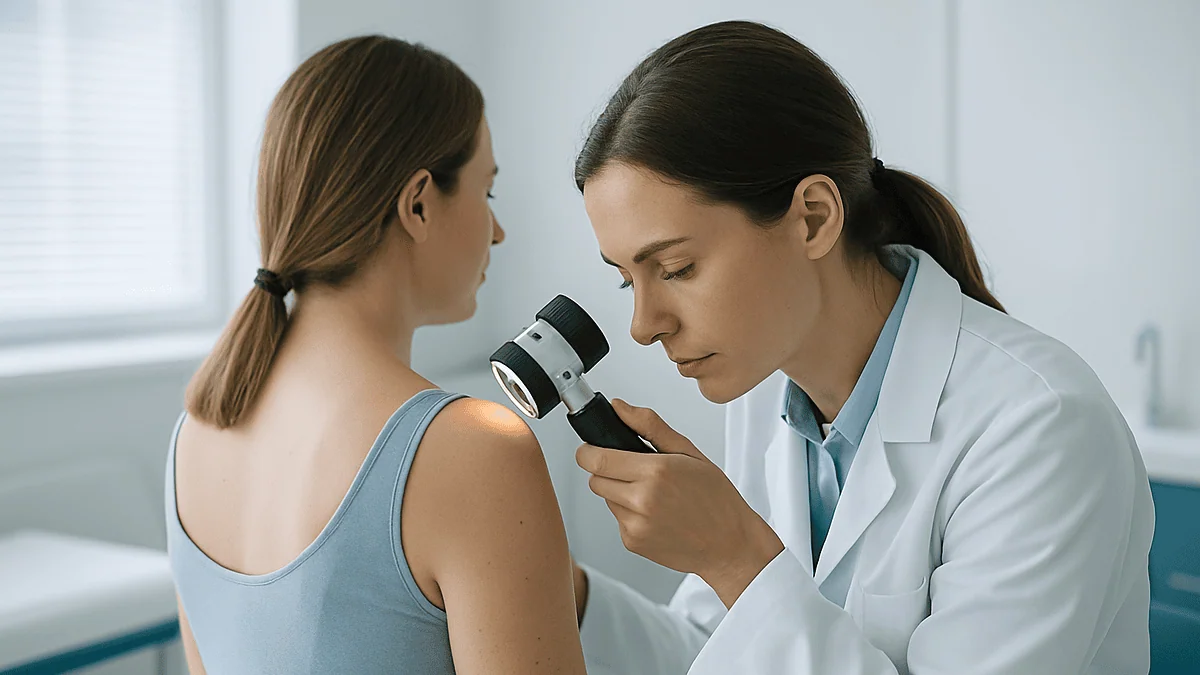
Key Takeaways
- Dermabrasion recovery has two speeds: the raw, weeping phase usually ends within about 7 to 10 days, while the pink phase typically lasts around three months (Mayo Clinic).
- Keeping the wound moist under the ointment your team chose speeds skin regrowth; a dry scab slows it and raises the risk of scarring.
- Pain should peak with swelling around day two or three and give way to itching by the end of week one; pain that climbs after day three is a reason to call.
- Ultraviolet light on healing skin is a leading cause of darkened patches, so months of sun avoidance followed by daily broad-spectrum sunscreen are non-negotiable.
- Isotretinoin within the past year, a keloid tendency, active infection and an unmanaged cold-sore history are among the common reasons a team asks someone to wait.
- Microdermabrasion shares a word with dermabrasion but not a mechanism: it removes dead surface cells with no downtime and cannot alter scars that sit in the dermis.
Dermabrasion recovery time typically runs in stages: the treated skin is raw, red and weeping for the first days, new skin usually covers the area within about 7 to 10 days, most people return to work in roughly two weeks, and pinkness commonly fades over about three months. Strict sun protection continues for months afterward. Exact timing depends on treatment depth, skin type and how closely aftercare is followed.
The morning after, the bathroom mirror tells the story before anyone else does. The face is swollen, weeping in patches, shiny under a thick layer of ointment, and it looks nothing like the neat diagram from the consultation. That is the moment most people reach for their phone and type the same thing: dermabrasion recovery time.
The honest answer has stages, and the first one is rough. Dermabrasion deliberately removes the outer layers of the skin so that new skin can grow in their place, which means the early days feel less like a beauty treatment and more like caring for a large graze. Then things turn a corner, usually within the first ten days, and a long, slow fade begins.
What follows is a plain account of that arc: the raw days, the ointment routine that matters more than any serum, the sun rule that outlasts everything, and the signs that mean healing has veered off course and deserves a call.
How dermabrasion actually works, and why your skin goes raw
Dermabrasion is a surgical procedure in which a clinician uses a rapidly rotating instrument, usually a fine wire brush or a diamond-coated wheel, to sand away the epidermis (the outer skin layer) and part of the dermis (the deeper, collagen-rich layer beneath it). The depth is controlled by hand, pass by pass, and the goal is a uniformly planed surface rather than a scratch. Mayo Clinic describes the treated skin afterward as raw and red, similar to a deep abrasion, and that appearance is expected rather than a sign that something went wrong.
Before the sanding starts, the area is numbed. Local anesthetic is standard; some teams add sedation, and the skin may be firmed with a cooling spray so the instrument has a stable surface to work on. Depending on how much skin is involved, the procedure itself can take anywhere from a few minutes to more than an hour, according to Mayo Clinic.
Healing then happens from below and from the sides. Hair follicles and sweat glands reach deep into the dermis, and their lining cells survive the abrasion. Those cells multiply and migrate across the wound surface in a process called re-epithelialization, which simply means regrowing the outer skin layer. At the same time, the dermis lays down fresh collagen and remodels it for months. That remodeling is why scars and wrinkles can look softer long after the surface has closed.
Two practical consequences follow. First, the wound needs the same care any open wound needs: cleanliness, moisture and protection from friction. Second, the timeline cannot be rushed, because it is set by cell biology rather than willpower.
Dermabrasion recovery time: what the typical stages look like
People want a single number, and no responsible source can give one, because dermabrasion recovery time depends on how deep the treatment went, how much skin was treated, the person’s skin type and how faithfully the aftercare is followed. What the major clinical references do agree on is the shape of the curve.
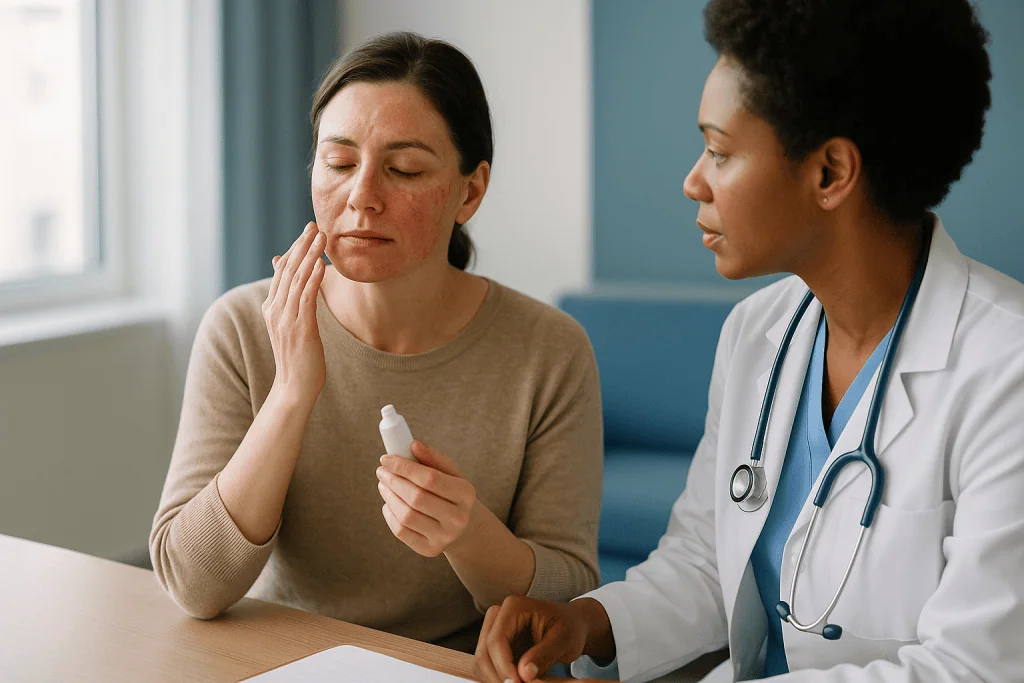
| Stage | Typical window | What it usually looks and feels like | Source |
|---|---|---|---|
| Raw phase | Days 0–3 | Red, swollen, weeping; burning or aching; dressing changes and frequent ointment | Mayo Clinic |
| Closure phase | Days 3–10 | Yellowish film or light crust; new skin forming beneath; swelling easing; itching begins | Mayo Clinic, Cleveland Clinic |
| Back to daily life | About 2 weeks | New skin covers the area, bright pink and sensitive; many people return to work | Mayo Clinic |
| Fading phase | Weeks 2–12 | Pink gradually softens; skin still reactive to heat and sun | Mayo Clinic |
| Remodeling | 3 months onward | Skin tone approaches normal; collagen keeps remodeling; final result judged | Mayo Clinic, Cleveland Clinic |
Two things stand out. The dramatic part, the weeping and swelling, is short. The subtle part, the pink that will not quite leave, is long. Mayo Clinic notes that most people can return to work in about two weeks and that skin tone typically takes around three months to settle, though the full effect on scars or lines may not be visible for months beyond that. Anyone planning dermabrasion around a wedding, a reunion or a new job should plan around the three-month mark rather than the two-week one.
How painful is dermabrasion, and what do the first days feel like?
The procedure itself should not hurt, because the area is numbed. The days afterward are a different matter, and it helps to know what “some discomfort” means in practice. Mayo Clinic describes burning, tingling and aching once the anesthetic wears off. People who have been through it reach for the same comparisons: a severe sunburn, or the sting of a large scraped knee when the air hits it. Swelling adds tightness, especially around the eyes and mouth, and it generally peaks over the first two to three days before easing within the first week (Mayo Clinic).
Pain is usually managed with medication chosen by the treating team, which may mean over-the-counter analgesics or, for larger or deeper treatments, a short course of a prescription pain reliever. Which medicine, how much and for how long is a decision for the prescriber, who knows the depth of the treatment and the rest of the person’s health history. What patients can do without a prescription: sleep with the head raised on extra pillows to limit facial swelling, avoid bending over or straining, and keep the room cool, since heat makes a raw surface throb.
Discomfort should follow a downward slope. Day three often feels worse than day one because swelling is at its height, but by the end of the first week most people describe itching rather than pain, a sign that new skin is knitting across the surface. Pain that climbs after day three, or that returns after it had settled, is not part of the expected pattern and is one of the signals covered in the red-flag section later in this article.
Dermabrasion aftercare ointment: why "keep it moist" is the whole instruction
Of every line on the aftercare sheet, the one about ointment does the most work. Wounds heal faster and with less scarring when they are kept moist than when they are allowed to dry into a hard scab, a principle that has guided wound care for decades and that Mayo Clinic and Cleveland Clinic both reflect in their dermabrasion aftercare guidance. A dried crust is a barrier the migrating skin cells have to burrow under; a thin film of ointment lets them glide across.
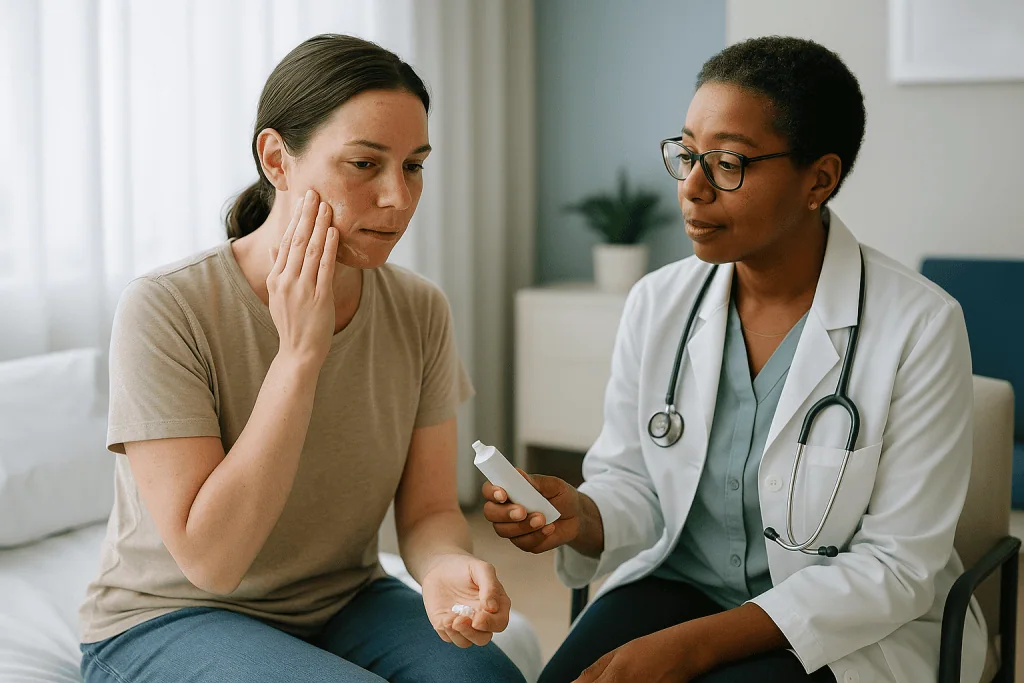
The ointment chosen is usually occlusive, meaning it forms a seal that holds water in the wound bed. Plain petroleum-jelly-type products are the common choice because they are bland and rarely cause allergic reactions. Some clinicians prefer a semi-occlusive dressing left in place for the first days, then a transition to ointment. Antibiotic ointments are sometimes used, but they are not automatic: certain topical antibiotics are well known to cause allergic contact dermatitis, an itchy red rash that can be mistaken for infection. That is precisely why the choice belongs to the treating team, who weigh infection risk against irritation risk for each person.
Application is simple but relentless. A thin, continuous layer, reapplied whenever the surface looks dry, is the usual instruction; thick globs trap heat and debris. Clean hands or a fresh applicator each time. Everything else, meaning retinoids, exfoliating acids, vitamin C serums, fragranced moisturizers and “healing” botanical products, stays in the drawer until the team clears it. The new skin has no barrier yet, and ingredients a mature face tolerates can sting, inflame or trigger pigment changes on a surface that is only days old.
Cleansing, crusting and the urge to pick
Cleansing during the raw days is less about being clean in the everyday sense and more about gently lifting away the serum, ointment residue and loose debris that collect on a healing wound. Most teams ask for a rinse with cool or lukewarm water and a mild, non-foaming cleanser applied with fingertips rather than a cloth, followed by patting rather than rubbing. Some prescribe dilute soaks; if so, the exact preparation comes from the team, not from a forum.
Then comes the hardest instruction of all: leave the crusts alone. By days three to seven, patches of yellowish film or light crust form and start to lift at the edges. Picking or peeling them tears the fragile new epithelium underneath, which can leave a pit, a line of darker pigment or a permanent pale spot. Cleveland Clinic and Mayo Clinic both list scarring and pigment change among the recognized complications, and premature peeling is one of the ways people bring those on themselves. Crusts that are ready will come away in the rinse.
A few other habits protect the surface. Sleeping on the back keeps the face off the pillow. Shaving waits until the team says the skin has closed, and even then a fresh blade and a light touch matter. Makeup usually waits until new skin covers the area, roughly the second week, and many clinicians suggest starting with mineral-based products (Mayo Clinic). Swimming pools, hot tubs and saunas are off the list for several weeks because of infection risk and heat. Smoking slows wound healing by narrowing small blood vessels, and anyone who smokes will be asked about it well before the procedure.
Redness after dermabrasion: why it lingers and when it fades
Once the surface has closed, the question changes from “when will this stop weeping” to “when will I stop looking sunburned.” Erythema, the medical term for redness, is the visible sign of extra blood flowing to a dermis that is still building collagen and repairing vessels. It is expected, and it is long. Mayo Clinic advises that treated skin typically stays pink for about three months, with skin tone returning to normal around that point.
Several factors stretch that window. Deeper treatment produces longer redness. Fair, thin skin flushes more visibly. A history of rosacea or easy flushing can extend it. Heat, alcohol, strenuous exercise and hot showers all dilate skin vessels temporarily, so the pink can look brighter on a hot afternoon or after a run, then settle again. None of that is a complication; it is physiology.
What actually helps is unglamorous. Sun avoidance comes first, because ultraviolet light inflames a healing dermis and delays fading. A bland, fragrance-free moisturizer keeps the new barrier from cracking. Once the team clears cosmetics, a green-tinted primer under foundation neutralizes pink optically, which many people find is the single biggest confidence lift in weeks two through eight. Some clinicians offer vascular laser treatment for redness that lingers unusually long; whether that is appropriate is an individual judgment.
Redness that behaves differently deserves attention. A patch that becomes thicker, raised, firm or itchy rather than flat and fading may be an early hypertrophic scar, meaning a thickened scar confined to the original wound, and early review gives the team the most options.
Sun protection after dermabrasion: the rule that outlasts every other
If one instruction outlives the ointment, the soaks and the dressing changes, it is this: keep the sun off the new skin. Freshly resurfaced skin has lost its normal melanin distribution, and its pigment cells are in an activated, reactive state. Ultraviolet exposure in that state can trigger hyperpigmentation, meaning patches that turn darker than the surrounding skin. Mayo Clinic notes that this darkening often appears in the weeks after treatment and is frequently temporary, but it can persist, and it is one of the most common reasons people end up disappointed with an otherwise good result.
Mayo Clinic advises avoiding sun exposure for months after dermabrasion and then using sunscreen every day once the skin has healed. In the first weeks, “avoiding” means physical avoidance: shade, a wide-brimmed hat, and staying out of the midday hours. Sunscreen goes on only once the team confirms the surface has closed, because chemical filters can sting an open wound. Many clinicians suggest mineral formulations early on because they sit on the surface and are less likely to irritate.
General public guidance from the CDC is a broad-spectrum product with SPF 15 or higher, reapplied at least every two hours and after sweating or swimming; most skin specialists lean toward SPF 30 or above for resurfaced skin. Ultraviolet A passes through window glass, so a long drive or a desk by a bright window counts as exposure. Cloudy days count too.
There is a quieter benefit here. People who adopt daily sun protection because of dermabrasion tend to keep it, and that habit protects against the very photodamage that created many of the lines and uneven tone they were treating in the first place.
Who dermabrasion is usually for, and who is usually asked to wait
Dermabrasion is a targeted tool. Mayo Clinic lists its common uses as acne scars, scars from surgery or injury, fine wrinkles around the mouth, sun-damaged skin, uneven skin tone and rhinophyma, a thickening of the skin on the nose. It works best on problems that live in the upper dermis, where a rotating instrument can reach. Deep, narrow acne scars that extend well below that level generally need other approaches, and a candid clinician will say so.
The list of people who are usually asked to wait, or to consider something else, is at least as important:
- Anyone who has taken isotretinoin, an oral retinoid used for severe acne, within the past year, because it alters how skin heals and raises the risk of scarring (Mayo Clinic).
- People with active acne, an active skin infection or a current cold sore in the treatment area.
- People with a history of recurrent herpes simplex (cold sores). They are not excluded, but Mayo Clinic notes that an antiviral medicine is often prescribed before and after treatment, because the virus can flare across raw skin.
- Anyone with a personal or family tendency to keloids, which are thick scars that grow beyond the original wound.
- People with deeper skin tones, in whom the risk of lasting pigment change is higher. This is a risk-benefit discussion, not an automatic no.
- People who have had radiation to the area, burn scars, or conditions that impair healing such as poorly controlled diabetes or immune suppression.
Smoking, pregnancy and certain autoimmune skin conditions also change the conversation. In every case the treating team decides after examining the skin, the scars and the person’s history; an article can only sketch the categories.
Dermabrasion vs microdermabrasion: two very different recoveries
The names differ by one prefix and the experiences differ by an order of magnitude. Microdermabrasion uses fine crystals or a diamond-tipped wand to buff away only the very top of the epidermis, the layer of dead cells that sheds naturally anyway. There is no anesthetic, the face may look faintly pink for a few hours, and most people go straight back to their day. Mayo Clinic and Cleveland Clinic both describe it as a milder relative with little to no downtime.
Because it stays so superficial, its effects are modest and temporary. Can you see results after one microdermabrasion? Often, yes: a smoother feel and a brighter look for a few days, because the dull outer cells are gone. What a single session cannot do is change a scar or a wrinkle, because those live in the dermis, which microdermabrasion never touches. Clinicians typically frame it as a series of treatments for maintenance rather than a one-time fix, and even a series will not replicate dermabrasion.
Dermabrasion, by contrast, is a controlled surgical wound into the dermis, done once for a given area, followed by the weeks of raw skin and months of pinkness described here. The trade is obvious: far more recovery for the possibility of durable change in scars and lines.
Two other resurfacing tools sit in between. Chemical peels use acid to remove skin at depths from superficial to deep, and ablative laser resurfacing vaporizes skin in a controlled pattern; Mayo Clinic notes that deeper peels and ablative lasers carry recovery periods and pigment risks comparable to dermabrasion. Which tool fits which problem, skin type and life schedule is exactly the conversation to have with the treating team.
Side effects that can lengthen dermabrasion recovery time
Most recoveries follow the curve in the table above. When they do not, one of a short list of complications is usually the reason, and knowing them in advance turns a frightening surprise into a recognized event. Mayo Clinic and Cleveland Clinic list the following:
- Prolonged redness and swelling. Expected for months; a problem only if it thickens or worsens after improving.
- Acne breakouts and enlarged pores. Occlusive ointment and healing inflammation can trigger both. They usually settle once the routine ends.
- Milia. Tiny white bumps, essentially trapped skin cells, that can appear in the weeks after treatment. They often clear on their own; a clinician can remove stubborn ones.
- Pigment change. Darkening (hyperpigmentation) often starts weeks after and is frequently temporary. Lightening (hypopigmentation) can be permanent, and the boundary between treated and untreated skin can become visible, particularly in deeper skin tones.
- Infection. Bacterial, fungal or viral, including a herpes simplex flare spreading across raw skin. Infection stalls closure and raises scarring risk, which is why it needs same-day attention.
- Scarring. Uncommon but real, especially with deep treatment, picking, infection or recent isotretinoin use.
- Allergic contact dermatitis to an ointment or dressing, which looks like an itchy, spreading rash rather than a deepening wound.
Each of these lengthens dermabrasion recovery time in a different way. Infection or a herpes flare resets the raw phase and demands treatment. Pigment change adds months of sun avoidance and may prompt prescription creams that the team chooses. A hypertrophic scar can mean injections or silicone dressings over many months. Reliable percentages for each vary widely between studies and this article deliberately avoids inventing them; what matters is that every item on the list is recognized, and every one is easier to manage early than late.
Is dermabrasion good for your skin? What the evidence supports
“Is dermabrasion good for your skin?” deserves an unfashionably precise answer. Dermabrasion is not a skin-health treatment in the way daily sunscreen or managing a chronic skin condition is. It is a surgical resurfacing tool, and it is good for skin in the narrow sense that it can improve specific surface problems: certain acne scars, surgical scars, fine lines around the mouth and areas of uneven texture (Mayo Clinic). For someone whose scar sits in the right layer, that improvement can be durable, because remodeled collagen persists.
Where honesty matters is in describing the evidence. Dermabrasion has been performed for decades, and its place in scar treatment rests largely on long clinical experience and case series rather than large randomized trials. That is common for surgical procedures, but it means no reputable source can hand a patient an outcome percentage, and this article will not either. NHS guidance on scars makes the broader point that no treatment removes a scar completely; the realistic goal is to make it less noticeable.
It is also fair to say what dermabrasion is not good for. It does not tighten loose skin, lift sagging tissue or treat deep wrinkles caused by muscle movement. Used on the wrong person, meaning someone with a keloid tendency, recent isotretinoin use or a high pigment risk, it can leave skin worse than it started.
So the answer is conditional. For a well-selected problem, on well-selected skin, with a patient willing to accept weeks of raw healing and months of pink, dermabrasion is a reasonable and established option. For general “skin quality” goals, gentler tools and daily habits usually make more sense, and a good clinician will say plainly which category a person falls into.
What people often get wrong about dermabrasion recovery
“A dry scab means it is healing well.” The opposite is closer to the truth. A hard scab is a sign the wound dried out, and skin cells regrow more slowly beneath one. Moist healing under ointment is the standard for a reason.
“Still pink at six weeks means it failed.” Six weeks is the midpoint of a fade that Mayo Clinic puts at around three months. Pink at week six is on schedule.
“More pain means a deeper, better result.” Pain tracks swelling and nerve irritation, not outcome. Rising pain after the third day points toward a problem, not a bonus.
“Active ingredients will speed it up.” Retinoids, acids and vitamin C serums applied to skin without a barrier tend to inflame it, and inflammation on healing skin is a direct route to pigment change. Speed comes from doing less, not more.
“Microdermabrasion is a small dermabrasion.” One removes dead surface cells and needs no downtime; the other is a surgical wound into the dermis. They share a word, not a mechanism.
“You can repeat it every few months.” Dermabrasion is generally a single treatment per area. If a second pass is ever considered, it waits until the skin has fully remodeled, which on Mayo Clinic’s timeline means well after the three-month mark, and it is the treating team’s call.
“Sunscreen is for the beach.” Ultraviolet light through a car window on a winter commute is enough to darken healing skin. Daily protection, indoors or out, is the rule for months.
“It will fix all my acne scars.” It reaches scars in the upper dermis. Deep, narrow scars usually need other techniques, sometimes in combination. Expecting a uniformly smooth surface sets up a disappointment that has nothing to do with how well the procedure went.
Questions to ask your care team before and after dermabrasion
Consultations are short and adrenaline makes people forget what they meant to ask. Bringing a list changes the conversation from a pitch to a plan. These are the questions that most directly shape how long healing takes and how smoothly it goes:
- How deep do you plan to go, and on which areas? Depth is the single biggest driver of recovery time.
- Given my skin tone and history, what is my personal risk of lasting pigment change, and what would you do to reduce it?
- Have I taken anything, including isotretinoin, that means I should wait?
- I get cold sores; will you prescribe an antiviral around the procedure, and how does that work?
- Which ointment or dressing do you use, why that one, and what should I do if my skin reacts to it?
- Exactly how should I cleanse, how often, and for how long?
- What will days one through three look like, and what will days seven through fourteen look like, so I know what is normal?
- When can I expect to return to work, exercise, wear makeup, shave and swim?
- How long do you want me to avoid the sun, and when can I start sunscreen?
- What are the signs that I should call you, and how do I reach someone after hours?
- What alternatives, including chemical peels, laser resurfacing or scar injections, would you consider for me, and why did you land on this one?
- If I develop a thick scar or pigment change, what would the next steps be?
Write down the answers, or ask permission to record them. The team’s replies become the personal aftercare sheet against which every later worry can be checked, and a clinician who welcomes these questions is telling you something reassuring about how they will handle the weeks that follow.
When to call your doctor
Some part of the mind will read every twinge of a raw face as a disaster. Most twinges are not. A short list of signs that genuinely warrant a call, ideally the same day, separates real problems from ordinary healing.
Call the treating team promptly for:
- Pain that increases after the third day, or pain that returns after it had eased.
- Redness that spreads beyond the treated area, feels hot, or comes with swelling that worsens after the first week rather than improving.
- Thick yellow or green discharge, honey-colored crusting, or a foul smell from the wound.
- Fever or chills.
- Clusters of small blisters or punched-out sores, especially with tingling first; this is the pattern of a herpes simplex flare, which needs treatment quickly on resurfaced skin.
- Bleeding that does not stop with gentle pressure.
- An itchy, spreading rash where ointment or dressing sits, suggesting contact allergy.
- Any area that becomes raised, firm or thick as it heals, or a scar that begins to grow.
- Patches turning noticeably darker or lighter than surrounding skin.
- Eye pain, vision change or inability to close the eyelids fully if the area near the eyes was treated.
Seek emergency care immediately, without waiting for a callback, for difficulty breathing, swelling of the lips or tongue, a rapidly spreading rash with dizziness, or confusion with a high fever. These are rare after dermabrasion, but they are emergencies wherever they occur.
For everything else, the rule of thumb is simple: if a worry would keep you up tonight, it is worth a message to the team today. Aftercare lines exist for exactly this, and nearly every complication above is easier to manage in its first day than its first week. The treating team, who know the depth, the technique and the person, remain the ones who decide what happens next.
Frequently asked questions
How painful is dermabrasion?
Not painful during the procedure, because the skin is numbed, but the first few days afterward usually bring burning, aching and tightness that people compare to a severe sunburn or a large graze. Mayo Clinic describes this discomfort as expected. It typically peaks with swelling around day two or three and gives way to itching by the end of the first week. Pain relief is chosen by the treating team.
How long is dermabrasion recovery time before I can go back to work?
About two weeks for many people, according to Mayo Clinic, which is roughly when new skin has covered the treated area and the weeping and crusting have stopped. The skin will still be pink and sensitive at that point, and makeup may or may not be permitted yet. Deeper or larger treatments can take longer, so the estimate should come from the treating team.
Which dermabrasion aftercare ointment should I use?
The one your treating team specifies, applied as a thin, continuous layer to keep the wound moist. Bland petroleum-jelly-type products are the usual choice because they seal in moisture and rarely cause allergy. Some clinicians use antibiotic ointments or semi-occlusive dressings instead; certain topical antibiotics can cause an allergic rash, which is why the choice is individualized. Do not swap products without asking.
How long does redness after dermabrasion last?
Typically around three months, according to Mayo Clinic, with the brightest pink in the first weeks and a slow fade after that. Deeper treatment, fair skin, a flushing tendency, heat and sun exposure can all extend it. Flat redness that is gradually softening is normal; a patch that becomes raised, thick or itchy should be reviewed by the treating team.
Is dermabrasion good for your skin?
It is good for specific problems rather than skin health in general. Mayo Clinic lists acne scars, surgical scars, fine lines around the mouth and uneven texture among its uses. It does not tighten skin or treat deep expression lines, and on the wrong candidate it can cause lasting pigment change or scarring. Whether it suits a particular person is a judgment for the treating team.
How often can dermabrasion be done?
Usually once for a given area. It is a surgical wound into the dermis, and the skin needs months to remodel; Mayo Clinic’s timeline puts normal skin tone at around three months. Any second treatment would be considered only after full healing and only if the clinician judges the skin can tolerate it. Frequent repeat sessions describe microdermabrasion, a far gentler procedure.
Dermabrasion vs microdermabrasion: can you see results after one microdermabrasion?
Often a subtle one: skin can feel smoother and look brighter for a few days because dead surface cells have been buffed away. A single session will not change scars or wrinkles, which sit in the dermis that microdermabrasion never reaches. Microdermabrasion involves little or no downtime and is usually done as a series, whereas dermabrasion is a one-time surgical resurfacing with weeks of recovery.
When can I wear makeup after dermabrasion?
Generally once new skin has covered the treated area, which Mayo Clinic places at roughly the second week, and only after the treating team confirms the surface is closed. Many clinicians suggest starting with mineral-based products, which are less likely to irritate. Applying makeup over open or crusted skin risks infection and irritation, and removing it can tear fragile new tissue.
Can I exercise during dermabrasion recovery?
Not in the first days, and gently after that, following the treating team’s timeline. Sweat stings and can carry bacteria onto raw skin, heat and exertion increase flushing and swelling, and bending over raises facial pressure. Walking is usually fine early on. Swimming pools, hot tubs and saunas are typically off limits for several weeks because of infection and heat, and outdoor exercise adds sun exposure.
Will dermabrasion permanently change my skin color?
It can, though it often does not. Mayo Clinic notes that darkening of treated skin frequently appears weeks after the procedure and is often temporary, while lightening can be permanent. People with deeper skin tones carry a higher risk. Strict sun avoidance for months, careful candidate selection and leaving crusts alone all lower the odds; any change should be reported to the team early.
References
This article is for general information only and is not a substitute for professional medical advice. Please consult a qualified doctor about your individual situation.

More from the Blog
Sun Protection After Dermabrasion: Why Strict Cover Matters for Months, Not Days
Sun protection after dermabrasion needs to continue for months, not days, because the newly grown skin is thin and its pigment cells are easily…
What Happens During an IPL Photorejuvenation Session: Cooling Gel, Flashes and Timing
During an IPL photorejuvenation session, a clinician cleanses the skin, applies a cool clear gel, gives you protective eyewear, and passes a handpiece across…

Why Your Cold Sore History Matters Before Laser Resurfacing and How Doctors Prepare for It
Your cold sore history matters before laser resurfacing because the herpes simplex virus that causes cold sores stays dormant in facial nerves and can…

What to Stop Before a Chemical Peel: Retinoids, Scrubs, Waxing and Sun Exposure
Before a chemical peel, people are usually asked to pause topical retinoids and exfoliating acids, stop facial scrubs, masks and exfoliating devices, avoid waxing,…

Laser Resurfacing Results: What Fine Lines and Acne Scars Realistically Look Like Afterward
Laser resurfacing results are usually a partial, gradual softening rather than a complete erasure. Fine lines around the eyes and mouth commonly look shallower,…

Blood Thinners, Anti-Inflammatories and Mesotherapy: What Your Doctor Checks First
Blood thinners and anti-inflammatory medicines matter for mesotherapy because the treatment relies on many shallow needle punctures, and anything that slows clotting raises the…