

Does Food Poisoning Need Lab Tests? When Stool Cultures and Blood Work Change the Plan

Key Takeaways
- The CDC estimates about 48 million foodborne illnesses in the United States each year, and the vast majority are diagnosed from symptoms and history rather than lab tests.
- A stool culture grows bacteria such as Salmonella, Shigella and Campylobacter and typically takes a few days, while PCR panels detect genetic material faster but cannot show antibiotic susceptibility.
- Blood tests almost never identify the germ; they measure dehydration, electrolytes and kidney function, and can catch hemolytic uremic syndrome after a Shiga toxin-producing E. coli infection.
- Symptoms within a few hours of eating usually point to a preformed toxin, whereas bacterial infections such as Campylobacter and STEC typically take two to five days to appear, according to Mayo Clinic onset windows.
- Antibiotics are not routine for food poisoning and may raise the risk of hemolytic uremic syndrome with STEC or prolong Salmonella shedding, so the decision belongs to the treating clinician.
- The NHS advises staying home until 48 hours after the last episode of vomiting or diarrhea, because germs continue to be shed after symptoms stop.
Most food poisoning does not need lab tests. Clinicians usually diagnose it from your symptoms, their timing, and what you ate, then focus on preventing dehydration. Stool cultures or blood work are typically reserved for bloody diarrhea, high fever, marked dehydration, symptoms lasting more than a few days, pregnancy, older age, weakened immunity, or a suspected outbreak, where a result can actually change treatment.
It is 2 a.m., the bathroom light is on for the fourth time, and the leftover rice from Sunday has become a suspect. Somewhere between the second trip and the third, the question shifts from what did this to whether anyone can prove it. Should there be food poisoning tests? Does a doctor need a sample? Would a result even change anything?
Those are fair questions, and the honest answer surprises people. Laboratories play a smaller role in food poisoning than television medicine suggests. For the vast majority of adults, the plan is decided at the bedside, or over the phone, using your story and a look at how dehydrated you are. The lab enters the picture in a specific set of circumstances, and knowing what they are is more useful than any home kit.
Here is how clinicians actually think it through, what a stool culture or blood panel can and cannot tell you, and the signs that mean the waiting is over.
Do you really need food poisoning tests at all?
Start with a number that reframes the whole question. The CDC estimates roughly 48 million people in the United States get sick from contaminated food each year, with about 128,000 hospitalized and around 3,000 deaths. Only a small share of those 48 million ever see a clinician, and fewer still hand over a sample. That is not neglect. It reflects how the illness behaves.
Food poisoning, sometimes called foodborne illness, is sickness caused by eating food contaminated with germs such as bacteria, viruses or parasites, or with toxins those germs produce. Most episodes are self-limiting, meaning the body clears the problem on its own. The NHS notes that most people feel better within a week without specific treatment. When an illness usually resolves before a culture result would even return, testing everyone makes little sense.
Clinicians therefore ask a sharper question than what germ is this. They ask whether a result would change the plan. Would it alter whether you receive an antibiotic, or which one? Would it flag a complication that needs monitoring? Would it help public health officials trace an outbreak or protect the people you cook for? If the answer to all three is no, watchful care with fluids is the evidence-based choice, not a lesser one.
That logic explains the apparent contradiction patients notice: one person with vomiting is sent home with hydration advice, while a neighbor with similar symptoms has a stool sample collected and blood drawn. The difference is rarely how miserable each of them feels. It comes down to age, risk factors, specific warning signs, and duration, which the rest of this article unpacks.
How is food poisoning diagnosed without a lab?
A good clinical history does most of the diagnostic work, and it is more structured than small talk. The National Institute of Diabetes and Digestive and Kidney Diseases (NIDDK) describes food poisoning as a diagnosis made primarily from symptoms and history, with tests added when illness is severe or prolonged.

Expect questions in roughly this order. When did symptoms begin, and how many hours after the suspected meal? Is it mostly vomiting, mostly diarrhea, or both? Is there blood or mucus in the stool? Any fever? Did anyone who shared the meal also fall ill? Have you traveled recently, swallowed untreated water, or handled reptiles or farm animals? Have you taken antibiotics in the past couple of months? That last one matters because a bowel infection called Clostridioides difficile, which flares after antibiotics disturb normal gut bacteria, can mimic food poisoning and is managed differently.
The physical exam is short but purposeful. A clinician checks your pulse, blood pressure, and how quickly your skin and mouth show fluid loss. They press on the abdomen, partly to gauge tenderness and partly to rule out mimics such as appendicitis or gallbladder inflammation that occasionally hide behind a story of a bad burrito.
Two things about this stage deserve emphasis. First, the diagnosis is often provisional: the working label is acute gastroenteritis, an inflammation of the stomach and intestines, with food as the probable source. Second, the exam is really an assessment of dehydration severity, because dehydration, not the germ itself, is what harms most people. Mayo Clinic frames the goal of evaluation exactly this way: identify who is losing too much fluid, then decide whether replacing it can happen at home or needs a clinic.
What does a food poisoning stool culture actually look for?
A stool culture is a lab test in which a small stool sample is spread on nutrient plates that encourage specific bacteria to grow, so technicians can identify them. According to MedlinePlus, results typically take a few days, because bacteria need time to multiply into visible colonies. The classic targets are Salmonella, Shigella, Campylobacter, and Shiga toxin-producing E. coli, often shortened to STEC.
Culture has two strengths that newer methods lack. It confirms a living organism rather than leftover genetic fragments, and it allows susceptibility testing, meaning the lab can check which antibiotics would work if one is ever needed. That second point is why public health laboratories still culture even when a faster test has already named the germ.
Many hospitals now use multiplex PCR panels first. PCR, or polymerase chain reaction, copies tiny amounts of a germ’s genetic material until it becomes detectable, and a multiplex panel hunts for many pathogens at once, including viruses like norovirus and parasites like Giardia that culture would miss. Because nothing has to grow, results come back faster than culture. The trade-off is sensitivity that sometimes runs ahead of relevance: a panel can detect a bystander organism or lingering fragments of something you cleared weeks ago. A positive line on a panel is a clue for the clinician, not a verdict.
Other stool tests exist for specific situations. An ova and parasites exam looks under a microscope for parasite eggs, typically after travel or prolonged diarrhea. A toxin assay checks for C. difficile. A rapid Shiga toxin test is used when bloody diarrhea raises concern for STEC. Collection is unglamorous but simple: a clean container, a small sample, delivered to the lab promptly so organisms stay detectable.
Food poisoning blood work: what it shows and what it cannot
Here is a fact that reorganizes expectations: blood tests rarely identify the germ behind food poisoning. Their job is different. They measure the damage the illness is doing to the rest of the body and catch complications early. Mayo Clinic lists blood tests among the tools used to assess dehydration and to look for specific infections such as Listeria, but for the typical case they answer how sick, not which bug.
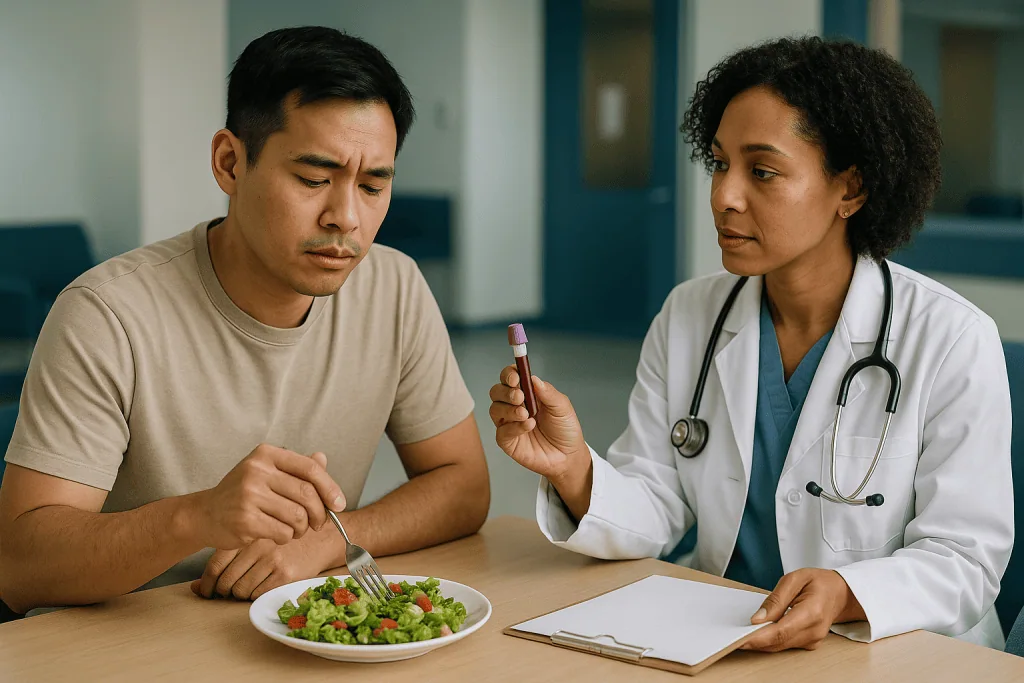
A basic metabolic panel measures electrolytes, the dissolved minerals such as sodium and potassium that vomiting and diarrhea drain, along with creatinine and urea, which rise when the kidneys are short on fluid. These numbers help a clinician decide whether oral fluids are enough or whether intravenous replacement is warranted.
A complete blood count, or CBC, tallies red cells, white cells and platelets. A high white count can suggest a bacterial infection, though it is nonspecific. Platelets deserve special mention. After a STEC infection, a small proportion of patients, most often young children and older adults, develop hemolytic uremic syndrome, a condition in which toxin damages small blood vessels, destroys red cells and injures the kidneys. Falling platelets, anemia and rising creatinine on a blood panel are how that complication is detected before it becomes obvious.
Blood cultures, in which blood is incubated to see whether bacteria grow from it, are drawn when an infection appears to have spread beyond the gut, signaled by high fever, shaking chills, or a very unwell appearance. Salmonella occasionally enters the bloodstream, and Listeria can do so in pregnancy, in newborns and in people with weakened immunity. Liver tests may be added when hepatitis A is on the list, since that foodborne virus attacks the liver rather than the intestines.
Who is usually tested, and who is usually asked to wait
Guidelines from the CDC and NIDDK converge on a practical list. Testing moves up the priority ladder when any of the following are present, because each one raises the odds that a result will change management:
- Blood or pus in the stool, which points toward invasive bacteria rather than a virus or preformed toxin.
- Fever above 102°F (38.9°C), a threshold Mayo Clinic uses as a reason to seek care.
- Signs of significant dehydration, or an inability to keep fluids down.
- Diarrhea lasting more than three days, again a Mayo Clinic marker for evaluation.
- Pregnancy, infancy, age over 65, or a weakened immune system from illness or medicines.
- Recent international travel, recent antibiotics, or a hospital stay.
- Several people sick after the same meal, or a job in food handling, healthcare, or childcare.
The last item is not about the individual’s severity at all. When a cluster forms, identifying the organism lets health departments trace a contaminated product, and it tells employers when a food handler can safely return.
Who is asked to wait? A healthy adult with watery diarrhea, no fever or a low one, no blood, who is drinking and improving within a day or two. For that person, a culture ordered on day one would return after recovery, would not change any decision, and might even prompt an unnecessary antibiotic if it detected a bystander organism. Waiting is active, though. It comes with a clear instruction to return if any red flag appears, and clinicians routinely book a check-in call rather than closing the encounter.
One nuance: waiting is a shared decision, not a refusal. If you have a reason a diagnosis matters to you, say so. Your care team can weigh it.
How symptom timing narrows down the suspect
Timing is the closest thing to a free diagnostic test. Different organisms take predictably different amounts of time to cause trouble, so the gap between a meal and the first symptom shrinks the list before any sample is collected. Mayo Clinic publishes typical onset windows; the table below summarizes several of the most common.
| Likely cause | Typical onset after eating | Common food links |
|---|---|---|
| Staphylococcus aureus toxin | 30 minutes to 8 hours | Meats, egg salad, cream pastries left at room temperature |
| Clostridium perfringens | 6 to 24 hours | Large batches of meat or poultry kept warm too long |
| Norovirus | 12 to 48 hours | Shellfish, ready-to-eat foods, contact with a sick person |
| Salmonella | 6 hours to 6 days | Poultry, eggs, raw produce |
| Campylobacter | 2 to 5 days | Undercooked poultry, unpasteurized milk |
| Shiga toxin-producing E. coli | Usually 3 to 4 days | Undercooked ground beef, raw vegetables, unpasteurized juice |
| Listeria | 9 to 48 hours (gut); 1 to 4 weeks (body-wide) | Deli meats, soft cheeses, unpasteurized dairy |
Read the pattern. Illness within a few hours of eating, dominated by vomiting, usually means a toxin was already in the food and no antibiotic could help because there is no growing infection to treat. Illness a few days later, with cramping, fever and diarrhea, points toward bacteria multiplying in the gut. That distinction is exactly why the meal you ate an hour before you got sick is often innocent, and yesterday’s lunch is the real culprit.
It also explains why clinicians ask about the whole week, not the last plate. Listeria’s long body-wide window is the reason a pregnant patient with flu-like symptoms may be asked about soft cheese eaten weeks earlier.
Can you test for food poisoning at home?
Not in any meaningful way. There is no validated over-the-counter test that identifies food poisoning or its cause, and consumer kits marketed for gut infections have not been shown to change outcomes. The symptoms overlap heavily with viral stomach bugs caught from other people, with medication side effects, and with flares of conditions such as inflammatory bowel disease, and no strip or swab sorts those apart at the kitchen counter.
Testing the food itself is equally impractical for individuals. Leftovers can be analyzed by public health laboratories during an outbreak investigation, but the suspect meal has usually been eaten or thrown away by the time symptoms appear, and a negative result on a leftover proves little because contamination is often uneven.
What you can do at home is monitor, and monitoring is genuinely valuable. A thermometer tells you whether fever has crossed the threshold that warrants a call. Watching how often you urinate and how dark it is tracks hydration more reliably than thirst does. Noting the time of each vomiting or diarrhea episode, and whether stool contains blood, gives a clinician the data they would otherwise have to reconstruct from memory.
A simple written timeline also helps. Jot down what you ate over the previous three to four days, when each symptom started, and who else shared the meals. NIDDK and Mayo Clinic both describe this history as the backbone of diagnosis, and a patient who arrives with it written down shortens the visit and sharpens the decision about whether food poisoning tests are needed.
If you want to report a suspected outbreak, local health departments accept reports from the public; this is how many clusters are first noticed.
Will a doctor actually do anything for food poisoning?
Yes, though not always what people expect. The most common intervention is an assessment rather than a prescription: how dehydrated you are, whether something other than food poisoning could be going on, and whether you fall into a group that needs testing. That assessment, and the safety net it creates, is the treatment for many patients.
When fluid loss outpaces what you can drink, a clinician can replace it intravenously, which can be the difference between a long night and a hospital admission. Medicines are considered case by case, and the evidence here is worth being clear about.
Antibiotics are not routinely used. Mayo Clinic notes they do nothing against viral causes and, in some bacterial infections, can worsen matters. With STEC, antibiotics have been associated with a higher risk of hemolytic uremic syndrome, and with uncomplicated Salmonella they may prolong the time the bacteria are shed in stool. Clinicians reserve them for severe illness, high-risk patients, or specific organisms such as Listeria, and the choice sits with the prescribing team.
Antidiarrheal medicines in the loperamide class work by slowing the movement of the gut. Mayo Clinic advises avoiding them when there is fever or bloody stool, because holding an invasive infection inside the bowel is not helpful. Anti-nausea medicines act on the brain’s vomiting centers and are sometimes used so a person can keep fluids down. None of these should be started, stopped or adjusted without discussing it with your clinician.
A doctor also does something invisible to you. Certain infections, once confirmed, are reportable to public health authorities, and that report is how a contaminated product gets pulled from shelves.
What helps flush out food poisoning? Mostly, nothing you buy
The phrase flush out reflects an intuitive but mistaken model of the illness. The diarrhea and vomiting are the body’s flushing mechanism; nothing you add speeds it up, and the products that claim to are answering the wrong question. Activated charcoal, herbal detox teas, and juice cleanses have no credible evidence for shortening established food poisoning, and cleanses that replace fluids with sugary juice can worsen diarrhea.
What actually shortens the misery is protecting yourself from the consequence that matters: dehydration. Both the NHS and Mayo Clinic put fluid replacement at the center of self-care. Water is good, but because diarrhea removes sodium and potassium along with water, drinks or oral rehydration solutions that contain electrolytes are often more effective at keeping you out of the clinic. Small, frequent sips are tolerated better than large gulps when the stomach is irritable, and ice chips or frozen pops count.
Food can return when appetite does. The old advice to fast for a day has fallen away; the NHS suggests eating when you feel able, starting with plain, easy-to-digest options and moving back to your usual diet as symptoms ease. Alcohol and caffeine are worth skipping until you are clearly better, since both pull fluid out of the body.
Rest matters more than people credit. The immune response that clears a gut infection is metabolically expensive, and a body that is upright and working has less to spend on it.
Finally, hygiene protects others: wash hands with soap after every bathroom visit, avoid preparing food for others while symptomatic, and disinfect surfaces. Norovirus in particular spreads efficiently within households, which is how one bad meal becomes a family event.
What the next few days usually look like
Most people notice the trajectory before any test could. Vomiting, if present, tends to settle first, often within a day. Diarrhea and cramping follow more slowly. The NHS states that most people recover within a week, and Mayo Clinic describes recovery over a few days for typical cases, though it stresses that the range depends on the cause and the person.
Appetite returns in stages. Many people find that dairy sits poorly for a short while afterward, because the enzyme that digests lactose lives on the intestinal lining that infection has temporarily roughened. This usually resolves on its own as the lining heals.
If a stool sample was collected, results tend to arrive as the illness is already improving. That is expected, and it does not make the test wasted. A confirmed organism may prompt a follow-up call about kidney monitoring after STEC, about a medicine change after a parasite is found, or about a public health interview if others have fallen ill. If the result is negative, your clinician will interpret it in context; a negative culture does not undo a clinical diagnosis.
Returning to work or school has a public health dimension. The NHS advises staying off until 48 hours after the last episode of diarrhea or vomiting, because shedding of germs continues after symptoms stop. Food handlers, healthcare staff and childcare workers may be given specific instructions by their employer or health department.
A minority of people experience lingering bowel irritability for weeks or months, sometimes labeled post-infectious irritable bowel syndrome. If cramping, urgency or altered stools persist well beyond recovery from the acute illness, mention it; it is a recognized pattern, not something to endure silently.
When food poisoning tests genuinely change the plan
The clearest argument for selective testing is to look at what a result actually does. Several outcomes shift management in concrete ways.
A positive Shiga toxin or STEC result changes the plan by subtraction. Antibiotics and antimotility drugs are avoided, and blood work is scheduled over the following days to watch platelets and kidney function for hemolytic uremic syndrome. Children with this result are often monitored closely, precisely because that complication clusters in the young.
A Listeria result in someone pregnant, newborn, older or immunocompromised does the opposite: it triggers urgent treatment because the organism can cross into the bloodstream, the nervous system, or the placenta. This is a case where the lab is the whole point.
Shigella or Campylobacter confirmed in a patient with severe or prolonged illness may lead the treating team to consider antibiotics, guided by susceptibility results that only culture can provide. Antibiotic resistance in these organisms is a documented concern, which is why guessing is discouraged.
A parasite such as Giardia or Cryptosporidium on an ova and parasites exam moves the illness into a different treatment category altogether, with medicines that antibiotics would not replicate. A C. difficile toxin result redirects care toward stopping the triggering antibiotic where possible and starting targeted therapy.
Norovirus on a PCR panel changes little for the individual but a great deal for a ward, a nursing home or a cruise ship, where infection control measures follow. And any reportable organism, once confirmed, enters public health surveillance, where matching genetic fingerprints from different patients is how a contaminated lettuce field or ice cream plant is found.
Notice what is missing from this list: the healthy adult with brief watery diarrhea. For that person, no result on the panel would alter care.
What people often get wrong about food poisoning tests
Myth one: the last thing you ate is the cause. As the onset table shows, most bacterial food poisoning takes one to several days to appear. The suspicious lunch is usually innocent; the meal two days earlier is the likelier culprit, which is why clinicians ask about the whole week.
Myth two: a negative stool test means it was not food poisoning. Cultures miss organisms that were present in small numbers, that were shed before the sample was collected, or that the panel does not target. Viruses and preformed toxins often leave no trace by the time a sample reaches the lab. A clinical diagnosis stands on its own.
Myth three: a positive test means antibiotics. In several common infections, antibiotics are unhelpful or potentially harmful, and the decision depends on the organism, the severity and the patient. The test informs; it does not prescribe.
Myth four: stomach flu and food poisoning are distinct illnesses that a doctor can tell apart by feel. Norovirus is one of the most common causes of foodborne illness and also the classic stomach flu. The label depends on the route, not the symptoms, and often nobody knows the route.
Myth five: you need a lab result to prove illness to an employer or to make a complaint. Most workplaces accept a clinician’s note based on assessment. Health departments accept reports without laboratory confirmation and decide themselves whether to investigate.
Myth six: blood tests find the germ. They almost never do. They measure dehydration, electrolyte disturbance and complications, which is arguably more important, but a different job.
Myth seven: one test covers everything. Bacteria, viruses, parasites and toxins each require different methods, and clinicians choose based on the story rather than ordering the full menu.
Questions to ask your care team
A short list, brought to the visit or the phone call, turns a hurried encounter into a shared decision. The most useful questions are the ones that clarify why a test is or is not being ordered, and what you should be watching for in the meantime.
- Based on my symptoms and timing, what do you think is the most likely cause, and how confident are you?
- Would a stool test or blood work change what you recommend for me right now? If not, what would make you order one later?
- Do I fall into a higher-risk group because of my age, pregnancy, medicines or other conditions?
- How should I judge whether I am becoming dehydrated at home, and at what point should I come back or go to an emergency department?
- If you are considering an antibiotic or an antidiarrheal, what is the reasoning, and what would make you avoid it?
- If a sample is collected, how and when will I hear about the result, and what happens if it shows something?
- Should I stop any of my regular medicines while I am vomiting, or take them differently? Please do not change anything without asking this explicitly.
- When is it safe for me to return to work or school, and are there extra rules because of my job?
- Should the people who ate with me be evaluated, or should this be reported to the health department?
- If my symptoms improve but my bowels stay unsettled for weeks, who should I contact?
Write the answers down. Dehydration and a sleepless night do unkind things to memory, and the instruction you most need is usually the one about when to call back.
When to call your doctor: red flags and when to see a doctor for food poisoning
Most people can manage food poisoning at home, but a defined set of signs means the plan should change from waiting to contacting a clinician the same day. Mayo Clinic and the NHS list closely overlapping red flags.
- Blood in the stool, or stool that is black and tarry.
- Fever above 102°F (38.9°C).
- Vomiting so persistent you cannot keep any fluids down.
- Signs of dehydration: very little or very dark urine, dizziness on standing, a dry mouth, or unusual drowsiness.
- Diarrhea lasting more than three days, or any diarrhea that is worsening rather than settling.
- Severe or steadily localized abdominal pain, which can signal a different diagnosis.
- Pregnancy, age over 65, an infant who is ill, or a weakened immune system, in which case call earlier rather than later.
Some signs warrant emergency care rather than a phone call. Confusion, fainting, a racing heart with very low urine output, or a child who is limp or cannot be roused suggest severe dehydration. Blurred or double vision, difficulty swallowing or speaking, and weakness that starts in the face and moves downward are features of botulism, a rare toxin-mediated illness that damages nerves and is a medical emergency. After a bout of bloody diarrhea, especially in a child, decreased urination, unusual paleness, small bruises or extreme fatigue may indicate hemolytic uremic syndrome and need urgent evaluation.
Trust the trajectory. An illness that is clearly improving each day is reassuring; one that has plateaued or turned is not, even if no single symptom on this list has appeared. When in doubt, a phone call to a clinician costs nothing but time and frequently settles the question. The decision about testing, medicine and where you should be cared for always rests with the team looking after you.
Frequently asked questions
What are the very first signs of food poisoning?
Nausea, stomach cramps, vomiting and diarrhea are the usual opening symptoms, sometimes with fever, chills or aching muscles. According to Mayo Clinic, the gap between eating and the first symptom ranges from under an hour for some toxins to several days for bacteria such as Campylobacter or Shiga toxin-producing E. coli. Because that window varies so much, the timing of your first symptom is one of the most useful clues a clinician has.
How is food poisoning diagnosed?
Mostly from your story and a physical exam. Clinicians ask what you ate over the past several days, when symptoms began, whether stool contains blood, whether you have a fever, and whether others who shared the meal are ill. The exam focuses on dehydration and on ruling out mimics such as appendicitis. NIDDK and Mayo Clinic describe stool tests and blood work as additions reserved for severe, prolonged or high-risk cases.
Is a food poisoning home test worth buying?
No validated home test identifies food poisoning or its cause, and consumer gut-infection kits have not been shown to improve care. Symptoms overlap with viral stomach bugs and other conditions that no strip can separate. Monitoring at home is still valuable: track your temperature, how often you urinate, whether stool contains blood, and write a timeline of meals and symptoms. That record helps a clinician decide whether food poisoning tests are needed.
Will a doctor do anything for food poisoning?
Yes. A clinician assesses how dehydrated you are, checks for other causes of your symptoms, decides whether you belong to a group that should be tested, and provides intravenous fluids if you cannot keep liquids down. Medicines are considered case by case; Mayo Clinic notes antibiotics are not routine and can worsen some infections. Confirmed infections may also be reported to public health, which is how contaminated products get traced and recalled.
What does a stool test for food poisoning involve?
You provide a small stool sample in a clean container, which the lab either cultures on nutrient plates to grow bacteria or analyzes with a PCR panel that detects the genetic material of many germs at once. MedlinePlus notes culture results usually take a few days because bacteria need time to grow. Separate tests exist for parasites, for Clostridioides difficile toxin, and for the Shiga toxin produced by certain E. coli strains.
Is there a blood test for food poisoning?
Not one that names the germ in most cases. Blood work measures the effects of the illness: electrolytes such as sodium and potassium, kidney markers such as creatinine, and blood counts including platelets. These reveal dehydration and can detect hemolytic uremic syndrome, a rare complication after Shiga toxin-producing E. coli. Blood cultures are drawn when infection may have spread into the bloodstream, which can happen with Salmonella or Listeria, especially in high-risk patients.
What helps flush out food poisoning faster?
Nothing reliably speeds up clearing the germ, and products marketed as detoxes or flushes lack evidence. Vomiting and diarrhea are already the body’s clearance mechanism. What genuinely helps is preventing dehydration with frequent small sips of fluids that contain electrolytes, resting, and returning to plain food when appetite allows, as the NHS and Mayo Clinic advise. Skip alcohol and caffeine until you are clearly better, and wash hands carefully to protect others.
How long does food poisoning last?
The NHS says most people feel better within a week, and Mayo Clinic describes recovery over a few days for typical cases, though duration depends on the cause and the person. Vomiting usually settles before diarrhea. Some people notice temporary trouble digesting dairy afterward, and a minority develop lingering bowel irritability for weeks. Symptoms that are worsening, or diarrhea persisting beyond three days, warrant a call to your clinician.
Can food poisoning tests come back negative even though I had it?
Yes, quite often. Cultures can miss organisms present in small numbers or shed before the sample was collected, and viruses or preformed toxins may leave no trace by the time the lab receives the stool. Panels only detect the germs they target. A negative result does not overturn a diagnosis made from your symptoms and history; clinicians interpret it in context and continue to treat the illness in front of them.
When should I see a doctor for food poisoning?
Call the same day if you notice blood in your stool, fever above 102°F (38.9°C), an inability to keep fluids down, signs of dehydration such as very little dark urine or dizziness, or diarrhea lasting more than three days, per Mayo Clinic guidance. Pregnant people, infants, adults over 65 and anyone with weakened immunity should call earlier. Confusion, fainting, or vision and swallowing problems need emergency care.
References
- NIDDK (NIH): Diagnosis of Food Poisoning
- NHS: Food poisoning
- Cleveland Clinic: Food Poisoning
- CDC: Symptoms of Food Poisoning
This article is for general information only and is not a substitute for professional medical advice. Please consult a qualified doctor about your individual situation.

More from the Blog

Autoimmune Hepatitis Diagnosis: Antibody Tests, Imaging and When a Liver Biopsy Is Needed
Autoimmune hepatitis is diagnosed by combining blood tests (raised liver enzymes and immunoglobulin G), autoantibody tests such as ANA, anti-smooth muscle and anti-LKM1, and…

Living Gluten-Free With Celiac Disease: Label Reading, Eating Out and Travel Without Slips
A gluten free diet with celiac disease means removing all wheat, barley and rye, every day, for life, because even small amounts can damage…
Preparing for Gallstone Surgery: Blood Tests, Fasting and Which Medicines Are Paused
Preparing for gallstone surgery usually means a pre-assessment visit with blood tests (blood count, kidney and liver function, sometimes clotting), a fasting window of…

Why Variceal Banding Is Often Repeated: How Many Sessions and What Follow-Up Endoscopy Checks
Variceal banding is usually repeated every 2 to 4 weeks until the varices are flattened or gone, a point endoscopists call eradication. Liver guidance…

IBS Myths: Is It All in Your Head and Does Cutting Out Gluten Always Help?
IBS is not all in your head. It is a recognized disorder of gut-brain interaction in which the bowel and nervous system miscommunicate, producing…

Living With Chronic Liver Disease: Weight, Alcohol, Sleep and the Check-Ups That Matter
Living with chronic liver disease usually means protecting the working tissue you still have: avoiding alcohol if your team advises it, aiming for gradual…