

Eating After Colon Cancer Surgery: How Diet Is Rebuilt With Your Care Team’s Guidance
Key Takeaways
- The colon absorbs mainly water and salt, not calories or most nutrients, which is why people can lose a large section and still eat a varied diet once healed.
- A typical hospital stay after large bowel resection is three to seven days according to MedlinePlus, with diet advancing from clear liquids to soft solids as gas and bowel movements return.
- Insoluble fiber from raw vegetables, bran and seeds is restricted early because a swollen bowel cannot handle bulk, while soluble fiber from oats and bananas often helps thicken loose stool.
- People with an ileostomy lose the colon's water-reclaiming function entirely, so dehydration is a leading reason for readmission and salt-containing fluids absorb better than large volumes of plain water.
- Removal of the terminal ileum can lead to vitamin B12 deficiency years later, because the body's stores last a long time and the ileum is the only site of B12 absorption.
- No specific food or diet has been shown to prevent colon cancer from returning; the evidence supports a varied, plant-forward pattern low in processed meat, a healthy weight, regular activity and scheduled surveillance.
Diet after colon cancer surgery is rebuilt in stages guided by your surgical team and dietitian: clear liquids in the first day or two, then soft, low-fiber meals for a few weeks while the bowel heals, then a gradual return toward varied everyday eating, often within six to twelve weeks. Small frequent meals, steady fluids and slow reintroduction of fiber help most people; the pace depends on the operation and your recovery.
The first thing many people notice after a colon resection is not pain but the tray. A cup of broth, a spoon of gelatin, a small carton of apple juice. It looks like a hospital afterthought, yet that tray is the opening move in a carefully sequenced plan to bring a shortened bowel back to work.
People facing this stage tend to arrive with two questions at once: what can I eat tonight, and will food ever feel ordinary again? The answers pull in different directions. Early on, the rules are strict and a little counterintuitive, since the fiber-rich meals praised for prevention are exactly what the healing gut cannot yet handle. Later, the rules loosen, and the long-term diet after colon cancer surgery looks a lot like the diet a cardiologist would applaud.
This explainer walks through both stretches honestly, including the weeks in between when bowel habits are unpredictable and patience is the main ingredient. Every step here is one to work out with your treating team, who know what was removed and how you are healing.
How digestion actually changes when part of the colon is removed
The colon, or large intestine, is roughly five feet of muscular tube whose main jobs are absorbing water and salt from what the small intestine sends along and turning that liquid slurry into formed stool. It absorbs almost no calories and few nutrients. Digestion in the sense of breaking food down and pulling out protein, fat and vitamins happens earlier, in the stomach and the roughly twenty feet of small intestine.
That anatomy explains why most people can lose a substantial section of colon and still eat a full range of foods in the long run. A colectomy, the surgical removal of part or all of the colon, shortens the drying-out stage. When the remaining colon is shorter, stool has less time to give up its water, so it tends to be softer and to arrive more often. Which segment was removed matters: the right side of the colon handles much of the water reabsorption, while the sigmoid colon and rectum on the left act as the storage area that lets you choose when to go.
In the first days after surgery the bowel also goes quiet, a normal, temporary slowdown called postoperative ileus. The gut has been handled, cut and rejoined at a suture line called an anastomosis, and it responds by pausing its rhythmic squeezing. Eating too much too early during this pause causes bloating, nausea and sometimes vomiting, which is why early diet after colon cancer surgery is built around liquids that ask nothing of a resting bowel.
Mayo Clinic describes the range of operations, from removing a segment of colon with lymph nodes to procedures that create a stoma, an opening on the abdomen through which stool leaves into a pouch. Each variation changes the eating plan slightly, and your team tailors advice to what your own operation involved.
What should I expect after colon resection surgery, and how long in hospital?
MedlinePlus gives a typical hospital stay of three to seven days after large bowel resection, with longer stays after open surgery or when complications arise. Within that window the diet advances in recognizable steps, and the pace is set by signs rather than by the calendar.
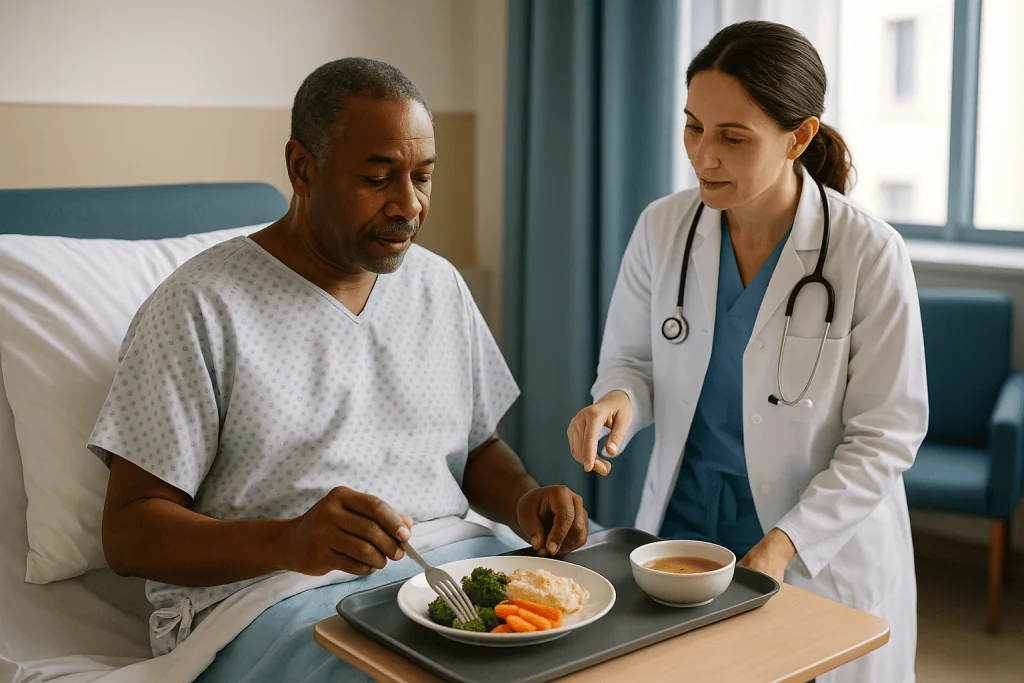
Day one is usually clear liquids: water, broth, diluted juice, ice chips, gelatin. Nurses listen for bowel sounds and ask whether you have passed gas, the humble milestone that tells the team the ileus is lifting. Many surgical programs now start sips of fluid and even small amounts of solid food earlier than they did a generation ago, as part of enhanced recovery approaches that also emphasize walking on the first day and limiting opioid painkillers, which slow the gut.
Once gas passes and nausea settles, the tray graduates to full liquids such as strained soups, smooth yogurt and nutrition shakes, then to soft, low-fiber solids like scrambled eggs, white toast, mashed potato and tender chicken. Some people move through all of this in two days; others need the full week, particularly if nausea lingers or the bowel is slow to wake.
Expect the first few stools to be loose, urgent and frequent, and expect them to arrive at odd hours. Expect gas and some cramping as the bowel restarts. These are ordinary parts of recovery, not signs that something has gone wrong, though the team will watch for a swollen, tense abdomen or persistent vomiting that could signal a lingering ileus or, rarely, a leak at the anastomosis.
Discharge usually comes when you are eating some solid food, drinking enough, walking, passing gas or stool and managing pain with oral medicine. You leave with written diet guidance that carries you through the next phase at home.
Who is usually asked to take diet slower, and who can move faster
Not everyone follows the same timeline, and the differences are clinical rather than a matter of willpower.
People who move fastest are typically those who had a laparoscopic or robotic resection through small incisions, with a straightforward join of the bowel and no stoma. Their gut wakes sooner, their pain is lower, and they often reach soft solids within a day or two. Younger age, good nutrition before surgery and no prior abdominal operations all help.
People asked to wait longer, or to stay on a restricted texture for more weeks, tend to fall into a few groups. Anyone with a new ileostomy, where the small intestine rather than the colon is brought to the skin, has bypassed the water-absorbing colon entirely; output is liquid and high in volume, so fiber, fluid and salt advice is stricter and more detailed. Anyone whose bowel was joined low in the pelvis, as in a low anterior resection for cancer near the rectum, is often given a longer low-fiber period to protect the anastomosis while it heals. People who had open surgery through a long incision, an emergency operation for a blocked or perforated bowel, or a complication such as an ileus lasting several days, will also advance more slowly.
Then there are people whose nutrition was already compromised, because the cancer caused weight loss, appetite loss or a partial blockage for months beforehand. For them the priority flips: the team may involve a dietitian early, add oral nutrition drinks and pay closer attention to protein, because healing tissue needs building blocks the body no longer has in reserve.
The NHS notes that a stoma after bowel cancer surgery is often temporary, reversed months later once healing is complete. That means the diet may loosen, tighten again around the reversal, and loosen once more. Each transition is a conversation with the team, not a decision to make alone.
The first two weeks at home: what to eat after colon resection
The kitchen at home offers more choice than the hospital tray, which is precisely where people get into trouble. The guidance for these weeks is simple to state and hard to follow when you are hungry for real food: small portions, low fiber, chewed thoroughly, eaten slowly, five or six times a day.
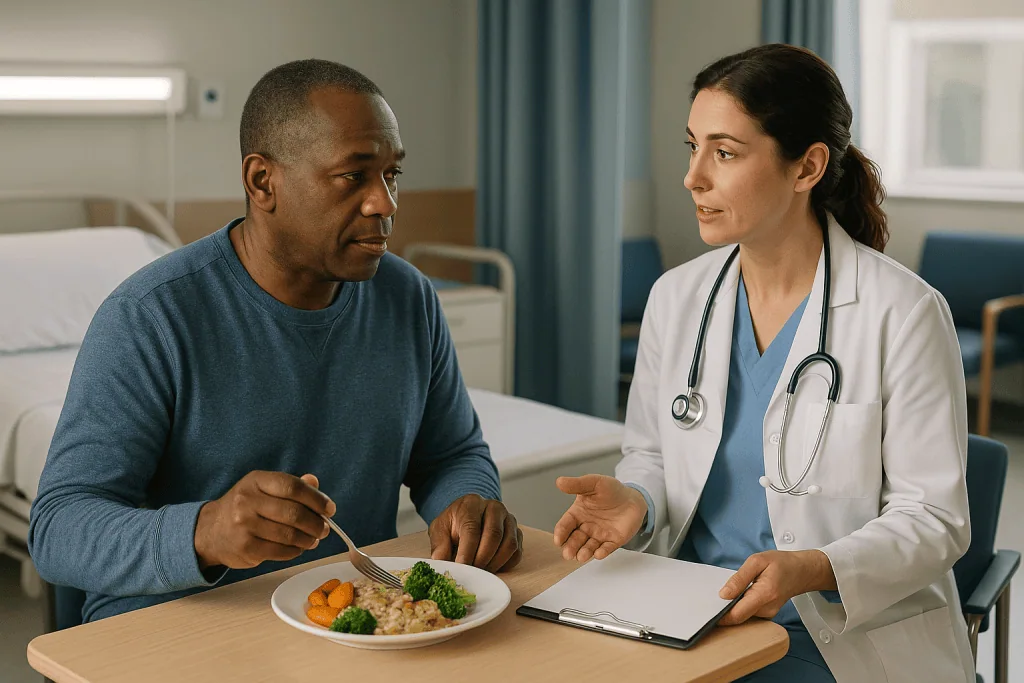
Small and frequent matters because a bowel that has just been rejoined and is still swollen tolerates a steady trickle better than three large meals. A plate that would have been normal before surgery can produce an hour of cramping now. Think of a fist-sized portion, then another two or three hours later.
Low fiber, sometimes called a low-residue diet, means choosing foods that leave little undigested bulk: white bread and rice, plain pasta, peeled and well-cooked vegetables, canned or very ripe peeled fruit, eggs, fish, poultry, tofu, smooth nut butters, yogurt if dairy agrees with you. MedlinePlus lists this pattern in its low-fiber diet guidance and notes it is meant as a temporary bridge, not a permanent way of eating.
Protein at every eating occasion is the quiet priority. Healing an anastomosis and closing an abdominal incision consumes protein, and appetite is often poor for weeks. An egg with breakfast, a piece of fish at lunch, a cup of yogurt as a snack: unglamorous, but effective.
Fluids sit alongside all of this. Sip through the day rather than gulping at meals, since large volumes with food can hurry things through. Warm drinks in the morning can gently coax a sluggish bowel; carbonated drinks often add gas you do not need.
Keep a simple food and symptom diary for these two weeks. Patterns emerge quickly, and the diary turns your follow-up appointment from guesswork into a specific conversation about which foods to reintroduce next.
Foods to avoid after colon surgery in the early weeks, and why
Lists of forbidden foods circulate widely and are often stricter than the evidence supports. The honest position is that very few foods are dangerous after a routine colectomy; many are simply uncomfortable while the bowel is swollen and short of its usual capacity. The table groups common troublemakers by mechanism so the logic, not just the rule, is clear.
| Food group | Typical early effect | Why it happens | Usually reintroduced |
|---|---|---|---|
| Raw vegetables, salad, corn, celery | Cramping, gas, undigested pieces in stool | Tough insoluble fiber the shortened bowel cannot soften | Gradually, cooked first, over weeks |
| Beans, lentils, cabbage family, onions | Gas and bloating | Fermentable carbohydrates feed gut bacteria that release gas | Small portions after the first month |
| Nuts, seeds, popcorn, dried fruit | Irritation, possible stoma blockage | Hard, bulky fragments; particular concern with an ileostomy | Chewed very well, later in recovery |
| Fried and very fatty foods | Loose, urgent stools | Fat speeds transit and is harder to absorb when the colon is short | Modest amounts as stools firm up |
| Caffeine, alcohol, carbonated drinks | Looser stools, gas, dehydration | Stimulate the gut or draw fluid; alcohol also interacts with painkillers | Individually, with the team’s advice |
| Milk in large amounts | Diarrhea in some people | Temporary lactase shortage after bowel surgery | Often tolerated again within weeks |
Two points deserve emphasis. First, the right-hand column is a typical range, not a schedule; your surgeon may extend or shorten it. Second, reintroduce one new food at a time in a small amount, wait a day, and let the diary tell you what happened. A food that misbehaves this month frequently behaves next month, so nothing here is a lifetime ban.
Low fiber diet after bowel surgery: why healthy can be too much, too soon
Here is the paradox that confuses almost everyone. For years public health messages have said fiber protects the bowel, and that message is sound for prevention. Yet in the weeks after surgery the same whole grains, beans and raw vegetables become the foods most likely to cause pain. Both statements are true; they simply apply to different moments.
Fiber comes in two broad types. Insoluble fiber, found in wheat bran, vegetable skins and seeds, adds bulk and scrapes along the intestinal wall. Soluble fiber, found in oats, bananas, applesauce, peeled potatoes and psyllium, dissolves into a gel that soaks up water. Early after surgery insoluble fiber is the problem: a swollen, recently sutured bowel does not want bulk. Soluble fiber, by contrast, is often a friend, because its gel thickens loose stool and slows the rush.
This is why a dietitian might steer you toward oatmeal and bananas while telling you to hold off on bran cereal and salad. It is not a contradiction; it is fiber chosen by function.
Reintroduction is a staircase. A typical pattern moves from peeled cooked vegetables to unpeeled cooked vegetables, from white rice to a mix of white and brown, from canned fruit to soft fresh fruit, and only then to raw salads, whole nuts and legumes. Each step is taken when the previous one has caused no trouble for several days. Many people find they can eat a fully varied diet within a couple of months, though the exact pace is individual and should follow your team’s guidance.
One more reason not to rush: the bacteria living in the colon shift after surgery, antibiotics and reduced fiber intake. They rebuild as fiber returns, but a sudden flood of fermentable food can produce a startling amount of gas. Slow and steady genuinely wins here.
Fluids and salt: why hydration matters more than usual
Because the colon’s central job is reclaiming water, losing part of it means more water leaves in stool. For most people after a segmental colectomy this shows up as softer, more frequent stools that gradually firm over weeks, and drinking steadily through the day is enough to compensate.
For someone with an ileostomy the math is different. The small intestine delivers a liter or more of fluid a day into a pouch, carrying sodium with it, and none of that passes through a colon to be reabsorbed. Dehydration is the most common reason people with a new ileostomy return to hospital, and it can develop within a day or two of a stomach upset. Thirst, dark urine, dizziness on standing, headache and cramping muscles are early warnings that should prompt a call.
Counterintuitively, plain water is not always the best drink when output is high. Large volumes of water can actually increase ileostomy output, because the gut moves fluid toward the saltier side, and the contents of the bowel are saltier than water. Stoma nurses often recommend oral rehydration solutions or salted broths that carry sodium and a little sugar together, which the small intestine absorbs far more efficiently. Sports drinks are not equivalent; many are too sugary and too low in salt.
Timing helps too. Separating drinks from meals by about half an hour lets solid food sit longer, which can thicken output. Sipping between meals rather than with them is a small change that many people find makes a noticeable difference.
If you have a colostomy, where the colon itself is brought to the skin, output is more formed and hydration behaves much as it does after a resection without a stoma. Either way, the stoma nurse will give specific targets for fluid and salt, and those targets, not a generic rule, are the ones to follow.
Bowel habits after rectal or sigmoid surgery: eating patterns that help
When the operation removes the sigmoid colon or part of the rectum, people often face a cluster of symptoms that has its own name: low anterior resection syndrome, or LARS. It means the storage function of the lower bowel has been reduced, so stool arrives in fragments, urgently, sometimes several times in an hour, and the sense of being finished can be unreliable. It is common, it is distressing, and it is rarely explained well before surgery.
Eating cannot restore lost storage capacity, but eating patterns strongly influence how the remaining bowel behaves. Regular meal times train a more predictable rhythm; skipping meals then eating heavily tends to produce a chaotic afternoon. Soluble fiber, again, thickens stool so it can be held more easily. Very fatty meals, large amounts of caffeine, alcohol, artificial sweeteners such as sorbitol, and spicy food commonly trigger urgency and are worth testing one at a time.
Some people learn to eat their larger meal earlier in the day so the bowel is quieter by evening, or to eat lightly before leaving the house. These are legitimate strategies, not defeats. A dietitian experienced with colorectal recovery can help you find a pattern that fits your life rather than shrinking it.
Diet is one tool among several. Pelvic floor exercises, sometimes taught by a specialist physiotherapist, strengthen the muscles that give you time to reach a toilet. Medicines that slow gut transit, such as antidiarrheal agents, are sometimes used under a clinician’s direction to firm stool and reduce frequency; whether and when they are appropriate is a decision for the prescribing team. Bulking fiber supplements are also commonly discussed, again on clinical advice.
Function typically improves over the first year as the bowel adapts, though the degree varies widely. If symptoms are limiting your life, say so at follow-up; there are structured programs for LARS, and no one should quietly endure it.
Protein, weight and healing: getting enough when appetite is low
Appetite after abdominal surgery is unreliable. The bowel is bruised, painkillers blunt hunger, the mind is busy, and the smell of food can be unwelcome for days. Yet this is the period when the body is laying down new tissue at the incision and the anastomosis, and it does that work from protein.
A modest, steady weight loss in the first weeks is common and usually reverses as eating normalizes. Rapid or continuing loss is different. It slows healing, weakens the muscles you need for walking and lifting, and, if chemotherapy is planned, can make treatment harder to tolerate. Weighing yourself once a week, at the same time of day, gives your team an objective number rather than an impression.
Practical tactics from dietitians are consistent. Eat by the clock rather than waiting for hunger, because hunger may not come. Put protein first on the plate: eggs, fish, poultry, tofu, dairy, smooth nut butters, well-cooked legumes once tolerated. Add calories without bulk by stirring cream, cheese, olive oil or nut butter into foods you are already eating. Nutrition drinks or fortified milkshakes can bridge the gap on bad days, and a dietitian can advise which kind suits your situation. Cold foods often go down more easily when nausea is present, and small plates make a half-eaten meal feel like a success rather than a failure.
People who were already underweight or losing weight before surgery are at higher risk and often benefit from formal nutrition support arranged before discharge. If you were told you were malnourished, ask explicitly what the plan is.
The goal in this phase is not an ideal diet. It is enough energy and protein, delivered gently, so that the body can do the repair work and you can get back on your feet.
Weeks six through twelve: can you live a normal life after colon cancer surgery?
Ask this question of people a year on and most say yes, with a footnote. The footnote is that normal is rebuilt rather than simply resumed, and that the middle weeks are where the rebuilding is most noticeable.
By around six weeks the incision has largely healed and most surgeons lift restrictions on lifting and driving; MedlinePlus advises avoiding heavy lifting for several weeks after bowel resection, with the exact period set by the surgeon. Around the same time the diet usually opens up markedly. Cooked vegetables with skins, whole grains, softer fruits and small portions of legumes return. Restaurants become possible again, with a little planning about what to order and where the restroom is.
Bowel habits are still settling. Many people find stools have firmed and frequency has dropped to two or three times a day, but flare-ups after a rich meal or a stressful week are ordinary. Urgency tends to ease as the remaining bowel stretches to hold more, a process of adaptation that continues for months.
This is also the stage where exercise rejoins the picture. Walking, then gentle strength work, rebuilds the muscle lost during recovery and independently helps bowel regularity and mood. The NHS living-with-bowel-cancer guidance encourages a gradual return to physical activity and everyday routines, adjusted for how you feel and for any further treatment.
If chemotherapy follows surgery, the timeline bends. Treatment often begins within a couple of months and brings its own appetite and bowel effects, so the diet you had just liberalized may need to tighten again on some days. That is not backsliding; it is responding to a new circumstance.
Normal, in the end, tends to mean eating most things, most of the time, with a few personal rules you learned the hard way. For most people that is a life that feels fully their own.
What is the best colon cancer survivor diet long term?
Once healing is complete, the question shifts from what the bowel can tolerate to what might help you stay well. The candid answer is that no single food or eating plan has been shown to prevent colon cancer from returning, and anyone who tells you otherwise is ahead of the evidence. What the evidence does support is a dietary pattern that improves overall health and is associated, in observational studies, with better outcomes in people who have had colorectal cancer.
That pattern is unremarkable and that is its strength. Plenty of vegetables, fruit and whole grains once they are tolerated; legumes, nuts and fish as regular protein sources; less red meat and very little processed meat such as bacon, sausage and deli products, which the WHO’s cancer research agency classifies as carcinogenic to humans on the strength of colorectal cancer data; limited alcohol; and limited sugary drinks and heavily processed foods. Maintaining a healthy weight and staying physically active sit alongside diet in every major guideline, and the NHS and Mayo Clinic both frame these as the core lifestyle advice after bowel cancer treatment.
Fiber, so troublesome early on, becomes an ally again. It feeds the gut bacteria that produce short-chain fatty acids thought to nourish the colon lining, and it keeps stool soft and regular, which matters to anyone with a shortened bowel.
Notice what is absent from this list: no miracle juice, no alkaline regimen, no need to cut out entire food groups unless a specific intolerance persists. Restrictive diets promoted online for cancer survivors can cause weight loss and nutrient gaps without any demonstrated benefit.
Follow-up colonoscopies and blood tests, on the schedule your oncology team sets, remain the evidence-based way to catch recurrence early. Diet supports health; surveillance does the detecting.
Supplements, vitamin B12 and what eating during chemo changes
Two nutrition questions come up so often after colon surgery that they deserve direct answers.
The first is about supplements. For most people who had a segment of colon removed and are eating a varied diet, no routine supplement is required; the colon absorbs almost no vitamins, so removing part of it does not by itself create deficiencies. The exception involves the terminal ileum, the last stretch of small intestine, which is sometimes removed along with the right colon. The ileum is the only place vitamin B12 is absorbed, so people who have lost it can develop deficiency over time. The NIH Office of Dietary Supplements notes that the body’s stores of B12 can last several years, which means a deficiency may appear long after surgery, as fatigue, numbness or tingling, or anemia. A blood test settles the question; whether and how to replace B12 is a decision for your clinician.
A general multivitamin is sometimes suggested during recovery when intake is poor, and iron may be checked if you were anemic before surgery. High-dose single nutrients and herbal products are a different matter. Some interact with chemotherapy or anesthesia, and none has proven benefit against recurrence. Tell your oncology team about everything you take.
The second question concerns chemotherapy, which many people receive after surgery to reduce the chance of recurrence. Common regimens for colon cancer can cause nausea, mouth soreness, altered taste, diarrhea and, with some drugs, sensitivity to cold foods and drinks. Eating patterns often shift back toward small, bland, frequent meals on treatment days and open up again between cycles. Hydration becomes more critical, since chemotherapy-related diarrhea on top of a shortened colon can dehydrate quickly. Your oncology nurse or dietitian will give day-by-day guidance, and severe or persistent diarrhea should always be reported promptly rather than managed alone.
What people often get wrong about diet after colon cancer surgery
Recovery advice travels fast between patients, and some of it arrives distorted. A few corrections, in the order they tend to cause trouble.
The first myth is that high-fiber eating should start immediately because fiber is good for the colon. As explained above, insoluble fiber is exactly what the healing bowel cannot yet handle; fiber returns gradually, soluble first, over weeks.
The second is the mirror image: that a low-fiber diet is permanent, or that a lifelong list of banned foods exists. For most people the restrictions are a bridge of weeks to a couple of months. Foods that misbehave early often behave later, and permanent avoidance without retesting shrinks the diet for no reason.
Third, that loose or frequent stools mean something has gone wrong. After losing part of the colon, softer and more frequent stool is expected and usually improves as the remaining bowel adapts. What matters is the trend and the accompanying signs, not a single bad day.
Fourth, that drinking lots of plain water is always the right response to loose output. For people with an ileostomy in particular, large volumes of water can worsen output, and salt-containing fluids absorb better.
Fifth, that a special anti-cancer diet, juice cleanse or sugar-free regimen will stop the cancer coming back. No dietary intervention has demonstrated this. Sugar does not selectively feed tumors in a way that starving yourself of carbohydrate would fix; extreme restriction mainly produces weight loss and weakness at the worst possible time.
Sixth, that supplements can substitute for food. They cannot replace the protein and calories healing tissue needs, and some interfere with treatment.
Finally, that you should tough out bowel symptoms because they are the price of surviving cancer. Urgency, incontinence and pain are treatable problems with dedicated programs, and raising them is part of good follow-up, not a complaint.
Questions to ask your care team about eating after surgery
The most useful appointments are the ones you arrive at with specific questions. These are the ones dietitians and colorectal nurses say patients most often wish they had asked earlier.
- Exactly which part of my bowel was removed, and was any of the small intestine, including the terminal ileum, taken as well?
- Do I have a stoma, is it an ileostomy or a colostomy, and is it expected to be temporary?
- How long should I stay on a low-fiber diet, and what signs tell me I am ready to move to the next stage?
- Which foods, if any, should I avoid for a set period because of my particular operation?
- How much fluid should I aim for each day, and should any of it contain salt?
- What bowel pattern is expected for someone with my surgery, and at what point would frequency or urgency be a concern?
- Am I at risk of vitamin B12, iron or other deficiencies, and when should these be checked?
- Was I malnourished or losing weight before surgery, and is there a nutrition plan to address that?
- Can I be referred to a dietitian who works with colorectal patients, and to a stoma nurse if I have a stoma?
- If I am having chemotherapy, how should my eating change on treatment days, and who do I call about diarrhea or vomiting?
- Are there any supplements or herbal products I should stop, and which prescribed medicines affect my bowel?
- Who is my point of contact between appointments if something changes?
Write the answers down or bring someone who will. Recovery makes memory unreliable, and a plan you can reread on a difficult evening is worth more than one you half-remember. Every one of these decisions sits with the team who operated on you and who will follow you afterward; the questions simply make sure the conversation happens.
When to call your doctor
Most bumps in recovery are ordinary, but a small number of signs should prompt a same-day call to your surgical team, or a visit to an emergency department if you cannot reach them. MedlinePlus discharge guidance for bowel resection lists the core warning signs, and they are worth knowing before you need them.
Call promptly if you have a fever above roughly 101 degrees Fahrenheit, or chills; worsening rather than easing abdominal pain, or a belly that becomes swollen, hard or tender to touch; repeated vomiting or inability to keep fluids down for more than a day; no bowel movement or gas for several days, especially with bloating and nausea, which could signal a blockage; blood in the stool beyond a small streak, or black tarry stool; redness, warmth, increasing pain, pus or foul-smelling drainage from the incision, or an incision that opens; watery diarrhea many times a day, particularly during chemotherapy, or signs of dehydration such as dizziness on standing, very dark or scant urine, a racing heart or confusion; and for people with a stoma, output that stops for several hours with cramping and swelling, output that suddenly becomes very high and watery, or a stoma that turns dark purple, black or pale.
Seek emergency care immediately for severe, sudden abdominal pain, chest pain or shortness of breath, a swollen and painful calf, fainting, or vomiting blood.
Between these emergencies and ordinary recovery sits a gray zone: weight that keeps falling, bowel urgency that is ruining your days, persistent nausea, food that never seems to agree with you. None of these needs an ambulance, but all of them deserve a conversation at your next appointment or a message to your team beforehand. The people who did your operation expect to hear from you, and early calls are almost always easier to act on than late ones.
Frequently asked questions
Can you live a normal life after colon cancer surgery?
Most people return to eating a wide range of foods and to their usual activities, though normal is usually rebuilt over months rather than resumed overnight. Bowel habits are often softer and more frequent at first and settle as the remaining bowel adapts. Some people keep a few personal food rules, and those with low rectal surgery may need help managing urgency. Your care team can connect you with dietitians and continence programs if symptoms limit daily life.
What is the best diet for colon cancer survivors?
The pattern supported by evidence is a varied diet rich in vegetables, fruit, whole grains, legumes and fish, with little red and processed meat, limited alcohol and few sugary or heavily processed foods, alongside a healthy weight and regular activity. No single food or special regimen has been shown to prevent recurrence. Once early restrictions lift, this everyday pattern, plus the surveillance schedule your oncology team sets, is what mainstream guidance recommends.
What should I expect after colon resection surgery?
Expect a quiet bowel for a day or two, then gas, then loose and frequent stools that gradually firm over weeks. Diet moves from clear liquids to soft, low-fiber foods and then toward normal eating over roughly six to twelve weeks, depending on your operation. Fatigue, reduced appetite and some cramping are common. Your team will give lifting restrictions, wound care instructions and clear warning signs to watch for after discharge.
How long in hospital after colon cancer surgery?
MedlinePlus gives a typical stay of three to seven days after large bowel resection. Laparoscopic or robotic operations with no complications often fall at the shorter end, while open surgery, a new stoma or a slow-to-wake bowel can lengthen the stay. Discharge usually depends on eating some solid food, drinking enough, passing gas or stool, walking and managing pain with oral medicine rather than on a fixed number of days.
What can I eat after colon resection in the first week at home?
Soft, low-fiber foods in small, frequent portions: eggs, white bread or rice, plain pasta, peeled well-cooked vegetables, canned or ripe peeled fruit, fish, poultry, tofu, smooth nut butters and yogurt if dairy agrees with you. Sip fluids steadily between meals rather than gulping with them. Include protein at each eating occasion to support healing. Keep a simple food and symptom diary so your follow-up visit can focus on what to reintroduce next.
What foods should I avoid after colon surgery?
In the early weeks most people are advised to limit raw vegetables, salads, corn, beans, cabbage-family vegetables, nuts, seeds, popcorn, dried fruit, fried and very fatty foods, large amounts of caffeine or alcohol, and carbonated drinks, because these cause gas, cramping or loose stools while the bowel is swollen. These are temporary restrictions rather than lifelong bans; most foods are reintroduced gradually, one at a time, over the following weeks with your team’s guidance.
How long do I need a low fiber diet after bowel surgery?
Typically a few weeks to a couple of months, with the exact length set by your surgeon based on the operation and how you are healing. Low rectal joins and new stomas often mean a longer period. Fiber returns in stages, soluble sources such as oats and bananas first, then cooked vegetables with skins and whole grains, then raw salads, nuts and legumes, each step taken once the previous one causes no trouble.
Why is my stool loose and frequent after colon cancer surgery, and will it improve?
The colon’s main job is reabsorbing water, so a shortened colon returns softer stool more often; this is expected rather than a sign of a problem. Function usually improves over weeks to months as the remaining bowel adapts and stretches to hold more. Soluble fiber, regular meals and limiting fatty food, caffeine and alcohol often help. Persistent watery diarrhea, dehydration signs or blood in the stool should be reported to your team promptly.
Do I need vitamin supplements after part of my colon is removed?
Usually not, if you are eating a varied diet, because the colon absorbs almost no vitamins. The exception is when the terminal ileum, the end of the small intestine, was removed along with the right colon, since it is the only site of vitamin B12 absorption; deficiency can appear years later and is detected by a blood test. Decisions about B12, iron or any other supplement should be made with your clinician, and all products you take should be disclosed.
How does chemotherapy after colon surgery change what I can eat?
Chemotherapy commonly causes nausea, taste changes, mouth soreness and diarrhea, so eating often shifts back to small, bland, frequent meals on treatment days and opens up between cycles. Hydration matters more, because treatment-related diarrhea on top of a shortened colon can dehydrate quickly. Some drugs cause sensitivity to cold foods and drinks. Your oncology nurse or dietitian will give specific day-by-day guidance, and severe or persistent diarrhea should always be reported rather than managed alone.
References
- MedlinePlus: Large bowel resection
- MedlinePlus: Large bowel resection – discharge
- NHS: Bowel cancer – Treatment
- NHS: Bowel cancer – Living with
This article is for general information only and is not a substitute for professional medical advice. Please consult a qualified doctor about your individual situation.

More from the Blog
Colonoscopy Surveillance After Colon Cancer: Why Follow-Up Continues After Treatment Ends
Colonoscopy surveillance after colon cancer continues because the remaining colon can grow new polyps or a second cancer, and the surgical join can occasionally…
Facial Weakness or Numbness After Parotidectomy: What Is Expected and When to Call
Some facial weakness or numbness after parotidectomy is common and, in most people, temporary. Weakness comes from the facial nerve being stretched or bruised…
What Follow-Up After Lung Cancer Treatment Involves: Scans, Visits and Side-Effect Care
Follow-up after lung cancer treatment usually combines scheduled clinic visits, a chest CT scan at set intervals, and ongoing care for side effects such…

How Does a Child Recover After Wilms Tumor Surgery? Comfort, Wound Healing and Next Steps
After Wilms tumor surgery, a child usually spends several days in hospital while pain is controlled, the bowel starts working again and the incision…

Can You Have Lung Cancer Surgery? What Lung Function and Heart Tests Help Decide
Yes, many people with early-stage lung cancer can have surgery, but the decision rests on tests rather than age alone. Surgeons measure breathing capacity…

Melanoma Staging: What Biopsy Review, PET-CT and Blood Tests Reveal Before Treatment
Melanoma staging tests establish how far the cancer has spread before any treatment plan is made. The pathologist's review of the biopsy, which measures…