

Eating After Esophageal Cancer Surgery: Small Meals, Reflux Habits and a New Routine

Key Takeaways
- After esophagectomy the stomach becomes a narrow tube in the chest, which is why portions shrink and gravity replaces the missing valve as the main defense against reflux.
- Discharge guidance such as MedlinePlus's typically recommends several small meals a day, often around six, eaten slowly and followed by time sitting upright.
- Early dumping syndrome begins about 10 to 30 minutes after eating and late dumping one to three hours later, according to Mayo Clinic, and sugary drinks are the most common trigger.
- Separating liquids from solid food, rather than drinking with meals, reduces both dumping and early fullness by keeping the small conduit free for nutrients.
- Food that sticks in the first weeks is usually swelling at the join, but persistent worsening may indicate a stricture that can be assessed by endoscopy and treated with dilation.
- Hospital stays commonly run one to two weeks per Mayo Clinic, yet eating patterns and energy typically take months to settle, and the small-meal rhythm is usually permanent.
Eating after esophageal cancer surgery usually means small, frequent meals instead of three large ones, chewing slowly, sitting upright during and after eating, and avoiding food in the hours before bed to limit reflux. Most people move gradually from liquids to soft foods to solids over weeks, guided by their surgical team and dietitian. Appetite, weight and stamina typically take months to settle.
The first thing many people notice is the tray. A hospital lunch that once looked modest now looks like a banquet: a bowl of soup, a yogurt, a cup of tea. Two spoonfuls of soup, and there is a fullness under the ribs that feels like the end of a holiday dinner. A nurse smiles and says, “That’s normal now.”
That moment, more than any diagram in a consent form, is when eating after esophageal cancer surgery becomes real. The esophagus, the muscular tube that carried food from throat to stomach, has been largely removed, and the stomach has been reshaped and pulled up to take its place. The plumbing works. It simply works differently.
This explainer walks through what actually changed inside, why small meals and new reflux habits matter, what the first weeks commonly look like, and which warning signs deserve a phone call. It is written to inform, not to replace your surgical team’s instructions, which always come first.
What actually happens to your digestion after an esophagectomy
An esophagectomy is an operation that removes most or all of the esophagus, usually for cancer, and rebuilds a route for food. In the most common version, the surgeon frees the stomach, shapes it into a narrower tube called a conduit, lifts it into the chest or neck, and joins it to the remaining esophagus at a stitched junction called the anastomosis. Mayo Clinic describes the approaches and why the stomach is the usual replacement.
Three things change at once. First, the stomach can no longer hold a large volume; a stretched tube holds far less than a pouch. Second, the valve at the top of the stomach, which normally stops acid and food flowing back up, is gone. Gravity is now the main thing keeping stomach contents where they belong. Third, the vagus nerves that told the stomach when to squeeze and when to open its outlet are typically cut during the operation, so emptying becomes less coordinated. Some surgeons widen or relax the stomach outlet, a step called a pyloroplasty, to help food pass.
The net effect is a digestive system with a small tank, no lid and an unpredictable drain. That sounds grim on paper, and yet most people eat real food again. They eat it in a new rhythm: smaller portions, more often, upright, and with attention to how the body responds to sugar, liquids and timing. Understanding the mechanics makes the rules feel less arbitrary. Every instruction that follows traces back to one of these three changes.
Why eating after esophageal cancer surgery starts with small meals
Small meals are not a temporary hospital quirk. They are the direct consequence of the new anatomy. A stomach turned into a conduit may accept only a cup or so of food before it signals fullness, and pushing past that point risks pressure on the fresh anastomosis, reflux, and a heavy, breathless feeling behind the sternum.
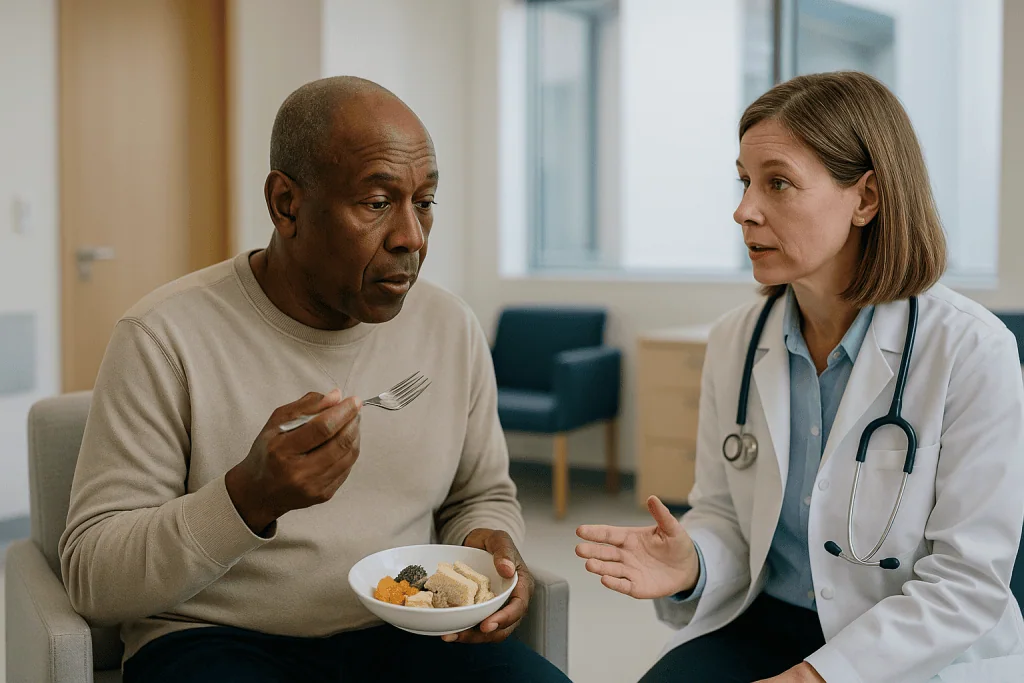
Discharge guidance published by MedlinePlus advises patients to eat several small meals a day, commonly around six, rather than three large ones, and to eat slowly. Teams phrase it in different ways, but the arithmetic is similar: the same day’s nutrition, divided into more sittings.
Small meals also protect against the second problem, poor emptying. Food that sits in a conduit with sluggish squeeze is more likely to come back up when you bend or lie down. Smaller loads clear faster.
What “small” means in practice varies from person to person and evolves over months. In the early weeks, half a cup may feel like plenty. Later, many people find that their tolerance grows as swelling settles and the conduit adapts. Your dietitian will help you calibrate portions to your symptoms, not to a number on a chart.
Two habits make small meals easier to live with. One is a clock or phone reminder, because early on you may not feel hunger and can skip meals without noticing. The other is keeping ready-to-eat portions on hand, such as a boiled egg, cottage cheese, or a small container of soup, so that a meal does not depend on energy you may not have.
Who moves through the diet stages quickly, and who is asked to wait
Diet progression after this operation is deliberately individualized. The join between esophagus and stomach must heal before it is asked to carry solid food, and surgeons judge readiness by clinical signs rather than by the calendar.
People who tend to move sooner are those with an uncomplicated recovery: stable vital signs, no fever, a chest that is clearing well, and, where the team uses one, a reassuring swallow study. Many centers perform a contrast X-ray in which the patient sips a liquid visible on imaging to check that nothing leaks at the anastomosis before oral intake advances. Mayo Clinic notes that eating and drinking are typically restricted at first, then reintroduced gradually.
People who are usually asked to wait include anyone with a suspected leak at the join, a chest infection or pneumonia, a hoarse voice suggesting nerve irritation that affects swallowing safety, or significant delayed emptying of the conduit. Someone who has had chemotherapy or radiation before surgery may also heal more slowly and be kept on tube feeding for longer.
Waiting is not a setback in the moral sense, though it can feel like one. A leak that is fed solid food becomes a serious complication; a leak that is rested and drained usually closes. When your team holds you at liquids for an extra week, they are protecting the repair.
The decision about when to advance, and how fast, sits with the treating team. If you are unsure why you are being held at a stage, ask. A clear explanation often turns frustration into patience.
Liquids, soft foods, then solids: the texture ladder in a diet after esophagectomy
Most programs follow a stepwise pattern, sometimes called a texture ladder. The names and timing differ between hospitals, so treat the table below as an orientation, not a schedule. Your own written plan overrides it.

| Stage | What it usually includes | Why this stage exists |
|---|---|---|
| Clear liquids | Water, broth, diluted juice, gelatin | Tests that swallowing and the join tolerate any intake |
| Full liquids | Milk, smooth soups, thin yogurt, nutrition drinks | Adds calories and protein without chewing |
| Puréed | Blended meats, mashed potato, smooth cereals | Introduces bulk while remaining easy to pass |
| Soft and moist | Flaked fish, scrambled eggs, soft-cooked vegetables | Restores texture with low sticking risk |
| Regular, modified | Most foods, cut small and chewed well | Long-term pattern; some items may never suit |
Two principles run through every rung. Moisture matters: dry, dense foods such as bread crusts, tough meat and rice are the classic culprits when something feels stuck. And chewing matters more than it ever did, because the conduit cannot compensate for a hurried mouth.
Foods to avoid after esophagectomy are less a fixed list than a set of patterns you will learn: very sugary drinks that trigger dumping, large volumes of fluid with meals that fill the conduit before food does, and anything you cannot chew to a paste. Carbonated drinks bother some people because gas expands in a tube with nowhere to go. Others tolerate them fine. Keep a simple food-and-symptom diary for the first month; it is worth more than any generic list.
Reflux after esophagectomy: why lying flat after eating changes for good
Reflux is the backward flow of stomach contents into the throat and chest. After this operation it is common and largely mechanical: the valve that once guarded the top of the stomach has been removed, and the stomach now sits in the chest. When you lie flat, nothing but the food’s own weight holds it down.
Discharge advice from MedlinePlus reflects this: stay upright after eating, avoid meals close to bedtime, and sleep with the head and chest raised rather than flat. Many people use a wedge pillow or raise the head end of the bed; stacking ordinary pillows tends to bend the neck without lifting the chest, which helps less.
Daytime habits count too. Bending from the waist to pick something up shortly after a meal can send fluid upward. Squatting instead, or waiting a while, avoids the problem. Tight waistbands press on a stomach that now has less room to yield.
Nighttime reflux deserves respect beyond discomfort. Stomach contents reaching the airway during sleep can cause coughing fits, a hoarse morning voice, and, in some cases, aspiration pneumonia, a lung infection caused by inhaled material. That is the medical reason behind the unglamorous rule of no late-night snacks. NHS guidance on treatment side effects lists reflux among the expected long-term changes after surgery.
Bile reflux, where bitter green-yellow digestive fluid rather than acid comes up, can also occur because the stomach outlet has been altered. It tastes different and responds differently to medicines, which is why it is worth describing your symptoms precisely to your team rather than simply saying “heartburn.”
Dumping syndrome after esophagectomy: why sugar can hit hard
Dumping syndrome is a group of symptoms that occur when food, especially sugary food, moves from the stomach into the small intestine too quickly. With the stomach’s outlet altered and its nerve control disrupted, rapid emptying is common after esophagectomy.
There are two patterns. Mayo Clinic describes early dumping, which begins within about 10 to 30 minutes of eating, when concentrated food pulls fluid into the gut and stretches it, producing cramping, bloating, nausea, sweating, a racing heart and sometimes diarrhea. Late dumping arrives roughly one to three hours after a meal: the rapid sugar surge prompts a large insulin release, blood sugar then falls too far, and the person feels shaky, weak, faint or confused.
The National Institute of Diabetes and Digestive and Kidney Diseases sets out the dietary approach that is the first line of management: smaller meals, less simple sugar, more protein and fiber, and separating liquids from solids so fluid does not flush food through. Lying down briefly after eating can slow emptying for people with severe early dumping, but this collides directly with reflux advice; a semi-reclined position is often the compromise, and your team should tailor it.
In everyday terms, a glass of fruit juice on an empty stomach is a common trigger. The same fruit eaten whole, with some yogurt, tends to behave. Many people learn their thresholds within a few weeks. Persistent or severe dumping is worth reporting, because dietary changes are not the only option and the treating team can assess whether anything else is warranted.
Food sticking, slow swallowing and the stricture question
A sensation of food catching behind the breastbone is one of the most unsettling experiences after this surgery. In the first weeks it is often swelling at the anastomosis, which narrows the passage temporarily. Small bites, thorough chewing, moist foods and sips of water usually get things moving.
When sticking persists or worsens over weeks, the concern is a stricture: scar tissue at the join that has tightened the opening. Mayo Clinic lists narrowing at the connection as a recognized complication. The usual assessment is an endoscopy, a camera examination through the mouth, sometimes with a contrast swallow study beforehand.
Treatment, when needed, is typically dilation, a procedure in which the narrowed area is gently stretched using a balloon or graded instruments passed through the endoscope. Some people need one session; others need a series as scar tissue re-forms. The decision about whether and when to dilate rests with the gastroenterologist and surgeon.
Patients often ask what they can do to prevent a stricture. Honest answer: not much directly. Chewing well protects you from an impaction, a piece of food that lodges completely, but it does not stop scar tissue forming. What you can do is report early. A stricture caught when soft foods still pass is easier to manage than one discovered after weeks of avoiding solids and losing weight.
A complete blockage, where even saliva will not go down and you find yourself spitting into a cup, is not something to wait out overnight. That situation is covered in the red-flag section below.
Feeding tubes, protein and getting enough nutrition
Many surgical teams place a feeding tube during the operation, most often a jejunostomy, a thin tube that passes through the abdominal wall directly into the small intestine, bypassing the healing join. Liquid formula runs through it, often overnight by pump, so that calories and protein arrive regardless of what you manage by mouth.
People sometimes feel the tube is a sign that eating is failing. It is better understood as scaffolding. In the early weeks, oral intake is small and unpredictable; the tube fills the gap while swallowing skills, appetite and confidence rebuild. Mayo Clinic notes that a feeding tube may remain in place for a period after discharge until oral intake is adequate. The team removes it once you consistently meet your targets by mouth.
Protein is the nutrient that matters most in this period. Healing tissue, immune cells and the muscle you lost during illness and hospital days are all built from it. A practical habit is to eat the protein portion of each small meal first, before vegetables or starch, so that if fullness arrives early the most important part is already in.
Fluids need attention too, because separating drinks from meals to limit dumping can quietly lead to dehydration. Sipping between meals through the day, rather than gulping, usually solves it.
Nutrition drinks and fortified foods have a legitimate role when appetite is low, and your dietitian can suggest options; this article does not endorse any particular product. What matters is the pattern: steady intake, protein at every sitting, and honest reporting when you fall short so the plan can be adjusted rather than quietly abandoned.
What the first weeks of eating at home usually look like
Hospital stays after esophagectomy commonly run one to two weeks, according to Mayo Clinic, and full recovery is measured in months rather than weeks. The eating timeline sits inside that longer arc.
In the first week or two at home, most people are on liquids or puréed foods, often still supported by tube feeding at night. Fatigue dominates. Preparing a meal, eating it slowly and sitting upright afterward can feel like a full activity. Appetite is frequently absent, so eating by the clock rather than by hunger is the norm.
By weeks three to six, many have moved to soft, moist solids and are experimenting with portions. This is when dumping and reflux patterns become clear and when the food diary earns its keep. It is also when the feeding tube is often reviewed for removal, if oral intake is reliable.
Somewhere in months two and three, regular textures return for most people, chewed well and cut small. Meals remain small and frequent. Some foods are quietly dropped for good. Energy improves, though rarely in a straight line.
These ranges are typical patterns described in mainstream patient guidance, not promises. Prior chemotherapy or radiation, complications, age and general fitness all shift them. The NHS is candid that recovery from this surgery can be slow and that eating habits usually change permanently.
A useful mindset for these weeks: measure progress in months, not meals. One bad afternoon of nausea does not undo a good week. Follow-up appointments with the surgical team and dietitian are where the pattern, rather than the single episode, gets judged.
Weight, energy and building a new eating routine
Weight loss after esophagectomy is expected, and it worries people more than almost anything else. Some of it happens before surgery, from the tumor and from treatment. More follows in the weeks after, when intake is small and the body is repairing. NHS guidance names weight loss among the common effects of treatment.
The goal in the first months is usually stabilization rather than regaining everything. Chasing a pre-illness number by forcing large meals tends to backfire into reflux and dumping. Steady intake that stops the slide is the more realistic and safer target, and your dietitian will set it with you.
Routine is the engine that makes small, frequent eating sustainable. A typical day might run: a small protein-based breakfast on waking; a mid-morning snack; a modest lunch; a mid-afternoon snack; an early evening meal; and, if your team allows, a light snack well before bed, followed by an upright hour. Water between meals, not with them. Alarms on the phone until the pattern becomes habit.
Social eating needs rethinking, not abandoning. Ordering an appetizer as a main, asking for a takeout box early, eating a little before an event so you are not tempted to overfill, and telling close friends what has changed all help. Alcohol, which relaxes what remains of the gut’s defenses and irritates the conduit, is worth discussing frankly with your team.
Energy returns as protein intake, sleep and gentle activity improve together. Short walks after meals aid emptying and mood. Over time, most people describe a new normal that is different from the old one but recognizably their own.
Medicines you may hear about, and what they actually do
Several classes of medicine come up in conversations after this operation. The point here is to explain mechanisms so that you can ask informed questions; whether any of them is appropriate for you, and for how long, is a decision for your prescribing clinician.
Acid-suppressing drugs, most often proton pump inhibitors, reduce the amount of acid the stomach produces. With the protective valve gone, less acid means less damage when reflux happens. Many surgical teams use them routinely after esophagectomy, and Mayo Clinic lists reflux as an expected issue that may be managed this way. They do not stop the reflux itself, so the positional habits still matter.
Prokinetic agents are medicines that encourage the stomach to empty. They are sometimes considered when the conduit drains slowly and food sits, causing fullness and regurgitation.
Where bile rather than acid is the problem, different agents that bind or neutralize bile may be discussed, because acid suppressors do little for bile.
Pain control in the early weeks often includes opioids, which slow the gut and can worsen constipation and nausea. Teams generally aim to step them down as healing allows.
Some people also ask about medicines for dumping syndrome. The NIDDK notes that diet is the first approach and that medicines may be considered when dietary changes are not enough; this is a specialist decision.
Never start, stop or change any of these on your own. If a medicine seems unhelpful or is causing side effects, describe exactly what is happening and let the prescriber weigh the options.
What people often get wrong about eating after esophageal cancer surgery
“Once I’m home, I’ll be back to normal meals in a month.” The small-meal pattern is usually lifelong, because the anatomy that demands it is permanent. Portions grow, but the rhythm of frequent small sittings tends to stay, as NHS patient guidance makes clear.
“If I feel full after a few bites, something has gone wrong.” Early fullness is the expected sensation of a small conduit filling. It is a signal to stop, not a symptom of failure.
“Heartburn tablets mean I can lie down after eating.” Acid suppressors reduce the acidity of what comes up; they do not restore the missing valve. Gravity remains the primary defense.
“Sugar-free means dumping-safe.” Some sugar alcohols used as sweeteners also draw fluid into the gut and can cause cramping and diarrhea in sensitive people. The diary, not the label, is the guide.
“Drinking more with meals helps food go down.” Fluid fills the limited space before nutrients do and can accelerate dumping. Small sips to clear a bite are fine; a full glass alongside a meal usually is not.
“A feeding tube means I’m failing at eating.” The tube is a safety net placed at surgery, not a verdict on progress.
“Weight loss means the cancer is back.” Weight loss in the months after esophagectomy is common and mostly nutritional. Persistent or unexplained loss should still be reported, but the first explanation is usually intake.
“Any food that sticks once is off the list forever.” Sticking often relates to swelling, bite size or chewing rather than the food itself. Retry cautiously later, cut smaller, unless your team advises otherwise.
Questions to ask your care team
Appointments after major surgery are short, and the useful questions tend to surface on the drive home. Writing a few down beforehand changes that. These are the ones patients and dietitians most often say they wish had been asked earlier.
- Which diet stage am I on now, and what specifically are you looking for before I move to the next one?
- Do I have a feeding tube, and what targets by mouth would let you remove it?
- How much protein should I aim for each day, and what does that look like in the foods I actually eat?
- Should I separate drinks from meals, and by how long?
- What position should I sleep in, and for how long after eating should I stay upright?
- Do I have a pyloroplasty or other change to the stomach outlet that affects how fast I empty?
- Which of my symptoms sound like dumping, which sound like reflux, and how do you want me to record them?
- Which medicines am I on for acid, emptying or bile, what does each one do, and when will they be reviewed?
- What sensation of food sticking is normal swelling, and what should prompt a call?
- Is alcohol reasonable for me, and if so, when?
- Who do I contact after hours, and what should I say so I am triaged correctly?
- When will I see a dietitian again, and can I contact them between visits?
Bring your food-and-symptom diary. A page of dated entries lets the team see patterns that a verbal summary cannot, and it moves the conversation from reassurance to adjustment. If anything in the answers is unclear, ask for it in writing; recovery brain is real, and written instructions survive the drive home.
When to call your doctor
Most of what follows surgery is uncomfortable rather than dangerous. A few situations are different, and they warrant a call to your surgical team or emergency care rather than waiting for the next appointment. MedlinePlus discharge guidance for esophagectomy lists similar warning signs.
Seek urgent care for any of the following:
- Fever or chills, especially with new chest pain or a racing heart, which can signal a leak at the join or an infection in the chest.
- Increasing shortness of breath, a new cough that brings up discolored or foul material, or pain on breathing.
- Inability to swallow even saliva, or repeated vomiting that prevents you keeping fluids down.
- Vomiting blood or material that looks like coffee grounds, or black, tarry stools.
- Sudden severe abdominal or chest pain that is different from your usual soreness.
- Signs of dehydration: very dark urine, dizziness on standing, confusion, or passing little urine over a day.
- Redness, swelling, leakage or pain at a feeding tube site, or a tube that has fallen out or blocked and cannot be flushed as instructed.
- Faintness, confusion or collapse after meals that does not settle quickly, which can indicate severe late dumping.
- Calf pain or swelling, or sudden breathlessness, which may indicate a blood clot.
Call, though less urgently, for steady weight loss over successive weeks despite following your plan, food sticking that is getting worse rather than better, nightly reflux that wakes you despite positional measures, or any new symptom that worries you. The treating team would rather hear about a problem early than manage a complication late, and the judgment about what a symptom means always sits with them, not with an article.
Frequently asked questions
How many meals a day should I eat after esophagectomy?
Most discharge guidance, including MedlinePlus’s, suggests several small meals a day rather than three large ones, often around six. The exact number depends on how much you can comfortably hold, how well your conduit empties, and your protein and calorie targets. Your dietitian sets the pattern and adjusts it as tolerance changes over the first months.
What is the typical diet after esophagectomy in the first month?
Most people move stepwise from clear liquids to full liquids, then puréed and soft, moist foods, with many still using a feeding tube at night for part of that period. Timing varies by hospital and by how healing is progressing. Your surgical team decides when to advance, sometimes after a swallow study confirms the join is secure.
Why is reflux after esophagectomy so common?
The valve at the top of the stomach is removed with the esophagus, and the stomach now sits in the chest, so nothing but gravity keeps contents down. Staying upright after meals, avoiding food in the hours before bed, and sleeping with the head and chest raised are the mainstays. Acid-suppressing medicines may be prescribed to limit damage but do not stop the flow itself.
What is dumping syndrome after esophagectomy?
Dumping syndrome is a set of symptoms caused by food, especially sugar, passing too quickly from the stomach into the small intestine. Early dumping brings cramping, sweating and a racing heart within about half an hour; late dumping causes shakiness and faintness one to three hours later from a blood sugar drop. Smaller, lower-sugar meals with liquids kept separate are the first-line approach, per NIDDK.
Which foods to avoid after esophagectomy cause the most trouble?
Patterns matter more than a fixed list. Sugary drinks and desserts commonly trigger dumping, dry or dense foods like tough meat, bread crusts and rice tend to stick, and large drinks with meals fill the conduit before food does. Carbonated drinks and alcohol bother some people. A food-and-symptom diary for the first weeks identifies your personal triggers more reliably than any general list.
Will I need a feeding tube, and for how long?
Many teams place a jejunostomy tube during surgery so nutrition continues while the join heals and oral intake is small. Mayo Clinic notes the tube may remain for a period after discharge until eating by mouth is adequate. Removal depends on consistently meeting intake targets, which your dietitian and surgeon assess; there is no fixed duration that applies to everyone.
Is it normal to lose weight after esophageal cancer surgery?
Yes, weight loss in the weeks and months after esophagectomy is common and mostly reflects reduced intake and the body’s repair demands, as NHS guidance describes. The early goal is usually to stabilize weight rather than regain it all quickly. Persistent or unexplained loss should still be reported so the team can review nutrition and exclude other causes.
What does it mean if food feels stuck after esophagectomy?
In the early weeks it is usually swelling at the anastomosis narrowing the passage; small bites, thorough chewing and moist foods typically help. If sticking persists or worsens over weeks, a stricture from scar tissue may have formed, which can be assessed by endoscopy and often treated by dilation. Inability to swallow saliva is urgent and needs same-day care.
Can I drink alcohol or coffee after esophagectomy?
Both irritate the conduit and can worsen reflux, and alcohol may also interact with medicines used during recovery. Many people find small amounts tolerable later on, while others do not. There is no universal rule, so the honest answer is to ask your surgical team when, and whether, reintroducing them makes sense for you.
How long until eating feels normal again after esophagectomy?
Mayo Clinic describes full recovery from esophagectomy as taking months, and eating follows a similar arc. Regular textures often return within the first few months, but small, frequent meals and reflux precautions usually remain lifelong because the anatomy is permanently changed. Most people describe reaching a new normal that differs from before yet becomes routine.
References
This article is for general information only and is not a substitute for professional medical advice. Please consult a qualified doctor about your individual situation.

More from the Blog

Molecular and Genetic Testing Before Targeted Therapy: How Tumor Markers Match the Drug
Molecular testing before targeted therapy examines a tumor sample for specific biomarkers, such as gene mutations, gene fusions, extra gene copies or abnormal proteins,…

CyberKnife vs Standard Radiation Therapy: Sessions, Precision and Who Suits Which
CyberKnife is a brand name for a robotic form of stereotactic radiosurgery, which delivers a small number of high-precision radiation treatments, typically one to…
How a Stomach Cancer Tumor Board Decides Between Surgery First and Chemotherapy First
A stomach cancer tumor board is a scheduled meeting where surgeons, medical and radiation oncologists, radiologists, pathologists and nurse specialists review one patient's scans,…

Reading Your Radiation Therapy Plan: Fractions, Fields and Questions Worth Asking
A radiation therapy plan lists how many sessions (fractions) you will have, the areas being treated (fields), and the nearby structures the team is…
Endometrial Cancer in Women Who Want Children: When Fertility-Sparing Care Is Discussed
Fertility-sparing treatment for endometrial cancer is a closely monitored alternative to hysterectomy that oncologists discuss only in a narrow situation: a low-grade endometrioid tumor…

Neck Dissection Recovery: Drains, Shoulder Stiffness and the Exercises That Restore Movement
Recovery after a neck dissection usually involves a suction drain for the first several days, tightness and numbness in the neck, and some degree…