

Endometrial Cancer in Women Who Want Children: When Fertility-Sparing Care Is Discussed
Key Takeaways
- Fertility-sparing hormone therapy is discussed only for grade 1 endometrioid endometrial cancer that imaging shows is confined to the uterine lining, with no sign of spread.
- Progestins work by restoring the hormonal off switch the lining has lacked, which is why response is measured by repeat biopsy rather than by scans.
- A hormonal IUD can be real treatment, not just contraception, because it delivers progestin directly to the lining at high local concentrations.
- Guideline summaries describe a decision window of roughly 6 to 12 months, after which persistent disease usually shifts the recommendation back to hysterectomy.
- Pooled studies summarized by the NCI report that most selected patients respond but that a substantial minority recur, so monitoring continues even after a clear biopsy.
- Completion hysterectomy is usually advised once childbearing is finished, and endometrial cancer before 50 is a recognized reason to test for Lynch syndrome.
Fertility-sparing treatment for endometrial cancer is a closely monitored alternative to hysterectomy that oncologists discuss only in a narrow situation: a low-grade endometrioid tumor that appears confined to the uterine lining, in someone who wants to carry a pregnancy. It relies on progestin hormone therapy, repeat biopsies every few months, and a plan to return to surgery if the cancer does not respond or once childbearing is complete.
The pathology report arrives on a Tuesday, and the word that lands hardest is not “cancer.” It is “hysterectomy.” She is 34, has been tracking ovulation for two years, and the standard operation for her diagnosis would remove the organ she has been hoping to fill. Her oncologist, to her surprise, does not close the door. Instead the conversation turns to whether fertility sparing treatment for endometrial cancer might be an option, and what it would ask of her.
That conversation happens more often than most people realize, though it still applies to a minority of patients. Endometrial cancer, which begins in the lining of the uterus, is largely a disease diagnosed after menopause. A smaller group is diagnosed before 40, and some of those tumors are slow-growing and caught very early.
This explainer walks through what the fertility-sparing pathway actually involves, who is usually offered it, who is usually steered toward surgery, and why the decision always rests with a specialist team rather than a single appointment.
What fertility sparing treatment for endometrial cancer actually means
Strip away the jargon and the idea is simple: treat the tumor with hormones instead of removing the uterus, watch it closely, and keep surgery in reserve. The National Cancer Institute’s treatment summary describes this approach as reserved for a specific subset of patients, not as a general alternative to hysterectomy.
The hormones in question are progestins, synthetic versions of progesterone, the hormone that in a normal cycle matures and then sheds the uterine lining. Most endometrial cancers in younger patients are of the type driven by too much estrogen signal and too little progesterone counterbalance. Progestin therapy aims to restore that balance from the inside and coax the abnormal lining back toward normal.
Three features define the pathway and separate it from ordinary medical treatment:
- It is conditional. Eligibility depends on tumor type, grade and depth, confirmed before anything starts.
- It is time-limited. If the lining has not responded within a defined window, the recommendation shifts back to surgery.
- It is temporary by design. Even after a full response and a completed family, most guidelines advise eventual hysterectomy because recurrence remains common.
Think of it as a bridge rather than a destination. The bridge exists to carry someone across the years in which they hope to conceive, and the care team walks it with them, checking the planks every few months. Oncologists sometimes call it “conservative management,” which can sound passive. In practice it is anything but: more appointments, more biopsies and more uncertainty than a single operation would bring. People who choose it generally do so with open eyes, because for them the chance to carry a pregnancy outweighs those burdens.
Why hysterectomy is the standard treatment, and why that matters for fertility
For most people with early endometrial cancer, the recommended treatment is surgery to remove the uterus and cervix (hysterectomy), usually together with both fallopian tubes and ovaries. Mayo Clinic and the NHS both describe this as the mainstay for early-stage disease, often performed laparoscopically, with lymph nodes sampled or removed when the tumor features suggest a higher risk of spread.
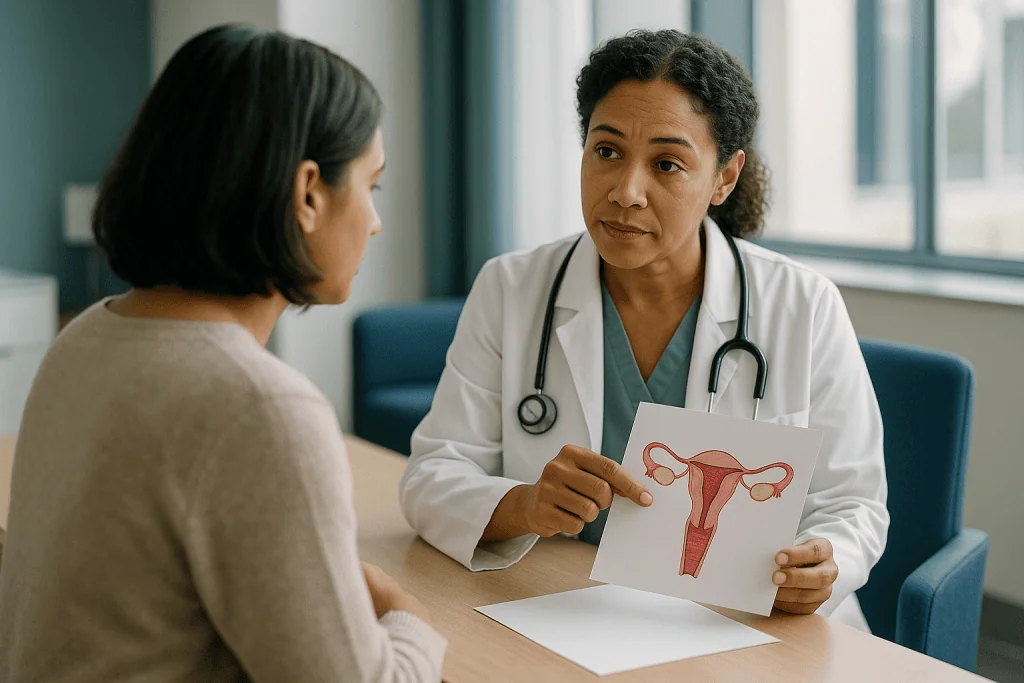
Surgery does two things at once. It removes the cancer, and it tells the pathologist exactly how far it had gone: how deeply into the muscular wall of the uterus (the myometrium), whether into the cervix, whether into nearby nodes. That depth information is what drives decisions about any further treatment. Hormone therapy cannot provide it, which is one reason oncologists are cautious about recommending a non-surgical route.
Removing the ovaries matters as well. In many patients the ovaries are taken out because estrogen produced there could feed any remaining cancer cells, and because a small proportion of younger patients with endometrial cancer also have a separate tumor in an ovary. For someone who wants children, however, the ovaries are the source of eggs and the uterus is the only place a pregnancy can grow. Standard surgery ends the possibility of carrying a child.
That tension is the whole reason fertility-sparing care exists as a discussion. The question the team asks is not “can we avoid surgery?” but “is this particular tumor behaving gently enough that delaying surgery is a reasonable risk for this particular person to take?” The answer depends on the details covered in the next two sections.
Who is usually eligible, and who is usually asked to choose surgery
The eligibility list is short and strict. Guideline summaries, including the NCI’s professional treatment summary, converge on the same criteria:
- The tumor is endometrioid type, the most common and generally slowest-growing form.
- It is grade 1, meaning the cells still look fairly organized under the microscope (“grade” describes how abnormal cells appear; lower grades tend to behave less aggressively).
- Imaging shows no invasion into the muscular wall of the uterus and no spread beyond it.
- There is a strong wish to carry a pregnancy, and the person accepts intensive follow-up.
- There is no medical reason progestins cannot be used, such as a history of certain blood clots.
People are usually guided toward standard surgery when any of those pieces is missing. Higher-grade tumors, non-endometrioid types such as serous or clear-cell cancers, any myometrial invasion, suspicious lymph nodes or ovaries on imaging, or a tumor that does not express progesterone receptors on pathology staining all weigh heavily against hormone therapy. So does a situation where pregnancy itself would be medically unsafe.
Some patients sit in a gray zone: a grade 2 tumor, or an MRI that cannot quite rule out shallow invasion. Teams handle these case by case, often at a multidisciplinary tumor board where surgeons, pathologists, radiologists and fertility specialists review the same images together. A second pathology opinion is common, because distinguishing complex atypical hyperplasia (a precancerous overgrowth of the lining) from grade 1 cancer is genuinely difficult, and the two carry different risks.
Age is not an eligibility criterion in itself, but reproductive realities shape the conversation. Someone in their late thirties may be counseled about the time hormone therapy consumes and may be referred to a fertility specialist early.
How the workup decides eligibility: biopsy, MRI and expert review
Before anyone discusses hormones, the team wants three things established beyond reasonable doubt: what the tumor is, how aggressive it looks, and where it sits.

The “what” and “how aggressive” come from tissue. An office endometrial biopsy may have made the initial diagnosis, but many centers prefer a more thorough sample obtained by hysteroscopy, a procedure in which a thin camera is passed through the cervix to view the uterine cavity, combined with dilation and curettage (D&C), which scrapes lining tissue for examination. Johns Hopkins and Mayo Clinic describe these as the standard tools for diagnosing endometrial cancer. A larger, directed sample lowers the chance that a small focus of higher-grade cancer was missed.
The “where” comes mainly from pelvic MRI with contrast, which gives the clearest view of the junction between lining and muscle. Transvaginal ultrasound is often done too, and may be the first test to flag a thickened lining. Imaging also examines the ovaries and lymph nodes. Blood tests may include CA-125, a protein marker that can rise with more extensive disease, though it is not a diagnostic test on its own.
Pathologists then look for progesterone receptors on the tumor cells, since progestin therapy depends on them. A tumor with few receptors is less likely to respond.
None of these tests is perfect. MRI can underestimate shallow invasion, and biopsy samples only part of the lining. That residual uncertainty is why the fertility-sparing pathway builds in repeat sampling rather than trusting the opening workup alone. The team is not just confirming eligibility; it is setting a baseline against which every later biopsy will be compared.
How progestin therapy for endometrial cancer works inside the uterus
Every month, in a cycling body, estrogen thickens the lining of the uterus and progesterone then stops the growth, matures the tissue and triggers shedding if no pregnancy occurs. Many younger patients with endometrial cancer have spent years with the first half of that rhythm and not the second. Irregular or absent ovulation, which is common in polycystic ovary syndrome (PCOS), means long stretches of estrogen exposure without the progesterone “off switch.” Excess body fat adds to the estrogen supply, because fat tissue converts other hormones into estrogen.
Progestin therapy for endometrial cancer supplies that missing signal continuously. At the cellular level, progestins bind to progesterone receptors in the lining and change which genes are switched on. The result is slower cell division, maturation of glandular cells, thinning of the lining, and in a responding tumor, replacement of abnormal tissue by normal or inactive endometrium. Pathologists can see this shift under the microscope, which is why biopsy, not imaging, is the main way response is judged.
Two routes deliver the hormone. Oral progestins act throughout the body. A levonorgestrel-releasing intrauterine device delivers progestin directly to the lining, producing very high local concentrations with lower levels elsewhere. Some teams use both together.
The mechanism explains both the promise and the limits. Progestins work on tumors that still listen to hormonal signals; cancers that have lost their receptors, or that have grown into muscle where the local hormone environment differs, are far less likely to respond. It also explains why therapy takes months. Tissue has to remodel, not simply shrink, and the team will usually not judge success or failure after a single early biopsy.
Oral progestin, hormonal IUD or hysteroscopic resection: how the options compare
Teams choose among a few approaches, sometimes in combination. The table summarizes how they differ in practice; the choice always rests with the treating specialists, who weigh tumor features, side-effect tolerance and personal circumstances.
| Approach | How it acts | Commonly discussed considerations |
|---|---|---|
| Oral progestin | Systemic hormone exposure acting on receptors throughout the lining | Longest track record; body-wide side effects such as weight gain, mood change, bloating and a modest increase in clot risk |
| Hormonal IUD for endometrial cancer | Progestin released directly into the uterine cavity | Fewer systemic effects; irregular bleeding early on; device sits in place for years and is removed before trying to conceive |
| Combination (oral plus IUD) | Local and systemic exposure together | Used in some centers to intensify treatment; adds side effects of both |
| Hysteroscopic resection plus progestin | Visible tumor shaved away through the hysteroscope, followed by hormone therapy | Removes bulk disease and gives a larger pathology sample; small risk of scarring inside the uterus that could affect later pregnancy |
The hormonal IUD deserves a clarification, because many patients know it only as contraception. It is the same type of device, placed in the same way, but here it serves as treatment. Its appeal is direct delivery and fewer whole-body effects; its drawback is that it prevents pregnancy while in place, so the plan includes removal once the lining has cleared.
Oral progestins remain the most studied option, and much of the evidence in systematic reviews summarized by the NCI comes from them. Hysteroscopic resection is a newer addition, used selectively, with the trade-off that any procedure inside the uterus carries a small risk of adhesions.
No approach removes the need for monitoring, and none has been proven superior across all patients. The comparison is about fit, not ranking.
What the first weeks and months of treatment usually look like
The opening stretch is quieter than most people expect. Once eligibility is confirmed and the team agrees on an approach, treatment begins with a prescription or an IUD placement, and then the waiting starts. There is no visible progress bar.
During the first weeks, side effects tend to dominate attention. Oral progestins commonly bring bloating, breast tenderness, fatigue, headaches, mood shifts and appetite changes; an IUD often causes spotting or irregular bleeding for several weeks as the lining adjusts. Clinicians usually ask patients to report any leg swelling, chest pain or breathlessness promptly, since progestins carry a small clot risk.
Lifestyle conversations often run alongside. Because excess estrogen from fat tissue is part of the biology, many teams discuss nutrition, physical activity and, where relevant, PCOS management as supportive measures. These are framed as part of the plan rather than conditions of it, and weight is approached as a medical factor, not a judgment.
The first formal check typically comes a few months in. The NCI and Mayo Clinic describe follow-up endometrial sampling at roughly 3-month intervals (often 3–6 months in practice) while on hormone therapy. That first biopsy is a baseline comparison, not a verdict; tissue remodeling takes time, and teams usually look for a trend across more than one sample.
Many people describe this period as emotionally harder than a scheduled operation would have been. A surgery has a date; hormone therapy has a calendar of biopsies. Oncology social workers, psycho-oncology services and patient groups can be part of the team, and asking for that support early is sensible rather than a sign of struggling.
How doctors measure response, and what happens if the cancer does not respond
Response is judged on tissue. At each follow-up, a biopsy or hysteroscopic sample is examined for whether cancer cells are still present, whether the lining shows the expected progestin effect, and whether anything looks more aggressive than before. Imaging may be repeated if symptoms or findings change, but the microscope does the deciding.
Pathologists generally describe findings in one of a few ways:
- Complete response: no cancer or atypical hyperplasia remains.
- Partial response: fewer or less abnormal cells, but disease still present.
- Stable disease: little change.
- Progression: higher grade, more extensive disease, or evidence of invasion.
Guideline summaries, including the NCI’s, describe a decision window of roughly 6 to 12 months. A lining that has fully cleared by then allows the next phase, usually an attempt at conception. A lining that is improving but not clear may earn a few more months on therapy. Persistent disease at the end of the window, or any progression at any point, typically shifts the recommendation to hysterectomy. Delaying beyond that point in the hope of a late response is where risk accumulates, because the tumor could invade muscle or spread while unseen.
Response, when it comes, is not permanent. Systematic reviews summarized by the NCI report that a substantial share of patients who respond later develop recurrence in the lining, often within a few years. Many of those recurrences respond to a second course of progestin, but each cycle extends the period of uncertainty. This is the honest core of fertility-sparing care: it trades a definitive operation for a monitored interval, and the team’s job is to keep that interval as safe as evidence allows.
What the evidence says about fertility sparing treatment for endometrial cancer
The evidence base is real but modest. There are no large randomized trials comparing hormone therapy with surgery for early endometrial cancer; such a trial would be ethically difficult. What exists is a body of observational studies and the systematic reviews that pool them, which the NCI’s professional treatment summary cites when describing fertility-sparing options.
Across those reviews, a few patterns hold. A majority of carefully selected patients with grade 1, lining-confined endometrioid cancer show a complete response to progestin therapy, with figures in pooled analyses commonly falling in the range of roughly two-thirds to three-quarters. A meaningful minority, often around one-third of responders, later recur. Live birth occurs in a smaller proportion of the original group, with many pregnancies achieved using assisted reproduction. The NCI summary presents these as outcomes in selected populations, not as expectations for any individual.
Several caveats matter when reading those numbers. The studies mix endometrial cancer with atypical hyperplasia, which responds more readily, so cancer-only figures tend to be somewhat lower. Definitions of response and lengths of follow-up vary. Patients in published series were chosen under strict criteria at experienced centers, which limits how far the results generalize.
Deaths from endometrial cancer in these series are rare but documented, usually in patients whose disease progressed during therapy or who declined surgery after non-response. That is the clearest reason guidelines emphasize the time window and the return to surgery.
Put plainly: for the right tumor in the right person, hormone therapy is a recognized option with a reasonable chance of clearing the lining for a time. It is not a replacement for surgery, and the evidence does not support presenting it as one.
Pregnancy after endometrial cancer: trying to conceive once the lining has cleared
A clear biopsy changes the tempo. The team’s goal shifts from treating the lining to helping a pregnancy begin quickly, because the longer the uterus sits exposed to its underlying hormonal environment, the greater the chance of recurrence.
Most guidelines, including the NCI summary, encourage prompt referral to a reproductive endocrinologist, a fertility specialist, often before treatment even ends. The reasons are practical. Many patients in this group have PCOS or irregular ovulation, the same factors that contributed to the cancer, so natural conception may be slow. Time on progestins has already passed. Assisted reproduction, including ovulation induction or in vitro fertilization, can shorten the path, and there is also the option of retrieving and freezing eggs or embryos before hormone therapy as insurance.
Concerns about fertility medicines raising estrogen and stimulating the lining are reasonable and are discussed case by case. Reviews summarized by the NCI have not shown that assisted reproduction worsens cancer outcomes in this setting, but data are limited, and protocols are usually planned jointly by the oncology and fertility teams.
Pregnancy itself produces very high progesterone levels, which is one reason some clinicians regard it as protective during those months. It is not treatment, and routine monitoring resumes after delivery.
Obstetric care is generally standard, though a history of hysteroscopic resection or repeated curettage may prompt extra attention to the placenta. After the baby arrives, the lining is sampled again, and the conversation about the longer term, covered next, resumes. Patients often describe this phase as hopeful and anxious in equal measure, and most teams expect both.
After childbearing is complete: why the conversation returns to hysterectomy
The uterus that grew a cancer once remains a uterus with the same underlying risk factors. That is why most guideline summaries, including the NCI’s, advise completion hysterectomy once a person no longer wishes to carry a pregnancy, even after a full response and a healthy delivery. Recurrence rates in the published series make a persuasive case: a substantial minority of responders see the disease return, and each recurrence is another chance for a more aggressive form to emerge.
The timing is individual. Some people proceed within months of giving birth; others want a second child and continue monitoring in the interval, usually with progestin maintenance such as a hormonal IUD to keep the lining quiet. Teams generally discourage open-ended delay once family plans are finished.
Whether to remove the ovaries at that operation is a separate question for premenopausal patients. Keeping them avoids surgical menopause and its effects on bone, heart and quality of life. Removing them eliminates a source of estrogen and the small risk of a coexisting ovarian tumor. Cleveland Clinic and Mayo Clinic both note that ovarian preservation may be considered in selected younger patients with early disease; the decision weighs age, tumor features and any hereditary cancer syndrome.
Genetics enters here too. Endometrial cancer before 50 is a recognized trigger for testing for Lynch syndrome, an inherited condition that raises the risk of endometrial, ovarian and colorectal cancers. A positive result shapes not only the surgical plan but also colonoscopy screening and the health of relatives. Many centers test the tumor for the relevant protein markers at diagnosis, so this conversation often starts long before the final operation.
What people often get wrong about early stage endometrial cancer and fertility
Misunderstandings cluster around a few points, and correcting them early saves distress later.
“Early stage means hormone therapy is always an option.” Stage describes extent; grade and type describe behavior. An early-stage tumor that is grade 3 or non-endometrioid is usually not a candidate for hormone therapy, however small it is.
“The IUD is just birth control, so it can’t be real treatment.” The device delivers progestin directly to the lining at high local concentrations. Guideline summaries recognize it as a legitimate fertility-sparing approach, alone or with oral therapy.
“A clear biopsy means the cancer is gone for good.” A clear biopsy means no disease was found in the tissue sampled at that moment. Recurrence after response is common, which is why monitoring continues and why hysterectomy is usually advised after childbearing.
“If it hasn’t responded yet, more time will fix it.” The 6-to-12-month window in guideline summaries exists because risk rises with delay. Persistence or progression beyond that point is a signal to move to surgery, not to wait.
“Getting pregnant is treatment.” Pregnancy raises progesterone and may be protective during those months, but the cancer biology remains. Postpartum sampling and long-term planning still apply.
“This is only for women with PCOS or higher body weight.” Those factors are common in this group, but eligibility rests on tumor features, not body type. Many eligible patients have neither.
“Fertility sparing is the gentler choice.” It avoids one operation but adds years of biopsies, side effects and uncertainty. For some people that is clearly worth it. Calling it gentler misses what it asks.
Questions to ask your care team
Appointments after a cancer diagnosis move quickly, and the most useful questions are the ones written down in advance. These are the ones that tend to change decisions.
- What exactly is the type and grade of my tumor, and has a second pathologist reviewed the slides?
- What does my MRI show about depth, and how confident is the team that there is no invasion into the muscle?
- Does my tumor express progesterone receptors, and does that affect the recommendation?
- Which approach is being proposed for me: oral progestin, a hormonal IUD, both, or hysteroscopic resection first, and why that one?
- How often will I have biopsies, and what finding at each one would change the plan?
- What is the time window after which you would recommend moving to surgery?
- Should I see a fertility specialist now, and is freezing eggs or embryos before treatment worth discussing?
- Has my tumor been tested for Lynch syndrome markers, and should I have genetic counseling?
- If I respond and have a child, what is the plan afterward, and would my ovaries be kept?
- Who do I contact between appointments if bleeding, pain or side effects worry me?
Bringing someone along to take notes helps; so does asking for the pathology and imaging reports in writing. Many teams are glad to arrange a joint appointment with oncology and reproductive medicine, which avoids the two services giving slightly different timelines. If any answer feels unclear, asking for it to be explained a second way is normal and expected.
A last question worth asking is the simplest: “If I were your family member, what would you want me to understand about this choice?” Good clinicians answer it honestly.
When to call your doctor
Fertility-sparing care depends on noticing change between scheduled visits, so the team will want to hear from you rather than wait. Contact your care team promptly if you notice any of the following:
- Heavy vaginal bleeding, bleeding that soaks through protection hourly, or bleeding that is new or heavier than the pattern your team described as expected.
- Pelvic or lower abdominal pain that is new, worsening or not relieved by the measures you were advised.
- Fever, foul-smelling discharge or feeling unwell after a biopsy, hysteroscopy or IUD placement, which can signal infection.
- Swelling, warmth or pain in one leg, or sudden chest pain, breathlessness or coughing up blood, which may indicate a blood clot and need emergency assessment.
- Severe headache, visual disturbance, or weakness or numbness on one side of the body.
- Persistent low mood, anxiety or thoughts of self-harm; emotional strain during prolonged monitoring is common and treatable.
- A missed or delayed follow-up biopsy for any reason, so the schedule can be rebuilt rather than quietly slipping.
Postmenopausal-style bleeding patterns, unexpected weight loss or new bowel or bladder symptoms also deserve a call, even if the last biopsy was clear.
None of these signs means the cancer has returned. Most will turn out to be side effects or unrelated issues. The point of calling is that your team, who knows your pathology and your timeline, is the only group able to judge whether a change warrants an earlier biopsy, a scan or simply reassurance. Fertility-sparing treatment works as a shared watch, and it works best when the person at the center of it speaks up early.
Frequently asked questions
Can I keep my uterus if I have endometrial cancer?
In a minority of cases, yes, for a limited time under close monitoring. Hormone therapy that preserves the uterus is considered when the tumor is low-grade endometrioid type, appears confined to the lining on MRI, and the person wants to carry a pregnancy. Most guidelines still advise hysterectomy once childbearing is complete because recurrence is common.
How does progestin therapy for endometrial cancer work?
Progestins supply the hormonal signal that normally stops the uterine lining from overgrowing. They bind to progesterone receptors in lining cells, slowing division and encouraging the tissue to mature and thin. Over months, a responding tumor is replaced by normal or inactive endometrium. Tumors lacking progesterone receptors or growing into muscle are much less likely to respond.
Is a hormonal IUD for endometrial cancer an accepted treatment?
Yes, it is recognized in guideline summaries as one fertility-sparing approach, used alone or alongside oral progestin. The device releases progestin directly into the uterine cavity, producing high local levels with fewer whole-body effects. It prevents pregnancy while in place, so the plan includes removal once biopsies show the lining has cleared and conception is the goal.
How long does fertility-sparing treatment take before I know if it is working?
Response is usually assessed by biopsy every few months, and guideline summaries describe a decision window of roughly 6 to 12 months. Some tumors clear within the first several months; others improve gradually. Persistent or worsening disease at the end of that window typically leads to a recommendation for surgery rather than further waiting.
What are the chances the cancer comes back after hormone treatment?
Recurrence is common enough that monitoring never fully stops. Systematic reviews summarized by the NCI report that a substantial minority of patients who respond, often around one in three, later see disease return in the lining. Many recurrences respond to a second course of progestin, but each one extends the period of risk and is a reason guidelines favor eventual hysterectomy.
Is pregnancy after endometrial cancer safe for me and the baby?
Published series summarized by the NCI describe healthy pregnancies after a complete response, usually with standard obstetric care. Teams encourage conceiving promptly after the lining clears, often with a fertility specialist’s help, since underlying hormonal factors can slow natural conception. Prior hysteroscopic resection may prompt extra attention to the placenta. Your oncology and obstetric teams plan this together.
Should I freeze my eggs before starting treatment?
It is worth raising early. Hormone therapy does not damage eggs, but it consumes time, and many patients in this group already have ovulation problems. Retrieving and freezing eggs or embryos before or during treatment can act as insurance. Whether it suits you depends on age, ovarian reserve and tumor details, which the oncology and fertility teams assess jointly.
Why is early stage endometrial cancer in a younger woman linked to PCOS or weight?
Both conditions increase estrogen exposure without enough progesterone to balance it. Irregular ovulation in PCOS means long stretches without the progesterone phase of the cycle, and fat tissue converts other hormones into estrogen. The lining is stimulated to grow for years. Not everyone with this cancer has these factors, and eligibility for hormone therapy rests on tumor features, not body type.
What side effects should I expect from progestin therapy?
Oral progestins commonly cause bloating, breast tenderness, fatigue, mood changes, headaches and appetite or weight changes, and carry a small increase in blood clot risk. A hormonal IUD more often causes irregular bleeding or spotting for several weeks. Report leg swelling, chest pain or breathlessness promptly. Your prescribing clinician decides how to manage any effects.
Will I need a hysterectomy eventually even if the treatment works?
Most guideline summaries advise completion hysterectomy once you no longer wish to carry a pregnancy, because the uterus retains its original risk and recurrence is common. Timing is individual, and whether the ovaries are removed depends on age, tumor features and any hereditary syndrome. The decision is made with your treating team, not by any single rule.
References
This article is for general information only and is not a substitute for professional medical advice. Please consult a qualified doctor about your individual situation.

More from the Blog
How a Stomach Cancer Tumor Board Decides Between Surgery First and Chemotherapy First
A stomach cancer tumor board is a scheduled meeting where surgeons, medical and radiation oncologists, radiologists, pathologists and nurse specialists review one patient's scans,…
Reading Your Radiation Therapy Plan: Fractions, Fields and Questions Worth Asking
A radiation therapy plan lists how many sessions (fractions) you will have, the areas being treated (fields), and the nearby structures the team is…

Neck Dissection Recovery: Drains, Shoulder Stiffness and the Exercises That Restore Movement
Recovery after a neck dissection usually involves a suction drain for the first several days, tightness and numbness in the neck, and some degree…
Follow-Up After Liver Cancer Treatment: What Repeat Imaging and Blood Tests Track
After liver cancer treatment, follow-up usually combines repeat imaging (contrast CT or MRI, sometimes ultrasound) with blood tests such as alpha-fetoprotein and liver function…
Leukemia Chemotherapy in Phases: Induction, Consolidation and Maintenance Explained
Leukemia chemotherapy is usually delivered in phases. Induction aims to clear the bone marrow of leukemia cells and reach remission; consolidation uses further chemotherapy…

When Is a Small Kidney Tumor Watched, and When Is Surgery Recommended?
Small kidney tumors, generally under 4 cm, are often monitored with periodic scans because many grow slowly and some are benign. Surgery, usually a…