

Estrogen Dominance: Is It Real? What Doctors Say About the Popular Diagnosis

Key Takeaways
- Estrogen dominance has no entry in the WHO International Classification of Diseases and no agreed test or threshold, which is why clinicians treat it as a theory rather than a diagnosis.
- Progesterone is near zero for roughly the first half of every menstrual cycle, so a fixed estrogen-to-progesterone ratio cannot define health.
- Anovulatory cycles in perimenopause and polycystic ovary syndrome are the real mechanism of unopposed estrogen, and both are recognized, manageable conditions.
- Alcohol is the dietary factor most consistently linked to higher estrogen in women; soy, despite its reputation, is not shown to raise blood estrogen in human trials.
- Saliva and dried-urine hormone ratios are not used in clinical endocrinology to diagnose or guide treatment, while timed blood tests are.
- Over-the-counter progesterone creams have inconsistent absorption and have not outperformed placebo for perimenopausal symptoms in randomized trials.
Estrogen dominance is not a recognized medical diagnosis. The term describes a theory that estrogen is too high relative to progesterone, but no accepted test, threshold or diagnostic code defines it. Doctors do recognize genuinely high estrogen, perimenopause, polycystic ovary syndrome and thyroid disease, which can cause the symptoms often attributed to it. Evaluation by a clinician, not an online checklist, sorts out the cause.
Scroll for ten minutes on any short-video app and a confident voice will tell you that your bloating, your heavy periods, your tender breasts and your 2 a.m. wakefulness all trace back to one culprit: estrogen dominance. The videos arrive with a hashtag, a saliva test kit and, often, a supplement link. As of September 2026, the phrase draws more searches than some diseases that fill hospital wards, and many of the people searching are women in their forties who feel, correctly, that something in their bodies has shifted.
What they are rarely told is that the term began in a 1990s self-help book, not in an endocrinology textbook, and that no major medical body lists it as a condition. That gap between a wildly popular label and a thin evidence base is exactly where confusion, and sometimes harm, grows.
This piece walks through what the hormones actually do, which real conditions hide behind the viral checklist, what the studies show, and how to get useful answers from a clinician rather than an algorithm.
Where did the term estrogen dominance come from?
The phrase has a traceable birthplace. In the mid-1990s an American family physician, John R. Lee, published popular books arguing that modern women suffered from relative progesterone deficiency and that over-the-counter progesterone cream was the remedy. He coined “estrogen dominance” to describe estrogen acting unopposed, meaning without enough progesterone to balance its effects on tissues such as the uterine lining and breast.
The idea had intuitive appeal. Estrogen builds; progesterone calms and stabilizes. If the second hormone runs short, the first seems to run wild. Lee’s books sold in the millions, and the term migrated into alternative-medicine clinics, wellness blogs and eventually the supplement aisle.
What it never did was pass through the ordinary gates that turn a hypothesis into a diagnosis: agreed definitions, validated measurement, controlled trials showing that treating the “imbalance” improves outcomes. Endocrinology, the branch of medicine that studies hormones, continued to classify disorders by their cause, for example an ovarian tumor producing excess estrogen or a failing ovary producing too little, rather than by a ratio between two hormones that fluctuates by the hour.
That history matters because it explains why your doctor may look puzzled when you mention the term, while your favorite creator treats it as settled fact. Both are responding to the same words with very different reference points. One is drawing on a framework that was marketed before it was tested; the other is drawing on a framework that only names what it can define and measure. Understanding that split is the first step toward a conversation that actually gets you somewhere.
Is estrogen dominance a real diagnosis? What doctors say
Ask an endocrinologist or gynecologist whether estrogen dominance is real and you will usually get a two-part answer. The symptoms people describe are real. The diagnostic label is not.

The World Health Organization’s International Classification of Diseases, the coding system hospitals worldwide use to record conditions, has no entry for estrogen dominance. Neither do the major gynecology or endocrine societies in the United States, the United Kingdom or Europe. Mainstream patient resources such as Cleveland Clinic’s overview of estrogen describe high estrogen as a finding with specific causes, not as a stand-alone syndrome, and they list the conditions a clinician would actually test for.
Why the reluctance? Three reasons dominate. First, the concept rests on a ratio, estrogen to progesterone, that has no agreed normal range. Progesterone is near zero for the first half of every menstrual cycle, so by the theory’s own logic every woman is “estrogen dominant” for two weeks a month. Second, the symptom list is so broad, from fatigue to weight gain to irritability, that it overlaps with thyroid disease, depression, iron deficiency, sleep disorders and ordinary perimenopause. A label that explains everything explains nothing. Third, treatments sold under the banner have not been shown in randomized trials to outperform placebo for those symptoms.
None of this means a doctor will dismiss you. It means the honest clinical response is to ask what is actually going on: Are your periods changing? Is your thyroid working? Are you anemic from heavy bleeding? Is this perimenopause? Those questions have answers that can be measured and acted on, which is more than the viral label offers.
What changed recently
The term is three decades old, so why does it feel brand new? Several shifts converged.
The loudest is distribution. A theory that once lived in paperback books and a handful of clinics now spreads through short video, where a 45-second checklist outperforms a 45-minute consultation for reach. Symptom-matching content is engineered to feel personal, and estrogen-related complaints are common enough that almost anyone will tick a few boxes.
The second shift is testing. Direct-to-consumer hormone kits, particularly saliva and dried-urine panels, are marketed heavily alongside the term. MedlinePlus, the National Library of Medicine’s consumer service, explains that clinicians order estrogen measurements in blood for specific reasons, such as evaluating puberty, fertility or menopause, and interpret them against the cycle phase. A single home result, read without that context, invites over-interpretation.
Third, the broader menopause conversation has opened up. Harvard Health and the NHS now publish detailed guides to perimenopause, the years of fluctuating hormones before periods stop, and more women recognize their symptoms in those descriptions. Perimenopause genuinely involves erratic estrogen peaks alongside falling progesterone, which is the kernel of truth the viral label exploits.
Finally, the supplement market has grown around it. Products containing diindolylmethane (DIM), calcium-D-glucarate or chasteberry are sold as “estrogen balancers,” even though the NIH Office of Dietary Supplements reminds consumers that supplements are not reviewed for effectiveness before sale.
Put together, a dated hypothesis, a new delivery channel, easy testing and a willing market produced a trend. What has not changed is the underlying evidence, which remains thin.
How estrogen and progesterone actually work in the body
To judge the theory you need the biology, and it is more elegant than any checklist suggests.
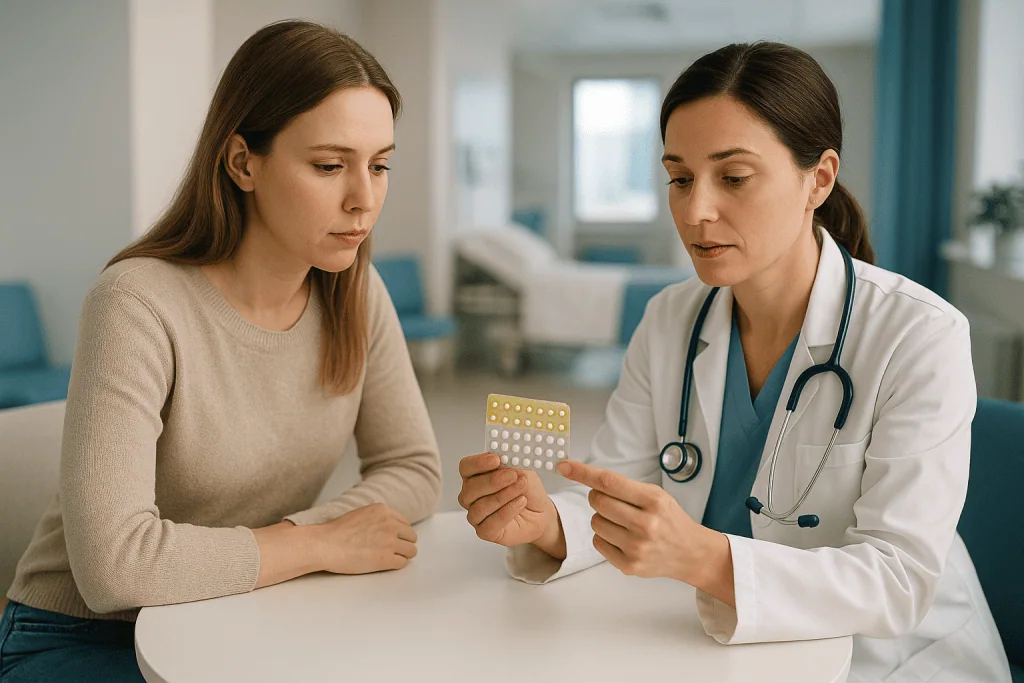
Estrogen is a family of hormones, chiefly estradiol in the reproductive years, made mostly by the ovaries and, in smaller amounts, by fat tissue and the adrenal glands. It thickens the uterine lining, supports bone density, influences cholesterol, keeps vaginal tissue supple and acts on the brain, which is why hot flashes and mood changes track estrogen swings. Johns Hopkins Medicine’s overview of estrogen’s effects lists action on nearly every organ system.
Progesterone is produced mainly by the corpus luteum, the temporary gland that forms in the ovary after an egg is released. Its job is to mature the uterine lining and hold a pregnancy. If no pregnancy occurs, the corpus luteum collapses, progesterone falls, and a period follows. Critically, progesterone is only present in meaningful amounts after ovulation. In a textbook 28-day cycle it is near its floor for roughly the first 14 days.
That timing demolishes the idea of a fixed healthy ratio. Estrogen rises steadily through the first half of the cycle while progesterone sits at zero; both peak in the second half; both plunge before menstruation. Hormone levels also vary by time of day, by lab method and from one cycle to the next. A woman’s estradiol can legitimately range several-fold within a single month.
Doctors therefore reason from patterns, not snapshots: regular ovulatory cycles, response to treatment, imaging of the ovaries and uterus, and specific blood tests ordered on specific cycle days. The question is never “is estrogen winning?” but “is the system cycling normally, and if not, why?”
Signs of estrogen dominance: what the viral checklists get right and wrong
The checklists circulating online typically list bloating, breast tenderness, heavy or irregular periods, mood swings, weight gain around the hips, fatigue, headaches, low libido, poor sleep and fibroids. Some run to 30 items.
What they get right is that several of these are genuine features of high or fluctuating estrogen. Cleveland Clinic’s patient information on estrogen notes that elevated levels can be associated with breast tenderness, irregular bleeding, fibroids and worsened premenstrual symptoms. Heavy periods in particular deserve attention, because the uterine lining thickens under estrogen and sheds more heavily when progesterone is absent, which happens in cycles where ovulation fails.
What they get wrong is specificity. Fatigue, weight change, low mood and poor sleep are among the most common complaints in any clinic and have dozens of causes. Hypothyroidism, an underactive thyroid gland, produces fatigue, weight gain, heavy periods and low mood all at once and is diagnosed with a simple blood test. Iron deficiency from heavy bleeding causes exhaustion and brain fog. Sleep apnea, depression and perimenopause each overlap heavily with the list.
A checklist that matches everyone is not a diagnostic tool; it is a mirror. The more honest approach is to notice which symptoms are measurable and time-bound. Has your cycle shortened or lengthened by more than a week? Are you soaking through protection hourly? Did breast tenderness appear for the first time after 40? Those details help a clinician decide whether to check thyroid function, a complete blood count, a pelvic ultrasound or hormone levels. The symptom is the starting point. The label is not the destination.
What really causes high estrogen levels?
Doctors do see high estrogen. They just name the cause rather than the ratio. The recognized reasons fall into a handful of categories, and a table makes the landscape clearer than prose.
| Recognized cause | How it raises estrogen | How it is identified |
|---|---|---|
| Anovulatory cycles (perimenopause, PCOS) | No ovulation means no progesterone, so estrogen acts unopposed on the uterine lining | Cycle history, timed blood tests, ultrasound |
| Excess body fat | Fat tissue converts androgens to estrogen via the enzyme aromatase | Clinical assessment; no single test |
| Estrogen-containing medicines | Combined contraceptives and menopausal hormone therapy add external estrogen | Medication review by the prescriber |
| Liver disease | The liver clears estrogen; impaired function slows breakdown | Liver function tests, imaging |
| Rare ovarian or adrenal tumors | Tumor tissue secretes estrogen directly | Blood levels well above range, imaging |
| Heavy alcohol use | Alters liver metabolism of estrogen | History, liver tests |
Two entries matter most for the people searching this topic. Anovulation, meaning cycles in which no egg is released, is the real mechanism behind “unopposed estrogen,” and it is common in perimenopause and in polycystic ovary syndrome, a condition of irregular ovulation and excess male-type hormones. Fat tissue’s role explains why weight and estrogen are linked, though the relationship is bidirectional and does not justify shaming anyone.
Notice what the table omits: no stress-induced “progesterone steal,” no plastic water bottles, no gut “estrobolome” as a confirmed clinical cause. Those ideas have laboratory interest but no place yet in diagnostic practice.
Perimenopause: the real story behind many estrogen dominance symptoms
If one legitimate condition hides inside the viral label, it is perimenopause. Mayo Clinic describes it as the transition that can begin in the forties, sometimes earlier, and last several years before periods stop for good. The defining feature is not a steady decline in estrogen but chaos.
In early perimenopause the ovaries respond unpredictably to signals from the brain. Some cycles produce no egg, so progesterone never rises and the period that follows can be late and heavy. Other cycles produce estrogen surges higher than those of a woman in her twenties, bringing breast tenderness, bloating and migraine. Cycles shorten, then lengthen, then skip. Sleep fragments, often before hot flashes arrive, and mood becomes less steady. Harvard Health calls it a rocky road for good reason.
Read that paragraph against the online symptom lists and the overlap is almost total. The difference is that perimenopause is a recognized stage with a known mechanism, a predictable trajectory and evidence-based options for managing symptoms, including menopausal hormone therapy and non-hormonal treatments that a clinician can discuss.
Diagnosis is clinical. The NHS advises that in women over 45 with typical symptoms, blood tests are usually unnecessary because hormone levels swing so widely that a single reading can mislead. Younger women, or those with atypical patterns, may be tested to rule out other causes.
So when a creator says your bloating and heavy periods mean estrogen dominance, a doctor may translate: you may be in perimenopause, which is normal, can be managed, and sometimes masks conditions such as fibroids or thyroid disease that deserve their own evaluation. Same symptoms, more accurate map, better options.
What the evidence actually says, graded by strength
Evidence comes in tiers. Randomized controlled trials, in which people are assigned by chance to a treatment or placebo, sit at the top. Observational studies, which track what happens to groups without assigning treatment, sit lower because they cannot separate cause from coincidence. Expert opinion and mechanistic reasoning sit lower still.
Applying that ladder to estrogen dominance produces a clear picture.
Strong evidence (randomized trials): Menopausal hormone therapy improves hot flashes and night sweats. Progestogens protect the uterine lining in women who take estrogen and still have a uterus. Hormonal contraceptives regulate bleeding in anovulatory cycles. These are established findings that support the biological premise that unopposed estrogen thickens the uterine lining.
Moderate evidence (consistent observational data): Higher body fat is associated with higher circulating estrogen after menopause, and with a higher risk of estrogen-sensitive cancers. Heavy alcohol use is associated with higher estrogen levels. Perimenopause involves erratic estrogen with falling progesterone.
Weak or absent evidence: That a measurable estrogen-to-progesterone ratio predicts the symptom cluster. That saliva or dried-urine ratios guide treatment. That over-the-counter progesterone cream improves those symptoms beyond placebo. That supplements such as DIM or calcium-D-glucarate relieve them. Small trials exist for some of these, but they are short, inconsistent and often industry-funded, and no major guideline cites them as a basis for care.
The verdict is not that the theory is absurd. The physiology of unopposed estrogen is real and well studied. The verdict is that the popular syndrome built on top of it has not earned its claims. A reader deserves to know which parts rest on trials and which on marketing.
Is there an estrogen dominance test? Blood, saliva and urine explained
Because the condition has no definition, there is no validated estrogen dominance test. There are, however, real hormone tests, and knowing how clinicians use them helps you read the marketing.
Blood (serum) testing is the clinical standard. MedlinePlus explains that an estrogen levels test measures estradiol, estrone or estriol and is ordered for defined reasons: investigating early or delayed puberty, fertility problems, menopausal status or certain tumors. Results are interpreted against the phase of the cycle, because a value that is normal on day 3 may be low on day 21. Progesterone, when measured, is typically drawn about a week after presumed ovulation to confirm that ovulation occurred.
Saliva testing is widely sold online. Hormones do appear in saliva, but concentrations are tiny, vary with collection technique and correlate poorly with blood levels for progesterone in particular. Mainstream endocrine practice does not use saliva ratios to make treatment decisions.
Dried-urine panels report hormone metabolites, the breakdown products the body excretes. They are interesting research tools and are promoted as showing how you “process” estrogen, but no guideline links a given metabolite pattern to a treatment that has been shown to help.
The practical upshot: if you have symptoms, a clinician may order a thyroid panel, a complete blood count to check for anemia, a pelvic ultrasound if bleeding is heavy, and sometimes timed estradiol, progesterone or follicle-stimulating hormone (FSH, the brain’s signal to the ovaries). Those tests answer specific questions. A mail-order ratio with a colorful graph answers none, and the money is better spent on an appointment.
Common myths about estrogen dominance, corrected
Viral claims travel faster than corrections, so here are the most frequent ones, each paired with what the evidence supports.
Myth: “Stress steals your progesterone.” The idea that cortisol production diverts the raw material for progesterone is popular and tidy. Cortisol and progesterone are made in different glands, the adrenals and the ovaries respectively, and the adrenal glands do not drain ovarian progesterone. Chronic stress can disrupt ovulation through the brain’s signaling, which lowers progesterone indirectly, but the “steal” mechanism as described is not supported.
Myth: “Soy raises estrogen and should be avoided.” Soy contains isoflavones, plant compounds that bind weakly to estrogen receptors. Human studies, including trials in breast cancer survivors, have not shown that moderate soy intake raises blood estrogen or worsens outcomes; some observational data suggest the opposite. Mainstream cancer and nutrition guidance considers whole soy foods safe.
Myth: “A saliva test proves it.” As explained above, saliva ratios are not used in clinical endocrinology to diagnose or treat.
Myth: “Everyone with fibroids or endometriosis is estrogen dominant.” Both conditions are estrogen-sensitive, meaning they grow in the presence of estrogen, but most women who have them have normal hormone levels. Sensitivity of tissue is not the same as excess hormone in the blood.
Myth: “Weight gain around the hips means high estrogen.” Fat distribution is shaped by genetics, age and overall body fat. Hip-dominant fat is typical of women with normal hormones.
Myth: “Natural progesterone cream is harmless.” Any hormone acts on tissue. Unsupervised use can mask bleeding patterns that need investigation. Decisions about progesterone belong with a prescriber.
How do I get rid of estrogen dominance? What actually helps the symptoms
The honest answer begins by reframing the question. You cannot get rid of a condition that has no definition, but you can address the real causes behind the symptoms, and most of them respond to ordinary, well-studied care.
If heavy or irregular bleeding is the main complaint, the first step is diagnosis: a pelvic examination, often an ultrasound to look for fibroids or polyps, and blood work for anemia and thyroid function. Treatments a clinician may discuss range from hormonal options that regulate the lining to non-hormonal medicines for heavy flow to procedures for fibroids. Which is appropriate depends entirely on the cause, which is why the label is a poor guide.
If perimenopausal symptoms dominate, menopausal hormone therapy and several non-hormonal prescription options have randomized-trial support. Cognitive behavioral therapy has trial evidence for sleep and mood during the transition. These conversations belong with a prescriber who knows your history.
If thyroid disease or iron deficiency turns up, treating it often resolves the fatigue and heaviness that were blamed on hormones.
Lifestyle measures have a supporting role grounded in moderate evidence. Regular physical activity improves sleep, mood and insulin sensitivity. Limiting alcohol lowers estrogen exposure and improves sleep quality. Maintaining a weight that is healthy for you reduces aromatase-driven estrogen production after menopause and lowers risk of estrogen-sensitive cancers. Fiber-rich diets are associated with lower circulating estrogen in observational studies, plausibly through increased excretion.
What does not have a place is self-prescribing hormones or buying supplements to chase a ratio. The symptoms are worth treating. The route runs through a diagnosis.
What foods should I avoid if I have high estrogen levels?
Diet is where the trend gets most prescriptive, and most of the rules circulating online are stricter than the evidence allows.
Start with what the data support. Alcohol is the dietary factor most consistently linked to higher estrogen levels in women; even moderate intake raises circulating estradiol in some studies, and the association with breast cancer risk is dose-dependent. Reducing alcohol is the one “avoid” with solid backing.
Dietary fiber is the one “add” with reasonable support. Observational studies associate higher fiber intake with lower blood estrogen, likely because fiber binds estrogen excreted in bile and speeds its exit. Whole grains, legumes, vegetables and fruit deliver it, and the same pattern lowers cardiovascular risk, which the American Heart Association emphasizes for women at midlife.
Cruciferous vegetables such as broccoli and cabbage contain compounds that shift estrogen metabolism in laboratory studies. Eating them is sensible for many reasons; there is no evidence that doing so treats symptoms, and the concentrated supplement version is a different question covered below.
Now the overcorrections. Soy does not need to be avoided; whole soy foods are safe in trials. Dairy is often blamed because milk contains trace hormones, but amounts are minute and studies do not show it raises estrogen in adults. “Conventional” meat and plastics appear on many lists; endocrine-disrupting chemicals are a legitimate research area, but no diet protocol has been shown to change symptoms.
The pattern that emerges is familiar: eat mostly plants, go easy on alcohol, keep weight stable. That is heart-healthy eating with a hormone label attached, and it is good advice regardless of what you call it.
Supplements marketed for excess estrogen: DIM, calcium-D-glucarate and chasteberry
Three products anchor the market. Each has a story, and each story outruns its evidence.
Diindolylmethane (DIM) is a compound formed when the body digests cruciferous vegetables. It is sold as a way to push estrogen metabolism toward “favorable” pathways. Laboratory and small human studies show it can change the ratio of urinary estrogen metabolites. No randomized trial has shown that this shift relieves bloating, breast tenderness, mood changes or any other symptom on the viral list. Changing a lab marker is not the same as helping a person.
Calcium-D-glucarate is proposed to block an enzyme that recycles estrogen in the gut, increasing excretion. The evidence is mostly animal and test-tube work; human symptom trials are essentially absent.
Chasteberry (Vitex agnus-castus) has the most human data of the three, with several small trials suggesting benefit for premenstrual symptoms. The trials are short, variable in quality and use different preparations, so the evidence is graded low to moderate. It acts on brain signaling rather than directly on estrogen, so it does not fit the “estrogen dominance” mechanism it is sold under.
The NIH Office of Dietary Supplements is plain on the regulatory point: supplements are not reviewed for effectiveness before sale, labels may not match contents, and products can interact with prescription medicines, including hormonal contraceptives and thyroid medicine. Anyone who is pregnant, breastfeeding, taking hormones or has a hormone-sensitive cancer should talk to their clinician before taking any of these.
If a supplement helps you feel better, that matters, and the placebo response in symptom trials is substantial. Just know that “balances estrogen” on a label is a marketing phrase, not a finding.
Progesterone cream and hormone therapy: what you should know before asking
Because the original theory prescribed progesterone cream, it remains the signature treatment in the estrogen dominance world. The evidence deserves a careful look.
Progesterone is a legitimate medicine. Prescription micronized progesterone, taken orally, is widely used in menopausal hormone therapy to protect the uterine lining in women who take estrogen, and that use rests on strong trial evidence. Progestogens are also used to manage heavy bleeding and irregular cycles.
Over-the-counter progesterone creams are different. Absorption through skin is variable and often low, blood levels achieved are inconsistent, and randomized trials have not shown reliable relief of perimenopausal or premenstrual symptoms compared with placebo. Nor have they shown reliable protection of the uterine lining, which is why clinicians do not rely on them for that purpose. Some products labeled “wild yam” contain no usable progesterone at all, because the body cannot convert the plant compound.
Compounded “bioidentical” hormone blends, mixed to order by a pharmacy, are not approved by regulators for safety or effectiveness and are not tested batch to batch. Mainstream societies advise regulated, approved products when hormone therapy is appropriate.
The decision to use any hormone, in any form, belongs with a prescribing clinician who knows your bleeding pattern, your breast and clot history and your other medicines. Starting a hormone on your own can mask abnormal bleeding that needs investigation, and stopping a prescribed one without advice can cause problems of its own.
If you suspect your symptoms are hormonal, the most useful thing you can bring to an appointment is a two- or three-month record of cycle dates, flow and symptoms. That record tells a clinician more than any cream can.
When to see a doctor
Most of the symptoms attributed to estrogen dominance are common and not dangerous, but some patterns need prompt evaluation because they can signal conditions that are treatable when caught early. Book an appointment soon if you notice:
- Bleeding between periods, after sex, or any bleeding after you have gone 12 months without a period
- Periods heavy enough to soak through a pad or tampon every hour for several hours, or that leave you dizzy, short of breath or unusually exhausted
- A new breast lump, nipple discharge, skin dimpling or a change in one breast only
- A cycle that suddenly becomes very irregular before age 40, or periods that stop altogether
- Persistent pelvic pain or pressure, or a visibly enlarging abdomen
- Enlarged male breast tissue (gynecomastia) in a man, which can reflect hormone-producing conditions
- Fatigue, weight change or mood symptoms that are affecting work or relationships
Seek urgent care for sudden severe pelvic pain, fainting with heavy bleeding, or calf pain and swelling or chest pain and breathlessness if you take any hormonal medicine, since these can indicate a blood clot.
At the appointment, expect questions about your cycle, contraception, medicines, supplements and family history, plus a physical examination. Common tests include thyroid function, a complete blood count, and sometimes pelvic ultrasound or timed hormone levels. Screening that is due, such as cervical screening or mammography according to your age and national guidance, may be arranged at the same time.
Bring your symptom record and your supplement bottles. Tell the clinician plainly that you have read about estrogen dominance and want to know what is actually going on. A good clinician will take the symptoms seriously and the label lightly, and that is exactly the balance you want.
Frequently asked questions
What are the signs of estrogen dominance?
The signs listed online, such as heavy periods, breast tenderness, bloating, mood swings, fatigue and weight gain, are real symptoms but not specific to any one cause. Heavy or irregular bleeding and new breast tenderness are most closely tied to estrogen fluctuations, especially in perimenopause. Fatigue, weight change and low mood overlap with thyroid disease, anemia and sleep disorders, so a clinician evaluates the whole picture rather than matching a checklist.
Is estrogen dominance a recognized medical diagnosis?
No. The term was coined in 1990s self-help books and has never been adopted by endocrine or gynecology societies, nor coded in international disease classifications. Doctors do diagnose high estrogen when it has a specific cause, such as anovulation, excess body fat, certain medicines, liver disease or rare tumors. The symptoms people describe are taken seriously; the label itself is not a clinical entity.
How do I get rid of estrogen dominance?
You address the real condition behind the symptoms rather than the label. That usually means a clinical evaluation for perimenopause, thyroid disease, anemia, fibroids or polycystic ovary syndrome, followed by treatment matched to the cause. Lifestyle measures with reasonable evidence include limiting alcohol, staying physically active, eating a fiber-rich diet and maintaining a stable weight. Self-prescribing hormones or supplements to chase a ratio is not supported.
What foods should I avoid if I have high estrogen levels?
Alcohol is the one food or drink with consistent evidence for raising estrogen levels in women, so reducing it is the best-supported step. Soy, dairy and meat do not need to be eliminated; human trials have not shown whole soy raises blood estrogen. Adding fiber from whole grains, legumes, vegetables and fruit is associated with lower circulating estrogen and supports heart health.
What supplements can help reduce excess estrogen?
None has randomized-trial evidence for relieving the symptoms attributed to excess estrogen. DIM can shift urinary estrogen metabolites in small studies but has not been shown to improve how people feel. Calcium-D-glucarate rests mainly on animal data. Chasteberry has low-to-moderate evidence for premenstrual symptoms through a different mechanism. Supplements are not reviewed for effectiveness before sale and can interact with medicines, so discuss them with your clinician.
Is there an estrogen dominance test I can take at home?
There is no validated test, because the condition has no agreed definition. Home saliva and dried-urine kits report hormone ratios, but mainstream endocrinology does not use these to diagnose or treat. Clinicians measure estradiol, progesterone or FSH in blood, timed to the menstrual cycle and ordered for specific questions. A single home result read without cycle context is easy to over-interpret.
How is perimenopause different from estrogen dominance symptoms?
The symptoms overlap almost completely, which is why many people searching the term are actually in perimenopause. The difference is that perimenopause is a recognized life stage with a known mechanism: erratic ovulation producing estrogen surges alongside falling progesterone. It is diagnosed clinically, often without blood tests in women over 45, and has evidence-based treatments a clinician can discuss.
Does stress cause progesterone to drop?
Indirectly, sometimes. Chronic stress can disrupt the brain signals that trigger ovulation, and without ovulation progesterone does not rise. The popular idea that cortisol production directly steals the raw material for progesterone is not supported, because the two hormones are made in different glands. Managing stress is worthwhile for sleep and mood, but it is not a targeted estrogen treatment.
Can men have high estrogen levels?
Yes. Men produce estrogen in small amounts, and levels can rise with excess body fat, certain medicines, liver disease or rare tumors. A visible sign can be enlarged male breast tissue (gynecomastia). It is evaluated with history, examination and blood tests by a clinician, and the underlying cause guides management. The estrogen dominance label is not used in men either.
Is over-the-counter progesterone cream safe to try?
It is not recommended without medical advice. Absorption through skin is unpredictable, trials have not shown reliable benefit over placebo for perimenopausal symptoms, and using it can mask abnormal bleeding that needs investigation. Prescription progesterone is a legitimate medicine with strong evidence for specific uses, and whether it is appropriate for you is a decision for a prescribing clinician who knows your history.
References
- Cleveland Clinic: Estrogen: Hormone, Function, Levels and Imbalances
- MedlinePlus: Estrogen Levels Test
- NHS: Menopause Symptoms
This article is for general information only and is not a substitute for professional medical advice. Please consult a qualified doctor about your individual situation.

More from the Blog

Genitourinary Syndrome of Menopause: The Under-Diagnosed Condition Behind Dryness, UTIs and Pain
Genitourinary syndrome of menopause (GSM) is the collection of vulvar, vaginal and urinary changes caused by falling estrogen after menopause, including dryness, burning, pain…

Non-Hormonal Menopause Treatments: Fezolinetant, SSRIs and What the Evidence Grades
Fezolinetant (Veozah) is a non-hormonal prescription medicine approved for moderate to severe menopausal hot flashes and night sweats. In randomized trials it cut hot-flash…

Hot Flashes at Night and Night Sweats: Why They Peak After Midnight and What Helps
Hot flashes at night often cluster after midnight because core body temperature, sleep stage and overnight hormone rhythms all shift during the second half…

HRT Side Effects and Benefits: An Honest Balance Sheet Based on the Latest Evidence
HRT side effects range from short-lived symptoms such as breast tenderness, nausea, bloating and spotting, which usually settle within a few months, to small…

Is There a Perimenopause Test? What FSH, Estradiol and AMH Can and Cannot Tell You
There is no single perimenopause test. Perimenopause is diagnosed from your age, your changing menstrual pattern and your symptoms, not from a lab value.…

Menopause Supplements: Black Cohosh, Soy Isoflavones and Others: What Trials Show
Randomized trials have not shown that black cohosh works better than placebo for hot flashes, and soy isoflavone trials are mixed, with small benefits…