

Progesterone for Sleep: Why Micronized Progesterone Is Taken at Night in HRT
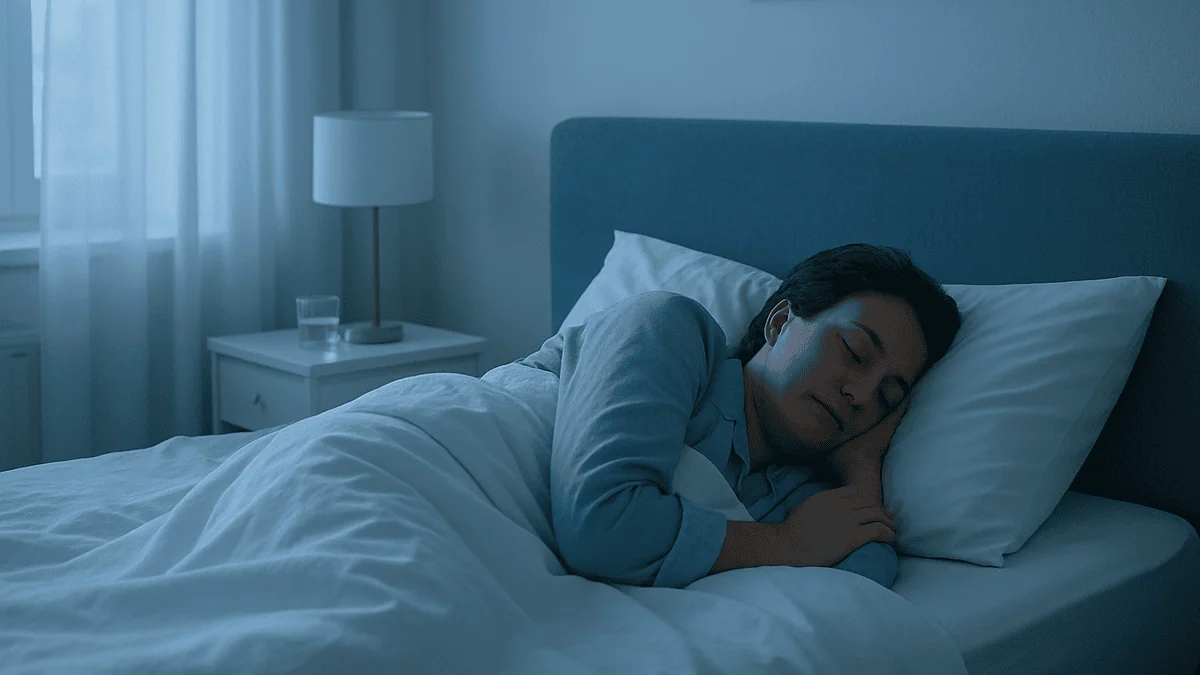
Key Takeaways
- Micronized progesterone is taken at bedtime in HRT because drowsiness and dizziness are listed side effects, so night-time dosing turns a nuisance into a convenience rather than a sleep strategy.
- Its sleep effect runs through allopregnanolone, a metabolite that acts on the brain's GABA system, but blood levels of that metabolite vary widely between women after the same capsule.
- The best evidence is small randomized crossover trials, typically under a dozen volunteers, showing less wake time at night; larger HRT trials report better sleep but cannot separate progesterone from relief of night sweats.
- Estrogen helps sleep mainly by stopping hot flashes and night sweats, while progesterone has a more direct calming effect; which matters more depends on what is actually waking you.
- Progesterone without estrogen carries no endometrial risk; it is estrogen without progesterone that thickens the uterine lining in women who still have a uterus.
- Cognitive behavioral therapy for insomnia, not a higher hormone dose, is the first-line treatment for persistent insomnia, and undiagnosed sleep apnea is a common reason progesterone appears not to work.
Micronized progesterone is taken at night in hormone replacement therapy mainly because it can cause drowsiness and dizziness, so bedtime dosing turns a side effect into a convenience. Its metabolite allopregnanolone acts on the brain's calming GABA system, and small randomized trials show modest improvements in sleep for some menopausal women. It is not approved as a sleep medicine, and any use should be guided by a prescribing clinician.
Scroll through menopause corners of social media this spring and one phrase keeps surfacing over the soft lighting and bedside lamps: progesterone for sleep. The clips are short, the promise is big, and the comment sections split neatly in two. Half the women say the little capsule gave them their first full night in years. The other half say they took it, waited, and nothing happened. As of early 2026 the search volume for the phrase has climbed alongside a wider rethink of menopause hormone therapy, including the US Food and Drug Administration’s late-2025 move to revise the boxed warnings on these products.
Here is the part the thirty-second videos leave out. Micronized progesterone was never approved to treat insomnia. It sits in hormone replacement therapy (HRT) to protect the lining of the uterus from estrogen. The sleepiness is a side effect that clinicians learned to schedule, not a feature they designed.
That distinction matters, because it tells you what to expect, what to question, and when the right answer is a conversation with your prescriber rather than another video.
What is micronized progesterone, and how is it different from a progestin?
Progesterone is the hormone the ovaries release after ovulation each month; its job is to prepare the lining of the uterus for a possible pregnancy and, if none occurs, to let that lining shed. Micronized progesterone is the same molecule, ground into very fine particles and suspended in oil so the gut can absorb it. The brand name most people encounter is Prometrium, though generic versions exist. Because the molecule is identical to the one the body makes, it is often called “body-identical” or “bioidentical,” words that describe its chemistry rather than any guarantee about how it behaves.
A progestin is a synthetic cousin: a laboratory-made compound such as medroxyprogesterone acetate or norethisterone that mimics progesterone’s effect on the uterus but has a different shape. That different shape matters in the brain. Micronized progesterone is broken down into allopregnanolone, a steroid that binds to the brain’s main inhibitory receptor system. Most synthetic progestins do not produce that metabolite in meaningful amounts, which is one reason the drowsiness story belongs to progesterone specifically and not to “the progestogen part of HRT” in general.
Why does HRT need either one? Estrogen taken on its own thickens the lining of the uterus (the endometrium), and over years that unchecked growth raises the risk of endometrial cancer. Adding a progestogen for enough days each month, or continuously, keeps the lining thin. Mayo Clinic and the NHS both describe this as the core reason anyone with a uterus who takes systemic estrogen is also prescribed a progestogen. Women who have had a hysterectomy generally do not need one.
Two practical notes follow from the formulation. Oral micronized progesterone capsules contain peanut oil, so a peanut allergy must be disclosed. And because the capsule is absorbed with food and metabolized quickly by the liver, the time of day you swallow it changes how much of its effect you notice.
Why is micronized progesterone taken at night in HRT?
Open the patient leaflet and the answer is almost unglamorous. MedlinePlus lists dizziness and drowsiness among the common effects of oral progesterone and advises taking it at bedtime. The night-time habit began as a safety measure: a woman who feels woozy an hour after her capsule is better off already in bed than driving to work.

The pharmacology explains the timing. After an oral dose, blood levels of progesterone and its sedating metabolite allopregnanolone rise within one to three hours and fall away over the following several hours. Line that curve up with bedtime and the peak lands in the first part of the night, when it is welcome. Swallow the capsule at breakfast and the same peak lands in a morning meeting.
There is a second, quieter reason. Progesterone taken at night with a light snack or shortly after dinner is absorbed somewhat better than on an empty stomach. Prescribers often suggest a consistent routine, capsule with the evening wind-down, so that absorption and sedation are predictable from one night to the next rather than varying with a skipped meal.
What the bedtime schedule does not do is change the medicine’s primary purpose. Whether a woman takes micronized progesterone at night or at noon, it protects the endometrium just the same, provided she takes it for the number of days her regimen requires. Sleep is the bonus some women experience, not the reason the prescription exists.
So when a video says “the timing can make or break it,” the honest version is narrower: timing decides whether you notice the drowsiness as a help or a hindrance. It does not decide whether progesterone will fix a sleep problem that has other causes, such as sleep apnea, restless legs, pain, or anxiety.
How does progesterone affect the brain and sleep?
The brain has a brake pedal called GABA (gamma-aminobutyric acid), a chemical messenger that quiets nerve firing. Prescription sleep medicines, alcohol and many anesthetics press that pedal, each in a different way. Allopregnanolone, the metabolite the liver makes from progesterone, presses it too. It binds to a different spot on the GABA-A receptor than benzodiazepines do, but the direction of the effect is similar: less neuronal chatter, a lower threshold for drifting off.
This is not a laboratory curiosity. Women feel it every month. In the luteal phase, the roughly two weeks between ovulation and a period, progesterone is high and many women report deeper, longer sleep and a slightly higher body temperature. When progesterone drops before menstruation, sleep often fragments. In perimenopause, cycles without ovulation become common, which means months with little or no progesterone, and some researchers think that loss contributes to the sleep complaints that begin even before hot flashes do.
Progesterone also acts as a mild respiratory stimulant, nudging the brainstem to breathe a little more vigorously, which is one reason pregnant women feel short of breath at rest. We will return to that in the section on sleep apnea.
Two caveats keep the mechanism honest. First, allopregnanolone levels after an oral dose vary widely between women, depending on liver metabolism, body weight and whether the capsule was taken with food. The same prescription can leave one woman groggy and another unaffected. Second, pressing the GABA brake is not the same as restoring normal sleep architecture. Small studies with overnight brain-wave recording (polysomnography) suggest progesterone reduces time spent awake after falling asleep and may modestly increase deep slow-wave sleep, but those studies involve a handful of volunteers over a few nights. The mechanism is real; the size of its effect in ordinary life is still being measured.
What changed recently with progesterone and menopause hormone therapy
Three dated developments explain why a decades-old capsule is suddenly a search trend.

The first is a shift in how the main professional bodies talk about hormone therapy. The 2022 position statement from the leading North American menopause society reaffirmed that for most healthy women under 60 or within ten years of their final period, the benefits of HRT for bothersome symptoms outweigh the risks, and it named micronized progesterone as a reasonable progestogen choice. Mayo Clinic’s patient guidance on hormone therapy, updated in that period, carries the same message: individualize, start for symptoms, and review regularly.
The second is regulatory. In November 2025 the US Food and Drug Administration announced it would revise the boxed warnings that have appeared on systemic menopause hormone therapy products since the early 2000s, bringing the labels closer to current evidence on timing and risk. That announcement did not add a sleep indication for progesterone. Prometrium and its generics remain approved for two uses: preventing endometrial thickening in women taking estrogen, and treating secondary amenorrhea (the absence of periods in someone who previously had them).
The third is cultural rather than scientific. Menopause content has moved from pamphlets to short-form video, and “take your progesterone at night for sleep” is a tidy, repeatable line. The NHS hormone replacement therapy pages, which list micronized progesterone among the available types, have become one of the most-read drug references in the United Kingdom, and traffic to MedlinePlus’s progesterone entry has followed the same curve in the United States.
Put together: the regulatory climate has become more permissive of HRT for symptoms, the professional guidance has become clearer, and social media has amplified one side effect into a headline. What has not changed is the evidence base on progesterone as a stand-alone sleep treatment, which remains small. That is the subject of the next section.
What the evidence actually says about progesterone for sleep
Grading evidence means asking two questions: how was the study designed, and how many people were in it. Randomized controlled trials, where volunteers are assigned by chance to drug or placebo, rank highest. Observational data, where researchers watch what happens to people who chose a treatment, rank lower. Expert opinion ranks lowest.
For progesterone and sleep, the picture looks like this.
- Small randomized crossover trials with sleep lab recording. Studies in healthy postmenopausal women, typically fewer than a dozen volunteers each, found that oral micronized progesterone reduced wake time during the night and partially restored deep sleep, with the clearest effect when sleep had been deliberately disturbed. Strength: moderate design, very low numbers, short duration.
- Larger HRT trials with sleep as a secondary outcome. Trials of combined estrogen plus micronized progesterone for hot flashes, running three to twelve months, consistently reported better self-rated sleep than placebo. Strength: good design, but it is impossible to separate progesterone’s direct effect from the relief of night sweats.
- Progesterone alone for vasomotor symptoms. One randomized trial of roughly 130 postmenopausal women found progesterone without estrogen reduced hot flashes and night sweats compared with placebo over three months. Strength: a single trial, modest size, sleep measured by questionnaire.
- Observational and clinical experience. Many clinicians report that women on HRT often mention sleeping better after progesterone is added. Strength: low; prone to placebo effects and selection.
No trial has tested micronized progesterone in women with chronic insomnia who are not menopausal, and none has compared it head to head with cognitive behavioral therapy for insomnia (CBT-I), the first-line treatment recommended by the NHS and most sleep medicine bodies.
The fair summary: there is a plausible mechanism and consistent, modest signals from small trials that progesterone improves sleep for some menopausal women, particularly when night sweats are part of the problem. The evidence does not support calling it a sleep medicine, and it says nothing about long-term use for that purpose.
Estrogen or progesterone for sleep: which one helps more?
This is one of the most-typed questions around the topic, and the honest answer is that the two hormones help sleep through different doors.
Estrogen’s route is mostly indirect. Hot flashes and night sweats wake women up, sometimes several times a night, and estrogen is the most effective treatment for them. Remove the 3 a.m. drenching and sleep improves because nothing is interrupting it. Estrogen may also have modest direct effects on temperature regulation and mood, but in trials the sleep benefit tracks closely with the fall in vasomotor symptoms.
Progesterone’s route is more direct, through the allopregnanolone and GABA pathway described earlier, with a smaller additional effect on night sweats. It tends to shorten the time it takes to fall asleep and reduce wakefulness after sleep onset in the small studies available.
| Question | Estrogen (estradiol) | Micronized progesterone |
|---|---|---|
| Main reason it is prescribed | Hot flashes, night sweats, vaginal symptoms, bone protection | Protects the uterine lining when estrogen is taken |
| How it helps sleep | Indirectly, by stopping night sweats that wake you | Directly, via a calming brain metabolite |
| Strength of sleep evidence | Moderate: large trials, sleep as secondary outcome | Low to moderate: small trials, short duration |
| Usual timing | Any consistent time; patch or gel is continuous | At bedtime, because of drowsiness |
| Who may take it alone | Women without a uterus | Occasionally in perimenopause; prescriber decides |
In practice the question “which helps more” usually dissolves once a clinician asks what is actually waking you. If the answer is heat and sweat, estrogen is doing most of the work. If the answer is lying awake cool and alert, progesterone’s sedative effect may matter more. Most women with a uterus on systemic HRT take both, which is why trial participants cannot tell you which one earned the credit.
What are the side effects of taking progesterone at night?
Bedtime dosing hides the most common side effect in plain sight: drowsiness. For many women that is the point. For some it overshoots into next-morning grogginess, a heavy-headed feeling that lifts after coffee or lingers until noon. MedlinePlus lists dizziness alongside drowsiness, and the pairing matters at night, because a dizzy trip to the bathroom at 2 a.m. is a fall risk, particularly in women over 65 or anyone also taking a sleeping tablet or alcohol.
Other effects reported in trials and patient leaflets, whatever the time of day, include headache, breast tenderness, bloating and fluid retention, nausea, mood changes including low mood or irritability, and vaginal spotting or bleeding, especially in the first few months of a continuous regimen. Some women describe vivid dreams in the first weeks. Cleveland Clinic’s overview of progesterone notes that these tend to be most noticeable early and often settle, though not for everyone.
Because progesterone can slightly relax the muscle at the top of the stomach, a few women notice heartburn when they lie down soon after the capsule. Taking it a little earlier in the evening, with a small snack rather than a large meal, is a common adjustment, but it is one to raise with the prescriber rather than improvise.
Rarer and more serious effects, shared with other hormone therapies, include blood clots in the leg or lung, stroke, and liver problems, as well as an allergic reaction in anyone sensitive to peanuts. Oral estrogen carries more of the clotting risk than micronized progesterone does, and observational data suggest micronized progesterone is gentler on breast tissue and blood vessels than some synthetic progestins, though that is lower-grade evidence and still being studied.
Two things should not be dismissed as ordinary side effects: bleeding that starts after a year or more of no periods, and a new, persistent change in mood. Both need a clinical review.
What happens if you take progesterone without estrogen?
The question usually comes from one of two places. Either a woman has been offered progesterone alone in perimenopause and wonders whether that is safe, or she has seen a video suggesting progesterone is a stand-alone sleep remedy for anyone.
Start with the safety point, because it is the one most often reversed in people’s minds. The combination that matters for the uterus is estrogen without progesterone. That is the arrangement that thickens the endometrium and raises cancer risk over time. Progesterone taken without estrogen does not carry that particular risk. It is not pharmacologically required to pair the two.
Is there a reason to take progesterone alone? Sometimes. In perimenopause, when a woman still makes estrogen in irregular surges but ovulates less often, a clinician may prescribe cyclic progesterone to regularize heavy or unpredictable bleeding. The single randomized trial mentioned earlier found progesterone alone also reduced hot flashes and night sweats modestly in postmenopausal women, and smaller studies reported better sleep. Mayo Clinic and the NHS both frame this as an option a clinician may consider, not a mainstream regimen, and the long-term data are thin compared with the decades of experience with combined HRT.
What progesterone alone will not do is replace estrogen’s benefits. It does not treat vaginal dryness, it is not a bone protection strategy, and its effect on hot flashes is smaller than estrogen’s. A woman who takes progesterone alone for sleep but whose real problem is night sweats may find the sleep benefit disappointing.
And for women who are not menopausal and have no gynecological indication, there is no trial evidence supporting progesterone as an insomnia treatment. Using a prescription hormone outside its approved purpose is a decision that belongs with a treating clinician who knows your history, not with a comment thread.
How much progesterone should you take for insomnia?
This is the question search engines see most often, and it is the one a responsible article cannot answer with a number. There is no approved dose of progesterone for insomnia because progesterone is not an approved treatment for insomnia. The doses that exist in prescribing information are the ones shown to protect the uterine lining in women taking estrogen, or to bring on a withdrawal bleed in women whose periods have stopped. Any sleep benefit is observed at those doses, as a side effect, not titrated toward a sleep target.
What a prescriber actually weighs when choosing a regimen is more interesting than a milligram figure.
- Whether you have a uterus. Without one, there is usually no need for a progestogen at all, and sleep alone would be an unusual reason to add one.
- Whether you are still having periods. Perimenopausal women often use progesterone cyclically, for part of each month, which produces a planned bleed. Postmenopausal women more often use it continuously, every night.
- How much estrogen you take and by what route. Higher estrogen exposure needs more endometrial protection.
- How you respond. Morning grogginess, dizziness, mood change or breakthrough bleeding may prompt a change in regimen or formulation, including a switch to a different progestogen or a progestogen-releasing intrauterine device.
Notice that sleep is not the organizing variable in that list. If a woman on a standard HRT regimen sleeps better, that is welcome. If she does not, the correct response is not a higher dose, because the endometrial protection is already adequate and more progesterone mainly buys more side effects. The correct response is to ask what else is disturbing sleep.
If you are already prescribed micronized progesterone and are tempted to adjust the timing, split the capsule, or take extra on bad nights, do not. Tell the prescriber what you are experiencing and let them adjust. The capsule is a hormone with effects on the uterus, the liver and the blood, not a sleeping pill to be dosed by feel.
Does progesterone help with sleep apnea and nighttime breathing?
The link between menopause, breathing and sleep is one of the more under-discussed reasons sleep deteriorates in midlife, and it is where progesterone’s reputation and its evidence part ways most sharply.
Obstructive sleep apnea (OSA) is a condition in which the throat repeatedly narrows or closes during sleep, cutting off airflow for ten seconds or more at a time and jolting the brain partly awake. Before menopause, women have roughly a third to a half the rate of OSA seen in men of the same age. After menopause the gap narrows considerably. Hormones are one plausible explanation: estrogen helps maintain upper-airway muscle tone, and progesterone stimulates breathing drive in the brainstem.
That second effect led researchers in the 1980s and 1990s to test synthetic progestins as a treatment for sleep-disordered breathing. The results were mixed and the trials small; some showed fewer breathing pauses, others none, and daytime sedation limited the approach. Modern guidelines do not recommend any hormone as a treatment for OSA. The treatment that works, with large randomized trials behind it, is continuous positive airway pressure (CPAP), a bedside machine that holds the airway open with gentle air pressure, alongside weight management where relevant and dental devices for milder cases.
Why does this matter for a woman taking progesterone for sleep? Because undiagnosed OSA is one of the most common reasons progesterone “didn’t work.” The capsule may ease falling asleep, but it cannot stop an airway from collapsing, and a sedative effect could in theory make breathing pauses slightly longer. If you snore loudly, wake gasping, have morning headaches, or feel unrefreshed despite seven or eight hours in bed, that pattern deserves a sleep study regardless of what hormones you take.
The National Institute on Aging’s guidance on sleep problems in menopause makes the same point in plainer words: treat the hot flashes, yes, but also rule out apnea, restless legs and depression, because each has its own effective treatment.
Who should not take progesterone, and what does the prescriber check first?
Progesterone is prescribed widely and generally tolerated, but it is a systemic hormone, and the pre-prescription conversation is where safety lives.
Absolute cautions listed in prescribing information and echoed by MedlinePlus and the NHS include a current or past blood clot in the leg or lung, a history of stroke or heart attack, known or suspected breast cancer or other hormone-sensitive cancer, unexplained vaginal bleeding that has not been investigated, active liver disease, and known or suspected pregnancy. A peanut allergy rules out the standard oral capsule because of its peanut oil content, though alternative progestogens exist.
Relative cautions, where the prescriber weighs benefit against a raised baseline risk, include migraine with aura, poorly controlled high blood pressure, a strong family history of breast cancer, a history of depression that worsened on hormonal contraception, and epilepsy, since fluid retention and hormonal shifts can occasionally affect seizure control.
Expect the clinician to ask about every other medicine and supplement. Micronized progesterone is processed by the liver’s cytochrome enzymes, so drugs that speed those enzymes up (some anti-seizure medicines, the antibiotic rifampicin, the herbal supplement St John’s wort) can lower its levels and weaken endometrial protection. Sedatives, alcohol and some antihistamines stack with its drowsiness.
Expect, too, a plan for review. The NHS and Mayo Clinic both describe HRT as something to reassess at around three months and then at least yearly, checking symptoms, bleeding pattern, blood pressure and whether the reasons for taking it still hold. Routine blood progesterone levels are not part of that review: the oral capsule produces levels that swing widely through the day, and the number does not predict either endometrial protection or sleep benefit. Anyone offering to “optimize” your progesterone by chasing a blood value is working outside mainstream practice.
Finally, screening does not pause. Mammograms at the interval your national program recommends, and prompt investigation of any postmenopausal bleeding, apply to women on HRT exactly as they do to everyone else.
Common myths about progesterone for sleep
Viral claims tend to contain a grain of truth stretched past what the evidence can bear. Here are the ones circulating most, and what mainstream sources actually support.
“Progesterone is nature’s sleeping pill.” Progesterone’s metabolite does act on the brain’s GABA system, which is the same system many sleep medicines target. But the trials are tiny, the effect is modest, and progesterone is not approved or recommended by any major body as a sleep treatment. A sleeping pill it is not.
“If it didn’t help your sleep, you need a higher dose.” The dose in HRT is set to protect the uterus. Raising it for sleep has no trial support and increases side effects. Non-response is a reason to look for another cause, most often apnea, anxiety, pain or hot flashes that estrogen is not yet controlling.
“Bioidentical means safer.” Micronized progesterone is chemically identical to the body’s own hormone, and observational data suggest a somewhat gentler profile than some synthetic progestins. That is encouraging, lower-grade evidence; it is not proof of safety, and the drug still carries the warnings shared by all systemic hormone therapy.
“Compounded progesterone cream at night does the same thing.” Creams and compounded products are not held to the same manufacturing and dosing standards as approved capsules, and there is no good evidence that over-the-skin progesterone reliably protects the endometrium. The NHS and Mayo Clinic advise against compounded hormones for this reason.
“Progesterone causes weight gain and depression.” Bloating and fluid shifts are common in the first months; sustained weight gain has not been shown in trials. Mood effects are real for a minority and reversible, and they are a reason to speak to the prescriber rather than to stop abruptly.
“You must take it with estrogen.” The reverse is the rule that matters: estrogen needs progesterone if you have a uterus. Progesterone alone is sometimes prescribed, particularly in perimenopause, under clinical supervision.
What to do if progesterone did not help your sleep
One of the most-watched videos on this topic is titled, more or less, “if you took progesterone for sleep and it didn’t work.” The framing is right even if the conclusions are sometimes not. Non-response is common, it is informative, and it is not a sign that you need more hormone.
Begin by noticing what the night actually looks like. Trouble falling asleep, waking repeatedly, waking early and unable to return, or sleeping long and waking exhausted are four different problems. Progesterone’s small evidence base points mainly to the first two. Early-morning waking tracks more closely with low mood; unrefreshing sleep despite long hours points toward sleep-disordered breathing.
Then look at what else is running at night. Caffeine after midday, alcohol in the evening (which helps you fall asleep and then fragments the second half of the night), a bedroom warmer than about 65 to 68 degrees Fahrenheit, screens in bed, irregular wake times, and pain from joints that are themselves affected by falling estrogen. None of these yield to a hormone.
The treatment with the strongest evidence for persistent insomnia at any age is cognitive behavioral therapy for insomnia, a structured four- to eight-session program that retrains the association between bed and sleep. The NHS lists it as first-line, ahead of any medicine, and randomized trials in menopausal women specifically have shown it outperforms sleep hygiene advice and holds up at six months. It is available in person, by telehealth and through validated digital programs.
If night sweats are still waking you, that is a conversation about the estrogen component of your HRT, not the progesterone. If you snore or stop breathing, ask for a sleep study. If worry or low mood keeps the mind running, say so; depression and anxiety are treatable and are more common in perimenopause than many women are told.
What not to do is quietly stop progesterone while continuing estrogen. That leaves the uterine lining unprotected. Any change to the regimen, including timing, belongs to the prescriber.
When to see a doctor
Most of what this article describes is a scheduled, unhurried conversation: before starting HRT, three months in, and at each yearly review. Some situations should not wait for that appointment.
Seek urgent care, the same day, for:
- Sudden chest pain, breathlessness, or coughing up blood, which can signal a clot in the lung.
- Pain, swelling, warmth or redness in one calf or thigh, the pattern of a deep vein clot.
- Sudden severe headache, especially with weakness, numbness, slurred speech, confusion or loss of vision, which can indicate a stroke.
- Swelling of the lips, tongue or throat, hives, or wheezing after a dose, which may be an allergic reaction, including to the peanut oil in standard capsules.
- Yellowing of the skin or eyes, dark urine or pale stools, which suggest a liver problem.
Book a prompt appointment, within days to a couple of weeks, for:
- Any vaginal bleeding that starts after you have been period-free for twelve months or more, or bleeding on a continuous regimen that persists beyond the first six months or returns after settling. Postmenopausal bleeding is investigated every time, even on HRT.
- A new breast lump, nipple discharge or skin change.
- Persistent low mood, loss of interest, or thoughts of self-harm that began or worsened after starting a hormone.
- Morning drowsiness or dizziness severe enough to affect driving, work or balance.
- Loud snoring, witnessed breathing pauses or gasping awakenings.
- Sleep that has not improved after three months of HRT, or that is worse than before.
And some everyday rules. Do not stop progesterone on your own while continuing estrogen. Do not change the time of day, split capsules or double up after a bad night without asking. Do not combine it with alcohol or other sedatives without discussing it. Bring a list of every medicine and supplement to each review, because interactions change the dose that works.
Every decision about whether to start, continue, adjust or stop micronized progesterone belongs to you and your prescribing clinician together. This article can tell you what the evidence shows; only that conversation can tell you what it means for you.
Frequently asked questions
What are the side effects of taking progesterone at night?
The most common are drowsiness and dizziness, which is exactly why it is scheduled at bedtime; for some women this spills into next-morning grogginess. Headache, breast tenderness, bloating, mood changes, vivid dreams and spotting are also reported, especially in the first months. Rarer serious effects include blood clots, stroke and liver problems. New bleeding after a year without periods or a marked mood change should be reviewed by the prescriber.
What happens if you take progesterone without estrogen?
Nothing dangerous to the uterus happens; the risky combination is estrogen without progesterone, which thickens the uterine lining. Progesterone alone is sometimes prescribed in perimenopause to regulate bleeding, and one randomized trial found it modestly reduced hot flashes. It will not treat vaginal dryness or protect bone, and there is no trial evidence for it as a stand-alone insomnia treatment in women who are not menopausal.
Estrogen or progesterone for sleep: which helps more?
It depends on what is waking you. Estrogen improves sleep mostly by stopping hot flashes and night sweats, with moderate evidence from large trials. Micronized progesterone has a more direct calming effect through a brain metabolite, with weaker evidence from small trials. Women with a uterus on systemic HRT usually take both, so in practice the two work together rather than competing.
How much progesterone should I take for insomnia?
There is no approved dose of progesterone for insomnia, because progesterone is not an approved insomnia treatment. The dose in HRT is chosen to protect the uterine lining and depends on whether you have a uterus, whether you still have periods, and how much estrogen you take. Any sleep benefit occurs at that dose as a side effect. The regimen belongs to your prescribing clinician; do not adjust it yourself.
Why is micronized progesterone at night better than in the morning?
Because blood levels of progesterone and its sedating metabolite peak one to three hours after an oral dose, taking it at bedtime lands that peak in the first part of the night rather than during the workday. Absorption is also steadier with a consistent evening routine. The timing changes how you experience the drowsiness; it does not change the medicine’s protective effect on the uterus.
Can progesterone for sleep be used by someone who is not menopausal?
No major guideline supports it. Micronized progesterone is approved to protect the uterine lining in women taking estrogen and to treat absent periods; its sleep research has been done almost entirely in postmenopausal women. For insomnia at any age, cognitive behavioral therapy for insomnia has far stronger evidence. Whether any hormone is appropriate for an individual is a decision for the treating clinician.
Does progesterone help with sleep apnea?
Not as a treatment. Progesterone does stimulate breathing drive, and small older studies of synthetic progestins in sleep apnea gave mixed results, but no guideline recommends hormones for the condition. Continuous positive airway pressure (CPAP) is the proven treatment. Loud snoring, gasping awakenings or unrefreshing sleep on HRT should prompt a sleep study, since undiagnosed apnea is a common reason progesterone seems not to help.
Will I feel groggy the morning after taking progesterone?
Some women do, especially in the first weeks or if the capsule is taken late or with alcohol or another sedative. Morning grogginess, dizziness or unsteadiness that affects driving or balance is worth telling your prescriber about; adjustments to the evening routine or the regimen may help. Do not change the timing or skip doses on your own, because the medicine is also protecting the uterine lining.
Is progesterone cream at night the same as the capsule?
No. Over-the-skin and compounded progesterone products are not held to the same manufacturing and dosing standards as approved capsules, and there is no good evidence that they reliably protect the uterine lining when estrogen is taken. The NHS and Mayo Clinic advise against compounded hormones for this reason. Any sleep claims for creams rest on anecdote rather than trials.
What should I do if progesterone did not improve my sleep?
Treat it as useful information rather than a failed dose. Note whether the problem is falling asleep, waking repeatedly, waking early or feeling unrefreshed, and raise it at your HRT review. Night sweats point to the estrogen component, snoring to a sleep study, worry to mood support, and persistent insomnia to cognitive behavioral therapy for insomnia. Do not stop progesterone while continuing estrogen.
References
- MedlinePlus: Progesterone (oral)
- NHS: Hormone replacement therapy (HRT)
- Cleveland Clinic: Progesterone
- National Institute on Aging: Sleep Problems and Menopause: What Can I Do?
This article is for general information only and is not a substitute for professional medical advice. Please consult a qualified doctor about your individual situation.

More from the Blog

Menopause, Blood Pressure and Cholesterol: Why Heart Risk Changes After 50
Menopause does not cause high blood pressure on its own, but the years around the final menstrual period are when a woman's blood pressure,…
Menopause Insomnia: Why Sleep Breaks at Midlife and the Treatments With Evidence
Menopause insomnia is trouble falling or staying asleep driven by falling and fluctuating estrogen and progesterone, night sweats, and midlife changes in sleep and…
Menopause Itchy, Dry Skin: The Collagen Drop Explained and a Routine That Helps
Menopause itchy skin is common and usually linked to falling estrogen, which thins the skin, reduces oil and water-holding molecules, and slows collagen production.…

Menopause Bloating: Hormones, Gut Changes and What Genuinely Helps
Menopause bloating is common and usually linked to falling, fluctuating estrogen and progesterone, which slow gut transit, alter fluid balance and shift the gut…

Menopause Brain Fog: What Estrogen Does to Memory and Focus, and Why It Usually Lifts
Menopause brain fog is the cluster of memory lapses, word-finding trouble and poor concentration that many women notice during perimenopause and early menopause. Falling…

Does HRT Cause Weight Gain? What the Studies Actually Found
Randomized controlled trials have not found that hormone replacement therapy (HRT) causes weight gain. In the largest studies, women taking HRT gained the same…