

Eye Pain, Fever or Severe Swelling With Reactive Arthritis: When Follow-Up Cannot Wait
Key Takeaways
- Reactive arthritis symptoms typically begin one to four weeks after a gut or genital infection, and the triggering germ is often gone by the time joints flare.
- A gritty red eye with normal vision is usually conjunctivitis; a deeply painful, light-sensitive or blurred eye suggests anterior uveitis and needs same-day specialist review.
- Low-grade fever can be part of active reactive arthritis, but fever with chills and a single dramatically swollen joint should be treated as possible septic arthritis until proven otherwise.
- Joint fluid aspiration is the only reliable way to separate an infected joint from a reactive flare or crystal arthritis, which is why very swollen joints are tested rather than guessed at.
- Antibiotics treat a persisting trigger such as Chlamydia and protect partners, but do not reliably shorten the arthritis once the immune reaction is established.
- Most people recover within about six months according to the NHS, and a minority have persistent or recurrent symptoms, more often those who carry the HLA-B27 gene.
With reactive arthritis, new eye pain, light sensitivity or blurred vision, a fever, or one joint that becomes hot, very swollen and impossible to move are signs that need same-day medical review rather than the next routine appointment. They can point to uveitis, which can threaten sight if untreated, or to joint infection, which needs urgent testing. Contact your care team or emergency services promptly.
Three weeks after a bout of food poisoning, a man in his thirties is limping on a swollen knee and has already been told the name for it. Reactive arthritis. He has a follow-up booked for next month. Then, on a Tuesday evening, his right eye starts to ache behind the brow, the bathroom light feels like a flashbulb, and the thermometer reads higher than it should. Is this part of the same illness, or something new?
That question matters more than most people realize. Reactive arthritis eye pain fever is not a phrase anyone types casually; it usually comes from someone sitting on the edge of a bed deciding whether to wait until morning. This article is about that decision. It explains which symptoms belong to the ordinary, frustrating course of the condition, and which ones are the exceptions where a clinic slot a month away is simply too far off.
What reactive arthritis actually is, and why the joints, eyes and urinary tract travel together
Reactive arthritis is joint inflammation that starts in the weeks after an infection somewhere else in the body, most often a gut infection with bacteria such as Salmonella, Shigella, Campylobacter or Yersinia, or a genital infection with Chlamydia. The infection itself is usually gone or fading by the time the joints flare. The immune system, having learned to fight the germ, keeps reacting in tissues that were never infected. Mayo Clinic notes that signs typically begin one to four weeks after the triggering infection.
Why the eyes? The lining of the joints, the surface of the eye, the front chamber of the eye and the lining of the urinary tract share features that make them vulnerable to the same misdirected inflammation. That is why older textbooks described a triad of arthritis, conjunctivitis and urethritis. In real life the full set is uncommon; many people have only one or two features, and the pattern can shift from week to week.
A gene called HLA-B27, a marker on the surface of cells that shapes how the immune system presents fragments of germs, is carried more often by people who develop reactive arthritis, according to the NIH’s National Institute of Arthritis and Musculoskeletal and Skin Diseases. Carrying the gene does not mean you will get the condition, and most carriers never do. It simply nudges the odds.
The joints most often affected are the knees, ankles and feet, frequently on one side more than the other. Tendon attachments, especially at the heel, can become sore. Some people notice mouth ulcers, a scaly rash on the soles or palms, or nail changes. None of these, on their own, is an emergency. The rest of this article is about the small number of symptoms that are.
Does reactive arthritis cause fever? What a temperature usually means
Yes, a mild fever can be part of reactive arthritis, particularly in the early weeks, alongside tiredness, poor appetite and a general feeling of being unwell. The NHS lists fever and fatigue among the symptoms that can accompany the joint pain. Inflammation anywhere in the body releases chemical messengers that reset the brain’s thermostat, so a low-grade temperature is not surprising when several joints are inflamed at once.

The problem is that fever is a poor witness. It tells you the immune system is busy; it does not tell you why. Three situations produce fever in someone with a diagnosis of reactive arthritis, and they need very different responses.
The first is the reactive process itself: usually low-grade, usually accompanied by the same aches you already know, and usually settling as the arthritis settles. The second is the original infection still smoldering, for example an untreated chlamydial infection or a gut infection that has not fully cleared. The third, and the one clinicians worry about most, is a new infection inside a joint, known as septic arthritis, which is a medical emergency because bacteria can damage cartilage within days.
You cannot reliably separate these at home. What you can do is notice the company the fever keeps. A temperature with chills or shaking, with a joint that has suddenly become far more swollen and hot than the others, or with a person who looks and feels much sicker than yesterday, is a different animal from a slight warmth on a day when everything else is unchanged. Any of those changes justifies a same-day call. If in doubt, a phone call to your care team is cheap insurance; a missed joint infection is not.
Can reactive arthritis affect the eyes? Conjunctivitis versus uveitis
It can, and the distinction between two kinds of eye involvement is the single most useful thing to take from this article. Conjunctivitis is inflammation of the thin membrane covering the white of the eye and the inner eyelids. In reactive arthritis it tends to make both eyes red, gritty and watery, often early in the illness, and it usually improves on its own within a week or two. It is uncomfortable but rarely dangerous.
Uveitis is different. The uvea is the middle layer of the eye, and the form most linked with reactive arthritis and with HLA-B27 is anterior uveitis, also called iritis, which is inflammation of the iris and the tissue just behind it. The NHS describes the hallmark features: a painful eye, often a deep ache rather than surface grittiness; sensitivity to light; blurred vision; and redness that is often most intense in a ring around the colored part of the eye. It usually affects one eye at a time.
Why does this matter for timing? Inflammation in the front chamber of the eye can cause the iris to stick to the lens, raise the pressure inside the eye, and, if repeated or prolonged, lead to cataract or glaucoma. The NHS is clear that uveitis needs prompt assessment by an eye specialist because untreated inflammation can permanently affect sight. Treatment usually involves anti-inflammatory eye drops chosen and monitored by an ophthalmologist, with the exact plan depending on what the slit-lamp examination shows.
The practical rule: red eyes that feel like sand but see normally can usually wait for routine advice. A red eye that hurts deeply, dislikes light or blurs your vision should be looked at the same day, either through your care team or an urgent eye service.
Reactive arthritis eye pain fever: why the combination changes the plan
Each of these symptoms alone can be explained away. Together they form a pattern that experienced clinicians take seriously, for two reasons.

First, they suggest the inflammation is active and widespread rather than fading. Reactive arthritis that is settling does not usually produce new organ involvement. A new painful eye three weeks in, or a fresh fever after a stretch of feeling better, means the disease is not following the expected curve. That is precisely the moment when a rheumatologist may want to reassess: repeat blood tests for inflammation markers, re-examine the joints, and check whether the triggering infection has truly cleared.
Second, the combination widens the list of alternatives. Fever with a painful red eye can also occur with infections of the eye itself, with other forms of inflammatory arthritis, and rarely with infections that have spread through the bloodstream. Clinicians are trained to rule out the dangerous explanation before settling on the reassuring one. That cannot be done by phone or by reading an article. It needs someone to look in the eye with a slit lamp, feel the joints, and often draw fluid from a swollen knee.
There is a quieter reason too. People with a named diagnosis tend to attribute everything new to it. Reactive arthritis becomes the explanation for the eye, the fever, the fatigue, and the follow-up drifts. Mayo Clinic advises contacting a doctor if joint pain develops within a month of an infection; the same logic applies to new symptoms after the diagnosis. New territory deserves a new look. If eye pain, fever and worsening joints arrive together, treat the scheduled appointment as a placeholder and ask for an earlier one, or seek same-day care if the eye or the joint is getting worse by the hour.
Severe swelling: telling a reactive flare from an infected joint
Septic arthritis is bacterial infection inside a joint space. The NHS describes it as a medical emergency because the bacteria can destroy cartilage quickly, and because infection in a joint can spread into the bloodstream. It is uncommon, but people with already inflamed joints, recent infections, or recent joint injections or procedures are at higher risk than the general population, which is why anyone with reactive arthritis should know the warning signs.
A reactive flare tends to involve joints that were already sore, waxing and waning over days, with warmth and swelling that are real but tolerable. Stiffness is often worst in the morning and eases with gentle movement. Several joints may be affected in a shifting, asymmetric way.
An infected joint behaves differently. Usually a single joint becomes dramatically worse over hours rather than days. It is hot to touch, tense with fluid, and so painful that the person cannot bear weight or move it even slightly. Fever, chills and a feeling of being generally unwell often accompany it. The knee is the most common site in adults.
The only reliable way to distinguish the two is to draw fluid from the joint with a needle, a procedure called arthrocentesis, and send it for cell counts, crystals and culture. The Cleveland Clinic and Mayo Clinic both list joint fluid analysis among the tests used when reactive arthritis is being diagnosed, and it is essential when infection is possible. Blood tests and imaging support the picture but cannot replace the fluid sample.
The message is blunt because it needs to be: a joint that has become hot, very swollen and unmovable, especially with fever, is not a wait-and-see situation. Emergency care is the right setting, and starting anti-inflammatory tablets at home to mask the pain can delay a diagnosis that matters.
Who is usually seen urgently, and who is usually asked to wait
Most people with reactive arthritis are managed as outpatients with scheduled follow-up, and that is appropriate. The condition is often self-limiting; the NHS notes that most people recover within about six months, and many improve well before that. Routine review tracks joint counts, checks that any treatment is working, and makes sure the triggering infection has been addressed.
Urgent review is reserved for a shorter list of situations, summarized below. The table is a guide to conversations with your care team, not a substitute for them.
| What you notice | What it can indicate | Usual urgency |
|---|---|---|
| Both eyes red, gritty, watery, vision normal | Conjunctivitis linked to reactive arthritis | Routine advice; mention at next contact |
| One eye deeply painful, light-sensitive, blurred | Possible anterior uveitis | Same day, eye specialist assessment |
| Low-grade temperature, usual aches, otherwise well | Active inflammation | Phone your care team within a day or two |
| Fever with chills and feeling very unwell | Possible ongoing or new infection | Same day |
| One joint suddenly hot, tense, cannot move it | Possible septic arthritis | Emergency care now |
| Chest pain, breathlessness, palpitations | Rare heart involvement | Emergency care now |
| Gradually improving joints, no new symptoms | Expected course | Keep scheduled follow-up |
People are usually asked to wait when symptoms are stable or improving, when new symptoms are mild and clearly in the same pattern as before, and when nothing points to the eye, to infection or to the heart. Waiting is not neglect; it is the correct response to a condition that often burns itself out. The skill lies in noticing when the pattern breaks.
What actually happens at an urgent assessment
Knowing what to expect makes it easier to go. An urgent visit for suspected uveitis or joint infection follows a fairly predictable path, whether in an emergency department, an urgent eye clinic or a rheumatology rapid-access slot.
The conversation comes first. You will be asked when the eye or joint changed, whether you have had a fever, what infections you had in the past two months, and whether you have been sexually active recently. That last question is not judgmental; Chlamydia is one of the most common triggers, and MedlinePlus notes that it can cause few or no symptoms, so it is easy to miss without asking. Answer plainly. It shapes both the tests and the treatment.
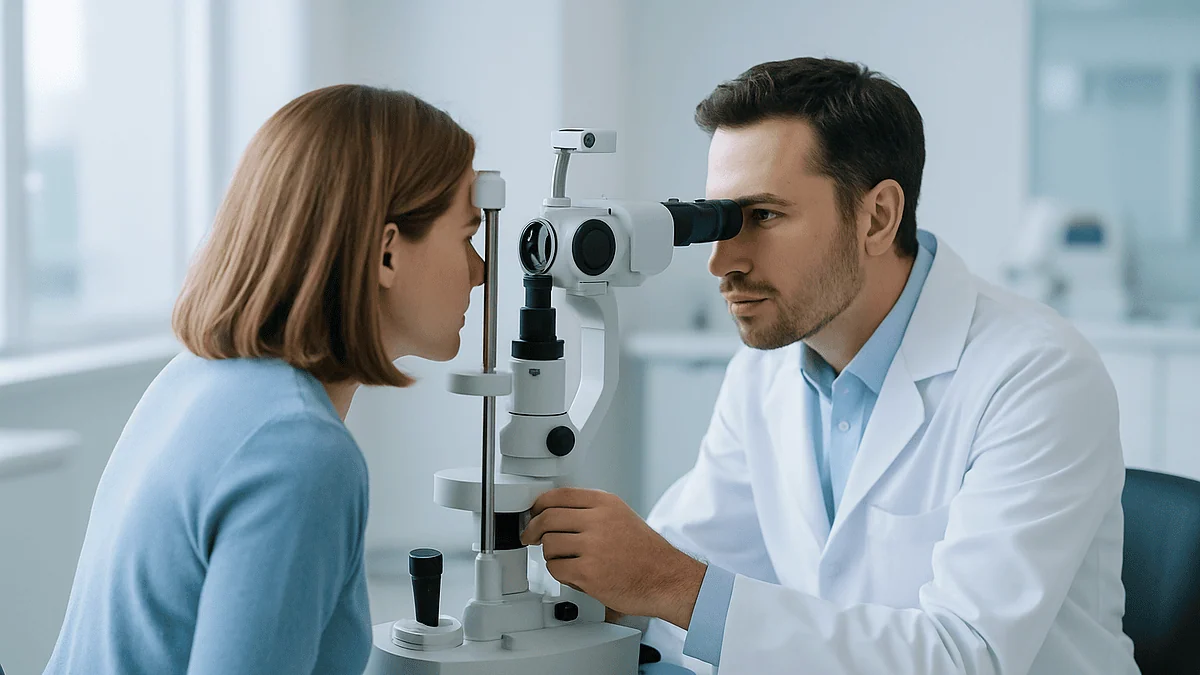
For the eye, the key examination is with a slit lamp, a microscope that lets the clinician see inflammatory cells floating in the front chamber of the eye, which is how anterior uveitis is confirmed. Eye pressure is measured. Drops that dilate the pupil may be used to prevent the iris sticking to the lens.
For a hot joint, expect blood tests measuring inflammation markers such as C-reactive protein and erythrocyte sedimentation rate, a full blood count, and blood cultures if you are feverish. The central test is aspirating the joint: a needle draws out fluid, which is examined for white cells, crystals and bacteria. An X-ray or ultrasound may follow. Urine and swab tests look for a persisting trigger.
Results from fluid microscopy can return within hours; cultures take longer. If infection is likely, treatment usually begins before cultures are final, because delay carries more risk than starting early. If the picture points instead to an active reactive flare, the visit still has value: treatment can be adjusted, and the follow-up date brought forward.
How treatment for reactive arthritis usually works: mechanisms and typical timelines
Treatment aims to control inflammation while the condition runs its course, to protect the eyes and joints from damage in the meantime, and to clear any infection that is still present. The choices sit with the treating team; what follows explains the logic, not a plan.
Nonsteroidal anti-inflammatory drugs are usually the first step for joint symptoms. They block enzymes that produce prostaglandins, the chemical messengers responsible for pain, swelling and warmth. Relief is often felt within days, though the underlying process continues in the background. They are not suitable for everyone, especially people with kidney, stomach or heart concerns, which is why the prescriber’s judgment matters.
Corticosteroids dampen inflammation more broadly. For a single very swollen joint, an injection directly into the joint is often preferred because it concentrates the effect where it is needed. For uveitis, corticosteroid eye drops are the mainstay, prescribed and tapered by an ophthalmologist who checks the eye’s response and pressure at each visit.
If arthritis persists for months despite these measures, rheumatologists may consider disease-modifying antirheumatic drugs, a class of medicines that alter immune signaling more fundamentally. These take weeks to show benefit and require blood monitoring, so they are reserved for the minority whose disease does not settle.
Antibiotics are used to treat a persisting triggering infection, particularly Chlamydia, and partners are usually treated too. They do not switch off the arthritis itself once it is established, a point that surprises many people.
Timelines help calibrate expectations. Mayo Clinic notes symptoms usually begin one to four weeks after infection; the NHS reports that most people improve within about six months, with a minority developing longer-lasting or recurrent symptoms. Physiotherapy throughout keeps joints moving and muscles strong, which shortens the road back to normal activity.
What the following days and weeks usually look like
Recovery from reactive arthritis rarely draws a straight line. Most people describe a stepwise pattern: a bad fortnight, a better week, a setback after overdoing it, then a longer stretch of improvement. Knowing this in advance prevents the common mistake of reading every dip as failure.
In the first week or two after diagnosis, the focus is on getting inflammation down and confirming that any triggering infection has been treated. Joint pain typically eases with anti-inflammatory treatment, though stiffness in the morning can linger. Conjunctivitis, if present, usually clears within a couple of weeks without specific treatment. If uveitis was diagnosed, expect frequent eye clinic visits early on, sometimes every few days, so the specialist can adjust drops as the inflammation responds. Skipping these is a false economy; the taper is guided by what the slit lamp shows, not by how the eye feels.
Across the following weeks, joint swelling generally recedes and function returns. Heel pain and tendon soreness can outlast the joint symptoms. Fatigue often persists longer than people expect, sometimes well after the joints look normal, and is worth mentioning at follow-up rather than enduring silently.
By around three to six months, the NHS and Mayo Clinic both describe most people as largely or fully recovered. A smaller group has symptoms that persist beyond this, and some experience recurrences, particularly people who carry HLA-B27. Recurrence does not mean the first episode was mismanaged; it reflects the underlying immune tendency.
Throughout, the same warning signs apply. A new painful eye, a fever that arrives after a period of feeling well, or a joint that suddenly worsens out of proportion to the others should reset the timeline and prompt a call, whatever week of recovery you happen to be in.
Post-fever arthralgia and other look-alikes worth knowing
Not every ache after an infection is reactive arthritis, and the distinction changes what follow-up is needed.
Post-fever arthralgia is joint pain, without true joint swelling, that follows a febrile illness. Arthralgia means pain in a joint; arthritis means inflammation of it, with swelling, warmth and sometimes redness. The difference is visible and palpable, and clinicians rely on it. Many viral infections, including influenza and the mosquito-borne infections chikungunya and dengue, can leave joints aching for weeks. The CDC notes that joint pain after chikungunya can be severe and, in some people, prolonged. These viral arthralgias usually fade without specific treatment, though they can be miserable in the meantime.
True viral arthritis, with swelling, can follow parvovirus, hepatitis B and C, rubella and others. It is usually symmetrical, often involving the small joints of the hands, which is a different pattern from the large lower-limb joints typical of reactive arthritis.
Gout and pseudogout are crystal arthritis. They can produce a single hot, red, exquisitely tender joint that looks, at first glance, exactly like infection or a severe reactive flare. Joint fluid analysis settles it by revealing crystals under polarized light. This is one more reason a very swollen joint should be aspirated rather than guessed at.
Psoriatic arthritis and the arthritis linked to inflammatory bowel disease belong to the same family as reactive arthritis, the spondyloarthritides, and share the tendency to affect tendons, the spine and the eyes. Sometimes what began as a presumed reactive episode is later reclassified when a rash or gut symptoms emerge.
None of this is for self-diagnosis. It is for understanding why a rheumatologist may order tests that seem unrelated to your knee, and why the label can shift as the picture clarifies.
Reactive arthritis flare symptoms versus rheumatoid arthritis getting worse
People often arrive at this topic having searched for signs that rheumatoid arthritis is getting worse, so the two conditions are worth separating clearly. Both cause inflamed joints; they are otherwise quite different diseases.
Rheumatoid arthritis is a long-term autoimmune condition in which the immune system attacks the joint lining without any identifiable infectious trigger. It classically affects the small joints of the hands and feet on both sides symmetrically, tends to persist for years, and is associated with specific antibodies in the blood. Worsening rheumatoid arthritis, according to Mayo Clinic and the NHS, usually shows as prolonged morning stiffness, an increasing number of tender and swollen joints, rising fatigue, and, over time, changes in joint alignment. Rheumatoid arthritis can also affect the eyes, but more often the outer coats, causing dryness or scleritis, rather than the anterior uveitis typical of reactive arthritis.
Reactive arthritis, by contrast, follows an infection, favors the knees, ankles and feet in an asymmetric pattern, and often resolves within months. A flare of reactive arthritis typically means the same lower-limb joints becoming more swollen and stiff again, sometimes with a return of heel pain, eye redness or urinary discomfort, occasionally with low-grade fever and fatigue.
Why does the distinction matter for urgency? In both conditions, the same red flags apply: one joint disproportionately hot and swollen, a painful light-sensitive eye, or fever with chills. But the routine follow-up differs. Rheumatoid arthritis needs sustained monitoring and long-term treatment adjustment; reactive arthritis needs surveillance through a defined recovery window and reassessment if it fails to settle. If you are unsure which diagnosis you have, or if an early label of reactive arthritis has stretched past a year, ask your rheumatologist directly whether the diagnosis still fits. Classifications do get revised.
What people often get wrong about reactive arthritis, eyes and fever
Myths cluster around this condition because it sits at the meeting point of infection, immunity and several organ systems. A few deserve correcting.
The first is that antibiotics will clear the arthritis. They treat a persisting infection, and that matters, especially with Chlamydia, where untreated partners can reinfect. But once the immune reaction is under way, antibiotics do not reliably shorten the joint illness. Expecting them to leads to disappointment and, sometimes, to unnecessary repeat courses.
The second is that any red eye is just conjunctivitis. Grittiness in both eyes with clear vision usually is. Deep ache, light sensitivity or blur in one eye is a different problem and should be treated as uveitis until an eye specialist says otherwise. The NHS advises urgent assessment for exactly this reason.
The third is that fever proves the original infection is back. Sometimes it does. Often it reflects the inflammation itself. Occasionally it signals infection in a joint. Only examination and tests can tell which, and the presence of a fever should trigger a call, not a self-prescribed remedy.
The fourth is that reactive arthritis is sexually transmitted. The triggering infection may be, but the arthritis is not contagious, and a gut infection from contaminated food is an equally common starting point. Nobody should feel shame about a diagnosis that follows a bout of food poisoning or an infection acquired in an ordinary relationship.
The fifth is that carrying HLA-B27 means a lifetime of disease. Most carriers never develop reactive arthritis, and many people with the condition do not carry the gene. It is one risk factor among several.
Finally, some assume rest is the best medicine for a swollen joint. Short rest during a flare helps, but prolonged immobility stiffens joints and wastes muscle. Guided movement, usually through physiotherapy, is part of standard care.
Questions to ask your care team
Appointments are short and questions evaporate under pressure. Writing a few down beforehand changes the quality of the conversation. These are the ones that tend to matter most for someone with reactive arthritis worried about eyes, fever or swelling.
- Has the infection that triggered this been identified and fully treated? Does anyone else, such as a partner, need testing or treatment?
- Which of my current symptoms fit the expected course, and which would you want to hear about the same day?
- If my eye becomes painful or light-sensitive outside clinic hours, exactly where should I go, and is there a direct route to an urgent eye service?
- What would make you suspect a joint infection in my case, and where should I present if that happens?
- Am I on any treatment that could mask a fever or blunt the signs of infection, and how should that change what I watch for?
- How long would you expect my joints to take to settle, and at what point would you reconsider the diagnosis or the treatment?
- Do I need HLA-B27 testing, and how would the result change my care?
- What movement and activity are safe now, and would a physiotherapy referral help?
- If I develop chest pain, breathlessness or palpitations, is that something you would want to know about urgently given this diagnosis?
- Who is my point of contact between appointments, and what is the quickest way to reach them?
Notice that none of these questions asks the clinician to promise an outcome. They ask for a map: what is expected, what is not, and what to do when the unexpected happens. That is the most useful thing a care team can give someone leaving with a diagnosis that may quietly resolve or may, in a minority, demand a fast response. Bring the answers home in writing, and keep them where the thermometer lives.
When to call your doctor: red-flag signs with reactive arthritis
Most of reactive arthritis is managed at scheduled appointments. The following signs are the exceptions, drawn from NHS, Mayo Clinic and Cleveland Clinic guidance, where waiting for the next routine slot is the wrong choice.
Seek emergency care now if one joint becomes hot, tense, markedly more swollen than the others and too painful to move or bear weight on, especially with fever, chills or feeling very unwell. This pattern can indicate septic arthritis, and cartilage damage can occur within days. Seek emergency care also for chest pain, breathlessness, fainting or a racing or irregular heartbeat; heart involvement in reactive arthritis is rare, but it exists and is time-critical.
Seek same-day assessment, through your care team or an urgent eye service, if an eye becomes deeply painful, sensitive to light, blurred or newly red in a ring around the iris. These are features of anterior uveitis, which the NHS advises should be examined promptly because untreated inflammation can permanently affect vision. Do not use leftover eye drops from a previous episode without advice.
Call your care team within the day if you develop a fever with shaking or sweats, if a previously settling pattern reverses and several joints flare at once, if you notice new symptoms such as painful urination, a new rash or mouth ulcers, or if you feel progressively more unwell rather than gradually better.
Contact your care team routinely, but do not skip it, if joint symptoms have not begun to improve after several weeks of treatment, if fatigue is interfering with daily life, or if you are unsure whether what you are experiencing is expected.
Every decision about testing, treatment and follow-up sits with the clinicians who can examine you. What this list offers is permission: to phone earlier than feels polite, and to go tonight rather than wait until morning when the eye or the joint is telling you something has changed.
Frequently asked questions
Do you get a fever with reactive arthritis?
A mild fever can occur, especially in the early weeks, along with tiredness and feeling generally unwell, because widespread joint inflammation releases chemicals that raise body temperature. What matters is the company the fever keeps. A temperature with chills, a single very hot swollen joint, or feeling much sicker than the day before can point to infection and should prompt same-day medical contact rather than waiting.
Can reactive arthritis affect the eyes?
Yes. The common form is conjunctivitis, which makes both eyes red, gritty and watery with normal vision and usually clears within a couple of weeks. The serious form is anterior uveitis, inflammation inside the front of the eye, which causes deep pain, light sensitivity and blurred vision, usually in one eye. Uveitis needs prompt examination by an eye specialist because untreated inflammation can permanently affect sight.
What is post-fever arthralgia?
Post-fever arthralgia is joint pain, without visible swelling, that lingers after a febrile illness such as influenza, chikungunya or dengue. Arthralgia means pain; arthritis means inflammation with swelling and warmth. Viral arthralgia usually fades on its own over weeks, though it can be intense. If a joint becomes swollen, hot or difficult to move, that is no longer simple arthralgia and deserves assessment.
What are some signs that rheumatoid arthritis is getting worse?
Rheumatoid arthritis is a different, long-term autoimmune condition, but worsening usually shows as longer morning stiffness, more tender and swollen joints on both sides, rising fatigue and, over time, changes in joint shape. Unlike reactive arthritis, it favors the small joints of the hands and feet and does not follow an infection. If your diagnosis is uncertain, ask your rheumatologist directly which condition you have.
How urgent is eye pain with reactive arthritis?
Deep eye pain, light sensitivity or blurred vision is a same-day problem. These are features of anterior uveitis, and the NHS advises prompt specialist assessment because inflammation can cause the iris to stick to the lens, raise eye pressure and, if untreated, damage vision. Surface grittiness in both eyes with clear vision is usually conjunctivitis and can wait for routine advice.
What does a reactive arthritis flare feel like?
Reactive arthritis flare symptoms usually mean the same lower-limb joints, often knees, ankles or feet, becoming stiffer and more swollen again, sometimes with a return of heel pain, eye redness or urinary discomfort, low-grade fever and fatigue. A flare typically builds over days and involves familiar joints. A single joint that worsens over hours and becomes hot and unmovable is a different pattern and needs urgent review.
How long does reactive arthritis usually last?
Most people improve within about six months according to the NHS, with many feeling considerably better before that. Symptoms typically begin one to four weeks after the triggering infection. A minority develop longer-lasting arthritis or recurrent episodes, more often among people who carry the HLA-B27 gene. These are typical ranges from published guidance, not predictions for any individual; your care team can tell you what to expect in your case.
Can severe joint swelling in reactive arthritis be an infection?
It can. Septic arthritis, bacterial infection inside a joint, is uncommon but can occur in people whose joints are already inflamed. The warning pattern is one joint becoming dramatically hot, tense and impossible to move, often with fever and chills. The only reliable test is drawing fluid from the joint. This is an emergency because bacteria can damage cartilage within days.
Do antibiotics make reactive arthritis go away?
Antibiotics treat a persisting triggering infection, particularly Chlamydia, and partners are usually treated too. They do not reliably shorten the arthritis once the immune reaction has started, because the joints themselves are not infected. Joint symptoms are managed separately with anti-inflammatory approaches chosen by the treating team, and most cases settle over months as the immune response calms.
Is reactive arthritis contagious or sexually transmitted?
The arthritis itself is not contagious. The infection that triggers it can be, if it was a sexually transmitted infection such as Chlamydia, which is why partners are offered testing. A gut infection from contaminated food is an equally common starting point. Carrying the HLA-B27 gene raises susceptibility, but most carriers never develop the condition.
References
- Reactive arthritis (NHS)
- Uveitis (NHS)
- Reactive arthritis (MedlinePlus Medical Encyclopedia)
- Reactive Arthritis (NIH National Institute of Arthritis and Musculoskeletal and Skin Diseases)
This article is for general information only and is not a substitute for professional medical advice. Please consult a qualified doctor about your individual situation.

More from the Blog

Staying on SLE Medication Between Flares: What the Monitoring Tests Are Looking For
People with systemic lupus erythematosus (SLE) are usually asked to keep taking maintenance medicines between flares because these drugs quiet immune activity before damage…

Vaccination Planning During Long-Term Vasculitis Therapy: What Your Team Schedules and Why
People receiving long-term immunosuppression for vasculitis can and should receive most vaccines, but timing matters. Non-live vaccines such as influenza, pneumococcal, COVID-19 and recombinant…

Why Lung Function Tests and Echocardiography Come Early in Scleroderma Treatment
Lung function tests and echocardiography are ordered early in scleroderma because the two complications most likely to shorten life, interstitial lung disease and pulmonary…

X-Ray or MRI for Ankylosing Spondylitis: What Each Scan Shows Your Rheumatologist
Rheumatologists use both scans for different jobs. An X-ray shows structural bone damage in the sacroiliac joints or spine, such as erosions, sclerosis and…

Systemic Lupus Erythematosus: When Chest Pain or Breathlessness Means Urgent Medical Advice
In systemic lupus erythematosus, chest pain or breathlessness that is sudden, severe, worsening over hours, or paired with fever, fainting, a racing heartbeat, coughing…

How Imaging and a Clinical Exam Set the Starting Point for Osteoarthritis Treatment
Osteoarthritis treatment usually starts with a hands-on clinical exam, with imaging added when it will change a decision. A plain X-ray shows joint-space narrowing,…