

Falls Prevention After 65: The Strength and Balance Program That Cuts Fractures

Key Takeaways
- One in four US adults aged 65 and over falls each year, and falls are behind about 95 percent of hip fractures.
- Balance and functional exercise cuts the rate of falls by about 24 percent with high-certainty evidence, and adding progressive leg strengthening pushes the reduction toward a third.
- Programs need to total roughly 50 hours over several months, about three sessions a week, before the full benefit appears, and the effect fades within months of stopping.
- Walking alone and strength training alone have not reduced falls in trials; the balance challenge, working at the edge of steadiness beside a support, is the active ingredient.
- Vitamin D supplements do not reduce falls in older adults who are not deficient, and the US Preventive Services Task Force recommends against them for this purpose.
- Hitting your head while taking an anticoagulant warrants same-day medical review even if you feel fine, because bleeding inside the skull can develop over hours.
Falls prevention after 65 works best with a structured strength and balance program: progressive balance exercises, leg-strengthening and regular walking, done about three times a week over several months. In randomized trials this approach cuts the rate of falls by roughly a quarter to a third, and it is the only single intervention backed by high-certainty evidence. Reviewing medicines, vision, footwear and home hazards with a clinician adds further protection.
Every September, as Falls Prevention Awareness Week comes around, search traffic for falls prevention jumps, and this year the questions sound different. Fewer people are asking which grab bar to buy. More are asking about the strength and balance program that clinicians keep recommending, and whether it genuinely works. As of September 2026, the answer from the evidence has been remarkably steady for several years: it does, and it is the only fall intervention that has earned high-certainty backing from randomized trials.
Picture a 74-year-old reaching for a cereal box on the top shelf. The arm goes up, the weight shifts onto the balls of the feet, and for half a second there is a wobble that was not there at 60. Nothing happens. The box comes down. But that half second is where most of the story of falls after 65 lives.
What follows is a tour of that half second: why it appears, which exercises shorten it, how strong the evidence is, and when a fall or near-fall needs a doctor rather than a cold pack.
What are the consequences of a fall after 65?
A fall is rarely “just a fall” once you pass 65. The CDC estimates that one in four adults in this age group falls each year, and that falls cause more than 3 million emergency department visits annually in the United States. Most of those visits end with a bruise and a shaken confidence. A meaningful minority do not: about one fall in five causes a serious injury such as a fracture or a head injury, and falls are behind roughly 95 percent of hip fractures.
The hip fracture is the outcome that changes a life. Recovery usually involves surgery and months of rehabilitation, and a substantial share of people never return to the walking ability or independence they had before. Falls are also the most common cause of traumatic brain injury in older adults, partly because anticoagulants, medicines that thin the blood, make bleeding inside the skull more likely after even a modest knock to the head.
Then there is the quieter consequence. After a fall, many people start avoiding the activities that frightened them: the garden, the stairs, the walk to the mailbox. Doing less weakens the legs and dulls balance, which raises the chance of the next fall. Clinicians call this the fear-of-falling cycle, and breaking it is as much the point of a strength and balance program as the muscle itself.
Worldwide, the WHO counts around 684,000 fatal falls a year, making falls the second leading cause of unintentional injury death after road traffic injuries, with adults over 60 bearing the greatest share. Those numbers explain why falls prevention has moved from a footnote in geriatric care to a central piece of staying independent.
What changed recently in falls prevention guidance
The science did not flip; it consolidated. In June 2024 the US Preventive Services Task Force, the independent panel that grades preventive care, reaffirmed its recommendation that clinicians offer exercise interventions to community-dwelling adults aged 65 and over who are at increased risk of falls. That is a Grade B recommendation, the panel’s second-highest tier, meaning the net benefit is judged moderate to substantial. Multifactorial programs, which bundle several interventions tailored to a person’s risks, kept a Grade C: offer them selectively, because the average benefit is small.
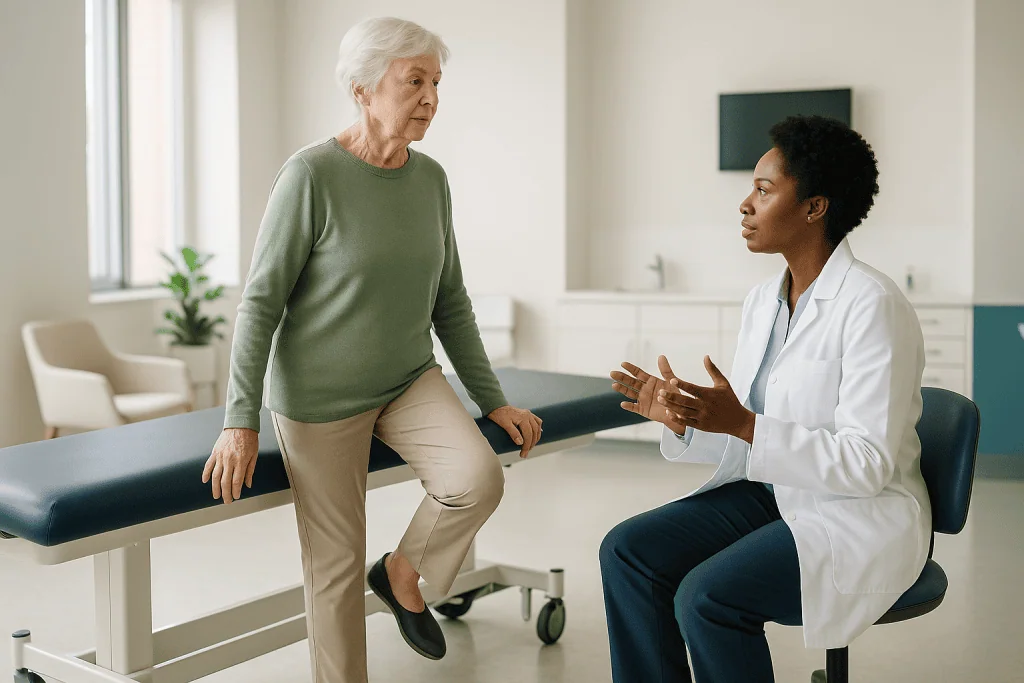
Two years earlier, in 2022, an international group of 96 experts from 39 countries published the World Guidelines for Falls Prevention and Management in the journal Age and Ageing. Their biggest change was a simple three-tier risk sort (low, intermediate, high), with exercise recommended for everyone and a full fall risk assessment reserved for those at high risk. The CDC’s STEADI initiative (Stopping Elderly Accidents, Deaths and Injuries) already used a similar screen-then-act structure.
The data behind both documents comes largely from the 2019 Cochrane review of 108 randomized trials involving more than 23,000 people, which found that balance and functional exercise reduces the rate of falls by about a quarter with high-certainty evidence. No later trial has overturned that finding, and as of September 2026 no medicine has come close to matching it.
What has changed on the ground is attention. CDC data showing more than 38,000 fall deaths among adults 65 and over in 2021, a figure that rose through the preceding decade, together with Falls Prevention Awareness Week each September, have pushed clinics to screen more routinely. The practical message for a reader is that the recommended program has been stable for years; what is new is how strongly guidelines now say to start it before the first fall.
Why do I keep tripping and falling?
Tripping is a clearance problem. When you walk, your swinging foot clears the ground by only about 1 to 2 centimeters at its lowest point. Anything that lowers the foot a fraction, or lifts the floor a fraction, closes that gap: a weak shin muscle that does not pull the toes up, a rug edge, a stiff hip that shortens the stride.
Several age-related changes stack up here. Sarcopenia, the gradual loss of muscle mass and strength that begins around age 50 and accelerates after 70, hits the legs first and the fast-twitch fibers hardest. Those are the fibers you need to catch yourself in the half-second after a stumble. Reaction time slows. Proprioception, the sense of where your joints are in space, dulls, especially if diabetes or vitamin B12 deficiency has damaged the nerves in the feet, a condition called peripheral neuropathy.
Falls that happen on standing up point elsewhere. Orthostatic hypotension, a drop in blood pressure within three minutes of rising, starves the brain for a moment and causes a lightheaded sway. Dehydration, some blood pressure and prostate medicines, and Parkinson’s disease all make it worse. Dizziness that spins with head movement suggests the inner ear rather than the legs.
Attention plays a part too. Older adults who fall often fall while doing two things at once: carrying laundry downstairs, talking while stepping off a curb. Researchers call this dual-task cost, and it is one reason balance programs increasingly add a counting or naming task to the exercises.
Repeated falls are a pattern worth taking seriously rather than explaining away as clumsiness. Two or more falls in a year, or any fall with injury, places a person in the high-risk group where guidelines recommend a full assessment, covered later in this article.
What is the strength and balance program that cuts falls?
The best-known version is the Otago Exercise Programme, developed by physiotherapists at the University of Otago in New Zealand in the late 1990s and tested in four randomized trials of people aged 65 to 97 living at home. It is deliberately unglamorous: 17 leg-strengthening and balance exercises done at home three times a week, plus a walking plan, with a physiotherapist or trained instructor visiting a handful of times over the first months to progress the difficulty. Strength comes from ankle weights that gradually get heavier; balance comes from narrowing your base and slowly letting go of the support.
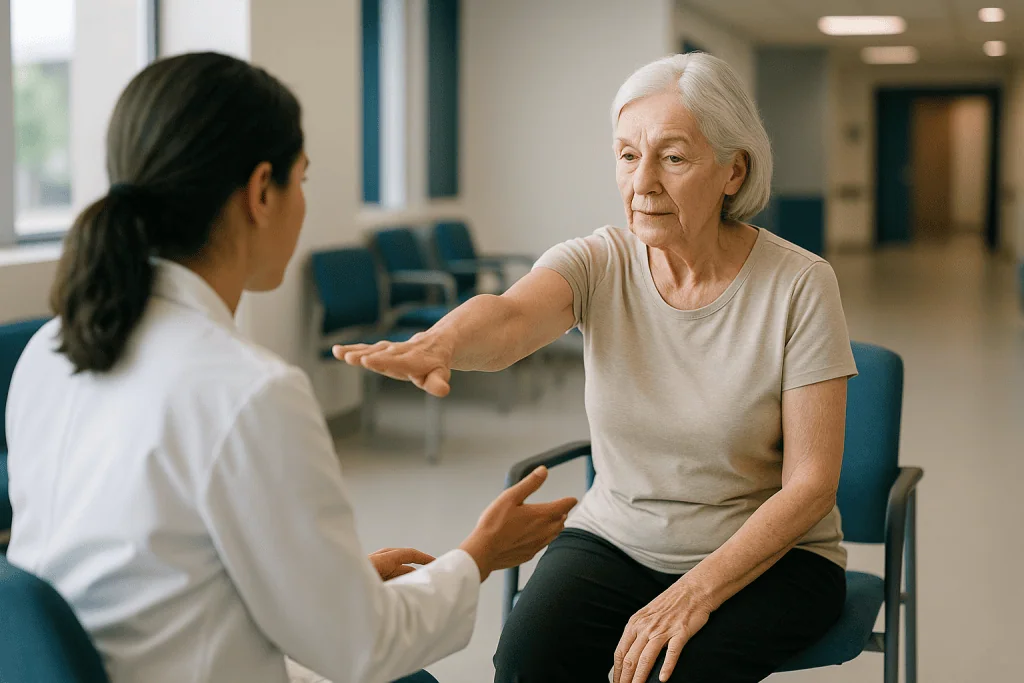
Across the original trials, participants fell about 35 percent less often than controls, and the benefit was largest in people over 80 and those with a previous fall. That pattern, more benefit for those at higher risk, has held up in later studies.
Otago is not the only route. Tai chi, the slow weight-shifting martial art, has moderate support, and community group classes built on the same principles perform similarly to home programs when people actually attend. What the effective programs share matters more than the name: they challenge balance in standing, they load the legs progressively, and they run for months rather than weeks.
Two points the research is clear about. First, the balance component is not optional; strength training alone has weaker and less consistent effects on falls. Second, “challenge” means working at the edge of steadiness, standing on one leg beside a counter with a fingertip ready, not performing seated leg lifts. Programs that feel comfortable from start to finish tend not to reduce falls, because the nervous system only recalibrates when it is asked to.
Exercise to prevent falls: how much, how hard, how often
Dose matters in exercise just as it does in medicine. Pooled analyses of fall-prevention trials suggest that programs totaling at least 50 hours over their course, roughly two to three hours a week for several months, produce the largest reductions, while short or infrequent programs often show none. Think of it as a course of treatment with a minimum effective dose, not a one-off class.
A practical week built on Otago principles looks like this:
- Balance, three days: tandem stand (one foot directly in front of the other), single-leg stand, heel-to-toe walking along a hallway, walking backwards and sideways, and turning in a small circle. Each is done beside a counter or sturdy chair so a hand can land if needed.
- Leg strength, three days: sit-to-stand from a chair without using the arms, heel raises, toe raises, and side and back leg lifts, progressed with ankle weights or a slower tempo.
- Walking, two or more days: 30 minutes at a comfortable pace, split into shorter bouts if needed.
Progression is the engine. When a balance exercise feels easy with one hand on the counter, move to a fingertip, then to no hands, then to eyes closed or with a head turn. When ten sit-to-stands feel easy, slow them down or hold a small weight. Each step forward should feel slightly unsteady but controlled.
Soreness in the thighs for a day or two after the first sessions is normal and settles as the muscles adapt. Sharp joint pain, chest pain, or dizziness during exercise is not, and is a reason to stop and check with a clinician. Anyone with recent falls, a heart condition, or osteoporosis benefits from starting with a physiotherapist rather than a video.
What the evidence actually says about falls prevention
Not every intervention carries the same weight, and the honest picture is more layered than “exercise works.” The table summarizes the main options, with the size of the effect on falls and how confident researchers are in it, drawn mainly from Cochrane reviews and the 2024 USPSTF evidence report.
| Intervention | Effect on falls (community-dwelling adults 65+) | Strength of evidence |
|---|---|---|
| Balance and functional exercise | Rate of falls reduced about 24% | High certainty, randomized trials |
| Balance plus progressive resistance training | Rate reduced about 34% | Moderate certainty |
| Tai chi | Rate reduced about 19% | Low certainty |
| Resistance training alone | Uncertain; small or no effect | Low certainty |
| Walking alone | No clear reduction; may increase exposure in frail people | Low certainty |
| Multifactorial assessment with tailored plan | Small reduction in rate of falls | Moderate certainty; USPSTF Grade C |
| Home hazard assessment by an occupational therapist | Rate reduced about a quarter in high-risk people | Moderate certainty |
| Vitamin D supplements (no deficiency) | No reduction in falls | Moderate certainty; USPSTF recommends against |
A few translations. “Rate of falls” counts all falls per person-year, so a 24 percent reduction means a group that would have had 100 falls has 76. “High certainty” means further research is unlikely to change the estimate; “low certainty” means it well might. Multifactorial programs look weaker on paper partly because trials vary enormously in what they actually deliver, and the exercise component often gets diluted.
The finding worth repeating is the direction of the strength-alone and walking-alone rows. Neither is useless for health, but neither is falls prevention by itself. The balance challenge is the active ingredient.
Does strength and balance training actually cut fractures?
This is where honesty beats headline. Falls are the proximate cause of nearly all hip and wrist fractures after 65, so fewer falls should mean fewer fractures, and trial data lean that way: in the 2019 Cochrane review, people in exercise groups were about 27 percent less likely to suffer a fall-related fracture. Fractures are rarer events than falls, though, so the confidence interval is wide and Cochrane rates that estimate as low certainty. The probable benefit is real; its exact size is not nailed down.
Exercise cannot carry the whole load because a fracture needs two ingredients: a fall and a bone weak enough to break. Osteoporosis, the loss of bone density and structure that makes bones fragile, affects roughly one in five women and one in twenty men over 50. Weight-bearing and resistance exercise helps maintain bone, but it does not reverse established osteoporosis on its own.
Fracture prevention is therefore a two-track effort. Track one is the strength and balance program. Track two is bone health, which runs through the clinician’s office. Bone density scanning (DXA) is recommended for all women from age 65 and for younger postmenopausal women and older men with risk factors such as a prior fracture, long-term steroid use, or low body weight. If the scan shows osteoporosis, prescription bone-strengthening medicines exist, and whether one is appropriate is a decision for the treating clinician based on individual fracture risk.
Vitamin D deserves a plain statement. For older adults who are not deficient, supplements have not reduced falls or fractures in large trials, and the USPSTF recommends against them for that purpose. Whether to test for deficiency, and what to do if it is found, is a question for your doctor rather than the supplement aisle.
Fall risk assessment: what a check-up actually looks for
A fall risk assessment is a structured check of the things that make a fall more likely, and most of it takes under ten minutes. The CDC’s STEADI protocol opens with three questions anyone over 65 can ask themselves: Have you fallen in the past year? Do you feel unsteady when standing or walking? Do you worry about falling? A yes to any one flags the need to look closer.
The physical tests are refreshingly low-tech:
- Timed Up and Go: rise from a chair, walk three meters, turn, walk back and sit. Twelve seconds or more suggests elevated risk.
- 30-second chair stand: how many times you can stand fully from a chair without using your arms in half a minute, compared with age norms.
- Four-stage balance test: feet together, then semi-tandem, then tandem, then single leg. Not holding the tandem position for ten seconds predicts falls.
The clinician then checks blood pressure lying and standing to catch orthostatic hypotension, reviews every medicine including over-the-counter and herbal products, looks at vision and feet, and asks about continence, sleep and mood. A brief cognition screen matters because memory problems multiply fall risk and change what kind of program will stick.
Under the 2022 World Guidelines, the result sorts people into three groups. Low risk: keep active and recheck in a year. Intermediate risk: start a supervised strength and balance program. High risk, meaning a fall with injury, two or more falls, or inability to rise unaided: the full multifactorial assessment above, with a tailored plan that nearly always still has exercise at its center. If your annual visit has never included these tests, asking for them is a reasonable request.
Medicines and falls: questions for the prescriber
Medicines are the most modifiable fall risk factor after muscle weakness, and the most delicate to address, because every one of them was prescribed for a reason. The classes most consistently linked to falls in observational studies are sedative-hypnotics such as benzodiazepines and “Z-drug” sleeping tablets, many antidepressants, antipsychotics, opioid painkillers, and anticholinergic drugs, which block a nerve messenger called acetylcholine and turn up in some bladder, allergy and sleep products. Blood pressure medicines, diabetes medicines that can cause low blood sugar, and medicines for prostate symptoms add risk through dizziness on standing.
Polypharmacy, usually defined as taking five or more regular medicines, raises risk independently, partly through interactions and partly because the sheer number makes errors more likely. CDC’s STEADI guidance accordingly asks clinicians to review and, where safe, reduce fall-risk-increasing drugs as part of every assessment.
What the evidence does not support is stopping anything yourself. Abruptly discontinuing a benzodiazepine can cause seizures; stopping a blood pressure tablet can precipitate a stroke. Deprescribing, the planned reduction or withdrawal of medicines that may no longer help, is a clinical process with tapering and monitoring, and trials suggest it can lower fall rates when carried out as part of a wider plan.
Useful questions to bring to the appointment:
- Which of my medicines can cause dizziness, drowsiness or a drop in blood pressure?
- Is there anything on this list I no longer need, or that could be taken at a different time of day?
- Could any over-the-counter sleep or allergy products be adding to the problem?
- Should my blood pressure be checked standing as well as sitting?
Bring every bottle, including supplements. The decision about what changes, if anything, belongs to the prescriber, but the review will not happen unless someone asks for it.
Vision, footwear and the home: fixing the environment
About half of falls happen at home, and most of the hazards are boringly fixable: loose rugs, trailing cords, a dim hallway between bed and bathroom, a bathtub with nothing to hold. Cochrane reviews find that a home hazard assessment carried out by an occupational therapist, who looks not just at the house but at how the person moves through it, reduces falls by about a quarter in people at high risk. Generic checklists help less, mostly because people fix the easy items and skip the ones that matter.
The highest-yield changes, drawn from NHS and CDC guidance:
- Grab bars beside the toilet and inside the shower, screwed into studs rather than suction-mounted.
- A night light on the route to the bathroom, and a bedside lamp reachable before standing.
- Rugs removed or fixed down with double-sided tape; cords routed along walls.
- Handrails on both sides of any staircase, extending beyond the top and bottom step.
- Frequently used kitchen items moved to waist-to-shoulder height so no step stool is needed.
Eyes matter as much as floors. Cataracts, the clouding of the eye’s lens, roughly double fall risk, and trials show that bringing forward cataract surgery for the first eye reduces falls. An annual eye examination is recommended after 65. One counterintuitive finding: multifocal glasses blur the lower field of vision exactly where the next step is, and switching to single-vision distance glasses for walking outdoors reduced falls in a randomized trial of active older adults. Ask your optometrist whether that applies to you.
Feet round it out. Foot pain, bunions and stiff ankles all impair balance, and a podiatry program of foot exercises, insoles and footwear advice reduced falls by over a third in one trial. The shoe rule is simple: thin firm sole, low heel, enclosed back, secure fastening. Slippers and socks on hard floors appear in fall reports far too often.
How to start safely, and why doing less makes falls more likely
The paradox of the fear-of-falling cycle is that the cautious choice is the risky one. Observational cohorts consistently show that people who restrict activity after a fall lose strength faster and fall more in the following year than those who keep moving. Muscle responds to load at every age; meta-analyses of resistance training in adults over 75 find strength gains comparable in percentage terms to those of younger adults. The capacity to improve does not expire.
Starting points depend on where you are:
- Active and steady: a community class such as tai chi or a strength-and-balance group twice a week, plus balance practice at home, is enough.
- Recent fall, unsteady, or using a walking aid: ask for a physiotherapy referral. A tailored program with a few supervised sessions is both safer and more effective, and most Otago trials were delivered this way.
- Frail or living with dementia: programs still work, but they need a carer or instructor present, shorter sessions, and exercises woven into routines such as standing during television commercials.
Adherence, sticking with the program, is the weak point in every trial. Roughly a third of participants drop out of home programs within a year, and benefits fade within months of stopping. The things that help are mundane: a fixed time of day, a visible chart, exercising with another person, and a reason that matters personally (getting back on the golf course motivates better than “reducing fall risk”).
Expect the first fortnight to feel awkward and slightly unsteady; that is the point of balance work. Noticeable improvement in rising from a chair usually arrives within about six weeks, and confidence within three months. Falls themselves are too rare to register a change quickly, which is exactly why it helps to track something you can feel.
Common myths about falls prevention
“Falls are just part of getting older.” Age raises risk, but most falls have identifiable, modifiable causes, and the randomized evidence that falls can be reduced by about a quarter with exercise is as strong as evidence gets in prevention. Inevitability is a myth with consequences, because it stops people asking for help.
“If I’m unsteady, I should rest and be careful.” Caution about hazards, yes. Rest, no. Inactivity accelerates muscle loss and is a well-documented predictor of further falls. The safe response to unsteadiness is supervised balance training, not a recliner.
“Walking every day is enough.” Walking is excellent for the heart and mood, but programs based on walking alone have not reduced falls in trials and may increase exposure in frail people. The balance challenge is what counts.
“A vitamin D pill will protect me.” For older adults without deficiency, large trials have found no reduction in falls, and the USPSTF recommends against supplements for this purpose. Testing and treating a genuine deficiency is a separate question for your clinician.
“A hip protector or a medical alert pendant prevents falls.” Neither prevents a fall. Alert pendants shorten time spent on the floor afterward, which is valuable in itself; hip protectors reduce hip fractures modestly in care homes but have weak evidence at home, largely because people do not wear them.
“Balance exercises are dangerous for someone who falls.” The exercises are done beside a support and progressed gradually; in trials the exercise groups had fewer injuries overall, not more. The risk lies in doing nothing.
“Only frail people need this.” One in four adults over 65 falls each year, including many who consider themselves fit, often outdoors and at speed. Prevention works earliest and best before the first fall.
What causes soreness after a fall?
Soreness that peaks a day or two after a fall and then eases is usually one of three things. The first is bruising: blood leaks from small vessels into the tissue, and the pressure and inflammation that follow are tender to touch. The second is muscle strain. In the half-second of a stumble, muscles contract hard and fast to try to save you, and that sudden load produces delayed-onset muscle soreness much like an unaccustomed workout. The third is impact on soft tissue over bone, at the hip, elbow or shoulder, which can ache deeply for a week.
Anticoagulant and antiplatelet medicines, and simply thinner skin, mean older adults bruise more readily and more visibly than younger people. A dramatic purple bruise is not by itself alarming; a swelling that keeps growing is.
For ordinary soreness, the first 48 hours follow familiar rules: rest the area without stopping all movement, apply a cold pack wrapped in cloth for 15 to 20 minutes a few times a day, keep the limb raised when sitting, and move gently through a pain-free range to prevent stiffness. Which pain reliever, if any, suits you depends on your other medicines and kidney function, so check with a pharmacist or clinician rather than assuming.
Pain that behaves differently should change the plan. A fracture typically hurts immediately, sharply, and more with weight-bearing or movement; soreness that is worse on day two than day one is more often muscular. Hip fractures sometimes present as groin or knee pain rather than hip pain, and some people walk on them for days. The next section sets out the signs that mean a fall needs medical review rather than a cold pack.
When to see a doctor after a fall or about falls risk
Call emergency services, or go to the emergency department, if any of the following follow a fall:
- You cannot get up, cannot bear weight, or a leg looks shortened or turned outward (possible hip fracture).
- You hit your head and take an anticoagulant or antiplatelet medicine, or anyone who hit their head has a worsening headache, vomiting, confusion, drowsiness, unequal pupils, or a seizure. Bleeding inside the skull can develop hours after the injury.
- Numbness, weakness or tingling in the arms or legs, or new difficulty controlling bladder or bowel, which can indicate a spinal injury.
- Severe pain, a visible deformity, or a wound that will not stop bleeding.
- You were on the floor for more than an hour, which raises the risk of dehydration, pressure injury and muscle breakdown.
Book a routine appointment within a few days if a fall happened without an obvious trip, if you felt dizzy or faint beforehand, if you have fallen twice or more in a year, if soreness is not improving after a week, or if you have started avoiding activities out of fear. A fall with no clear cause is sometimes the first visible sign of a heart rhythm problem, an infection, or a medication effect, and it deserves a look.
See your clinician before starting a strength and balance program if you have a heart condition, uncontrolled blood pressure, osteoporosis with a previous fracture, or a neurological condition such as Parkinson’s disease. None of these rules out exercise; they shape how it is supervised.
Every decision about medicines, bone-strengthening treatment, or supplements described in this article belongs with the prescribing clinician, who knows your full history. The goal of a fall check-up is not a label to worry about but a plan you can start this week.
Frequently asked questions
What are the potential consequences of falls in the elderly?
About one fall in five among adults over 65 causes a serious injury such as a fracture or head injury. Hip fractures are the most life-altering, often requiring surgery and months of rehabilitation, and many people never regain their previous independence. Falls are also the leading cause of traumatic brain injury in older adults. Beyond injury, fear of falling leads to reduced activity, weaker legs and a higher risk of the next fall.
Why do I keep falling for no reason?
Falls that feel causeless usually have a cause that is simply not visible: muscle loss that slows your recovery from a stumble, a blood pressure drop on standing, medicines that cause drowsiness or dizziness, nerve damage in the feet, cataracts, or an inner ear problem. Two or more falls in a year, or any fall with injury, is a signal to ask your clinician for a fall risk assessment rather than to accept it as clumsiness.
What are the best balance exercises for seniors?
The exercises with the strongest trial support are standing ones that progressively narrow your base: tandem stand, single-leg stand, heel-to-toe walking, walking backwards and sideways, and turning in a small circle, all done beside a counter so a hand can land if needed. They work best combined with leg strengthening such as sit-to-stands and heel raises, three times a week, and progressed as they become easier.
How long does exercise to prevent falls take to work?
Strength gains are usually noticeable within about six weeks and confidence within three months, but the reduction in falls in trials appears over programs lasting several months and totaling at least 50 hours. Falls are too infrequent to notice a change week to week, so tracking something you can feel, such as how many sit-to-stands you can do in 30 seconds, is a more realistic way to see progress.
What causes soreness after a fall and how long should it last?
Most post-fall soreness comes from bruising, muscle strain from the sudden effort of trying to stay upright, or impact on soft tissue over bone. It typically peaks a day or two after the fall and settles over about a week with gentle movement and cold packs. Pain that started immediately and sharply, worsens with weight-bearing, or is not improving after a week should be assessed by a clinician.
Is tai chi as good as a strength and balance program?
Tai chi reduces falls by about 19 percent in pooled trials, compared with about 24 percent for balance and functional exercise and about 34 percent for combined balance and resistance training. The evidence for tai chi is graded low certainty, so the true effect may be larger or smaller. It is a good option for people who enjoy it and attend regularly, since consistency matters more than the label.
Does vitamin D prevent falls?
For older adults who are not deficient, large randomized trials have not shown that vitamin D supplements reduce falls or fractures, and the US Preventive Services Task Force recommends against supplementation for this purpose. Whether you should be tested for deficiency, and how a confirmed deficiency should be managed, is a separate question that belongs with your clinician rather than a decision to make on your own.
What happens in a fall risk assessment?
A fall risk assessment starts with three questions about falls in the past year, unsteadiness and worry about falling, followed by short physical tests such as the Timed Up and Go, the 30-second chair stand and a four-stage balance test. The clinician also checks blood pressure lying and standing, reviews all medicines, and looks at vision, feet and cognition. The result places you in a low, intermediate or high risk group with a matching plan.
Should I stop a medicine that makes me dizzy?
No, not on your own. Several medicine classes raise fall risk, including sedatives, some antidepressants, opioids and blood pressure drugs, but stopping them abruptly can be dangerous, causing seizures or a stroke in some cases. The right step is to bring every medicine and supplement to your prescriber and ask for a fall-focused review. Any reduction, swap or timing change should be planned and monitored by that clinician.
What are some important health topics for senior citizens alongside falls prevention?
Falls prevention sits alongside bone health screening, blood pressure and heart health, vision and hearing checks, vaccinations recommended for older adults, medication review, and maintaining muscle through strength training. Many of these overlap: a bone density scan, an eye examination and a medicine review each reduce fracture risk directly. A yearly visit that covers them together is the most efficient way to protect independence.
References
- CDC STEADI: Stopping Elderly Accidents, Deaths and Injuries
- WHO Fact Sheet: Falls
- NIH National Institute on Aging: Falls and Fractures in Older Adults: Causes and Prevention
- NHS: Falls, Prevention
This article is for general information only and is not a substitute for professional medical advice. Please consult a qualified doctor about your individual situation.

More from the Blog
The Imaging Behind Robotic Knee Replacement: How Your Scans Shape the Implant Plan
Imaging before robotic knee replacement usually means a CT scan of the hip, knee and ankle, or detailed X-rays, that software turns into a…
What a Slipped Disc Feels Like, and How to Tell If You Have One
A slipped (herniated) disc most often feels like a deep ache in the lower back or neck paired with sharp, burning or electric pain…

What Kind of Anesthesia Is Used for Hip Replacement? Spinal, General and the Recovery Room
Most hip replacements are done under spinal anesthesia, a numbing injection in the lower back that blocks feeling from the waist down, usually paired…
Hand Surgery Recovery Milestones: Splint Removal, Grip Strength and Returning to Work
Hand surgery recovery time depends on what was repaired. The skin usually heals within about two weeks, a splint often comes off somewhere between…

Can Clubfoot Come Back After Treatment? Relapse, Bracing Lapses and What Happens Next
Yes, clubfoot can come back after treatment. Relapse most often appears in the first few years of life, and the strongest known predictor is…

Caring for a Baby in a Spica Cast After Hip Dysplasia Surgery: Feeding, Diapers and Sleep
Spica cast care for a baby after hip dysplasia surgery centers on four routines: keep the cast dry and intact, change diapers often with…