

Gastric Sleeve Myths, Corrected: Stretching the Pouch, Never Eating Normally and More

Key Takeaways
- A sleeve gastrectomy removes about 80 percent of the stomach, including most of the fundus that produces the hunger hormone ghrelin, which is why appetite often falls as well as capacity.
- The term "pouch" belongs to gastric bypass; a sleeve is a narrow tube that can relax modestly over time but does not return to its original size through ordinary eating.
- NHS guidance describes a staged return from liquids to pureed, soft and then varied solid foods over roughly six weeks, after which most everyday foods are eaten in small portions.
- Serious complications such as staple-line leaks and blood clots are uncommon but concentrated in the first weeks, which is why fever, rising pulse and worsening pain are treated urgently.
- Acid reflux can appear or worsen after a sleeve because the narrow stomach is a higher-pressure system, and uncontrolled reflux is one of the two main reasons a revision to bypass is considered.
- Lifelong vitamin and mineral supplements, regular blood tests and avoiding pregnancy for around 12 to 18 months after surgery are standard NHS advice, not optional extras.
Most gastric sleeve myths do not survive contact with the evidence. The stomach does not grow back, and while the remaining sleeve can relax somewhat over time, it does not stretch back to its original size through ordinary eating. Most people return to small, varied, mostly ordinary meals within a few months. Lifelong supplements, follow-up and food habits matter more than any single rule.
The pre-assessment clinic has a particular kind of quiet. A man in his forties sits with a folder on his lap, and the questions he has written down are not about the operation itself. They are about afterward. Will he ever eat a meal with his family again? Will he undo it all by “stretching the pouch”? A cousin told him sleeve patients can never drink coffee. A forum told him the stomach grows back.
Gastric sleeve myths travel faster than the facts, partly because weight-loss surgery is still talked about in whispers, and partly because the vocabulary is borrowed from a different operation. Some of the loudest claims are simply untrue. Others contain a grain of truth that has been stretched past recognition, which is, ironically, the thing people worry about most.
This explainer takes the common claims one at a time, says what mainstream evidence actually shows, and leaves every decision where it belongs: with you and your treating team.
How gastric sleeve surgery actually works
A gastric sleeve, formally called a sleeve gastrectomy, is an operation that removes a large part of the stomach and leaves a narrow tube, roughly the shape and width of a banana. According to Mayo Clinic, about 80 percent of the stomach is removed, usually through several small keyhole (laparoscopic) incisions rather than one large cut. Nothing is bypassed and the intestines are not rerouted; food still travels the normal route, just through a much smaller stomach.
Two mechanisms do the work. The first is capacity. The new stomach holds far less, so fullness arrives after a small volume of food. The second is hormonal. The portion removed includes most of the stomach’s fundus, the upper dome that produces much of the body’s ghrelin, a hormone that signals hunger to the brain. Cleveland Clinic notes that this is why many people report noticeably less appetite in the months after surgery, not only less room.
That second mechanism is the one people underestimate. Reduced appetite is not willpower; it is physiology, and it explains why the operation can change eating patterns in ways that dieting alone often does not. It also explains why the effect is strongest early and settles over time, as the body adapts to its new hormonal baseline.
The sleeve is usually done under general anesthesia, and MedlinePlus describes the operation itself as taking around one to two hours. Because the stomach is cut and stapled along its length, the staple line needs to heal, which shapes the staged return to food described later. Understanding these two mechanisms, less room and less hunger signal, makes most of the myths that follow much easier to judge.
Gastric sleeve myths often begin with the word "pouch"
Here is a small but revealing detail: a sleeve gastrectomy does not create a pouch. The word belongs to gastric bypass, where surgeons form a small upper stomach pocket and connect it directly to the small intestine. In a sleeve, the stomach is reshaped into a tube, not a pocket. People who worry about “stretching the pouch” after a sleeve are often repeating advice written for a different operation.
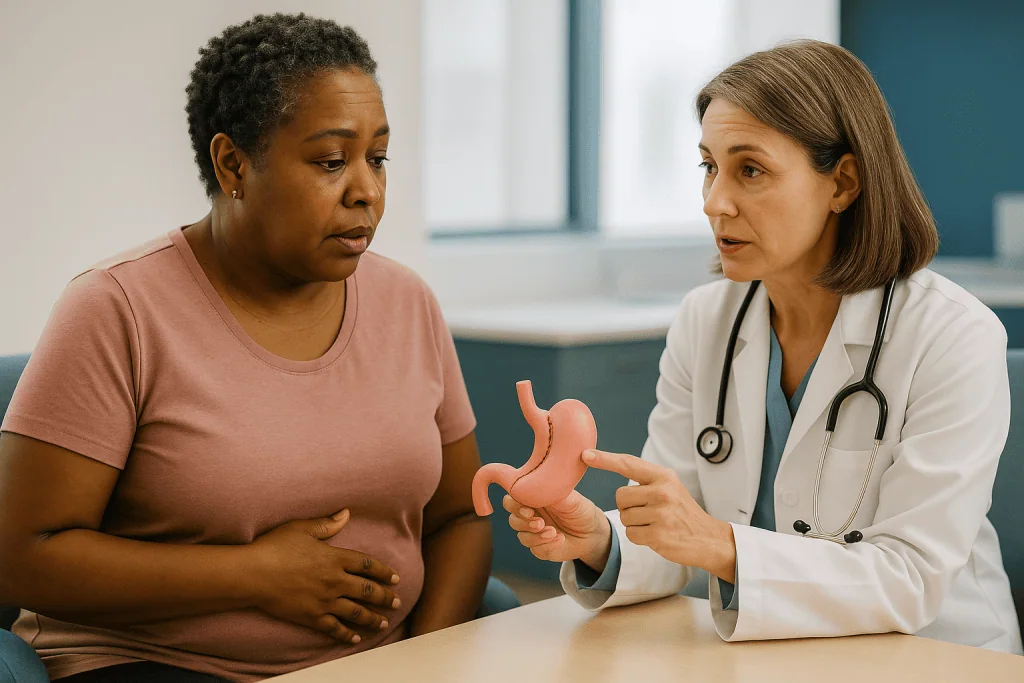
This matters because the two procedures behave differently. In a bypass, the pouch is tiny and the connection to the intestine is a surgical join; concerns about the pouch or that join enlarging over years are a real part of follow-up. In a sleeve, the remaining stomach is longer, and it is muscle, so it has some natural elasticity from day one. There is no sealed pocket to “blow out.”
The confusion is understandable. Online, bariatric communities mix bypass and sleeve patients, and the shorthand “pouch” gets applied to everyone. Add a few dramatic anecdotes about someone who “stretched their stomach back to normal,” and a durable myth is born.
Why does the vocabulary matter beyond pedantry? Because it drives behavior. Some people eat fearfully for years, convinced that one larger meal will undo the surgery. Others swing the other way, assuming the sleeve is fragile and therefore pointless. Neither matches what the anatomy suggests. Using the right words, sleeve rather than pouch, is the first step to understanding what the evidence does and does not say about stretching, which is the next question.
Can you stretch your sleeve? What the evidence on gastric sleeve stretching shows
The honest answer sits between the two popular extremes. The stomach is a muscular organ designed to expand and contract, and the tube left after a sleeve keeps that property. Mayo Clinic’s patient information acknowledges that, over time, the remaining stomach can relax and allow somewhat more food than it did in the first weeks. This is expected, gradual and not a sign that the operation has failed.
What the evidence does not support is the idea that normal eating returns the stomach to its original size. The removed portion is gone, and the most stretch-prone part of the stomach, the fundus, is the part that was removed. The sleeve is also stapled along the lesser curve, which is less distensible. In plain terms, the elastic part has been taken out, and what remains has a modest ceiling.
Why, then, do some people feel they can eat more a few years on? Several things happen at once. The hormonal appetite suppression settles. Swelling and tightness from surgery resolve. Eating faster, drinking with meals and choosing soft, calorie-dense foods allow more intake without the same fullness signal. People sometimes call this “stretching” when it is mostly adaptation plus habit.
The practical lesson follows directly. The small capacity is one tool, not the whole toolkit. Eating slowly, stopping at early fullness, separating fluids from meals and keeping protein central protect the result more than fear of a single large meal. Occasional overeating is uncomfortable rather than catastrophic. Persistent overeating, day after day, gradually works around any operation, which is why bariatric programs build long-term dietitian and psychological support into follow-up rather than relying on anatomy alone.
Can you eat normally after gastric sleeve? The "never again" myth
Ask what people fear most before surgery and “never eating normally” comes near the top. It deserves a careful answer, because “normal” means different things.
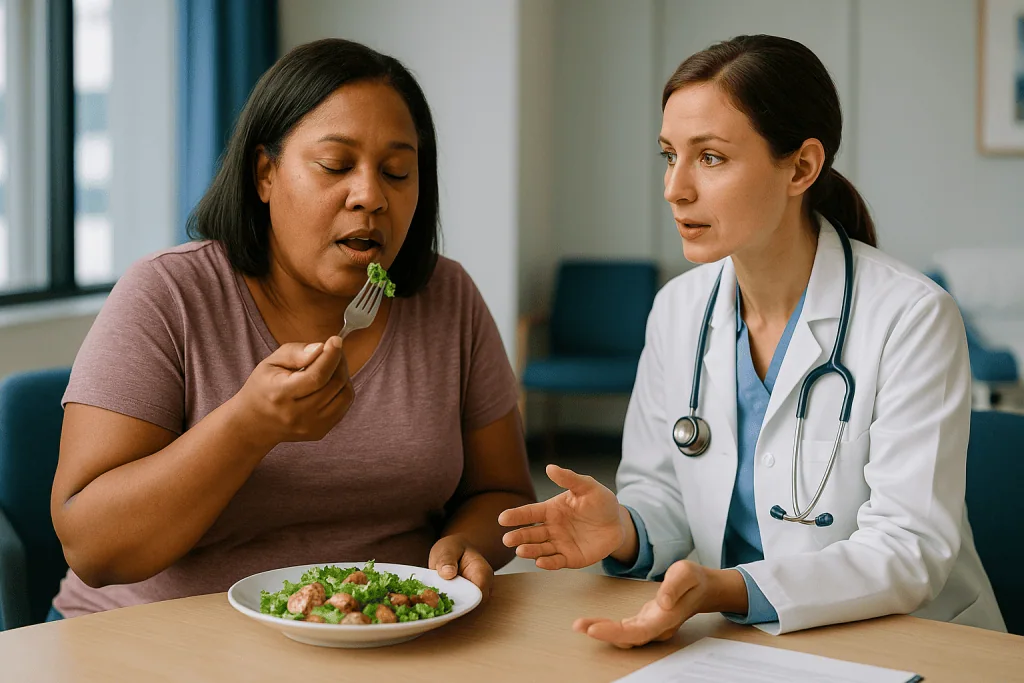
If normal means large portions eaten quickly, then no, that pattern does not return, and it is not meant to. If normal means sitting down to a family meal, eating a range of real foods, and enjoying them, the answer is usually yes. NHS guidance on life after weight-loss surgery describes a staged return: liquids for the first days, then pureed foods, then soft foods, then a varied solid diet, typically reached around six weeks after surgery, after which most everyday foods are back on the table in small amounts.
What changes permanently is the shape of eating, not its content. Portions are small, often a side-plate rather than a dinner plate. Meals are slower, with food chewed well. Many people are advised not to drink for a period before and after meals so that liquid does not wash food through or crowd out protein. NHS advises choosing protein first, then vegetables, then starches, because protein supports healing and preserves muscle while weight falls.
Some foods behave unpredictably for some people: very dry meat, bread that balls up, fizzy drinks that cause pressure, and sugary foods that may trigger discomfort. Tolerance is individual and often improves over the first year. The honest picture is a long list of “usually fine in small amounts” and a short list of “many people find this uncomfortable,” rather than a wall of permanent bans.
Eating out, holidays and birthday cake are all compatible with a sleeve. The adjustment is about pace and portion, and most programs teach that skill deliberately.
Is gastric sleeve safe? Risks in plain, neutral terms
“Is gastric sleeve safe” is one of the most searched questions about the operation, and the only honest reply is comparative. No operation under general anesthesia is risk-free. What the major patient-information bodies say is that sleeve gastrectomy is now one of the most commonly performed weight-loss procedures, that serious complications are uncommon, and that the risks need to be weighed against the risks of living with severe obesity, which include type 2 diabetes, high blood pressure, sleep apnea and some cancers.
The short-term risks described by the NHS and Mayo Clinic include bleeding, infection, blood clots in the legs or lungs, reactions to anesthesia and, specific to the sleeve, a leak from the staple line, where stomach contents escape into the abdomen. Leaks are uncommon but serious, which is why fever, worsening pain or a racing heartbeat in the first weeks are treated urgently.
Longer-term, the NHS lists gallstones (more likely with rapid weight loss), nutritional deficiencies, loose skin and, for some, worsened acid reflux. Mayo Clinic and Cleveland Clinic both note that reflux can appear or intensify after a sleeve because the narrower stomach is a higher-pressure system; people with significant pre-existing reflux are often counseled about this in advance.
A fair reading, then: the sleeve carries real surgical risk, mostly front-loaded into the first weeks, plus manageable long-term risks that depend heavily on follow-up. It is not “dangerous” in the way some headlines imply, and it is not trivial in the way some adverts imply. The NIH’s NIDDK frames it as a serious operation with established benefits for carefully selected people, which is exactly how a treating team will frame it with you.
Who a gastric sleeve is usually for, and who is usually asked to wait
Eligibility is not about appearance or a number someone picked on a form. Guideline bodies use body mass index (BMI), a ratio of weight to height, as a starting point. The NHS describes weight-loss surgery as generally considered for adults with a BMI of 40 or more, or a BMI of 35 to 40 with a serious weight-related condition such as type 2 diabetes or high blood pressure. Several bodies add that people with type 2 diabetes may be considered at somewhat lower BMI thresholds, and that thresholds are sometimes adjusted for people of South Asian, Chinese, other Asian, Middle Eastern, Black African or African-Caribbean family background, whose health risks begin at lower BMI.
BMI is only the entry point. Programs also expect that other weight-management approaches have been tried, that the person is fit enough for surgery and anesthesia, and that they are ready for permanent changes in eating and for lifelong follow-up. Assessment usually involves a surgeon, a dietitian, and often a psychologist or specialist nurse.
Who is asked to wait? Typically, people with uncontrolled medical or mental health conditions that would make surgery or recovery unsafe, those who are pregnant or planning pregnancy soon, people with active substance misuse, and people with untreated binge eating who may benefit from support first. A severe untreated reflux problem may steer the conversation toward a different operation rather than a sleeve.
None of these are moral judgments. They are safety checks, and most are temporary. Being asked to wait usually means the team wants to fix something first so the operation gives you the best chance. The final judgment belongs to the treating team, in conversation with you.
Myth: surgery is the easy way out
This myth is unkind and inaccurate in equal measure. It assumes that willpower alone should be enough, and it ignores what obesity medicine has learned about why lost weight tends to return.
The physiology is well described. When a person loses weight by dieting, the body responds with increased hunger signals and a lower resting energy use, a defense of the previous weight that can persist for years. Harvard Health has summarized this as the main reason most diets fail to deliver lasting loss. Surgery works partly because it changes those signals rather than fighting them with discipline alone.
Even so, nothing about the process is easy. Before the operation, many programs ask for weeks of a reduced-calorie diet to shrink the liver, which sits over the stomach and must be lifted during keyhole surgery. Afterward comes a staged diet, learning to eat slowly, lifelong vitamin and mineral supplements, regular blood tests and a long adjustment to hunger that feels different, food that behaves differently and a body that changes faster than the mind can keep up.
The NHS is explicit that weight-loss surgery only works alongside long-term changes to eating and activity. People who thrive after a sleeve usually describe it as a tool that made the hard work possible, not a tool that did the work for them.
A better frame: surgery is one of the most effective treatments available for severe obesity, which is a chronic disease and not a character flaw. Choosing it after careful assessment is not taking a shortcut. It is taking treatment seriously.
Myth: a sleeve is the fastest way to lose weight
Search engines fill with the question “what is the fastest way for a woman to lose weight?” and some of those searches end up on bariatric pages. The honest reply is that speed is the wrong goal, for women and for men.
Yes, weight loss after a sleeve is rapid compared with diet alone, especially in the first six to twelve months. Mayo Clinic notes that people typically continue to lose weight for up to about two years before stabilizing. But the operation is not offered because it is fast. It is offered because, for people with severe obesity, it produces larger and more durable change than lifestyle treatment and can improve or send into remission conditions such as type 2 diabetes, sleep apnea and high blood pressure, as summarized by NIDDK.
Fast loss also carries costs that the myth ignores. Rapid weight change increases the risk of gallstones, which the NHS lists among the recognized consequences. Hair shedding in the first months is common as the body prioritizes protein for healing. Muscle can be lost along with fat unless protein intake and strength activity are protected. The NHS advice to prioritize protein and to build regular exercise into recovery exists precisely because losing weight quickly is not the same as losing it well.
For someone who is not a surgical candidate, the sound answer to the “fastest way” question is a sustainable calorie reduction, more movement, sleep and support, assessed by a clinician, and in some cases prescribed weight-management medicines under medical supervision. Anyone promising rapid results without medical oversight is selling, not advising.
What the first days and weeks after a gastric sleeve usually look like
Recovery has a rhythm, and knowing it in advance removes a lot of fear. The ranges below are typical and are drawn from NHS and Mayo Clinic patient information; your own program may differ, and your team’s plan takes precedence.
| Phase | Typical timing | What usually happens |
|---|---|---|
| Hospital stay | About 1–3 days | Pain control, early walking, sips of clear fluid, checks for leak or bleeding |
| Liquids only | First 1–2 weeks | Water, clear and then thicker liquids; small frequent sips; protein drinks as advised |
| Pureed foods | Roughly weeks 2–4 | Smooth, blended foods; protein first; small spoon-sized portions |
| Soft foods | Roughly weeks 4–6 | Soft solids, well chewed; testing tolerance one food at a time |
| Varied solid diet | From around 6 weeks | Most everyday foods in small portions; slow eating; fluids separated from meals |
| Return to desk work | Often 2–4 weeks | Longer for physical jobs; driving once pain and medicines allow |
Walking begins on the day of surgery or the next day, and it is the single most useful thing in the first week because it lowers the risk of blood clots and helps the gut wake up. The NHS advises avoiding heavy lifting and strenuous exercise for several weeks while the small incisions and the stapled stomach heal.
Expect a few surprises. Tiredness in the first month is normal while intake is low. Food tolerance can be unpredictable: something fine on Monday may sit badly on Thursday. Some people feel little hunger at all, which is the ghrelin effect at work, and others feel “head hunger” from habit. Follow-up appointments with the surgical team and dietitian are scheduled through this period and continue for years, because this is a treatment for a chronic condition, not a one-off procedure.
What can you never have after a gastric sleeve?
The “never” list online is long and mostly wrong. Coffee, bread, rice, pasta, alcohol, carbonated drinks, sugar: each has been declared forbidden forever by someone. The guideline picture is more measured and more useful.
A few things are genuinely discouraged on a long-term basis. The NHS and Cleveland Clinic both caution against sugary, high-calorie liquids, because they slide through a small stomach without producing fullness and can undo results quietly. Carbonated drinks are commonly advised against, at least early on, because gas expands in a narrow stomach and causes pressure and discomfort. Drinking large volumes with meals is discouraged for the same reason.
Alcohol deserves its own sentence. After a sleeve, alcohol is absorbed faster and peaks higher because it reaches the small intestine more quickly, so the same drink has a stronger effect than before surgery. Programs also watch for alcohol use disorder after bariatric surgery, which is a recognized concern in the long-term literature. Most teams advise avoiding alcohol in the early months and treating it cautiously afterward.
Everything else sits in the “small amounts, chewed well, watch how you feel” category. Bread, rice and pasta can swell and feel heavy, so many people naturally eat little of them. Tough, dry meat may stick; moist, tender protein usually goes down well. Coffee is often reintroduced once the stomach has healed. Non-steroidal anti-inflammatory painkillers are a medication class that many bariatric teams ask people to avoid or use only with guidance because of ulcer risk; this is a decision for your prescribing clinician, not for a blog.
Rather than memorizing bans, think in terms of what the sleeve is for: protein first, slow eating, fluids between meals, and honest tracking.
How common is gastric sleeve revision? The gastric sleeve revision rate, honestly
Revision means a second operation that alters or converts the original sleeve, most often to a gastric bypass. It is one of the most searched and least clearly answered questions, so some honesty about why the number is slippery is in order.
Published rates vary widely between studies, countries and follow-up lengths, from a small single-digit percentage in short-term series to higher figures in cohorts followed for a decade. Mayo Clinic and Cleveland Clinic both acknowledge that some people regain weight after a sleeve and that a minority eventually have a second procedure. Any single “revision rate” you read online is a snapshot of one population, not a universal truth, and no mainstream patient-information body commits to one figure for exactly that reason.
The two main reasons revision is considered are more useful than the percentage. The first is reflux: because a sleeve creates a narrow, higher-pressure stomach, some people develop or worsen gastro-esophageal reflux disease, and when medicines and lifestyle changes do not control it, conversion to a bypass is a recognized option. The second is insufficient weight loss or regain over years, often alongside the return of conditions such as diabetes.
What is not true is that regain means the sleeve has “failed” or “stretched out.” Weight regain after any bariatric operation is multi-factorial: hormonal adaptation, eating patterns, activity, medicines that promote weight gain, life events and mental health all play a part. Programs address those before discussing further surgery, because a second operation carries more risk than the first.
If you are weighing a sleeve, ask your team how they follow people long-term, how they manage reflux and regain, and what their approach to revision is. That conversation is worth more than any statistic.
What people often get wrong about gastric sleeve myths and facts
A handful of smaller claims circulate so widely that they deserve quick, evidence-based corrections.
“The stomach grows back.” It does not. The removed portion is gone. What people experience as “growing back” is the gradual relaxation described earlier, plus eating habits creeping back.
“You will have to take vitamins forever.” This one is true, and it is not a myth. The NHS states that people who have weight-loss surgery need lifelong vitamin and mineral supplements and regular blood tests, because intake is small and some nutrients, notably iron, vitamin B12, vitamin D and calcium, are easily short. Which supplements and how to take them is a decision for your clinical team.
“You cannot get pregnant after a sleeve.” Fertility often improves as weight falls. The NHS advises avoiding pregnancy for around 12 to 18 months after surgery, while weight is changing fastest and nutrition is most vulnerable, and planning pregnancy with your bariatric and maternity teams afterward.
“Hair falls out permanently.” Temporary shedding in the first months is common and usually settles as intake stabilizes and protein is protected.
“A sleeve is just a weaker bypass.” They are different operations with different trade-offs. A sleeve avoids rerouting the intestine and the related absorption issues; a bypass may be preferred where reflux is a concern or where greater metabolic effect is wanted. Neither is universally “better.”
“Surgery treats everything.” It does not treat the emotional relationship with food, and it does not remove the need for movement. NIDDK is clear that benefits depend on long-term lifestyle changes and follow-up. The operation is powerful, and it is also only part of the treatment.
Questions to ask your care team before a gastric sleeve
The best appointments are the ones you walk into with questions already written down. These are the ones experienced bariatric patients most often say they wish they had asked.
- Why a sleeve for me rather than a bypass or another operation, and what tipped that balance?
- I have reflux or heartburn now. How might a sleeve affect it, and how will you monitor it?
- What pre-operative diet or preparation do you expect, and for how long?
- How long is the typical hospital stay in your program, and what are the signs that would bring me back in?
- What does your long-term follow-up look like: how often, with whom, and for how many years?
- Which supplements and blood tests will I need, and who manages them once I am discharged?
- How do you support people who struggle with eating patterns, mood or alcohol after surgery?
- What happens if I regain weight or lose less than expected? Is revision part of your pathway?
- I am taking regular medicines. Will any need adjusting, and who decides that?
- I may want to become pregnant in future. How does that fit with the timing of surgery?
- What activity can I do in the first weeks, and when can I return to my specific job?
- Is there a patient support group or dietitian-led course attached to the program?
Write the answers down, or bring someone who can. Decisions made with a team that answers these questions clearly tend to be decisions people feel settled about later. If an answer feels like a sales pitch rather than an explanation, that is worth noticing too.
When to call your doctor after a gastric sleeve
Most recovery discomfort is expected and fades. A short list of symptoms is not, and the surgical team will want to hear about them promptly rather than politely late. Mayo Clinic and the NHS highlight the following as red flags, especially in the first few weeks:
- Fever, chills, or feeling suddenly and unusually unwell
- Worsening abdominal pain, or pain spreading to the left shoulder
- A fast or racing heartbeat, especially with breathlessness
- Persistent vomiting, or inability to keep fluids down for more than a day
- Redness, warmth, swelling or discharge at an incision
- Black, tarry stools or vomiting blood
- Pain, swelling or warmth in one calf, or sudden chest pain or breathlessness, which can signal a blood clot
- Signs of dehydration: very dark urine, dizziness, dry mouth, very little urine
Fever with a rising pulse and increasing pain is the classic pattern of a staple-line leak, which is uncommon but a surgical emergency. Chest pain or sudden breathlessness is treated as an emergency anywhere, and even more so after surgery. If you cannot reach your bariatric team, use emergency services; do not wait for office hours.
Later on, call about persistent heartburn that is not controlled, repeated difficulty swallowing, ongoing nausea, unexpected weight regain, low mood or changes in alcohol use, and any symptoms of nutritional shortfall such as unusual tiredness, tingling in the hands or feet, or hair and nail changes beyond the early months. These are manageable when caught early.
Every one of these judgments, including whether a symptom is serious, belongs to the people who know your case. This article can tell you what commonly matters; only your treating team can tell you what it means for you.
Frequently asked questions
Is gastric sleeve a safe surgery?
It is a major operation with uncommon but real risks, including bleeding, infection, blood clots and staple-line leaks, and longer-term issues such as reflux, gallstones and nutrient deficiencies. Mainstream bodies including the NHS and Mayo Clinic describe it as an established procedure whose risks must be weighed against the health risks of severe obesity. Your treating team assesses fitness for surgery individually and remains responsible for that judgment.
Can you stretch your stomach after gastric sleeve surgery?
Modestly, yes; dramatically, no. The remaining stomach is muscle and can relax somewhat over time, so capacity often increases a little in the years after surgery. The removed portion, including the most elastic part, does not grow back. Most of what people call stretching is a mix of hormonal adaptation and habits such as eating quickly, drinking with meals and choosing soft, calorie-dense foods.
Can you eat normally after gastric sleeve?
Most people return to a varied, mostly ordinary diet in small portions once healing is complete, which NHS guidance places at around six weeks after surgery. What changes for good is the pace and size of meals rather than the type of food. Some items, such as dry meat, bread or fizzy drinks, are uncomfortable for some people, and tolerance tends to improve over the first year.
What can you never have after a gastric sleeve?
Permanent bans are fewer than the internet suggests. Sugary high-calorie drinks are discouraged long-term because they bypass fullness, carbonated drinks are often avoided because gas expands in a narrow stomach, and alcohol is absorbed faster and more strongly afterward. Certain painkiller classes may be restricted by your clinician because of ulcer risk. Most other foods are a matter of small amounts and personal tolerance.
How common is gastric sleeve revision?
There is no single reliable figure. Published rates range from a small single-digit percentage in short follow-up to higher numbers in groups followed for a decade, and major patient-information sources deliberately avoid quoting one number. The two main reasons for revision are reflux that medicines cannot control and significant weight regain. Ask your team how they manage both before any second operation is discussed.
Does the stomach grow back after a sleeve gastrectomy?
No. The portion removed during surgery is gone and does not regenerate. The remaining tube can relax over time and hold a little more than it did in the first weeks, which is normal. Feeling able to eat more a few years on usually reflects settling appetite hormones and changed eating habits rather than regrowth of stomach tissue.
Is the gastric sleeve the fastest way for a woman to lose weight?
Speed is the wrong measure. For people with severe obesity who meet guideline criteria, a sleeve produces faster and more durable loss than diet alone, with weight typically falling for up to about two years. But it is offered for health outcomes, not speed, and rapid loss brings gallstone risk, hair shedding and muscle loss if protein and activity are neglected. Anyone not eligible should seek a clinician-guided sustainable plan.
Will I need vitamins forever after a gastric sleeve?
Yes. The NHS advises lifelong vitamin and mineral supplements and regular blood tests after weight-loss surgery because intake is small and nutrients such as iron, vitamin B12, vitamin D and calcium can run low. Which supplements, in what form, and how your levels are monitored are decisions for your bariatric team and prescribing clinician, not something to work out from online forums.
Does a gastric sleeve cause acid reflux?
It can. Because the sleeve leaves a narrow, higher-pressure stomach, reflux can develop or worsen in some people, and Mayo Clinic and Cleveland Clinic both list this among the recognized downsides. People with significant reflux before surgery are often counseled about alternative operations. Persistent heartburn after a sleeve should be reported to your team, who may adjust management or discuss other options.
How long does it take to recover from gastric sleeve surgery?
Hospital stays are typically one to three days, with most people back to desk work within two to four weeks and longer for physically demanding jobs. The diet progresses from liquids to pureed, soft and then varied solid foods over roughly six weeks. Energy is often low in the first month while intake is small. Your program’s own timeline and your surgeon’s advice override these general ranges.
References
- NHS: Weight loss surgery
- MedlinePlus: Vertical sleeve gastrectomy
- Cleveland Clinic: Gastric sleeve surgery (sleeve gastrectomy)
- NIH NIDDK: Types of weight-loss surgery
This article is for general information only and is not a substitute for professional medical advice. Please consult a qualified doctor about your individual situation.

Planning This Treatment in Turkey
Our full guide for international patients: techniques, hospital stay, recovery and cost.
More from the Blog

Bariatric Contouring Recovery: Compression Garments, Early Walking and Lifting Limits
Recovery from body contouring after major weight loss usually centers on three habits: wearing a surgeon-fitted compression garment for several weeks to limit swelling…

What Do Gastric Bypass Results Look Like Years Later? Regain, Maintenance and Follow-Up
Long-term studies show that most people who have gastric bypass keep off a large share of their weight a decade or more later, though…
Which Areas Does a Post-Bariatric Body Lift Address and How Is the Operation Staged?
A post-bariatric body lift removes and tightens skin left loose after major weight loss. The lower body lift, also called a belt lipectomy, addresses…

How Do Bariatric Surgeons Choose Between Sleeve and Bypass for Your Health Profile?
Bariatric surgeons choose between sleeve gastrectomy and gastric bypass by weighing a person's body mass index, type 2 diabetes history, acid reflux, prior abdominal…
When a Sleeve Gastrectomy Needs Revision: Re-Sleeve, Conversion to Bypass and Why
Sleeve gastrectomy revision options include re-sleeving a stretched stomach, converting the sleeve to a Roux-en-Y gastric bypass, which is usually favored when acid reflux…

Who May Be a Candidate for a Gastric Balloon? What the Bariatric Team Evaluates First
Gastric balloon candidates are usually adults whose body mass index falls roughly between 30 and 40, who have tried structured diet and activity changes…