

Getting Ready for SRP Deep Cleaning: Eating Before Anesthesia and Medications to Mention

Key Takeaways
- For a deep cleaning under local anesthetic alone, eating a normal meal beforehand is sensible because numbness can make chewing unsafe for a few hours afterward.
- Fasting rules apply only when sedation is planned, and those instructions come in writing from the sedation team, not from general advice.
- Blood thinners and antiplatelet medicines should never be stopped for a dental cleaning without the prescriber's direction, since clot risk usually outweighs the manageable bleeding risk.
- Antibiotic premedication before dental work is now reserved for a narrow group at highest risk of infective endocarditis, such as people with artificial heart valves or previous endocarditis.
- Healthy gum pockets measure about 1–3 mm; readings deeper than 4 mm are what usually justify scaling and root planing rather than a routine cleaning.
- Gums that look more receded after treatment usually reflect swelling resolving, not damage, and pockets are re-measured a few weeks later to judge the response.
Preparing for deep cleaning (scaling and root planing) usually means eating a normal meal beforehand if only a local anesthetic is planned, since chewing is awkward while numb, but following your team's fasting instructions if sedation is involved. Before the visit, give the dental team a complete list of prescription medicines, over-the-counter products and supplements, especially blood thinners, diabetes medicines and heart drugs. The team decides any adjustments.
The appointment card says “SRP, upper right and lower right, 90 minutes,” and the two questions that keep surfacing at the kitchen table are oddly practical: should I eat first, and does the hygienist really need to know about the fish oil capsules? Those are exactly the right questions. Preparing for deep cleaning is less about bravery and more about logistics, and a little planning changes how the morning feels.
Scaling and root planing is the formal name for a deep dental cleaning. It reaches below the gumline to remove hardened plaque from the roots of the teeth, usually with the gums numbed. That numbness is the hinge on which most preparation decisions turn: it affects when you eat, how you drive home and whether certain medicines deserve a conversation beforehand.
This explainer walks through what actually happens in the chair, what to eat and when, which medicines to flag, what the days afterward tend to look like, and the small number of warning signs that should prompt a call. Every decision about your medicines stays with the clinicians who prescribe them and the team doing the work.
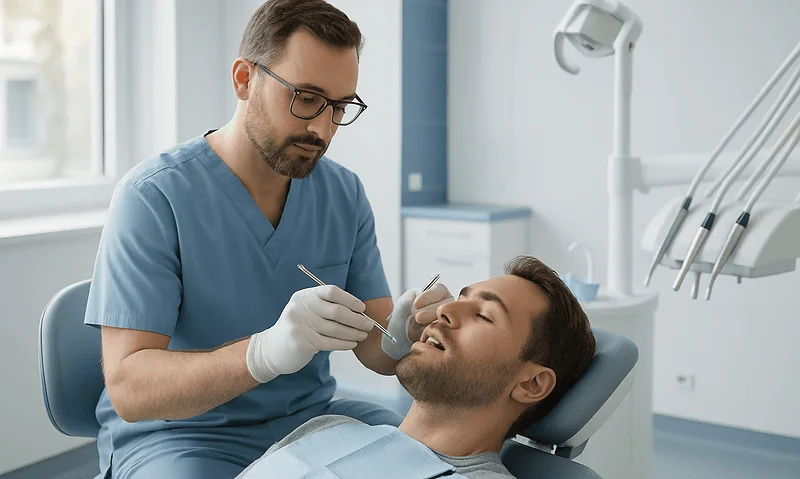
How do dentists deep clean your teeth? Scaling and root planing explained
A routine cleaning polishes what you can see. Scaling and root planing works where you cannot look: in the pockets that form between gum and tooth when the gum has pulled away because of long-standing inflammation. A periodontal pocket is that gap, measured in millimeters with a thin probe. Mayo Clinic describes healthy pockets as about 1–3 mm deep, while pockets deeper than 4 mm may point to periodontitis, the stage of gum disease in which bone around the teeth begins to erode.
Scaling is the removal of plaque and calculus (hardened plaque, often called tartar) from the tooth surface and from inside the pocket. Root planing follows: the clinician smooths the root surface so that bacteria have fewer rough ledges to cling to and so the gum can reattach more closely. Both steps use fine hand instruments, ultrasonic tips that vibrate and spray water, or a mix of the two.
Because the instruments travel below the gumline, most people are offered a local anesthetic, a numbing injection that blocks pain signals in one region of the mouth for a few hours. The Cleveland Clinic notes that treatment is commonly divided across one or two visits, often by quadrant (one quarter of the mouth at a time), so that only part of the face is numb and the appointment stays manageable.
Expect a feeling of pressure and scraping rather than sharp pain, plus the hum of the ultrasonic scaler and a steady need to swallow or be suctioned. A visit may run an hour or more depending on how many teeth are involved and how deep the pockets are. The clinician may also apply an antimicrobial rinse or, in some cases, a medicated product placed into deep pockets; whether that is appropriate is a decision for the treating team, not a standard add-on.
Who is usually a candidate for SRP, and who is usually asked to wait
Deep cleaning is a treatment for periodontitis, not a premium version of a polish. The NHS describes gum disease as a spectrum: gingivitis, where gums are red, swollen and bleed on brushing, and periodontitis, where the supporting bone and ligament are affected. Scaling and root planing is generally recommended when probing shows deepened pockets, bleeding on probing and, on X-rays, early bone loss. Someone with gingivitis alone is usually managed with a standard cleaning and better home care, not SRP.

Who is typically asked to pause? The answer is rarely “never,” more often “not this week”:
- People with an active mouth infection or an abscess, which the team may want to settle first.
- Anyone whose blood thinner or antiplatelet regimen is being adjusted, so that the treatment lands at a stable point.
- People with recent heart events, recent major surgery or uncontrolled blood pressure, where the prescribing physician’s input is needed before a long appointment with an epinephrine-containing anesthetic.
- Patients with diabetes whose blood sugar has been unusually unstable, since healing after SRP depends partly on glucose control.
- Those who have just started an antiresorptive drug for bone, where the dental and medical teams may coordinate timing.
Pregnancy does not usually rule out periodontal treatment. Mayo Clinic and MedlinePlus both note that gum inflammation often worsens during pregnancy, and untreated periodontitis is not a safer choice than treating it. Most clinicians prefer to schedule elective dental work in the second trimester and keep the obstetric team informed.
Age by itself is not a barrier. What matters is whether the pockets are deep enough to need it, whether the mouth can heal, and whether the person can keep up the daily cleaning that makes the result last. All of those are judgments for the dentist or periodontist who examined you.
Preparing for deep cleaning: what to eat before a local anesthetic appointment
Here is the piece of advice that surprises people: if your deep cleaning uses local anesthetic only, eat. A proper meal an hour or two before the appointment is sensible, for three reasons.
First, numbness. The Cleveland Clinic notes that the anesthetic can keep part of the mouth numb for a few hours after the visit. Chewing while numb is clumsy at best and risky at worst, because people bite the inside of the cheek or tongue without noticing. If you arrive hungry, you may be looking at a long stretch before a comfortable meal.
Second, blood sugar. A long appointment with your mouth open is easier when you are not light-headed. For anyone on diabetes medicines, skipping a meal while taking the usual dose can tip blood sugar low. Hypoglycemia, the medical term for low blood sugar, can cause sweating, shakiness and confusion, which are hard to recognize when you are already tense in a dental chair.
Third, the anesthetic itself. Local anesthetics work by blocking nerve signals in the tissue where they are injected; they do not depress breathing or protective reflexes the way sedation does, so there is no medical reason to fast for them.
What to choose? Something you digest comfortably, with protein and slow-release carbohydrate, and not so heavy that lying back feels unpleasant. Brush and floss afterward so the team is working on a reasonably clean surface. Drink water. Many people skip coffee right before the visit because it leaves them jittery, though that is preference, not a rule. The one firm instruction: if your appointment letter says otherwise, follow the letter, and if it says nothing, ask.
What to eat before deep cleaning if sedation is part of the plan
The picture changes when sedation enters the room. Some people with dental anxiety, a strong gag reflex or a large amount of treatment are offered sedation alongside the local anesthetic. The options range from nitrous oxide (a gas breathed through a small nose mask that wears off within minutes once stopped) to oral sedatives taken before the visit, to intravenous sedation given through a drip.

Sedation dulls the reflexes that normally protect your airway. If the stomach is full, there is a risk of stomach contents coming up and entering the lungs. That is why sedation teams give fasting instructions, and why those instructions deserve to be followed exactly rather than approximately. How many hours, which clear fluids are allowed, whether a regular morning medicine should be taken with a sip of water: these details vary with the sedation type and the practice’s protocol, and they will be written down for you. If they are not, call and ask before the day.
Nitrous oxide is the mild end of the scale and often carries lighter fasting advice, but even then the team may suggest avoiding a heavy meal because nausea is a known side effect.
A few practical points apply to every form of sedation beyond gas:
- You will need an adult to take you home and, ideally, stay with you for the rest of the day.
- You should not drive, operate machinery, sign legal documents or drink alcohol until the next day or as instructed.
- Tell the team about sleep apnea, snoring, reflux or previous problems with anesthesia; these change the safety assessment.
Preparing for deep cleaning under sedation also means a clear conversation about your medicines, which is where the next sections go.
Medications before dental cleaning: why the team wants the full list, not the highlights
The medical history form at the front desk is not bureaucracy. For scaling and root planing, the clinician is planning to make small cuts in inflamed tissue, inject an anesthetic that often contains epinephrine (adrenaline), and send you home to heal. Each of those steps interacts with common medicines.
Bring a written list, or a photograph of the labels, that covers:
- Every prescription medicine, including inhalers, patches, injections and creams.
- Over-the-counter products you take regularly, especially aspirin and other anti-inflammatory painkillers.
- Vitamins, herbal products and supplements. The NIH Office of Dietary Supplements notes that several, including fish oil, vitamin E, garlic and ginkgo, may affect bleeding or interact with prescription drugs.
- Recent courses of antibiotics or steroids, even if finished.
- Allergies and previous reactions, particularly to local anesthetics, latex, penicillin or sedatives.
Why this matters in practice: a person on an anticoagulant (a medicine that slows clotting) may ooze longer after root planing; a person on a beta blocker may respond differently to epinephrine; a person using a bisphosphonate for bone has a small but real consideration for jaw healing. None of these are reasons to refuse treatment. They are reasons to plan it well.
Two rules of thumb carry across every category. Never stop or change a prescribed medicine on your own because of a dental appointment. And tell the team about changes made since your last visit, including a new dose of an old drug. The dental clinician’s role is to recognize what needs a conversation; the prescriber’s role is to decide whether anything changes. Your role is simply to make sure both of them have the same information.
Blood thinners and antiplatelet medicines: the category that matters most
If one group of medicines deserves its own paragraph on the intake form, it is this one. Anticoagulants such as warfarin and the newer direct oral anticoagulants, and antiplatelet drugs such as aspirin and clopidogrel, are prescribed to prevent clots in people with atrial fibrillation, artificial heart valves, stents, a history of stroke or deep vein thrombosis. They also make gums bleed longer when instruments work below the gumline.
The reflex many patients have is to skip a dose “to be safe.” The evidence points the other way. The American Heart Association emphasizes that interrupting antiplatelet therapy after a stent, or anticoagulation in someone at high clot risk, carries real danger of heart attack, stroke or clot, and that minor bleeding from dental procedures can usually be managed locally with pressure, sutures or hemostatic dressings. Scaling and root planing is generally regarded as a procedure with a low bleeding risk that can often proceed without changing these medicines, but that judgment belongs to the dentist in consultation with the prescribing physician.
What you can do:
- Name the drug and why you take it, not just “a blood thinner.” A stent placed recently is a different situation from one placed years ago.
- If you take warfarin, mention when your INR (a blood test that measures clotting time) was last checked; the team may want a recent result.
- Tell the team about bruising easily or prolonged bleeding after past dental work or cuts.
- Do not add aspirin or ibuprofen for post-procedure soreness without asking, since both can stack bleeding risk.
After the visit, expect some pink in the saliva for a day or so. Bleeding that soaks gauze repeatedly or will not slow with firm pressure is not expected and belongs in the red-flag section later in this article.
Heart, blood pressure and diabetes medicines, and the antibiotic premedication question
The local anesthetic used for most deep cleanings contains a small amount of epinephrine to constrict blood vessels, which keeps the numbness lasting longer and the field clearer. For most people that is unremarkable. For a few it is worth a conversation: those with uncontrolled high blood pressure, a recent heart attack, unstable angina or serious rhythm problems, and those on certain beta blockers. The dentist may choose an anesthetic without epinephrine, use a smaller amount, keep the appointment shorter, or ask the cardiologist first. Bring your blood pressure medicines as usual unless told otherwise; a dental visit is not a reason to skip them.
Diabetes sits at the center of periodontal care for two reasons. High blood sugar impairs healing and feeds gum inflammation, and periodontitis itself can make glucose harder to control; the NIH’s dental institute describes the relationship as running in both directions. So the team will ask what you take, when you take it and how stable your readings have been. If you use insulin or a sulfonylurea, pairing the usual dose with a skipped meal can cause hypoglycemia, which is the single most common avoidable medical event in a dental chair. Eat normally for a local anesthetic visit, bring a fast-acting sugar source, and tell the team if you feel shaky.
Then there is antibiotic premedication: a single dose of antibiotic taken before the appointment to reduce the small chance that bacteria entering the bloodstream settle on a damaged heart valve, a condition called infective endocarditis. The American Heart Association reserves this for a narrow group, including people with artificial heart valves, previous endocarditis, certain congenital heart conditions and heart transplant recipients with valve problems. Most people with heart murmurs, stents or past bypass surgery no longer need it. Joint replacements are usually not an indication either, though some orthopedic surgeons make individual recommendations. Whether you fall into a covered group, and what to take, is decided by your cardiologist and dentist together.
Bone medicines, immune suppressants and the drugs that make gums overgrow
Three further categories tend to be forgotten because they do not feel like “dental” medicines.
Antiresorptive drugs, which include bisphosphonates and denosumab, are prescribed for osteoporosis and for bone protection in some cancers. They slow the cells that remodel bone. A rare complication, osteonecrosis of the jaw, is an area of exposed, non-healing jawbone that can follow dental procedures involving bone. Scaling and root planing does not remove bone and is generally considered low risk, but the team needs to know you take one of these drugs, how long you have taken it and whether it is given by mouth or by infusion, so that any later treatment such as an extraction can be planned carefully. Do not pause these medicines on your own.
Immunosuppressants and long-term steroids, taken after transplants or for autoimmune disease, blunt the body’s response to infection and slow healing. Chemotherapy and some newer biologic drugs do the same. The team may want blood counts, may coordinate timing with your specialist, and will give closer attention to post-procedure instructions.
Certain drugs cause gingival overgrowth, a thickening of gum tissue that traps plaque and deepens pockets. The classic culprits, noted by Mayo Clinic and MedlinePlus, are phenytoin for seizures, cyclosporine after transplants and some calcium channel blockers for blood pressure. If your gums have become bulky, say so; the treatment plan may differ, and your prescriber may consider alternatives, though that is their call.
Finally, mention dry-mouth medicines or symptoms. Many antidepressants, antihistamines and bladder medicines reduce saliva, and a dry mouth loses its natural rinse, so plaque builds faster. Knowing this helps the hygienist tailor home-care advice rather than simply telling you to brush more.
Supplements, smoking and alcohol: the things people do not think to mention
Ask a room full of patients whether they take medicine and half will say no while quietly swallowing turmeric, fish oil and a nightly glass of wine. All three matter here.
Supplements first. The NIH Office of Dietary Supplements lists omega-3 fish oil, vitamin E, garlic, ginkgo and high-dose ginger among products that may increase bleeding tendency or interact with anticoagulants. The evidence that any of them cause significant bleeding after a dental cleaning is limited and mixed, so the honest position is that they probably matter little for most people, but they matter more if you are also on a prescribed blood thinner. Write them down. Let the team decide whether they are relevant.
Smoking is the single lifestyle factor with the strongest evidence against it in periodontal disease. The NHS and CDC both identify tobacco as a major risk factor for developing periodontitis and for poor response to treatment, because nicotine narrows the small blood vessels that gums need to heal and masks the bleeding that would otherwise warn you. Nobody will refuse to clean your teeth because you smoke, but the realistic forecast for how well the pockets shrink afterward is worse, and the team will say so. If you have been thinking about stopping, the weeks around SRP are a genuinely useful moment, and your physician or pharmacist can help with proven options.
Alcohol on the night before a local anesthetic appointment is a matter of comfort more than safety; a hangover makes a long appointment miserable. Before sedation, it is a safety issue, because alcohol compounds the effects of sedatives, and most protocols ask you to avoid it for a set period before and after. Cannabis deserves the same honesty: it can interact with sedation and increase heart rate alongside epinephrine. Tell the team. They are not there to judge, only to plan.
Scaling and root planing preparation at a glance
Most of the preparation for a deep cleaning fits on a single sheet. The table below gathers the practical steps into a timeline; the right-hand column notes where the decision rests, because several items are explicitly not yours to make alone.
| When | What to do | Who decides |
|---|---|---|
| One to two weeks before | Write a complete medicine and supplement list; note allergies and previous reactions to anesthetics. Ask whether any medical clearance or antibiotic premedication applies. | Dentist with your prescribing physician |
| Several days before | If you take a blood thinner, diabetes medicine or antiresorptive drug, confirm with the dental team that nothing changes. Arrange a ride if sedation is planned. | Prescriber; never self-adjust |
| Evening before | Keep alcohol minimal (none if sedation is booked). Sleep. Lay out your list and insurance or ID documents. | You |
| Morning of, local anesthetic only | Eat a normal meal, take usual medicines, brush and floss, drink water. | You, unless told otherwise |
| Morning of, sedation planned | Follow the written fasting instructions exactly; ask which regular medicines to take with a sip of water. | Sedation team |
| Arrival | Hand over the list, report any new illness, cold sore, fever or recent dental pain. Mention anxiety; it changes how the team paces the visit. | Shared |
Two items from this table carry most of the weight. The written list prevents the awkward “I think it’s a small white one” conversation, and the question about antibiotic premedication, asked in advance, prevents a cancelled appointment on the day.
Comfort details are worth a sentence as well. Wear something warm, since clinics run cool and appointments run long. Bring headphones if the team allows them; many patients find the sound of the ultrasonic scaler the hardest part. Agree a hand signal for “pause” before the first instrument goes in. These are small things, and they are the things people remember afterward.
Deep cleaning teeth side effects and the downsides worth knowing
Scaling and root planing is a conservative, long-established treatment, and the Cleveland Clinic and Mayo Clinic both describe its risks as generally minor. Honest preparation still includes knowing what “minor” feels like.
Soreness is the most common complaint. The gums have been instrumented and may feel bruised for a few days; chewing on that side can be tender. Tooth sensitivity to cold and sweet often follows, because calculus that was insulating exposed root surfaces has been removed and the root is now in contact with the world. For most people this fades over weeks as the gum tightens and the tooth lays down protective mineral; for some it lingers longer, and a desensitizing toothpaste may be suggested.
Gum recession is the paradox of successful treatment. As inflammation settles, swollen tissue shrinks back to its true level, so teeth can look longer and gaps between them wider. That is the disease being revealed, not caused, but it surprises people who were not warned. Dark triangles between front teeth are the version that bothers patients most.
Bleeding and slight swelling are expected for a day or two. Infection after SRP is uncommon; a persistent bad taste, increasing swelling or fever is not part of normal healing. Rarely, a piece of calculus is pushed deeper, or an abscess forms in a pocket that did not drain.
Numbness that outlasts the expected few hours is rare and almost always resolves, though prolonged altered sensation after an injection near the lower jaw nerve can occasionally take weeks. Allergy to modern local anesthetics is very rare; reactions people describe are more often a racing heart from epinephrine or a faint from anxiety.
There is also a downside in the shape of expectation. SRP treats the infection around the roots; it does not regrow bone that is already lost, and it does not work without daily cleaning afterward. Alternatives, for pockets that do not respond, include repeat SRP, localized antimicrobials or periodontal surgery, and the choice among them is the periodontist’s after re-evaluation.
What the following days and weeks usually look like
The first afternoon is about the anesthetic wearing off. Expect numbness for a few hours, as the Cleveland Clinic describes, and avoid hot drinks and chewing until feeling returns so you do not burn or bite tissue you cannot sense. Soft foods make sense for the rest of the day: yogurt, eggs, soup that is warm rather than scalding, mashed vegetables. Hard, crunchy, very spicy or very acidic foods tend to sting treated gums, so many people set them aside for a couple of days.
Days one to three bring tenderness and some sensitivity. Brushing feels counterintuitive, but gentle brushing with a soft brush, starting the same day, is what the NHS and Mayo Clinic advise, because plaque left on freshly cleaned roots undoes the work. Warm salt-water rinses can soothe; your team may suggest an antimicrobial mouthwash for a short period. Over-the-counter pain relief is often enough, but check with the team about which type if you take a blood thinner, have kidney problems or are pregnant.
By the end of the first week most people feel close to normal, with sensitivity the main reminder. Gums gradually firm up and change from puffy red toward pale pink; bleeding on brushing should decrease steadily. That change, more than any single symptom, is the sign the treatment is doing what it should.
The important milestone comes at the re-evaluation visit, which the Cleveland Clinic notes is typically scheduled a few weeks after treatment. The clinician re-measures every pocket and compares it with the starting chart. Pockets that have shrunk and stopped bleeding move into a maintenance schedule, which Mayo Clinic describes as more frequent than routine cleanings, often every three to four months, because periodontitis is managed rather than eliminated. Pockets that stay deep may need repeat treatment or referral. None of these timelines is a promise; they are the typical shape of recovery.
What people often get wrong about preparing for deep cleaning
“I should fast like I would for surgery.” Only if sedation is booked. For a local anesthetic alone, fasting makes the visit harder and, for people on diabetes medicines, riskier. Eat.
“I’ll stop my blood thinner the day before so I don’t bleed.” This is the most dangerous myth on the list. The American Heart Association is clear that stopping antiplatelet or anticoagulant therapy without medical direction carries real risk of clot, stroke or heart attack, while dental bleeding is usually manageable in the chair. Tell the team; let the prescriber decide.
“Deep cleaning is just a thorough regular cleaning.” They are different procedures with different aims. A routine cleaning addresses the crown of the tooth and the gum margin; SRP treats pockets below the gumline. If a clinician recommends SRP, probing depths and X-rays should back the recommendation, and you can ask to see them.
“Everyone with a heart condition needs antibiotics first.” Guidelines narrowed this years ago to a small group at highest risk of endocarditis. Many people still take antibiotics for conditions that no longer warrant it, which adds side effects and resistance for no benefit.
“My gums got worse; the cleaning damaged them.” Recession after SRP is swollen tissue returning to its true level as inflammation resolves. The bone loss that created the pocket was there before the appointment.
“Once it’s done, it’s done.” Periodontitis is a chronic condition. Without daily interdental cleaning and maintenance visits, pockets refill with bacteria and the cycle restarts.
“Deep cleaning means the whole house.” A surprising share of online searches for this phrase are about housekeeping checklists. If your dentist mentioned deep cleaning, the checklist you need is the one in this article.
Questions to ask your care team before the appointment
A good consultation before SRP is a two-way exchange. These questions tend to produce answers that change how you prepare:
- Which teeth and how many quadrants will be treated, and over how many visits?
- Will I have local anesthetic only, or is sedation being offered? If sedation, what exactly are my fasting instructions, and which of my regular medicines should I still take that morning?
- Have you seen my full medicine and supplement list? Is there anything on it you want to discuss with my physician before the visit?
- Does my heart condition, joint replacement or other history mean I need antibiotic premedication under current guidelines? Who will prescribe it if so?
- I take a blood thinner (or diabetes medicine, or a bone medicine). Does anything about my routine change, and have you confirmed that with the prescriber?
- What are my current pocket depths, and what would count as a good result at the re-evaluation?
- How much sensitivity or recession should I expect, and what can I use at home for it?
- What pain relief is appropriate for me afterward, given my other medicines?
- When will you re-measure, and what happens if some pockets do not respond?
- How often will I need maintenance visits afterward?
- Is there anything about my smoking, dry mouth or diet that you think is holding healing back?
Write the answers down, or ask for them in writing. Appointment instructions given verbally in a busy clinic are the ones most often misremembered, and the fasting and medicine questions are precisely the ones where misremembering matters. If any answer feels unclear, ask again; a team that is happy to repeat itself is a good sign.
When to call your doctor or dental team after a deep cleaning
Most recovery from scaling and root planing is uneventful: tender gums, a little pink saliva, cold sensitivity that eases over weeks. A short list of signs falls outside that pattern and should prompt a same-day call to the dental team, or to your physician if the dental office is closed.
- Bleeding that does not slow with 20–30 minutes of firm pressure on gauze, or that restarts repeatedly, especially if you take a blood thinner.
- Swelling of the face, jaw or floor of the mouth that is increasing rather than settling, or any difficulty swallowing or breathing. Swelling that threatens the airway is an emergency; call emergency services.
- Fever, chills or a spreading area of redness and heat over the gum, which can signal infection.
- Severe pain that worsens after the second or third day instead of improving, or pain not controlled by the relief your team suggested.
- Numbness or tingling in the lip, chin or tongue that persists well beyond the expected few hours.
- A rash, hives, wheezing or lightheadedness after the anesthetic or any medicine given, which may indicate an allergic reaction.
- Signs of low blood sugar if you have diabetes, such as shakiness, sweating or confusion, that do not resolve with sugar.
- For people with heart valve disease or previous endocarditis: unexplained fever, night sweats or fatigue in the weeks after dental treatment, which the American Heart Association lists among warning signs of infective endocarditis.
Seek care, too, if a piece of calculus or a loose fragment seems lodged under the gum, if a tooth suddenly feels loose or high in the bite, or if a bad taste or pus persists beyond a couple of days.
The threshold for calling should be low. Dental teams would far rather reassure you about expected soreness than hear about a problem a week late. And every judgment about whether a medicine needs changing in response to any of these events rests with the clinicians who know your history, not with an article, however carefully written.
Frequently asked questions
What should I eat before deep cleaning with local anesthetic?
A normal, comfortable meal an hour or two before is reasonable when only local anesthetic is planned. Choose protein and slow-release carbohydrate, avoid anything so heavy that reclining feels unpleasant, and brush afterward. Eating matters because numbness can last a few hours and chewing while numb risks biting the cheek or tongue. If you have diabetes, keeping your usual meal and medicine pattern helps avoid low blood sugar.
Do I need to fast before scaling and root planing?
Not for local anesthetic alone. Fasting is only required when sedation is used, because sedatives dull the reflexes that protect the airway. The sedation team sets the exact hours and tells you which regular medicines to take with a sip of water. Follow their written instructions precisely, and if nothing was provided, call the practice before the appointment rather than guessing.
Which medications before dental cleaning should I tell the dentist about?
All of them, including over-the-counter products and supplements. The ones that most change planning are anticoagulants and antiplatelets, diabetes medicines, blood pressure and heart drugs, bisphosphonates or denosumab, immunosuppressants and steroids, and drugs that cause gum overgrowth such as phenytoin or some calcium channel blockers. Allergies to anesthetics, latex or antibiotics belong on the same list.
Should I stop my blood thinner before a deep cleaning?
No, not on your own. Stopping anticoagulant or antiplatelet therapy without medical direction carries a real risk of clot, stroke or heart attack, while bleeding from scaling and root planing is usually controlled in the chair with pressure or dressings. Tell the dental team exactly what you take and why; they will consult your prescriber if any adjustment is being considered.
How do dentists deep clean your teeth?
They numb the area, then use hand instruments and ultrasonic scalers to remove plaque and hardened calculus from the tooth and from inside the gum pockets, a step called scaling. Root planing follows, smoothing the root surface so the gum can reattach. Treatment is often split by quadrant over one or two visits, and pockets are re-measured a few weeks later.
Do I need antibiotics before a deep cleaning if I have a heart condition?
Only a small group does under current American Heart Association guidance: people with artificial heart valves, previous infective endocarditis, certain congenital heart conditions and heart transplant recipients with valve disease. Most people with murmurs, stents or past bypass surgery do not. Joint replacements are generally not an indication either. Your cardiologist and dentist decide together and prescribe if needed.
What are the deep cleaning teeth side effects I should expect?
Tender gums for a few days, cold sensitivity that fades over weeks, slight bleeding for a day or two, and gums that look more receded as swelling resolves. Infection, persistent numbness and allergic reactions are uncommon. Increasing swelling, fever, bleeding that will not stop with pressure or worsening pain after day three are not typical and warrant a call.
Can I take my diabetes medicine as usual before a deep cleaning?
Usually yes when local anesthetic is used, paired with your normal meal, because taking insulin or a sulfonylurea and then skipping food can cause hypoglycemia. If sedation is planned, ask the team specifically how to handle your diabetes medicine around fasting. Bring a fast-acting sugar source and tell the clinician immediately if you feel shaky or sweaty.
Can I drive home after scaling and root planing?
After local anesthetic alone, most people can drive, though some prefer not to while part of the face is numb. After any sedation other than brief nitrous oxide, you must not drive, and you will need an adult to take you home and stay with you. Nitrous oxide clears within minutes, but the practice will confirm whether driving is acceptable.
Is scaling and root planing safe during pregnancy?
Periodontal treatment is generally considered safe in pregnancy, and gum inflammation often worsens during pregnancy, so leaving periodontitis untreated is not the safer option. Many clinicians prefer the second trimester for elective work and keep the obstetric team informed. Tell the dental team you are pregnant so anesthetic choice, pain relief and positioning can be planned appropriately.
References
- NHS: Gum disease
- MedlinePlus: Periodontitis
- NIH National Institute of Dental and Craniofacial Research: Periodontal (Gum) Disease
This article is for general information only and is not a substitute for professional medical advice. Please consult a qualified doctor about your individual situation.

More from the Blog

How Long Do Fissure Sealants Last? Wear, Chipping and Check-Ups That Keep Them Working
Fissure sealants typically last several years rather than a lifetime. CDC data show they prevent about 80% of cavities in back teeth for two…
Can You Have Orthodontics With Gum Disease or Missing Teeth? What Is Planned Around
Orthodontics with gum disease or missing teeth is usually possible, but only after the gums are stable and the plan has been built around…

What Causes Orofacial Pain? TMJ, Nerves, Muscles and How Structured Care Is Planned
Orofacial pain most often comes from one of four places: the temporomandibular (jaw) joint and its chewing muscles, the teeth and their supporting bone,…

Halitosis With Dry Mouth From Medications: How Treatment Is Adjusted for Older Adults
Bad breath linked to dry mouth from medications is usually managed in older adults by first confirming that reduced saliva is the cause, then…

Bruxism Myths: Only Stress Causes It, Night Guards Weaken Teeth and More Corrected
Bruxism, the clenching or grinding of teeth while awake or asleep, has several contributors beyond stress, including brief sleep arousals, certain medicines, caffeine, alcohol,…
How Dentists Read a Cavity X-Ray Before a Dental Filling: Judging the Depth of Decay
Before a filling, dentists usually read a bitewing X-ray, in which decay appears as a darker shadow because softened tooth tissue absorbs fewer X-rays.…