Endocarditis
Learn what endocarditis is, common endocarditis symptoms, causes and risk factors, how doctors diagnose it, and the treatment options that may be used.

Quick answer
Endocarditis is inflammation of the inner lining of the heart, usually the heart valves, most often caused by bacteria entering the bloodstream. It mainly affects people with damaged or artificial valves, congenital heart defects or heart devices. Symptoms include fever, fatigue and breathlessness. Treatment involves weeks of intravenous antibiotics and, in some cases, heart surgery.
What is endocarditis?
Endocarditis is inflammation of the endocardium, the thin inner lining of the heart chambers and heart valves. In most cases it is caused by an infection, usually with bacteria and less often with fungi, and doctors then call it infective endocarditis. Germs enter the bloodstream, settle on a damaged area of a valve or on artificial material inside the heart, and build up into clumps of germs, blood cells and clotting proteins called vegetations. These clumps can damage the valve, allow infection to spread through the body, or break off and block blood vessels elsewhere.
Endocarditis is uncommon, but it is a serious condition that can be life-threatening if it is not treated. It most often affects people who already have a heart valve problem, a replacement (prosthetic) valve, certain heart defects present from birth (congenital heart disease), or an implanted heart device such as a pacemaker. People who inject drugs, older adults and people with weakened immune systems are also at higher risk. A healthy heart with normal valves is rarely affected, although this can happen.
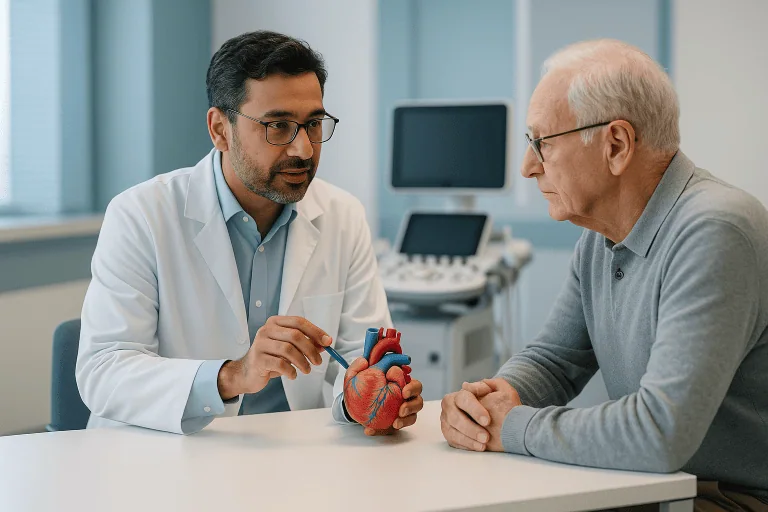
Because the condition involves the heart valves and often needs both long courses of antibiotics and, in some cases, heart surgery, care is usually shared between infectious disease specialists, cardiologists (heart specialists) and heart surgeons. In many hospital groups, including Acibadem, the Cardiology Department is closely involved in diagnosis and follow-up.
Symptoms of endocarditis
Endocarditis symptoms can be vague and are easy to mistake for a common infection such as the flu. They may appear suddenly over a few days, or they may build slowly over weeks or months. Common symptoms include:
- Fever and chills, which may come and go
- Night sweats
- Unusual tiredness or weakness
- Aching muscles and joints
- Shortness of breath, especially with activity or when lying flat
- Chest pain when breathing
- A new or changed heart murmur (an extra sound a doctor hears through a stethoscope)
- Loss of appetite and unintended weight loss
- Swelling of the feet, legs or abdomen
- Persistent cough
Some people develop less common signs that point more directly to endocarditis. These include small red or purple spots on the skin, in the whites of the eyes or inside the mouth (petechiae), painless red spots on the palms or soles, tender lumps on the fingertips or toes, thin dark lines under the fingernails (splinter hemorrhages), and blood in the urine.
Doctors often describe two broad patterns. Acute endocarditis develops quickly, with high fever, rapid heart rate and a person who becomes very unwell within days. It is more often caused by aggressive bacteria such as Staphylococcus aureus. Subacute endocarditis develops slowly, often with low-grade fever, fatigue, weight loss and general malaise that may go on for weeks before the cause is found. People with a prosthetic valve or a heart device may have particularly subtle symptoms. If the infection causes a piece of a vegetation to break off (an embolus), the first sign may be a sudden problem in another organ, such as a stroke, severe abdominal or back pain, or a painful, cold limb.
Causes and risk factors
Endocarditis causes almost always involve germs entering the blood and reaching the heart. Bacteria are the usual culprits, most often types that normally live harmlessly on the skin, in the mouth, in the gut or in the urinary tract. Fungal endocarditis is less common and mainly affects people with weakened immune systems, long-term intravenous lines or a history of injecting drugs. Rarely, endocarditis is not caused by infection at all and is linked to conditions such as lupus or advanced cancer.
Germs can enter the bloodstream in many everyday ways, including through gum disease or dental work, skin infections and wounds, catheters or intravenous lines, some medical or surgical procedures, and needles used to inject drugs. A healthy immune system usually clears small numbers of bacteria quickly. Problems arise when the bloodstream carries germs to an area of the heart where they can attach and grow.
Risk factors that make this more likely include:
- A previous episode of endocarditis
- An artificial (prosthetic) heart valve or repaired valve
- Damaged or diseased heart valves, for example from rheumatic fever, age-related degeneration or mitral valve prolapse with a leak
- Certain congenital heart defects, particularly complex ones or those with unrepaired abnormal connections
- Implanted heart devices such as pacemakers or defibrillators
- Injection drug use, which often affects the valves on the right side of the heart
- Long-term intravenous catheters, including those used for dialysis
- A weakened immune system, poorly controlled diabetes, or long-term hemodialysis
- Poor dental health and untreated gum disease
- Older age, partly because valve disease and medical procedures become more common
Diagnosis
Endocarditis diagnosis can be challenging because the symptoms overlap with many other illnesses. Doctors combine the person’s history, a physical examination, blood tests and heart imaging, and they often use a formal set of diagnostic criteria (such as the modified Duke criteria) to decide how likely the diagnosis is.
Blood cultures are the most important laboratory test. Several samples of blood are drawn, usually from different sites and at different times, and sent to the laboratory to see whether germs grow. Identifying the exact bacterium or fungus and testing which antibiotics work against it guides the whole treatment plan. Cultures may be negative in some people, especially if antibiotics were started before the samples were taken, and special tests may then be needed.
Echocardiography is the main imaging test. A transthoracic echocardiogram (an ultrasound scan of the heart performed through the chest wall) can show vegetations, leaking valves and other damage. Because small vegetations or infection around a prosthetic valve can be missed, doctors often also perform a transesophageal echocardiogram, in which a thin probe is passed down the throat into the esophagus to obtain clearer, closer pictures of the valves.
Other tests that may be used include:
- Routine blood tests to look for signs of infection and inflammation, anemia, and kidney function
- Electrocardiogram (ECG), which records the heart’s electrical activity and can show rhythm problems caused by infection spreading into the heart’s tissue
- Chest X-ray to check the lungs and heart size
- CT or MRI scans of the heart, brain or other organs to look for abscesses or emboli
- Nuclear imaging (such as PET-CT) in selected cases, particularly when a prosthetic valve or device is involved
- Dental assessment to find and treat possible sources of bacteria
Because the diagnosis has major consequences, doctors may repeat blood cultures and imaging over several days before reaching a conclusion. Being told that endocarditis is possible but not yet confirmed is common in the early stages.
Treatment options for endocarditis
Endocarditis treatment options depend on the germ involved, which valve is affected, whether there is a prosthetic valve or device, and how much damage has occurred. Treatment nearly always begins in the hospital, and observation alone is not considered safe once the diagnosis is likely, because untreated infection can destroy the valve and spread.
Antibiotic or antifungal medication is the foundation of treatment. High doses are given directly into a vein (intravenously) so that enough medicine reaches the vegetations, which are hard for the immune system and for oral drugs to penetrate. The choice of drug is guided by the blood culture results. Courses are long, typically several weeks, and are often started as a broad combination and then narrowed once the exact germ is known. In some carefully selected people who are stable and responding well, doctors may consider finishing part of the course at home through an intravenous line or, in specific situations, with oral antibiotics under close supervision. Regular blood tests are used to check that the infection is clearing and to watch for side effects such as kidney or hearing problems.
Heart surgery is needed in a substantial share of cases. Surgeons may repair the damaged valve or replace it with an artificial one, drain an abscess, or remove infected tissue and infected device leads. Common reasons your doctors may recommend surgery include heart failure caused by a severely leaking valve, infection that does not respond to medication, fungal infection, infection around a prosthetic valve, an abscess in the heart tissue, or large vegetations that carry a high risk of breaking off and causing a stroke. The timing of surgery is a careful decision that weighs the risks of operating during an active infection against the risks of waiting. If a pacemaker or defibrillator is infected, the whole system usually has to be removed and, if still needed, a new one is implanted later once the infection has cleared.
Supportive care may include treatment for heart failure, management of heart rhythm problems, and care for complications in other organs such as the kidneys or brain. Dental treatment to remove sources of bacteria is often arranged, ideally once the person is stable.
Rehabilitation and recovery can take months. Long hospital stays and major surgery lead to loss of strength and fitness, and a structured cardiac rehabilitation program, where available, may help people gradually rebuild activity levels. Follow-up echocardiograms and blood cultures after the antibiotics finish are commonly used to confirm that the infection has not returned.
Living with endocarditis and outlook
Endocarditis is a serious illness, and honesty about the outlook matters. Many people recover fully with prompt antibiotics and, where needed, surgery, particularly when the infection is found early and involves a less aggressive germ. Outcomes tend to be poorer with delayed diagnosis, infection of a prosthetic valve, Staphylococcus aureus or fungal infection, heart failure, older age, and complications such as stroke or kidney damage. Even after successful treatment, the illness carries a meaningful risk of death, and your care team can discuss what the outlook means in your individual situation.
After recovery, some people are left with a damaged or replaced valve that needs lifelong monitoring. People with an artificial valve may need long-term blood-thinning medication, and everyone who has had endocarditis is considered at higher risk of a repeat episode. For this reason, doctors usually recommend meticulous dental hygiene with regular dental check-ups, preventive antibiotics before certain dental procedures, prompt treatment of skin and other infections, and avoiding tattoos, piercings and injection drug use, all of which can introduce bacteria into the blood. Many people also find it helpful to carry a card or wear a bracelet stating that they have had endocarditis, so that any doctor or dentist is aware.
Fatigue can last for a long time, and it is common to feel anxious or low after a life-threatening illness. Gradual return to work and exercise, guided by your cardiology team, is the usual approach. Ongoing care is typically coordinated by a cardiology service, and knowing the warning signs of recurrence is an important part of living well after endocarditis.
Frequently asked questions
What is endocarditis in simple terms?
Endocarditis is an infection, or occasionally another type of inflammation, of the inner lining of the heart, usually affecting one or more heart valves. Germs that get into the bloodstream stick to a damaged valve or artificial material and grow into clumps that can destroy the valve and spread infection. It is uncommon but serious and always requires medical treatment.
What are the first endocarditis symptoms people notice?
The earliest endocarditis symptoms are often nonspecific: fever, chills, night sweats, tiredness and aching muscles or joints that feel like a lingering flu. Some people also notice breathlessness, weight loss or small red spots on the skin. Because these signs are so general, endocarditis is often not suspected at first, especially in people who do not know they have a heart valve problem.
What are the most common endocarditis causes?
Most cases are caused by bacteria that normally live on the skin, in the mouth or in the gut and that enter the bloodstream through gum disease, dental work, wounds, catheters, medical procedures or injected drugs. Fungal infections are a less common cause. The germs are far more likely to cause trouble if the heart already has a damaged valve, an artificial valve, a congenital defect or an implanted device.
How is endocarditis diagnosis confirmed?
Doctors rely mainly on repeated blood cultures to identify the germ and on echocardiography, an ultrasound of the heart, to look for vegetations and valve damage. These findings are combined with symptoms, examination and other tests using formal criteria. In some cases a transesophageal echocardiogram, CT, MRI or PET-CT is added, and it can take several days to confirm or rule out the diagnosis.
Can endocarditis be cured without surgery?
In many cases, yes. A long course of intravenous antibiotics, usually lasting several weeks, clears the infection in a large proportion of people. Surgery is generally reserved for situations such as heart failure from a badly damaged valve, infection that does not respond to medication, abscesses, infected prosthetic valves or devices, and large vegetations at high risk of causing a stroke. Your doctors will explain which endocarditis treatment options apply to you.
Is endocarditis contagious?
No. Endocarditis cannot be passed from person to person. Although the bacteria that cause it can be common, the infection develops only when they reach a susceptible area of the heart through the bloodstream, which depends on an individual’s own heart and health, not on contact with someone who has the condition.
Can endocarditis come back after treatment?
It can. Having had endocarditis once is one of the strongest risk factors for having it again, especially in people with prosthetic valves or ongoing risk factors such as injection drug use. This is why long-term follow-up, good dental care, preventive antibiotics before certain dental procedures and prompt attention to any new fever are usually recommended after recovery.
When to see a doctor
Anyone who has a known heart valve problem, an artificial valve, a congenital heart defect, an implanted heart device, or a previous episode of endocarditis should seek medical advice promptly for a fever without an obvious cause, particularly if it lasts more than a few days or is accompanied by night sweats, unexplained tiredness or weight loss. Mention your heart history to the doctor, because it changes how such symptoms are assessed. It is also reasonable for anyone with a persistent unexplained fever, a new heart murmur or unusual skin spots to be evaluated.
Seek emergency care immediately if you or someone with you develops:
- Sudden weakness, numbness, facial drooping, confusion or difficulty speaking, which may indicate a stroke
- Severe or worsening shortness of breath, or inability to lie flat without breathlessness
- Chest pain that is severe or does not go away
- Fainting, a very rapid or irregular heartbeat, or a heart rate that feels dangerously slow
- High fever with chills and rigors, especially in someone with a heart valve or device
- Sudden severe pain in the abdomen, back or a limb, or a limb that becomes cold, pale or numb
- Blood in the urine together with fever or reduced urination
- Sudden loss of vision or a severe headache with fever
These signs may point to serious complications such as heart failure, stroke or a blocked artery, and early treatment can make a substantial difference to the outcome.
Medically reviewed by the Acıbadem International Medical Board September 9, 2026
See our medical review board →
Update history
- PublishedSeptember 9, 2026
- Medical review approvedSeptember 9, 2026
- Last content updateSeptember 9, 2026