

Hand, Foot and Mouth Disease in Adults: Why It Hits Harder and How Long It Lasts

Key Takeaways
- Immunity after hand, foot and mouth disease is serotype-specific, so an adult who had coxsackievirus A16 as a child has little protection against the A6 strain now common in adult outbreaks.
- The incubation period is 3–6 days and symptoms typically resolve within 7–10 days in adults, the same timeline as in children, but with more extensive rash and mouth pain.
- People are most contagious during the first week of illness, yet the virus can be shed in stool for several weeks after recovery, making handwashing after toilet use the longest-lasting defense.
- Coxsackievirus A6, documented in US outbreaks since 2011–2012, is linked to larger blisters beyond the hands and feet and to harmless nail shedding four to eight weeks later.
- No antiviral or antibiotic treats the infection; care is supportive, with cool fluids and soft foods to prevent the dehydration that is the most common adult complication.
- Licensed enterovirus A71 vaccines exist only for young children in a few countries, protect against no other serotype, and are not approved in the US, UK or EU.
Adults can catch hand, foot and mouth disease, and when they develop symptoms the illness often feels harsher than in children: larger, more painful blisters, a sore throat that makes swallowing difficult, and fatigue that outlasts the rash. Most adults recover fully within 7–10 days without specific treatment, though nail changes can appear weeks later and the virus can be shed in stool for several weeks.
The photographs are what started it. As of September 2026, social feeds are full of adults holding up palms covered in angry red blisters, captioned with some version of “I thought this was a toddler illness.” Search interest in hand foot and mouth adults has climbed with the late-summer peak of enterovirus season, and the comment threads are a mix of alarm, bad advice and genuine confusion about why a grown person is flattened by something a four-year-old shrugs off.
Part of the answer is a strain. Since the late 2000s a coxsackievirus called A6 has produced outbreaks with a wider, more dramatic rash, and adults turn up in those case series far more often than they used to. Part of the answer is simpler: adults notice pain, lose work days and post about it.
What follows is the evidence, graded honestly, on who gets it, why it can hit harder after childhood, how long each stage lasts and when a blistered hand needs a clinician rather than a cold compress.
Can adults get hand foot and mouth? Yes, and more often than the name suggests
Hand, foot and mouth disease is a viral infection that causes mouth sores and a blistering rash on the hands and feet. The CDC describes it as common in children under five, which is accurate, but the same page is explicit that teenagers and adults can get it too. Children simply account for the majority of recognized cases because they meet the viruses early, in daycare and preschool, and because small children are examined by a clinician for almost any fever.
Immunity is the key idea. Each infection teaches the immune system to recognize one specific enterovirus type (a serotype), not the whole family. An adult who had coxsackievirus A16 as a child is well protected against A16 but has little defense against coxsackievirus A6 or enterovirus A71. That is why a parent nursing a sick toddler can come down with the same illness a few days later, even though they “already had it” decades ago.
Many adult infections also go unnoticed. Mayo Clinic and the NHS both note that older children and adults frequently have mild or no symptoms, so the virus passes through a household with only the youngest member looking ill. When an adult does develop the full picture, it tends to be the first time they have met that particular serotype, and that is one reason the symptomatic adult cases we hear about skew toward the dramatic.
Who is most likely to be affected? Parents and grandparents of young children, childcare and healthcare workers, teachers, and anyone in a shared living setting such as a dormitory or military barracks. Travel also matters: enterovirus A71 circulates widely across East and Southeast Asia, and returning travelers occasionally bring a serotype their home community has not seen.
Which viruses cause it, and why coxsackievirus A6 changed the picture
Enteroviruses are a large group of small RNA viruses that live in the gut and spread easily between people. Three members do most of the work in hand, foot and mouth disease. Coxsackievirus A16 is the classic cause, producing the textbook pattern of a few mouth ulcers and discrete blisters on palms and soles. Enterovirus A71 causes similar skin findings but carries a small, well-documented risk of neurological complications, almost entirely in young children in Asia-Pacific outbreaks. Coxsackievirus A6 is the newer player, and it matters most for adults.

A6 was first linked to large outbreaks in Finland and Singapore around 2008, then reached the United States, where the CDC documented clusters during the 2011–2012 season. Compared with A16, the A6 illness tends to involve more of the skin: blisters can spread to the arms, legs, buttocks and face, the lesions are often bigger, and they sometimes form in areas of eczema, mimicking a herpes infection. Case series from those outbreaks repeatedly flagged two features that were previously rare: a higher proportion of adult patients, and fingernail or toenail shedding (onychomadesis, meaning the nail separates from its base) one to two months after recovery.
Why A6 behaves differently is not fully settled. The leading explanations are that it had not circulated widely before, so adults lacked immunity, and that it appears to infect skin cells more aggressively. Both ideas rest on outbreak surveillance and laboratory studies rather than controlled trials, so they should be read as strong hypotheses, not proven mechanisms.
One practical point follows from all this. A clinician usually diagnoses the illness by looking at it, and knowing that A6 can produce an atypical, widespread rash helps avoid mislabeling it as chickenpox, a drug reaction or shingles. Laboratory confirmation by a throat or stool swab is possible but reserved for unusual or severe cases.
Hand foot and mouth disease adults symptoms: what it actually looks like
The illness announces itself before the rash. After an incubation period of 3–6 days (the gap between catching the virus and the first symptom), most people develop a fever, a scratchy sore throat, reduced appetite and a general sense of being unwell. Adults often describe this stage as a bad cold or early flu. It lasts roughly a day or two.
Then the mouth sores arrive. Small red spots on the tongue, gums, inner cheeks and back of the throat break down into shallow ulcers. In adults these can be exquisitely painful, enough to make swallowing water feel like a chore, and the pain is frequently the symptom people remember most. Dehydration risk rises accordingly.
The rash follows within a day or so. Flat or slightly raised red spots on the palms and soles develop into gray-centered blisters that may itch, sting or burn. The NHS and CDC both note that spots can also appear on the knees, elbows, buttocks and genital area. In the A6 pattern, blisters can be larger than a pencil eraser and extend up the limbs. Adults frequently report tenderness so marked that walking or gripping a steering wheel is uncomfortable for several days.
What you may not expect: the fatigue. Many adults feel wrung out for a week or more after the fever breaks, and some notice joint aches. As the blisters heal, the skin on the palms and soles often peels in sheets, a harmless but startling finding two to three weeks in.
Not every adult gets every stage. Some have only mouth ulcers (a related illness called herpangina), some have only a hand rash, and a sizable minority have no symptoms at all. The variability is one reason the condition is underrecognized outside pediatrics.
Why does it hit adults harder?
Start with an honest caveat: “harder” is partly a matter of who gets counted. Adults with mild infections rarely see a clinician and never enter a case series, while adults with spectacular rashes do. That selection effect inflates the impression of severity. Even so, several mechanisms plausibly make a symptomatic adult infection rougher than a child’s.
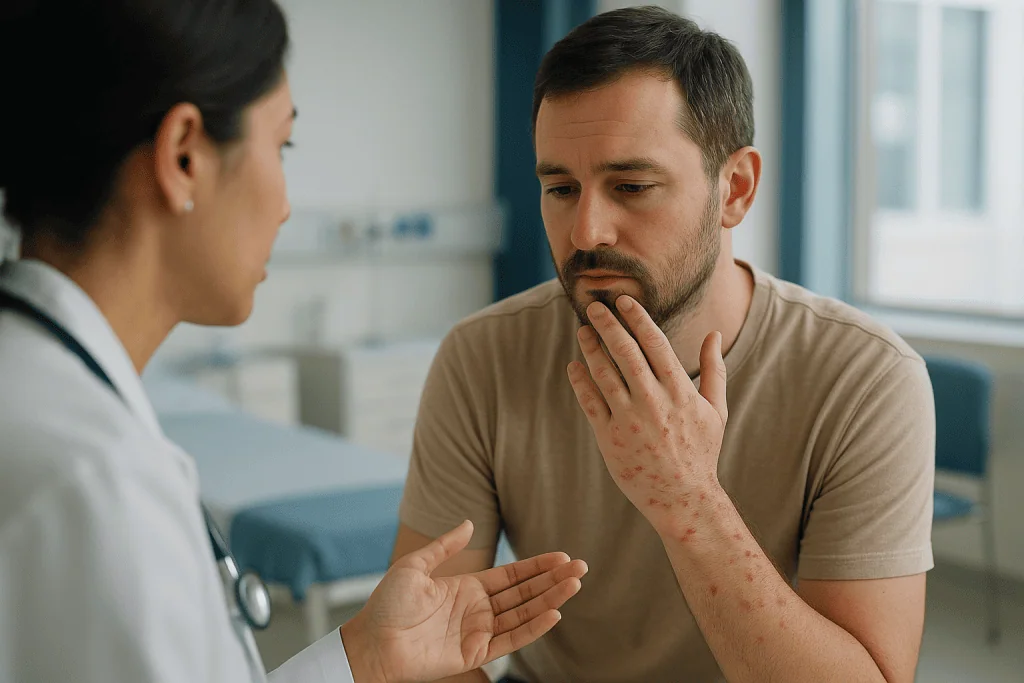
The first is immunological. Children meet enteroviruses one after another in early life, building a library of partial cross-reactive defenses. An adult encountering a new serotype, especially A6, may have none of that background, so the virus replicates longer before it is contained. The result is more blisters and a longer febrile phase.
The second is the immune response itself. Adults mount a vigorous inflammatory reaction, and much of the pain, redness and swelling in the mouth and on the palms reflects that inflammation rather than viral damage alone. This is the same reason chickenpox and some other childhood infections are more punishing after adolescence.
The third is anatomical and behavioral. Adult palms and soles are thicker and weight-bearing, so blisters there are under constant pressure. Adults also keep working, cooking and driving through the illness, which prolongs discomfort. And adults report pain more precisely, so a lesion a toddler ignores becomes a documented complaint.
How strong is this evidence? Mostly observational: outbreak investigations, hospital case series and expert review. No randomized trial compares adult and pediatric disease course, and none is likely. What the observational data consistently show is that adults with A6 infection have more extensive rash, more mouth pain and more nail loss, while serious neurological complications remain rare in adults at any age. Harder, yes. Dangerous, almost never.
Hand foot and mouth adults timeline: how long it lasts, stage by stage
Most adults are back to normal within 7–10 days of the first symptom. That figure comes from CDC and NHS guidance and matches what outbreak case series report. The stages overlap, but a typical course looks like this.
Days 0–2: the prodrome. Fever, sore throat, malaise and loss of appetite. Many adults are already contagious here, before anything visible appears.
Days 1–3: mouth sores. Ulcers form on the tongue, cheeks and throat. Pain usually peaks around day three and eases over the following four or five days as the ulcers shallow out.
Days 2–4: the rash. Spots appear on palms and soles, sometimes spreading to limbs and buttocks. Blisters enlarge over two to three days, then flatten and crust. By day seven to ten most have faded, though the skin may look bruised or dusky for another week.
Weeks 2–3: peeling. Palms and soles often shed skin in large flakes. This is a normal healing phase and needs nothing more than a bland moisturizer.
Weeks 4–8: nail changes. In a minority, particularly after A6 infection, fingernails or toenails loosen and fall away. They regrow normally over several months.
Fatigue can linger beyond the rash. Adults commonly describe a week or two of low energy after the skin clears, a pattern seen with many viral infections and not specific to this one.
What makes a course longer? Extensive A6-type rash, blisters that become infected with bacteria from scratching, and dehydration from poor fluid intake during the mouth-ulcer phase. None of these change the eventual outcome, but all can add days. If symptoms are still worsening past day ten, that is a reason to be reassessed rather than to wait longer.
How long is hand foot and mouth contagious in adults?
Longer than the rash, and that surprises people. The viruses spread through respiratory droplets, saliva, fluid from blisters and stool, as well as from contaminated surfaces such as door handles, phones and shared towels. The CDC states that people are most contagious during the first week of illness, when viral load in the throat is highest and blisters are fresh.
Shedding does not stop when you feel better. Enteroviruses multiply in the gut and can be found in stool for several weeks after symptoms resolve; the CDC puts this at weeks, and some virology studies have detected virus for a month or more. Respiratory shedding typically fades within one to three weeks. People without symptoms can also carry and pass on the virus, which explains how it reaches households where no one appears ill.
For adults the practical implications are straightforward. Treat the first seven days as the high-risk window: stay home if you have a fever or feel unwell, avoid preparing food for others while you have active mouth sores or open blisters, and do not share cups, utensils or towels. Afterward, the main defense is meticulous handwashing, especially after using the toilet and before eating, because the stool route persists longest.
Can you go back to work? Most guidance, including the NHS, advises staying home while feeling unwell or feverish rather than until every spot has gone. Workplaces with vulnerable populations, such as healthcare settings and childcare centers, often apply stricter rules, and those local policies take precedence. Check with your employer or occupational health service.
Finally, reinfection with the same serotype is unusual, but a second episode caused by a different serotype is entirely possible. Having had it once does not close the door.
Adults versus children: a side-by-side comparison
The same virus, two different experiences. The table below summarizes what mainstream guidance and outbreak case series report. Note that the adult column reflects symptomatic adults; many adult infections are silent.
| Feature | Children under 5 | Adults with symptoms |
|---|---|---|
| Typical cause | Coxsackievirus A16, enterovirus A71, A6 | Coxsackievirus A6 overrepresented |
| Incubation | 3–6 days | 3–6 days |
| Fever | Common, usually brief | Common, may run higher and last longer |
| Mouth sores | Drooling, food refusal | Severe swallowing pain, dehydration risk |
| Rash extent | Palms, soles, buttocks | Often wider: arms, legs, face; larger blisters |
| Duration | 7–10 days | 7–10 days, fatigue may persist longer |
| Nail shedding | Occasional, mostly after A6 | Reported more often after A6 |
| Neurological complications | Rare, mostly EV-A71 outbreaks | Very rare |
| Evidence base | Large surveillance datasets | Case series and outbreak reports |
Two patterns stand out. The timeline is essentially identical: age does not stretch the illness, it intensifies it. And the one truly serious complication, inflammation of the brain or its lining, is overwhelmingly a pediatric concern tied to enterovirus A71, not something adults in North America or Europe typically face.
The comparison also clarifies where adult care should focus. Children need watching for dehydration because they refuse to drink; adults need the same attention for a different reason, because they push through pain and underdrink while working. Skin care matters more in adults because the blisters are larger and under pressure. And the nail changes, while harmless, deserve a mention so that a loosening fingernail six weeks later does not trigger an unnecessary scare.
Hand foot mouth adults treatment: what helps and what doesn't
There is no antiviral medicine that treats hand, foot and mouth disease, and antibiotics do nothing because the cause is a virus, not bacteria. Care is supportive, meaning it eases symptoms while the immune system clears the infection, which it reliably does. That sounds unsatisfying when your mouth feels like it has been sanded, so it helps to know which supportive measures have a rationale behind them.
Fluids come first. Painful swallowing is the main driver of dehydration in adults, so the goal is frequent small volumes of cool liquid rather than large drinks. Cold milk, chilled water, diluted juice and ice chips are easier than hot drinks or acidic fluids such as orange juice and soda, which sting ulcers. Pale yellow urine is a simple check that intake is adequate.
Soft, cool, bland food is next: yogurt, smoothies, oatmeal cooled to room temperature, scrambled eggs, mashed potato. Salty, spicy, crunchy and citrus foods can wait a week. A warm salt-water rinse, swished and spat out, is a traditional comfort measure the NHS mentions for mouth ulcers; the evidence is expert opinion rather than trials, but it is low risk.
Pain relief is reasonable, and this is where the prescribing clinician or pharmacist should guide you. Over-the-counter pain and fever relievers can make eating and sleeping possible; which one suits you depends on your other health conditions and medicines, so ask rather than guess. Do not stop or alter any prescribed medicine on your own because of this infection.
Skin care is mostly restraint. Leave blisters intact, keep hands clean, and use a bland emollient on peeling skin. Antiseptic or steroid creams are not routinely recommended and some irritate open lesions.
What does not help: antibiotics, antiviral pills meant for herpes or influenza, and supplements marketed to “boost immunity.” None has evidence in this illness.
Complications adults should know about, including pregnancy
Serious complications are rare in adults, but a handful deserve to be named so they can be recognized early.
Dehydration is the most common. Several days of minimal fluid intake because of mouth pain can produce dizziness on standing, headache, dark urine and a racing pulse. It is also the complication most under your control.
Secondary bacterial infection of blisters happens when they are scratched or burst and skin bacteria move in. Signs are spreading redness, warmth, pus, or a blister that becomes markedly more painful after the others have started to heal.
Nail shedding affects a minority, typically four to eight weeks after an A6 infection. The nail lifts from its base and falls away painlessly, then regrows over three to six months. It needs no treatment.
Neurological complications, including viral meningitis (inflammation of the membranes around the brain) and the rarer encephalitis (inflammation of the brain itself), are documented mainly in young children during enterovirus A71 outbreaks. The CDC lists them as rare at any age. Adults should still know the warning signs: severe headache, stiff neck, confusion, unusual drowsiness or a seizure.
Pregnancy raises understandable questions. Mainstream guidance, including the NHS, indicates that infection in pregnancy is usually mild and that there is no established link to birth defects. The one specific concern is infection in the final weeks before delivery, when the virus can pass to the newborn, who may develop a more severe illness. Anyone pregnant who develops symptoms, or who has close contact with a case near their due date, should tell their maternity clinician so the team can plan accordingly.
Weakened immunity from chemotherapy, transplant medicines or advanced HIV can prolong viral shedding and skin disease. People in these groups should have a lower threshold for seeking advice.
What changed recently
Nothing about the virus has changed in the past few months; what has shifted is attention, and a few durable facts underpin the current conversation.
The CDC redesigned its hand, foot and mouth disease pages in 2024, consolidating guidance on symptoms, causes, transmission and prevention into a plain-language set that explicitly addresses adults and states that people can be contagious for weeks through stool even after recovering. That clarity has made the pages a frequent citation in this season’s viral posts, which is a welcome development.
The epidemiological backdrop is the continued circulation of coxsackievirus A6. Since the CDC’s documentation of A6 outbreaks in the United States during the 2011–2012 season, this serotype has remained in the mix every year, and its tendency to produce widespread rashes in adults is now described on patient-facing pages from Cleveland Clinic and Mayo Clinic as well as in the medical literature. What looked like a curiosity fifteen years ago is now standard teaching.
On vaccines, the regulatory status is worth stating plainly. Inactivated enterovirus A71 vaccines were licensed in China from 2015–2016 for young children and have reduced severe EV-A71 disease there, according to published trial and surveillance data indexed in PubMed. No vaccine against any hand, foot and mouth virus is approved in the United States, the United Kingdom or the European Union, and the Chinese vaccines are not available for adults anywhere. They also offer no protection against A16 or A6, the serotypes most relevant to adults.
Finally, the seasonal pattern itself is the trend engine. In temperate climates cases peak in summer and early fall, so late-summer spikes in adult searches recur annually, amplified each year by a fresh set of photographs. The pattern is reliable enough that the next wave can be predicted to the month.
What the evidence actually says, graded
Readers deserve to know how firm each claim is. Here is a rough grading using the categories that matter: randomized trials, observational data and expert opinion.
Transmission routes and incubation (strong, observational and virological). Decades of surveillance and laboratory culture studies establish the 3–6 day incubation, spread through droplets, blister fluid and stool, and prolonged fecal shedding. This is settled science.
Typical duration of 7–10 days (strong, observational). Consistent across CDC, NHS and large pediatric datasets, and matched by adult case series.
Adults get more extensive disease, particularly with A6 (moderate, observational). Multiple outbreak investigations and hospital case series report the same pattern. The weakness is selection: severe adult cases are more likely to be documented. No controlled comparison exists.
Nail shedding after A6 infection (moderate, observational). Repeatedly reported in outbreak follow-up, with a plausible mechanism of temporary arrest of nail growth during fever.
Supportive care measures (expert opinion). Cool fluids, soft food, salt-water rinses and rest are recommended by every major health body, but no trial has compared them. They are low risk and biologically sensible, which is why guidance endorses them.
Pain and fever relievers improve comfort (indirect, trial data in other conditions). Their effectiveness for sore throat and fever is well established in general, though not tested specifically in this disease. Choice and suitability belong with your clinician or pharmacist.
EV-A71 vaccine efficacy in children (strong, randomized trials). Large phase 3 trials in China showed high protection against EV-A71 disease. Irrelevant to adult protection and not available outside licensed markets.
Rarity of serious complications in adults (moderate, observational). Surveillance consistently finds neurological and cardiac complications concentrated in young children with EV-A71. Adult cases are case-reportable rarities.
The headline: the facts people most need, how long it lasts and how it spreads, are the ones best supported.
Common myths circulating about hand, foot and mouth disease in adults
Viral posts travel faster than corrections. These are the claims that keep resurfacing, and what the evidence says about each.
“Adults can’t get it.” False. The CDC, NHS and Mayo Clinic all state that adults can be infected. Adults are less likely to show symptoms, which is not the same as being immune.
“If you had it as a kid, you’re protected for life.” Partly false. Immunity is serotype-specific. Protection against A16 does not cover A6 or A71, and a second episode from a different virus is well documented.
“It’s related to foot-and-mouth disease in cattle.” False. The animal disease is caused by an unrelated virus and does not infect humans. The similar names are a coincidence that causes real confusion.
“You’re only contagious while you have spots.” False. People are contagious before the rash appears and continue to shed virus in stool for weeks afterward, as the CDC states. The rash is a poor guide to infectiousness.
“Antibiotics will clear it faster.” False and potentially harmful. The cause is viral; antibiotics have no effect on it and add side effects and resistance risk.
“Popping the blisters speeds healing.” False. Opening blisters releases infectious fluid and invites bacterial infection. Leave them alone.
“Losing a fingernail afterward means something went badly wrong.” False. Nail shedding one to two months later is a recognized, harmless after-effect, especially with A6. Nails regrow normally.
“There’s a vaccine you can get.” Not for adults, and not in the US, UK or EU. The only licensed vaccines target enterovirus A71 in young children in a few countries.
“It’s dangerous in pregnancy.” Overstated. Infection is usually mild and not linked to birth defects. The specific concern is transmission to a newborn when infection occurs close to delivery, which is why the maternity team should be told.
How to protect your household and limit spread
Prevention is low-tech, and it works best when it starts before anyone is sick, because the virus spreads during the symptom-free incubation period.
Handwashing is the single most effective measure. Soap and water for at least 20 seconds, with particular attention after using the toilet, after changing diapers, after wiping a child’s nose and before preparing food. Alcohol-based hand sanitizers are less reliable against enteroviruses than soap and running water, so use them as a backup rather than a replacement.
Surfaces matter because the virus survives on them. Clean frequently touched objects, including phones, remote controls, door handles, taps and toys, with a household disinfectant, following the product label. Toys that go in a toddler’s mouth deserve special attention during an outbreak at daycare.
Within the home, the sick person should have their own towel, cup and cutlery for the first week, and kissing or sharing food with a symptomatic family member is best paused. Diaper-changing areas should be cleaned after each use, since stool shedding is the longest-lasting route.
Adults caring for a sick child are the group most likely to be infected next. Washing hands immediately after any contact with saliva, blister fluid or stool, and avoiding touching the face in between, reduces that risk substantially. If you do develop symptoms, remember you were likely contagious for a day or two beforehand, so a quiet word to close contacts is a courtesy.
On returning to work, follow the general rule of staying home while feverish or unwell, then apply any stricter policy your workplace sets. Healthcare, food-handling and childcare roles often require clearance from an occupational health service, and that judgment belongs to them, not to a blog post.
When to see a doctor about hand, foot and mouth disease as an adult
Most adults can manage this illness at home, but a clinician’s assessment matters in specific circumstances, and some signs call for urgent care the same day.
Seek same-day or emergency care for any of the following:
- Signs of significant dehydration: very dark urine or none for 8 hours, dizziness or fainting on standing, a dry mouth with no saliva, or a persistently fast heartbeat.
- Severe headache with a stiff neck, sensitivity to light, confusion, unusual drowsiness or a seizure. These can indicate meningitis or encephalitis and need immediate evaluation.
- Chest pain, breathlessness or palpitations, which are very rare but can signal inflammation of the heart muscle.
- A fever that is very high, lasts more than three days, or returns after settling.
- Blisters that become increasingly red, hot, swollen or filled with pus, or red streaks spreading from a lesion.
Book a routine appointment if you are pregnant, especially in the last month before your due date; if you have a weakened immune system from illness or medicines; if symptoms are not improving after ten days; if you cannot eat or drink enough because of mouth pain despite over-the-counter relief; or if the rash is widespread, unusually painful or involves the eyes.
Consider an appointment, too, if the diagnosis is uncertain. A rash on the palms and soles in an adult has a short but important list of alternative causes, including secondary syphilis, chickenpox, drug reactions and certain tick-borne infections, and a clinician can distinguish them. Mouth ulcers with fever can also be streptococcal throat infection, which does respond to antibiotics.
Every decision about medicines, including which pain reliever is appropriate alongside your existing prescriptions, belongs with the prescribing clinician or pharmacist who knows your history. Nothing here replaces that conversation.
Frequently asked questions
Can adults get hand foot and mouth disease from their children?
Yes, and this is the most common way adults catch it. Close contact with a child’s saliva, blister fluid or stool during diaper changes transfers the virus easily. Many adults then have mild or no symptoms, but those without prior immunity to that serotype can develop the full illness. Washing hands immediately after caring for a sick child reduces the risk.
What are the first hand foot and mouth disease adults symptoms?
The first signs are usually fever, sore throat, loss of appetite and feeling run down, resembling a cold or early flu. Mouth ulcers appear within a day or two, followed by red spots and blisters on the palms and soles. In adults the mouth pain is often the most troublesome early symptom, and the rash may spread to the arms, legs and buttocks.
How long is hand foot and mouth contagious after symptoms go away?
You remain able to spread the virus for weeks after you feel well, mainly through stool. Respiratory and blister-fluid spread fades within one to three weeks, but enteroviruses can persist in the gut for a month or more. The first week of illness carries the highest risk, so that is when isolation matters most; afterward, careful handwashing is the key measure.
What is the best hand foot mouth adults treatment at home?
Supportive care: frequent small sips of cool fluids to prevent dehydration, soft bland foods, rest, and avoiding acidic or spicy items that sting mouth ulcers. A salt-water rinse can soothe the mouth. Over-the-counter pain relievers can help with eating and sleeping, but check with a pharmacist or clinician about which one suits your health history. Antibiotics have no effect because the cause is viral.
Why is hand foot and mouth disease worse in adults than in children?
Symptomatic adults often lack immunity to the particular serotype, especially coxsackievirus A6, so the virus replicates longer and the immune reaction is more intense. Adult palms and soles bear weight, making blisters more painful. Reporting also plays a role: mild adult infections go unnoticed while dramatic ones are documented. Serious complications nonetheless remain rare in adults.
How long does hand foot and mouth last in adults?
About 7–10 days from the first symptom to clearing of the rash, the same as in children. Fever lasts one to three days, mouth pain peaks around day three, and blisters fade by the end of the second week. Skin peeling on palms and soles may follow for another week or two, and fatigue can linger. Nail shedding, if it happens, appears four to eight weeks later.
Can I go to work with hand foot and mouth disease?
General guidance advises staying home while you have a fever or feel unwell, not until every spot disappears. Once you feel better and are fever-free, many people return while practising strict handwashing and not sharing food or utensils. Healthcare, childcare and food-handling workplaces often have stricter policies, and their occupational health rules should be followed.
Is hand foot and mouth disease dangerous in pregnancy?
Usually not. Infection during pregnancy is typically mild, and mainstream guidance reports no established link with birth defects. The specific concern is catching it in the final weeks before delivery, because the virus can pass to the newborn, who may become more seriously unwell. Pregnant people with symptoms or close exposure near their due date should inform their maternity clinician.
Why are my fingernails falling off weeks after hand foot and mouth?
This is onychomadesis, a recognized after-effect in which the nail separates from its base because nail growth paused during the febrile illness. It is reported most often after coxsackievirus A6 infection and typically appears four to eight weeks later. The process is painless, the nail regrows normally over several months, and no treatment is needed.
Is there a vaccine for hand foot and mouth disease for adults?
No. The only licensed vaccines target enterovirus A71 and are approved for young children in China and a few other countries, where trials showed strong protection against that serotype. They do not protect against coxsackievirus A16 or A6, which cause most adult cases, and no hand, foot and mouth vaccine is approved in the United States, United Kingdom or European Union.
References
- CDC: About Hand, Foot, and Mouth Disease
- NHS: Hand, foot and mouth disease
- Cleveland Clinic: Hand, Foot and Mouth Disease
- MedlinePlus Medical Encyclopedia: Hand-foot-mouth disease
This article is for general information only and is not a substitute for professional medical advice. Please consult a qualified doctor about your individual situation.

More from the Blog

Bug Bite Identification: Mosquito, Tick, Spider or Bed Bug, and the Reactions That Need Care
Bug bite identification works best by pattern, not by a single bump. Mosquito bites raise an itchy welt within minutes on exposed skin. Tick…

Flu vs COVID vs RSV: Telling the Three Apart by Symptoms and Tests
Flu, COVID-19 and RSV share fever, cough and fatigue, so symptoms alone rarely settle which one you have. Flu tends to arrive abruptly with…

Salmonella Infection in Pregnancy, Infants and Older Adults: Why Doctors Monitor More Closely
Salmonella usually causes a self-limited stomach illness, but in pregnancy, infancy and older age the margin for error is thinner. Dehydration develops faster, the…

Chickenpox in Adults: Why It Is More Serious and When Vaccination Makes Sense
Chickenpox in adults is usually more severe than in children: the rash is heavier, fever runs higher, and complications such as varicella pneumonia, encephalitis…

Dengue Recovery Timeline: The Fever Phase, the Critical Window and When Strength Returns
Dengue usually follows three phases. A fever of 2 to 7 days comes first, then a critical window of roughly 24 to 48 hours…

Antibiotic Side Effects: The Common, the Rare and How to Protect Your Gut
Antibiotics side effects are usually mild and digestive: loose stools, nausea, bloating or a yeast infection, affecting roughly one in five people. Rarer problems…