

How a Dental Hygiene Cleaning Works: Scaling, Polishing and Gum Checks Step by Step
Key Takeaways
- Healthy gum pockets measure 1 to 3 millimeters on probing; depths of 4 millimeters or more suggest periodontitis and may prompt a deep cleaning rather than a routine one, according to Mayo Clinic.
- Tartar is plaque that has mineralized onto the tooth and cannot be removed by any home toothbrush; only scaling instruments break its bond with the surface.
- Polishing removes surface stain and smooths enamel but contains no bleaching agent, so it restores your natural shade rather than whitening.
- CDC surveillance finds nearly half of adults aged 30 and over have some form of periodontal disease, most of it painless and unnoticed.
- The NHS individualizes recall intervals from three months to two years based on risk; a fixed six-month schedule is tradition rather than strong evidence.
- Never stop a prescribed blood thinner before a cleaning on your own; the team manages minor bleeding, and the decision belongs to the prescribing clinician.
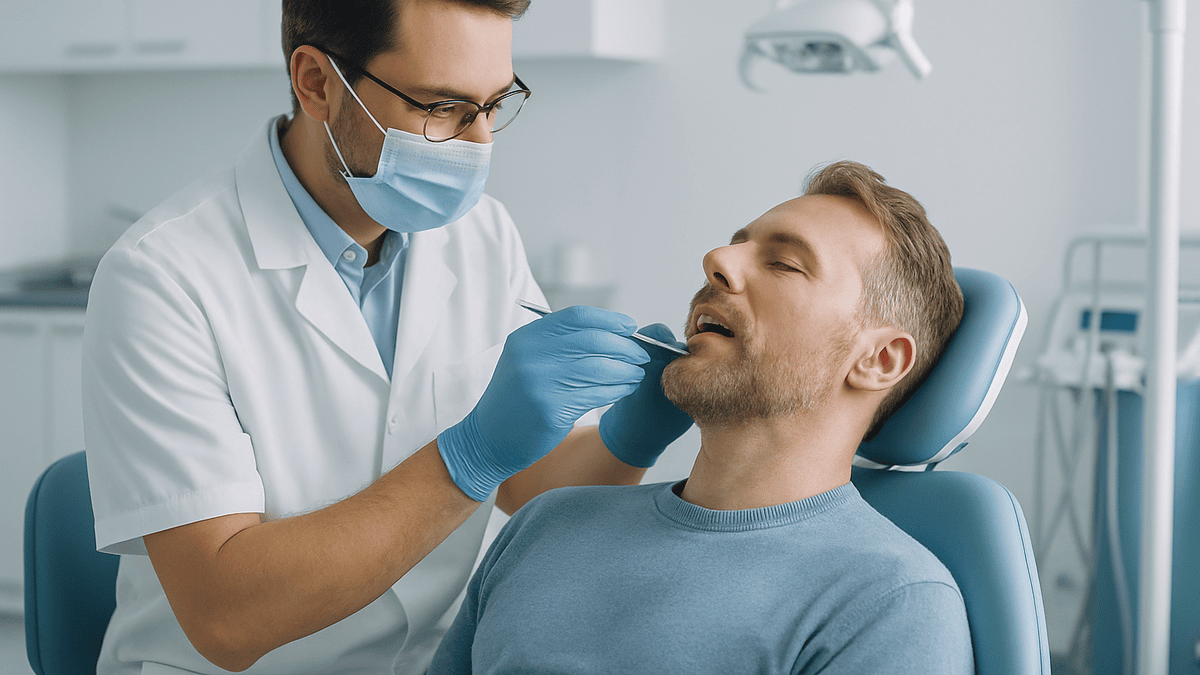
A professional dental cleaning usually has three parts: a gum check, in which the hygienist measures the space between gum and tooth in millimeters; scaling, which removes hardened plaque (tartar) above and just below the gumline with hand or ultrasonic instruments; and polishing, which smooths tooth surfaces and lifts surface stain. A dentist then examines the mouth and reviews any X-rays before agreeing a recall interval with you.
The chair tilts back, the light swings over, and somewhere down the corridor a high-pitched whine starts up. Most people run their tongue across their back teeth at that moment, checking for the rough patch they have been ignoring since spring. Then comes the small, familiar dread: will it hurt, will they scold me, and what exactly are they doing in there for forty minutes?
For a professional dental cleaning, what happens is far more structured than it feels from the chair. There is a measuring step, a scraping step and a smoothing step, in that order, and each one has a specific job. Understanding the sequence turns a passive experience into something you can follow, question and use.
This explainer walks through the whole visit, what the numbers the hygienist calls out mean, why some people are asked to wait, and where the evidence is firm and where it is honestly thinner than the marketing suggests.
Professional dental cleaning: what happens from start to finish
A routine hygiene visit, sometimes called a prophylaxis, follows a fairly predictable arc. The hygienist first asks about changes since your last visit: new medicines, new diagnoses, pregnancy, bleeding when you brush, anything that has been sore. This is not small talk. Blood thinners, diabetes and heart valve history all change how the appointment is run.
Next comes a look around. The hygienist checks the soft tissues of the cheeks, tongue, palate and throat, then the gums themselves. A thin, blunt ruler called a periodontal probe is slid gently between gum and tooth to measure how deep that groove is. The depths are recorded, along with any bleeding, and they form the baseline for everything that follows.
Then the cleaning proper begins. Scaling removes plaque, the soft bacterial film that forms on teeth every day, and tartar, which is plaque that has absorbed minerals from saliva and hardened onto the tooth surface. Once the surfaces are clear, a rotating rubber cup with a gritty paste polishes them, followed by flossing between every tooth. Some visits finish with a fluoride application.
Finally, the dentist steps in to examine the teeth, review any X-rays and confirm the findings. Together with the hygienist they suggest when you should return, which can range from every three months to every two years depending on your risk, according to the NHS.
The Cleveland Clinic gives a typical appointment length of about 30 to 60 minutes, though heavy tartar, bleeding gums or a long gap since the last visit can push it toward the upper end. Nothing in the sequence is arbitrary: the measuring tells the team what the scaling needs to achieve, and the polishing only makes sense once the hard deposits are gone.
The gum check: what those millimeter numbers actually mean
Listen closely during the first few minutes and you will hear a quiet chant: “two, two, three, three, four, two.” Each number is a pocket depth, the distance in millimeters from the edge of the gum to the point where the gum tissue attaches to the tooth root. The probe has markings like a tiny ruler and is pressed only lightly, so the sensation is pressure rather than pain when gums are healthy.
According to Mayo Clinic, healthy pockets typically measure between 1 and 3 millimeters. Depths of 4 millimeters or more suggest that the attachment has started to pull away from the tooth, which is the hallmark of periodontitis, the more advanced stage of gum disease in which bone supporting the tooth is gradually lost. Gingivitis, the milder, reversible stage, shows up mainly as bleeding and redness with normal depths.
The hygienist also notes bleeding on probing. A healthy gum does not bleed when a blunt instrument touches it lightly; inflamed tissue does, because the blood vessels are dilated and the surface is fragile. Bleeding spots are mapped, not judged.
Why does this matter beyond the mouth? Gum disease is common: CDC surveillance has found that nearly half of adults aged 30 and over have some form of periodontal disease, rising to a large majority of adults over 65. Most of them do not know it, because bone loss is painless until it is advanced.
The numbers also decide what kind of cleaning you need. Pockets of 1 to 3 millimeters can be cleaned thoroughly with routine scaling. Deeper pockets shelter tartar far below the gumline where a standard cleaning cannot reliably reach, and that is where a different procedure, described later, enters the conversation. Ask to see your chart; a good team will happily walk you through it.
Scaling: how the hygienist removes tartar you cannot brush away
Here is the mechanical truth that makes a hygiene visit necessary in the first place. Plaque is soft, and a toothbrush handles it well. Tartar is not soft. Once plaque mineralizes, it bonds to enamel and root surface like limescale to a kettle element, and no amount of brushing will lift it. The Cleveland Clinic notes that plaque that is not removed can begin hardening within days, which is why the spaces you routinely miss, often the inside of the lower front teeth and the outside of the upper back molars near the saliva glands, are where tartar builds fastest.
Two families of instrument do the removing. Hand scalers and curettes are fine metal tools with a sharpened working edge. The hygienist braces a finger on a nearby tooth, hooks the edge under the deposit and pulls it away in short, controlled strokes. You hear a faint scraping and feel a tug. Ultrasonic scalers, the source of that corridor whine, vibrate a metal tip thousands of times per second and shatter tartar off the surface while a stream of water washes debris away and keeps the tip cool. Many teams use both: ultrasonic for the bulk, hand instruments for the fine finish.
Neither method removes healthy enamel. The instruments are designed to sit against a hard deposit and break the bond between deposit and tooth, and the pressure used is far below what would abrade intact enamel. The gritty feeling after tartar comes off is the tooth surface you had forgotten was there.
Scaling also reaches slightly below the gumline, roughly the first few millimeters, which is exactly the zone the probing numbers mapped. Bleeding during this step is common when gums are inflamed and usually settles within the visit. Heavy, persistent bleeding is one reason the team asks about blood thinners beforehand.
Polishing, fluoride and the X-ray question
Polishing is the part most people enjoy, and it is also the part most often misunderstood. A soft rubber cup spins slowly against each tooth with a mildly abrasive paste. Its job is twofold: to remove surface stain from coffee, tea, tobacco or red wine that scaling leaves behind, and to smooth microscopic roughness so that new plaque has less to grip. It brightens teeth only to their natural shade. It does not bleach them, because the paste contains no bleaching agent and does not change the color of the enamel itself.
Some clinics use an air-polishing device that sprays a fine powder and water instead of a rubber cup, especially around orthodontic brackets or implants. The outcome is the same: clean, smooth surfaces. Flossing follows, partly to clear any paste left between teeth and partly to check that nothing snags, which can reveal a rough filling edge or a hidden cavity.
Fluoride, a mineral that strengthens enamel and slows the early stages of decay, may be applied as a varnish or gel at the end. According to MedlinePlus, professional fluoride treatment is commonly recommended for children and for adults at higher risk of cavities, such as those with dry mouth, exposed roots or a history of frequent decay. Whether you need it is a clinical judgment made by the team, not a standard add-on for everyone.
X-rays are not part of every cleaning. They are taken when the dentist judges that the benefit of seeing between teeth or under the gum outweighs a small radiation exposure, and the interval depends on your cavity history and gum status. MedlinePlus advises that the frequency should be individualized rather than routine. If you are pregnant or have had recent imaging elsewhere, say so; both change the decision.
How painful is a tooth cleaning? An honest answer
The honest answer is that it depends almost entirely on the state of your gums walking in, and the good news is that the second visit is nearly always easier than the first.
With healthy gums and modest tartar, most people describe scaling as pressure, vibration and occasional scratchiness rather than pain. The ultrasonic water spray can feel cold on sensitive teeth, and the polishing is usually pleasant. Discomfort rises when gums are inflamed, because inflamed tissue is tender and bleeds easily, and when tartar has crept below the gumline, because reaching it means the instrument is working against sore tissue.
Sensitivity is a separate issue from soreness. Teeth whose roots are exposed by receding gums have no enamel covering that surface, and the underlying dentin, the porous layer beneath enamel, conducts cold and touch straight toward the nerve. Removing tartar that had been coating those roots can make them feel briefly more sensitive, not less, for a few days afterward. The Cleveland Clinic describes this post-cleaning sensitivity as common and short-lived.
You have options, and you are allowed to use them. Tell the hygienist before they start if you are anxious or have had a painful cleaning before. Many will use a numbing gel on the gums, work in shorter bursts, switch from ultrasonic to hand instruments or vice versa, or agree a hand signal so you can pause without speaking. For a deep cleaning that goes well below the gumline, local anesthetic injections are routinely offered, according to Mayo Clinic.
What you should not expect is sharp, lasting pain. If a particular tooth jolts when touched, say so immediately; that can be a sign of a cracked tooth, a cavity or an exposed nerve, and it needs the dentist’s eyes rather than more scaling.
Who a routine cleaning is for, and who is usually asked to wait
Almost every adult and child with teeth is a candidate for routine professional cleaning, including people with fillings, crowns, implants and braces. Pregnancy is not a reason to skip it; hormonal changes make gums more prone to inflammation, and both the NHS and MedlinePlus describe dental care during pregnancy as safe and worthwhile. Tell the team you are pregnant so they can time X-rays and position you comfortably.
A short list of situations usually prompts a pause or a change of plan rather than an outright no.
- An active infection in the mouth, such as a swollen abscess or a fresh cold sore on the lip, is normally treated or allowed to settle first, because instruments and water spray can spread it.
- People with certain heart conditions may need an antibiotic before the appointment. The American Heart Association reserves this for a small high-risk group, including those with an artificial heart valve, a previous episode of infective endocarditis, some types of congenital heart disease and certain heart transplant recipients. The decision and any prescription sit with your cardiologist and dentist, not the hygienist.
- Anyone on anticoagulant medicines, or with a bleeding disorder, is usually still cleaned, but the team may want recent blood test results or a note from the prescribing clinician. Do not stop a blood thinner on your own before a cleaning; that decision belongs to the doctor who prescribed it.
- Recent joint replacement, recent radiation to the jaw, or medicines that affect bone healing can all change the plan and warrant a conversation first.
- Feeling unwell with fever or a respiratory infection is a reason to reschedule, for your sake and the staff’s.
Children are typically seen from the time the first teeth appear, with the cleaning kept short, gentle and playful, and fluoride discussed on an individual basis.
Deep cleaning vs regular cleaning: what changes and why
When the probing numbers show pockets of 4 millimeters or more with bleeding, the team may recommend a procedure called scaling and root planing, widely known as a deep cleaning. Scaling here means the same tartar removal, but it goes down to the bottom of each pocket. Root planing means smoothing the root surface so bacteria and tartar find it harder to reattach and so the gum can heal snugly against the tooth again. Mayo Clinic lists it as the first-line, non-surgical treatment for periodontitis.
| Feature | Regular cleaning (prophylaxis) | Deep cleaning (scaling and root planing) |
|---|---|---|
| Who it is for | Healthy gums or gingivitis; pockets typically 1–3 mm | Periodontitis; pockets typically 4 mm or deeper with bleeding or bone loss |
| How deep it goes | Above and just below the gumline | To the base of each pocket, including root surfaces |
| Anesthetic | Usually none; numbing gel if requested | Local anesthetic commonly offered |
| Number of visits | Usually one | Often split into two or more visits by section of the mouth |
| Afterward | Mild sensitivity for a few days | Soreness and sensitivity for several days; a re-check visit some weeks later |
| Goal | Maintain health, remove surface deposits | Reduce pocket depth and inflammation, halt further bone loss |
Two points deserve emphasis. First, a deep cleaning is not a punishment for poor brushing; smoking, diabetes, genetics and some medicines all raise the odds of periodontitis, and the CDC highlights how common the condition is in adults over 30. Second, a deep cleaning is not a one-time fix. Mayo Clinic describes a re-evaluation visit afterward to re-measure pockets, followed by more frequent maintenance cleanings, because the bacteria that caused the pockets return if they are given the chance.
If you are told you need a deep cleaning, ask which teeth and which pockets prompted the recommendation and what the plan is if the numbers do not improve. Surgical options exist for pockets that stay deep, but the decision on any of them rests with the dentist or periodontist treating you.
What shouldn't you do before getting your teeth cleaned?
People prepare for hygiene visits in oddly counterproductive ways, usually out of a wish to make a good impression. A few habits are worth dropping.
Do not scrub aggressively the night before or the morning of. Hard brushing with a stiff brush does not remove tartar, but it can make gums raw and bleed more during probing, which muddies the very measurements the team relies on. Brush and floss normally; the hygienist wants to see your everyday mouth, not a special-occasion version.
Do not stop a prescribed medicine to avoid bleeding. Anticoagulants and antiplatelet medicines are prescribed to prevent clots in the heart, brain or legs, and the small extra bleeding during a cleaning is manageable with pressure and technique. Stopping them, even for a day, carries real risk and is a decision only the prescribing clinician can make. Bring an up-to-date list of everything you take, including supplements.
Do not hide symptoms. A tooth that has been twinging with cold, gums that bleed when you floss, a jaw that clicks: mention each one before the cleaning starts. The team can then look properly instead of discovering it when an instrument hits a sore spot.
Do not arrive with a heavy meal or a large coffee just beforehand. There is no medical rule against eating, but strong flavors, staining drinks and a very full stomach make lying back with water spray in your mouth less comfortable.
Do not skip the appointment because you are embarrassed. Hygienists see the full range of mouths every day, and a long gap is exactly the situation the visit exists to fix. Shame is not a treatment plan.
Finally, if you have a cardiac condition that requires an antibiotic before dental work, confirm the arrangement with the prescribing doctor well ahead of time rather than on the morning of the visit.
What the next few days usually look like
The first thing most people notice on the drive home is texture. Teeth feel glassy, the tongue keeps finding smooth surfaces where there used to be ridges, and the gaps between teeth can seem wider. That last one is worth explaining: tartar that had been filling the space between teeth and gum is gone, so the true contour of the tooth is visible again. Nothing has been taken from the tooth itself.
Sensitivity to cold, and sometimes to sweet foods, is common for a short period after scaling, particularly where gums have receded and root surface is exposed. The Cleveland Clinic describes this as typically lasting a few days. A toothpaste designed for sensitive teeth and a brief pause on ice water are usually all it takes. If a single tooth stays sharply sensitive for more than a week or two, that warrants a call rather than patience.
Gums that were inflamed may feel tender and look slightly redder for a day or two, and a small amount of pink in the sink when you brush is expected at first. The pattern to look for is improvement: inflamed gums that are cleaned and then brushed and flossed daily typically bleed less within one to two weeks, according to the NHS guidance on gingivitis, because the irritant driving the inflammation has been removed.
After a deep cleaning the timeline is longer. Numbness from local anesthetic wears off over a few hours, soreness can last several days, and the team will usually book a re-check some weeks later to re-measure pocket depths, as Mayo Clinic outlines. Between visits, the homework is unglamorous: brush twice daily with a soft brush, clean between teeth once a day, and avoid smoking, which the CDC identifies as a major contributor to gum disease and slower healing.
What are the downsides of dental cleaning?
Every procedure has a cost side, and pretending otherwise does readers no favors. The downsides of a routine cleaning are real but modest, and they are worth weighing against what happens when tartar is left alone.
Temporary sensitivity is the most common complaint, described above. Gum soreness and minor bleeding follow. Both usually resolve within days. For people on anticoagulants, bleeding may last longer and the team may apply pressure or a hemostatic gauze; serious bleeding is rare when the medicine history is known in advance.
Rarely, a piece of tartar or a chip from an old, weak filling comes loose during scaling. Hygienists are trained to spot this, and it more often reveals a filling that was already failing than one the cleaning damaged. Equally rarely, the ultrasonic tip can scratch a porcelain or composite restoration, which is why many teams switch to hand instruments around crowns and veneers.
The bacteremia question comes up often. Scaling does push small numbers of oral bacteria into the bloodstream for a short time. For nearly everyone this is harmless; the immune system clears them, and everyday brushing and chewing do the same. For the small high-risk cardiac group identified by the American Heart Association, this is precisely why prophylactic antibiotics are considered, and why disclosing heart valve history matters.
There is also an honest evidence caveat. Cochrane systematic reviews on routine six-monthly scaling and polishing in adults with healthy gums found only small differences in gum health compared with less frequent recall, which is why the NHS now individualizes intervals from three months to two years rather than defaulting everyone to six months.
The alternative to removing tartar is not a gentler technique; it is leaving it in place. Tartar cannot be brushed off, and the inflammation it drives leads over years to bone loss and tooth mobility, according to MedlinePlus. The realistic alternative is choosing the right interval, not skipping the visit.
Is it worth getting teeth professionally cleaned? What the evidence shows
Yes, for nearly everyone, though the reasons are less dramatic than the headlines promising that a cleaning will protect your heart.
The strongest case is mechanical and local. Tartar is a physical shelter for bacteria at the gumline. Removing it, and reducing the inflammation it maintains, is the foundation of preventing gingivitis from progressing to periodontitis and of managing periodontitis once it exists. Mayo Clinic and the NIH’s National Institute of Dental and Craniofacial Research both describe professional cleaning combined with daily home care as the core of gum disease prevention and control. Gum disease, not decay, is the leading reason adults lose teeth, and its early stages are painless, which is why the measuring step is doing quiet work.
The second case is surveillance. A hygiene visit is a regular, low-drama chance for a trained person to look at the soft tissues of your mouth, feel for lumps, catch a cavity while it is small and notice that a filling edge is crumbling. Oral cancer screening happens here, without a separate appointment.
Now the honest part about the body-wide claims. People with periodontitis do have higher rates of heart disease, stroke and poorly controlled diabetes, and the American Heart Association acknowledges the association. Association is not proof that cleaning your teeth prevents a heart attack; shared risk factors such as smoking, diabetes and inflammation explain part of the link, and trials have not shown that periodontal treatment reduces cardiovascular events. For diabetes the evidence is somewhat better: treating gum disease is associated with modest improvements in blood sugar control in some studies, which is why the CDC lists gum care within diabetes management.
So the fair summary is this: professional cleaning is clearly worth it for your teeth and gums, plausibly helpful for overall health, and not a substitute for managing blood pressure, glucose or smoking directly.
What people often get wrong about a professional dental cleaning
Myths cluster around this appointment, partly because it is so routine that nobody explains it. A few deserve correcting.
“Scaling scratches enamel and weakens teeth.” Scalers are designed to break the bond between tartar and tooth, not to cut the tooth. Enamel is the hardest substance in the body, and the pressures used in a cleaning do not remove it. The rough-to-smooth change you feel is tartar leaving, not enamel.
“My teeth feel loose afterward, so the cleaning damaged them.” Heavy tartar can act like a splint, bridging teeth together. When it is removed from teeth that already had bone loss, the underlying mobility becomes noticeable. The looseness was there; the cleaning revealed it and, in doing so, gave the team the information needed to manage it.
“Polishing whitens teeth.” It removes surface stain and restores the natural shade. Genuine whitening uses bleaching agents and is a separate conversation with your dentist.
“Bleeding gums mean I should brush less.” The opposite is true. Bleeding is inflammation, and inflammation responds to gentle, thorough daily cleaning. The NHS notes that gingivitis usually improves within a couple of weeks of consistent brushing and interdental cleaning after professional care.
“Everyone needs a cleaning every six months.” Six months is a tradition, not a finding. The NHS bases recall on individual risk, anywhere from three months to two years, and Cochrane reviews have not found strong evidence favoring a fixed six-month schedule for adults with healthy gums.
“If nothing hurts, nothing is wrong.” Periodontitis is largely painless until it is advanced. The CDC’s estimate that nearly half of adults over 30 have some form of it, most unaware, is the clearest rebuttal.
“A good electric toothbrush replaces the hygienist.” An electric brush handles plaque well. Nothing sold for home use removes tartar once it has formed.
Questions to ask your care team
A hygiene visit is one of the few medical appointments where the clinician is with you, hands-on, for half an hour or more. Use it. These questions turn a cleaning into a check-in on your actual risk, and none of them will be unwelcome.
- What were my pocket depths today, and how do they compare with last time? Ask to see the chart; a trend matters more than any single number.
- Did any areas bleed on probing, and which ones? Bleeding points tell you exactly where your home care is missing.
- Do I have gingivitis, periodontitis or healthy gums, and what is the difference in my case?
- Based on what you found, how often should I come back, and what would change that interval?
- Do I need X-rays today, and if so, why now?
- Is fluoride treatment appropriate for me, and what specifically makes me higher or lower risk for cavities?
- Which teeth or surfaces am I consistently missing when I brush, and can you show me on a model or mirror?
- Is there anything about my medicines, my medical history or my heart that changes how you clean my teeth, and should I check anything with my doctor before the next visit?
- If you are recommending a deep cleaning, which pockets prompted it, how many visits will it take, and what happens if the numbers do not improve?
- Are there any fillings, crowns or areas of wear you are watching, and what would prompt you to act on them?
- Given that I smoke, have diabetes, have dry mouth or take a medicine that affects my gums, what should I do differently at home?
Write down the answers, or ask for a printout of your periodontal chart. The next visit will make far more sense when you can compare, and a team that welcomes these questions is telling you something useful about how it works.
When to call your doctor
A routine cleaning rarely leads to complications, and mild sensitivity or tenderness for a few days is expected. Certain signs, however, should prompt a call to your dental practice or, out of hours, to a doctor rather than a wait-and-see approach.
Call your dentist promptly if you notice any of the following after a cleaning or deep cleaning:
- Bleeding from the gums that does not stop with ten to fifteen minutes of firm pressure, or that restarts repeatedly, especially if you take an anticoagulant.
- Increasing swelling of the gum, cheek or jaw, rather than swelling that is settling, or a new lump or firm area.
- Fever, feeling generally unwell, or foul-tasting discharge from the gum, which can signal infection.
- Sharp, throbbing or lingering pain in a single tooth that worsens over days rather than easing, or pain that wakes you at night.
- A tooth that has become noticeably loose, chipped or has a filling or crown that has come away.
- Numbness or tingling in the lip, chin or tongue that persists many hours after local anesthetic should have worn off following a deep cleaning.
Seek urgent medical care, not a routine dental appointment, if swelling spreads toward the eye or down the neck, if you have difficulty swallowing or breathing, or if you develop a high fever with chills. These are rare, but they are emergencies.
People with the high-risk heart conditions described by the American Heart Association should also contact their doctor if they develop unexplained fever, night sweats or fatigue in the weeks after any dental procedure, because these can be early signs of infective endocarditis, an infection of the heart’s inner lining, which is uncommon but serious.
Outside of these red flags, the practical rule is simple: if something feels wrong and is not improving, a phone call costs nothing and the team would rather hear from you early. Every decision about further treatment, medicines or follow-up rests with the dentist and physicians who know your history.
Frequently asked questions
Is it worth getting teeth professionally cleaned?
Yes, for nearly everyone with teeth, because tartar cannot be removed at home and the inflammation it sustains is the main driver of gum disease and adult tooth loss. The visit also doubles as a check for early cavities, failing fillings and soft-tissue changes. Claims that cleaning directly prevents heart attacks are not proven; the link between gum disease and heart disease is an association, partly explained by shared risk factors such as smoking and diabetes.
Does teeth cleaning hurt if my gums bleed when I brush?
It is likely to be more uncomfortable than a cleaning on healthy gums, because bleeding gums are inflamed and tender. Most people still describe pressure and scratchiness rather than sharp pain. Tell the hygienist beforehand; numbing gel, shorter bursts and a pause signal all help. The encouraging part is that once tartar is removed and daily brushing continues, inflammation usually eases within a couple of weeks, so the next visit tends to be noticeably easier.
How often should you get teeth cleaned?
There is no single correct interval. The NHS recommends recall based on individual risk, anywhere from every three months for people with active gum disease to every two years for those with healthy mouths and low cavity risk. Cochrane reviews have not found strong evidence that a fixed six-month schedule improves gum health for low-risk adults. Your dentist and hygienist will suggest an interval after measuring your gums and reviewing your history.
What is the difference between deep cleaning vs regular cleaning?
A regular cleaning removes plaque and tartar above and just below the gumline and is for healthy gums or gingivitis. A deep cleaning, formally called scaling and root planing, goes to the bottom of deeper gum pockets and smooths the root surface so gums can reattach. It is the standard non-surgical treatment for periodontitis, usually done with local anesthetic over more than one visit, followed by a re-check some weeks later.
What to do before a dental cleaning if I feel anxious?
Tell the practice when you book, and tell the hygienist again before they start. Ask for a hand signal to pause, request numbing gel if probing or scaling has hurt before, and consider a morning appointment so you are not worrying all day. Bring headphones if the ultrasonic sound bothers you. Do not skip the visit out of embarrassment about how long it has been; hygienists see every kind of mouth and a long gap is exactly what they help with.
What are the downsides of dental cleaning?
The common downsides are temporary sensitivity to cold, mild gum soreness and a little bleeding, usually settling within a few days. Rarely an old, weak filling can chip during scaling, or an ultrasonic tip can mark a restoration, which is why many teams use hand instruments around crowns. Scaling briefly pushes oral bacteria into the bloodstream; this is harmless for most people but is the reason a small group with high-risk heart conditions may need an antibiotic first.
Can a dental cleaning damage my enamel?
No. Scaling instruments are designed to break the bond between tartar and the tooth, and the pressure used does not remove intact enamel, which is the hardest substance in the body. The rough-to-smooth feeling afterward is tartar coming off, not enamel. Polishing paste is mildly abrasive but is used briefly with a soft rubber cup. If a tooth feels different in a worrying way after a cleaning, ask the dentist to look rather than assume damage.
Why do my teeth feel loose or gappy after a cleaning?
Tartar can fill the spaces between teeth and gums and, in heavy cases, act like a splint that bridges teeth together. When it is removed, the true shape of the teeth is visible again and any existing mobility from bone loss becomes noticeable. The cleaning did not create the looseness; it revealed it, which gives the team the information needed to plan treatment. Report any loose tooth so it can be assessed.
Do I need antibiotics before a teeth cleaning if I have a heart condition?
Only a small group does. The American Heart Association reserves antibiotic prophylaxis before dental procedures for people at highest risk of infective endocarditis, including those with an artificial heart valve, a previous episode of endocarditis, certain congenital heart defects and some heart transplant recipients. Most people with murmurs, stents or well-controlled conditions do not need it. The decision and any prescription belong to your cardiologist and dentist, so raise it with them before the visit.
Is it safe to have a dental cleaning while pregnant?
Yes. Both the NHS and MedlinePlus describe routine dental care during pregnancy as safe and beneficial, partly because hormonal changes make gums more prone to inflammation and bleeding. Tell the team you are pregnant so they can decide whether any X-rays are needed now or can wait, position you comfortably and time longer appointments sensibly. Treating gum inflammation during pregnancy is generally encouraged rather than postponed.
This article is for general information only and is not a substitute for professional medical advice. Please consult a qualified doctor about your individual situation.

More from the Blog

Can Early Tooth Decay Be Treated Without a Filling? Fluoride, Sealants and Monitoring
Yes, in many cases. When decay is caught while it is still confined to the enamel and has not broken through the surface, dentists…

After Tooth Decay Treatment: Sensitivity, Chewing on the Numb Side and Daily Brushing
After cavity treatment care is mostly patience and protection. Avoid chewing on the numb side until feeling returns, usually within a few hours, keep…

Questions to Ask an Orthodontist Before Treatment: Options, Length and Retention
Before orthodontic treatment, ask what your diagnosis actually is, which options fit your bite and why, how long treatment is expected to take and…

Can Grinders Have Porcelain Veneers? Night Guards and What Bruxism Changes in Planning
Yes, many people who grind or clench their teeth can have porcelain veneers, but bruxism changes how the work is planned. Dentists usually look…

Fissure Sealant Appointment: How the Grooves Are Cleaned, Coated and Set in One Visit
A fissure sealant procedure is a short, non-invasive dental visit in which the deep grooves on the chewing surface of a back tooth are…

Managing TMJ Pain Safely: Heat, Medication Reviewed by Your Team and Physiotherapy
Most TMJ pain responds to conservative, reversible care: heat or cold as preferred, softer foods during flares, avoiding gum and clenching, and gentle jaw…