

How an Implant-Supported Dental Bridge Spares Neighboring Teeth From Being Reshaped
Key Takeaways
- A traditional bridge requires permanent removal of enamel from both neighboring teeth, and Cleveland Clinic notes that enamel does not grow back once removed.
- An implant-supported bridge anchors to titanium posts in the jawbone, so the adjacent teeth keep their enamel and nerves intact and can still be filled normally if they later decay.
- Bone must bond to the implants before the final bridge is fitted, a process MedlinePlus places at roughly two to six months and longer after bone grafting.
- The implants themselves can last a lifetime with good care, while the bridge on top is a wearing part with a typical bridge lifespan of five to fifteen years according to Cleveland Clinic.
- A common design replaces three teeth on two implants; longer spans or heavy chewing zones usually call for an additional implant to stop the framework flexing.
- Peri-implantitis, infection of the gum and bone around an implant, is the leading cause of late failure and is driven by the same plaque bacteria that cause gum disease around natural teeth.
An implant-supported dental bridge replaces missing teeth by anchoring the false teeth to titanium posts placed in the jawbone, rather than to crowns cemented onto the neighboring teeth. Because the adjacent teeth are not filed down to act as anchors, their enamel and nerve stay intact. Suitability depends on bone volume, gum health and general health, which the treating dental team assesses.
The molar came out on a Tuesday, cracked past saving, and by Friday the practical question had arrived: what fills the gap? The dentist sketched two options on the back of a leaflet. One drawing showed a bridge held by the teeth on either side, each of them trimmed into a small peg. The other showed the same bridge sitting on two posts in the bone, the neighbors untouched. Both drawings looked tidy. Only one of them left two healthy teeth exactly as they were.
That is the choice this article is about. An implant supported dental bridge is not the right answer for everyone, and the honest version of the story includes surgery, months of healing and a list of things that can go wrong. But the reason so many dental teams raise it first is simple, and it deserves a clear explanation: it spares the teeth next door.
What is an implant supported dental bridge, and what does "sparing neighboring teeth" mean?
A dental bridge is a row of artificial teeth joined together that fills a gap left by one or more missing teeth. A dental implant is a small titanium post placed into the jawbone, where it heals in place and acts as an artificial root. Put those two ideas together and you have an implant supported dental bridge: a row of replacement teeth fastened to two or more implants rather than to the natural teeth on either side of the gap.
The phrase “sparing neighboring teeth” is not marketing language. It describes a mechanical fact. Every bridge needs something to hold it up. In a conventional bridge, that job falls to the teeth beside the gap, called abutment teeth. To fit crowns over them, the dentist removes a layer of enamel and some dentin, the softer tissue beneath, around the entire tooth. That reshaping is permanent. Enamel does not grow back, and a tooth that has been prepared for a crown will always need a crown.
An implant-supported version moves the load from teeth to bone. The adjacent teeth are left alone, their enamel unbroken and their nerves undisturbed. If one of those neighbors later develops a cavity, it can be filled as usual. If the bridge itself needs repair or replacement years from now, the work stays within the gap.
The Mayo Clinic describes dental implant surgery as a procedure that “replaces tooth roots with metal, screwlike posts” and notes that it “can offer a welcome alternative to dentures or bridgework that doesn’t fit well” and an option when natural tooth roots cannot support a conventional bridge. That framing is useful: the implant is doing root work, so the neighboring roots do not have to.
Why a traditional bridge reshapes healthy teeth
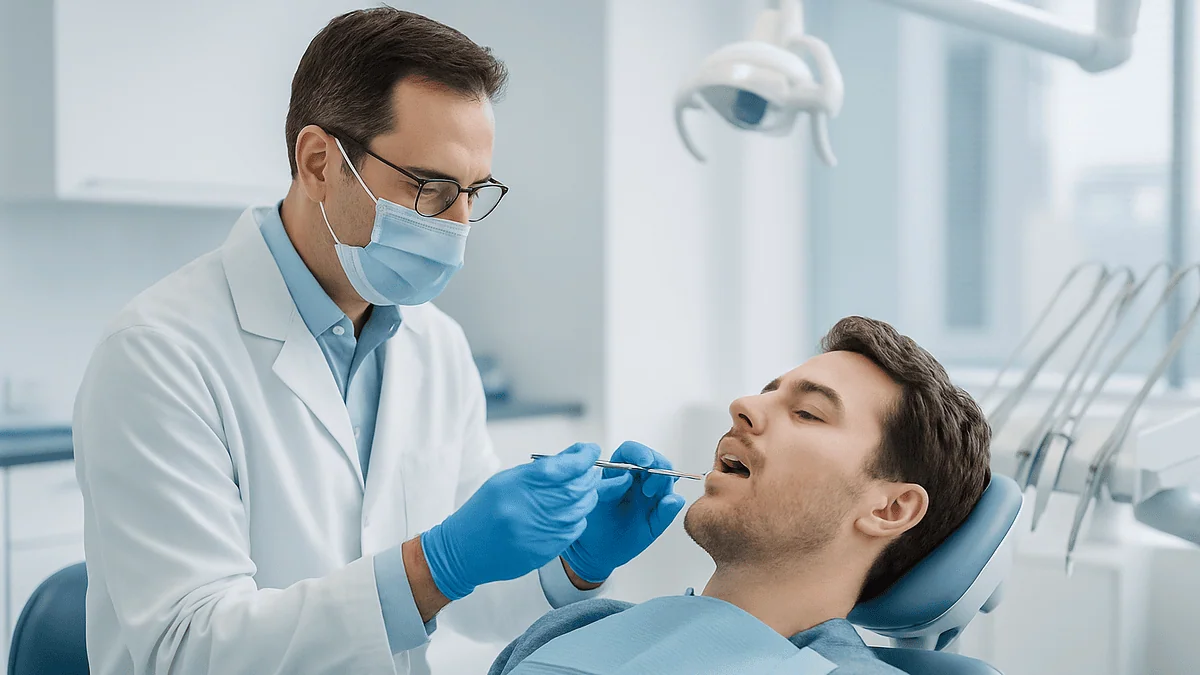
It helps to picture what a conventional three-unit bridge actually is. Two crowns sit at either end, one on each abutment tooth, and a false tooth called a pontic is fused between them. The whole piece is cemented in place as a single unit. For the end crowns to fit, each abutment tooth has to be reduced on every surface: top, cheek side, tongue side and both sides facing neighbors.
The Cleveland Clinic’s overview of dental bridges spells out the trade-off plainly: traditional bridges are strong, but the dentist “has to remove some of your natural tooth enamel” from the abutment teeth, and “once your enamel is removed, it won’t grow back.” That is the cost that an implant-supported bridge is designed to avoid.
Reshaping has consequences beyond the loss of enamel. A tooth that has been prepared this deeply sits closer to its nerve, and a proportion of crowned teeth later develop nerve inflammation and need root canal treatment. The margin where crown meets tooth is a favored spot for new decay, and because the two abutments are joined, decay or fracture in one of them can compromise the whole bridge. Cleaning under the pontic requires floss threaders or interdental brushes, because ordinary floss cannot pass between joined teeth.
None of this makes a traditional bridge a poor choice. When the neighboring teeth already have large fillings or existing crowns, preparing them costs almost nothing extra, and the conventional bridge becomes a sensible, non-surgical route. The calculation changes when the neighbors are healthy and unrestored. Filing down two sound teeth to replace one missing tooth is a real price, and it is the price an implant-supported design lets a patient decline.
How the implant supported bridge procedure works, step by step
The process unfolds in stages, usually over several months, and it is worth knowing what happens at each one.
Assessment and imaging. The dentist or oral surgeon examines the gums and remaining teeth and takes X-rays, often a three-dimensional cone-beam scan, to measure how much bone is available and where the nerves and sinuses sit. MedlinePlus lists this evaluation as the first step, alongside a review of general health and medicines.
Implant placement. Under local anesthetic, sometimes with sedation, the surgeon opens the gum, drills a precise channel in the bone and threads the titanium post into it. For a bridge, two or more implants are placed at planned positions along the gap. The gum is stitched closed, either over the implant or around a small healing cap.
Osseointegration. This is the biological heart of the treatment: bone cells grow onto the textured surface of the titanium and lock it in place. The Mayo Clinic notes this healing “can take several months,” and MedlinePlus gives a typical window of two to six months, longer if the bone needed grafting. The implants are not loaded with the final bridge until this bond is stable.
Abutment and impressions. Once integration is confirmed, a connector called an abutment is attached to each implant. Impressions or a digital scan record the exact positions so a laboratory can build the bridge.
Fitting. The finished bridge is screwed or cemented onto the abutments and the bite is checked and adjusted. Some teams place a temporary bridge earlier so the patient is not left with a visible gap during healing; whether that is safe depends on how firmly the implants sat at placement, and the surgeon makes that call.
Implant bridge vs traditional bridge vs single implants: a side-by-side comparison
Three designs compete for the same gap, and each has a distinct profile. The table below summarizes the differences most people weigh, drawn from Cleveland Clinic and Mayo Clinic patient information.
| Feature | Traditional bridge | Implant-supported bridge | One implant per missing tooth |
|---|---|---|---|
| Neighboring teeth reshaped | Yes, both abutments | No | No |
| Surgery required | No | Yes, implant placement | Yes, one implant per tooth |
| Typical time to finish | Weeks | Several months (healing) | Several months (healing) |
| Preserves jawbone at the gap | No | At implant sites | At every site |
| Number of implants | None | Fewer than teeth replaced | Equal to teeth replaced |
| Cleaning | Floss threader under pontic | Floss threader under pontic | Ordinary floss between crowns |
| Needs enough bone | No | At implant sites only | At every site |
A few points stand out. The traditional bridge wins on speed and avoids surgery, which matters for people who cannot or would rather not undergo it. Single implants for every tooth give the most natural cleaning pattern and the fullest bone preservation, but they demand adequate bone at every position and more surgery. The implant-supported bridge sits between them: it protects the neighbors and much of the bone, uses fewer implants than a tooth-by-tooth approach, and can span a site where one spot lacks bone by placing the pontic there instead of a post.
The right column for a given person depends on how many teeth are missing, how healthy the neighbors are, how much bone remains, and how much time and surgery the patient is willing to accept. Those are questions for the treating team, not a table.
Who is usually a candidate, and who is usually asked to wait
Most adults with one or more missing teeth can at least be assessed for implants. The Mayo Clinic lists the usual prerequisites: a fully grown jawbone, adequate bone to secure the implants or the ability to have a bone graft, healthy oral tissues, no health conditions that would impair bone healing, and a willingness to commit to several months of treatment. Non-smoking is also on the list, and for good reason, discussed below.
Some people are asked to wait rather than being ruled out. Adolescents whose jaws are still growing are generally deferred, because an implant placed in growing bone can end up sitting lower than the teeth around it as the jaw develops. People with active gum disease are usually treated for that first; the NIH’s National Institute of Dental and Craniofacial Research describes periodontitis as an infection that destroys the bone supporting teeth, and placing an implant into an infected field invites the same destruction around the post.
Uncontrolled diabetes, recent radiotherapy to the jaws and certain medicines that slow bone turnover, such as the antiresorptive class used for osteoporosis, all raise the risk of poor healing. None of these is an automatic refusal. They are reasons for the surgeon to talk with the patient’s physician, sometimes to delay, and always to plan more carefully. Any adjustment to a prescribed medicine is a decision for the prescribing clinician, never something to do on one’s own before dental surgery.
Heavy smoking is the modifiable risk that comes up most often. Tobacco narrows small blood vessels in the gum and bone, impairing the very blood supply that osseointegration depends on. Mayo Clinic lists smoking among the factors that can contribute to implant failure. A candid conversation about quitting, or at least pausing around surgery, is a standard part of the consultation.
Bone matters more than most people expect
The jawbone exists to hold teeth. When a tooth is lost, the bone that surrounded its root no longer receives the chewing forces that kept it dense, and it begins to shrink. This is called resorption, and it is the reason a gap that has been empty for years often feels hollow to the tongue and looks sunken in photographs.
For implant planning, resorption has two consequences. First, there may simply not be enough bone height or width to hold a post safely, particularly in the upper back jaw where the sinus cavity sits above the molars, and in the lower back jaw where a major nerve runs through the bone. Second, the shape of the bone affects where the implant can go, which in turn affects how the bridge will look and how easily it can be cleaned.
When bone is short, surgeons have options. A bone graft adds material, either from the patient, from a donor bank, or a synthetic substitute, to build up the site before or during implant placement. A sinus lift raises the floor of the sinus and packs graft beneath it to create height in the upper jaw. MedlinePlus notes that grafting, when needed, adds to the overall healing time, because the graft itself must mature before it can hold an implant.
Here the bridge design offers a quiet advantage over placing an implant at every position. If one spot in the gap has poor bone and the spots on either side are sound, the implants go where the bone is and the pontic bridges the weak point. That can spare a patient a graft altogether, or shrink the size of one. It is a judgment the surgeon makes from the scan, and it is a reasonable thing to ask about directly.
How long does an implant supported bridge last? What the evidence actually shows
This is the question people type most, and the honest answer has two parts, because an implant-supported bridge is two things: the implants in the bone and the bridge attached to them.
The implants, once integrated, are intended to be permanent. The Cleveland Clinic states that dental implants “can last a lifetime” with good care, and Mayo Clinic makes the same point about the titanium post fusing with bone. That does not mean they cannot fail. They can, through infection of the surrounding bone, through overload from grinding or a poorly balanced bite, or through the general health problems already described. But when an implant integrates and the tissue around it stays healthy, there is no built-in expiry date.
The bridge on top is a different matter. It is a manufactured object made of porcelain, zirconia or a metal framework with tooth-colored covering. It wears, it can chip, and screws can loosen. Cleveland Clinic patient information on dental bridges gives a typical lifespan of five to fifteen years for bridges generally, with longer service common when oral hygiene is good and the bite is kind to the material. A bridge that wears out on healthy implants can usually be replaced without further surgery, which is another quiet benefit of keeping the load off natural teeth.
Care is not optional. Peri-implantitis, an infection of the gum and bone around an implant, behaves much like gum disease around a natural tooth and is the leading cause of late failure. Daily cleaning under the bridge with interdental brushes or a floss threader, regular professional cleaning, and prompt attention to any bleeding or swelling around the posts are what keep the years adding up. No one can promise a number for a given mouth, and any clinician who does is guessing.
How many teeth can you have on an implant supported bridge?
More than most people assume, and fewer than the sales pitches sometimes imply. The number of teeth a bridge can carry depends on the number and position of the implants, the density of the bone they sit in, the length of the gap, and the forces the bite will place on it.
The most common design replaces three teeth on two implants, one at each end with a pontic between them, exactly mirroring the traditional three-unit bridge but without touching the neighbors. Four teeth on two implants is also frequent when the bone at the end positions is strong. Longer spans, or spans in the back of the mouth where chewing forces are highest, generally call for a third implant somewhere along the row to prevent the framework from flexing.
At the far end of the scale sits the full-arch bridge, which replaces every tooth in a jaw. The Cleveland Clinic describes these as fixed prostheses held by several implants spread around the arch, a design that lets a whole row of teeth rest on a handful of posts rather than one per tooth. The exact count is an engineering decision made from the scan and the bite, and it varies from person to person.
Two constraints set the upper limit. A pontic cannot hang too far past the last implant, because that overhang acts like a lever and can loosen screws or fracture the bone around the post. And each implant needs enough bone around it, so a long gap with thin bone throughout may require grafting before any bridge is possible. Asking the surgeon to explain why a particular number of implants was chosen, and what would change that number, is one of the more revealing questions a patient can put to the team.
What the first days and weeks after surgery usually look like
Implant placement is a surgical procedure, and the first week feels like one. Expect swelling of the gum and cheek that peaks around the second or third day, bruising in some people, minor bleeding for the first day, and pain at the surgical site. Mayo Clinic lists all of these as typical and notes that the surgeon may prescribe pain relief or antibiotics; how those are used is the surgeon’s decision, and the instructions that come with them take precedence over anything read online.
Soft foods for the first several days are standard advice, as is avoiding the surgical area when brushing while keeping the rest of the mouth clean. Rinsing gently rather than spitting forcefully protects the stitches. Most stitches either dissolve on their own or are removed at a check-up around one to two weeks later.
Then comes the long quiet stretch. From the outside nothing seems to happen, but inside the bone is knitting to the titanium. MedlinePlus puts this integration phase at roughly two to six months, with the longer end more likely after grafting or in softer upper-jaw bone. During this time the gap may be covered by a temporary tooth, a removable flipper, or nothing at all, depending on the position and the plan.
The final stage is brisk by comparison. Placing abutments takes one visit, impressions or a scan another, and fitting the finished bridge a third, typically spread over a few weeks while the laboratory works. Some adjustment of the bite at fitting is normal. A follow-up a few weeks later checks that the gum has settled and that the patient can clean under the bridge comfortably.
People commonly ask when they can return to work. For a straightforward two-implant placement, many are back at a desk within a day or two; heavier grafting or sinus work extends that. The surgeon’s estimate, based on what was actually done, is the one to trust.
Risks and complications, described plainly
Any honest explainer has to say clearly that implants can fail and that surgery carries risk. The Mayo Clinic lists the main complications: infection at the implant site, injury to surrounding teeth or blood vessels, nerve damage causing pain, numbness or tingling in the teeth, gums, lips or chin, and sinus problems when upper-jaw implants protrude into a sinus cavity. Each of these is uncommon, and careful imaging exists precisely to avoid the anatomical ones, but none can be reduced to zero.
Early failure means the implant does not integrate. The bone fails to bond, the post loosens, and it has to be removed. Smoking, uncontrolled diabetes, infection and premature loading are the usual culprits. A failed implant site can often be allowed to heal and re-implanted later, sometimes with grafting, but that adds months.
Late failure is usually peri-implantitis. The NIH’s dental institute describes how bacteria in plaque trigger inflammation that destroys the bone supporting a tooth; the same process attacks the bone around an implant, and because an implant has no ligament to cushion it, the destruction can proceed quietly until the post loosens. Bleeding, swelling or a bad taste around the posts are the early signals, and they are worth acting on rather than watching.
The bridge itself brings mechanical risks. Porcelain can chip, especially in people who grind at night; a protective night guard is a common recommendation. Screws holding the bridge to the abutments can loosen and need retightening. A framework that spans too far can flex and crack. Most of these are repairable, and one advantage of a screw-retained bridge is that it can be removed for repair and refitted.
Finally, there is the risk that the bridge looks or feels wrong: a gum line that recedes and shows metal, a pontic that traps food, a bite that never quite settles. These are reasons for frank conversations before the laboratory starts work.
Alternatives worth understanding, including waiting
An implant-supported bridge is one option among several, and the alternatives deserve a fair hearing because for some people one of them is the better fit.
The traditional bridge, already discussed, avoids surgery and finishes in weeks. When the neighboring teeth already carry large fillings or crowns, the reshaping objection largely disappears, and the conventional design becomes very reasonable. Its weaknesses are the joined abutments and the bone loss beneath the pontic, which continues because nothing is stimulating the bone there.
A resin-bonded bridge, sometimes called a Maryland bridge, glues a false tooth to the backs of the neighboring teeth with small metal or ceramic wings. It removes very little enamel and is quick. It is also relatively weak and tends to debond under heavy chewing, so it suits front teeth better than molars.
A removable partial denture replaces several teeth on a plate held by clasps around remaining teeth. It requires no surgery and no reshaping beyond small rests, and it is the least invasive fixed option after doing nothing. It also moves slightly in function, can rub the gums, and must be removed for cleaning, which some people find unacceptable and others find perfectly fine.
Single implants for each missing tooth, the design in the table’s right-hand column, give the most independent, most cleanable result, at the cost of more implants and enough bone at every site.
And there is waiting. A single missing molar at the very back of the mouth may not need replacement at all if the bite is stable. The NHS notes that a gap is not always a problem, though it can allow adjacent teeth to drift or tilt over time and put extra strain on remaining teeth. The decision to wait is a legitimate one, best made with the dentist monitoring the gap rather than by default.
What people often get wrong about implant bridges
“An implant bridge is instant.” Advertisements for same-day teeth have blurred this. A temporary bridge can sometimes be fitted the day the implants go in, but the final restoration waits for the bone to bond, a process MedlinePlus and Mayo Clinic both place at several months. Loading an implant before it is stable is a recognized cause of early failure.
“Implants can’t get infected because they’re metal.” The titanium cannot decay, but the gum and bone around it can. Peri-implantitis is real, common enough to be the leading cause of late loss, and driven by the same plaque bacteria that cause gum disease around natural teeth, as the NIH describes. An implant bridge needs daily cleaning underneath it, not less attention than natural teeth.
“Once the implant heals, the bridge lasts forever.” The implant may. The bridge is a manufactured part that wears, chips and occasionally needs replacing. Cleveland Clinic’s five-to-fifteen-year typical range for bridges is a fair expectation for the prosthetic part, with the post underneath outlasting it.
“Any dentist who places implants will get the same result.” Training, imaging and planning vary widely. This is not a reason to seek out any particular provider, but it is a reason to ask about a clinician’s experience with the specific procedure being proposed and how they plan it.
“If I’m missing three teeth I need three implants.” Often two will do, with the middle tooth as a pontic. That is the whole point of the bridge design.
“Bone loss is only a cosmetic issue.” Resorption at an untreated gap can undermine the roots of the neighboring teeth and change the bite. Implants stimulate bone at the sites where they sit, which a traditional bridge cannot do.
Questions to ask your care team before you decide
A good consultation should leave a person able to explain their own plan back to someone else. These questions help get there.
- Why is an implant supported dental bridge being suggested for my gap rather than a traditional bridge, single implants or a removable denture, and what would change that recommendation?
- How many implants are planned, where exactly will they sit, and what determined that number?
- Do I need a bone graft or sinus lift? If so, will it happen before or at the same time as implant placement, and how does it change the timeline?
- What does my scan show about the nerve in my lower jaw or the sinus in my upper jaw, and how is the plan avoiding them?
- Will I have a temporary tooth during healing, and if not, what will the gap look like for those months?
- How long do you expect the whole process to take for me specifically, from first surgery to final bridge?
- Which of my health conditions or medicines could affect healing, and will you be speaking with my physician about them?
- Will the bridge be screwed or cemented on, and what does that mean if it needs repair later?
- How will I clean underneath it, and can you show me with the tools I’ll need?
- What would make you stop and change the plan partway through?
- What is your experience with this specific procedure, and who will I contact if something feels wrong after surgery, including at night or on a weekend?
Notice that none of these is about cost. Financial questions are legitimate and should be asked, but they belong in a separate conversation with the practice’s administrative staff, with figures in writing. The clinical questions above are the ones that determine whether the plan is right, and they are the ones a good team will welcome.
When to call your doctor
Some discomfort after implant surgery is expected. Certain signs are not, and they warrant a call to the surgical team the same day, or emergency care if the practice cannot be reached.
In the first days after surgery, contact the team promptly for bleeding that soaks through gauze and does not slow with firm pressure after half an hour, swelling that keeps increasing after the third day rather than easing, pain that is getting worse rather than better or that is not controlled by what was prescribed, fever, or a foul taste or pus from the wound. Numbness or tingling in the lip, chin or tongue that persists beyond the wearing-off of the anesthetic, usually a matter of hours, should be reported the same day, because it may indicate nerve irritation and early assessment matters.
For upper-jaw implants, a sudden nosebleed on the side of surgery, air passing between mouth and nose when drinking, or a feeling of sinus pressure and congestion that develops after the procedure should also be reported; these can signal that the implant or graft has communicated with the sinus.
Seek emergency care immediately for difficulty breathing or swallowing, swelling spreading toward the eye or down the neck, or a rapidly enlarging, tense swelling of the floor of the mouth. These are rare but can indicate a deep infection or hematoma and are not situations to wait out overnight.
In the months and years afterward, call the dental team for any bleeding, swelling, redness or tenderness of the gum around the implants, a bridge that feels loose or rocks, a change in how the teeth meet when biting, or a chip in the porcelain. Peri-implantitis caught early is far easier to manage than bone loss discovered when a post loosens.
Every one of these decisions, from whether to proceed at all to how to respond to a warning sign, sits with the treating team who know the mouth in question.
Frequently asked questions
How long does an implant-supported bridge last?
The implants and the bridge age differently. Integrated titanium posts can last a lifetime with good care, according to the Cleveland Clinic, though they can fail from infection or overload. The bridge attached to them is a manufactured part; Cleveland Clinic gives a typical range of five to fifteen years for bridges, with replacement usually possible without new surgery if the implants stay healthy. No clinician can promise a specific number for one mouth.
Can you do an implant-supported bridge if you've been missing teeth for years?
Often yes, but a long-standing gap usually means the bone has shrunk, and the scan may show too little to hold an implant safely. In that case a bone graft or sinus lift can rebuild the site first, which extends the timeline by months. The bridge design can also help by placing implants where bone is adequate and spanning the weak spot with a pontic. The surgeon decides from imaging.
What is the typical cost of an implant-supported bridge?
This article does not publish prices, because they vary so widely by number of implants, need for grafting, materials, region and insurance that any figure would mislead. What can be said is which factors drive the total: each implant, each graft procedure, the type of bridge material and the number of visits. Ask the practice for a written, itemized plan and what happens to costs if the plan changes partway through.
How many teeth can you have on an implant-supported bridge?
Commonly three or four teeth on two implants, with an extra implant added for longer spans or heavy-chewing back-jaw sites. Full-arch bridges replace every tooth in a jaw on several implants spread around the arch, as Cleveland Clinic describes. The limit is set by how far a false tooth can safely overhang the last implant and by how much bone each post needs, both judged from the scan.
What is the difference between an implant bridge vs traditional bridge?
A traditional bridge is cemented onto crowns fitted over the teeth beside the gap, which must be permanently filed down. An implant bridge rests on posts in the bone, leaving the neighboring teeth untouched and stimulating bone at the implant sites. The traditional design avoids surgery and finishes in weeks; the implant design needs surgery and several months of healing but spares healthy teeth and slows bone loss.
Is the implant supported bridge procedure painful?
Placement is done under local anesthetic, often with sedation, so the surgery itself should not hurt. Afterward, Mayo Clinic lists swelling, bruising, minor bleeding and pain at the site as typical for the first days, peaking around day two or three. The surgical team advises on pain management; follow their instructions rather than general advice. Pain that worsens after the third day or is not controlled should be reported.
Can an implant bridge get infected?
Yes. The titanium cannot decay, but the gum and bone around it can develop peri-implantitis, an infection driven by the same plaque bacteria that cause gum disease, as the NIH describes. It is the main cause of implants being lost years after placement. Daily cleaning under the bridge with interdental brushes or a floss threader, regular professional cleaning and prompt attention to bleeding or swelling around the posts are the defenses.
Who should wait before getting an implant-supported bridge?
Adolescents whose jaws are still growing are usually deferred, because an implant does not move with growing bone. People with active gum disease are typically treated for that first. Uncontrolled diabetes, recent jaw radiotherapy, heavy smoking and certain bone-slowing medicines raise healing risk and prompt discussion with the patient’s physician. These are reasons for careful planning or delay, not automatic refusals, and the treating team decides.
Do I need a bone graft for an implant-supported bridge?
Only if the scan shows insufficient bone height or width at the planned implant sites. The bridge design sometimes avoids a graft by placing implants where bone is good and spanning a poor spot with a false tooth. When grafting is needed, MedlinePlus notes it lengthens the overall healing period because the graft must mature before it can hold an implant. Your surgeon reads this from the three-dimensional scan.
What happens if one implant under the bridge fails?
It depends on how many implants carry the bridge and where the failed one sits. The bridge is usually removed, the failed implant taken out and the site allowed to heal, sometimes with grafting, before a new post is placed months later. A temporary bridge may cover the interval. Because the neighboring natural teeth were never reshaped, they are unaffected by this process, which is one practical benefit of the design.
References
- MedlinePlus: Dental implants
- Cleveland Clinic: Dental Implants
- Cleveland Clinic: Dental Bridges
- NIH National Institute of Dental and Craniofacial Research: Periodontal (Gum) Disease
This article is for general information only and is not a substitute for professional medical advice. Please consult a qualified doctor about your individual situation.

More from the Blog
Who Suits E-Max Crowns? Front Teeth, Translucency Needs and When Bite Force Argues Against Them
A lithium disilicate glass-ceramic crown, widely called an e-max crown, generally suits people restoring a front tooth or premolar where matching the translucency of…

Living With Mini Implant Dentures: Snapping In, Cleaning the Posts and Replacing the O-Rings
Caring for mini implant dentures means three habits: snapping the denture on and off along the line of the posts with even thumb pressure,…
What Follows Peri-Implantitis Treatment: Interdental Brushes, Rinses and Maintenance Visits
After peri-implantitis treatment, the aim is to keep the implant surface free of plaque so inflammation does not return. That usually means brushing twice…
Zirconium Crown Treatment Step by Step: Tooth Shaping, Digital Design and the Fitting Visit
A zirconium crown procedure usually unfolds over two visits. At the first, the dentist numbs the tooth, removes decay or old filling material, and…
Which Dental Bone Graft Material Is Used? Your Own Bone, Donor, Animal-Derived and Synthetic
Dental bone graft material comes in four families: autograft (your own bone, usually taken from the jaw), allograft (processed human donor bone), xenograft (processed…
Are Zirconium Teeth Right for You? Bite Force, Smile Goals and When Another Ceramic Fits Better
A good zirconium teeth candidate usually needs a strong restoration for a back tooth, an implant crown, or a bridge, especially with a heavy…