

How Bruxism Wears Teeth and Strains the Jaw: Grinding and Clenching Explained
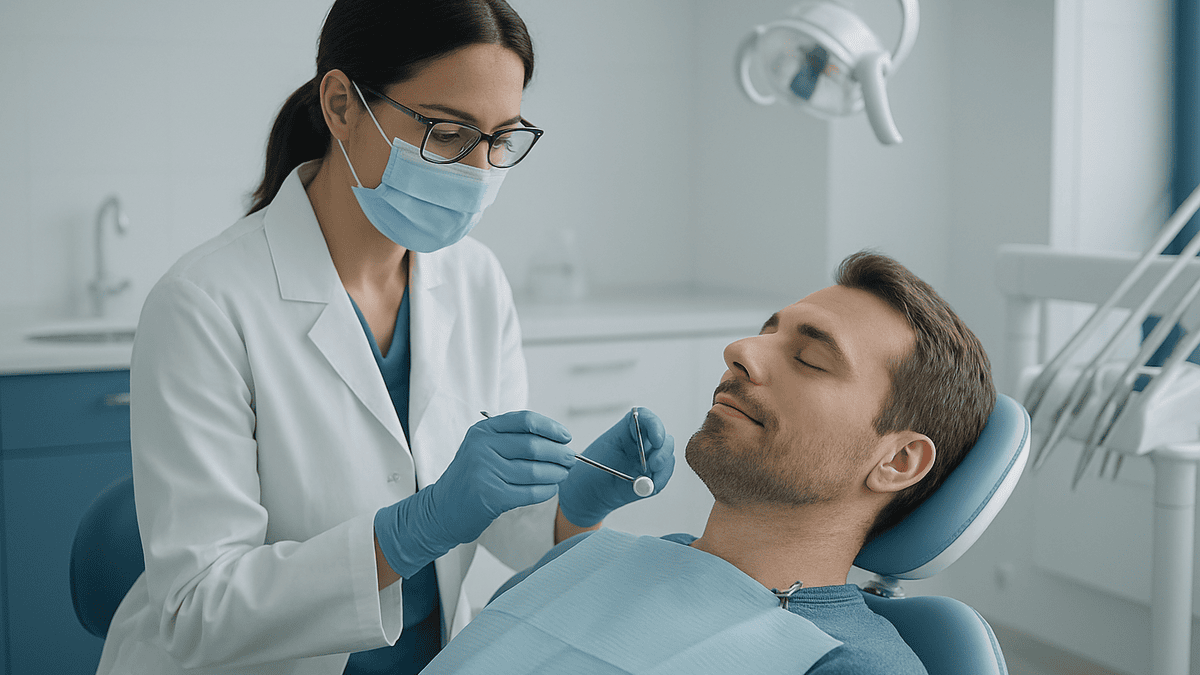
Key Takeaways
- Enamel has no nerve supply, so grinding can thin it for years before the first sensitive tooth or cracked filling gives it away.
- Clenching is a form of bruxism, not a separate condition; it loads roots, fillings and the jaw joint without necessarily wearing enamel.
- The temporalis muscle fans across the side of the skull, which is why overnight clenching produces a dull temple headache that is worst on waking.
- A night guard protects teeth by wearing out in their place; it does not stop the muscles grinding, and it needs regular inspection and replacement.
- Sleep bruxism occurs more often in people who snore or have obstructive sleep apnea, so loud snoring with gasping is a reason for a medical review.
- Childhood grinding usually stops once adult teeth come through, so children without pain or damage are generally monitored rather than treated.
Bruxism is the habit of grinding or clenching the teeth, awake or during sleep, usually without being aware of it. The repeated force flattens and chips enamel, loosens fillings, tires the chewing muscles and loads the jaw joint, which can lead to morning headaches and jaw pain. Dentists typically manage it with a custom night guard, stress and sleep measures, and checks for related conditions such as sleep apnea.
The first clue is rarely the teeth. It is the ache under the cheekbone at breakfast, the dull band across the temples, or a partner who says, half joking, that it sounded like someone dragging furniture at three in the morning. The person doing the grinding usually has no memory of it at all.
That gap between what happens in the mouth overnight and what the owner of that mouth notices is why bruxism explained properly matters. A dentist can often read the story on the molars long before anything hurts: polished flat spots where the cusps used to be, a hairline crack running down a filling, a tongue with scalloped edges from being pressed against the teeth.
This article walks through what grinding and clenching actually do to enamel, muscle and joint, why the two habits are not the same, what the evidence says helps, and which signs mean it is time to pick up the phone rather than wait for the next check-up.
Bruxism explained: what actually happens when you grind or clench
Bruxism is the clinical name for grinding, gnashing or clenching the teeth outside of normal chewing. Dentists split it into two conditions that behave differently. Awake bruxism is mostly clenching: the jaw muscles tighten during concentration, stress or physical effort, often with the teeth pressed together in silence. Sleep bruxism is classed as a sleep-related movement disorder, and it tends to involve rhythmic grinding the sleeper never remembers, according to Mayo Clinic.
What actually happens is a muscle event rather than a tooth event. The masseter, the thick muscle at the angle of the jaw, and the temporalis, the fan-shaped muscle at the temple, contract in bursts. During sleep these bursts often ride on brief arousals, moments when the brain surfaces partway from deeper sleep and heart rate and muscle tone rise for a few seconds. The jaw joins in. Because the sleeper is not awake to judge the force, the bite can be far harder than anything used on food.
Teeth are built to meet briefly. During a normal day the upper and lower teeth touch for fractions of a second per swallow or chew, and the total contact time is tiny. Bruxism changes the arithmetic. Sustained clenching or repeated sliding delivers force for far longer, to surfaces that were never meant to carry it, and at angles that scrape enamel against enamel.
That mismatch is the whole story in miniature. Enamel wears, muscles ache, the joint is loaded, and because most of it happens in sleep, the first clues usually arrive secondhand: a partner who hears it, or a dentist who notices the molars have lost their peaks.
What is the difference between bruxism and clenching?
Clenching is one form of bruxism, not a separate condition. The umbrella term covers two movements: grinding, where the lower jaw slides sideways or forward while the teeth are pressed together, and clenching, where the jaw holds still under heavy force. Both can happen awake or asleep, but the mix differs. Awake bruxism is dominated by clenching; sleep bruxism includes more grinding, which is why it makes noise and leaves wear facets, the smooth flat patches dentists spot on molars.

The distinction matters because the damage pattern differs. Grinding is abrasive: it removes enamel layer by layer, like sanding wood. Clenching is compressive: it rarely scrapes enamel away, but it loads the roots, the supporting bone, the fillings and the jaw joint, and it keeps the chewing muscles contracted for long stretches. A person who only clenches can have beautifully intact enamel and a jaw that aches every morning.
| Feature | Grinding | Clenching |
|---|---|---|
| Jaw movement | Slides sideways or forward | Holds still under pressure |
| Sound | Often audible creak or squeak | Usually silent |
| Typical timing | More common during sleep | More common while awake and concentrating |
| Main tooth effect | Enamel wear, flattened cusps | Cracks, loosened fillings, sensitivity |
| Main jaw effect | Muscle fatigue, joint clicking | Muscle pain, temple headache, stiffness |
| How it is noticed | Partner hears it; dentist sees wear | Person catches themselves; morning jaw ache |
Many people do both. The practical point is that a dentist assesses the whole picture: the enamel, the muscles and the joint, rather than relying on whether anyone has heard a noise.
Does bruxism hurt your teeth? How grinding wears enamel
Yes, though the damage is often painless until late. Enamel, the hard outer shell of a tooth, has no nerve supply, so it can be ground thinner for years without a single twinge. What you feel arrives when the wear reaches dentin, the softer, yellower layer underneath, which is laced with tiny tubules leading toward the nerve. At that point cold drinks, sweet foods and even a breath of winter air can sting.
Mayo Clinic lists the classic findings: teeth that are flattened, fractured, chipped or loose; worn enamel exposing deeper layers; increased sensitivity; and damaged fillings or crowns. Each has a mechanical explanation. Side-to-side grinding shears the cusps, the little peaks on back teeth, into flat tables. Front teeth lose their edges and start to look short and square. Fillings, which are rigid, take the force differently from the surrounding tooth and can chip at the margins.
Cracks are the quiet danger. A clenched molar carries force straight down its long axis, and a tooth with a large old filling has less natural structure to absorb it. A hairline crack may cause a sharp, brief pain on biting that is easy to dismiss. Left alone, some cracks spread toward the pulp, the living core of the tooth, which is where infection and the need for more involved dental treatment begin.
Bruxism can also load the periodontal ligament, the thin cushion that holds each root in its socket. Under repeated overload the ligament widens and teeth can feel slightly loose or tender when tapped, as described by Cleveland Clinic. None of this is reversible by the body: enamel does not grow back, which is the single strongest argument for catching it early.
How clenching strains the jaw joint and muscles
The temporomandibular joint, usually shortened to TMJ, is the hinge just in front of each ear where the lower jaw meets the skull. It is unusual among joints because it both rotates and slides, and because a small disc of cartilage sits between the bones like a washer, moving with the jaw as it opens. Both joints work as a pair, so a problem on one side changes how the other behaves.

Clenching loads that system in two ways. First, the muscles. The masseter and temporalis are among the strongest muscles for their size in the body, and in bruxism they are asked to contract at high force for long periods, often while the person is asleep and cannot relax them deliberately. Any muscle worked that way becomes fatigued, tender and tight, which is why the jaw can feel stiff on waking and why pressing on the cheek or temple can be sore.
Second, the joint itself. Sustained pressure compresses the disc and the tissue behind it. Over time the disc can be nudged out of position, which produces the clicking or popping some people hear when they open wide. If the disc slips far enough, the jaw can catch or lock briefly.
The NHS groups these symptoms under temporomandibular disorder, or TMD: pain around the jaw, ear and temple, clicking or grinding noises, difficulty opening the mouth fully, and headaches. Bruxism is one of several recognized contributors, alongside stress, injury and uneven bite, and the NHS notes that most TMD improves with simple self-care measures rather than surgery. The jaw joint, in other words, usually forgives, as long as the overload is addressed.
Can jaw clenching cause headaches?
It can, and the mechanism is straightforward. The temporalis muscle fans across the side of the head from the temple to a tendon that attaches to the lower jaw. When you clench, you are contracting a muscle that covers a large area of the skull. Hold that contraction for minutes or hours overnight and the result is a dull, pressing ache across the temples on waking, sometimes spreading toward the forehead or the back of the head. Mayo Clinic lists a dull headache starting in the temples as one of the recognized signs of bruxism.
This pattern has a few features that distinguish it from other headaches. It tends to be worst in the morning and ease through the day. Pressing on the temple or the angle of the jaw often reproduces it. Opening the mouth wide, chewing something tough or a long phone call can bring it back. There is no visual aura, no nausea and no sensitivity to light of the kind that marks migraine, though people with migraine can also clench, and the two can overlap.
Ear symptoms belong in the same conversation. The TMJ sits a few millimeters in front of the ear canal, and overloaded joints and muscles can produce earache, a sense of fullness or ringing that sends people to an ear specialist who finds nothing wrong with the ear.
The honest caveat is that headache is common and has many causes, and a morning headache does not prove bruxism. What the evidence supports is a link between clenching and tension-type headache, not a rule that every temple ache comes from the jaw. A dentist who finds tender jaw muscles and wear on the teeth, together with a doctor who has considered other causes, can usually make sense of it.
What sound does grinding teeth make in sleep?
People who have heard it describe a dry, squeaking creak, something between chalk on a board and a leather chair under strain, repeated in short bursts. It can be surprisingly loud. Mayo Clinic notes that sleep grinding can be noisy enough to wake a bed partner, which is often how an adult first learns about it. The sound comes from enamel sliding across enamel under heavy pressure; it is the same physics as a wet finger on a glass rim, with teeth instead of glass.
Not every grinder makes noise. Pure clenching is silent, and so is grinding that happens on a soft night guard. Lighter grinding may produce only faint clicks, and some people make a rhythmic chewing motion with little sound at all. Absence of noise therefore does not rule bruxism out, and a partner’s report, while useful, is only one piece of the picture.
The pattern of the noise can tell a dentist something. Bursts tend to cluster during lighter stages of sleep and around brief awakenings. Loud snoring, pauses in breathing or gasping alongside grinding is a combination worth mentioning to a doctor, because Mayo Clinic reports that sleep bruxism occurs more often in people who snore or have obstructive sleep apnea, a condition in which the airway narrows repeatedly during sleep.
Children grind noisily too. Parents often hear it from the next room and worry, yet the NHS explains that grinding is common in children and usually stops once the adult teeth have come through. In a child, a loud grinding sound without pain, broken teeth or daytime problems is more often something to monitor than to treat.
If no one shares your bedroom, a simple voice-recording app left running overnight sometimes captures it. It is not a diagnostic tool, but it can start a useful conversation at the next dental visit.
Why people grind: causes and triggers the evidence supports
Nobody has found a single cause, and the honest summary is that bruxism sits at the crossroads of the nervous system, sleep and lifestyle. The old idea that a misaligned bite drives grinding has not held up well; most current guidance, including Mayo Clinic’s, places bite problems as a possible contributor rather than the main engine.
Stress and anxiety are the most consistent associations. Awake clenching tracks closely with concentration, frustration and tension, and the NHS lists stress and anxiety as the most common factors. Sleep bruxism is more tangled, because it is linked to how the brain regulates arousal during sleep. That is why it clusters with snoring and obstructive sleep apnea, and why it appears alongside other sleep disturbances.
Several other factors are well documented:
- Medicines: certain antidepressants, notably the selective serotonin reuptake inhibitor class, are associated with new or worsened grinding. This is a known effect to discuss with the prescriber, never a reason to stop a medicine on your own.
- Stimulants and depressants: caffeine, alcohol, tobacco and recreational drugs are all linked to higher rates of grinding, according to the NHS and Mayo Clinic.
- Family history: bruxism tends to run in families, suggesting an inherited component.
- Other conditions: Mayo Clinic notes associations with gastroesophageal reflux, epilepsy, Parkinson’s disease, attention-deficit/hyperactivity disorder and night terrors.
- Age: grinding is common in young children and usually fades by adolescence.
Personality also seems to matter. Mayo Clinic describes a link with competitive, driven or hyperactive temperaments, though this is an association rather than a diagnosis of character. Most people who grind are not doing anything wrong; their nervous system is simply spilling tension into the jaw, often during the hours they have least control over it.
How bruxism is diagnosed, who is usually treated, and who is asked to wait
There is no blood test for bruxism. Diagnosis rests on history and examination, which is why a routine dental check-up is where most cases surface. The dentist looks for wear facets on the molars, chipped edges on the front teeth, cracked fillings, tooth sensitivity, scalloping along the sides of the tongue, and enlargement or tenderness of the masseter muscles. Questions follow: morning jaw ache, headaches, noises a partner has heard, stress, sleep quality, snoring, caffeine and alcohol, and any medicines that might contribute.
When the story suggests a sleep problem, the dentist or doctor may refer for a sleep study, a monitored overnight recording that measures breathing, oxygen, movement and brain activity. Mayo Clinic notes this is used mainly when sleep apnea or another sleep disorder is suspected, not as a routine step for everyone who grinds.
Who is usually offered treatment? Adults with visible enamel loss, cracked or sensitive teeth, jaw or temple pain, or restorations that keep failing. The goal is to protect what remains and calm the muscles while triggers are addressed. Adults with heavy clenching but intact teeth may be offered a guard chiefly for the jaw rather than the enamel.
Who is usually asked to wait and watch? Mild grinding with no wear, no pain and no complaints, which many dentists simply note and review at the next visit. Young children form the other large group. The NHS advises that childhood grinding generally resolves once adult teeth erupt, so the usual approach is monitoring, with treatment considered only if a child has pain, significant wear or sleep disruption.
Whether to act, and how, is a judgment the dentist makes with the patient, weighing the amount of damage, the symptoms and what is driving the habit.
How a bruxism mouth guard works, and what it cannot do
A night guard, which dentists also call an occlusal splint, is a removable appliance that sits over the upper or lower teeth while you sleep. The NHS lists it as the main dental measure for grinding, and its job is modest but valuable: to put a replaceable layer of plastic between the two rows of teeth. When the jaw grinds, the guard wears instead of the enamel. When the jaw clenches, the smooth surface lets the teeth slide rather than lock, and the force is spread across more of the arch rather than concentrated on a few cusps.
A guard does not stop bruxism. This is the point most people miss. The muscles still fire, the jaw still moves; the guard simply changes what takes the hit. Some people do find their jaw feels easier with a splint, and dentists sometimes adjust the guard’s surface to encourage a more relaxed jaw position, but the evidence that splints reduce the grinding itself is weak and inconsistent. They are best understood as protection, not correction.
Custom guards are made from a mold of your teeth and fitted by a dentist, which is why they stay in place and distribute load evenly. Pharmacy boil-and-bite versions are softer and bulkier; they protect enamel but fit less precisely, and some dentists report that soft, chewy material can encourage certain people to clench on it. Mayo Clinic notes that guards can be made of hard acrylic or soft materials, and the choice depends on the pattern of grinding and the dentist’s assessment.
Whatever the type, a guard needs checking. A dentist inspects it for wear patterns, which conveniently map where the grinding is happening, and replaces it when it is worn through. A guard that has cracked or no longer fits can shift teeth or concentrate force, which defeats its purpose.
Sleep bruxism treatment explained: options beyond the guard
Because a guard protects rather than prevents, management usually works on the triggers too. The NHS and Mayo Clinic describe a layered approach, and the components are more ordinary than people expect.
Stress and arousal. Where anxiety or tension drives clenching, approaches such as cognitive behavioral therapy, relaxation training and structured sleep routines are recommended in NHS guidance. Awake clenching responds to simple awareness: noticing the jaw during emails or traffic and letting the teeth part, with the tongue resting behind the upper front teeth. Habit reversal of this kind takes weeks of repetition rather than days.
Sleep. Treating obstructive sleep apnea, when present, addresses one of the strongest known associations. Reducing evening caffeine and alcohol and avoiding tobacco are standard advice because all three are linked to more grinding.
Medicines. Mayo Clinic is candid that medications are generally not very effective for bruxism. Where grinding has started after a new antidepressant, the prescriber may review the regimen; where muscle pain is severe, a short course of a muscle relaxant is sometimes considered. Both decisions sit with the prescribing clinician, and no one should stop or adjust a prescribed medicine on their own.
Injections. Botulinum toxin injected into the masseter muscles is described by Mayo Clinic as an option for severe bruxism that has not responded to other treatments. It works by partially weakening the muscle for a period of months. The evidence base is still developing, and it is reserved for selected cases under specialist care.
Repair. Worn, cracked or broken teeth may need fillings, crowns or other dental work to restore function, usually once the grinding is under better control so the new work is not ground down in turn.
The sequence a dentist chooses depends on what is driving the habit and how much damage exists; there is no single protocol that fits everyone.
What the following days and weeks usually look like
Starting treatment for bruxism is undramatic. There is no procedure to recover from, only a set of small adjustments that take time to settle.
The first nights with a new guard are often the hardest part. The appliance feels bulky, saliva increases, speech lisps slightly if you try to talk with it in, and some people wake and find they have removed it in their sleep. Most dentists advise simply persisting; the mouth adapts over a week or two in most people, and the guard stops registering as foreign. If it causes pain, rubs the gums or changes how the teeth meet in the morning for more than a few minutes, the fit needs adjusting rather than enduring.
Jaw and temple pain tends to change more slowly than people hope. The NHS notes that TMD symptoms often improve with self-care such as softer foods, avoiding wide yawning and chewing gum, warmth or cold packs over the muscles and gentle jaw stretching, but this is a matter of weeks rather than nights. Morning headaches typically ease as the muscles are spared overnight load, though the timeline varies with how long the habit has run.
Awareness work for daytime clenching follows its own curve. In the first days people are startled by how often they catch their teeth together. Over several weeks the catching becomes faster and the clenching rarer. Nobody reaches zero; the aim is to shorten each episode.
A follow-up visit, usually after a few weeks and then at routine check-ups, lets the dentist examine the guard’s wear pattern, reassess the muscles and decide whether to add anything. Enamel already lost does not return, so progress is measured in symptoms, in the guard taking the damage instead of the teeth, and in fewer cracked fillings over the following years.
Bruxism explained honestly: what people often get wrong
Myths about grinding are stubborn, partly because the condition is invisible to the person who has it. These are the ones dentists hear most, with what the evidence actually shows.
“My teeth must be misaligned, so fixing the bite will stop it.” Bite alignment is at most a minor contributor in current guidance. Grinding down teeth or extensive reshaping to “balance” the bite is irreversible and is not supported as a treatment for bruxism itself.
“A night guard will stop me grinding.” It will not. A guard is body armor for enamel; the muscles keep working. Expect the guard to show wear, which is the point.
“Only stressed people grind.” Stress is the most common association, but sleep bruxism is a sleep-related movement disorder with links to arousal, breathing, genetics and certain medicines. Calm, well-adjusted people grind too.
“It is just a childhood thing.” Childhood grinding usually fades as adult teeth arrive, as the NHS notes, but adult bruxism is common and tends to persist unless its drivers are addressed.
“If it does not hurt, it is not doing harm.” Enamel has no nerves. Years of silent wear can precede the first sensitive tooth or cracked filling.
“Morning headaches are always sinus.” Temple headaches that ease as the day goes on and are reproduced by pressing the jaw muscles are a recognized sign of overnight clenching, according to Mayo Clinic. Sinus pain is one possibility among several, and a doctor can help tell them apart.
“A pharmacy guard is as good as a custom one.” It protects enamel, and that is worthwhile, but fit and material differ. A dentist’s assessment of which type suits the pattern of grinding is worth having.
Questions to ask your care team
A ten-minute conversation at the end of a check-up can shape years of dental health. Few people know what to ask, so the questions below are a starting point. Write the answers down; grinding is a slow condition and comparisons over time are useful.
- What signs of grinding or clenching can you see on my teeth, and how much enamel has been lost?
- Does my pattern look more like grinding, clenching or both, and does it seem to be happening in sleep, during the day or at both times?
- Are any of my teeth cracked, or are any fillings or crowns at risk, and should they be repaired now or after the grinding is better controlled?
- Is the jaw joint itself involved, and would any of the TMD self-care measures help me?
- Would a custom guard or a pharmacy guard suit me, hard or soft, upper or lower, and how will we know when it needs replacing?
- Do any of the medicines I take have a known link to grinding, and who should I discuss that with?
- Do I snore, stop breathing or wake unrefreshed, and should I be assessed for sleep apnea?
- What role do caffeine, alcohol and tobacco play in my case?
- Which stress or sleep approaches have the best evidence, and can you point me toward them?
- How often should we review this, and what would make you want to see me sooner?
Bring a partner’s observations if you have them, and mention headaches or earache even if they feel unrelated. The dentist and, where needed, a physician or sleep specialist are the people who weigh all of this; the answers to these questions give them the fullest picture to work from.
When to call your doctor
Most bruxism is a routine dental matter handled at check-ups, and the NHS advises seeing a dentist if grinding is causing pain, damaging teeth or affecting sleep. Some situations need faster attention.
Contact a dentist promptly if a tooth cracks, chips or becomes suddenly sensitive; if a filling or crown falls out or feels loose; if biting on one tooth causes sharp pain; or if a tooth feels wobbly. These point to structural damage that can worsen quickly.
Seek same-day care, from a dentist, a doctor or an urgent care service, if the jaw locks open or will not close, if jaw pain is sudden and severe, or if there is swelling of the face or gums, fever, or a bad taste that may signal infection spreading from a damaged tooth.
Speak to a doctor rather than waiting if headaches are new, severe, different from your usual pattern or accompanied by vision changes, weakness, numbness, confusion or neck stiffness, since these are not features of a clenching headache and need separate assessment. Loud snoring with witnessed pauses in breathing, gasping during sleep or heavy daytime sleepiness also warrants a medical review for sleep apnea, which is linked to bruxism and carries its own risks.
For children, arrange a dental visit if grinding comes with tooth pain, visible wear, difficulty eating, disturbed sleep or persistent jaw or ear complaints.
Every decision about guards, dental repair, medicines, injections or referral rests with the treating dentist and physician, who can see the teeth, examine the muscles and joint, and weigh the whole history. This article is meant to make that conversation clearer, not to replace it.
Frequently asked questions
Can jaw clenching cause headaches?
Yes. The temporalis muscle, which closes the jaw, covers a wide area of the temple, and prolonged clenching leaves it fatigued and sore, producing a dull, pressing headache that is typically worst on waking and eases through the day. Mayo Clinic lists temple headache as a recognized sign of bruxism. Headaches with visual changes, weakness or confusion are not typical of clenching and need medical assessment.
Does bruxism hurt your teeth?
It damages them, though often painlessly at first. Grinding flattens the cusps and thins enamel; clenching cracks teeth and chips fillings. Pain begins once wear exposes dentin, the sensitive layer under enamel, or when a crack reaches the nerve. Mayo Clinic lists flattened, fractured, chipped, loose or sensitive teeth and damaged restorations among the common findings, and lost enamel does not grow back.
What is the difference between bruxism and clenching?
Clenching is one type of bruxism. The term bruxism covers both grinding, where the jaw slides with the teeth pressed together, and clenching, where the jaw holds still under force. Grinding tends to happen in sleep, makes noise and wears enamel; clenching is more common during waking concentration, is silent and strains muscles, joint and fillings. Many people do both.
What sound does grinding teeth make in sleep?
A dry, squeaking creak, often compared to chalk on a board or leather under strain, repeated in short bursts. It comes from enamel sliding over enamel under pressure and can be loud enough to wake a bed partner, as Mayo Clinic notes. Pure clenching is silent, so an absence of noise does not rule bruxism out.
What are the most common teeth grinding symptoms a dentist looks for?
Dentists look for flat wear patches on molars, chipped or shortened front teeth, cracked fillings, scalloped edges on the tongue and tender or enlarged jaw muscles, then ask about morning jaw ache, temple headaches, sleep quality and any sounds a partner has heard. These findings together, rather than any single one, support the diagnosis; self-checking is no substitute for the exam.
Is a bruxism mouth guard worth it?
For people with wear, cracked fillings or jaw pain, a guard is the mainstay of dental protection recommended by the NHS, because it takes the grinding force in place of enamel. It does not stop the grinding itself. A dentist can advise whether a custom appliance or a pharmacy version suits the pattern of grinding, and the guard should be checked for wear at reviews.
How can I tell jaw clenching headaches from other headaches?
Clenching headaches are usually dull rather than throbbing, sit across the temples, are worst in the morning and can be reproduced by pressing the jaw muscles or chewing something tough. They lack the aura, nausea and light sensitivity of migraine. Because headaches have many causes, a doctor should assess any that are new, severe or unusual for you.
Is teeth grinding in children normal?
It is common and usually harmless. The NHS explains that childhood grinding generally stops once the adult teeth have come through, so most children are simply monitored at routine dental visits. A dentist should assess a child whose grinding comes with tooth pain, visible wear, difficulty eating, disturbed sleep or persistent jaw or ear complaints.
Can stress cause teeth grinding?
Stress and anxiety are the most consistent associations with bruxism, especially daytime clenching, and the NHS lists them as the most common factors. Sleep grinding is more complex, linked to how the brain regulates arousal during sleep, to snoring and sleep apnea, to certain medicines and to family history. Stress management is therefore one part of treatment rather than the whole of it.
What does sleep bruxism treatment usually involve?
A layered approach: a night guard to protect the teeth, measures for stress and sleep such as cognitive behavioral therapy and relaxation, reducing caffeine, alcohol and tobacco, assessment and treatment of sleep apnea where suspected, and a review of any medicines linked to grinding by the prescriber. Mayo Clinic notes that medications are generally not very effective, and injections are reserved for severe cases under specialist care.
References
- NHS: Teeth grinding (bruxism)
- NHS: Temporomandibular disorder (TMD)
- Cleveland Clinic: Teeth grinding (bruxism)
- MedlinePlus: Bruxism
This article is for general information only and is not a substitute for professional medical advice. Please consult a qualified doctor about your individual situation.
Add us as a Preferred Source to see more of our trusted health content across Google Search, AI Overviews and Discover.

More from the Blog
Does a Dental Microscope Change a Root Canal? What Magnification Means for Hidden Canals
A dental operating microscope does not change what a root canal treatment is; it changes how much of the tooth's interior the clinician can…
In-Office vs Take-Home Teeth Whitening: Speed, Sensitivity and How Even the Shade Comes Out
In-office whitening uses a higher-concentration peroxide gel applied by a dental professional and typically lightens teeth within a roughly one-hour visit, while dentist-made take-home…

When Is It Better to Wait Before Clear Aligners? Growth, Gum Health and Combined Plans
It is usually better to wait before clear aligners when the jaws are still growing, when gum disease or untreated cavities are present, when…

Can the Tooth Be Saved Instead? How Dentists Weigh Root Canal, Crown and Extraction
Dentists usually favor saving a tooth when its root is intact, the surrounding bone and gum are healthy, and enough sound tooth remains to…
What a Panoramic X-Ray Shows Before Wisdom Teeth Removal: Roots Near the Nerve
A panoramic X-ray before wisdom teeth removal shows the whole lower jaw in one image, including each wisdom tooth's position, root shape, and how…

How Deep Is the Cavity? Reading a Tooth Decay X-Ray to Choose Filling or Root Canal
Dentists read cavity x ray depth by how far a dark shadow travels through the tooth: into enamel only, into dentin, close to the…