

How Clear Aligner Treatment Unfolds: From Scan to Attachments to Your First Trays

Key Takeaways
- Aligners move teeth through the same bone remodeling that braces use, which is why light, near-continuous pressure of roughly 20 to 22 hours a day is expected rather than optional.
- Attachments are small bonded composite bumps that give plastic a grip on teeth, and their number reflects the complexity of planned movements, not treatment quality.
- Systematic reviews find aligners less predictable than fixed braces for rotating canines and premolars, extruding teeth and controlling roots, which is why refinement rounds are common.
- The digital preview is a plan, not a guarantee; treatment length typically falls within the same broad range as braces, about one to three years depending on complexity.
- Active gum disease, untreated cavities and a mouth of mixed baby and adult teeth usually mean waiting, not refusal, before aligner treatment begins.
- Retainers are the permanent second half of treatment because teeth drift back toward their original positions when force is removed.
Clear aligner treatment usually unfolds in stages: an orthodontic examination and digital scan of the teeth, a computer-planned sequence of movements the clinician reviews and adjusts, small tooth-colored attachments bonded to selected teeth, then a series of removable trays each worn for roughly 20 to 22 hours a day and changed every one to two weeks. Regular check-ins, possible refinements and lifelong retainers complete the process, with all decisions made by the treating orthodontist.
The mirror moment usually arrives on an ordinary weekday. A woman in her forties is brushing her teeth and notices, again, that one lower incisor has drifted forward like a commuter edging out of line. A college student photographs his graduation and quietly zooms past his own smile. Both end up typing the same question late at night: what does the clear aligner treatment process actually involve, and how much of the glossy advertising is true?
The honest answer is less dramatic than the ads and more interesting. Moving teeth is slow biology, not software. The plastic trays are only the visible part; underneath sits a sequence of bone remodeling, careful planning and small bonded bumps most people never notice until they run a tongue over them.
This explainer walks through each stage in the order you will meet it, from the first scan to the sensation of pressing that first tray into place, with the evidence stated plainly and every decision left where it belongs: with you and your orthodontist.
What is the clear aligner treatment process, in plain language?
Clear aligners are thin, transparent plastic trays, custom-made to fit over your teeth and shaped slightly differently from where your teeth currently sit. Each tray nudges a few teeth a fraction of a millimeter; the next tray in the series nudges them a little further. Worn in sequence over months, those tiny steps add up to a straighter arch and a better bite. Mayo Clinic and Cleveland Clinic describe them as an alternative to fixed braces for many, though not all, orthodontic problems.
The orthodontic problem itself is called malocclusion, which simply means the upper and lower teeth do not meet the way they should. MedlinePlus groups malocclusion into crowding, spacing, overbite, underbite, crossbite and open bite, and notes that most cases are mild enough that treatment is a choice rather than a medical necessity.
The clear aligner treatment process therefore runs in a recognizable order. First comes an examination and records, including a digital scan. A clinician then plans the movements on a computer, often over several rounds of revision. Attachments, small tooth-colored bumps, are bonded to selected teeth to give the plastic something to grip. You receive your first trays, learn the wear routine, and return for periodic checks. Many people finish with a refinement round of extra trays to polish the result, and everyone finishes with retainers to hold it.
What matters most, in my reading of the evidence, is not the brand of plastic but three things: whether your particular bite suits aligners, how many hours a day the trays sit on your teeth, and whether the plan is supervised by a trained orthodontist or dentist who examines you in person. Everything below hangs on those three points.
How do clear aligners work at the level of bone and ligament?
A tooth is not cemented into the jaw. It hangs in its socket by the periodontal ligament, a thin sling of fibers that connects root to bone. Push gently and steadily on a tooth and the ligament on the pressure side compresses while the ligament on the opposite side stretches. The body reads that signal and responds: cells called osteoclasts dissolve a little bone where the root is pressing, and cells called osteoblasts lay down new bone in the space left behind. The tooth drifts, and the socket travels with it.
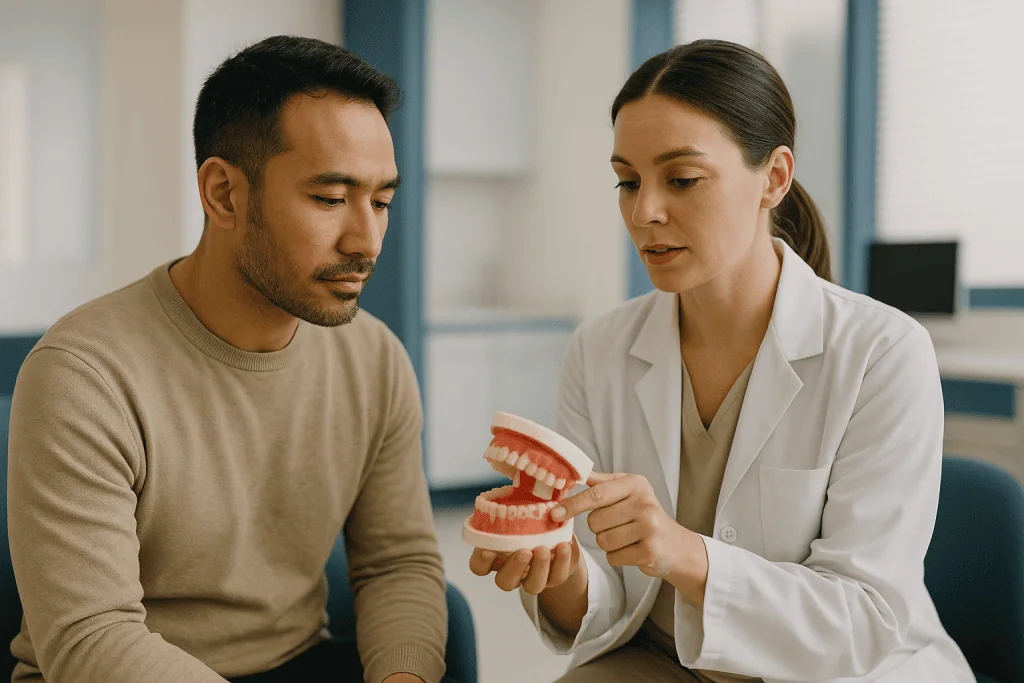
This is the same mechanism that fixed braces rely on. Cleveland Clinic’s overview of braces describes the process as applying light, continuous pressure that gradually reshapes the surrounding bone. Aligners simply deliver the force through a shaped plastic shell instead of wires and brackets.
Two features follow from the biology. The force must be light; heavy pressure can starve the ligament of blood and stall movement rather than speed it. And the force must be nearly continuous, because bone remodeling is a slow, cumulative response. Take the tray out for most of the day and the ligament recovers before the remodeling cascade gets going. That is the scientific root of the wear-time rules discussed later.
Aligners are strongest at tipping teeth and closing modest gaps. Systematic reviews of aligner biomechanics have repeatedly found that certain movements are less predictable with plastic alone: rotating round teeth such as canines and premolars, pulling a tooth downward out of the gum (extrusion), and moving roots bodily rather than tipping crowns. Those limitations are precisely why the planning stage, and the attachments described below, exist.
Who is clear aligner treatment usually for, and who is asked to wait?
The typical candidate has mild to moderate crowding or spacing, a healthy foundation of gum and bone, all adult teeth present, and the self-discipline to keep a tray in place for most of every day. Adults and older teenagers make up most of this group, partly because they are more likely to value discretion and partly because their jaws have finished growing, which makes the plan more predictable.
Some people are usually offered fixed braces or a combined approach instead. Severe crowding that needs teeth to move long distances, large bite discrepancies caused by jaw position rather than tooth position, and cases requiring significant rotation or extrusion often fall into this category. The NHS notes that treatment for more complex problems may involve fixed appliances, and that in some jaw discrepancies surgery combined with orthodontics is discussed.
Others are asked to wait rather than told no. Active gum disease is the most common reason. Moving teeth through inflamed, infected tissue risks bone loss, so periodontal treatment comes first and aligners later. Untreated cavities, a cracked tooth or a failing filling similarly go to the front of the queue. Children with a mixed set of baby and adult teeth are sometimes monitored until more permanent teeth arrive, although some orthodontists use aligners in growing patients for specific problems.
A few situations call for extra caution rather than exclusion: heavy nighttime grinding that could crack trays, jaw joint pain, or a history of root shortening on previous X-rays. None of these is a verdict you can reach from a mirror. Suitability is a clinical judgment based on examination, X-rays and a scan, and the treating team owns that decision.
Step one: the consultation, records and digital scan
The first appointment looks a lot like a thorough dental check with extra photography. The orthodontist, a dentist with additional specialist training in moving teeth and jaws, examines how your teeth meet, how your jaw opens and closes, and the health of your gums. Expect questions about clenching, past dental work, medications and what bothers you about your smile, because the goal you name shapes the plan.
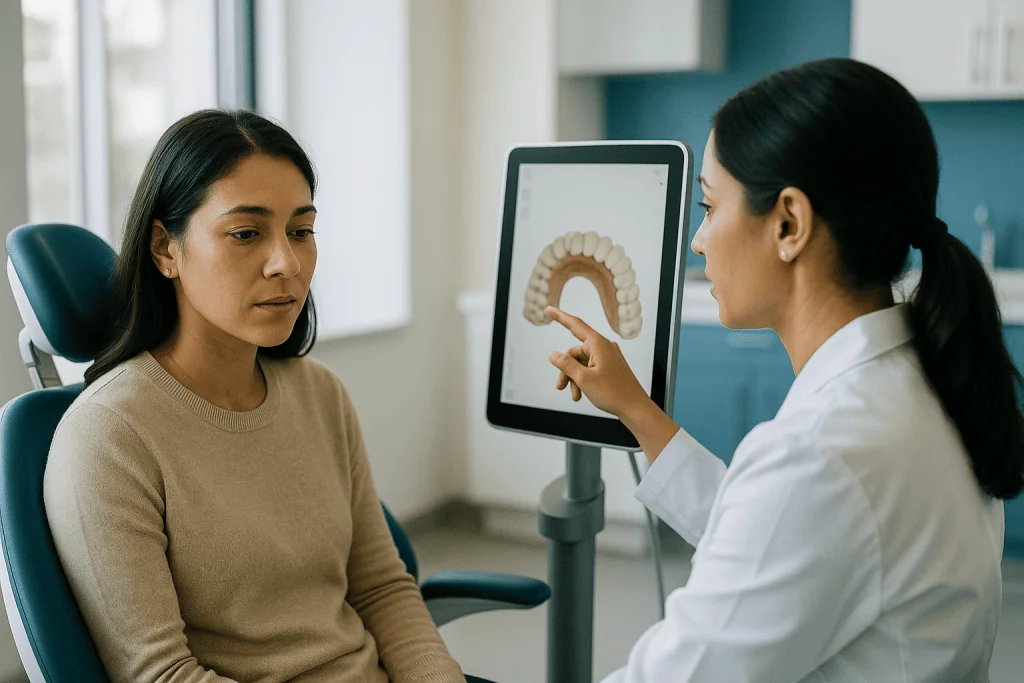
Records come next. Standard orthodontic records include photographs of your face and teeth, a panoramic X-ray showing every root and the bone around it, and often a side-view skull X-ray called a cephalogram that reveals how the jaws relate to each other. These are not formalities. Root length, bone height and the position of unerupted teeth all influence which movements are safe.
Then comes the scan. An intraoral scanner is a small wand with a camera that sweeps across your teeth, capturing thousands of images per second and stitching them into a three-dimensional digital model. Most people find it far more comfortable than the old putty impression trays, and the scan takes only a few minutes. Some practices still use putty for certain situations; both routes produce the same end product, a precise model of your mouth.
You leave this appointment with a preliminary opinion: whether aligners are a reasonable option for you, whether any dental work must happen first, and a rough sense of the likely treatment length. Treat any timeline offered at this stage as an estimate, not a promise. The detailed plan has not yet been built, and the biology has not yet had its say.
What happens to your scan before your first trays arrive
The quiet middle of the clear aligner treatment process is mostly invisible to you, and it is arguably the most important stage. Your digital model goes to planning software, and a technician or the orthodontist maps each tooth’s journey from its current position to its target position. The path is then divided into small steps, each corresponding to one tray.
Here the orthodontist’s judgment matters more than the software. The first draft produced by a computer is a starting point. The clinician typically reviews the sequence of movements, checks that forces are light and staged sensibly, decides which teeth need attachments, and marks where a little enamel polishing between teeth might create room. Plans often go through several revisions before approval, and a good clinician will show you a digital preview of the intended result and explain what it does and does not guarantee.
That preview deserves a plain warning. It is a plan, not a prediction. Teeth do not always follow the animation. Some lag behind their trays, a mismatch clinicians call tracking failure, and the plan is adjusted later through refinements. Viewing the preview as a target rather than a contract saves disappointment.
Once the plan is approved, the trays are manufactured. Each aligner is formed over a three-dimensional printed model of your teeth at that stage, trimmed and polished. Depending on the workflow, you may receive a full series or a batch covering the next few months. During this waiting period, which typically runs a few weeks, any dental work the orthodontist requested, such as fillings or a gum cleaning, should be completed so the mouth is ready when the trays arrive.
What are clear aligner attachments, and why do they matter?
Attachments are the part of the process almost no advertisement mentions. An attachment is a small bump of tooth-colored composite resin, the same material used for white fillings, bonded to the surface of a tooth. Its job is to give the aligner a handle. Smooth plastic sliding over a smooth crown can tip a tooth, but it struggles to rotate it or lift it. A precisely shaped bump changes the geometry so the tray can push in a controlled direction.
Placing them is painless and takes one appointment. The orthodontist fits a template tray with tiny wells where each attachment belongs, fills the wells with resin, seats the template over your teeth and hardens the resin with a blue light. The template comes off and the bumps remain. Not everyone needs many; some plans use a handful, others use one on most teeth. The number reflects the complexity of the movements, not the quality of the treatment.
Attachments are visible on close inspection, especially on front teeth, and they feel rough to the tongue for a few days. They are removed at the end of treatment by polishing, which leaves the enamel intact.
Interproximal reduction, or IPR, is another quiet helper. It means polishing a fraction of a millimeter of enamel from the sides of selected teeth to create space for crowded teeth to align. The amounts are tiny, typically well within the enamel layer, and the procedure is generally painless. Some plans also use small elastic bands hooked between upper and lower trays, or between a tray and a button on a tooth, to correct how the jaws meet. If any of these appear in your plan, ask why. A clear answer signals a thoughtful plan.
Your first trays: what the first days and weeks usually feel like
The fitting appointment is short. You learn to seat the trays, pressing them down with your fingers and often biting on a small foam or silicone roll called a chewie to make them fully engage. You learn to remove them, hooking a fingernail under the edge at the back. And you are shown how to tell whether a tray is fully tracking: the plastic should hug every tooth with no visible gap between tray and tooth edge.
The first evening tends to bring a snug, pressured feeling, as if your teeth are being politely squeezed. By the next morning some people notice that biting into firm food is tender. Cleveland Clinic and Mayo Clinic describe this as a normal response to tooth movement, most noticeable in the first few days after starting each new tray and easing as the teeth settle into the new position. Over-the-counter pain relief is sometimes suggested by clinicians for this stage; what you use, and whether you need anything, is a question for your own dentist or pharmacist.
Speech may lisp slightly for a day or two as your tongue learns the new landscape. Saliva production often rises, then normalizes. The rough attachments may rub the inside of the lip until the tissue toughens; orthodontic wax over the offending spot helps.
Within a week or two most people report that the trays feel like part of the mouth. The routine settles: trays out to eat and drink anything other than water, brush, floss, rinse the tray, trays back in. Changing to the next tray is often scheduled at night so the tightest hours pass during sleep. Each change reintroduces a little pressure, but usually less than the very first tray.
The 22-hour habit and the so-called 30-minute rule explained
Wear time is where aligner treatment succeeds or stalls. Cleveland Clinic’s patient guidance describes an expectation of about 20 to 22 hours of daily wear, leaving roughly two hours for meals, hot drinks and cleaning. That figure is not arbitrary. The bone remodeling described earlier needs sustained, near-constant pressure; a tray that spends the working day in a pocket delivers a series of short pushes that the ligament simply recovers from.
The 30-minute rule is patient shorthand rather than a clinical guideline. It refers to the idea that trays should not be out for more than about half an hour at a stretch, roughly the length of a meal. The point is behavioral: eating slowly, then lingering over coffee, then forgetting to reinsert can quietly turn two hours a day into four or five. Aligners left out for long periods also let teeth drift back toward their previous position, so the next tray may feel unexpectedly tight or fail to seat fully. If you find yourself struggling to fit a tray, the usual advice is to return to the previous one and contact the practice rather than forcing it, but follow your own clinician’s instructions.
Habits that help are unglamorous. Keep the case with you and never wrap trays in a napkin, the classic route to a tray in the restaurant trash. Drink only water while wearing them; hot drinks can warp the plastic, and sugary or acidic drinks trapped under a tray bathe the enamel for hours. Brush or at least rinse after eating before reinserting.
Tray-change intervals vary. Some plans move to a new tray weekly, others every two weeks, and the orthodontist may adjust the interval depending on how well the teeth track. The interval is a clinical decision, not a personal preference.
Clear aligners vs braces: what the comparison really shows
People want a winner. The evidence offers trade-offs instead. Systematic reviews comparing aligners with fixed appliances broadly find that both can achieve good results in mild to moderate cases, that aligners tend to be more comfortable and easier to keep clean, and that fixed braces retain an edge for complex movements and for finishing the fine details of a bite. Treatment time for braces, according to Cleveland Clinic, commonly runs from about one to three years, and aligner cases fall within a similar range, shorter for simple crowding and longer for complex bites. Faster is not a property of the appliance; it is a property of the problem.
| Feature | Clear aligners | Fixed braces |
|---|---|---|
| Appearance | Nearly transparent; attachments visible on close inspection | Visible brackets and wires; ceramic options less conspicuous |
| Removable | Yes, for eating and cleaning | No |
| Depends on patient wear time | Heavily, roughly 20 to 22 hours daily | No; works continuously |
| Eating restrictions | Few, because trays are removed | Hard, sticky and chewy foods limited |
| Oral hygiene | Easier; normal brushing and flossing | Harder; special brushes and threaders |
| Best suited to | Mild to moderate crowding and spacing | Wide range including complex rotations and bite correction |
| Emergency visits | Lost or cracked tray | Broken bracket or poking wire |
| Retainers afterward | Required | Required |
One row deserves emphasis. The dependence on wear time is the defining feature of aligners, for good and ill. It gives you control over meals and cleaning, and it hands you responsibility that a bonded bracket never asks of anyone. Which side of that trade you prefer is a legitimate part of the decision.
What are the downsides of clear aligners?
Honest counseling lists the disadvantages before the patient asks. The first is compliance burden. A tray in a drawer moves nothing, and treatment that stalls because of low wear time is not the plastic’s fault but it is still a failure of the method for that person.
The second is predictability. Aligners are less reliable than fixed appliances for certain movements, especially rotating canines and premolars, extruding teeth and controlling root position. In practice this shows up as refinements, extra rounds of trays after the original series, which lengthen treatment. Refinements are common enough that they should be considered part of the normal process rather than a sign something went wrong.
The third group of risks is shared with all orthodontic treatment. MedlinePlus and Cleveland Clinic both note that tooth movement can cause temporary discomfort, and that any orthodontic treatment carries a small risk of root shortening, gum recession in thin tissue, and decalcification, the chalky white marks that appear when plaque sits on enamel. Aligners lower the decalcification risk because they come out for brushing, but drinking anything sugary with trays in raises it sharply.
Fourth are the practical annoyances: lisping in the early days, a dry mouth, trays that yellow if worn while drinking coffee, lost trays on vacation, and attachments that pop off and need rebonding. Some people with sensitive stomachs dislike the bulk of plastic against the palate.
Finally, and most important in my view, aligners have made it easier for treatment to occur without regular in-person examination. Remote-only pathways cannot check gum health, take X-rays or notice a tooth that is not tracking until damage is visible. The safest version of this process includes a clinician who looks in your mouth at intervals and can intervene.
How long does aligner treatment take, and what are refinements?
Treatment length is the question every patient asks and no honest clinician answers with a single number. The NHS describes orthodontic treatment as typically lasting from many months to around two years depending on complexity, and Cleveland Clinic gives a range of roughly one to three years for fixed braces. Simple aligner cases that close a small gap or align a few front teeth can finish toward the short end; cases correcting how the back teeth meet run longer. Whatever estimate you receive should be framed as a range, and the biology gets a vote.
Check-ins during active treatment are usually spaced every six to ten weeks, although the interval is set by the orthodontist and sometimes supplemented by photographs sent between visits. At each visit the clinician checks tracking, replaces any lost attachments, performs any planned polishing between teeth and hands over the next batch of trays.
Refinement is the stage that surprises people who expected the final tray to deliver the final smile. When the original series ends, a fresh scan compares reality with the plan. Teeth that lagged, rotations that did not fully turn and small bite details are addressed with a new, shorter series of trays. Some people need one refinement, some need two or more, and a minority need none. Building refinements into your mental timeline from the start prevents the deflating sense that treatment has been extended.
Retention is the last, and permanent, stage. The NHS is explicit that teeth will drift back toward their original position unless retainers are worn, and that retention is typically advised long term, often nightly. Aligner patients frequently receive clear retainers that look like the trays they have worn for months, and sometimes a thin wire bonded behind the front teeth. Retainers are not optional extras; they are the second half of the treatment.
What people often get wrong about the clear aligner treatment process
Myth: aligners are faster than braces. Speed depends on how far teeth must move and how consistently force is applied, not on the appliance. A mild case finishes quickly with either method; a complex one takes its time with either. Advertising tends to show mild cases.
Myth: the digital preview is what you will get. The animation is a plan. Teeth are living structures anchored in bone that responds at its own pace, and refinements exist because plans and outcomes diverge. A clinician who promises the preview exactly is overpromising.
Myth: you can skip the orthodontist and buy trays directly. Trays made from a scan without X-rays, gum assessment or in-person monitoring miss the very problems, such as periodontal disease and short roots, that make tooth movement risky. Cleveland Clinic’s guidance emphasizes supervision by a dental professional throughout.
Myth: taking trays out for a few hours occasionally does not matter. It matters cumulatively. Teeth relapse quickly when force is removed, which is why the next tray can suddenly refuse to seat.
Myth: aligners are pain-free. Pressure and tenderness in the first days of each tray are normal and usually mild, but they are real. Describing them as painless sets people up to think something is wrong when it is not.
Myth: once the last tray is done, you are done. Without retainers, movement reverses. The NHS notes that retainers are typically needed indefinitely to hold the result.
Myth: attachments and enamel polishing mean the treatment is poor quality. The opposite is closer to the truth. They are tools that make difficult movements possible and are chosen because the plan is realistic about biomechanics.
Questions to ask your care team before you start
A good consultation should leave you able to answer these questions yourself. If any are met with vagueness, ask again or seek a second opinion. The point is not to test the clinician but to understand your own treatment.
- Which specific movements does my plan involve, and are any of them among the ones aligners handle less predictably?
- How many attachments will I have, and on which teeth? Will any be on front teeth where they show?
- Is enamel polishing between teeth part of the plan? On which teeth, and how much?
- What is the realistic range for treatment length in my case, and how likely are refinements?
- How many hours a day do you expect me to wear the trays, and how often will I change them?
- How often will I be seen in person, and who examines my gums and takes X-rays during treatment?
- What happens if a tray cracks, I lose one while traveling or an attachment comes off?
- Will I need elastics or any other additional appliances?
- What kind of retainer will I have afterward, and for how long will I need to wear it?
- Are there any dental problems, such as gum inflammation or a filling, that should be treated before we start?
- Do I have any signs, such as short roots or thin gum tissue, that raise my risk of side effects?
- If aligners turn out not to be suitable partway through, what are the alternatives?
Bring a written list. Consultations move quickly, and the questions you forget in the chair are usually the ones you lie awake wishing you had asked. Writing the answers down also gives you something to compare against if your experience diverges from what you were told.
When to call your doctor: red-flag signs during aligner treatment
Most aligner troubles are minor and wait comfortably for the next scheduled visit: a rough attachment edge, a mild lisp, a tray that feels tight on day one. Some situations should prompt a call to the practice within a day or two, and a few need urgent dental or medical attention.
Call the practice promptly if a tray will not seat fully even after several days and chewies, if an attachment breaks off, if a tray cracks or is lost, or if a tooth becomes noticeably loose beyond the slight mobility that accompanies normal movement. Also call if you notice gums that bleed persistently, swell or pull away from a tooth, since gum inflammation during tooth movement can accelerate bone loss and is best assessed early.
Seek same-day care if you develop severe, throbbing pain in a single tooth that does not ease when the tray is removed, sensitivity to heat that lingers, swelling of the gum, face or jaw, a bad taste with pus near the gum line, or a fever alongside dental pain. These can signal an infection or a dying nerve rather than ordinary orthodontic pressure. Trauma to the face while wearing trays, a chipped or displaced tooth, or a jaw that locks or will not close also need prompt evaluation.
Go to an emergency department or call emergency services for facial swelling that spreads toward the eye or neck, difficulty swallowing or breathing, or a swallowed tray fragment causing choking or chest pain. These are rare, but they are emergencies regardless of orthodontic status.
Above all, do not stop or restart trays, skip retainers or attempt to adjust attachments on your own advice. The treating team knows your plan and your mouth, and every change should run through them.
Frequently asked questions
What is the 30-minute rule for clear aligners?
It is informal shorthand for keeping trays out no longer than about half an hour at a time, roughly the length of a meal. The clinical target behind it is total daily wear of around 20 to 22 hours. Long gaps let teeth drift back and make the next tray hard to seat, so the rule exists to protect the habit rather than as a strict medical threshold.
What is the most uncomfortable stage of clear aligner treatment?
Most people report the first few days of the first tray as the most noticeable, with a squeezing pressure and tenderness when biting firm food. Each new tray brings a smaller version of the same feeling for a day or two. Attachment edges can also rub the lip early on. Discomfort that worsens over time or centers on one tooth is not typical and should be discussed with the practice.
What are the downsides of clear aligners?
The main downsides are dependence on wear time, reduced predictability for certain movements such as rotations and extrusion, the frequent need for refinement trays, and shared orthodontic risks including root shortening, gum recession and enamel marks if sugary drinks are consumed with trays in. Practical issues include lisping early on, lost trays and attachments that need rebonding.
Is clear aligner treatment faster than braces?
Not inherently. Treatment speed depends on how far teeth need to move and how consistently force is applied, and both aligners and braces typically fall within a range of about one to three years for complete cases. Mild crowding finishes quickly with either method, while bite corrections take longer with either. Claims of dramatically faster results usually describe very simple cases.
How do clear aligners work if they are just plastic?
Each tray is shaped slightly differently from your current tooth positions, so it presses gently on selected teeth. That sustained pressure compresses the ligament around the root, prompting bone on one side to dissolve and new bone to form on the other, and the tooth drifts a fraction of a millimeter. The next tray repeats the step. Attachments bonded to teeth give the plastic extra grip for harder movements.
What are clear aligner attachments made of, and do they damage teeth?
Attachments are made of tooth-colored composite resin, the same material used for white fillings, bonded to the enamel surface and hardened with a blue light. They do not require drilling. At the end of treatment they are polished away, leaving the enamel intact. They can feel rough to the tongue and are faintly visible up close, especially on front teeth.
How long does aligner treatment take from scan to first trays?
The planning and manufacturing phase between the digital scan and receiving the first trays typically takes a few weeks, though it varies with the practice’s workflow and how many plan revisions are needed. This waiting period is often used to complete any dental work the orthodontist requested, such as fillings or a gum cleaning, so the mouth is healthy when treatment begins.
Can I drink coffee or tea with clear aligners in?
Standard guidance is to drink only water with trays in place. Hot drinks can warp the thin plastic, and coffee, tea and colored drinks stain it. Sugary or acidic drinks are the bigger concern because liquid trapped under a tray sits against enamel for hours and raises the risk of decay and white marks. Removing trays for drinks, then rinsing before reinserting, avoids these problems.
What happens if I lose a tray while traveling?
Contact your practice as soon as possible and follow their instructions. Depending on where you are in the sequence, they may advise wearing the previous tray to hold position, moving to the next tray early, or ordering a replacement. Carrying the previous tray as a backup on trips is a common precaution. Going without a tray for days allows teeth to drift and can throw off the plan.
Do I really need retainers after clear aligner treatment?
Yes. Teeth tend to drift back toward their original positions once active force stops, and the NHS notes that retainers are typically needed long term, often nightly, to hold the result. Aligner patients usually receive clear removable retainers, sometimes combined with a thin wire bonded behind the front teeth. The schedule and type of retainer are decided by the treating orthodontist.
References
- NHS – Orthodontics
- MedlinePlus – Malocclusion of teeth
- MedlinePlus – Orthodontia
- Cleveland Clinic – Malocclusion
This article is for general information only and is not a substitute for professional medical advice. Please consult a qualified doctor about your individual situation.

More from the Blog

Questions to Ask Your Surgeon and Orthodontist Before Orthognathic Surgery
Before orthognathic (corrective jaw) surgery, ask your surgeon which jaw or jaws will be moved and why, what the alternatives are, how surgery and…

How a Jaw Cyst Is Diagnosed: Panoramic X-Ray, CT Imaging and Pathology Review
A jaw cyst is usually diagnosed in three steps. A panoramic dental X-ray first reveals a dark, fluid-filled space in the bone, often by…

Gummy Smile Results: How the Gum Line Settles and What a Balanced Smile Realistically Means
Gummy smile results depend on the cause and the method used. Gum reshaping produces a new gum line that is visible at once but…

How TMJ Disorder Progresses: Clicking, Locking and Bite-Related Discomfort Explained
TMJ disorder usually begins with painless clicking as the cushioning disc inside the jaw joint slips out of position, can progress to intermittent or…

Is It Dry Socket? Tooth Extraction Pain That Returns and When to Call Your Dentist
Dry socket is a healing complication in which the blood clot that should protect an extraction site fails to form, dissolves early, or is…

What Scaling and Root Planing Usually Achieves: Shallower Pockets and Firmer Gums
Scaling and root planing usually leaves periodontal pockets shallower by roughly 1 to 2 millimeters on average, with deeper pockets improving the most, and…