

How Gastric Bypass Reroutes Digestion: The Pouch, the Bypassed Segment and the New Connection
Key Takeaways
- Roux-en-Y gastric bypass leaves the whole stomach in the body; it creates a walnut-sized pouch holding about an ounce and reroutes food around the rest (Mayo Clinic).
- Two new connections form the Y: one joins the pouch to the lifted jejunum, the other reunites digestive juices with food further down the intestine (NIH, NIDDK).
- Because food reaches the lower intestine early, hormones such as GLP-1 rise after meals, which helps explain reduced appetite and early blood sugar changes before weight loss (NIH, NIDDK).
- Dumping syndrome has two phases: early symptoms 10 to 30 minutes after eating and late low blood sugar 1 to 3 hours later (Cleveland Clinic).
- Bypassing the duodenum and the acid-producing stomach reduces absorption of iron, calcium, vitamin B12 and vitamin D, so supplements and blood tests continue for life (NHS).
- The NHS advises avoiding pregnancy for 12 to 18 months after weight-loss surgery and expects most people to return to usual activities within about 4 to 6 weeks.
Roux-en-Y gastric bypass reroutes digestion in three steps. Surgeons staple off a walnut-sized pouch at the top of the stomach, then divide the small intestine and attach its lower part to that pouch, so food skips the rest of the stomach and the first stretch of intestine. The bypassed segment is reconnected further down so digestive juices rejoin food. Smaller meals, changed gut hormones and reduced absorption follow.
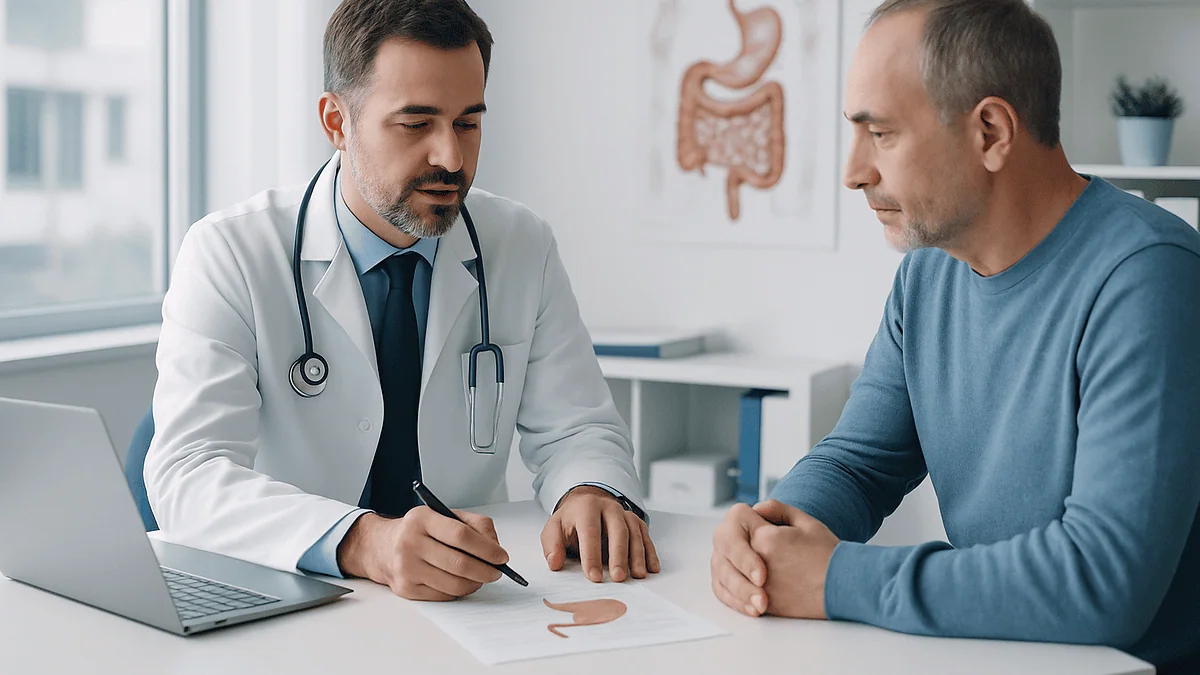
The consent form is one page, but the diagram on the back of it is what people stare at. A stomach drawn like a deflated balloon, a loop of bowel lifted up and stitched to a tiny pocket near the top, and two arrows showing food going one way and digestive juices going another. Most people at that kitchen table can tell you the operation makes the stomach smaller. Far fewer can explain how gastric bypass works step by step, or why a loop of intestine ends up where it does.
That gap matters, because the rerouting is the whole point. It explains why hunger changes within days, why a dessert can trigger a cold sweat, and why the vitamin blood tests never stop.
This explainer walks through the three parts of the title, the pouch, the bypassed segment and the new connection, using the mainstream evidence and nothing else.
How gastric bypass works step by step in the operating room
Picture the digestive tract as a single hose running from mouth to bowel. Gastric bypass does not remove the hose; it adds a shortcut. The operation most surgeons mean when they say “gastric bypass” is the Roux-en-Y bypass, named after the Y-shaped junction it creates. It is usually performed laparoscopically, meaning through several small incisions with a camera rather than one long cut (Mayo Clinic).
Step one is the pouch. The surgeon uses a stapling device to partition the uppermost part of the stomach into a small pouch, about the size of a walnut and able to hold roughly an ounce of food (Mayo Clinic). The staple line both seals the pouch and closes off the larger remaining stomach.
Step two is the division of the small intestine. A short distance below the stomach, the surgeon divides the jejunum, the middle section of the small intestine. The downstream end is brought up and joined to the pouch. That join is called an anastomosis, a surgical connection between two hollow organs. Food now travels from the pouch straight into this raised limb of intestine.
Step three closes the loop. The upstream end of the divided intestine still carries bile and pancreatic enzymes draining from the bypassed stomach and duodenum. It is reattached to the raised limb further down. From that second junction onward, food and digestive juices travel together, much as they did before.
Three steps, two new connections, one Y. Everything that follows in this article, from the altered hunger signals to the vitamin blood tests years later, traces back to this rerouting. The procedure typically takes a few hours under general anesthesia (Mayo Clinic), and the stomach is never taken out of the body.
What is the gastric pouch, and why is it kept so small?
The gastric pouch is the small reservoir created from the top of the stomach, the part just below where the esophagus, the swallowing tube, enters. Its job is to receive a mouthful of food, hold it briefly and release it into the intestine. The Mayo Clinic describes it as roughly walnut-sized with a capacity of about an ounce, compared with a normal stomach that can stretch to hold several cups.
Why that part of the stomach and not another? The upper stomach is relatively thick-walled and stretches less than the lower body of the organ, which makes it a more stable pouch over time. Keeping the pouch small also limits how much food can arrive at once, which is the “restrictive” half of how the operation works (NIH, NIDDK).
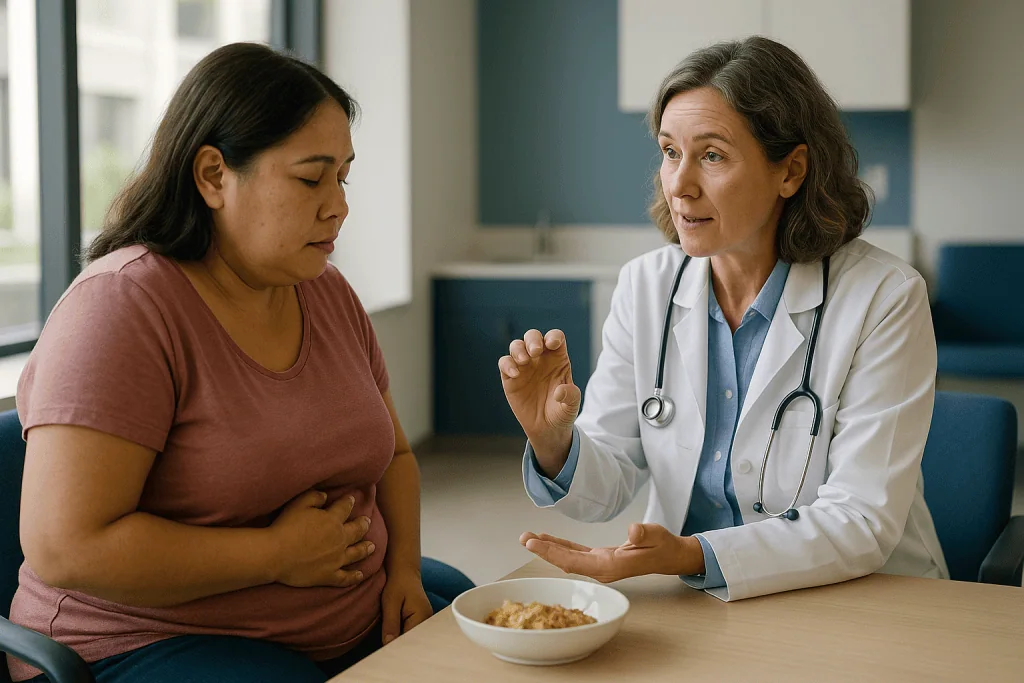
Small has consequences. A pouch that holds an ounce fills quickly, so meals become a matter of a few tablespoons eaten slowly. Chewing thoroughly stops being advice and becomes mechanics: large pieces have nowhere to go. Drinking with meals is usually discouraged in the early months because liquid either fills the pouch before food does or washes food through too fast (Mayo Clinic).
A common worry is that the pouch will “stretch out” and undo the surgery. Pouches do adapt somewhat, and the opening into the intestine can widen, but the stomach was never the only mechanism. Hormonal and intestinal changes, covered below, are doing much of the work, which is why guidelines frame the pouch as one component of a combined restrictive and malabsorptive procedure rather than the whole story (NIH, NIDDK).
One more detail that surprises people: the pouch still produces a little acid, but far less than the full stomach did, because most acid-producing cells are in the bypassed portion.
The bypassed segment: what happens to the stomach food no longer reaches
The larger part of the stomach, often called the remnant, stays exactly where it was. It keeps its blood supply, its nerve supply and its ability to make acid and digestive juices. What it loses is traffic. No food passes through it after the operation, which is why surgeons describe it as bypassed rather than removed (MedlinePlus).
The remnant is not idle. It continues to secrete fluid that drains normally through the pylorus, the muscular valve at the stomach’s exit, into the duodenum, the first section of the small intestine. The duodenum, in turn, still receives bile from the liver and gallbladder and enzymes from the pancreas. These juices flow down what surgeons call the biliopancreatic limb, the stretch of intestine that carries digestive fluids but no food, until it meets the food stream at the second connection.
Keeping the remnant has practical implications. It cannot be examined with a standard endoscope, the flexible camera passed through the mouth, because the camera follows the new food route and never enters the old stomach. If a problem is suspected there later in life, the care team may need imaging or other approaches to assess it (Mayo Clinic). This is one reason surgeons keep detailed operative records and why patients are encouraged to carry a summary of their anatomy.
The bypassed duodenum matters for nutrition too. It is a major site where iron and calcium are absorbed, and the acid environment of the full stomach helps release vitamin B12 from food. Skipping both means several nutrients are absorbed less efficiently for life, a point the NHS makes central to long-term follow-up.
Nothing is thrown away, in other words. The old route simply becomes a service corridor for digestive juices.
Roux-en-Y gastric bypass explained: the new connection and the Y shape
The name comes from a nineteenth-century Swiss surgeon, César Roux, and from the letter the finished anatomy resembles. Draw a Y. The upper-left arm is the Roux limb, the piece of jejunum lifted to meet the pouch; food travels down it. The upper-right arm is the biliopancreatic limb, carrying juices from the bypassed stomach and duodenum. The stem of the Y is the common channel, where both streams merge and ordinary digestion resumes (NIH, NIDDK).
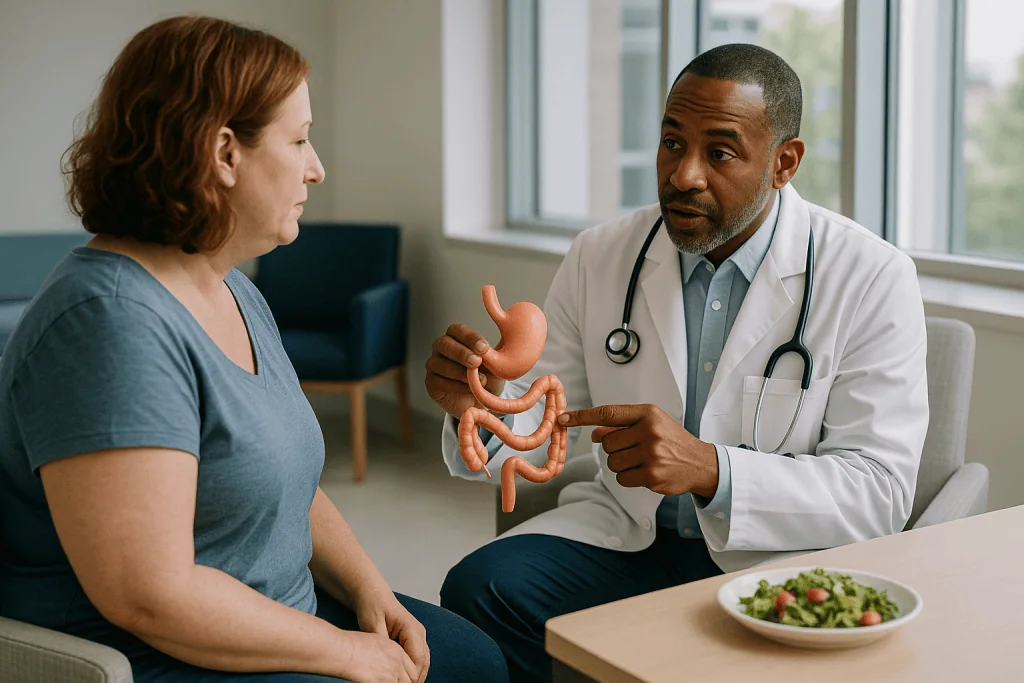
Two connections make this possible. The first, between pouch and Roux limb, is the gastrojejunostomy. It is deliberately narrow, which slows how fast food leaves the pouch. The second, where the biliopancreatic limb joins the Roux limb, is the jejunojejunostomy. Each is created with staples or sutures, and each is checked for leaks before the operation ends (Mayo Clinic).
Why not simply attach the pouch to the intestine and leave it at that? Because bile and pancreatic enzymes have to reach food somewhere, and because letting them wash back up into the pouch would irritate it. The Y keeps the two streams apart until they are well below the pouch, which protects the new stomach lining from bile while still allowing fats and proteins to be broken down once the streams meet.
The length of the limbs is a surgical decision. A longer Roux limb means a longer stretch where food travels without digestive juices, which reduces absorption further. Surgeons choose lengths within established ranges based on individual factors, and the specifics belong in a conversation with the operating team rather than in a general article.
Once you can picture the Y, the rest of the operation’s effects stop being mysterious. Food meets a small pouch, a narrow exit, a delayed rendezvous with enzymes and a shorter absorptive runway.
Why does gastric bypass change hunger, not just how much fits?
People expect to feel full faster after bypass. What many do not expect is to feel less interested in food in the first place, sometimes before they have lost any weight. That shift points to the second mechanism: hormones.
The gut is an endocrine organ. When food arrives in the lower small intestine sooner than usual, which is exactly what the Roux limb arranges, the cells lining that intestine release more of several signaling hormones, including glucagon-like peptide-1, usually shortened to GLP-1, and peptide YY. Both act on the brain to reduce appetite and on the pancreas to improve insulin release after meals (NIH, NIDDK). This early arrival of food is a direct result of bypassing the stomach and duodenum, and it is one reason researchers describe gastric bypass as a metabolic operation rather than purely a mechanical one.
Ghrelin, sometimes called the hunger hormone, is produced mainly in the upper stomach. Its behavior after bypass is less consistent across studies than after sleeve gastrectomy, where the ghrelin-producing region is removed, so it is wiser to say the evidence is mixed than to credit it with the appetite change.
These hormonal effects help explain an observation that puzzled clinicians for decades: blood sugar in people with type 2 diabetes often improves in the days after gastric bypass, before meaningful weight loss has occurred (NIH, NIDDK). Improvement is not guaranteed and not permanent for everyone, and medicines for diabetes must only be adjusted by the prescribing clinician, who will monitor glucose closely in the early weeks.
The honest summary is that gastric bypass works through at least three channels at once: a smaller container, a shorter absorptive route and a changed hormonal conversation between gut and brain. Which channel matters most for any individual is still being studied.
Who is gastric bypass usually for, and who is usually asked to wait?
Eligibility rests on a combination of body mass index, health conditions and readiness, not on BMI alone. BMI, or body mass index, is weight in kilograms divided by height in meters squared, a crude but widely used screening number.
The Mayo Clinic summarizes typical criteria as a BMI of 40 or higher, or a BMI of 35 or higher together with a serious weight-related condition such as type 2 diabetes, high blood pressure or severe sleep apnea. The NHS adds that surgery may be considered at a BMI of 30 to 34.9 for people with recently diagnosed type 2 diabetes, and uses lower thresholds for people of Asian family backgrounds, in whom health risks rise at lower BMIs. In both frameworks, the operation is offered after other approaches have been tried and when the person is medically fit for anesthesia and committed to long-term follow-up (NHS).
Who is usually asked to wait? Patterns across guidelines include people with uncontrolled psychiatric illness or active substance misuse, people who cannot yet commit to the eating and supplement routine, people who smoke and have not stopped, and people planning pregnancy soon. The NHS advises avoiding pregnancy for 12 to 18 months after surgery while weight and nutrition stabilize. Certain stomach conditions, such as untreated ulcers, may also need to be managed first because the remnant cannot be easily examined afterward.
Waiting is not refusal. Preoperative programs commonly address these factors over months, with dietitian, psychology and medical input, and reassess. Surgeons may also prefer a different operation, such as a sleeve, for people with particular anatomy or medical histories.
Whether bypass is the right operation, or the right time, is a judgment made by a multidisciplinary team with the person in front of them. No article can make that call.
Gastric bypass vs sleeve: how the two operations differ
The sleeve gastrectomy is now the most commonly performed weight-loss operation in many countries, and people weighing their options almost always ask how it compares. The core difference is simple: the sleeve removes tissue and keeps the route; the bypass keeps tissue and changes the route.
In a sleeve, the surgeon removes about 80 percent of the stomach along its outer curve, leaving a narrow tube shaped like a banana (Mayo Clinic). Food still passes through the pylorus into the duodenum, so absorption pathways are largely intact. In a bypass, nothing is removed, but food skips the remnant stomach and the duodenum entirely.
| Feature | Roux-en-Y gastric bypass | Sleeve gastrectomy |
|---|---|---|
| Stomach tissue removed | None; remnant stays in place | About 80% removed (Mayo Clinic) |
| Food route | Rerouted past stomach and duodenum | Unchanged, through pylorus |
| New intestinal connections | Two | None |
| Main mechanisms | Restriction, malabsorption, hormonal change | Restriction, hormonal change |
| Reversibility | Technically possible, complex | Not reversible |
| Dumping syndrome | More typical | Less typical |
| Effect on acid reflux | Often improves (Mayo Clinic) | May worsen or appear |
| Lifelong supplements | Required (NHS) | Required (NHS) |
Neither column is “better.” Bypass carries the specific risks of the new connections and a greater need for nutritional surveillance; the sleeve avoids those but can aggravate reflux and cannot be undone. Both are major operations with similar immediate recovery, and both require lifelong follow-up (NHS, MedlinePlus).
The right fit depends on reflux history, diabetes, prior abdominal surgery, medication needs and personal priorities. Surgeons weigh these individually, and a thoughtful team will explain why they lean one way for you.
How gastric bypass works step by step after you go home: the first weeks
The operating room is where the plumbing changes. The weeks that follow are where the body learns to use it.
Most people wake with several small dressings, a sore abdomen and, often, shoulder-tip pain from the gas used to inflate the abdomen during laparoscopy. Walking begins the same day because movement lowers the risk of blood clots. A hospital stay of a few days is typical, though it varies with individual recovery (MedlinePlus).
Eating restarts in stages. The pouch and its new connection need time to heal, so the early diet is clear liquids, then thicker liquids, then pureed foods, then soft foods, before solid textures return over several weeks (Mayo Clinic). Each stage is a test of the new anatomy as much as a nutrition plan. Sipping rather than gulping becomes a habit, and the dietitian’s instructions about protein first, small portions and separating drinks from meals are built around the walnut-sized pouch and its narrow exit.
Energy is low for a while. Calorie intake drops sharply, and the body is also healing. The NHS notes that most people can return to usual activities, including work, within about 4 to 6 weeks, with heavy lifting deferred until the surgeon agrees. Hair thinning a few months in, sensitivity to cold and changes in taste are commonly reported and usually settle, though they should be mentioned at follow-up.
Supplements begin almost immediately. A multivitamin, vitamin B12, iron, calcium and vitamin D are the standard components (NHS, Mayo Clinic); the exact products and amounts are set by the care team, who will adjust them against blood tests over the first year and beyond.
Weight loss is usually fastest in the first months and continues, more slowly, into the second year (NIH, NIDDK). The pace varies widely, and no one can promise a number.
Dumping syndrome after gastric bypass: why sugar lands differently
Dumping syndrome is the name for a cluster of symptoms that occur when food, especially sugary or very rich food, moves from the pouch into the small intestine too quickly. In an intact stomach, the pylorus meters food out gradually. After bypass, that valve is bypassed along with the remnant, so the pouch empties straight into the jejunum with little regulation (Cleveland Clinic).
There are two phases, and they feel different. Early dumping begins about 10 to 30 minutes after eating. Concentrated sugar in the intestine pulls fluid in from the bloodstream, and the sudden distension triggers cramping, nausea, flushing, a racing heart and sometimes diarrhea (Cleveland Clinic). Late dumping arrives 1 to 3 hours after a meal. Rapid absorption of sugar prompts a large insulin response, blood glucose then overshoots downward, and the result is shakiness, sweating, confusion and intense hunger (Cleveland Clinic).
Clinicians often describe dumping as an uncomfortable but useful feedback system, because it discourages exactly the foods that undermine the operation. That framing can feel glib to someone who has just experienced it in a restaurant. A more balanced view is that dumping is common, generally manageable with eating pattern changes and tends to lessen over time for many people, though not for all (Cleveland Clinic).
The usual first-line approach is dietary: smaller, more frequent meals; protein and fiber before carbohydrate; avoiding drinks for a period around meals; and limiting foods high in simple sugar. If symptoms persist despite these changes, the care team may investigate further and, in some cases, discuss medicines that slow sugar absorption or intestinal transit. Those decisions sit with the treating clinician.
Severe or frequent episodes of late dumping deserve prompt attention, because very low blood sugar can be dangerous.
Why nutrient absorption changes for life
The rerouting that reduces calorie absorption also reduces absorption of things the body cannot do without. This is the trade-off at the heart of the operation, and it is the reason follow-up never formally ends (NHS).
Three mechanisms combine. First, the bypassed duodenum and upper jejunum are prime territory for absorbing iron, calcium, folate and several other micronutrients. Second, the remnant stomach’s acid and a protein it produces called intrinsic factor are needed to free vitamin B12 from food and carry it to its absorption site; food never meets either of them after bypass. Third, fats and the vitamins dissolved in them, A, D, E and K, are digested only once bile and pancreatic enzymes meet food at the lower junction of the Y, leaving a shorter stretch of intestine to do the job (MedlinePlus).
The practical consequence is a lifelong routine. The NHS lists a daily multivitamin, vitamin B12, iron, calcium and vitamin D as standard, with regular blood tests to check levels and adjust. Deficiencies can develop silently over years; iron deficiency can show as fatigue and breathlessness, B12 or thiamine deficiency can affect nerves and memory, and low calcium and vitamin D can weaken bone. Thiamine, vitamin B1, deserves particular attention in the early months if vomiting is persistent, because its stores are small.
Protein absorption is less affected but intake often falls simply because portions are small, which is why dietitians put protein at the start of every meal plan.
Pregnancy adds another layer: the NHS advises avoiding pregnancy for 12 to 18 months after surgery and arranging specialist nutritional monitoring throughout any later pregnancy.
None of this is an argument against the operation. It is an argument for choosing it with open eyes and keeping the follow-up appointments when life gets busy.
What are the risks of rerouting the gut?
Any operation that creates new connections between hollow organs carries risks that a purely restrictive operation does not, and a fair explainer names them in plain language.
Early complications relate to healing. An anastomotic leak is a gap in one of the new joins that lets intestinal contents escape into the abdomen; it is uncommon but serious and usually declares itself in the first days with fever, rapid heartbeat and worsening pain (Mayo Clinic). Bleeding from a staple line, infection and blood clots in the legs or lungs are risks shared with other major abdominal surgery, which is why early walking and clot-prevention measures are routine (NHS).
Later complications are specific to the anatomy. A stricture is a narrowing at the pouch-to-intestine connection that causes food to stick and vomiting; it can often be stretched with an endoscopic balloon. A marginal ulcer is a sore at the same junction, made more likely by smoking and by anti-inflammatory painkillers of the NSAID class, which is why care teams usually ask people to avoid both. An internal hernia occurs when a loop of bowel slips through a gap created by the rerouting; it can cause intermittent or severe cramping pain and may need urgent surgery (Mayo Clinic). Gallstones are more common during rapid weight loss, and dumping syndrome and nutritional deficiencies are covered above.
Alternatives exist at every level of intensity. Structured lifestyle programs, prescription weight-management medicines such as GLP-1 receptor agonists and other classes, endoscopic procedures and the sleeve gastrectomy all sit on the spectrum, each with its own evidence base and trade-offs (NIH, NIDDK). Which path is reasonable depends on health, preferences and prior attempts.
Overall, guidelines regard bypass as an established procedure with a well-characterized risk profile, and the treating team is the right place to discuss how those risks apply to you.
What people often get wrong about gastric bypass
Myths cluster around this operation, and most of them come from misunderstanding the plumbing.
“They remove most of your stomach.” They do not. In a Roux-en-Y bypass the entire stomach stays in the body; only the route changes. The removal of stomach tissue describes the sleeve gastrectomy (Mayo Clinic). Conflating the two leads to confusion about reversibility and about what can be examined with a camera later.
“It works because you physically cannot eat.” Capacity is one part. The hormonal shift from early delivery of food to the lower intestine, and the reduced absorption from skipping the duodenum, are at least as important (NIH, NIDDK). People who think only about the pouch tend to be surprised when appetite changes before weight does.
“The pouch stretches and the operation stops working.” Pouches adapt somewhat, and regain can happen, but the evidence points to a mix of anatomical, behavioral and hormonal factors rather than a single stretched reservoir. Follow-up programs exist precisely to catch drift early.
“You can never eat normally again.” Portions stay small, and some foods remain difficult, but by several months most people eat a wide range of ordinary foods in modest amounts (NHS). What changes most is pace and sequence.
“Vitamins are optional once you feel fine.” Deficiencies after bypass develop quietly over years; feeling well is not a reliable guide, which is why blood tests continue indefinitely (NHS).
“Alcohol affects you the same way.” It does not. Without the stomach to slow absorption, alcohol reaches the bloodstream faster and peaks higher, and some people develop problematic drinking after surgery. The NHS advises particular caution.
“Surgery is the easy way out.” Anyone who has eaten a quarter-cup meal slowly, every meal, for a year, would disagree. It is a tool with a lifelong instruction manual.
Questions to ask your care team
A good consultation leaves you able to redraw the Y on a napkin and explain why it is shaped that way. These questions help get there, and they signal to the team that you want to understand, not just consent.
Start with the anatomy. Why do you recommend bypass rather than a sleeve for me, given my reflux history, diabetes status and previous operations? Roughly how long will my Roux limb be, and what guided that choice? How will my remnant stomach be assessed if I ever have symptoms there, since a standard endoscope will not reach it?
Move to the mechanisms. Which of my current medicines might be absorbed differently after surgery, and who will review them? If I take medicines for diabetes or blood pressure, how closely will they be monitored in the first weeks, and whom do I call if readings change? Are there medicine classes, such as anti-inflammatory painkillers, that I should avoid afterward, and what are the alternatives?
Then the timeline. What does the staged diet look like in my program, and how will I know I am ready to move to the next texture? When can I expect to return to work and exercise, and what should I avoid lifting? How often will I have blood tests in the first year, and after that?
Cover the long term. Which supplements will I take, how will they be adjusted, and what happens if I cannot tolerate one? What are the signs of dumping syndrome, a stricture or an internal hernia, and how do I reach the team out of hours? If I am considering pregnancy, how long should I wait and who will manage nutrition during it?
Finally, ask what the team would want a family member to know. The answer often reveals what they consider most important.
When to call your doctor
Most recoveries are uneventful, and most late problems announce themselves gradually. A small number do not, and because the rerouted anatomy can hide trouble, surgical teams would rather hear from you early than late (Mayo Clinic).
Seek urgent care, or call emergency services, for any of the following in the days and weeks after surgery: a fever or chills; a heart rate that feels persistently fast at rest; abdominal pain that is severe, worsening or spreading to the shoulder or back; breathlessness, chest pain or coughing up blood; a swollen, painful calf; vomiting blood or passing black, tarry stools; or any wound that becomes red, hot, leaking or increasingly painful. These can signal a leak at a connection, bleeding, infection or a blood clot, each of which needs prompt assessment (MedlinePlus, NHS).
Later on, contact the team promptly if you develop cramping abdominal pain that comes in waves, especially after meals, since an internal hernia can present this way long after the operation; if food repeatedly sticks and you cannot keep liquids down, which may indicate a stricture; if you have burning pain below the breastbone that persists, a possible marginal ulcer; or if you experience episodes of shakiness, sweating and confusion one to three hours after eating, suggesting late dumping with low blood sugar (Cleveland Clinic, Mayo Clinic).
Do not wait for the next scheduled visit if you notice new numbness or tingling in the hands or feet, unsteady walking, memory problems, unusual bruising, or persistent exhaustion. These can reflect nutritional deficiencies that respond best when caught early (NHS).
A simple rule from many surgical units: if something feels wrong and you are wondering whether to call, that is the moment to call. The treating team knows your anatomy and your history; their judgment, not this article, should guide what happens next.
Frequently asked questions
What is the gastric pouch made from?
The pouch is formed from the uppermost part of your own stomach, just below where the esophagus enters, sealed off with a line of surgical staples. Mayo Clinic describes it as about the size of a walnut, holding roughly an ounce of food. Nothing is implanted; the pouch is simply a partitioned corner of the original organ.
Can someone explain Roux-en-Y gastric bypass in one sentence?
Food enters a small stomach pouch, passes directly into a lifted loop of small intestine, and meets bile and pancreatic enzymes only at a second junction further down, forming a Y-shaped route that bypasses the rest of the stomach and the duodenum. That rerouting reduces capacity, changes gut hormones and lowers absorption at the same time (NIH, NIDDK).
Is the bypassed stomach removed or does it stay?
It stays. The larger part of the stomach, called the remnant, keeps its blood supply and continues to make digestive juices that drain into the duodenum and rejoin food lower down. It no longer receives food, and because a standard endoscope follows the new route, it cannot be examined in the usual way afterward (MedlinePlus, Mayo Clinic).
Gastric bypass vs sleeve: which changes digestion more?
Gastric bypass changes digestion more, because it reroutes food past the stomach and duodenum and adds two new intestinal connections, reducing absorption and causing more dumping. A sleeve removes about 80 percent of the stomach but keeps the normal route, so absorption pathways are largely intact (Mayo Clinic). Both require lifelong supplements and follow-up (NHS).
Why does dumping syndrome happen after gastric bypass?
The pylorus, the valve that normally releases food gradually from the stomach, is bypassed along with the remnant, so the pouch empties quickly into the small intestine. Sugary or rich food then pulls fluid into the bowel and triggers a sharp insulin response, causing early symptoms within 10 to 30 minutes and late low blood sugar 1 to 3 hours later (Cleveland Clinic).
How does gastric bypass affect blood sugar so quickly?
Food arriving early in the lower small intestine stimulates release of gut hormones, including GLP-1, which improve insulin release after meals. This can change blood glucose within days, before significant weight loss (NIH, NIDDK). Improvement varies between individuals and is not guaranteed, and any adjustment to diabetes medicines must be made by the prescribing clinician with close monitoring.
How long does recovery from gastric bypass usually take?
A hospital stay of a few days is typical, and the NHS notes most people return to usual activities within about 4 to 6 weeks, with heavy lifting delayed until the surgeon agrees. Eating progresses from liquids through pureed and soft foods to solids over several weeks (Mayo Clinic). Individual timelines vary, and the care team sets the pace.
Why do I need vitamins forever after bypass?
The rerouting skips the duodenum, a key site for absorbing iron, calcium and folate, and skips the stomach acid and intrinsic factor needed to absorb vitamin B12. Fat-soluble vitamins are also absorbed less well. The NHS lists a multivitamin, B12, iron, calcium and vitamin D as standard, adjusted against lifelong blood tests.
Can gastric bypass be reversed?
Technically yes, because no stomach tissue is removed, but reversal is a complex operation with its own risks and is rarely done, usually only for serious complications. This differs from sleeve gastrectomy, which cannot be reversed (Mayo Clinic). Anyone considering reversal or revision should discuss the reasons and alternatives in detail with an experienced surgical team.
Does alcohol affect you differently after gastric bypass?
Yes. With the stomach bypassed, alcohol is absorbed faster and reaches higher blood levels, so its effects arrive sooner and more strongly. The NHS advises caution, and some people develop problematic drinking after surgery. Discussing alcohol openly with the care team, before and after the operation, is sensible and routine.
References
- NHS: Weight loss surgery
- MedlinePlus: Gastric bypass surgery
- NIH NIDDK: Types of Weight-loss Surgery
- Cleveland Clinic: Dumping Syndrome
This article is for general information only and is not a substitute for professional medical advice. Please consult a qualified doctor about your individual situation.

More from the Blog

The Pre-Bariatric Surgery Diet: Why Surgeons Ask You to Shrink the Liver Before Surgery
A pre bariatric surgery diet is a short, structured, low-calorie and higher-protein eating plan that surgical teams prescribe before weight-loss surgery, usually lasting about…

Nausea and Cramps After a Gastric Balloon: What Is Normal and When to Call Your Team
Nausea, stomach cramps and some vomiting are expected during the first week after a gastric balloon. Mayo Clinic notes that pain and nausea affect…

Questions to Ask Your Bariatric Surgeon Before Signing the Consent Form
Before signing a bariatric surgery consent form, ask your surgeon how many of your specific operation they perform each year, why they recommend that…
How Does the Surgeon See Inside? Camera Ports and Gas in Gastric Laparoscopic Surgery
In laparoscopic gastric surgery, the surgeon works through several small cuts in the abdomen rather than one long incision. Carbon dioxide gas is pumped…

Bile Reflux After Mini Gastric Bypass: An Honest Look at the Risk and How It Is Managed
Bile reflux after a mini gastric bypass (also called one anastomosis gastric bypass) happens when bile from the bypassed bowel loop flows back into…

What Happens When the Gastric Balloon Comes Out? Removal and Keeping Habits Afterward
Gastric balloon removal is a short endoscopic procedure, usually done under sedation about six months after placement: the balloon is punctured, drained, and drawn…