

How Many Teeth Do Humans Have? A Guided Tour of Your Mouth

Key Takeaways
- A typical adult mouth holds 32 permanent teeth, eight per quadrant, but 28 is equally normal, since about one in four people never develops at least one wisdom tooth.
- Children start with 20 primary teeth by around age three, and their count naturally fluctuates between 20 and 28 during the mixed-dentition years of ages 6 to 12.
- Research on the 'shortened dental arch' suggests about 20 well-distributed natural teeth can support acceptable chewing function, which is why 24 teeth is usually fine.
- NIH data show U.S. adults 65 and older now retain roughly 21 natural teeth on average, and complete tooth loss among seniors has fallen sharply over recent decades.
- The viral '700,000 teeth' claim about snails confuses lifetime replacement with a headcount: a garden snail's radula carries around 14,000 microscopic tooth-like structures at once.
- Enamel is the hardest substance in the body but contains no living cells, so it never regrows, fluoride can remineralize early damage, but a cavity cannot heal itself.
Most adults have 32 teeth, counting four wisdom teeth; many people live with 28 after wisdom teeth are removed or simply never develop. Children have 20 primary (baby) teeth, which are gradually replaced between roughly ages 6 and 12. Natural variation is common, some people are born with extra or missing teeth, so anywhere from 28 to 32 healthy adult teeth is considered typical.
Lean back in a dental chair and you’ll hear a strange roll call. “Number three, occlusal. Fourteen looks good. Nineteen has an old filling.” The hygienist is reading your mouth like a seating chart, and if you’ve ever wondered how high those numbers go, you’ve stumbled onto one of the most-searched questions in oral health.
The answer sounds simple, and mostly is. But the honest version is more interesting: your tooth count changed dramatically twice in your life, four of your teeth may never show up at all, and the number you keep into your seventies says a surprising amount about your overall health.
So consider this a guided tour, front incisors to the molars hiding at the back, with a stop at every question people actually type into a search bar, including the one about an animal with 700,000 teeth.
Do We Have 32 or 36 Teeth? Settling the Count
Thirty-two. That’s the full complement of permanent teeth in a typical adult mouth: eight incisors, four canines, eight premolars, and twelve molars, including the four third molars better known as wisdom teeth. The number 36 sometimes floats around online, but no standard human dentition includes 36 teeth. Where does the confusion come from? Two places, mostly.
First, a rare condition called hyperdontia can produce extra (“supernumerary”) teeth, so a small number of people genuinely do have more than 32. Second, some tallies casually add baby teeth and adult teeth together, which is a bit like counting your childhood shoe sizes as shoes you still own.
Here’s the math worth memorizing. Your mouth is divided into four quadrants, upper right, upper left, lower right, lower left. Each adult quadrant holds eight teeth: two incisors, one canine, two premolars, and three molars. Four quadrants times eight teeth gives you 32. Cleveland Clinic and other major medical sources use this same framework, and dentists chart your mouth by it every visit.
One honest caveat: 32 is the blueprint, not a guarantee. Roughly a quarter of people never develop at least one wisdom tooth, and millions more have had theirs removed. A mouth with 28 well-cared-for teeth is every bit as “complete” in functional terms: a point we’ll return to, because it matters more than the trivia answer.
Baby Teeth: Why Children Start With Just 20
Before the 32 comes the 20. Primary teeth, baby teeth, milk teeth, deciduous teeth, pick your favorite, begin erupting around six months of age, usually starting with the two lower front incisors. By about age three, most children have the full set: eight incisors, four canines, and eight molars. Notice what’s missing from that list, premolars. Children don’t have any. Premolars only exist in the adult set.
Why start small? Simple geometry. An infant’s jaw can’t hold 32 full-size teeth, so nature installs a starter set scaled to a small face, then swaps it out as the jaw grows. The swap is remarkably orderly: baby teeth typically loosen and fall out between ages 6 and 12, roughly in the order they arrived, as permanent teeth dissolve their roots from below and push upward.
Parents sometimes treat baby teeth as disposable: they’re falling out anyway, right? Pediatric dental guidance pushes back hard on that idea. Primary teeth hold space in the jaw for the permanent teeth developing beneath them. Lose a baby molar too early to decay, and neighboring teeth can drift into the gap, crowding the adult tooth that was supposed to land there. Untreated decay in baby teeth can also cause pain, infection, and trouble eating and speaking.
A useful detail for the running tally: at certain points between ages 6 and 12, children are in “mixed dentition”, some baby teeth, some adult teeth, so counts of 22, 24, or 26 in a ten-year-old are perfectly normal snapshots of a mouth in transition.
The Four Types of Teeth, and What Each One Does
Your 32 teeth aren’t interchangeable. Each type is shaped for a specific job, and together they work like a small food-processing assembly line: cut at the front, tear at the corners, crush at the back.
| Tooth type | How many (adult) | Main job | Typical arrival |
|---|---|---|---|
| Incisors | 8 | Cutting and slicing food; shaping speech sounds | Ages 6–9 |
| Canines (cuspids) | 4 | Gripping and tearing; guiding the bite as jaws close | Ages 9–12 |
| Premolars (bicuspids) | 8 | Crushing and beginning to grind | Ages 10–12 |
| Molars (incl. wisdom teeth) | 12 | Heavy grinding; bearing most chewing force | Ages 6–13 (wisdom: 17–25) |
A few details make the design click into place. Incisors have thin, blade-like edges, watch someone bite into an apple and you’ll see them work exactly as intended. Canines are your longest-rooted teeth, anchored deep because they take lateral stress when your jaw slides side to side. Molars are broad, multi-rooted platforms; your first molars, which erupt around age six behind the baby teeth, do a disproportionate share of lifetime chewing, which is partly why they’re also the most commonly filled teeth.
The takeaway for tooth-count questions: losing different teeth costs you different things. A missing back molar quietly shifts grinding work onto teeth that weren’t built for it, one reason dentists care about which 28 teeth you have, not just how many.
Wisdom Teeth: The Four That May Never Show Up
Third molars are the wildcard in every tooth count. They typically erupt between ages 17 and 25, the supposed dawning of wisdom, hence the name, but “typically” is doing heavy lifting there. Some emerge on schedule and behave perfectly. Some come in sideways, get stuck against the neighboring molar, or stall beneath the gum entirely (dentists call this impaction). And a meaningful share never form at all: studies suggest roughly one in four people is congenitally missing at least one wisdom tooth.
Why the chaos? The leading explanation involves evolutionary timing. Human jaws have gradually become smaller, while our tooth blueprint hasn’t fully caught up. Third molars are the last teeth to arrive, so they draw the short straw on space. Mayo Clinic notes that impacted wisdom teeth can cause pain, damage to adjacent teeth, and a higher risk of infection and decay: they’re simply hard to clean at the back of a crowded mouth.
That said, the old assumption that all wisdom teeth must come out has softened. Healthy, fully erupted, cleanable wisdom teeth can often stay put with regular monitoring. Evidence doesn’t support removing trouble-free wisdom teeth purely as a precaution in every case; the decision depends on position, hygiene access, and whether problems are developing: a conversation to have with your own dentist, ideally with X-rays in hand.
For the count: 32 with all four, 28 without, and anything in between is common. Your total says nothing about your character and surprisingly little about your dental health.
Is Having 24 Teeth Okay?
It depends on how you got there, and how old you are. In a child between about 6 and 12, a count of 24 is completely expected: mixed dentition means baby teeth are leaving and adult teeth are arriving, and the total fluctuates for years.
In an adult, 24 teeth means eight are gone from the standard 32. If four of those are wisdom teeth that were removed or never developed, you’re really only down four “working” teeth, common after orthodontic extractions, for instance, where premolars are sometimes removed to relieve crowding. Plenty of people chew, speak, and smile beautifully with that arrangement for a lifetime.
Function is the better yardstick than raw count. Dental researchers use the concept of a “shortened dental arch”: around 20 well-distributed teeth, the front teeth plus premolars, can support acceptable chewing function for many people. The World Health Organization has long used retention of 20 or more natural teeth as a benchmark for a functional dentition. By that standard, 24 clears the bar.
The honest caution: why teeth were lost matters enormously. Teeth removed for orthodontics or impaction tell one story; teeth lost to untreated decay or gum disease tell another, because the underlying condition may still be active. And every lost back tooth shifts chewing load and can allow neighbors to tilt into the gap over time. If you have 24 teeth, the smart move isn’t worry: it’s a dental exam to confirm the remaining 24 are stable and the gaps aren’t causing drift.
How Many 70-Year-Olds Still Have All Their Teeth?
Fewer than you’d hope, but far more than a generation ago, and the trend line is genuinely encouraging.
Start with the strict version of the question. Keeping all 32 teeth, wisdom teeth included, into one’s seventies is rare, mostly because so many wisdom teeth are removed or never erupt in the first place. National surveys don’t even track “all 32” as a category; researchers focus on more meaningful measures.
Those measures tell a story of steady improvement. According to data compiled by the National Institute of Dental and Craniofacial Research (part of NIH), U.S. adults 65 and older retain an average of roughly 21 of their natural teeth, enough, notably, to meet that functional-dentition benchmark of 20. Complete tooth loss (edentulism) among older adults has fallen dramatically over recent decades; it once affected around half of seniors in the mid-20th century and now affects a minority, with rates continuing to decline in each survey cycle.
The gains aren’t evenly shared, and that’s worth saying plainly. Tooth retention in later life tracks closely with income, education, smoking status, and access to dental care. Older adults who smoke, for example, lose teeth at markedly higher rates, largely through gum disease.
The practical reading: total tooth loss is not an inevitable feature of aging. It’s largely the endpoint of two preventable diseases, caries and periodontitisaccumulating over decades. A 70-year-old with 26 healthy teeth isn’t lucky so much as the beneficiary of fluoride, daily habits, and regular care. That’s a future you can still influence at 30, 50, or 65.
What's Inside a Tooth? A Quick Anatomy Lesson
From the outside, a tooth looks like a solid pebble. It’s actually a layered, living structure, and understanding the layers explains almost everything about why teeth hurt, decay, and can’t heal the way skin does.
The outer shell is enamel, the hardest substance in the human body, harder than bone, built almost entirely of mineral. Enamel has no nerves and no living cells, which is why early cavities are painless and why enamel, once destroyed, cannot grow back. It can, however, be strengthened: fluoride helps remineralize enamel in the earliest stages of acid damage, which is the entire logic behind fluoride toothpaste.
Beneath the enamel lies dentin, a yellowish, slightly springy layer laced with microscopic tubules that connect to the nerve. When decay or gum recession exposes dentin, cold water and sweet foods suddenly “reach” the nerve: the familiar zing of sensitivity.
At the core sits the pulp: nerves, blood vessels, and connective tissue running down through the root canals. This is the tooth’s living center, and when bacteria reach it, the result is the deep, throbbing pain of an infected tooth.
Below the gumline, a bone-like layer called cementum coats the root, and a hammock of periodontal ligament fibers suspends the tooth in its socket, which is why teeth have a tiny bit of give and why they can be moved by braces.
Every one of your 32 (or 28, or 24) teeth shares this architecture. The count changes; the engineering doesn’t.
When Do Teeth Come In, and When Do They Fall Out?
Your tooth count follows a lifelong arc: zero at birth, 20 by age three, a fluctuating mixed count through the school years, 28 in the early teens, and, for some, 32 by the mid-twenties. Here’s the timeline in broad strokes, with the usual reminder that healthy children vary by many months on either side.
Six months to age three: Primary teeth erupt, typically lower central incisors first, second molars last. A one-year-old commonly has somewhere between two and eight teeth; by the third birthday, all 20 are usually in place.
Around age six: Two things happen almost simultaneously. The first permanent molars erupt behind the baby teeth, no baby tooth falls out to make room for them, which is why parents often miss their arrival, and the lower front baby teeth begin to loosen.
Ages six to twelve: The great exchange. Baby teeth exit roughly in their order of arrival; permanent incisors, canines, and premolars take their places. This is the mixed-dentition window where counts of 22 to 26 are normal.
Ages twelve to thirteen: Second molars come in, bringing most teens to 28 teeth.
Ages seventeen to twenty-five: Third molars erupt, stall, or never appear, settling the final count anywhere from 28 to 32.
Worth flagging: significant delays, no baby teeth by 18 months, or a baby tooth stubbornly in place long after its permanent replacement should have arrived, merit a dental visit, since an X-ray can quickly show whether the adult tooth exists and where it’s headed.
Born Different: Extra Teeth, Missing Teeth, and Other Variations
The 20-then-32 blueprint has exceptions, and they’re more common than most people realize.
Hypodontiacongenitally missing teeth, is the most frequent variation. Setting wisdom teeth aside, studies suggest somewhere in the range of 2 to 8 percent of people are born missing at least one permanent tooth, most often a lower second premolar or an upper lateral incisor (the small tooth beside the front two). Include wisdom teeth and the figure jumps dramatically, since roughly a quarter of people lack at least one third molar. Hypodontia often runs in families and can accompany certain genetic conditions, though most cases occur in otherwise healthy people.
Hyperdontiaextra teeth, is rarer, affecting an estimated 1 to 4 percent of the population, and appears more often in the permanent dentition and in males. The most common extra tooth is a small, cone-shaped one called a mesiodens, which forms between the upper front incisors. Extra teeth sometimes erupt visibly; more often they sit hidden in the jaw and turn up on a routine X-ray, occasionally blocking a normal tooth from erupting.
Natal teeth deserve a mention for sheer surprise value: a small number of babies are born with one or two teeth already visible, usually lower incisors. Most are simply early arrivals of normal baby teeth.
None of these variations is cause for alarm on its own. They are, however, good reasons for children to have dental checkups with periodic X-rays, so that missing or extra teeth are found early, when planning around them is easiest.
Which Animal Has 700,000 Teeth? (Spoiler: Nothing, Exactly)
Search this question and you’ll find confident trivia lists naming the humble snail. The truth is messier, and more fun.
Snails don’t have teeth the way we do. They have a radula: a flexible, ribbon-like tongue studded with thousands of microscopic, chitinous tooth-like structures that rasp food like sandpaper. A common garden snail carries somewhere in the neighborhood of 14,000 of these micro-teeth at any one time: an astonishing number, but a long way from 700,000. The larger figure appears to come from lifetime estimates: radular teeth wear down and are continuously replaced, conveyor-belt style, so over years a snail may cycle through vast numbers of them. Somewhere along the internet’s game of telephone, a lifetime tally became a headcount.
Sharks play a similar trick. A shark has a few dozen functional teeth at once but rows of replacements queued behind them, and some species may go through 20,000 to 30,000 teeth across a lifetime. Meanwhile, the giant armadillo holds a claim to the most teeth of any land mammal, up to around 100, and certain dolphins carry over 200.
Here’s the humbling contrast for us: humans get exactly two sets, ever. No conveyor belt, no regrowth. Once a permanent tooth is gone, biology offers no third act, only dentistry does. It’s a genuinely useful frame for the rest of this article: animals that constantly replace teeth can afford to lose them. You can’t, which is precisely why your 28 to 32 deserve daily maintenance.
Why Your Tooth Count Matters More Than You Think
A tooth count sounds like trivia until you look at what tooth loss actually correlates with. Then it starts to look like a health metric.
Chewing comes first. Fewer teeth, especially fewer opposing pairs of back teeth, means less efficient grinding, and research on older adults links significant tooth loss with dietary shifts away from fibrous vegetables, fruits, and tougher proteins toward softer, more processed foods. The tooth count quietly edits the grocery list.
Bone comes next. Tooth roots stimulate the jawbone the way exercise stimulates muscle; when a tooth is lost, the bone in that spot begins to resorb. Over years, extensive tooth loss can change facial structure and make future tooth replacement more complicated.
Then there’s the systemic picture. Severe gum disease, the leading cause of tooth loss in adults, is associated in numerous studies with cardiovascular disease and with poorer blood sugar control in diabetes. The honest scientific framing matters here: these are associations, and researchers are still working out how much is shared inflammation, shared risk factors like smoking, or direct causation. What’s not in dispute is that the mouth reflects, and participates in, overall health. Harvard Health and the American Heart Association both describe the gum-heart connection as real but not proven to be causal.
Finally, teeth shape speech and confidence in ways that are easy to underrate until they’re threatened. None of this is meant to alarm anyone missing a few teeth, remember the 20-tooth functional benchmark. It’s meant to reframe the count as something worth protecting, one tooth at a time.
How to Keep the Teeth You Have
The playbook for keeping 28-plus teeth into old age is short, unglamorous, and backed by decades of evidence. That’s the good news: no exotic products required.
Brush twice daily with fluoride toothpaste. Two minutes, all surfaces, and, per NHS guidance, spit but don’t rinse afterward, so the fluoride stays on your enamel working longer. A soft-bristled brush is enough; scrubbing harder mostly wears gums and enamel.
Clean between teeth once a day. A toothbrush can’t reach the surfaces where teeth touch, which is where a large share of cavities and gum inflammation begin. Floss, interdental brushes, and water flossers all count: the best tool is the one you’ll actually use.
Manage sugar frequency, not just quantity. Each sugary snack or sip triggers roughly a 20-to-30-minute acid attack on enamel. Six small sips of a sweet drink across an afternoon do more damage than the same drink finished in five minutes. Grouping sweets with meals is a genuinely effective harm-reduction move.
Don’t smoke. Smoking multiplies the risk of gum disease and roughly doubles the odds of tooth loss, along with raising oral cancer risk. It’s arguably the single biggest modifiable factor in whether a 70-year-old keeps their teeth.
See a dental professional regularly. Gum disease and early decay are largely silent; exams and X-rays catch them while they’re cheap and reversible to address. How often depends on your individual risk, some people genuinely need visits more frequently than others.
Notice what’s not on this list: anything expensive, branded, or complicated. Consistency beats intensity in oral health, every time.
How to Count Your Own Teeth at Home
Curiosity is a fine reason for a mirror check, and it takes two minutes. Stand in good light, and count one quadrant at a time, mouths are symmetrical enough that quadrant-by-quadrant is far less confusing than trying to sweep the whole arch.
Start at the front midline of your upper jaw and move backward on one side: two incisors, one pointed canine, two premolars (they have two small peaks), then your molars, big, flat-topped grinders. Count the molars carefully; this is where totals go wrong. Two molars per quadrant means no wisdom tooth erupted on that side (or it was removed). Three means it’s in. Multiply your quadrant pattern across all four, adjusting for any known extractions.
A few things a home count can tell you:
- A total of 28 to 32 in an adult is squarely normal.
- An asymmetry you can’t explain, say, a tooth present on the right but not the left, with no memory of an extraction, is worth mentioning at your next dental visit; the missing tooth may be impacted or congenitally absent.
- A partially erupted wisdom tooth, where you can feel a hard edge under a flap of gum, deserves professional eyes, since these are magnets for trapped food and inflammation.
And a few things it can’t tell you: whether teeth are decaying between contacts, whether bone levels are healthy, or whether unerupted teeth are lurking below. Only an exam with X-rays sees those. Think of the home count as a fun census, not a checkup.
When to See a Dentist or Doctor
Most tooth-count curiosities can wait for a routine checkup. Some symptoms shouldn’t. Here’s how to sort them.
Book a routine dental visit if: you’re an adult who can’t account for your count (fewer than 28 with no extraction history); a child’s teeth seem far off the typical timeline, no first tooth by 18 months, or a baby tooth still firmly in place while its permanent replacement erupts behind it; you notice gradual gum recession, persistent bad breath, or bleeding when you brush. Bleeding gums are common, but they’re not normal: they’re usually the earliest, most reversible sign of gum disease.
Call a dentist promptly if: a tooth aches for more than a day or two, feels loose as an adult, becomes newly sensitive to heat (heat sensitivity more often signals nerve trouble than cold does), or if a partially erupted wisdom tooth becomes swollen and sore. A knocked-out permanent tooth is a true emergency: the odds of saving it are best within about 30 minutes, so store it in milk or tucked in your cheek and seek care immediately.
Seek urgent medical care if: dental pain comes with facial swelling, fever, difficulty swallowing, or trouble breathing. These can signal a spreading infection, which is a medical problem, not merely a dental one, and needs treatment the same day.
One last nudge for the symptom-free: gum disease and early decay do their quiet work without pain. Waiting for a mouth to hurt is the single most expensive dental strategy there is. Regular checkups exist precisely because comfortable mouths can still be losing ground.
Frequently asked questions
Do we have 32 or 36 teeth?
Adults have 32 permanent teeth, not 36, eight incisors, four canines, eight premolars, and twelve molars, including four wisdom teeth. No standard human dentition includes 36 teeth. The higher figure usually comes from mixing up baby and adult sets, or from rare cases of hyperdontia, where a person develops extra teeth. Without wisdom teeth, a normal adult count is 28.
Is having 24 teeth okay for an adult?
Usually, yes. If four wisdom teeth are absent and four other teeth were removed, commonly premolars extracted for orthodontics, 24 remaining teeth can function well for life. Research suggests around 20 well-distributed teeth can support acceptable chewing. What matters more is why teeth were lost: if decay or gum disease caused it, that underlying condition needs attention. A dental exam can confirm the remaining teeth are stable.
How many 70-year-olds still have all their teeth?
Very few keep all 32, mainly because wisdom teeth are so often removed or never erupt. But most older adults now keep the majority of their teeth: NIH data show adults 65 and older retain roughly 21 natural teeth on average, and complete tooth loss among seniors has declined steadily for decades. Tooth retention in later life tracks closely with smoking status, dental care access, and daily habits.
Which animal has 700,000 teeth?
No animal carries 700,000 teeth at once: the claim is internet exaggeration, usually attached to snails. A garden snail’s radula, a rasping tongue-like ribbon, holds roughly 14,000 microscopic tooth-like structures, which wear out and are continuously replaced. Lifetime replacement tallies likely inflated into the viral figure. For comparison, some sharks cycle through 20,000 to 30,000 teeth over a lifetime, a few dozen at a time.
How many baby teeth do children have?
Twenty. Primary teeth begin erupting around six months of age, usually starting with the lower front incisors, and the full set of 20, eight incisors, four canines, and eight molars, is typically in place by age three. Children have no premolars; those exist only in the adult set. Baby teeth then fall out between roughly ages 6 and 12 as permanent teeth replace them.
Do wisdom teeth count as part of the 32?
Yes. The standard adult count of 32 includes all four third molars, or wisdom teeth. Since roughly a quarter of people never develop at least one wisdom tooth, and many others have theirs removed, 28 is the more common real-world adult count. Dentists consider anything from 28 to 32 a complete, functional adult dentition.
Can adults grow new teeth?
No. Humans develop exactly two sets of teeth, 20 primary and up to 32 permanent, and once a permanent tooth is lost, the body cannot regrow it. Enamel contains no living cells, so it can’t regenerate either, though fluoride can remineralize very early damage. Researchers are studying tooth regeneration in the lab, but no proven regrowth treatment exists today; replacement currently means dental restorations.
Does everyone get wisdom teeth?
No. Studies suggest roughly one in four people is congenitally missing at least one third molar, and some people develop none at all. Among those who do have wisdom teeth, eruption typically happens between ages 17 and 25, though the teeth may remain impacted in the jaw indefinitely. Only a dental X-ray can confirm whether unerupted wisdom teeth are present and where they’re positioned.
How many teeth do you need to chew properly?
Around 20 natural teeth, if they’re well distributed, is a widely used benchmark for functional chewing: the concept dentists call a shortened dental arch, covering the front teeth through the premolars. The World Health Organization has used retention of 20 or more teeth as a marker of functional dentition. Distribution matters as much as number: opposing pairs of back teeth do most grinding work.
At what age do you get all your adult teeth?
Most people have 28 permanent teeth by age 12 to 13, when the second molars erupt. The final four, wisdom teeth, typically arrive between ages 17 and 25, bringing the total to 32 for those who develop and erupt all of them. Because wisdom teeth are so often missing or impacted, many adults reach their lifelong final count in their early teens.
References
- Teeth: Anatomy, Types, Function & Care: Cleveland Clinic
- Tooth Loss in Seniors: National Institute of Dental and Craniofacial Research (NIH)
- Dental Health: MedlinePlus
- How to Keep Your Teeth Clean: NHS
This article is for general information only and is not a substitute for professional medical advice. Please consult a qualified doctor about your individual situation.

More from the Blog
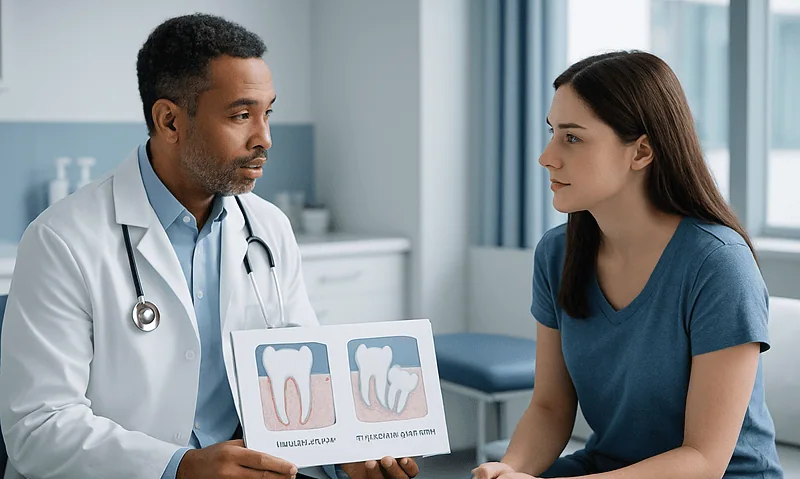
Impacted Canine vs Impacted Wisdom Tooth: Why One Is Often Saved and the Other Removed
An impacted canine is usually saved because it is a cornerstone tooth with the longest root in the mouth, guides the bite and anchors…
Do Root Canals Make You Sick? Old Myths About Treated Teeth, Corrected
No. Current evidence does not show that a properly treated root canal tooth causes cancer, heart disease, arthritis or other illnesses. The idea traces…
Do Teeth Need Straightening Before Porcelain Veneers? When Orthodontics Comes First
Not everyone needs braces before veneers, but many people benefit from straightening first. Porcelain veneers can mask mild rotations, small gaps, and uneven edges,…
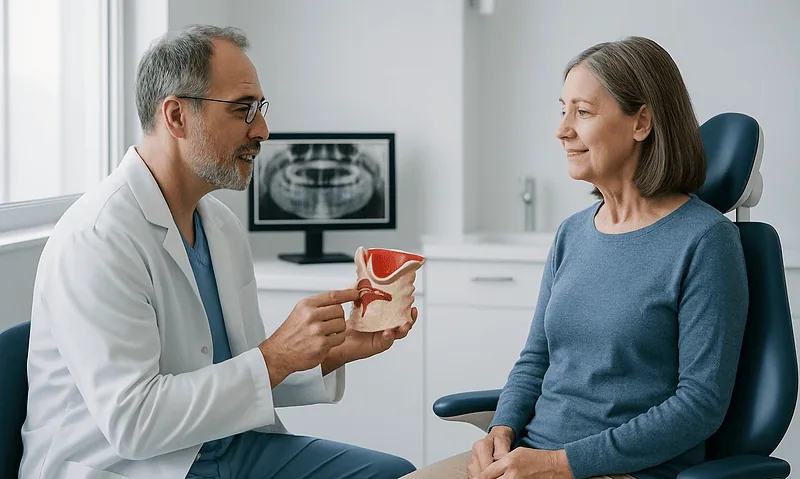
Sinus Lift: Why Upper-Jaw Implants Sometimes Need It, and How It Heals
A sinus lift is a surgical procedure that adds bone between the upper jaw and the maxillary sinus so a dental implant has enough…
How 3D Imaging Changes Oral and Maxillofacial Surgery Planning Around Nerves and Sinuses
3D imaging in oral surgery planning, most often a cone beam CT scan, gives surgeons a layered view of the jaw so they can…

Oil Pulling: The Ancient Practice vs the Actual Evidence
Oil pulling, swishing edible oil in the mouth for 10 to 20 minutes, may modestly reduce plaque and mouth bacteria, according to a handful…