

How to Support Someone Through Radiation Therapy: Rides, Meals and Watching for Fatigue
Key Takeaways
- External beam radiotherapy does not make a person radioactive, so hugging, sharing meals and sleeping in the same bed are safe throughout treatment.
- A standard course runs on weekdays for several consecutive weeks with sessions of roughly 10 to 30 minutes, which makes a shared ride rota the single most useful practical gift.
- Skin reactions typically begin two to three weeks into treatment and usually settle within two to four weeks after the final session, provided only team-approved products touch the area.
- Cancer-related fatigue builds over the course, often peaks in the final weeks and the fortnight after, and gentle daily movement eases it more reliably than extra rest.
- Side effects follow the beam: hair loss, soreness and swallowing or bowel problems occur only in the treated area, so ask the team which effects to expect for the specific site.
- A temperature of 38°C (100.4°F) or higher, new breathlessness, uncontrolled bleeding or broken weeping skin are reasons to contact the treatment team immediately rather than wait for the next appointment.
To support someone going through radiation, take on the repeatable jobs: a shared ride rota for daily weekday appointments, small frequent meals matched to the treated area, and a quiet eye on fatigue, which usually builds over the course and can last weeks after the last session. Report new fever, bleeding, breathing trouble or skin breakdown to the care team, and let them make every medical decision.
The first appointment card usually looks harmless. One line, a time, a department. Then the person you love turns it over and there are twenty more, five a week, each one needing a lift, a parking space and someone to wait. That is the moment most families realize that how to support someone going through radiation is less about grand gestures and more about logistics done kindly.
Radiotherapy is quiet treatment. There is no drip, no overnight stay for most people, and the sessions themselves are short. The strain arrives sideways: through the calendar, through a fridge full of food nobody feels like eating, and through a tiredness that creeps up in week three and refuses to leave.
This guide is written for the driver, the cook and the person who notices. It covers what actually happens in the treatment room, what fatigue really feels like, and how to tell an ordinary bad day from a call-the-team day.
What actually happens at a radiation appointment
It helps to know what your person is walking into, because the room is stranger than the word suggests. Radiation therapy uses high-energy beams, most often X-rays, to damage the DNA inside cancer cells so they stop dividing. Healthy cells in the path are affected too, but they repair themselves more efficiently, which is why treatment is spread over many small daily sessions rather than one large one.
Before the first treatment there is a planning visit, sometimes called simulation. A CT scan maps the area, the team decides on angles and beam strength, and tiny permanent dots or temporary marks are placed on the skin so the machine lines up the same way every day. For head and neck treatment a mesh mask is molded to the face to hold it still. Many people find that mask the hardest part of the whole course, so a companion who understands why it exists can genuinely take the edge off.
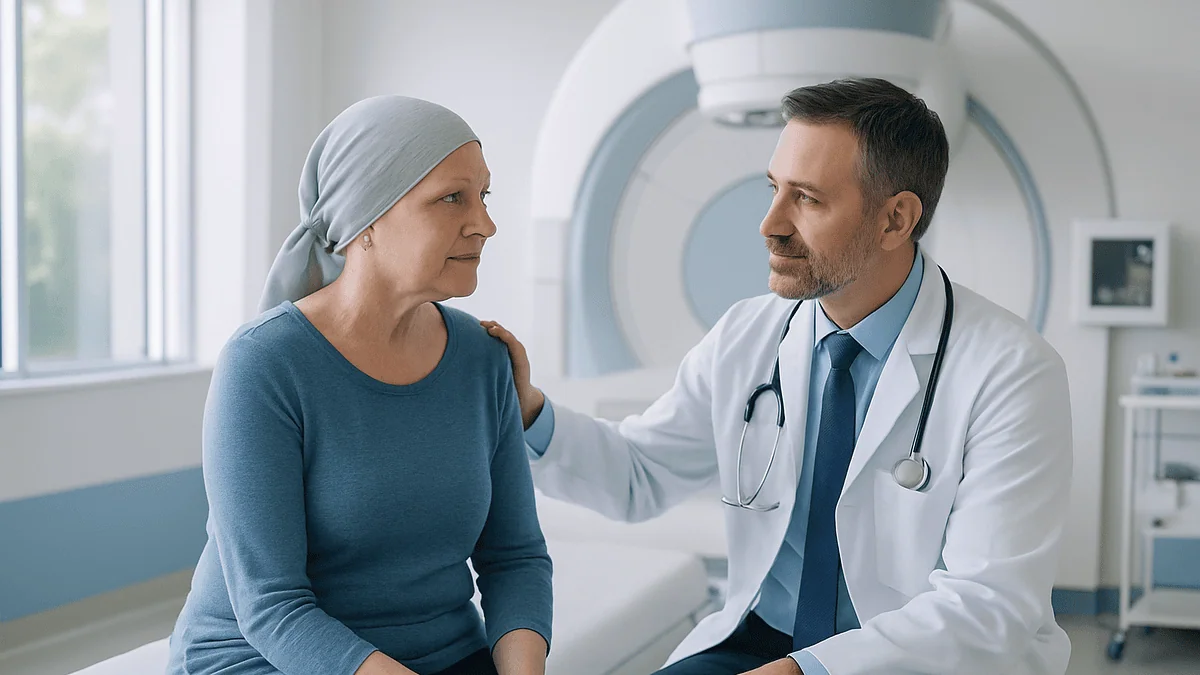
On treatment days the routine is brisk. The person lies on a table, the therapists position them using the marks, then step out to a control room where they can see and hear everything. The machine, a linear accelerator, moves around the body and delivers the beam. Nothing is felt during delivery. Mayo Clinic notes that a session usually takes about 10 to 30 minutes, with most of that time spent on positioning rather than the beam itself.
External beam treatment does not make a person radioactive. They can hug children, share a bed and hold a grandchild the same afternoon. Only internal forms of radiation, where a sealed source is placed inside the body, sometimes call for temporary precautions, and the team will explain those individually.
Who has radiation, and why the plan is not yours to change
Roughly half of people treated for cancer will have radiotherapy at some stage, according to the NHS, and the reasons vary widely. It may be the main treatment, it may follow surgery to reduce the chance of return, it may run alongside chemotherapy, or it may be given in a short course to ease pain or pressure from a tumor that cannot be removed. Knowing which of these applies to your person changes how you support them, because a five-day palliative course and a seven-week curative-intent course ask very different things of a household.
Some people are asked to wait. Radiation is usually delayed until a surgical wound has healed, until blood counts have recovered from chemotherapy, or until a pregnancy has ended, since the beam can harm a developing baby. Others are not offered it at all because the same area was treated before and the surrounding tissue has already absorbed as much as is considered safe. These decisions come from a radiation oncologist, a doctor who specializes in this treatment, working with physicists and therapists who calculate the plan to the millimeter.
The supporter’s job here is narrow but valuable: help the person understand their own plan and hold on to the details. Write down the number of sessions, the body area, the name of the treating team and the phone number for the department. Ask, with permission, whether you can sit in on the consent conversation. Then resist the urge to research alternatives on their behalf. Questions belong in the clinic room, not in a group chat, and the decision always rests with the person and their treating team.
How to support someone going through radiation: the first week sets the pattern
Week one is deceptively easy. Energy is normal, skin is normal, and the person may insist they can drive themselves. Take them at their word, and use that window to build the systems you will need in week four, when nobody has the bandwidth to organize anything.
Start with a single shared calendar that lists every session time, because departments often shift appointments and the person will not always remember to tell you. Agree on one point of contact who talks to the treatment team, so messages do not get garbled through three relatives. Decide now where spare copies of the appointment schedule and the department’s contact number live: fridge door, phone notes, glovebox.
Then ask a question that feels awkward and pays off for weeks: “What do you want me to do without asking, and what do you want me to always ask about first?” Some people want groceries to appear silently. Others feel erased when tasks are taken from them. The Mayo Clinic’s guidance for cancer caregivers is blunt about this: unwanted help can feel like a loss of control at a time when control is already scarce.
Keep the early practical support light and observable. Sit in the waiting room once so you know the layout. Learn where the accessible parking is. Notice how long the person takes to recover after a session in week one, because that is your baseline for spotting change later. The best support in the first week is quiet preparation, not a flurry of casseroles.
Rides to radiation: how to run the calendar without taking over
A typical external beam course runs on weekdays for several consecutive weeks, and the NHS describes daily sessions Monday to Friday with weekends off as the usual pattern. Multiply that by the round trip, the parking and the waiting room, and transport becomes the single largest practical burden of the whole treatment. It is also the easiest one to share.
Build a rota with more names than you need. Neighbors, colleagues and members of a faith community often want to help but do not know how; a specific request, “Can you drive Tuesday afternoons for the next four weeks?”, is far easier to say yes to than “let me know if you need anything.” Put the rota somewhere everyone can see it and edit it, and appoint one person to chase gaps.
Brief every driver on three things. First, the person may be fine on the way in and wiped out on the way home, especially later in the course, so no errands on the return leg. Second, some sites, particularly pelvic treatment, ask the person to arrive with a full or empty bladder, which means a rest stop at the wrong moment can undo the setup. Third, many radiation patients also take medicines that affect concentration, and the treating team may advise against driving; the driver should never pressure someone to take the wheel.
Ask the department whether they run their own transport service or can adjust appointment times to reduce rush-hour travel. Many will try to cluster times for people traveling far. Keep a small kit in the car: water, a plain snack, a light blanket, a phone charger. Small comforts matter more on day eighteen than on day one.
Meals during radiation: what helps, what to avoid
Food during radiotherapy is not one problem but several, and the right approach depends almost entirely on where the beam is aimed. Someone having treatment to the breast or prostate may eat normally throughout. Someone having treatment to the head and neck may find swallowing painful within two to three weeks, and someone having abdominal or pelvic treatment may develop loose stools or nausea. Ask early which side effects the team expects, then cook for that.
Some principles hold across the board. Small, frequent meals are easier than three large ones when appetite dips. Protein matters, because the body is repairing tissue daily; eggs, dairy, beans, fish and soft meats are useful, and the NHS advises against unsupervised weight loss during treatment even in people who would ordinarily welcome it. Hydration is quietly important, particularly with diarrhea or a sore mouth, and plain water, diluted juice and clear soups are usually tolerated.
For a sore mouth or throat, aim for soft, moist, lukewarm food: soups, smoothies, mashed vegetables with gravy, porridge, scrambled eggs. Skip anything sharp, salty, very hot, very spicy or acidic, and be aware that alcohol and smoking irritate treated tissue. For nausea, bland dry foods eaten slowly often sit better than rich ones, and strong cooking smells can be a trigger, so consider preparing meals elsewhere and bringing them chilled.
Two cautions. Do not start supplements or high-dose vitamins on your own initiative; the Mayo Clinic notes that some antioxidant supplements may interfere with how radiation works, and the team should approve anything new. And if your person is losing weight, struggling to swallow or eating very little for more than a couple of days, ask for a referral to the oncology dietitian rather than trying to solve it in the kitchen.
What does radiation fatigue feel like?
People expect tiredness. What they get is something else, and supporters who understand the difference stop saying the wrong things. Cancer-related fatigue, as the Cleveland Clinic and NHS both describe it, is a heavy, whole-body exhaustion that is out of proportion to activity and does not lift after a night’s sleep. Someone can wake from nine hours feeling as though they have not been to bed.
Patients describe it in physical terms: limbs that feel weighted, a fog that makes a simple phone call feel like a task, a sudden need to sit down halfway through a shower. It has a mental side too. Concentration fails, patience runs short, and reading a page twice without absorbing it becomes normal. Some notice it most in the late afternoon; others hit a wall soon after each session.
The pattern over a course is fairly predictable. Fatigue tends to be mild or absent in the first week, builds gradually, and is often at its worst in the final weeks of treatment and the fortnight after. The Cleveland Clinic notes it can persist for weeks to months after the last session before slowly improving. It is not a sign the treatment is failing, and it is not laziness. The body is spending energy repairing tissue every day, and daily travel, disrupted routines, poor sleep and worry all draw on the same account.
Why this matters to you: fatigue is the side effect most likely to be hidden. Skin reactions are visible. A sore throat is audible. Exhaustion, in a proud person, gets disguised as “I’m fine” until a cup gets dropped. The supporter who knows what to look for can step in before that.
Watching for fatigue: how to support someone going through radiation when energy drops
Fatigue is where a companion earns their place, because the person living inside it cannot always see it clearly. Keep a light, unobtrusive log: how long the afternoon nap runs, whether they are skipping meals, whether they are still climbing the stairs or sleeping downstairs. Compare against your week-one baseline rather than against how they were before diagnosis. A gradual slide is expected; a sudden drop over a day or two is worth a call to the team, because it can point to anemia, dehydration, infection or low mood, all of which have their own treatments.
What actually helps is counterintuitive. The strongest evidence for easing cancer-related fatigue, summarized by the Mayo Clinic and NHS, is gentle regular movement rather than rest. A short walk most days, even ten minutes around the block, tends to leave people feeling less drained than a day on the sofa. Offer to walk with them, and let them set the pace and the distance.
Protect sleep at night by keeping daytime naps short rather than letting them stretch into hours, which blurs the day-night rhythm and makes the following night worse. Help them ration energy: do the important thing, whether that is a grandchild’s visit or a phone call with a friend, at the time of day they feel best, and let low-value tasks go entirely.
Take the invisible load without ceremony. Answer the door, field the calls, run the laundry, keep the calendar. And watch mood alongside energy. Persistent low spirits, loss of interest in things they usually enjoy, or talk of being a burden should go to the treating team, who can involve psychological support. Fatigue and depression overlap, and both deserve attention.
Do and don'ts after radiotherapy: skin, sun and daily care
The treated patch of skin is the part of radiotherapy most people can see, and the part most likely to prompt well-meaning but unhelpful advice from relatives. The NHS describes skin changes typically starting around two to three weeks into a course: redness or darkening depending on skin tone, dryness, itching, and sometimes soreness, peeling or, in skin folds, moist breakdown. Reactions usually continue for a week or two after the final session before settling over the following two to four weeks.
The do list is short and specific. Wash the area gently with lukewarm water and a mild unperfumed soap, pat rather than rub dry, and wear loose soft clothing that does not chafe. Use only the moisturizer or cream the treatment team has approved, applied as they direct, and avoid putting anything on the skin in the hours before a session unless told otherwise. Keep the area out of the sun during treatment and for at least a year afterward, then use high-factor sunscreen indefinitely, because treated skin stays more sensitive.
The don’ts matter just as much. No hot water bottles, heat pads or ice packs on the area. No adhesive tape or plasters over it. No shaving with a blade, no wax, no perfumed products, no swimming in chlorinated pools while the skin is reacting. And no home remedies from the internet, however natural they sound; some can irritate broken skin or interfere with treatment.
A supporter can help by checking laundry detergent is mild, moving heavy bag straps off the treated shoulder, and gently noticing when the skin looks different. Cracked, weeping or bleeding skin should be shown to the team, who can supply appropriate dressings.
Common side effects by treatment area, and what a helper can do
Side effects follow the beam. Knowing the likely pattern for your person’s treatment site lets you prepare rather than react. The table below summarizes the NHS and Mayo Clinic descriptions of what commonly appears; individual experience varies, and the treating team’s own list takes precedence.
| Treatment area | Common effects during the course | Practical help that fits |
|---|---|---|
| Head and neck | Sore mouth and throat, dry mouth, taste changes, thick saliva, difficulty swallowing | Soft moist meals, a water bottle everywhere, dental-team liaison, patience with speech |
| Breast or chest wall | Skin redness and soreness, especially in folds, arm stiffness, fatigue | Loose front-fastening tops, help lifting, reminders for arm exercises given by the team |
| Chest or lung | Cough, sore throat on swallowing, breathlessness, fatigue | Slower walks, extra pillows, prompt reporting of new or worsening breathlessness |
| Abdomen and pelvis | Nausea, diarrhea, cramping, bladder urgency or stinging, fatigue | Bland small meals, hydration, bathroom-first route planning, unhurried travel |
| Brain | Hair loss in the treated area, headache, nausea, fatigue, short-term memory lapses | Written reminders, soft head coverings, calm quiet spaces, no pressure to remember |
| Bone (short palliative courses) | Temporary pain flare, tiredness | Comfortable positioning, help with mobility, close contact with the team about pain |
Two points across all rows. Fatigue appears in every column because it is nearly universal, so plan for it whatever the site. And hair loss from radiation occurs only in the treated area, unlike chemotherapy, so someone having pelvic treatment will keep the hair on their head.
Most of these effects are expected and managed with medicines and advice from the team, which is why reporting them early matters. Anti-sickness and pain-relief options exist for nearly every item listed; the point of support is to make sure the person actually mentions the problem rather than enduring it quietly.
What the weeks during and after treatment usually look like
Radiotherapy has a shape, and knowing it prevents two common mistakes: panicking when side effects arrive on schedule, and relaxing too early when the last session ends. The timeline below reflects typical NHS and Mayo Clinic descriptions for a multi-week external beam course; short courses compress it, and individuals vary.
Weeks one to two. Little to feel beyond the disruption of daily travel. Skin looks normal. Some people are almost disappointed that nothing seems to be happening. This is the time to lock in rotas and habits.
Weeks two to four. Effects begin. Skin starts to redden or darken, mouth or bowel symptoms appear depending on the site, and fatigue becomes noticeable by mid-afternoon. Appetite may dip. Weekly review appointments with the team become useful, so encourage the person to keep a running list of symptoms to raise.
Final weeks. Side effects tend to reach their peak. This is where the household needs the most cover, and where fatigue can feel relentless. The finish line is close, which helps morale, but do not expect an immediate rebound.
The first two weeks after. Symptoms often continue and can briefly worsen, because the effect of radiation accumulates and tissue is still reacting. Many people find this stretch the hardest emotionally: the routine and the daily contact with staff have vanished, and friends assume it is over. Keep the meal deliveries and check-ins going.
Weeks three to eight after. Skin settles, mouth and bowel effects ease, and energy begins a slow climb. The Cleveland Clinic notes that fatigue may take months to fully resolve, so a gradual return to work or exercise, guided by the team, is normal rather than a sign of weakness.
Emotional support: what to say, what to skip, and looking after yourself
Radiotherapy can be lonelier than it looks. The person spends a few minutes each day alone under a machine in a lead-lined room, surrounded by staff who are kind but busy, then goes home to a life that expects them to carry on. Partners often ask what the single most useful thing is. Most people who have been through it give a version of the same answer: be there, and do not make me manage your feelings too.
Listen more than you reassure. “You’ll be fine” closes a conversation; “How was today, really?” opens one. Let them be frightened or irritable without rushing to fix it. Sit in the waiting room when they want company, and stay in the car when they want quiet. Keep normal life in the picture: a favorite program, a walk to the same bench, the ordinary gossip they are missing. Illness shrinks a person’s world, and you can hold the door open to the rest of it.
Some things are better skipped. Stories about someone else’s treatment, comparisons with what a relative went through, unrequested research, and any sentence beginning “at least.” The Mayo Clinic’s caregiver guidance also warns against taking over decisions; ask before you act.
Look after yourself with the same seriousness. Caregiver strain is real and well documented, and an exhausted supporter helps nobody. Accept offers, share the rota, keep one activity of your own each week, and say honestly when you are struggling. If either of you notices persistent low mood, sleeplessness or a sense of dread that will not shift, ask the treatment team about counseling or support groups. Many departments have a clinical nurse specialist or social worker whose role includes exactly this.
Gifts for someone going through radiation: what people actually use
The instinct is flowers or a hamper. Both are lovely and both tend to sit untouched, because a person with a sore mouth cannot eat chocolate and a person with fatigue does not want to change vase water. The gifts that get used are the ones that solve a small daily irritation of treatment.
Think about the journey first. A soft neck pillow and a light blanket for the car and the waiting room. A large insulated water bottle, since dry mouth and hydration are constant themes. A phone charger or power bank for long waits. A tote bag that stays packed by the door with tissues, lip balm the team has approved, a book, and the appointment schedule.
Think about the skin next. Loose, soft, front-opening clothing in natural fabrics matters enormously for chest, breast and neck treatment, when anything that rubs the treated area becomes unbearable. Cotton camisoles, soft scarves for a treated neck or a partly shaved head, slip-on shoes for the days when bending down feels like too much.
Think about the evenings. Audiobooks or podcast subscriptions suit eyes and brains too tired to read. A streaming gift, a puzzle book, a warm throw for the sofa. For someone with taste changes, ask before buying food; plain crackers, mild soups or lemon drops (if the team has no objection) sometimes suit better than treats.
Then there are gifts of time, which most people rank highest of all. A card offering three specific Thursday-morning lifts. A voucher for a cleaning service. A promise to walk the dog every day for the last two weeks of treatment. An offer to be the person who updates the wider family, so the patient does not repeat the same news ten times. Ask what would help, then do precisely that.
What people often get wrong about supporting someone through radiation
“They’ll be radioactive, so keep the kids away.” False for external beam treatment, which is the type most people have. The beam is switched off when the person leaves the table and nothing remains in the body. The NHS and Mayo Clinic are clear that hugging, sharing meals and sleeping in the same bed are all safe. Some internal radiation treatments call for brief precautions, and the team will say so explicitly.
“Radiation is the easy one.” Compared with chemotherapy, radiotherapy is often less dramatic day to day, but the cumulative fatigue and the local side effects can be severe, and the daily travel is grinding. Treating it as minor leaves the person under-supported precisely when they need cover.
“Rest is the answer to fatigue.” Bed rest tends to make cancer-related fatigue worse. Gentle daily activity is what the evidence supports, alongside good sleep habits and treatment of any contributing causes such as anemia or low mood.
“Once the last session is done, it’s over.” Side effects commonly peak in the fortnight after treatment ends and fatigue can linger for months. This is the period when support most often falls away and is most needed.
“A natural cream will soothe the skin.” Only products approved by the team belong on treated skin. Some oils, powders and herbal preparations irritate broken skin or leave residues that matter for treatment.
“Losing a bit of weight will do them good.” Unplanned weight loss during radiotherapy can affect how well the person tolerates treatment and, for head and neck sites, whether the mask still fits. Weight is something the team monitors for a reason.
“They will lose all their hair.” Hair loss occurs only where the beam passes. Treatment to the pelvis or breast does not affect the hair on the head.
Questions to ask the care team, with the person's permission
A supporter with a notebook in the consultation room is worth a great deal, provided the person wants you there and you remember whose appointment it is. Agree beforehand what they would like asked, and let them lead. These are the questions families most often wish they had raised earlier.
- How many sessions are planned, over how many weeks, and how long should we allow for each visit including waiting?
- Which side effects do you expect for this treatment area, roughly when should they start, and how long after the last session do they usually last?
- Are there any preparation rules for each session, such as bladder filling, fasting or avoiding creams beforehand?
- Which skin products are approved, and what should we do if the skin cracks or weeps?
- Is it safe for them to drive during treatment, and is there transport help or flexibility on appointment times?
- What should they eat or avoid, and when should we ask for a dietitian?
- Which symptoms are expected, which should we phone about within office hours, and which mean calling the emergency line straight away?
- What is the out-of-hours number, and who answers it?
- Is exercise encouraged, and what kind?
- Are there any supplements, medicines or herbal products they should avoid during the course?
- Will there be a review appointment during treatment, and who is the named contact between visits?
- What follow-up is planned after the final session, and when will we know how the treatment has gone?
- Is there counseling, a support group or a social worker attached to the department?
Write the answers down, including names. In week five nobody will remember what the physicist said in week one, and a written record saves repeated calls. Where the team gives numbers, timeframes or instructions, those override anything in this article.
When to call your doctor
Most of what happens during radiotherapy is expected, uncomfortable and manageable, and the team would rather hear about a problem early than late. Each department gives its own contact instructions, usually a daytime number and a 24-hour line; keep both where every helper can find them. As a rule, expected side effects that are getting worse despite the measures the team suggested belong in a daytime call. The signs below, drawn from NHS and Mayo Clinic guidance, warrant contacting the team or emergency services without waiting.
- A temperature of 38°C (100.4°F) or higher, or shivering and feeling unwell even without a measured fever, particularly if the person is also having chemotherapy, since infection can progress quickly when blood counts are low.
- New or worsening breathlessness, chest pain, or coughing up blood.
- Bleeding that does not stop, blood in urine or stool, or vomiting blood.
- Inability to keep fluids down for more than a day, signs of dehydration such as very little urine, dizziness on standing, or confusion.
- Treated skin that has broken open, is weeping heavily, smells unpleasant, or shows spreading redness and heat.
- Sudden severe pain, especially in the back or neck, or new weakness or numbness in the legs.
- A sudden drop in energy, alertness or ability to walk, rather than the gradual slide of ordinary fatigue.
- Swelling, pain or warmth in one calf, which can signal a blood clot.
- Inability to swallow saliva, or a sore mouth so severe that eating and drinking have stopped.
- Persistent low mood, hopelessness or any talk of not wanting to go on, which is a medical matter and deserves the same urgency as a physical symptom.
When in doubt, call. The supporter’s role is to make the call easy: have the schedule, the list of current medicines and the treatment site written down, and describe what has changed and since when. Every decision about what to do next belongs to the treating team.
Frequently asked questions
What does radiation fatigue feel like?
It feels like a heavy, whole-body exhaustion that sleep does not fix, often with foggy concentration and short patience. People describe weighted limbs, needing to sit down mid-task and a wall of tiredness in the afternoon or after each session. It usually builds over the course, peaks near the end and can linger for weeks to months afterward before gradually easing.
What is a good gift to give someone going through radiation?
The most used gifts solve a daily irritation of treatment: a large water bottle, a neck pillow and blanket for the car, soft loose front-opening clothing, audiobooks for tired eyes, and above all specific offers of time such as named lifts or dog walks. Check before giving food, since taste changes and sore mouths are common, and avoid skin products unless the team has approved them.
What are the do and don'ts after radiotherapy?
Do keep treated skin clean with lukewarm water and mild unperfumed soap, wear loose soft clothing, stay active in short walks, eat small frequent protein-rich meals and keep the area out of the sun. Don’t use heat pads, ice, adhesive tape, perfumed products or unapproved creams on the area, don’t swim in chlorinated water while skin is reacting, and don’t stop reporting symptoms once sessions end.
What do people wish they knew before radiation?
Most commonly, that the daily travel is the hardest part, that side effects arrive on a delay around week two or three, and that the fortnight after the last session can be worse than the last week of treatment. Many also wish they had asked earlier about transport help, dietitian referral and the out-of-hours number, and had set up a ride rota before they needed it.
Is it safe to be around someone having radiation therapy?
Yes, for external beam radiotherapy, which is the most common type. The beam stops when the machine is switched off and nothing radioactive remains in the body, so children, pregnant relatives and partners can share space normally. Some internal treatments, where a sealed source is placed in the body, involve brief precautions, and the treating team will explain those clearly if they apply.
How long does radiation therapy take each day?
Each session usually lasts about 10 to 30 minutes, with most of that spent positioning the person precisely on the table; the beam itself runs for only a few minutes. Add check-in, waiting and travel, and a realistic daily commitment is often one to two hours. Planning visits at the start take longer because scans and skin marks are done then.
What should someone eat during radiation treatment?
It depends on the treated area, so ask the team what to expect. In general, small frequent meals with plenty of protein and fluids help, and unplanned weight loss should be avoided. For a sore mouth or throat, soft moist lukewarm foods work best and sharp, salty, spicy or acidic items should be skipped. Any supplement should be cleared with the team first.
How can a partner best support a spouse through radiotherapy?
Ask what they want done without asking and what they want to be consulted on, then respect the answer. Take on the repeatable jobs such as calendar, transport and meals, listen more than you reassure, keep normal life in the picture, and watch quietly for changes in energy, mood and skin. Look after your own rest and accept help, because caregiver exhaustion is common.
Can someone drive themselves to radiation appointments?
Many people can early in a course, but fatigue, nausea and some medicines can affect safe driving later on, so ask the treating team directly. Even where driving is allowed, a companion on the return trip is sensible in the final weeks, when tiredness after a session can be sudden. Departments can often advise on transport services or adjust appointment times.
When should we call the treatment team during radiotherapy?
Call the same day for a temperature of 38°C (100.4°F) or higher, new breathlessness, bleeding that will not stop, inability to keep fluids down, skin that has broken open or is weeping, sudden severe pain or weakness, a swollen painful calf, or a sudden collapse in energy. Expected side effects that are steadily worsening belong in a daytime call. When unsure, phone.
References
- NHS: Radiotherapy, side effects
- NHS: Radiotherapy, what happens
- Cleveland Clinic: Cancer fatigue
- MedlinePlus: Radiation therapy
This article is for general information only and is not a substitute for professional medical advice. Please consult a qualified doctor about your individual situation.

More from the Blog
How Doctors Choose Between HDR and LDR Brachytherapy: Temporary Source or Permanent Seeds
Doctors choose between HDR and LDR brachytherapy based on the cancer type and size, how the tumor sits next to healthy organs, the patient's…
Immunotherapy Cycles Explained: Why Infusions Repeat Every Few Weeks and for How Long
Immunotherapy is usually given in cycles because the drugs are cleared from the body over days to weeks and the immune response they trigger…

Recovery After Melanoma Surgery: Stitches, Skin Grafts and Getting Back to Activity
Recovery after melanoma surgery usually takes about one to three weeks for a wound closed with stitches, and several weeks longer when a skin…
Who Sits on a Head Cancer Tumor Board and How the Group Reaches a Recommendation
A head and neck cancer tumor board is a scheduled meeting where surgeons, radiation oncologists, medical oncologists, radiologists, pathologists, and supportive specialists review one…
How CyberKnife Tracks a Moving Tumor: Robotic Arm, Real-Time Imaging and Breathing
CyberKnife tracks tumor movement by pairing a small linear accelerator on a robotic arm with two ceiling-mounted X-ray cameras that repeatedly image the patient…
Questions to Ask Before HIPEC: Second Opinions, Expected Benefits and the Recovery Plan
Before HIPEC, ask your care team how complete they expect tumor removal to be, what evidence supports HIPEC for your specific cancer type, which…