

How Treatment Differs Between Acute and Chronic Lymphocytic Leukemia

Key Takeaways
- ALL fills the marrow with immature blasts over weeks, while CLL accumulates mature-looking B cells over years, and that difference drives everything about how each is treated.
- ALL treatment runs through induction, consolidation and maintenance phases, with the NHS putting maintenance alone at around two years.
- Early-stage CLL without symptoms is monitored rather than treated, because trials of early treatment showed no benefit over waiting.
- CLL treatment is triggered by falling blood counts, bulky or fast-growing nodes, rapid lymphocyte doubling, or persistent symptoms, not by the diagnosis itself.
- Modern CLL therapy relies on BTK inhibitors, BCL-2 inhibitors and anti-CD20 antibodies, which target specific survival signals rather than all dividing cells.
- Fever during treatment for either disease is handled as an emergency, because infection can progress within hours when white cell counts are low.
Acute lymphocytic leukemia (ALL) is treated urgently with intensive, phased chemotherapy and targeted drugs that usually run for about two to three years, often starting in hospital. Chronic lymphocytic leukemia (CLL) grows slowly, so early-stage disease is commonly monitored without treatment, and when therapy is needed it is usually outpatient targeted medicine. The treating hematology team decides timing and approach.
Two people sit in the same hematology waiting room with the same word printed on their paperwork: leukemia. One of them will be admitted this afternoon, with a central line placed and the first infusion running before dinner. The other will be told to come back in four months for a blood test, and otherwise to go home and live normally.
That gap is not a lottery of good and bad doctors. It reflects a real biological divide, and understanding acute vs chronic lymphocytic leukemia treatment starts with it. Acute lymphocytic leukemia behaves like a house fire. Chronic lymphocytic leukemia behaves more like damp in the walls: real, worth watching, sometimes needing serious work, but rarely an emergency on day one.
This explainer walks through why the two are handled so differently, what each pathway actually involves, and which questions are worth bringing to your care team.
Acute vs chronic lymphocytic leukemia treatment: why one word hides two different diseases
Both conditions start in lymphocytes, the white blood cells that form the memory and targeting arm of the immune system. That shared origin is where the similarity ends.
In acute lymphocytic leukemia, also called acute lymphoblastic leukemia or ALL, the bone marrow (the spongy tissue inside bones that makes blood) fills with immature cells called blasts. Blasts cannot do a white cell’s job, and they crowd out the red cells and platelets the body needs. Symptoms tend to appear over weeks. The NHS describes ALL as the most common leukemia in children, although adults get it too.
Chronic lymphocytic leukemia, or CLL, involves mature-looking B lymphocytes that live far longer than they should and accumulate slowly in blood, marrow, lymph nodes and spleen. Many people are diagnosed from a routine blood test before they notice anything. The NHS notes CLL mainly affects people over 60 and is rare under 40.
Treatment follows biology. A disease that can overwhelm the marrow in weeks is treated promptly and intensively, with the aim of pushing it into remission, meaning no detectable disease on standard tests. A disease that may sit quietly for years is managed on a different clock: observe first, treat when the disease starts causing problems, and lean on targeted medicines that are usually taken at home.
Here is the opinion this article will keep returning to: the single most useful thing a newly diagnosed person can learn is which of these two diseases they have, because almost every other question, from urgency to side effects to how long treatment lasts, hangs on that answer.
What is the difference between ALL and CLL at the cell level?
Under a microscope, ALL blasts look young and undifferentiated, like cells that stopped maturing. CLL cells look almost normal, which is exactly why they slipped past the body’s quality control.
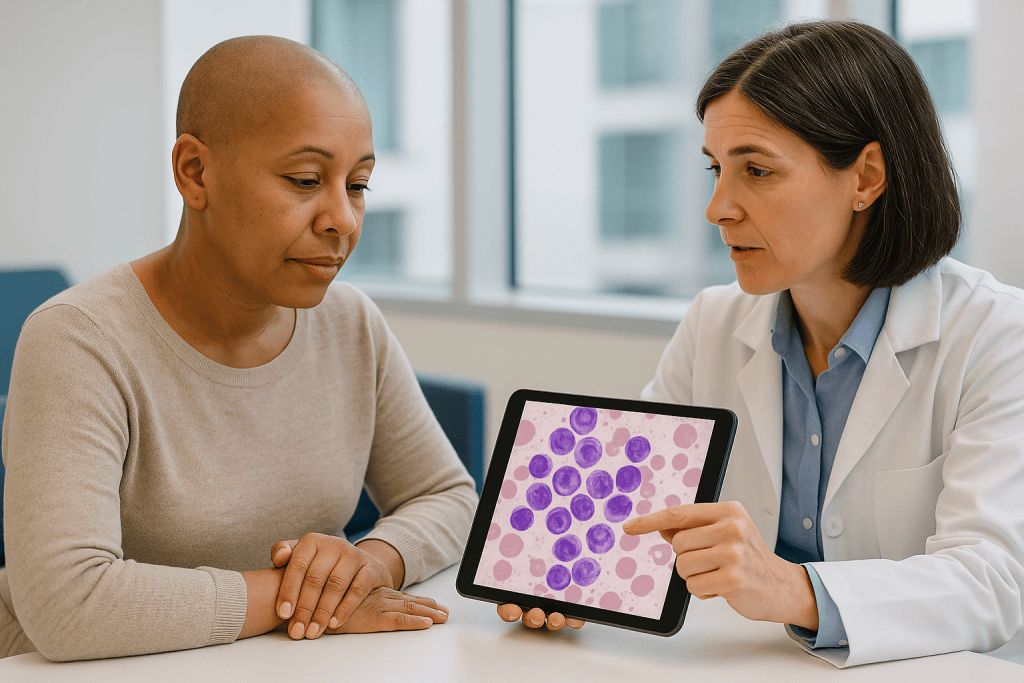
Laboratories confirm the diagnosis with immunophenotyping, a test that reads the protein markers on the cell surface to establish the cell’s identity. For CLL, a specific pattern of markers on blood cells is often enough to confirm the diagnosis without a marrow sample. For ALL, a bone marrow biopsy is standard, and the sample is also checked for genetic changes that steer treatment.
Two genetic findings matter more than most:
- In ALL, the Philadelphia chromosome is a swap of material between two chromosomes that creates an abnormal growth-signaling protein. Its presence changes the drug plan, because tyrosine kinase inhibitors (medicines that block that specific signal) are added to chemotherapy.
- In CLL, a deletion on chromosome 17 or a change in the TP53 gene marks disease that responds poorly to traditional chemotherapy. The NIH’s PDQ summary notes these findings help guide the choice of targeted therapy.
Teams also check how far the disease has spread. ALL is not staged in the usual sense; the key questions are the subtype, whether the central nervous system is involved, and how the disease responds early. CLL uses the Rai or Binet staging systems, which count how many lymph node areas are involved and whether red cell or platelet counts have dropped.
Every one of these results feeds the treatment decision, which is why the first appointments are heavy on tests and light on firm plans. That is normal, not a sign of indecision.
How does acute lymphocytic leukemia treatment actually work?
Picture the marrow as a factory that has been taken over. ALL treatment aims to clear the occupiers fast enough that normal production can restart, then keep clearing stragglers for long enough that they do not return.
The main tool is combination chemotherapy: several drugs with different mechanisms given together, so that cells resistant to one are caught by another. Corticosteroids, which are unusually toxic to lymphoblasts, are a standard part of the mix. For Philadelphia-chromosome-positive disease, a tyrosine kinase inhibitor is layered on top.
Leukemia cells can hide in the fluid around the brain and spinal cord, where most intravenous drugs do not reach. Treatment therefore includes central nervous system-directed therapy, usually chemotherapy injected into the spinal fluid during a lumbar puncture (intrathecal chemotherapy). This is prevention as much as treatment, and the NIH’s PDQ summary lists it as a routine component.
Modern plans are risk-adapted. Age, genetics, and especially the early response are used to decide intensity. Measurable residual disease (MRD) testing counts leukemia cells far below what a microscope can see, and a result that stays positive may move someone toward more intensive options, including a stem cell transplant from a donor (allogeneic transplant), which replaces the marrow with a healthy immune system that can recognize residual leukemia.
Newer immune-based approaches exist for disease that relapses or resists chemotherapy. CAR T-cell therapy re-engineers a person’s own T cells to recognize a marker on leukemia cells, and bispecific antibodies physically link T cells to leukemia cells. Which of these is appropriate, and when, is a specialist decision that depends on the individual case.
What are the ALL treatment phases, and how long does each take?
ALL treatment phases follow a recognizable shape across guidelines, even though the drugs and intensity vary by protocol.
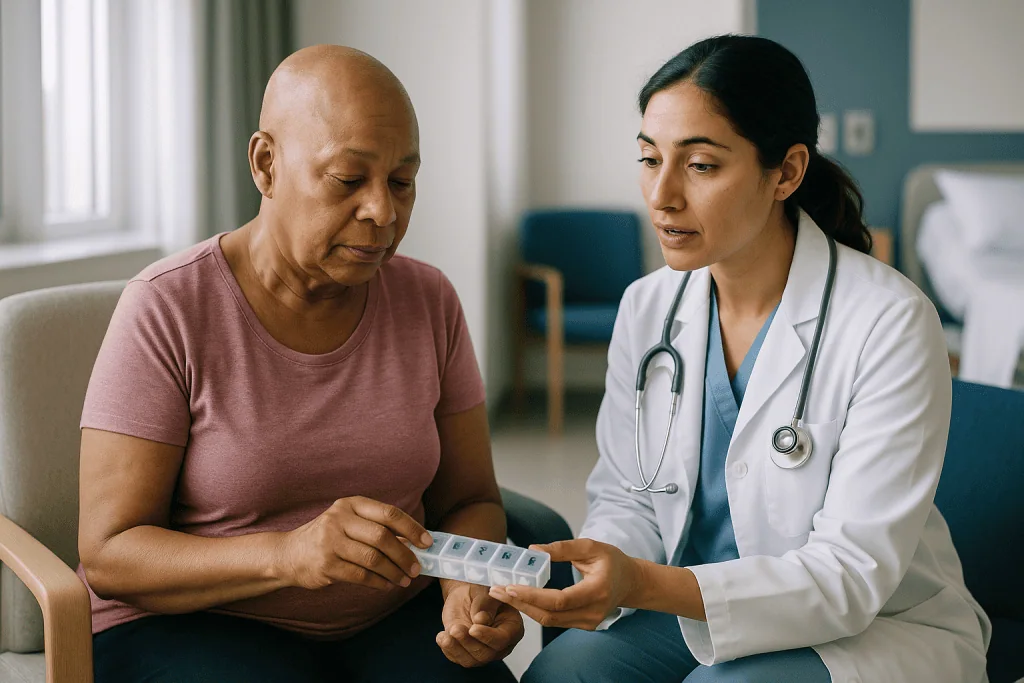
Induction comes first. The goal is remission, and this phase typically lasts a matter of weeks, much of it in hospital because blood counts fall sharply and infection risk rises. The NHS describes this as the initial stage where most people are admitted.
Consolidation (sometimes called intensification) follows remission. Several months of further chemotherapy target the cells that survived induction, with intrathecal treatment continuing. Some people have a transplant during this window if their risk profile calls for it.
Maintenance is the long tail: lower-intensity treatment, often oral, with periodic clinic visits. The NHS puts this phase at around two years, which is why the whole course for ALL is commonly described as lasting two to three years.
The length surprises people. A common question is why treatment continues after tests show no disease. The honest answer is that relapse rates were higher in historical protocols that stopped early, and maintenance is designed to clear cells below the detection threshold.
Children and adults follow different protocols, and pediatric-style regimens are increasingly adapted for younger adults. For families, the practical reality is a long relationship with a treatment center, with hospital stays front-loaded and visits thinning out over time. Fertility preservation, school or work planning, and emotional support are usually raised at the start, and it is reasonable to ask about them if they have not been.
Who is treated for CLL right away, and who is asked to wait?
The most counterintuitive fact in acute vs chronic lymphocytic leukemia treatment is this: a confirmed cancer diagnosis in CLL does not, by itself, trigger treatment.
Guidelines from the NHS and the NIH’s PDQ summary describe a monitoring-first approach for early-stage CLL that is not causing symptoms. The reasoning is evidence-based rather than cautious by habit: trials of treating early-stage CLL with chemotherapy showed no advantage over waiting, and treatment carries its own risks. Whether newer targeted drugs change that calculation for high-risk early disease is an active research question, not a settled one.
Treatment is usually recommended when the disease becomes “active,” which clinicians define using criteria such as:
- Falling red cell or platelet counts caused by marrow crowding.
- Lymph nodes or spleen that are large, growing quickly, or causing discomfort.
- A rapid rise in the lymphocyte count over months.
- Persistent symptoms such as drenching night sweats, unexplained weight loss, or profound fatigue that interferes with daily life.
- Immune complications, such as the immune system attacking the body’s own red cells or platelets, that do not respond to standard measures.
Stage alone, a high white cell count alone, or anxiety alone are not treatment triggers under these guidelines, although anxiety is real and deserves support.
People with advanced-stage disease at diagnosis, or with symptoms from the outset, are usually offered treatment sooner. Genetic risk markers shape which treatment, more than whether to start. The decision always rests with the treating hematologist, who weighs the blood trend, the examination, other health conditions, and what matters most to the person in front of them.
What does CLL watch and wait actually involve?
“Watch and wait” sounds passive. In practice it is structured surveillance, and the better clinics call it active monitoring for that reason.
A typical pattern is a clinic visit with a blood count and a physical examination every few months at first, stretching out if the disease stays stable. The NHS describes regular check-ups during this period, with treatment started if tests or symptoms change. Some people stay on monitoring for years; others progress within months. The pace is hard to predict at the first visit, which is why trends over several tests matter more than any single number.
Monitoring also includes things that are easy to overlook:
- Vaccinations. CLL weakens the immune system even before treatment, so inactivated vaccines such as influenza, pneumococcal and COVID-19 vaccines are generally recommended. Live vaccines are usually avoided; your team will advise.
- Infection awareness. Chest infections, sinus infections and shingles are more common. Prompt reporting of fevers matters more than it would for someone without CLL.
- Skin checks. People with CLL have a higher risk of skin cancers, so sun protection and reporting new skin changes are sensible.
- A second-cancer and heart-health conversation, since most people with CLL are older and other conditions share the stage.
The hardest part is psychological. Living with a diagnosis you are told not to treat can feel like being asked to ignore an alarm. Evidence does not support that worry: starting earlier does not improve outcomes in the trials that have tested it. If the waiting itself becomes the illness, say so; psycho-oncology support is a legitimate part of the care plan.
How does CLL targeted therapy work when treatment is needed?
Chemotherapy once dominated CLL care. Today CLL targeted therapy, meaning medicines that interfere with specific survival signals in CLL cells rather than attacking all dividing cells, is the usual first choice in guidelines, with chemoimmunotherapy reserved for selected situations.
Three classes do most of the work:
- BTK inhibitors block Bruton tyrosine kinase, an enzyme inside B cells that relays the “stay alive and multiply” signal from the cell surface. Cut the relay and CLL cells lose their hold on lymph nodes and gradually die. These are oral medicines, often taken continuously.
- BCL-2 inhibitors target a protein that CLL cells overproduce to block their own programmed death. Removing that block lets the cell’s built-in self-destruct sequence run. Because cell death can be rapid at the start, treatment begins under close monitoring, since a sudden breakdown of many cells can strain the kidneys and disturb blood chemistry.
- Anti-CD20 monoclonal antibodies are laboratory-made antibodies that bind a protein on the surface of B cells and flag them for destruction by the immune system. They are given by infusion and are often combined with one of the oral classes.
Each class has a characteristic side-effect profile. BTK inhibitors can increase bruising and bleeding tendency and, in some people, affect heart rhythm. BCL-2 inhibitors can lower neutrophil counts. Antibody infusions can cause reactions during the first doses. None of this is a reason to avoid them; it is the reason the choice is individualized.
The prescribing clinician matches the class to the person’s genetics, heart and kidney health, other medicines, and preference for a fixed course versus ongoing treatment. Never adjust or stop any of these medicines on your own; some lose effect or cause a rebound of symptoms if interrupted.
Acute vs chronic lymphocytic leukemia treatment at a glance
Seeing the two pathways side by side makes the logic obvious. The table summarizes typical patterns described in NHS, Mayo Clinic and NIH patient guidance; individual plans vary.
| Question | Acute lymphocytic leukemia (ALL) | Chronic lymphocytic leukemia (CLL) |
|---|---|---|
| Who is most often affected | Children most commonly; adults of any age | Mainly adults over 60 |
| How fast it develops | Days to weeks | Months to years |
| Treatment urgency | Starts promptly after diagnosis | Often monitored first; treated when active |
| Main treatment type | Combination chemotherapy, steroids, CNS-directed therapy; targeted drugs for some subtypes | Targeted oral or infused therapy; chemoimmunotherapy in selected cases |
| Where treatment happens | Largely inpatient at first, then outpatient | Mostly outpatient |
| Typical length | Around 2–3 years in phases | Fixed course of around 1–2 years, or continuous therapy |
| Transplant or cell therapy | Used for high-risk or relapsed disease | Rarely; reserved for specific situations |
| Treatment goal language | Deep remission and long-term control | Control of symptoms and counts; remission when possible |
Two points deserve a second look. First, “typical length” for ALL is long, but it is front-loaded; the final year is usually much lighter. Second, CLL’s choice between a fixed course and continuous treatment is genuinely open in current guidelines, so “how long will I be on this” is a question with more than one defensible answer, and it is worth discussing early.
What do the first weeks of treatment usually look like?
The opening weeks differ as much as the diseases do.
For ALL, the first weeks are typically spent in hospital. Blood counts drop as chemotherapy clears the marrow, and the team watches for fever, bleeding and infection while giving transfusions and antibiotics as needed. Steroids can change mood, sleep and appetite noticeably. Hair loss, mouth soreness and nausea are common, and anti-nausea medicines are routine. A lumbar puncture for intrathecal chemotherapy usually happens early. Toward the end of induction, a repeat marrow test checks for remission, and the result shapes the next phase. Many people describe this stretch as the hardest part physically, with life gradually widening again through consolidation.
For CLL starting targeted therapy, the first weeks are mostly outpatient. Blood tests are frequent at the start, particularly for BCL-2 inhibitors, where the Mayo Clinic and NIH guidance note the need for monitoring as cells break down. People often notice lymph nodes softening within the first weeks on a BTK inhibitor. A temporary rise in the blood lymphocyte count during the first months on a BTK inhibitor is expected, because cells are being pushed out of the nodes into the bloodstream; it is not treatment failure. Fatigue, loose stools, bruising and joint aches are among the early effects people report, and most are managed without stopping treatment.
In both settings, a named contact number for out-of-hours problems is standard. Keep it somewhere visible. Fever during treatment for either disease is handled as urgent, and the threshold for calling is lower than most people assume.
What are the newer frontline treatment options for CLL?
The CLL landscape has shifted from chemotherapy toward targeted medicines, and the current frontline conversation is less about “which drug” than about “which shape of treatment.”
Two broad patterns are now standard options in guideline summaries from the NIH and NHS:
- Continuous therapy, usually a BTK inhibitor taken daily for as long as it works and is tolerated.
- Fixed-duration therapy, usually a BCL-2 inhibitor combined with an anti-CD20 antibody or a BTK inhibitor, taken for a defined period and then stopped, with the possibility of retreatment later.
What does the evidence actually show? Both approaches produce durable disease control in frontline trials. Head-to-head comparisons of continuous versus fixed-duration strategies are still maturing, and published analyses so far suggest broadly similar disease control over the follow-up available, with differences lying mainly in side-effect patterns, convenience, and how treatment-free intervals feel to the individual. That is an honest “both are reasonable” rather than a clear winner.
Newer-generation BTK inhibitors with fewer off-target effects, oral combinations of two targeted agents, and MRD-guided stopping rules (using sensitive blood tests to decide when a fixed course can end) are all being studied or adopted. Chemoimmunotherapy still has a role in a small group with favorable genetics who prefer a finite course and tolerate chemotherapy well.
Treatment selection weighs genetic markers (particularly TP53 and IGHV status), heart rhythm and blood pressure history, kidney function, bleeding risk, interactions with other medicines, and personal preference. Because the options are closer in effectiveness than they are in lived experience, your preferences carry real weight here. Bring them to the appointment, and let the treating team translate them into a plan.
Can stress cause CLL, and can you exercise with CLL?
Three lifestyle questions come up in nearly every CLL clinic, and the evidence on each is clearer than the internet suggests.
Does stress cause CLL? No credible evidence supports that. The Mayo Clinic lists the established risk factors as older age, a family history of CLL or other blood cancers, and certain chemical exposures. CLL arises from acquired genetic changes in B cells that accumulate over decades. Stress affects quality of life and may influence how people cope with symptoms, which is reason enough to address it, but it is not a cause.
Can you exercise with CLL? Generally yes, and it is encouraged. Regular moderate activity supports cardiovascular health, mood, sleep and muscle strength, all of which matter for a disease that is often lived with for years. Sensible adjustments apply: avoid contact sports if platelets are low or you are on a medicine that raises bleeding risk, pause during fevers, and be cautious with crowded gyms during periods of very low white cell counts. Ask your team whether any specific limits apply to your blood counts or medicines.
Is fasting a treatment for CLL? No. Fasting is not part of any mainstream CLL guideline. Laboratory and small early-phase studies of fasting-mimicking approaches alongside chemotherapy exist for other cancers, but there is no evidence that fasting controls CLL or should replace or delay treatment. During active therapy, unplanned weight loss and low intake can worsen fatigue, affect drug handling, and complicate recovery. If you are interested in nutrition strategies, raise them with a dietitian attached to your cancer service rather than trialing them alone.
What people often get wrong about leukemia treatment
“Chronic means mild.” Chronic means slow, not harmless. Some CLL progresses quickly, carries high-risk genetics, or transforms into an aggressive lymphoma. Monitoring exists precisely because the disease can change.
“Acute means hopeless.” ALL treatment is long and demanding, but it is intended to achieve lasting remission, and pediatric protocols in particular have become more effective over decades. The intensity reflects the goal, not the prognosis.
“If the doctor is not treating it, they are not taking it seriously.” Early treatment of asymptomatic CLL has not shown benefit in controlled trials. Monitoring is the evidence-based recommendation, not neglect.
“A rising white cell count on a BTK inhibitor means it has stopped working.” An early rise in blood lymphocytes is an expected redistribution effect as nodes shrink. Your team interprets counts alongside node size and symptoms.
“Targeted therapy has no side effects.” It has different side effects, not none. Bleeding tendency, heart rhythm changes, low neutrophils, and infection risk are all real and are the reason monitoring continues.
“Maintenance can be skipped once scans and bloods are clear.” In ALL, the maintenance phase targets cells below detection limits. Stopping early is a decision only the treating team can make, usually with MRD data in hand.
“Supplements can replace or boost treatment.” The NIH Office of Dietary Supplements notes that some supplements, including high-dose vitamins and herbal products, interact with chemotherapy and targeted drugs. Declare everything you take, including teas and over-the-counter products.
“You cannot travel or work.” Many people on CLL monitoring or targeted therapy continue working and traveling; what changes is the need for vaccination planning, infection precautions, and a clear plan for who to call if unwell away from home.
Questions to ask your care team
Consultations move fast and the vocabulary is unfamiliar. Written questions change the quality of the conversation. These are grouped by stage so you can pick what applies.
At diagnosis, for either disease
- Which type and subtype do I have, and which genetic results are still pending?
- What is the goal of treatment in my case: remission, long-term control, or symptom relief?
- Is a clinical trial an option for me, and what would it involve?
- Who is my named contact, and what number do I call out of hours?
If you have ALL
- How long will induction likely take, and how much of it is in hospital?
- Will my plan include CNS-directed therapy, and how often?
- When will MRD be measured, and how would the result change the plan?
- Is a transplant being considered, and what would make it necessary?
- What fertility preservation options exist, and how urgent is that decision?
If you have CLL
- What stage am I, and what would trigger a move from monitoring to treatment?
- How often will I be seen, and which blood trends matter most?
- Which vaccinations should I have now, and which should I avoid?
- If treatment is needed, would you suggest a fixed-duration or continuous approach for me, and why?
- Which of my current medicines or supplements could interact with the proposed treatment?
For everyone
- What side effects should prompt a same-day call rather than waiting for the next visit?
- Can I keep exercising, working, or driving, and are there specific limits?
- Is there psychological support or a specialist nurse I can contact between appointments?
Bring someone with you if you can; two sets of ears catch more than one.
When to call your doctor
Both diseases, and the treatments for them, lower the body’s defenses. That shifts the threshold for seeking help. The following signs warrant contacting your care team the same day, or emergency services if you cannot reach them.
- Fever at or above the threshold your team has given you, or chills and shaking even without a confirmed temperature. During chemotherapy and many targeted therapies this is treated as a medical emergency because infection can progress within hours when white cells are low.
- Bleeding that does not stop, blood in urine or stool, black stools, coughing or vomiting blood, or widespread new bruising or tiny red skin spots.
- Breathlessness, chest pain, or a racing or irregular heartbeat, particularly on a BTK inhibitor, where rhythm changes are a known effect.
- Severe headache, confusion, new weakness, facial droop, or vision change, which need urgent assessment.
- Reduced urine output, severe muscle cramps, or palpitations in the first days of a BCL-2 inhibitor, which can indicate rapid cell breakdown affecting the kidneys and blood chemistry.
- A rapidly enlarging lymph node, drenching night sweats, or sudden weight loss in someone with CLL, which can signal progression or transformation.
- Persistent vomiting or diarrhea that prevents you from keeping fluids or medicines down.
- Any rash with blisters along one side of the body, which may be shingles and is treated urgently in people with lowered immunity.
Call sooner rather than later. Clinicians who treat leukemia would far rather hear about a symptom that turns out to be nothing than miss one that mattered. If you are on monitoring and simply feel that something has changed, that is a valid reason to book an earlier review.
Frequently asked questions
What is the difference between ALL and CLL in simple terms?
ALL is a fast-growing leukemia of immature lymphocytes that needs prompt, intensive treatment; CLL is a slow-growing leukemia of mature-looking lymphocytes that is often monitored before any treatment. ALL is the most common leukemia in children, while CLL mainly affects adults over 60. The letters refer to the same cell family, but the diseases behave, and are treated, very differently.
What are the newer frontline treatment options for CLL?
Current frontline options are mostly targeted therapies: continuous BTK inhibitor treatment, or fixed-duration combinations built around a BCL-2 inhibitor with an anti-CD20 antibody or a BTK inhibitor. Both approaches are guideline options, and comparisons so far suggest broadly similar disease control with different side-effect and convenience profiles. Newer-generation agents and MRD-guided stopping rules are under study. Your hematologist selects based on genetics, heart and kidney health, and preference.
Why is CLL watch and wait recommended instead of treating straight away?
Because controlled trials found that treating early-stage, symptom-free CLL did not improve outcomes compared with monitoring, while exposing people to treatment side effects. Watch and wait means regular blood tests and examinations, with treatment started when the disease becomes active. Some people remain on monitoring for years. It is an evidence-based strategy, not a sign that the disease is being ignored.
What are the ALL treatment phases and how long is each?
ALL treatment has three phases. Induction aims for remission and typically takes a matter of weeks, often in hospital. Consolidation follows for several months to clear remaining cells, with chemotherapy into the spinal fluid to protect the brain and spinal cord. Maintenance is lower-intensity and lasts around two years according to the NHS, bringing the full course to roughly two to three years. Exact timing depends on the protocol and response.
How does CLL targeted therapy differ from chemotherapy?
Targeted therapy blocks specific signals CLL cells depend on, such as the BTK enzyme or the BCL-2 survival protein, or flags cells for immune destruction via the CD20 marker. Chemotherapy damages all rapidly dividing cells. Targeted drugs are mostly oral or infused on an outpatient basis and have their own side effects, including bleeding tendency, rhythm changes and low neutrophils. Guidelines now favor targeted therapy for most people needing CLL treatment.
Can stress cause chronic lymphocytic leukemia?
No. There is no credible evidence that stress causes CLL. Established risk factors, according to the Mayo Clinic, are older age, a family history of CLL or related blood cancers, and certain chemical exposures. CLL develops from genetic changes that accumulate in B cells over many years. Stress can affect how you cope with the diagnosis and symptoms, which is a good reason to seek support, but it is not a cause.
Can you exercise with CLL?
Usually yes, and regular moderate activity is encouraged for cardiovascular health, mood and strength. Adjustments may be needed: avoid contact sports if platelets are low or you take a medicine that increases bleeding risk, pause during fevers, and be careful in crowded settings when white cell counts are very low. Ask your care team whether your current blood counts or medicines call for specific limits.
Is fasting a typical treatment for CLL?
No. Fasting is not part of any mainstream CLL guideline, and there is no evidence that it controls the disease or can replace treatment. Early research into fasting-mimicking diets alongside chemotherapy exists for some other cancers, but it is not established practice. During active therapy, inadequate intake can worsen fatigue and complicate recovery. Discuss any dietary strategy with a dietitian attached to your cancer service.
Why does ALL treatment continue for years after tests show no leukemia?
Because leukemia cells can persist below the detection limit of standard tests. Maintenance therapy is designed to clear those residual cells, and historical protocols that stopped early had higher relapse rates. Measurable residual disease testing, which counts cells far below what a microscope sees, helps teams judge response. Decisions about shortening or intensifying treatment are made by the treating team using those results.
Does a rising white cell count mean my CLL treatment is failing?
Not necessarily. In the first months on a BTK inhibitor, blood lymphocyte counts often rise temporarily because cells are pushed out of lymph nodes into the bloodstream; nodes typically shrink at the same time. This is an expected effect, not treatment failure. Your hematologist interprets counts alongside node size, symptoms and other blood values, so raise the question at your next review rather than changing anything yourself.
References
- Chronic lymphocytic leukaemia, NHS
- Acute lymphoblastic leukaemia, NHS
- Chronic lymphocytic leukemia (CLL), MedlinePlus Medical Encyclopedia
This article is for general information only and is not a substitute for professional medical advice. Please consult a qualified doctor about your individual situation.

More from the Blog

Who May Be Considered for a Bone Marrow Transplant: Disease Stage, Age and Organ Fitness
A bone marrow transplant is usually considered for people whose blood cancer, marrow failure or inherited blood disorder is unlikely to be controlled by…

Redness, Bleeding or Swelling After Skin Cancer Surgery: What Is Normal and What Is Not
After skin cancer surgery, mild pink skin along the wound edge, a little oozing that stops with pressure, and bruising or swelling that peaks…

How Acute Myelogenous Leukemia Treatment Is Planned When Time Matters
Acute myelogenous leukemia treatment is usually planned within days of diagnosis because immature blood cells can crowd the bone marrow quickly. The care team…

Skin Surveillance After Basal Cell Carcinoma: How Often Checks Happen and What Is Examined
After treatment for basal cell carcinoma, most people are asked to return for a skin examination every 6 to 12 months for several years…

Living With Chronic Graft-Versus-Host Disease: Skin, Eye Dryness and Long-Term Follow-Up
Living with chronic GVHD means the donor's immune cells keep reacting against your own tissues, most often the skin, mouth and tear glands, for…
Recovering After Lung Cancer Surgery: Breathing Exercises, Walking and Chest Drains
After lung cancer surgery, recovery usually rests on three habits: slow deep breaths, often with an incentive spirometer, taken several times every waking hour;…