

How Type 1 Diabetes Care Is Planned From Diagnosis: Monitoring, Education and Follow-Up

Key Takeaways
- A type 1 diabetes care plan covers four pillars, insulin replacement, glucose monitoring, structured education and scheduled follow-up, and is written with the person in the first week, then revised at every review.
- The A1C blood test reflects average glucose over roughly the previous three months and is typically repeated every 3–6 months according to NHS guidance, with eye, kidney, foot and lipid checks at least yearly.
- The honeymoon phase, when surviving beta cells partly recover and insulin needs fall, lasts weeks to months per Cleveland Clinic and is never a reason to stop insulin without medical direction.
- Hypoglycemia is defined by the CDC as glucose below 70 mg/dL and every plan should include a written treatment protocol plus a named person trained to give glucagon.
- Sick-day rules across NHS and Mayo Clinic guidance share one core instruction: never stop basal insulin during illness, check ketones when glucose stays high, and call early rather than late.
- Pumps are usually offered after a person is confident with carbohydrate counting and sick-day rules, because pumps use only rapid-acting insulin and a failure can lead to ketones within hours.
A type 1 diabetes care plan is a written, individualized agreement between the person and their diabetes team covering four pillars: insulin replacement, glucose monitoring, structured education, and scheduled follow-up. It is drafted in the first days after diagnosis, revised at every review, and usually includes glucose targets, a sick-day and hypoglycemia plan, and a calendar of blood, eye, kidney and foot checks. Decisions rest with the treating team.
The folder is thicker than anything else you left the hospital with. A glucose meter, a lancing device, a booklet on carbohydrate counting, a laminated card about ketones, three phone numbers and a follow-up appointment written on a sticky note. Two days ago the word was “diabetes”; today it is “routine,” and nobody has yet explained how the two fit together.
That gap is exactly what a type 1 diabetes care plan is designed to close. It is not a single prescription or a diet sheet. It is a working document, built with you in the first week and rewritten many times over the following years, that says who does what, how often, and what happens when things go wrong.
This explainer walks through how that plan is assembled from the day of diagnosis: what gets monitored, what the education actually covers, how follow-up is scheduled, and where the common misunderstandings hide.
What a type 1 diabetes care plan actually is (and what it is not)
Type 1 diabetes is an autoimmune condition in which the immune system destroys the insulin-producing beta cells of the pancreas, so the body can no longer make the hormone that moves glucose from blood into cells. According to the CDC, it accounts for roughly 5–10% of all diabetes. Because the missing hormone must be replaced from outside for life, the care plan is less about “treating an episode” and more about running a system every day.
In plain terms, the plan is a personalized document that records: the insulin regimen and who prescribes it, the monitoring method and glucose targets, an agreed response to low and high readings, a sick-day protocol, an education schedule, and a calendar of clinical checks. Most services also attach contact routes for urgent advice and a named point of contact. The NHS describes this as an individual care plan reviewed at least once a year, with the person expected to help write it rather than simply receive it.
What the plan is not: it is not a fixed set of numbers handed down once. Insulin needs change with growth, weight, activity, illness, stress, and the natural course of the condition in the first year. A plan that still reads exactly as it did at diagnosis after twelve months has probably stopped reflecting reality.
The document also serves a coordination purpose. A person with type 1 may see an endocrinologist, a diabetes educator, a dietitian, a pharmacist, an eye specialist, a podiatrist, and a primary care clinician. The plan is the shared script that keeps them, and the school nurse or employer if relevant, working from the same page. Every adjustment, though, is made by the prescribing team, not by the paperwork.
What actually happens in the first days after a type 1 diagnosis
Diagnosis often arrives in one of two ways. Some people are picked up early with thirst, frequent urination and weight loss, confirmed by a high blood glucose and, according to Mayo Clinic, autoantibody tests that distinguish type 1 from type 2. Others present acutely with diabetic ketoacidosis (DKA), a dangerous build-up of acidic ketones that happens when the body burns fat because it cannot use glucose. DKA is treated in hospital with intravenous fluids, insulin and electrolyte correction before any long-term planning begins.
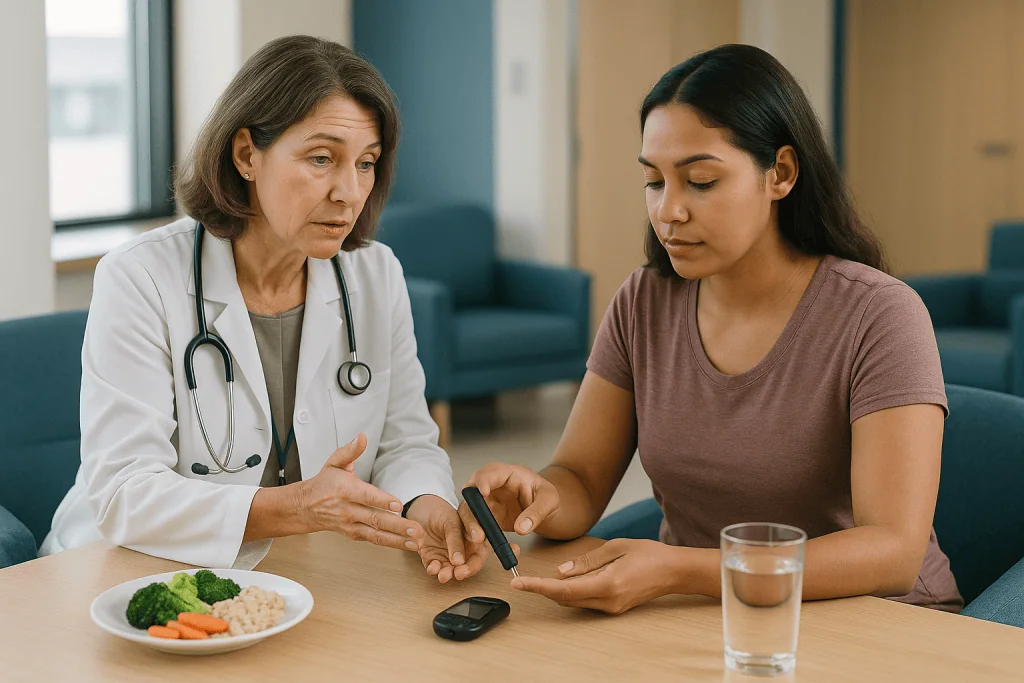
Once the person is stable, the first-day tasks are practical and deliberately limited. Teams describe this as “survival skills” education: how to check glucose, how to take insulin safely, how to recognize and treat a low, and when to phone for help. The goal is competence, not completeness. Carbohydrate counting, exercise adjustment and travel planning can wait a week or two.
Several things are usually recorded in the chart during this window and become the skeleton of the care plan:
- A baseline A1C, a blood test that reflects average glucose over roughly the previous three months, as MedlinePlus explains.
- Weight, blood pressure, and kidney and lipid bloods as a starting point for later comparison.
- The chosen monitoring method, whether fingerstick meter, continuous glucose monitor, or both.
- An initial insulin regimen, with the explicit expectation that it will be adjusted frequently in the coming weeks.
- Contact details for the diabetes team, including an out-of-hours route.
Most people leave hospital or clinic within a few days if they were not acutely ill, with a phone or video check-in scheduled inside the first week. That early call matters more than almost any later appointment, because the first fortnight is when small misunderstandings about timing or technique are easiest to catch.
Why insulin is non-negotiable in the type 1 diabetes treatment plan
In type 2 diabetes, the body still produces insulin but responds poorly to it, which is why lifestyle change and oral medicines can work. In type 1, production falls toward zero. No tablet, diet, supplement or exercise program can substitute for a hormone the body no longer makes. The NHS is unambiguous: everyone with type 1 needs insulin from diagnosis onward.
Modern regimens try to mimic what a healthy pancreas does. A pancreas releases a low, steady trickle of insulin around the clock, then a rapid surge when you eat. The care plan copies this in one of two broad ways:
- Multiple daily injections, combining a long-acting (basal) insulin that covers the background trickle with a rapid-acting (bolus) insulin taken before meals.
- An insulin pump, a small device worn on the body that delivers rapid-acting insulin continuously and gives extra at meals, either on the user’s instruction or, in newer systems, partly automated in response to a linked glucose sensor.
How much insulin a person needs is worked out individually by the prescribing team, using weight, glucose patterns, meals and activity, and it is revised often. This article deliberately does not describe amounts or schedules; those belong in the consultation room.
Two mechanisms explain most of the plan’s rules. First, rapid-acting insulin typically starts working within minutes and peaks about an hour later, which is why timing relative to meals is taught so carefully, according to Mayo Clinic. Second, insulin lowers glucose whether or not you have eaten, which is why exercise, skipped meals and alcohol all appear in the education curriculum: they change the balance between insulin on board and glucose available.
People sometimes ask whether they can “come off insulin” if their readings improve. In type 1, a temporary reduction in need does happen (see the honeymoon section below), but stopping insulin without medical direction is one of the most common causes of DKA.
Glucose monitoring: fingersticks, CGM and what the numbers mean
Monitoring is the feedback loop that makes the rest of the plan adjustable. There are two main tools, and many people use both.

A fingerstick meter measures glucose in a drop of capillary blood at a single moment. It is accurate, inexpensive to learn, and remains the reference check when a sensor reading seems wrong or when symptoms and numbers disagree. The NIDDK notes that people on multiple daily injections may be asked to check several times a day, typically before meals, at bedtime, before driving and around exercise.
Continuous glucose monitoring (CGM) uses a small sensor under the skin that estimates glucose in the fluid between cells every few minutes and sends it to a phone or receiver. CGM shows direction and speed of change, not just a snapshot, and can alarm for lows and highs, including overnight. The NIDDK describes a lag of several minutes behind blood glucose, which is why rapidly changing readings should be confirmed with a fingerstick before acting.
What are the numbers compared against? Targets are individual, but published guidance gives a frame. Mayo Clinic cites an A1C goal below 7% for many adults, with looser or tighter targets depending on age, hypoglycemia risk and other health conditions. The CDC defines hypoglycemia as glucose below 70 mg/dL. Teams using CGM also talk about “time in range,” the share of the day spent inside an agreed glucose band, which many people find more intuitive than a single average.
The care plan should state which device you use, how often to check, which readings require action, and which require a phone call. Monitoring data is only useful if someone looks at it; the plan should also say when and how the team reviews your downloads, whether at each visit or remotely between them.
Your diabetes care schedule: A1C and the annual review
Type 1 diabetes raises long-term risk to the eyes, kidneys, nerves, feet and heart, and much of the follow-up calendar exists to catch early changes while they are still reversible or slowable. The rhythm below reflects NHS and Mayo Clinic guidance; your team may adjust intervals based on your results.
| Check | Typical frequency | Why it matters |
|---|---|---|
| A1C blood test | Every 3–6 months (NHS) | Average glucose over about three months; the main long-term marker |
| Blood pressure | Every clinic visit, at least yearly | High pressure multiplies kidney and heart risk |
| Cholesterol and lipids | Yearly | Cardiovascular risk assessment |
| Kidney function and urine albumin | Yearly | Detects early kidney damage before symptoms |
| Retinal (eye) screening | Yearly (NHS) | Photographs the back of the eye for early retinopathy |
| Foot examination | Yearly, more often if risk found | Checks sensation and circulation |
| Thyroid and celiac screening | At diagnosis, then as advised | Both autoimmune conditions are more common in type 1 |
| Injection or infusion site check | Every visit | Lumps of fatty tissue can make insulin absorption erratic |
| Mental health and diabetes distress check | Yearly, or when concerns arise | Burnout directly affects glucose management |
The annual review is where the whole plan is reopened. Mayo Clinic notes that the A1C should be checked at least twice a year even when stable, and more often when treatment is changing. A good review compares this year’s kidney, eye and lipid results with last year’s, rather than treating each as a pass or fail in isolation.
One practical point: ask the team to write the schedule into the plan itself, with rough months, so that a missed eye screening is visible as a gap rather than forgotten.
What structured diabetes education covers, and why it is not optional
Education is the pillar people most often underestimate, partly because it sounds passive. In practice it is the training that turns a prescription into a livable routine. The NHS recommends that everyone newly diagnosed with type 1 be offered a structured education course, typically within the first year, and refreshers when circumstances change.
What does “structured” mean? A defined curriculum, delivered by trained educators, usually over several sessions, with content that has been evaluated rather than improvised. Core topics generally include:
- Carbohydrate counting: estimating the carbohydrate in a meal so mealtime insulin can be matched to it, rather than eating to a fixed dose.
- Insulin action and timing: how long each type works, why stacking corrections is risky, and how to interpret patterns rather than single readings.
- Hypoglycemia: causes, early warning signs, treatment steps, and the concept of impaired awareness, when the body stops signaling lows.
- Sick-day rules: why illness raises glucose, when to test for ketones, and never to stop basal insulin during illness.
- Exercise: how aerobic and resistance activity move glucose in different directions and how to plan around them.
- Alcohol, driving, work and travel: situations where lows carry extra consequences.
- Technology: reading CGM traces, using pump features, and troubleshooting device failures.
The NIDDK frames diabetes self-management education as the foundation of care because most decisions are made by the person, alone, many times a day. A clinician sees you for perhaps an hour a year; you make roughly a thousand glucose-relevant decisions in the same period.
Education is also where the plan becomes yours. A course that teaches you to reason from your own data, and to recognize when a pattern needs a clinical review rather than a self-adjustment, is doing its job. If a course was not offered, it is reasonable to ask why and when.
Who is offered a pump or CGM early, and who is usually asked to wait
Technology decisions are part of the care plan from the outset, and the reasoning behind them is worth understanding because it is rarely about who “deserves” a device.
Continuous glucose monitoring is increasingly offered at or soon after diagnosis. The NHS now recommends real-time or intermittently scanned CGM for adults and children with type 1, and Mayo Clinic describes it as the preferred monitoring method for many. People usually offered it first include children, anyone with frequent or severe hypoglycemia, those with impaired awareness of lows, people who are pregnant or planning pregnancy, and shift workers whose routines change unpredictably. Reasons a team might delay CGM include a strong personal preference for fingersticks, skin reactions to adhesives, or a wish to consolidate injection skills before adding another device.
Insulin pumps follow a more cautious path. Most services want a person to be confident with carbohydrate counting, insulin action and sick-day rules before moving to a pump, because a pump uses only rapid-acting insulin; if it fails or is disconnected, there is no long-acting insulin in the background, and ketones can rise within hours. Typical candidates include people whose glucose remains difficult to manage despite good technique on injections, those with recurrent disabling hypoglycemia, young children with very small insulin requirements, and people who strongly prefer pump lifestyle features. Those usually asked to wait are the newly diagnosed still in the honeymoon phase, people who have not yet completed structured education, and anyone unable or unwilling to do the frequent monitoring a pump requires.
Hybrid closed-loop systems, which link a pump and CGM so that basal insulin adjusts automatically, sit at the far end of this pathway and are offered according to local criteria and clinical judgment. In every case the decision belongs to the person and their team together, weighing benefit, burden and safety rather than novelty.
What is the daily routine for someone with type 1 diabetes?
People often ask this question hoping for a timetable. The honest answer is that the routine is a set of recurring checkpoints wrapped around ordinary life, not a schedule that dictates it. Here is a typical day for an adult on injections, described as a pattern rather than a prescription.
On waking: check glucose (or glance at the CGM), note the overnight trace, take the morning basal insulin if that is when the team has placed it. A pattern of morning highs or lows over several days is information for the next review, not a reason to improvise.
Before each meal: estimate carbohydrate, check glucose, take rapid-acting insulin as the plan directs, allowing the lead time the team has taught. Meals do not need to be identical from day to day; that is the point of carbohydrate counting.
Around activity: check before, and often after, exercise. Aerobic exercise tends to lower glucose during and for hours afterward; short intense bursts can raise it briefly. The plan should say how to adjust food or timing, and when to carry fast-acting carbohydrate.
Before driving: many licensing authorities and the NHS advise checking glucose before setting off and at intervals on long journeys, because hypoglycemia at the wheel is dangerous.
At bedtime: check glucose, consider the effects of evening activity or alcohol, and set CGM alarms if used.
Always: carry glucose treatment, identification stating you have type 1 diabetes, and a way to check glucose.
The mental load is real. The NIDDK acknowledges that diabetes distress, the exhaustion of constant decision-making, is common and worth raising with the team. A routine that leaves room for imperfect days, and a plan that says what to do on those days, is more sustainable than one built on flawless execution.
The honeymoon phase and the first year: what the following weeks and months look like
Shortly after starting insulin, many people find their glucose easier to manage than expected, and their insulin needs fall. This is the “honeymoon phase”: the surviving beta cells, relieved of the strain of high glucose, temporarily recover some function. Cleveland Clinic describes it as lasting from weeks to months, occasionally longer, and notes that it is not remission. The autoimmune process continues, and needs eventually rise again.
The care plan should anticipate this in three ways. It should warn that a falling requirement is expected and does not mean the diagnosis was wrong. It should set out how the team will monitor and adjust insulin during this period, because lows become more likely as needs drop. And it should make clear that insulin is never stopped, even if very little seems necessary, since a small background dose protects against DKA and may support remaining beta cells.
A rough shape of the first year, based on NHS and Mayo Clinic pathways rather than a fixed rule:
- Week one: daily or near-daily contact, survival skills, first adjustments.
- Weeks two to six: frequent phone or clinic reviews, introduction of carbohydrate counting, CGM start if planned, first dietitian appointment.
- Months two to four: structured education course, first repeat A1C, review of injection technique and sites.
- Months six to twelve: watch for the end of the honeymoon phase with rising requirements, screening for thyroid and celiac disease if not done, discussion of technology options, first full annual review.
Emotionally, the first year has its own arc. Diagnosis shock gives way to competence, then often to a dip when the novelty fades and the permanence sinks in. Teams that ask about mood at each visit, not only at the annual review, tend to catch this. Asking for a psychologist or counselor referral is a normal part of the plan, not a sign of failing at it.
Hypoglycemia and sick-day rules: the emergency pages of the plan
Two situations account for most urgent calls, and both have a written protocol in a well-built care plan.
Hypoglycemia means glucose below 70 mg/dL, per the CDC. It happens when insulin outpaces available glucose: a delayed meal, more activity than expected, alcohol, or a mismatch in carbohydrate estimation. Early signs include shakiness, sweating, a racing heart, hunger and irritability; if untreated, confusion and loss of consciousness can follow. The standard response taught in education, sometimes called the “15-15 rule” by the CDC, is to take a measured amount of fast-acting carbohydrate, recheck after about 15 minutes, and repeat if still low, then follow with longer-acting food if the next meal is not imminent. The plan should also cover glucagon, a hormone that raises glucose and can be given by another person if you cannot swallow, and should name who around you has been shown how to use it.
Impaired awareness of hypoglycemia, where warning symptoms fade after repeated lows, is a specific risk the team should ask about. CGM alarms and a period of deliberately avoiding lows, under supervision, are the usual responses.
Sick days work in the opposite direction. Infection and stress hormones raise glucose and can push the body toward ketone production even when you eat little. The core rules, consistent across NHS and Mayo Clinic guidance, are: never stop basal insulin; check glucose more often; check ketones in blood or urine when glucose stays high, with Mayo Clinic citing readings above 240 mg/dL as a common trigger for testing; keep drinking fluids; and contact the team early rather than late. Ketones that keep rising despite following the plan, or vomiting that prevents fluids staying down, mean the plan has reached its limit and clinical assessment is needed.
Individual care plans for children and students with type 1 diabetes
When the person diagnosed is a child, the care plan multiplies. There is the clinical plan held by the pediatric diabetes team, and there is a second, simpler document for school, often called an individual healthcare plan or diabetes medical management plan. The CDC recommends that every student with diabetes has one, agreed between parents, the school and the diabetes team, and reviewed each school year or whenever treatment changes.
A school plan usually specifies, in language a non-medical adult can follow:
- Who at school is trained to check glucose, recognize and treat a low, and give glucagon in an emergency.
- Where supplies are kept and how the child can access them at any time, including during exams, trips and sports.
- How insulin is given at school, whether by the child, a trained staff member or a visiting nurse, and how carbohydrate at lunch is handled.
- What the CGM alarms mean and who responds to them.
- When parents are called, and when emergency services are called instead.
- Permission for unrestricted bathroom and water access, since high glucose causes thirst and frequent urination.
Pediatric plans also change with the child. A five-year-old needs adults to make every decision; a fifteen-year-old needs a plan that transfers responsibility gradually while keeping a safety net. Adolescence brings hormonal shifts that raise insulin resistance, along with independence, irregular sleep and the natural wish not to be different, all of which show up in glucose patterns. Pediatric teams usually schedule more frequent reviews during these years, and many include a formal transition program to adult services rather than a single handover.
For preparation and comfort, children often do better when procedures are predictable: the same words for a fingerstick each time, a choice of finger, a distraction ready, and praise for cooperation rather than for a “good number.” Numbers are information, and a child should never learn to read them as a grade.
What is a nursing care plan for diabetes, and how is one written?
Search results for “diabetes care plan” are dominated by nursing documents, and it helps to understand how they differ from the plan you carry home. A nursing care plan is a structured clinical record used by nurses, mainly in hospital or home-care settings, to organize care for a patient over a shift or an admission. It follows a standard format: assessment, nursing diagnosis, goals, interventions and evaluation.
For a person with type 1 diabetes admitted for any reason, a nursing care plan typically addresses:
- Risk of unstable blood glucose: scheduled monitoring, coordination of insulin with meal delivery, and recognition of hypoglycemia or hyperglycemia.
- Fluid and electrolyte balance, especially during DKA treatment or illness.
- Knowledge deficit: identifying what the patient does and does not understand, and arranging education or reinforcement.
- Skin integrity and infection risk: care of injection or infusion sites, foot inspection, wound observation.
- Coping and anxiety, particularly around a new diagnosis.
Each entry pairs a measurable goal (“glucose within the agreed range before meals during this admission”) with specific interventions and a note on how the outcome will be evaluated. The plan is updated each shift and closed when the goal is met or the patient is discharged.
How is one written? Nurses draw on the medical orders, their own assessment, and the patient’s existing self-management routine. Good practice, emphasized in NHS inpatient guidance, is to let people with type 1 who are well enough continue managing their own insulin in hospital, with the nursing plan supporting rather than overriding their expertise.
The takeaway for readers: a nursing care plan is a professional tool for a specific episode. Your long-term type 1 diabetes care plan is a different document, owned jointly by you and your outpatient team. If you are ever admitted, bringing a copy of yours helps the nursing plan start from what already works.
Food, exercise and mental health: the lifestyle chapter of the plan
Lifestyle guidance in type 1 is easily confused with the advice given for type 2, so it is worth being precise about what the plan does and does not ask.
Food. There is no “diabetic diet” that people with type 1 must follow, and no food is forbidden. The NHS and NIDDK both frame eating in type 1 around matching insulin to carbohydrate rather than avoiding it, while following the same heart-healthy principles recommended for everyone: plenty of vegetables, whole grains, lean protein, limited processed food and sugary drinks. A dietitian’s role in the plan is to teach carbohydrate estimation, discuss how fat and protein slow glucose rises, and help with specific situations such as eating out, fasting for religious reasons or vegetarian diets. Products marketed as “diabetic” foods offer no proven advantage and the NHS advises against them.
Exercise. Physical activity is encouraged for cardiovascular health and wellbeing, but it changes insulin sensitivity for many hours afterward. The plan should note your usual activities and how to prepare: checking glucose beforehand, carrying fast carbohydrate, and knowing which activities tend to lower or raise your glucose. Because insulin needs can shift after starting a new exercise program, changes to insulin are agreed with the team, not made alone.
Mental health. Depression and anxiety are more common in people with diabetes, and the American Heart Association highlights the two-way link between mood and cardiovascular risk in this group. Diabetes distress, a specific frustration and burnout related to the daily demands, is distinct from depression and responds to different support. A plan that includes a yearly wellbeing check, and a route to psychological support without needing to be “in crisis,” is consistent with NHS and NIDDK guidance.
Smoking and alcohol. Smoking sharply increases the vascular risks that diabetes already raises; support to stop should be part of the plan. Alcohol can cause delayed hypoglycemia, particularly overnight, which is why it features in education rather than in a list of bans.
What people often get wrong about type 1 diabetes care
Myths around type 1 are stubborn, partly because most public conversation is really about type 2. Here are the misunderstandings that most often surface in the first year, with what the evidence actually says.
“It was caused by eating too much sugar.” Type 1 is autoimmune. The CDC and NIDDK are clear that diet and lifestyle do not cause it, and nothing the person or their parents did brought it on. Guilt here is misplaced and, for children especially, worth addressing directly.
“If my numbers are good, I can reduce or stop insulin.” Good numbers mean the regimen is working, not that the pancreas has recovered. The honeymoon phase can temporarily lower needs, but stopping insulin leads to DKA, sometimes within a day.
“A diet, supplement or alternative therapy can replace insulin.” No evidence supports this. Cinnamon, chromium, herbal remedies and restrictive diets have not been shown to restore insulin production in type 1. The NIH Office of Dietary Supplements notes that supplement claims for diabetes are largely unsupported, and some interact with medicines. Anything marketed as an insulin alternative should be raised with the team before use.
“A pump means the diabetes manages itself.” Pumps and even hybrid closed-loop systems still require carbohydrate entry, site changes, sensor calibration checks and troubleshooting. They reduce burden for many people; they do not remove it.
“A high reading is a failure.” Glucose is affected by dozens of variables, several of them invisible. A single number is data, not a verdict. Patterns over days are what the team acts on.
“Type 1 is the mild one because you are thin.” Body weight has nothing to do with the diagnosis or its seriousness. Both types carry long-term risks that structured follow-up exists to manage.
“Children grow out of it.” They do not. Type 1 is lifelong, which is exactly why the care plan is built for revision rather than completion.
Questions to ask your care team when the plan is written
The best moment to shape a care plan is while it is being drafted. These questions are not a test of your team; they are a way of making sure the document reflects your life rather than a generic template. Bring them to the first review and again to the annual one.
- Who is my main point of contact, and how do I reach someone out of hours if my glucose or ketones are behaving in a way the plan does not cover?
- What glucose targets have you set for me, and why those numbers rather than others?
- How often will you review my monitoring data, and can I share it remotely between visits?
- When will I be offered structured education, and what does the course cover?
- Am I a candidate for CGM now, and if not, what would need to change?
- What should I do on a sick day, in writing, including when to check ketones and when to call?
- Who around me should be trained to give glucagon, and can you arrange that training?
- How should I prepare for exercise, alcohol, driving and travel across time zones?
- What screening will happen this year for eyes, kidneys, feet, thyroid and celiac disease, and when?
- How will we know when the honeymoon phase is ending, and how will adjustments be made?
- Is there psychological support available, and how do I access it without waiting for a crisis?
- If I am ever admitted to hospital, can I keep managing my own insulin, and what document should I bring?
- For parents: who will train the school, how often is the school plan reviewed, and how will my child’s responsibility grow over time?
Write the answers into the plan itself. A plan that records “call the nurse line” without a number, or “annual eye check” without a rough month, tends to slip. Specifics are what make it usable at eleven at night when a reading does not make sense.
When to call your doctor: red-flag signs in type 1 diabetes
Every care plan has a boundary, and knowing where it is protects you. The situations below are drawn from NHS, CDC and Mayo Clinic guidance and are the ones that should trigger a call to your diabetes team, or emergency services, rather than another self-adjustment.
Call emergency services, or have someone do so, if:
- You or the person with diabetes is drowsy, confused, unable to swallow safely, having a seizure or unconscious, whether from suspected low or high glucose.
- There is vomiting that will not stop, deep or rapid breathing, severe abdominal pain, a fruity smell on the breath, or high ketones with high glucose. These are signs of possible diabetic ketoacidosis, which needs hospital treatment.
- A severe low has been treated with glucagon; medical review is still needed afterward.
Contact your diabetes team the same day if:
- Glucose stays high despite following your sick-day plan, or ketones are present and not falling.
- You are ill and cannot keep food or fluids down, even if glucose looks acceptable.
- You have had more than one low requiring help from another person, or you notice your warning signs for lows have faded.
- Your pump has failed and you are unsure how to cover insulin in the meantime.
- You develop a foot wound, blister or area of redness that is not healing, or new numbness or pain in the feet.
- You notice sudden changes in vision.
- You are pregnant or planning pregnancy, since targets and follow-up change.
Raise at your next routine review if: glucose patterns have shifted over a couple of weeks, you are struggling with mood or the daily burden, you have started a new job, sport or medicine, or a screening appointment has been missed. None of these mean the plan has failed. They mean it needs the update it was designed for, and the people who can make that update are the ones who wrote it with you.
Frequently asked questions
What is the treatment plan for type 1 diabetes?
The treatment plan for type 1 diabetes always centers on lifelong insulin replacement, delivered by multiple daily injections or a pump, alongside glucose monitoring, structured education and regular screening for complications. The prescribing team sets individual glucose targets and adjusts insulin over time. There is no oral medicine, diet or supplement that can substitute for insulin in type 1, and every change to the regimen is made with the treating clinician rather than independently.
How do you write a care plan for a diabetic patient?
A care plan for someone with type 1 diabetes is written jointly by the person and their diabetes team. It records the insulin regimen and prescriber, monitoring method and targets, hypoglycemia and sick-day protocols, contact routes including out of hours, the education schedule, and a calendar of A1C, eye, kidney, foot and lipid checks. It is reviewed at least yearly, per NHS guidance, and updated whenever circumstances or results change.
What is a nursing care plan for diabetes?
A nursing care plan for diabetes is a structured clinical record used by nurses during a hospital admission or home-care episode. It follows an assessment, nursing diagnosis, goals, interventions and evaluation format, typically addressing unstable glucose, fluid balance, knowledge gaps, skin and infection risk, and coping. It is different from the long-term care plan a person holds with their outpatient team, and good practice lets capable inpatients keep managing their own insulin.
What is the daily routine for someone with type 1 diabetes?
A typical daily routine involves checking glucose or reviewing a CGM on waking, before meals, around exercise, before driving and at bedtime; estimating carbohydrate and taking rapid-acting insulin before eating as the plan directs; taking basal insulin at the agreed time; and always carrying glucose treatment and identification. The routine wraps around ordinary life rather than dictating it, and imperfect days are expected and planned for.
How often should A1C be checked with type 1 diabetes?
The A1C is usually checked every 3–6 months according to NHS guidance, and Mayo Clinic advises at least twice a year even when glucose is stable, more often when treatment is changing. Because the test reflects average glucose over about three months, checking it more frequently than that adds little. Your team may combine it with other bloods and with a review of CGM data for a fuller picture.
What is the honeymoon phase in type 1 diabetes?
The honeymoon phase is a temporary period after diagnosis when surviving insulin-producing cells partly recover once high glucose is brought down, so insulin needs fall and glucose becomes easier to manage. Cleveland Clinic describes it as lasting weeks to months, sometimes longer. It is not remission; the autoimmune process continues and needs rise again. Insulin is continued throughout, with the team adjusting amounts to avoid lows.
Do I need a continuous glucose monitor right away?
Many services now offer CGM at or soon after diagnosis, and the NHS recommends it for adults and children with type 1. It shows direction and speed of glucose change and can alarm for lows overnight. Some people prefer to start with fingersticks and add CGM later, and skin sensitivity or personal preference are valid reasons to delay. The choice is made with your team based on your situation.
What is included in a diabetes care schedule for the year?
A yearly diabetes care schedule typically includes A1C every 3–6 months, blood pressure at each visit, annual cholesterol, kidney function and urine albumin tests, annual retinal photography, an annual foot examination, checks of injection or infusion sites at every visit, and a mental health and diabetes distress check. Thyroid and celiac screening are done at diagnosis and as advised because both autoimmune conditions are more common in type 1.
What should a school care plan for a child with type 1 diabetes include?
A school plan, recommended by the CDC for every student with diabetes, names who is trained to check glucose, treat lows and give glucagon; where supplies are kept and how the child can access them at all times; how insulin and lunch carbohydrate are handled; what CGM alarms mean and who responds; when parents versus emergency services are called; and permissions for water and bathroom access. It is reviewed each school year or when treatment changes.
Can type 1 diabetes be managed without insulin?
No. Type 1 diabetes destroys the body’s ability to make insulin, so it must be replaced from outside for life. No diet, supplement, exercise program or alternative therapy has been shown to restore insulin production, and stopping insulin can lead to diabetic ketoacidosis within a day. Insulin needs may temporarily fall during the honeymoon phase, but any reduction is managed by the prescribing team, never by stopping on your own.
References
- NHS: Type 1 diabetes
- CDC: About Type 1 Diabetes
- NIH NIDDK: Managing Diabetes
- MedlinePlus: Type 1 diabetes
This article is for general information only and is not a substitute for professional medical advice. Please consult a qualified doctor about your individual situation.

More from the Blog

Watchful Waiting, Medication or Surgery for a Pituitary Tumor: How Do Specialists Decide?
Specialists choose between watchful waiting, medication and surgery for a pituitary tumor by weighing three things: whether the tumor secretes excess hormone, how large…

Transsphenoidal Surgery for Acromegaly: How the Adenoma Is Removed Through the Nose
Acromegaly is usually treated first by removing the growth hormone-producing pituitary adenoma through the nose, a procedure called transsphenoidal surgery. Working through a nostril…
How to Read a Longevity Report: Cardiovascular, Metabolic and Cancer Risk Markers Explained
A longevity report explained simply is a bundle of standard laboratory tests, blood pressure readings and sometimes imaging, grouped into cardiovascular, metabolic and cancer…

Graves Disease Work-Up: Thyroid Hormone Tests, Antibodies, Ultrasound and Scintigraphy
Graves disease is usually diagnosed with blood tests first: a low or undetectable TSH with raised free T4 or T3 confirms an overactive thyroid,…

Why Is Thyroid Disease Monitored More Closely in Pregnancy, and How Is Care Coordinated?
Thyroid disease in pregnancy is monitored more closely because pregnancy changes how the thyroid works and because the baby depends on the mother's thyroid…

Questions to Ask Your Endocrine Surgeon Before a Parathyroidectomy
Before a parathyroidectomy, ask your endocrine surgeon which gland or glands are thought to be overactive, whether a focused or four-gland operation is planned,…