

Watchful Waiting, Medication or Surgery for a Pituitary Tumor: How Do Specialists Decide?

Key Takeaways
- Most pituitary tumors are benign adenomas that never spread, and the treatment question is about hormone excess and pressure on nearby structures, not cancer.
- A microadenoma is under 10 millimeters and a macroadenoma is 10 millimeters or larger, and that size threshold, together with hormone tests, shapes nearly every treatment conversation.
- Prolactinomas are the one pituitary tumor where medication, specifically a dopamine agonist, is usually tried before surgery because it can shrink the tumor as well as lower the hormone.
- Growth hormone-secreting and ACTH-secreting tumors, which cause acromegaly and Cushing's disease, are usually treated with transsphenoidal surgery first because no medication removes the source.
- Documented loss of peripheral vision from pressure on the optic chiasm is one of the clearest reasons to operate on a nonfunctioning tumor, and earlier decompression gives the nerves a better chance to recover.
- Radiation can take months to years to bring hormone levels down fully, which is why it is usually reserved for residual or regrowing tumors and paired with medication in the meantime.
Specialists choose between watchful waiting, medication and surgery for a pituitary tumor by weighing three things: whether the tumor secretes excess hormone, how large it is and whether it presses on the optic nerves or nearby structures, and the person's symptoms and overall health. Many small, silent tumors are monitored with MRI; prolactin-secreting tumors usually start with medication; most other symptomatic tumors are considered for surgery.
The MRI was ordered for headaches. The headaches turned out to be nothing much, but the radiologist’s report had a line nobody expected: a small mass in the pituitary gland. Now there is a referral to an endocrinologist, a folder of printouts on the kitchen table, and one question that will not sit still. Does this need to come out, or can it simply be watched?
That question lands on thousands of kitchen tables every year, and the honest answer is that a pituitary tumor treatment decision is rarely a single yes or no. It is a sorting process. Endocrinologists and neurosurgeons look at the same scan and the same blood tests and ask a short list of structured questions, and the answers steer one person toward a yearly MRI, another toward a prescription, and a third toward an operation through the nose.
This article walks through that sorting process in plain language: what each path involves, who typically lands on which one, what the weeks afterward look like, and which beliefs about pituitary tumors tend to be wrong.
What is a pituitary tumor, and why does the word 'tumor' rarely mean cancer here?
The pituitary is a pea-sized gland that sits in a bony pocket at the base of the brain, just behind the bridge of the nose. It is often called the master gland because it releases hormones that direct the thyroid, the adrenal glands, the ovaries and testes, growth, breast milk production and the body’s water balance. A pituitary tumor is an abnormal growth of cells within that gland.
The overwhelming majority of these growths are adenomas, meaning benign tumors that arise from the gland’s own hormone-producing cells. Mayo Clinic and MedlinePlus both describe pituitary tumors as usually noncancerous: they do not spread to other parts of the body, and they grow slowly, often over years. Pituitary cancer exists, but it is rare enough that most people reading this will never meet someone who has it.
Why, then, do these benign growths matter? Two reasons. First, some adenomas are functioning, meaning they churn out one hormone in excess. A prolactinoma produces prolactin, the hormone of milk production; a growth hormone adenoma causes acromegaly, a condition of enlarging hands, feet and facial features; an adrenocorticotropic hormone adenoma causes Cushing’s disease, with weight gain around the trunk, thin skin and high blood pressure. Second, even a nonfunctioning adenoma, one that makes no active hormone, can grow large enough to squash the normal gland or press upward on the optic chiasm, the crossing point of the two optic nerves that sits directly above the pituitary.
Size has its own vocabulary. A microadenoma measures less than 10 millimeters across, roughly the width of a fingernail; a macroadenoma is 10 millimeters or larger. Those two labels, plus the hormone picture, are the raw materials of nearly every treatment conversation that follows.
How specialists make a pituitary tumor treatment decision: three questions that drive everything
Strip away the jargon and the pituitary tumor treatment decision rests on three questions, asked in roughly this order.

Is the tumor making excess hormone? Blood tests, sometimes with timed collections or stimulation tests, answer this. A functioning tumor is treated because the hormone excess itself damages health, even when the tumor is tiny. A nonfunctioning tumor is treated only if it is causing a mechanical problem or threatens to.
Is the tumor pressing on something? MRI shows whether the growth touches or lifts the optic chiasm, invades the cavernous sinuses (the channels beside the gland that carry nerves controlling eye movement) or compresses the normal pituitary tissue. A formal visual field test, which maps the edges of what each eye can see, often decides whether compression is already doing harm. Vision loss from chiasm pressure classically starts at the outer edges of both eyes, and it can be subtle enough that people do not notice until it is tested.
What does the person bring to the table? Age, other medical conditions, pregnancy plans, the risks of general anesthesia, how the symptoms are affecting daily life, and personal preference all shape the final call. Two people with identical scans can reasonably end up on different paths.
These questions are usually worked through by a multidisciplinary team: an endocrinologist, who manages hormones; a neurosurgeon, who operates; an ophthalmologist for vision; a radiation oncologist when radiation is considered; and a radiologist reading the images. Mayo Clinic, Cleveland Clinic and Johns Hopkins all describe this team approach as standard. The practical message for a patient is that no single appointment should feel like the final verdict. The team is meant to meet, compare notes and bring back a plan.
What actually happens on each path: watching, medication, surgery and radiation
Before weighing options, it helps to know concretely what each one is.
Watchful waiting, sometimes called active surveillance, means no treatment now but a structured schedule of monitoring. In practice that is a repeat MRI at an interval the team sets, periodic hormone blood tests, and visual field testing if the tumor sits anywhere near the chiasm. The point is to catch growth or new hormone activity early, not to ignore the tumor.
Medication means a prescribed drug that either shrinks the tumor, blocks its hormone, or blocks that hormone’s effects on the body. Which class is used depends entirely on which hormone is involved, and the prescribing clinician sets everything about it. Medication is usually a long-term arrangement rather than a short course.
Surgery nearly always means transsphenoidal surgery: the surgeon reaches the pituitary through the nostril and the sphenoid sinus, the air-filled space behind the nose, without opening the skull. An endoscope, a thin lighted camera, or a microscope guides the removal. A craniotomy, which opens the skull, is reserved for unusually large or awkwardly placed tumors.
Radiation therapy uses focused high-energy beams to stop tumor cells from dividing. It can be delivered as stereotactic radiosurgery, a single highly targeted session despite the word ‘surgery’, or as fractionated treatment spread over several weeks. Mayo Clinic notes that radiation’s effect on hormone levels builds slowly, over months to years, which is why it is usually a second-line or add-on option rather than the first move.
Most people end up with a combination over time: an operation followed by surveillance, medication adjusted after surgery, or radiation for a remnant that medication and surgery together could not control. The paths are not mutually exclusive; they are tools used in sequence.
Pituitary adenoma watchful waiting: who is usually asked to wait, and what waiting involves
Waiting is the path that unsettles people most, so it deserves a clear explanation of who is placed on it and why.

The typical candidate is someone whose tumor was found incidentally, during imaging for something unrelated, is a microadenoma or a modest macroadenoma well clear of the optic chiasm, is not producing excess hormone, and is not causing symptoms. Clinicians call this a pituitary incidentaloma. Mayo Clinic and Cleveland Clinic both describe monitoring as the usual approach for such tumors, because many never grow in a meaningful way and the risks of an operation would outweigh a benefit that may never materialize.
A second group sometimes offered waiting: older adults or people with serious heart, lung or other illness, for whom anesthesia and surgery carry higher risk, provided the tumor is not threatening vision. A third: people with a small prolactinoma that is not bothering them, whose hormone levels can be checked periodically.
What waiting involves is more active than the name suggests. Expect a baseline hormone panel covering the main pituitary axes, a baseline MRI, and visual field testing if the tumor is anywhere near the chiasm. Follow-up MRI is then repeated at an interval the team chooses, often with the gap lengthening if the tumor stays stable. Hormone tests are repeated because a nonfunctioning tumor can gradually compress the normal gland and cause deficiencies that creep in quietly: fatigue, loss of libido, irregular periods, cold intolerance.
The trigger to leave the waiting path is usually one of three things: measurable growth on MRI, new pressure on the chiasm or a change in visual fields, or a new hormone abnormality. People on surveillance should know what those triggers are in advance, so that a change in the plan feels like the plan working rather than a surprise.
Prolactinoma medication vs surgery: why pills usually come first for this tumor type
Prolactinomas are the exception that proves a rule. For almost every other pituitary tumor that needs treatment, surgery is the first consideration. For a prolactinoma, medication is.
A prolactinoma overproduces prolactin. In women this often shows up as irregular or absent periods, infertility or milky nipple discharge; in men, as low testosterone, reduced libido, erectile dysfunction, or, because men tend to have fewer early warning signs, a larger tumor found later with headaches or vision change. The National Institute of Diabetes and Digestive and Kidney Diseases (NIDDK) describes prolactinoma as the most common type of hormone-producing pituitary tumor.
The reason medication leads is mechanism. Normal prolactin release is held in check by dopamine, a brain chemical that acts as a brake. Prolactinoma cells still carry dopamine receptors. Dopamine agonists, the class that includes cabergoline and bromocriptine, stimulate those receptors, which both lowers prolactin and, in most people, shrinks the tumor itself. NIDDK notes that these medicines control prolactin levels and reduce tumor size in most people who take them, which is an unusual property; few tumors anywhere in the body can be made smaller by a tablet.
Surgery for a prolactinoma is considered when medication is not tolerated, when prolactin stays high despite it, when the tumor keeps growing or threatens vision regardless, or when someone strongly prefers not to take long-term medication and the tumor is small enough that the surgeon expects complete removal. Pregnancy planning also shapes the discussion, because dopamine agonists are usually paused during pregnancy and a macroadenoma can enlarge under pregnancy hormones.
Whether to start, how long to continue, and whether to attempt stopping later are decisions for the prescribing endocrinologist, guided by repeat prolactin levels and MRI. The typical pattern is months of treatment before stability is assessed, not weeks.
Acromegaly and Cushing's disease: why surgery usually leads when the tumor makes growth hormone or ACTH
For the two other major hormone-secreting tumors, the logic flips, and the reason again comes down to mechanism.
Acromegaly results from a growth hormone-secreting adenoma. Excess growth hormone drives the liver to produce insulin-like growth factor 1, which thickens bone and soft tissue: enlarging hands and feet, a widening jaw, spacing teeth, thickened skin, joint pain, sleep apnea, and over time, raised risks of diabetes, high blood pressure and heart disease. Cushing’s disease results from an adenoma secreting adrenocorticotropic hormone (ACTH), which drives the adrenal glands to flood the body with cortisol: central weight gain, a rounded face, purple stretch marks, muscle weakness, mood changes and bone thinning.
In both conditions, the hormone excess itself is the medical emergency in slow motion, and no medication shrinks these tumors as reliably as dopamine agonists shrink prolactinomas. Mayo Clinic, NIDDK and Johns Hopkins describe transsphenoidal surgery as the usual first treatment for both acromegaly and Cushing’s disease, because removing the source is the most direct way to bring the hormone down.
Medication steps in when surgery is not possible, when the tumor cannot be fully removed, or while waiting for radiation to take effect. For acromegaly, the main classes are somatostatin analogs, which mimic the body’s natural brake on growth hormone; growth hormone receptor antagonists, which block the hormone’s action at the tissues; and, in some cases, dopamine agonists. For Cushing’s disease, options include medicines that inhibit cortisol synthesis in the adrenal glands and medicines that act on the tumor or the pituitary. All of these have specific side-effect profiles and monitoring needs that the prescribing team manages.
The decision, then, is not usually whether to operate but when, and what to do alongside it. People with severe sleep apnea, poorly controlled diabetes or very high blood pressure may need those problems stabilized first so that the anesthesia itself is safer.
Nonfunctioning macroadenomas and the optic chiasm: when size and vision make the choice
A nonfunctioning adenoma makes no excess hormone, so the question of whether to treat it is entirely about mechanics: what it is pressing on, and what it is likely to press on if left alone.
The structure that matters most is the optic chiasm, which lies a few millimeters above the gland. When a macroadenoma rises out of its bony pocket and lifts the chiasm, the nerve fibers serving the outer halves of both visual fields are the first to suffer. The result, bitemporal hemianopia, is a loss of peripheral vision on both sides, and many people compensate without realizing it until a formal test maps the gap. Cleveland Clinic lists vision changes, headaches and hormone deficiency from gland compression as the main reasons a nonfunctioning tumor comes to treatment.
Documented visual field loss, or MRI showing the chiasm already distorted, is the clearest indication for surgery in this group. Decompressing the nerves promptly gives them the best chance of recovering function, and the longer compression continues, the less reliable that recovery becomes. A tumor that is close to the chiasm but not yet touching it occupies a gray zone, where the team weighs growth on serial scans, the person’s age and the risk of anesthesia against the risk of waiting too long.
Hormone deficiency is the second driver. A large nonfunctioning adenoma can crush normal pituitary tissue, producing hypopituitarism, which is underproduction of one or more pituitary hormones. Surgery sometimes allows the squashed gland to recover, though not always, and some people need lifelong hormone replacement regardless.
Radiation is held in reserve for residual tumor after surgery that keeps growing, or for people who cannot have an operation. Because nonfunctioning tumors have no hormone to track, follow-up relies on MRI and visual fields alone, which is why these patients tend to stay under long-term surveillance.
Transsphenoidal surgery for a pituitary tumor: what the operation actually involves
The phrase ‘brain surgery through the nose’ sounds alarming until the anatomy is explained. The pituitary sits just behind the back wall of the sphenoid sinus, and that sinus opens into the nasal cavity. The surgeon therefore has a natural corridor to the gland that avoids the brain altogether.
Under general anesthesia, the surgeon passes an endoscope, a slim lighted camera, through one or both nostrils, opens the thin bone at the back of the sinus and then the floor of the sella turcica, the saddle-shaped bony pocket holding the gland. The tumor, which is usually softer than normal pituitary tissue, is removed piece by piece with fine instruments, often with the help of image guidance that matches the patient’s MRI to the surgical view in real time. Mayo Clinic and Johns Hopkins both describe this endoscopic endonasal approach as the standard route for most pituitary tumors. Some centers use an operating microscope instead of an endoscope, and some combine a neurosurgeon with an ear, nose and throat surgeon.
The opening is then sealed, sometimes with a small graft of the patient’s own fat or tissue and a synthetic sealant, to prevent cerebrospinal fluid, the clear liquid bathing the brain, from leaking into the nose. Nasal packing is used in some cases and not others.
A craniotomy, in which a window of skull is opened above the eye or at the temple, is reserved for tumors that extend sideways or upward beyond the reach of the nasal route. It is a larger operation with a longer recovery.
What a person usually wants to know is whether the whole tumor comes out. The honest answer is that it depends on size and whether the tumor has invaded the cavernous sinus walls, where tumor cells wrap around the carotid artery and cranial nerves and cannot be safely scraped away. Surgeons therefore talk about the goal of surgery, whether total removal or safe debulking, before the operation, not after.
What the days and weeks after pituitary surgery usually look like
The first night is typically spent in a monitored unit, with frequent checks of blood pressure, vision and, above all, fluid balance. The hospital stay after transsphenoidal surgery is usually short, described by Cleveland Clinic and Johns Hopkins as a matter of days rather than weeks, though it stretches if complications appear.
Fluid balance is watched closely because surgery near the back of the pituitary can temporarily disrupt vasopressin, the hormone that tells the kidneys to hold water. The result, called diabetes insipidus or arginine vasopressin deficiency, produces intense thirst and large volumes of dilute urine. It is usually temporary and is treated by the inpatient team; a small number of people need ongoing treatment.
Cortisol is the second concern. The surgical team often checks whether the gland can still make the adrenal-stimulating hormone, and some people go home on a temporary replacement until testing confirms recovery. In Cushing’s disease specifically, a sharp drop in cortisol after a successful operation is expected and can feel like a crash: fatigue, aching, low mood. Replacement is managed by the endocrinologist and tapered on a schedule the clinician sets.
Nasal symptoms dominate the first two weeks: congestion, crusting, a reduced sense of smell, and a sinus-pressure headache. People are usually asked not to blow their nose, strain, bend over heavily or lift anything heavy for a period the surgeon specifies, because pressure can disturb the seal and cause a cerebrospinal fluid leak. Saline rinses are often advised.
Hormone blood tests follow in the early weeks, and the first postoperative MRI is usually delayed a few months, because swelling and packing material make an early scan hard to read. Mayo Clinic describes long-term follow-up with periodic imaging and hormone testing as standard after any pituitary surgery, since remnants can regrow slowly. Return to desk work is often a matter of weeks; the surgeon’s advice on driving and exercise should be followed over any general figure.
Where radiation therapy fits in a pituitary tumor plan
Radiation is the quiet third option, rarely first, often decisive. It is chosen when a tumor cannot be fully removed, when it regrows after surgery, when hormone levels stay high despite surgery and medication, or when someone cannot safely have an operation.
There are two main forms. Stereotactic radiosurgery delivers a high dose of precisely shaped radiation to the tumor in a single session or a handful of sessions; the name is misleading because nothing is cut. Conventional or fractionated radiation spreads smaller doses over several weeks of daily visits. The choice depends on tumor size and, critically, how close it sits to the optic nerves, because those nerves tolerate only a limited radiation dose. A tumor pressed against the chiasm may need the gentler fractionated approach, or surgery first to create distance.
The defining feature of radiation is its timeline. Mayo Clinic notes that it can take months to years for radiation to bring hormone levels down fully, which is why people with acromegaly or Cushing’s disease who receive radiation are usually kept on medication in the meantime. Tumor shrinkage, where it happens, is similarly gradual.
The main long-term trade-off is hypopituitarism. Radiation affects the normal gland as well as the tumor, and the risk of new hormone deficiencies rises over the years after treatment, which is why lifelong endocrine follow-up is advised. Rarer risks include damage to the optic nerves and, over decades, a small increase in the risk of other tumors in the radiation field.
None of this makes radiation a poor option. For a persistently active remnant, it is often the tool that finally settles the problem. It simply asks for patience, and for a clear conversation about what will be monitored in the meantime.
Watchful waiting vs medication vs surgery for a pituitary tumor: the options side by side
The table below summarizes how the main approaches compare. It is a map, not a prescription; the treating team matches the map to the individual.
| Option | Usually considered for | Main mechanism | Typical timeline | Key trade-offs |
|---|---|---|---|---|
| Watchful waiting | Small, nonfunctioning, symptom-free tumors; some small prolactinomas; people at high surgical risk | Serial MRI, hormone tests and visual fields to detect change early | Open-ended; intervals set by the team and often lengthened if stable | Requires reliable follow-up; tumor may eventually need treatment anyway |
| Medication | Prolactinomas first-line; acromegaly and Cushing’s disease when surgery is incomplete or not possible | Dopamine agonists shrink prolactinomas; somatostatin analogs and other classes lower or block hormones | Months to judge response; often long-term | Side effects; ongoing monitoring; tumor may regrow if stopped |
| Transsphenoidal surgery | Tumors pressing on the optic chiasm; acromegaly; Cushing’s disease; medication failure or intolerance | Physical removal of tumor through the nasal route | Short hospital stay; weeks of recovery; MRI after a few months | Hypopituitarism, fluid imbalance, CSF leak, incomplete removal of invasive tumors |
| Radiation therapy | Residual or regrowing tumor; persistent hormone excess; people unable to have surgery | Targeted beams stop tumor cell division | Months to years for full hormone effect | Delayed hypopituitarism; dose limits near optic nerves |
A few patterns stand out. Medication is the only path that routinely lowers hormone levels within weeks to months without an operation, but only for the tumor types that respond to it. Surgery is the only path that relieves pressure on vision quickly. Waiting costs nothing in side effects but demands discipline about follow-up. Radiation trades speed for durability.
Sources for the patterns above are the Mayo Clinic, Cleveland Clinic and Johns Hopkins overviews of pituitary tumor treatment and the NIDDK pages on prolactinoma and acromegaly, listed in the references.
The risks and trade-offs specialists weigh before recommending any treatment
Every path carries risk, including the path of doing nothing, and the pituitary tumor treatment decision is really a comparison of those risks against each other.
Surgery’s specific risks cluster around the gland and its neighbors. Hypopituitarism, meaning loss of one or more pituitary hormones, can follow removal of a large tumor or disturbance of the normal gland, and may require lifelong replacement of thyroid hormone, cortisol, sex hormones or growth hormone. Arginine vasopressin deficiency, the water-balance problem described earlier, is usually temporary. Cerebrospinal fluid leak occurs when the seal at the back of the sinus fails and can require a second procedure to repair; it matters because a persistent leak raises the risk of meningitis, an infection of the membranes around the brain. Rarer complications include bleeding from the carotid artery, injury to the optic nerves or the nerves controlling eye movement, and persistent loss of smell. Mayo Clinic and Cleveland Clinic list these in their patient material.
Medication’s risks are class-specific. Dopamine agonists commonly cause nausea, dizziness and low blood pressure on standing, especially early; impulse-control changes have been reported and are worth mentioning to a clinician if they occur. Somatostatin analogs can cause digestive upset and gallstones. Cortisol-lowering agents need careful monitoring of liver function and cortisol levels. The prescribing clinician weighs these against the harm of untreated hormone excess.
Radiation’s main cost is delayed hypopituitarism, with risk accumulating over years.
Waiting’s risk is quieter: a tumor that grows unnoticed between scans, or vision loss that becomes harder to reverse. That is why surveillance is only safe when the person can and will attend follow-up.
Against all of this sits the harm of the condition itself. Untreated acromegaly and Cushing’s disease shorten lives through cardiovascular and metabolic damage; untreated chiasm compression can cost sight. The team’s job is to put these harms on the same scale and explain the weighing out loud.
Pituitary tumor when to operate: special situations that change the calculus
Some circumstances override the usual sorting rules, and they are worth knowing about because they are the moments when urgency is real.
Pituitary apoplexy is sudden bleeding into, or loss of blood supply to, a pituitary tumor. It presents with abrupt severe headache, often with nausea, vision loss or double vision, and sometimes confusion or collapse. Because the swollen gland can compress the optic nerves and because cortisol production can fail acutely, apoplexy is treated as an emergency: urgent cortisol replacement and, in many cases, urgent surgical decompression. Mayo Clinic and Cleveland Clinic both flag it as the one pituitary scenario needing immediate care.
Rapid visual decline, even without apoplexy, shifts a borderline case firmly toward surgery, because recovery of vision depends on how long the nerves have been compressed.
Pregnancy reshapes the plan in two directions. Prolactinomas are usually managed with medication paused once pregnancy is confirmed, with vision monitored, since the normal gland enlarges during pregnancy and a macroadenoma may do the same. Surgery during pregnancy is reserved for threatened vision. For a woman planning pregnancy with a macroprolactinoma, some teams discuss surgery beforehand to reduce that risk; the choice is individual.
Hormone excess that threatens life also accelerates the timeline. Severe Cushing’s disease with uncontrolled blood pressure, blood sugar, infection risk or psychiatric symptoms may need medication to lower cortisol quickly before an operation can safely proceed.
At the other end, advanced age or frailty can pull a case away from surgery that would otherwise be recommended, in favor of radiation or medication, provided vision is not at stake.
None of these situations change who decides. They change how fast the team must meet, and they are the reason patients on any path should know the red-flag symptoms listed near the end of this article.
What people often get wrong about pituitary tumors and their treatment
Myth: a pituitary tumor is brain cancer. Pituitary adenomas are benign in the vast majority of cases and arise from the gland, not the brain. They do not spread. MedlinePlus and Mayo Clinic are explicit on this point, and getting it straight removes a large share of the fear in the first week.
Myth: every tumor should come out. Small, silent, nonfunctioning adenomas are routinely monitored rather than removed, because surgery carries risks that an unchanging tumor does not justify. Being told to wait is not being dismissed.
Myth: medication is a weaker option than surgery. For prolactinomas it is the stronger first option, because dopamine agonists shrink the tumor as well as lowering the hormone. The right first treatment depends on tumor type, not on how aggressive it sounds.
Myth: the operation goes through the brain. Transsphenoidal surgery reaches the gland through the nose and sinus, beneath the brain. That is why recovery is measured in weeks and why there is no visible scar.
Myth: a normal hormone level after surgery means follow-up can stop. Remnants can regrow slowly, and hormone deficiencies can emerge years later, especially after radiation. Long-term monitoring is part of treatment, not an optional extra.
Myth: supplements or diets can shrink a pituitary tumor. There is no evidence from mainstream medical sources that any supplement, herbal product or eating pattern reduces the size of a pituitary adenoma or corrects its hormone output. Healthy habits support overall recovery; they are not a substitute for the plan agreed with the team.
Myth: headaches mean the tumor is growing. Headache is common in the general population and only sometimes relates to the tumor. A new or changed headache deserves a report to the clinician, but headache alone does not mean the plan has failed.
Questions to ask your care team before agreeing to any pituitary tumor plan
A good consultation leaves room for questions, and a prepared list makes the time count. These are the ones that tend to unlock the most useful answers.
- What type of tumor do you think this is, and is it producing any excess hormone?
- How large is it, and is it touching or near the optic chiasm? Have my visual fields been tested?
- Are any of my normal pituitary hormones already low because of the tumor?
- Which option are you recommending, and what would change your recommendation?
- If we watch it, how often will I have scans and blood tests, and what result would move me to treatment?
- If medication is proposed, how does it work, what side effects are most common, how will we judge whether it is working, and how long would I expect to take it?
- If surgery is proposed, is the goal complete removal or partial removal, and what are the chances I will need hormone replacement afterward?
- How many of these operations does this team perform, and will an endocrinologist be involved before and after?
- What are the warning signs I should act on urgently, and whom do I call?
- How might this affect fertility, pregnancy or sexual function, and are there steps to take first?
- If the first treatment does not fully control the tumor, what comes next?
- Is there a reason to seek a second opinion, and would you support one?
Write the answers down or bring someone to do it. Pituitary conversations involve a lot of numbers, millimeters and hormone names, and few people retain them from a single sitting. A second opinion, especially on the surgery-versus-waiting question, is routine in this field and no team worth trusting will take offense at the request.
When to call your doctor: red-flag signs for anyone with a pituitary tumor
Whichever path has been chosen, a short list of symptoms should prompt a same-day call or emergency care rather than waiting for the next scheduled appointment. These are drawn from the Mayo Clinic and Cleveland Clinic patient guidance on pituitary tumors and pituitary apoplexy.
Seek emergency care immediately for a sudden, severe headache unlike any before, especially with nausea, vomiting, stiff neck, double vision, sudden loss of vision, drooping eyelid, confusion, fainting or collapse. These can signal pituitary apoplexy, which needs urgent treatment.
Call the care team the same day for any new or worsening change in vision, including blurring, loss of side vision or double vision; a persistent clear, watery discharge from one nostril, a salty or metallic taste at the back of the throat, or fluid that increases when bending forward, any of which may indicate a cerebrospinal fluid leak after surgery; fever, severe headache and neck stiffness after surgery, which can indicate meningitis; intense thirst with very frequent urination, particularly after surgery; or profound weakness, dizziness on standing, nausea, vomiting or abdominal pain, which in someone on cortisol replacement or recently operated can signal dangerously low cortisol, an adrenal crisis.
Contact the team within a few days for new fatigue, cold intolerance, loss of libido, missed periods or unexpected milk discharge, since these can reflect changing hormone levels; for side effects of any prescribed medication that are hard to tolerate; and for any symptom the person simply cannot explain. Never stop or adjust a prescribed pituitary medicine, particularly cortisol replacement, without speaking to the prescribing clinician first.
It is worth agreeing in advance who answers the phone: the endocrinology office, the surgical team or an emergency department. Knowing that number before it is needed is part of a complete plan.
Frequently asked questions
What is pituitary adenoma watchful waiting, and is it safe to leave a tumor untreated?
Watchful waiting is structured monitoring rather than no care: repeat MRI at set intervals, periodic hormone blood tests, and visual field checks if the tumor is near the optic nerves. It is offered for small, nonfunctioning tumors that cause no symptoms, because many never grow meaningfully and surgery would add risk without clear benefit. It is safe only when follow-up is reliable, and the team defines in advance what change would prompt treatment.
Prolactinoma medication vs surgery: which is usually tried first?
Medication is usually first for a prolactinoma. Dopamine agonists act on receptors that prolactinoma cells still carry, lowering prolactin and shrinking the tumor in most people, according to NIDDK. Surgery is considered when the medicine is not tolerated, when prolactin stays high despite it, when the tumor keeps growing or threatens vision, or when someone prefers not to take long-term medication and the tumor looks fully removable. The prescribing endocrinologist makes that call.
How does transsphenoidal surgery for a pituitary tumor work?
The surgeon reaches the pituitary through the nostril and the sphenoid sinus, the air space behind the nose, opening the thin bone that separates the sinus from the gland. An endoscope or microscope guides removal of the tumor in pieces, and the opening is sealed to prevent cerebrospinal fluid leaking. The brain itself is not entered, there is no external scar, and the hospital stay is usually a matter of days, with weeks of recovery at home.
Pituitary tumor when to operate: what signs push specialists toward surgery?
Surgery is favored when a tumor is pressing on the optic chiasm and visual field testing shows loss, when it secretes growth hormone or ACTH causing acromegaly or Cushing’s disease, when a prolactinoma fails to respond to medication, or when a tumor grows on serial scans. Pituitary apoplexy, sudden bleeding into the tumor with severe headache and vision change, is the one scenario where surgery may be needed urgently.
Can a pituitary tumor be treated without any surgery at all?
Yes, for some tumor types. Prolactinomas are commonly controlled with dopamine agonists alone, and small nonfunctioning tumors are often simply monitored for years. For acromegaly and Cushing’s disease, medication and radiation can control hormone levels when surgery is not possible or does not remove everything, though surgery is usually the first choice. Whether a nonsurgical path is appropriate depends on tumor type, size, vision and the person’s health.
How long do I take medication for a pituitary tumor?
Often for years, and sometimes indefinitely, though it depends on the tumor type and how it responds. For prolactinomas, the endocrinologist typically checks prolactin and MRI over months before judging stability, and may discuss a supervised trial of stopping after a long period of control, knowing the tumor can regrow. For acromegaly and Cushing’s disease, medication frequently continues until surgery or radiation has done its work. Never stop without the prescriber’s guidance.
What are the main risks of pituitary surgery?
The most common concerns are hormone-related: temporary disruption of water balance causing intense thirst and frequent urination, and hypopituitarism, meaning loss of one or more pituitary hormones that may need lifelong replacement. Cerebrospinal fluid leak through the nose can occur and sometimes needs repair, and it raises the risk of meningitis. Rarer risks include bleeding, injury to the optic nerves or eye-movement nerves, and persistent loss of smell. Nasal congestion and crusting are expected for a few weeks.
Will I need hormone replacement after treatment?
Some people do and some do not. A large tumor may already have crushed normal gland tissue, and surgery or radiation can add to the loss, so thyroid hormone, cortisol, sex hormones or growth hormone are sometimes replaced long term. Others recover full gland function. Blood tests in the weeks after surgery, and periodically for years afterward, show which hormones need support, and the endocrinologist adjusts any replacement over time.
Does radiation therapy work quickly for a pituitary tumor?
No. Radiation stops tumor cells from dividing, but Mayo Clinic notes that its effect on hormone levels can take months to years to become complete, and tumor shrinkage is similarly gradual. That is why it is usually used for residual or regrowing tumors after surgery, or for people who cannot have an operation, and why medication is often continued in the meantime. Its main long-term trade-off is delayed hypopituitarism.
Can a pituitary tumor come back after treatment?
Yes, which is why long-term follow-up is part of every plan. Tumors that invade the cavernous sinus beside the gland cannot always be fully removed, and even small remnants can regrow slowly over years. Prolactinomas may enlarge again if medication is stopped. Periodic MRI and hormone testing, with intervals set by the team, catch regrowth early, when options such as repeat surgery, medication or radiation remain open.
References
- MedlinePlus: Pituitary Tumors
- Cleveland Clinic: Pituitary Adenomas
- NIH NIDDK: Prolactinoma
- NIH NIDDK: Acromegaly
This article is for general information only and is not a substitute for professional medical advice. Please consult a qualified doctor about your individual situation.

More from the Blog

Transsphenoidal Surgery for Acromegaly: How the Adenoma Is Removed Through the Nose
Acromegaly is usually treated first by removing the growth hormone-producing pituitary adenoma through the nose, a procedure called transsphenoidal surgery. Working through a nostril…

How to Read a Longevity Report: Cardiovascular, Metabolic and Cancer Risk Markers Explained
A longevity report explained simply is a bundle of standard laboratory tests, blood pressure readings and sometimes imaging, grouped into cardiovascular, metabolic and cancer…

Graves Disease Work-Up: Thyroid Hormone Tests, Antibodies, Ultrasound and Scintigraphy
Graves disease is usually diagnosed with blood tests first: a low or undetectable TSH with raised free T4 or T3 confirms an overactive thyroid,…

Why Is Thyroid Disease Monitored More Closely in Pregnancy, and How Is Care Coordinated?
Thyroid disease in pregnancy is monitored more closely because pregnancy changes how the thyroid works and because the baby depends on the mother's thyroid…

Questions to Ask Your Endocrine Surgeon Before a Parathyroidectomy
Before a parathyroidectomy, ask your endocrine surgeon which gland or glands are thought to be overactive, whether a focused or four-gland operation is planned,…
Endoscopic Pituitary Tumor Surgery Explained: The Transsphenoidal Route and What It Avoids
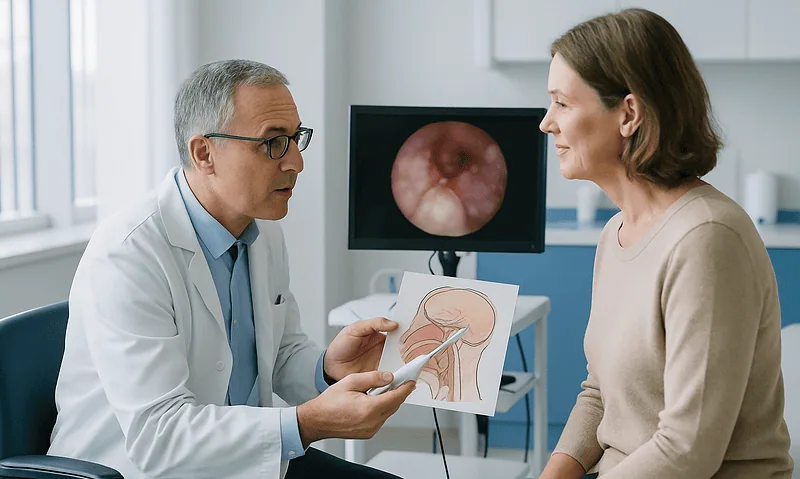
Transsphenoidal surgery is an operation that reaches the pituitary gland through the nose and the sphenoid sinus, an air pocket behind the nasal cavity…