

Inside the Operating Room: How a Robotic Hysterectomy Is Performed Through Small Incisions

Key Takeaways
- In a robotic hysterectomy the uterus is removed through the vagina, not through the small abdominal incisions, which exist only to admit the camera and instruments.
- The robotic arms have no independent function; every cut, seal and stitch is directed by a surgeon seated at a console a few feet away.
- A Cochrane review found keyhole hysterectomy recovers faster than abdominal but carries more bladder and ureter injuries, and found no clear difference between robotic and conventional laparoscopic approaches.
- Shoulder-tip pain in the first days is referred pain from residual carbon dioxide irritating the diaphragm, not a shoulder problem.
- The vaginal cuff, not the skin, sets the healing timeline, which is why the NHS advises waiting around four to six weeks before intercourse regardless of incision size.
- Keeping the cervix means cervical screening continues; removing both ovaries before natural menopause triggers menopausal symptoms within days.
A robotic hysterectomy removes the uterus through several small abdominal incisions, each roughly fingertip-width. Under general anesthesia the abdomen is inflated with carbon dioxide, ports are placed, and a surgeon seated at a console guides wristed instruments on robotic arms using a magnified 3D camera. The uterus is detached, drawn out through the vagina, and the vaginal cuff stitched closed. The robot never moves on its own.
The consent form is on the kitchen table, and one word on it keeps catching the eye: robotic. She has read that the incisions are small. She has also read, on a forum at 1 a.m., that somebody’s shoulder hurt for days and nobody warned them. Between the surgeon’s ten-minute explanation and the internet’s ten thousand opinions, there is a gap where the actual operation lives.
This article walks through the robotic hysterectomy procedure the way a colleague in the operating room would describe it: what happens after you fall asleep, where the openings go, why the uterus leaves through the vagina rather than the abdomen, and what the first six weeks honestly feel like. It also weighs the evidence on whether the robot changes outcomes, because that is the question underneath all the others.
None of it replaces the conversation with your own surgical team, who know your anatomy and history. It should make that conversation sharper.
What actually happens during a robotic hysterectomy procedure, from first incision to last stitch
You will not remember most of this, which is exactly why it is worth describing. A hysterectomy is surgery to remove the uterus, or womb. In the robotic version, that removal happens through a few small openings low on the abdomen rather than one long cut.
The morning begins with an anesthesiologist. You receive a general anesthetic, meaning you are fully asleep with a breathing tube supporting your lungs. A thin catheter drains the bladder so it stays empty and out of harm’s way. The team places your legs in padded supports and tilts the table gently head-down, letting the bowel slide toward the chest and away from the pelvis.
Next, the gynecologic surgeon positions a uterine manipulator, a slim instrument passed through the vagina that lets the team move the uterus like a handle. Carbon dioxide gas flows into the abdomen through a first small incision, creating a dome of working space. Several more incisions follow, each fitted with a hollow tube called a port. The robotic cart is wheeled up and its arms are attached to those ports, a step surgeons call docking.
From here the operation follows the same anatomical sequence as any hysterectomy. Ligaments holding the uterus are divided and their vessels sealed. The bladder is eased off the front of the uterus. The uterine arteries are closed. A circular cut around the top of the vagina frees the uterus, which is drawn out through the vagina rather than the abdominal wall. The surgeon stitches the top of the vagina, now called the vaginal cuff, closed from inside. Gas is released, ports come out, and the skin openings are closed with a stitch or surgical glue, as Mayo Clinic’s description of the procedure outlines.
Is the robot operating on me? How the surgeon controls the arms
The word robot does a lot of unhelpful work in patients’ imaginations. Nothing in that room moves unless a surgeon moves it. The more accurate name is robot-assisted laparoscopy, and laparoscopy is keyhole surgery performed with a camera and long, thin instruments passed through small incisions.

Picture the layout. The surgeon sits at a console a few feet from the table, face pressed to a viewer that shows a magnified, three-dimensional image from the camera inside your abdomen. Two hand controls and a set of foot pedals translate every finger movement into motion of the instruments on the arms. Those instruments have wrists that bend further than a human hand can inside a narrow pelvis, and the software filters out natural tremor, as Mayo Clinic notes. Lift your hands off the controls and the arms freeze.
At the bedside, a second trained team member, often a surgical assistant or resident, swaps instruments, passes sutures and manages the uterine manipulator. A scrub nurse counts every needle. The anesthesiologist watches heart rate, blood pressure, oxygen and the pressure inside the abdomen, because the gas and the head-down tilt shift blood toward the chest and push on the diaphragm.
Two safety facts belong in your head before you sign. First, an open operation is always available if bleeding, dense scar tissue or an unexpected finding makes the keyhole approach unsafe; teams call this conversion, and consent forms typically mention it. Second, the machine has no independent judgment. If the system faults, the arms are undocked and the surgeon continues with conventional laparoscopic instruments or an incision. The skill in the room is entirely human; the technology extends reach and steadiness, nothing more.
Where the small incisions go and what each one does
Ask to see the incision map before surgery, because the geography shapes what you will feel afterward. Most surgeons place four or five openings. One sits at or just above the navel for the camera. Two or three fan out across the lower abdomen, roughly a hand’s width to each side, for the working arms. A final opening, usually on one flank, serves the bedside assistant for suction, retrieving stitches and passing tissue.
Each is small enough to close with a single stitch or a dab of skin glue, according to Mayo Clinic. That is why the outside of a robotic hysterectomy heals quickly. Inside, though, the operation is exactly as large as any hysterectomy: a fist-sized organ detached, major vessels sealed, a suture line placed at the top of the vagina. Small incisions do not mean small surgery, a point NHS recovery guidance makes by advising weeks, not days, before lifting or vigorous activity after keyhole hysterectomy.
How does a uterus leave through openings that size? It does not. In most cases it exits through the vagina after the top of the vagina is opened. When fibroids have made the uterus too bulky for that route, surgeons have two options: extend one incision, or divide the tissue into smaller pieces, a technique called morcellation. When morcellation is used at all it is done inside a containment bag, because scattering fragments would be harmful if an unsuspected cancer were present; Cleveland Clinic and Mayo Clinic both flag this as a pre-surgery conversation.
The port sites themselves rarely cause lasting trouble. Numbness around the scars, small lumps under the skin where sutures dissolve, and itching as tiny nerves regrow are common and settle over months.
Total, partial, radical: what is removed, and what happens to the ovaries
Hysterectomy is one word covering several operations, and the consent form should say which one you are having.
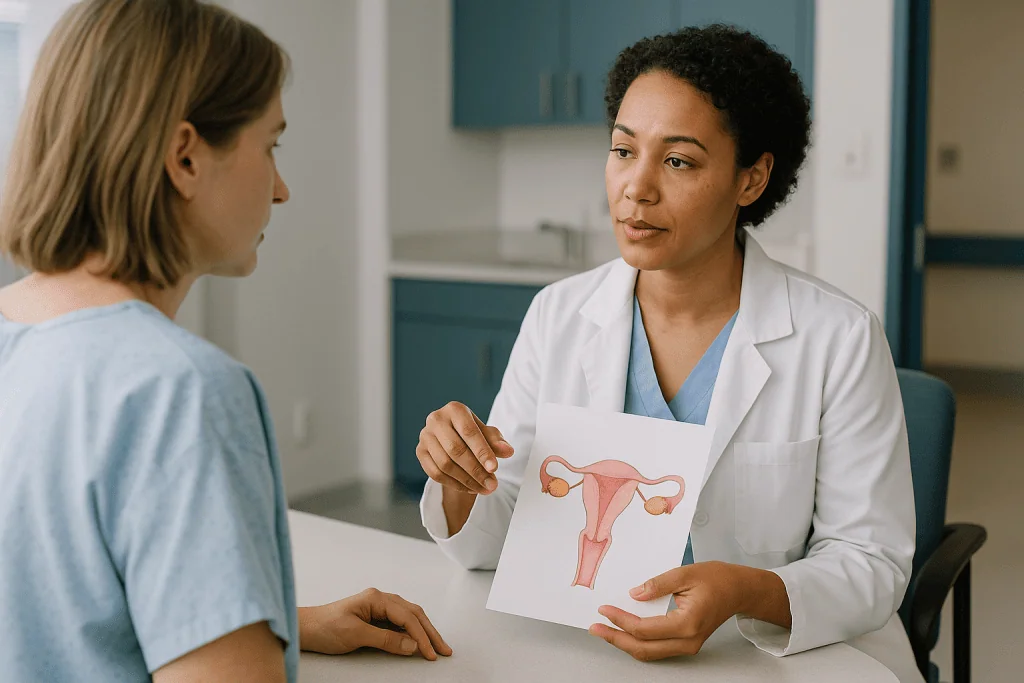
A total hysterectomy removes the uterus and the cervix, the narrow neck at its base. A supracervical, or subtotal, hysterectomy removes the upper uterus and leaves the cervix in place. A radical hysterectomy, generally reserved for certain cancers, also removes the upper vagina and surrounding supporting tissue. All three can be performed robotically, though radical operations are more complex, per Johns Hopkins Medicine.
Separately, you and your surgeon decide the fate of the fallopian tubes and ovaries. Removing the tubes is salpingectomy; removing the ovaries is oophorectomy. Many surgeons now offer tube removal during hysterectomy for people who have finished childbearing, because a proportion of ovarian cancers are believed to begin in the tube, as Cleveland Clinic explains. Tubes make no hormones, so taking them does not trigger menopause.
Ovaries are another matter. They produce estrogen and progesterone until natural menopause. If both are removed beforehand, hormone production stops abruptly and menopausal symptoms can begin within days, according to the NHS. That decision touches bone, heart and sexual health for decades and deserves its own conversation rather than a tick box.
Keeping the cervix carries a practical consequence people forget: cervical screening continues on the usual schedule, because the tissue that screening examines is still there. Keeping the ovaries carries another: they can still form cysts or, rarely, cancer, so new pelvic pain later in life still warrants evaluation.
Route and extent are separate decisions. One is how the surgeon gets in; the other is what comes out. Both are settled before the anesthetic, together, and written down.
Who is usually offered a robotic hysterectomy procedure, and who is asked to wait
Hysterectomy is among the most common operations performed on women in the United States, second only to cesarean delivery, according to Cleveland Clinic. Most are done for benign conditions.
The reasons a surgeon might suggest a robotic hysterectomy procedure mirror the reasons for any hysterectomy: fibroids causing bleeding or pressure, heavy periods unresponsive to other treatment, endometriosis or adenomyosis (tissue resembling the uterine lining growing outside the uterus or within its muscle wall), uterine prolapse, and cancer or precancerous change of the uterus, cervix or ovaries, as MedlinePlus and the NHS list. The robotic route tends to be chosen when a keyhole approach is wanted but the case is technically demanding: a large uterus, dense adhesions from earlier surgery or endometriosis, or a body shape that makes straight laparoscopic instruments hard to angle.
Who is usually steered elsewhere? When a vaginal hysterectomy is feasible, the Cochrane review by Aarts and colleagues favors it as the least invasive option. Serious heart or lung disease can make the head-down tilt and gas pressure poorly tolerated. A uterus too large to pass through the vagina intact may point toward an open incision.
Who is asked to wait? People with benign symptoms who have not yet tried simpler options, since hormonal therapies, a hormone-releasing intrauterine device, endometrial ablation, myomectomy or uterine artery embolization can manage bleeding or fibroids while preserving the uterus. Anyone who may still want a pregnancy, because hysterectomy permanently ends fertility. Those with untreated anemia, uncontrolled diabetes, an active infection or heavy smoking are often given time to improve first, because each raises surgical risk. Waiting is not refusal; it is preparation, and the treating team sets the timing.
Robotic vs laparoscopic hysterectomy (and vaginal and abdominal): what the evidence shows
Patients want to know whether the robot is better. The honest answer is that the route into the body matters far more than the presence of a robot, and the evidence is clearest when keyhole approaches are compared with a long abdominal incision.
A Cochrane systematic review of surgical approaches to hysterectomy for benign disease found that laparoscopic hysterectomy, compared with abdominal, brought faster return to normal activities, shorter hospital stays and fewer wound infections, but longer operating times and more injuries to the bladder or ureter, the tube carrying urine from kidney to bladder. Comparing robot-assisted with conventional laparoscopic hysterectomy, the same review judged the available trials too few and too small to show clear differences in complications or recovery.
| Approach | How the uterus is reached | Typical hospital stay | Typical return to usual activities | What the evidence says |
|---|---|---|---|---|
| Abdominal (open) | One incision across the lower abdomen | Longest, up to several days (NHS: 1 to 5 days across all types) | About 6 to 8 weeks (NHS) | Needed for very large uterus or some cancers; slowest recovery |
| Vaginal | Through the vagina, no abdominal incision | Shorter than abdominal (NHS) | Shorter than abdominal (NHS) | Preferred where feasible (Cochrane) |
| Laparoscopic | Several small incisions; surgeon holds instruments | Often same day or one night | Faster than abdominal (Cochrane) | More urinary tract injury than abdominal; fewer wound infections |
| Robotic | Several small incisions; instruments on robotic arms | Same day or one night for many (Mayo Clinic) | Around 3 to 4 weeks for many people (Mayo Clinic) | No clear difference from laparoscopic in trials reviewed (Cochrane) |
Read those as ranges, not promises. Your recovery depends on what was removed, whether cancer surgery was involved, your health beforehand and how the days afterward are handled. The Cochrane authors were pointed: choose vaginal where possible, laparoscopic when vaginal is not, and reserve abdominal incisions for cases that need them, with the robot as one way of doing laparoscopy rather than a separate category of care.
How painful is robotic hysterectomy, and where the pain actually comes from
Pain after this surgery comes from four places, and knowing which is which helps.
The incisions are usually the least of it; they are small, and many surgeons inject a local anesthetic around each before closing. The deeper ache is internal, from the pelvis where ligaments and vessels were divided and the cuff was sutured; it feels like a heavy period cramp and peaks in the first two or three days. A third pain surprises people: a sharp jab at the tip of one shoulder or under the ribs. That is referred pain from leftover carbon dioxide irritating the diaphragm, and it fades as the gas is absorbed over a few days, as NHS guidance on keyhole surgery describes. Fourth, the bladder may sting or feel urgent for a while after the catheter and the dissection around it.
Pain control after hysterectomy is usually multimodal, meaning several medicine classes working by different mechanisms at once: acetaminophen and anti-inflammatory drugs dampen pain signaling and swelling, while opioids are held for breakthrough pain because they cause constipation, nausea and carry dependence risk. The prescribing team decides what is used and for how long; nothing should be adjusted without them.
Compared with an open hysterectomy? The Cochrane review found people resumed activity sooner after keyhole approaches, a reasonable proxy for less prolonged pain, although pain scores were not consistently reported. Cleveland Clinic describes most people needing prescription pain relief for only a short period after minimally invasive hysterectomy before moving to over-the-counter options. Many patients name day three as the turning point.
What is not normal: pain that escalates after initially easing, pain with fever, or pain out of proportion to what the team predicted. Those belong in the red-flag section near the end of this article.
Robotic hysterectomy risks and downsides, stated plainly
A surgeon who says a robotic hysterectomy has no downsides is not telling the whole story. Here they are, in neutral terms.
The general risks belong to any hysterectomy: bleeding, infection at the incisions or inside the pelvis, blood clots in the legs or lungs, and reactions to anesthesia, as MedlinePlus lists. Injury to neighboring organs is the particular worry of pelvic surgery. The bladder rests on the uterus; the ureters run within a finger’s width of the uterine arteries; the bowel sits inches away. The Cochrane review found urinary tract injuries more frequent with laparoscopic than abdominal hysterectomy, and the robotic approach shares that anatomy and that risk.
Some downsides are specific to the technique. Operating time is longer with keyhole methods, lengthening anesthesia. The steep head-down position, held for hours, can cause facial swelling, temporary numbness in an arm or leg from pressure on nerves and, rarely, changes in eye pressure. The vaginal cuff, stitched from inside, can occasionally open weeks later, a rare event called cuff dehiscence that shows up as sudden pain, bleeding or a sensation of something coming through the vagina, usually after intercourse or straining; Cleveland Clinic notes this is why the wait before intercourse exists.
Conversion to an open incision happens in a minority of cases when the keyhole approach becomes unsafe; that is a safety decision, not a failure. Loss of touch is a real limitation: a surgeon at the console senses resistance only indirectly and relies on visual cues.
Then there are downsides that arrive later. Removing the ovaries brings immediate menopause; even with ovaries kept, some studies suggest menopause may come somewhat earlier, though findings are mixed. Pelvic support changes, and prolapse or urinary symptoms can develop over years. Relief, grief and altered body image can coexist. A surgeon’s experience with the platform matters, and asking about it is legitimate.
Why is my stomach bigger after a robotic hysterectomy?
This question tends to arrive in the second or third week, when people expect to look like their old selves and find a rounder, tighter belly instead. There are several ordinary explanations, and one that needs a phone call.
Start with the gas. Carbon dioxide inflates the abdomen during the operation, and although most is released at the end, some stays trapped between organs. The body absorbs it over a few days, which is why bloating and shoulder pain usually fade together, according to NHS guidance on keyhole surgery.
Then there is swelling. The pelvis has been operated on, and tissue responds with fluid and inflammation exactly as a sprained ankle does, except you cannot see it. That internal swelling, nicknamed swelly belly in patient forums, can wax and wane for weeks, often worse after a day on your feet and better after a night lying flat.
Constipation contributes more than people expect. Anesthesia slows the bowel; opioid pain relievers slow it further; less walking and lighter eating do the rest. A bowel that has not emptied for several days adds real volume. Gentle movement, fluids, fiber and whatever bowel plan the team suggests address this.
Finally, the abdominal wall itself. The muscles have been pierced and are guarded and weak; posture changes as you protect a sore pelvis, and a belly usually held in relaxes forward. Core strength returns with time and graded activity.
The version that should prompt a call is different in character: a belly that expands rapidly over hours, feels hard or exquisitely tender, or arrives with fever, vomiting, inability to pass urine or feeling faint. Those can signal internal bleeding, infection or bowel obstruction and need same-day assessment.
What can you not do after a robotic hysterectomy?
The rules after a robotic hysterectomy are almost identical to the rules after any hysterectomy, because the inside of you does not know how small the incisions were. NHS recovery guidance is the clearest single source, and it frames restrictions by what has to heal rather than by the calendar.
Nothing in the vagina until the cuff has healed. That means no intercourse, tampons or douching until your surgeon confirms healing, which the NHS places at around four to six weeks for most people and which usually follows a cuff check at a follow-up visit. The cuff is the one suture line that bears strain, and pressure or friction before it has knitted is the mechanism behind the dehiscence described earlier.
No heavy lifting or straining. Shopping bags, toddlers, laundry baskets and weights all raise pressure in the abdomen and tug on healing tissue. The NHS advises avoiding heavy lifting during recovery and building back gradually; many surgeons use the yardstick of nothing heavier than a full kettle for the first few weeks.
No driving until you can wear a seat belt comfortably and perform an emergency stop without hesitation, per NHS advice; this often takes several weeks, and your insurer may have its own conditions. No baths or swimming until wounds are sealed; showers are usually fine early. No smoking, which impairs healing and raises clot and infection risk.
What you should do is walk. Short, frequent walks from the first day lower clot risk, wake the bowel and shift trapped gas. Rest is not bed rest.
Return to work depends on the job: the NHS gives a broad range of roughly four to eight weeks for hysterectomy overall, shorter for desk work after keyhole surgery, longer for physical roles. Your surgeon signs off, not your diary.
What the days and weeks after surgery usually look like
Recovery has a shape, and knowing it lowers the panic when a day goes sideways.
Day of surgery. You wake in the recovery area with a scratchy throat from the breathing tube, cramping low in the pelvis and perhaps shoulder-tip pain. The catheter usually comes out within hours; passing urine on your own is one gate to going home. Mayo Clinic notes many people leave the same day or after one night following robotic hysterectomy, a shorter stay than after abdominal surgery.
Days one to three. The hardest stretch. Fatigue is profound; anesthesia, blood loss and the body’s inflammatory response all demand sleep. Light vaginal bleeding or brownish discharge is expected. Walk to the bathroom and back, then a little further each time. Bowels are sluggish.
Week one to two. Pain shifts from constant to positional. Many people stop prescription pain relief in this window. Incisions itch. A follow-up call or visit often falls here.
Weeks two to four. Energy returns in uneven steps, a good day followed by a flat one. Discharge lightens and should not smell offensive. Mayo Clinic describes a return to usual activities for many people around three to four weeks after robotic hysterectomy, an average rather than a target. If tissue went to pathology, results typically arrive in this window and are discussed at follow-up.
Weeks four to eight. The cuff check, usually at a postoperative visit, clears intercourse and heavier activity. The NHS describes full recovery from hysterectomy overall within about six to eight weeks, sooner after keyhole approaches.
Beyond. Scars fade for a year. Emotional adjustment, whether relief at the end of bleeding or grief at the end of fertility, keeps its own timeline and deserves as much attention as the stitches.
What people often get wrong about robotic hysterectomy
Some beliefs about this operation are so widespread they arrive in the consultation already installed. A few corrections.
“The robot does the surgery.” It does not. Every movement is a surgeon’s movement, transmitted through the console. The system cannot cut, seal or suture on its own.
“Robotic is automatically safer than laparoscopic.” The Cochrane review found no clear evidence of fewer complications or faster recovery with robot assistance compared with conventional keyhole surgery. The robot may make a difficult keyhole case feasible, which is a different and legitimate benefit.
“Small scars mean a small operation.” The internal surgery is identical to an open hysterectomy. Healing timelines for lifting and intercourse are set by the vaginal cuff, not the skin.
“If I keep my ovaries, nothing hormonal changes.” Usually little changes immediately, but because the ovaries share blood supply with the uterus, some studies suggest menopause can arrive somewhat earlier than it otherwise would. The NHS describes this as possible rather than certain.
“You gain weight after a hysterectomy.” The operation itself does not alter metabolism. Reduced activity during recovery, and menopause if ovaries were removed, can shift weight; the surgery is not the direct cause.
“Sex will be worse.” Cleveland Clinic notes many people report no change or improvement once pain and bleeding stop, while a minority notice differences, particularly after removal of the cervix or ovaries. Lubrication and emotional factors matter more than anatomy for most.
“I will never need gynecologic care again.” If the cervix stays, screening continues. If the ovaries stay, they can still develop problems. Pelvic floor symptoms can emerge years later. The gynecologist does not vanish from your life; the visits simply change subject.
Questions to ask your care team before a robotic hysterectomy
Consultations are short and the questions that matter tend to surface in the parking lot afterward. Bring this list, and bring someone to take notes. None of these questions is confrontational; good surgeons answer them routinely and often welcome a patient who has done the reading.
- Which type of hysterectomy am I having: total, supracervical or radical, and why that one?
- Will my fallopian tubes or ovaries be removed? What are the reasons for and against in my case?
- Why robotic rather than vaginal, conventional laparoscopic or abdominal for me specifically?
- How many robotic hysterectomies do you perform in a typical year, and what is your rate of conversion to open surgery?
- If my uterus is large, how will it be removed? Is morcellation possible, and how would a containment bag be used?
- What is your plan for pain control, including non-opioid options, and how will it be adjusted if it is not working?
- What is your plan to prevent blood clots during and after surgery?
- Will I go home the same day or stay overnight, and what has to happen before I am discharged?
- What exactly should I not do, and until when? Who confirms the vaginal cuff has healed?
- When and how will I get pathology results?
- Which symptoms mean I should call the office, and which mean I should go to an emergency department?
- Who do I call at 2 a.m., and what number?
- If my ovaries are removed, who will manage menopausal symptoms afterward?
- Are there alternatives to hysterectomy for my condition that we have not yet tried?
Write the answers down beside each question. If any answer is vague, ask again; if it is a percentage, ask where it comes from. You are allowed to seek a second opinion, and asking for one is not a criticism of the first.
When to call your doctor after a robotic hysterectomy
Most recovery worries turn out to be ordinary, but a short list of signs should not wait for the scheduled follow-up. The NHS, Mayo Clinic and MedlinePlus agree on the core red flags.
Call emergency services or go to an emergency department for chest pain, sudden breathlessness or coughing up blood, which can signal a clot in the lung; for heavy vaginal bleeding that soaks a pad within an hour or passes large clots; for fainting or a racing heart with lightheadedness; or for a sensation of tissue coming through the vagina, especially after intercourse or straining, which can indicate the vaginal cuff has opened.
Contact your surgical team the same day for a temperature above the threshold your team set, or persistent chills; for abdominal pain that worsens rather than eases, or a belly that becomes hard, swollen and tender over hours; for pain, warmth, swelling or redness in one calf; for redness, spreading warmth, pus or separation at any incision; for vaginal discharge that becomes foul-smelling or turns bright red and heavy after having lightened; for inability to pass urine, burning that persists beyond a day or two, or urine leaking continuously without control; for persistent vomiting or inability to keep fluids down; or for new numbness or weakness in a leg that does not resolve within a day.
Call during office hours, without waiting for the next appointment, for constipation lasting more than a few days despite the plan you were given, for low mood or anxiety that is interfering with sleep or daily life, or simply because something feels wrong and you cannot name it. Surgical teams would far rather hear about a false alarm than miss a real one. Every decision about what happens next, from a reassuring phone call to a return to the hospital, sits with the clinicians who know your operation.
Frequently asked questions
How long is the robotic hysterectomy recovery time?
Mayo Clinic describes many people returning to usual activities around three to four weeks after robotic hysterectomy, compared with roughly six to eight weeks after an abdominal operation according to the NHS. Hospital stay is often the same day or one night. Those are typical ranges, not guarantees; what was removed, whether cancer was involved and your health beforehand all shift the timeline, and your surgeon sets the milestones.
How painful is a robotic hysterectomy compared with open surgery?
Most people describe internal cramping like a heavy period for the first few days, small-incision soreness and, often, shoulder-tip pain from residual gas. The Cochrane review found faster return to activity after keyhole approaches than after abdominal hysterectomy, which suggests less prolonged pain, though pain scores were inconsistently reported. Pain control is multimodal and set by the prescribing team; many patients name day three as the turning point.
What are the downsides of a robotic hysterectomy?
Longer operating and anesthesia time than open surgery, a higher rate of bladder or ureter injury with keyhole approaches per the Cochrane review, positional effects from the steep head-down tilt, the rare risk of the vaginal cuff opening weeks later, and the possibility of conversion to an open incision. The surgeon also loses direct touch and relies on visual cues. Longer-term downsides, such as menopause if ovaries are removed, belong to any hysterectomy.
Why is my stomach bigger after a robotic hysterectomy?
Four ordinary reasons: residual carbon dioxide absorbed over a few days, internal swelling that can fluctuate for weeks, constipation from anesthesia and opioid pain relief, and weakened, guarded abdominal muscles that let the belly relax forward. A belly that enlarges rapidly over hours, feels hard or very tender, or comes with fever, vomiting or inability to pass urine is different and needs same-day medical assessment.
What can you not do after a robotic hysterectomy?
NHS recovery guidance advises nothing in the vagina, including intercourse and tampons, until the cuff has healed, typically around four to six weeks and confirmed by your surgeon; no heavy lifting or straining; no driving until you can wear a seat belt and do an emergency stop comfortably; no baths or swimming until wounds seal; and no smoking. Walking from day one is encouraged. Return to work usually falls within four to eight weeks depending on the job.
Robotic vs laparoscopic hysterectomy: is one safer?
Not clearly. The Cochrane review of surgical approaches to hysterectomy found the trials comparing robot-assisted with conventional laparoscopic hysterectomy too few and too small to show a difference in complications or recovery. Both share the advantages of keyhole surgery over an abdominal incision and the same risk to the bladder and ureter. The robot’s practical value is making technically difficult keyhole cases feasible, which your surgeon can explain for your situation.
Does the robot perform the surgery by itself?
No. The system is robot-assisted laparoscopy: a surgeon sits at a console and every movement of the instruments mirrors a movement of the surgeon’s hands, with tremor filtered out and a magnified 3D view. Release the controls and the arms stop. A bedside assistant changes instruments, and an anesthesiologist monitors you throughout. If the system faults, the surgeon continues with conventional instruments or an open incision.
How is the uterus removed through such small incisions?
It is not removed through them. After the uterus is detached inside the pelvis, the surgeon opens the top of the vagina and draws the uterus out that way, then stitches the vaginal cuff closed from inside. When fibroids make the uterus too large for the vaginal route, options include enlarging one incision or dividing the tissue inside a containment bag, a decision Mayo Clinic and Cleveland Clinic advise discussing before surgery.
Will I go through menopause after a robotic hysterectomy?
Only if both ovaries are removed before natural menopause, in which case the NHS notes symptoms can begin within days because hormone production stops abruptly. Periods end after any hysterectomy, but ovaries left in place keep producing estrogen and progesterone. Some studies suggest menopause may arrive somewhat earlier than it otherwise would after hysterectomy with ovaries kept, though the evidence is mixed. Removing the fallopian tubes alone does not affect hormones.
Can I still get cervical cancer after a hysterectomy?
If the cervix was left in place, as in a supracervical hysterectomy, yes, and routine cervical screening continues on the usual schedule. After a total hysterectomy the cervix is gone, and most people with no history of cervical precancer or cancer no longer need screening, though those with such a history may be advised to continue vaginal screening. Your gynecologist or primary care clinician confirms which applies to you.
References
This article is for general information only and is not a substitute for professional medical advice. Please consult a qualified doctor about your individual situation.

More from the Blog

Can You Get Pregnant After Menopause? Natural Odds, Perimenopause and IVF Options
Once menopause is complete, meaning 12 consecutive months without a period, pregnancy with your own eggs is no longer realistically possible because the ovaries…

Early Pregnancy Symptoms: The First Signals, Week by Week
Early pregnancy symptoms usually begin around weeks 4 to 6, counted from the first day of your last period. A missed period is the…

Who Is a Candidate for Endometriosis Surgery? Pain, Fertility Plans and Imaging Findings
Endometriosis surgery is usually considered for people whose pelvic pain has not eased with hormonal or anti-inflammatory treatment, who are trying to conceive and…

Endometriosis After Surgery: Why Lesions Can Return and How Repeat Treatment Is Planned
Endometriosis can return after surgery because the operation removes visible lesions but not the hormonal environment that drives them. Pooled studies report symptoms or…

When to Start Mammograms and How Often to Have Them
Most women at average risk can begin screening mammograms at age 40 and repeat them every one to two years, depending on the guideline…

After Robotic Hysterectomy: Redness, Discharge or Fever and When to Contact Your Surgeon
After a robotic hysterectomy, mild pinkness at the small incisions, light brown or pink vaginal discharge for up to six weeks, and low-grade warmth…