

Is a Dental Hygiene Cleaning Painful? Sensitivity, Heavy Tartar and Numbing Options
Key Takeaways
- Healthy gum grooves measure about 1 to 3 millimeters; pockets of 4 millimeters or more are the finding that shifts a person from routine cleaning to scaling and root planing.
- Enamel has no nerve supply, so scaling a healthy crown is painless; the twinges people feel come from inflamed gums and exposed root dentin, not from enamel being scraped.
- A routine cleaning typically takes 30 to 60 minutes, while deep cleaning is usually split across two or more visits of an hour or longer, each done under local anesthetic.
- Bleeding during a cleaning reflects gum inflammation, not rough technique; gums that are already healthy do not bleed under the same instrument pressure.
- Gums often look receded and teeth appear longer in the weeks after deep cleaning because swollen tissue tightens as it heals, revealing bone loss the disease had already caused.
- The recommended interval between check-ups is individualized, from every few months to every two years according to the NHS, and shorter gaps generally mean lighter tartar and gentler cleanings.
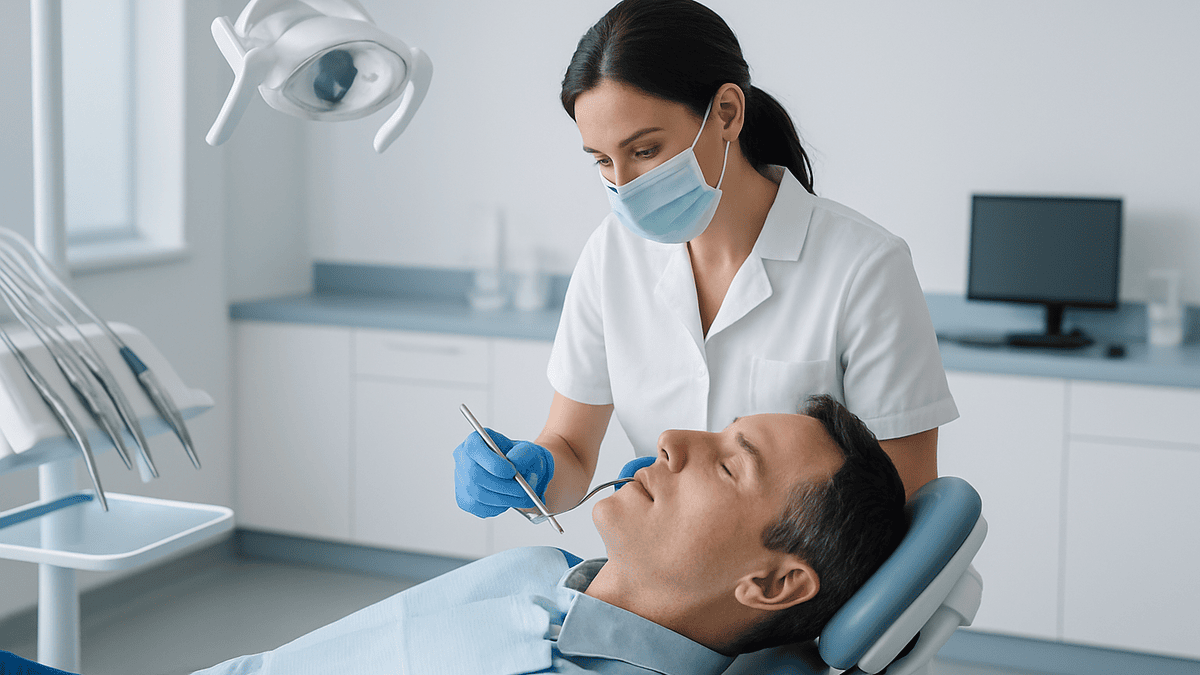
For most people, a routine teeth cleaning is not painful, though it can feel scratchy, cold, or briefly uncomfortable, especially where gums are inflamed or roots are exposed. A deep cleaning (scaling and root planing) works below the gumline and is usually done with local numbing. Mild sensitivity afterward is common and typically settles within days. Tell your hygienist about any discomfort; comfort options exist and can be adjusted.
Your tongue keeps finding it: that rough little ledge behind your lower front teeth, the one that was not there a few years ago. You have an appointment on Thursday. It has been a long time, longer than you would say out loud, and somewhere around midnight you type the question you have been carrying around all week: is teeth cleaning painful?
The honest answer is more interesting than yes or no. What a cleaning feels like depends far less on the hygienist’s instruments than on the state of the gums those instruments are working beside. Healthy gum hugs the tooth like a turtleneck. Inflamed gum is loose, swollen, and tender, and it bleeds when touched. That difference, not toughness or a low pain threshold, decides most of the experience.
This explainer walks through what actually happens in the chair, why heavy tartar changes the feel of a visit, what deep cleaning involves, which numbing options exist, and what the days afterward usually look like, so Thursday holds fewer surprises.
Is teeth cleaning painful? The honest short answer
Most routine cleanings sit somewhere between neutral and mildly unpleasant. People describe scraping sounds that feel louder than they are, a cold spray of water, pressure along the gumline, and the occasional sharp twinge when an instrument passes an exposed root. Pain in the sense of something that makes you flinch and grip the armrest is not the expected experience for a person with healthy gums and a recent history of regular visits.
The picture shifts when gums are inflamed. Gingivitis, the early and reversible stage of gum disease, makes tissue swollen and quick to bleed, and touching inflamed tissue hurts in a way that touching healthy tissue does not. The NHS notes that bleeding while brushing is often the first sign of gum disease, and a hygienist working along that same gumline will meet the same tenderness.
Two other factors matter. Exposed dentin, the layer beneath enamel that contains microscopic channels leading toward the nerve, reacts to cold and touch. And the volume of tartar, which is hardened plaque, dictates how much instrument time each tooth needs. More tartar means more contact, and more contact on tender gums means more sensation.
So the fair answer to “is teeth cleaning painful” is this: discomfort is common, real pain is not the norm, and the amount of either tracks closely with how inflamed the gums are and how long it has been since the last visit. That is also why hygienists ask about your history before they start. They are gauging what the appointment is likely to feel like for you, and what comfort measures to have ready.
What actually happens during a routine dental cleaning
A routine cleaning, sometimes called a prophylaxis, follows a fairly predictable sequence. The hygienist first looks and often probes, gently measuring the small groove where gum meets tooth. Healthy grooves measure roughly 1 to 3 millimeters deep; pockets of 4 millimeters or more suggest gum disease, according to the Mayo Clinic. The probe is a thin ruler, and the reading tells the team whether a routine cleaning is the right appointment at all.
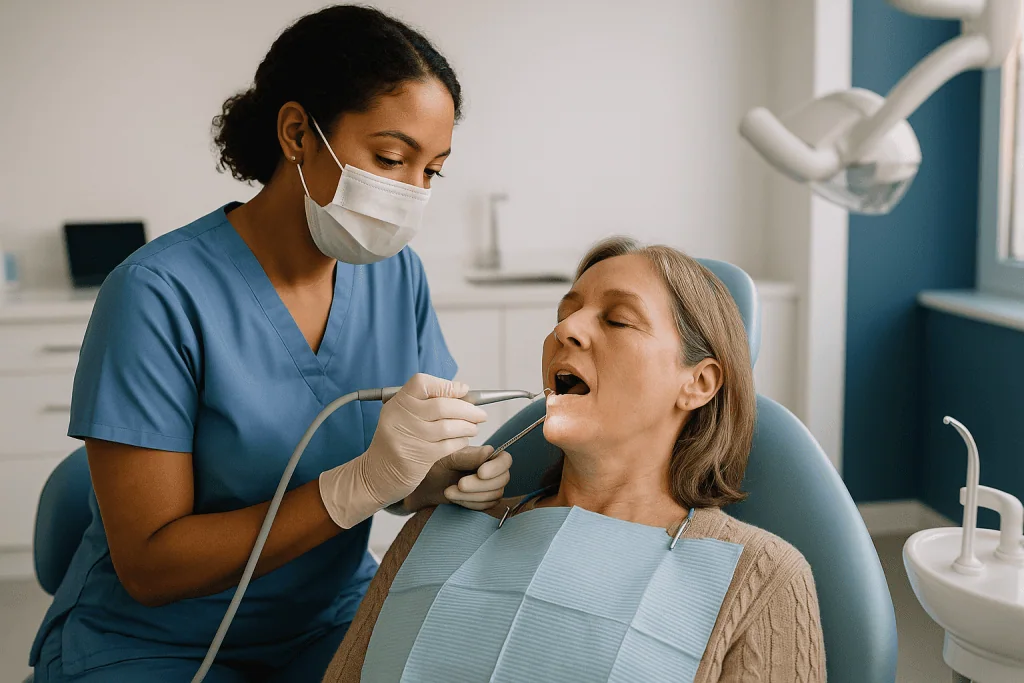
Next comes scaling, the removal of plaque and tartar from tooth surfaces above and just below the gumline. Two kinds of tools do this work:
- An ultrasonic scaler, a tip that vibrates thousands of times per second while spraying water, which shakes tartar loose and flushes debris away. It feels like a hum and a fine cold mist.
- Hand scalers, curved metal instruments the hygienist uses to feel for and lift remaining deposits. This is the classic scraping sensation.
Polishing follows, with a spinning rubber cup and a gritty paste that removes surface stain. Flossing checks the contacts between teeth. Many appointments end with a fluoride treatment, a varnish or gel painted onto the teeth to strengthen enamel and calm sensitivity.
Cleveland Clinic describes the whole sequence as typically taking 30 minutes to an hour. Throughout, the mouth is kept open and slightly stretched, which is where much of the fatigue people report actually comes from: jaw muscles, not teeth. Knowing the order of events helps, because the scaling step, the part most people brace for, is the middle of the visit, not the whole of it.
Why teeth cleaning hurts more for some people than others
Three mechanisms explain almost all the variation in how a cleaning feels, and none of them is about being brave.
The first is inflammation. Plaque bacteria irritate the gum, the body sends immune cells and extra blood, and the tissue swells and softens. Swollen tissue has a lower threshold for pain, the same way a bruise hurts when pressed while the skin next to it does not. The more inflamed the gumline, the more each pass of the scaler registers.
The second is exposed dentin. Enamel has no nerve supply, which is why a healthy crown can be scaled without any sensation at all. Below the gumline the root is covered by cementum, a thin layer that wears away easily. When gums recede, dentin is exposed, and dentin contains tubules, tiny fluid-filled channels running toward the pulp. Cold water, air, and instrument contact move that fluid and trigger the nerve. The Mayo Clinic explains this as the basis of sensitive teeth generally, and a cleaning simply delivers those triggers in quick succession.
The third is tartar load. Tartar cannot be brushed off; it must be mechanically removed. Heavy deposits mean more time per tooth, and deposits below the gumline sit directly against inflamed tissue.
Anxiety amplifies all three. A tense jaw, a held breath, and anticipation of the next twinge make ordinary sensations feel sharper. This is not imaginary; it is how the nervous system handles threat. It also means that the levers for a more comfortable visit are practical ones: healthier gums, protected dentin, less tartar to remove, and a hygienist who knows you would like a heads-up before each new step.
Heavy tartar: why the first cleaning after years away feels different
If it has been several years, the first appointment back is a different event from a six-month check, and it helps to know that going in.
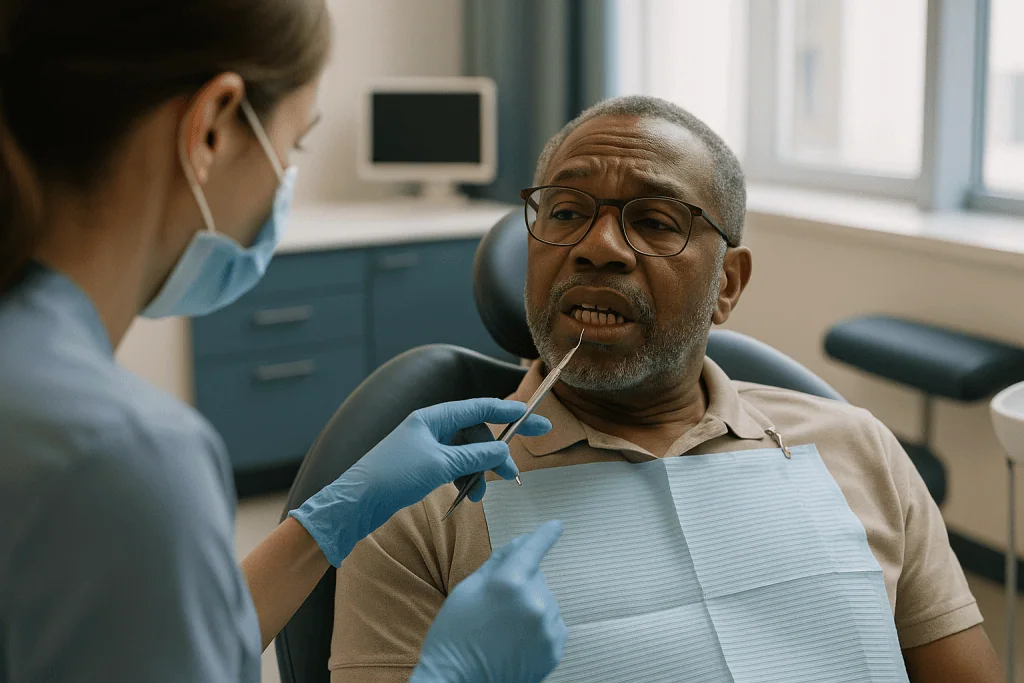
Plaque that stays on a tooth for more than a day or two begins to absorb minerals from saliva and hardens into tartar, also called calculus. Once formed, it acts as a rough scaffold that traps more plaque, and it spreads downward along the root under the gum. The gum around it stays chronically inflamed. Over years, that ledge you can feel behind your lower front teeth can grow into a band that bridges several teeth, and the gum beneath it is often puffy, dark red, and ready to bleed.
Removing it takes longer and involves more instrument contact. The ultrasonic scaler does the bulk of the work, but thick deposits may need to be broken up in stages. Bleeding is expected; it is the inflamed tissue responding, not damage caused by the cleaning. Some people are startled by how much blood they see on the rinse and interpret it as harm. Hygienists read it the opposite way, as a marker of how much the gums need the treatment.
When deposits extend well below the gumline and probing shows deeper pockets, the team may say a routine cleaning is not sufficient and recommend scaling and root planing instead. That is a clinical judgment about disease, not a comment on the person in the chair. The NHS is clear that gum disease is common and that treatment aims to control it and prevent progression. A frank conversation about numbing before starting, and about splitting the work across visits, changes the experience considerably.
Does deep cleaning hurt? Scaling and root planing explained
A deep cleaning is the everyday name for scaling and root planing, a non-surgical treatment for periodontitis, the more advanced stage of gum disease in which the bone and fibers supporting the tooth begin to break down. The Mayo Clinic lists it as a first-line, non-surgical treatment.
Scaling here means removing tartar and bacteria from the root surface all the way to the bottom of the pocket, well below the gumline. Root planing means smoothing the root surface so bacteria have a harder time reattaching and the gum can heal snugly back against it. Both steps are done with ultrasonic and hand instruments similar to a routine cleaning, but working deeper, for longer, and against tissue that is by definition inflamed.
Does deep cleaning hurt? Without numbing, it often would, which is why local anesthesia is a standard part of the procedure rather than an add-on, as Cleveland Clinic describes. Once the area is numb, most people report pressure, vibration, and the awareness of work being done, but not sharp pain. The mouth is usually treated in sections, one quadrant or one half at a time, so that only part of the face is numb after any single visit.
The more relevant discomfort tends to come afterward, as the anesthetic wears off: tender gums, sensitivity to cold on the treated roots, and a slightly bruised feeling for a few days. That is covered in the timeline section below. In the chair itself, the honest expectation for a numbed deep cleaning is tedium and pressure rather than pain, and the hygienist can top up the anesthetic if sensation returns partway through.
Routine cleaning vs deep cleaning: what to expect side by side
People often arrive expecting one kind of appointment and are offered another, so it helps to see the two procedures, and the maintenance visits that follow deep cleaning, laid out together. The details below reflect typical patterns described by the Mayo Clinic and Cleveland Clinic; your own team sets the plan.
| Feature | Routine cleaning (prophylaxis) | Deep cleaning (scaling and root planing) | Periodontal maintenance |
|---|---|---|---|
| Who it is for | Healthy gums or early gingivitis | Periodontitis with pockets typically 4 mm or deeper | People who have had deep cleaning |
| Where it works | Above and just below the gumline | Down to the base of the pocket, on the root surface | Wherever pockets persist |
| Numbing | Usually none; topical gel if needed | Local anesthetic is standard | Sometimes, depending on tenderness |
| Typical length | About 30 to 60 minutes | Usually split across two or more visits, each often an hour or more | Similar to a routine visit, sometimes longer |
| Feels like | Scraping, vibration, cold spray, pressure | Pressure and vibration while numb; tenderness afterward | Similar to routine, with attention to problem areas |
| Afterward | Little or no sensitivity | Sensitivity and tender gums for days; gums may look receded | Mild |
| Interval | Set by risk, from every few months to two years (NHS) | One-time treatment course, then reassessment | Often every few months |
The single most useful line in that table is the numbing row. Routine cleaning rarely needs it; deep cleaning nearly always includes it. If you are told you need scaling and root planing and no one has mentioned anesthesia, ask. Conversely, if a routine cleaning is planned but your gums are very tender, topical numbing gel is a reasonable thing to request before the hygienist begins.
Do they numb you for teeth cleaning? Numbing for teeth cleaning explained
Yes, when the situation calls for it, and the options sit on a ladder from mild to fully numb. Which rung is used is a decision for you and the clinical team together.
A topical anesthetic is a gel or liquid applied to the gum surface, where it numbs the outer tissue for a short time. It takes the edge off scaling at an inflamed gumline and is easy to add to a routine cleaning. It does not reach the depth of a pocket, so for deep cleaning it is a starting point rather than the whole plan.
A local anesthetic injection blocks nerve signals in a region of the mouth for an hour or more. This is the standard for scaling and root planing. The brief pinch of the needle is, for many people, the most noticeable moment of the entire procedure, and topical gel is often applied first to soften it. Numbness of the lip and cheek afterward is expected and fades on its own; the team will advise about eating while the area is numb to avoid biting the cheek.
Nitrous oxide, sometimes called laughing gas, is an inhaled sedative that reduces anxiety and dulls sensation without putting you to sleep. It clears quickly once the mask comes off. Other forms of sedation exist for people with severe dental anxiety, and the appropriateness of any sedation depends on your health history, which is why the medical questionnaire matters.
Two things worth knowing: numbing is a request you are allowed to make, and it is a plan the team can adjust mid-appointment. If sensation returns during a deep cleaning, say so. Topping up is routine.
How long does teeth cleaning take?
Length is one of the most searched questions about cleanings, partly because people are trying to gauge how long they will have to tolerate whatever the appointment feels like. The ranges below are typical, not guarantees, and your history and tartar load are the biggest variables.
A routine cleaning generally takes 30 minutes to an hour, according to Cleveland Clinic, and that usually includes the examination, scaling, polishing, and any fluoride application. Someone with light deposits and healthy gums may be done at the shorter end; someone returning after years away will often need the full hour, and sometimes a second visit to finish.
Deep cleaning is a different scale. Because it works root by root beneath the gum and requires anesthesia, Cleveland Clinic notes it is commonly split across two or more visits, with each visit often lasting an hour or longer. Treating the whole mouth in one sitting is possible but leaves the entire face numb and can be tiring, so many teams schedule one side or one quadrant at a time.
After scaling and root planing, a reassessment visit some weeks later allows the team to re-measure pockets once the gums have healed, and periodontal maintenance visits that follow tend to be scheduled more often than routine cleanings.
How often you need a routine cleaning is also individualized. The NHS advises that the interval between check-ups should be based on personal risk and can range from every few months to every two years. The often-quoted six months is a reasonable default for many people, not a rule, and your team will suggest an interval based on what they see.
Who is usually offered a deep cleaning, and who is asked to wait
A routine cleaning is for nearly everyone with teeth, including people with early gingivitis, since removing plaque and tartar is how gingivitis is reversed. Deep cleaning is reserved for a specific finding: periodontitis, confirmed by pocket depths of roughly 4 millimeters or more, bleeding on probing, and often bone loss visible on X-rays, as the Mayo Clinic describes. It is a treatment for disease, not a more thorough version of a routine visit, and offering it to someone with healthy gums would not make sense.
Certain situations lead teams to pause, coordinate, or modify a cleaning rather than proceed as usual:
- An active dental abscess or facial swelling, which usually needs assessment and treatment of the infection first.
- Bleeding disorders or anticoagulant (blood-thinning) medicines, where the team may want to speak with the prescribing clinician about timing. Patients should never change these medicines on their own.
- Specific heart conditions, such as certain prosthetic valves or a history of infective endocarditis, for which the American Heart Association recommends antibiotic coverage before some dental procedures. Whether this applies is a decision for your cardiologist and dentist together.
- Uncontrolled diabetes, which impairs gum healing; care often proceeds but with closer coordination.
- Recent surgery or acute illness, where deferral is a matter of comfort and judgment.
Pregnancy is not a reason to avoid cleaning. Hormonal changes make gums more prone to inflammation, and routine cleaning during pregnancy is considered safe and worthwhile, according to the NHS. Deep cleaning during pregnancy is a case-by-case conversation.
The consistent theme is coordination, not exclusion. Bring a current medication list and be candid about health changes; that information shapes the plan more than anything else.
Teeth sensitive after cleaning: what the next days and weeks look like
The appointment is one part of the experience; the days that follow are the other, and they differ sharply between routine and deep cleaning.
After a routine cleaning, most people notice little beyond a smoother feel and perhaps some mild gum tenderness or brief cold sensitivity that same day. Gums that bled during the visit may feel slightly sore for a day or two. Teeth sensitive after cleaning at this level usually settle without any intervention.
After scaling and root planing, expect more. As the anesthetic wears off, the treated gums typically feel tender and bruised, and the newly exposed root surfaces react to cold, sweet, and sometimes toothbrushing. Cleveland Clinic describes sensitivity and soreness lasting for several days, occasionally longer. Slight bleeding when brushing during the first days is common. Many teams suggest a soft-bristled brush, gentle technique, and a desensitizing toothpaste during this window; if pain relief is needed, the team will advise what is suitable for you.
Over the following weeks something less expected happens: the gums shrink. Inflamed tissue was swollen; as it heals, it tightens against the root and the swelling resolves. Teeth can look longer, small dark triangles may appear between them, and food may catch in new places. This is a sign of healing, not damage, though it is worth discussing because the exposed root areas can stay sensitive.
The reassessment visit a few weeks later is where the team re-measures pockets and decides whether maintenance cleanings will suffice or whether some areas need further treatment. Timelines vary from person to person, and smoking, diabetes, and home care all influence how quickly gums recover.
What is the disadvantage of teeth cleaning? Risks in plain terms
Cleaning is among the lowest-risk procedures in dentistry, but no procedure is free of downsides, and an honest explainer should name them.
Temporary sensitivity is the most frequent complaint, for the reasons already described: dentin newly uncovered as tartar is removed and gums shrink. For most people it fades; for some with significant recession it lingers and needs ongoing management with desensitizing products or, occasionally, restorative treatment. Mild gum soreness and bleeding are expected in the short term.
Gum recession that becomes visible after deep cleaning is often described as a disadvantage, though it is more accurately the unmasking of damage that periodontitis had already done. The tissue was never going to reattach to a tartar-covered root; removing the tartar reveals where the bone and gum have already been lost.
Scaling introduces oral bacteria into the bloodstream briefly, as does brushing and chewing. For most people this is harmless. For a small group with particular heart conditions, the American Heart Association recommends antibiotic prophylaxis before some dental work; that decision belongs to your physician and dentist.
Minor risks include small nicks to the gum or tongue from instruments, a chipped edge on a fragile restoration, and, with aggressive polishing on exposed roots, some surface abrasion. Local anesthetic can cause a lingering numb lip that people occasionally bite before sensation returns. Allergic reactions to anesthetic are rare.
The disadvantage people fear most, that cleaning weakens teeth or loosens them, is not borne out by the evidence; the next section takes that on directly. Weighed against the documented consequences of untreated gum disease, which the NHS lists as including tooth loss, the balance for most people favors treatment. Your team can put your own risk factors into that balance.
What people often get wrong about painful teeth cleaning
Several beliefs make cleaning appointments more frightening than they need to be, and a few are backwards.
“Can teeth fall out after deep cleaning?” This is the most common fear about scaling and root planing, and it deserves a careful answer. Deep cleaning does not remove bone or loosen the fibers that hold teeth. What it can do is reveal looseness that periodontitis had already caused: heavy tartar sometimes acts like mortar between teeth that have lost bone support, and once it is gone the true mobility is felt. Very advanced disease can lead to tooth loss with or without treatment, as MedlinePlus describes; deep cleaning is the attempt to stop that progression. If a tooth feels loose after treatment, tell the team, who will assess the bone support.
“Cleaning scrapes off enamel.” Enamel is far harder than tartar, and instruments are designed to lift deposits from it, not carve it. Sensitivity after cleaning comes from exposed dentin on the root, not from enamel removal.
“Bleeding means the hygienist is being rough.” Bleeding is a sign of inflamed gums. Healthy gums do not bleed under the same instrument pressure.
“Numbing is only for fillings.” Local anesthesia is standard for deep cleaning and available on request for tender routine cleanings.
“If it hurt last time, it will always hurt.” The opposite is usually true. Once gums heal and visits are regular, tartar load and inflammation drop, and later cleanings tend to feel milder.
“Skipping cleanings avoids the pain.” Avoidance lets tartar and inflammation build, making the eventual visit longer and more uncomfortable. The gentlest cleaning is the one that follows a recent one.
How to make your next cleaning less painful
Comfort at a cleaning is partly something you prepare for in the weeks before and partly something you negotiate in the chair.
Before the visit, the highest-yield step is reducing inflammation, because tender gums are the main source of discomfort. Two weeks of thorough twice-daily brushing along the gumline and daily cleaning between teeth, as the NHS recommends for gum disease, can noticeably calm gingivitis. Bleeding during that fortnight is expected and tends to lessen as tissue tightens. If you already know your teeth react to cold, the Mayo Clinic notes that toothpastes formulated for sensitive teeth work by blocking the dentin tubules or calming the nerve and typically need consistent use over several applications to build up their effect; starting ahead of the appointment gives them time to work.
At the visit, say what you are worried about before the hygienist picks up an instrument. Useful things to ask for include:
- Topical numbing gel along tender areas, or a local anesthetic if you have had painful cleanings before.
- A hand signal that means pause, agreed on in advance.
- Warmer water in the ultrasonic scaler, or more hand scaling in areas that react to cold.
- Breaks to rest your jaw, especially in longer appointments.
- Splitting a heavy first cleaning across two visits.
Slow breathing through the nose, headphones, and keeping your shoulders unclenched all reduce the way anxiety sharpens ordinary sensation. None of these are unusual requests; they are part of everyday practice.
After the visit, keeping the interval your team recommends is the single most reliable way to make each subsequent cleaning shorter and milder. Tartar takes time to build, and inflammation follows it.
Questions to ask your care team
A cleaning appointment moves quickly, and it is easy to leave with your questions still unasked. Bringing a short list turns a passive experience into a shared plan. These questions cover comfort, diagnosis, and what comes next.
About what was found:
- Did my pocket measurements show gingivitis, periodontitis, or healthy gums, and which areas concern you most?
- Do I need a routine cleaning or scaling and root planing, and what specifically led to that recommendation?
- Were there any signs of bone loss on my X-rays?
About comfort:
- What numbing options are available for me, and which do you suggest given my history?
- Can we agree on a signal for pausing, and can the anesthetic be topped up if I start to feel the work?
- Would splitting the appointment across visits make it easier?
About recovery and follow-up:
- What sensitivity or soreness should I expect afterward, and roughly how long does it typically last in your experience?
- What home care do you recommend during the first days, and is a desensitizing toothpaste worth trying?
- When is my reassessment or next visit, and what interval do you suggest for me going forward?
About my health:
- Do any of my medicines or health conditions change how you approach the cleaning, and should you speak with my physician first?
- Do I fall into a group for whom antibiotic coverage before dental work is advised?
Write the answers down or ask for them in your visit summary. The recommended interval, in particular, is the piece of information most people forget and the one that most influences whether the next cleaning is easy.
When to call your doctor
Some soreness, sensitivity to cold, and slight bleeding when brushing are expected after a cleaning, especially a deep one, and typically ease over days. The signs below are different. They suggest infection, a reaction, or a problem that needs assessment, and they warrant a call to your dentist or physician rather than waiting for the next scheduled visit. If breathing or swallowing is affected, treat it as an emergency.
- Swelling of the face, jaw, or floor of the mouth, particularly if it is increasing or spreading toward the eye or neck.
- Fever, chills, or feeling generally unwell in the days after treatment.
- Pain that worsens after the second or third day instead of easing, or pain that keeps you awake and is not settling.
- Bleeding that does not stop with gentle pressure after about 20 to 30 minutes, or that restarts repeatedly, especially if you take a blood-thinning medicine.
- Numbness of the lip, tongue, or chin that persists many hours beyond what your team said to expect, or altered sensation the next day.
- A tooth that feels distinctly loose, moves when you press it, or changes position.
- Pus, a foul taste, or a pimple-like bump on the gum.
- Difficulty opening the mouth that is worsening rather than improving.
- Signs of an allergic reaction to the anesthetic, such as a spreading rash, hives, or swelling of the lips or throat. Difficulty breathing is an emergency.
- For people with heart valve disease or a history of endocarditis: unexplained fever, night sweats, or fatigue in the weeks following dental work, which should be reported to your physician promptly.
Contact your care team as well if sensitivity is severe enough to stop you from eating or brushing, since untreated recession may need specific management. Every decision about further treatment, medicines, or referral rests with the clinicians who examined you.
Frequently asked questions
Is teeth cleaning painful for everyone?
No. People with healthy gums and regular visits usually feel scraping, vibration, and cold water rather than pain. Discomfort rises with gum inflammation, exposed root surfaces, and heavy tartar, all of which increase the sensation each instrument pass produces. Anxiety amplifies these feelings further. Telling the hygienist about sensitive areas before starting allows them to adjust technique or offer numbing.
Does deep cleaning hurt more than a regular cleaning?
Without anesthesia it would, because it works on inflamed tissue deep beneath the gumline. In practice, local anesthetic is a standard part of scaling and root planing, so most people feel pressure and vibration rather than sharp pain during the procedure. The more noticeable discomfort usually comes afterward, as tender gums and sensitive roots settle over several days, according to Cleveland Clinic.
Do they numb you for teeth cleaning?
For deep cleaning, yes, local anesthetic is routine. For routine cleaning, numbing is not usually needed, but a topical gel can be applied to tender gums on request, and an injection is an option if past cleanings were painful. Nitrous oxide sedation is available in many settings for anxiety. Whether and how much numbing to use is decided together with your care team.
How long does teeth cleaning take?
A routine cleaning generally takes 30 minutes to an hour, according to Cleveland Clinic, covering examination, scaling, polishing, and often fluoride. Deep cleaning is commonly split across two or more visits, each frequently lasting an hour or longer, since it treats one section of the mouth at a time under anesthesia. Heavy tartar after years away can lengthen either type.
Can teeth fall out after deep cleaning?
Deep cleaning does not remove bone or cut the fibers holding teeth in place. What it can do is reveal looseness that periodontitis had already caused, because thick tartar sometimes splints teeth that have lost support. In advanced disease, tooth loss can occur with or without treatment; scaling and root planing aims to halt that progression. Report any loose tooth to your team for assessment.
What is the disadvantage of teeth cleaning?
The main downsides are temporary: sore gums, bleeding for a day or two, and sensitivity to cold where root surfaces are exposed. After deep cleaning, gums may look receded as swelling resolves, which reflects prior disease rather than new damage. Rare risks include small gum nicks, a chipped restoration, a bitten numb lip, or reaction to anesthetic. For most people these are outweighed by preventing gum disease progression.
Why are my teeth sensitive after cleaning?
Removing tartar and calming swollen gums exposes root dentin, which contains microscopic tubules leading toward the nerve. Cold, sweet, and touch move fluid in those tubules and trigger sensation, as the Mayo Clinic explains for sensitive teeth generally. After a routine cleaning this usually fades within a day or two; after deep cleaning it can last several days or longer. Desensitizing toothpaste and gentle brushing are commonly suggested.
Why do my gums bleed so much during a cleaning?
Bleeding is a sign of gum inflammation, not of the hygienist being rough. Plaque bacteria irritate the gum, increasing blood flow and making the tissue fragile, so light instrument contact draws blood. Healthy gums do not bleed under the same pressure. The NHS notes that bleeding while brushing is often the first sign of gum disease. Bleeding typically decreases at later visits once inflammation has settled.
Does teeth cleaning damage enamel?
No. Enamel is considerably harder than tartar, and scaling instruments are designed to lift deposits off the surface rather than cut into it. The sensitivity some people feel afterward originates in dentin on the root, which sits below the gumline and is uncovered when tartar is removed or gums recede. Polishing paste is mildly abrasive, so hygienists typically avoid heavy polishing on exposed root surfaces.
How often should I have a teeth cleaning?
It depends on your individual risk. The NHS advises that the interval between dental check-ups should be tailored to the person and can range from every few months to every two years. The commonly quoted six months is a reasonable default for many but not a rule. After deep cleaning, maintenance visits are usually scheduled more frequently. Your team will recommend an interval based on your gum health and history.
References
This article is for general information only and is not a substitute for professional medical advice. Please consult a qualified doctor about your individual situation.

More from the Blog

Before a Halitosis Assessment: Foods, Mouthwash and Habits to Pause So Testing Is Accurate
Before a halitosis appointment, most clinics ask you to skip strong-smelling foods such as garlic and onions, avoid mouthwash, mints, gum and breath sprays,…

How Bruxism Is Diagnosed: Tooth Wear Patterns, Jaw Checks and Sleep History
Bruxism is usually diagnosed by a dentist from three strands of evidence gathered together: the pattern of wear, chips or cracks on the teeth;…

Orthognathic Surgery Recovery: Liquid Diet, Swelling and Milestones Over the First Weeks
Recovery from orthognathic (corrective jaw) surgery usually unfolds in stages: a short hospital stay, swelling that builds over the first days and fades over…
How Long Do Dental Fillings Last? Wear, Chewing Habits and When Replacement Is Discussed
Most dental fillings last many years but not for life. Published reviews and major clinic guidance put tooth-colored composite fillings at roughly 5–10 years…
Infected Tooth Pulp Explained: How Pulpitis Progresses and When a Root Canal Is Planned
Infected tooth pulp means bacteria have reached the soft tissue inside a tooth, usually through deep decay or a crack. Early inflammation, called reversible…

Tooth Extraction Aftercare: The First 72 Hours Done Right
For the first 72 hours after a tooth extraction, protect the blood clot in the socket: bite on gauze for 30 to 45 minutes,…