

Is Chemotherapy Painful? What Treatment Actually Feels Like
Key Takeaways
- The infusion itself is usually not painful; most discomfort during chemotherapy comes from side effects in the days after a dose, not from the drip.
- Blood counts typically reach their lowest point roughly 7 to 12 days after a dose, making the second week the highest-risk period for infection even when you feel better.
- The so-called 7-day rule is patient folk wisdom, not a clinical guideline, and it is most useful as a reminder to stay vigilant during week two rather than a signal that danger has passed.
- Mouth sores often appear 5 to 10 days after treatment and heal as counts recover, while nerve tingling builds gradually across cycles and is the side effect most likely to linger.
- Side effects reflect how your healthy tissues react to a medicine and say nothing about whether the treatment is working; scans and blood tests do that job.
- A temperature of 100.4°F (38°C) or higher during chemotherapy warrants an immediate call to the care team, and fever medicine should not be taken before calling.
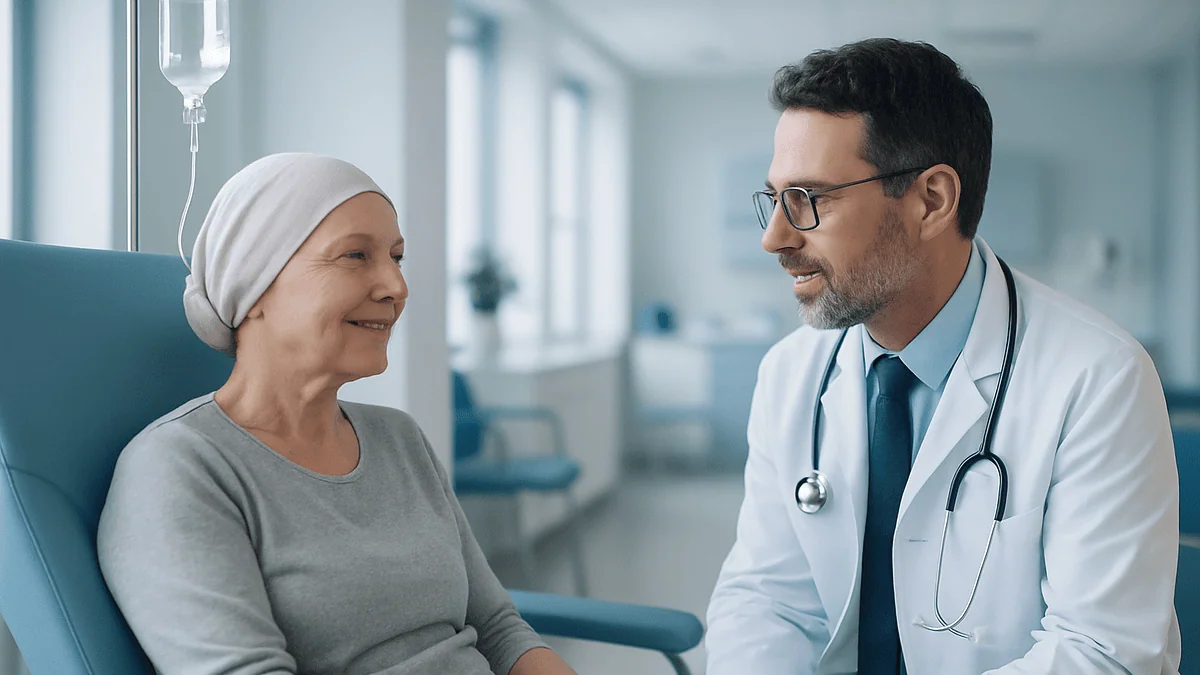
Chemotherapy is usually not painful while it is being given; most people feel only the needle and perhaps a cool sensation from the drip. Discomfort tends to arrive later, from side effects such as mouth sores, nerve tingling, body aches or constipation, and these vary widely by medicine and person. Most are temporary, follow a fairly predictable timeline, and are easier to control when reported early.
The first thing many people notice in an infusion room is how quiet it is. Someone in the next recliner is doing a crossword. A nurse is offering warm blankets. A man who arrived braced for something that looked like a hospital drama realizes, forty minutes in, that the most eventful thing so far was picking a tea.
That gap between what people expect and what actually happens is the whole story of chemotherapy and pain. The word carries decades of cultural baggage, some of it earned by older regimens given before modern supportive care existed. The reality today is more layered: the hours in the chair are typically uneventful, the days that follow can be genuinely hard, and the specific discomforts depend on which medicines are used and which healthy tissues they happen to bother.
This guide walks through what people really feel, hour by hour and week by week, using mainstream evidence rather than horror stories or reassurance that rings false.
Does chemotherapy hurt while it's being given?
Almost never, and that surprises people. Chemotherapy medicines travel in through a vein, a port, a pill or occasionally an injection, and none of those routes carries a built-in pain signal once the line is in place. During an infusion, which the NHS notes can run anywhere from about 30 minutes to several hours depending on the regimen, most people describe sensations rather than pain: a coolness creeping up the arm as room-temperature fluid enters, a faint metallic taste, a flush of warmth if a supportive medicine is given first, the squeeze of a blood pressure cuff every so often.
The exceptions are worth understanding. Some chemotherapy medicines irritate the lining of small veins and can produce an ache or burning along the forearm while they run. Nurses watch for exactly this and respond by slowing the drip, warming the arm or choosing a different vein. A rarer problem is extravasation, when medicine leaks out of the vein into surrounding tissue. It stings right away, and infusion teams are trained to stop the pump the moment someone says the site feels wrong. That is why you will be asked, repeatedly, how the arm feels. It is not small talk.
Here is the honest picture: the time in the chair is usually the least uncomfortable part of the entire experience. When pain does show up, it arrives in the days afterward, and it comes from what the medicine does to healthy fast-growing cells, not from the act of receiving it.
What does the needle, IV line or port actually feel like?
For most people the sharpest moment of the whole day is the needle stick, and it feels like any blood draw: a brief pinch, then pressure, then nothing. A standard cannula sits in a vein on the back of the hand or forearm and is removed before you go home. Some centers offer a numbing cream applied ahead of time, which can take the edge off for people who dread needles.
A port changes the experience considerably. This is a small disc placed under the skin of the upper chest during a short procedure, connected to a thin tube that rests in a large vein. The area is typically sore and bruised for several days after placement, much like a deep bruise from bumping a doorframe. Once healed, each treatment involves a single needle pushed through the skin into the disc. People often describe it as a quick sting followed by a dull pressure, and because the medicine enters a large vein, the forearm irritation described earlier largely disappears. Mayo Clinic describes ports and similar devices as a common option when treatment will involve many infusions over months.
A PICC line, threaded through an arm vein and left in place for weeks, avoids repeat sticks entirely but does need to be kept dry and covered.
Oral chemotherapy skips needles altogether. It is easy to assume that makes it gentler, but the biology of side effects is the same once the medicine is in the bloodstream. A tablet at the kitchen table can produce the same mouth sores or fatigue as a drip, just without the infusion chair.
Why does chemotherapy cause side effects at all?
The answer sits in one word: division. Most traditional chemotherapy medicines work by damaging cells that are in the act of dividing, because cancer cells divide more often than most healthy ones. The catch, as Mayo Clinic and the NHS both explain, is that several healthy tissues are also fast dividers, and the medicine cannot tell them apart.
Map those tissues and you have predicted most side effects before the first dose. The lining of the mouth and gut replaces itself every few days, so it is vulnerable to soreness, ulcers, nausea and changes in bowel habit. Bone marrow constantly manufactures new blood cells, so counts of white cells, red cells and platelets can dip, bringing infection risk, fatigue and easy bruising. Hair follicles cycle rapidly, which is why Mayo Clinic notes that hair loss often begins two to four weeks after treatment starts rather than on day one.
Nerves are the outlier. Nerve cells barely divide, yet certain chemotherapy medicines injure the long fibers that run to the hands and feet through a different mechanism, interfering with the internal scaffolding and energy supply those fibers depend on. That is why tingling fingertips belong to some regimens and not others.
Understanding this map does something useful for the person in the chair. Side effects stop feeling random. They become expected, timed and, in most cases, temporary, because the same rapid turnover that makes these tissues vulnerable also lets them repair themselves quickly once each dose is cleared.
What to expect after the first chemo treatment
Day one often ends better than feared. Supportive medicines given before the infusion can leave people feeling oddly alert, even a little wired, for the rest of the day. Appetite may be normal. Some people go home and cook dinner and wonder what all the worry was about.
The next few days are where the first cycle earns its reputation. Nausea, when it happens, can begin within hours according to Mayo Clinic, but the National Cancer Institute (part of the NIH) also describes a delayed form that starts more than a day after treatment and lingers for several days. Fatigue tends to build over days two to five and can feel less like ordinary tiredness and more like moving through water. Constipation from anti-nausea medicines, a metallic taste, mild body aches and a low mood as the supportive medicines wear off all show up in this window.
Think of the first cycle as a data-gathering exercise rather than a preview of everything to come. Keep a simple diary: what you felt, when it started, when it eased, what you ate. Care teams adjust supportive treatment between cycles based on exactly this information, and many people find cycle two goes more smoothly because the plan has been tuned to them.
One more piece of honesty: the emotional side effects of the first treatment are real and underdiscussed. Sitting in that chair makes the diagnosis concrete in a way that scans and consultations do not. Feeling shaken afterward is not weakness, and it is not a side effect of the medicine.
What week of chemo is the hardest?
People ask this hoping for a single number, and the truthful reply has two parts, because the question hides two different timelines.
Within one cycle, the pattern is fairly consistent. The first two to five days carry the acute effects: nausea, fatigue, taste changes, aches. Blood counts then fall to their lowest point, a phase clinicians call the nadir, which the National Cancer Institute places roughly 7 to 12 days after a dose. This is usually when people feel most drained and when infection risk is highest, even though the nausea has often faded. Counts recover over the following week, and many people describe the final days before the next cycle as the closest thing to normal.
Across the whole course, the answer shifts. Fatigue is cumulative. The NHS identifies it as one of the most common side effects, and people frequently report that cycle four or five feels heavier than cycle one even though nausea has become more predictable. Nerve symptoms, when they occur, also build with each dose rather than appearing fully formed at the start.
So the hardest week is often the second week of a middle-to-late cycle, when acute effects have faded but counts are low and accumulated tiredness has set in. That is a generalization, and regimens given weekly, every two weeks or every three weeks produce different rhythms. What matters more than the calendar is learning your own pattern by cycle two, then planning heavy commitments around it.
What is the 7-day rule in chemotherapy?
Search this phrase and you will find it everywhere online and nowhere in clinical guidelines. It is not a formal rule. It is a piece of patient folk wisdom that has attached itself to two real ideas, and untangling them is worth a minute.
The first meaning is reassurance: for many regimens, the sharpest side effects settle within about a week of each dose. That lines up loosely with the timeline above, where nausea and the worst fatigue occupy the first several days. It is a rough heuristic, not a promise, and it does not hold for every medicine or every person.
The second meaning is a warning, and it is the more useful one. Around the seventh day, blood counts are heading toward their lowest point. The National Cancer Institute describes this nadir as typically falling 7 to 12 days after treatment, when the body has the fewest infection-fighting white cells. People who feel better by day seven sometimes assume the risky period is over, when in fact the window of greatest vulnerability is just opening. This is the week to be scrupulous about hand washing, food safety and taking your temperature if anything feels off.
Some people also use the phrase to mean that a new symptom lasting more than seven days deserves a call rather than watchful waiting. That is sensible advice, though most care teams would rather hear about a troubling symptom on day two than day eight.
The takeaway: treat the number as a reminder to stay alert during week two, not as a countdown to safety.
Which chemo side effects can actually be painful?
Discomfort during chemotherapy comes from a fairly short list of sources, and it helps to know which ones produce true pain versus unpleasantness. The timings below are typical ranges from the sources cited; individual experience varies with the regimen.
| Side effect | What it feels like | Typical timing | Source |
|---|---|---|---|
| Mouth sores (mucositis) | Raw, ulcer-like soreness on gums, tongue or throat; hot or acidic food stings | Often begins 5 to 10 days after a dose | NIH / National Cancer Institute |
| Peripheral neuropathy | Tingling, numbness, burning or electric sensations in fingertips and toes | Builds gradually over cycles; may persist after treatment | NIH / National Cancer Institute |
| Bone and muscle aches | Deep flu-like ache, often in back, hips or thighs | Days after a dose, or after growth-factor support | NHS |
| Constipation | Cramping, bloating, abdominal pressure | First week, often linked to anti-nausea medicines | Mayo Clinic |
| Vein irritation | Aching or burning along the forearm during infusion | During or shortly after the drip | Cleveland Clinic |
| Scalp tenderness | Sore, sensitive scalp before and during hair shedding | Around 2 to 4 weeks after starting | Mayo Clinic |
Two things stand out from this table. First, none of these are caused by the medicine touching a tumor; they are all consequences of healthy tissue reacting. Second, every one of them is something care teams anticipate and have strategies for, which is why reporting a symptom on the day it starts, rather than toughing it out until the next appointment, so consistently leads to better weeks.
Headache, joint stiffness and skin sensitivity round out the list for certain regimens. Severe, sudden or escalating pain is not on this list of expected effects and always warrants a call.
Chemo nerve pain: why fingers and toes start tingling
Ask a room of people who have finished certain chemotherapy regimens which side effect they think about most, months later, and many will hold up their hands. Peripheral neuropathy is the one that lingers, and it deserves a plain explanation.
The longest nerve fibers in the body run from the spinal cord to the fingertips and toes. Certain chemotherapy medicines interfere with the internal transport system those fibers rely on, and the farthest ends suffer first. The result is a symmetrical, glove-and-stocking pattern: tingling or numbness starting in the fingertips and toes, sometimes with burning, sharp shooting sensations, or a strange sensitivity to cold. The National Cancer Institute describes these symptoms along with practical consequences people rarely anticipate, such as difficulty buttoning a shirt, dropping small objects or feeling unsteady on stairs because the feet cannot sense the floor properly.
Neuropathy tends to be dose-related. It accumulates with each cycle rather than appearing suddenly, which is why oncology teams ask about hands and feet at every visit and may adjust the plan if symptoms progress. Reporting early tingling matters more than almost any other side effect, because the goal is to stop mild symptoms from becoming permanent ones.
Recovery is genuinely mixed. For many people, symptoms improve over the months after treatment ends as nerve endings slowly regrow. For some, a degree of numbness persists. Safety adjustments help in the meantime: checking bath water with an elbow rather than a hand, wearing shoes indoors, using extra light on stairs, and paying attention to balance when getting up at night.
Mouth sores, sore throat and taste changes explained
Few side effects are as underestimated as a sore mouth. It does not sound serious until eating toast feels like chewing gravel and orange juice becomes impossible.
The lining of the mouth and throat is among the fastest-renewing tissue in the body, and chemotherapy interrupts that renewal. The National Cancer Institute notes that mouth sores often appear 5 to 10 days after a dose and typically heal as blood counts recover. At their mildest they are patches of redness and sensitivity; at their worst they are open ulcers that make swallowing painful and eating difficult, which in turn affects hydration and energy.
Taste changes travel alongside. Food may taste metallic, flat, overly sweet or simply wrong, a phenomenon sometimes called metal mouth. This is not imagination; the medicine affects taste receptors and saliva, and it usually resolves in the weeks after treatment finishes.
What actually helps is unglamorous and effective. Gentle oral care with a soft toothbrush, frequent rinsing with a mild salt-water or baking-soda solution, avoiding alcohol-based mouthwashes, and choosing soft, cool, bland foods during the sore window all reduce misery. Some infusion units offer ice chips to suck during specific infusions, on the principle that cooling narrows the small blood vessels in the mouth and reduces how much medicine reaches the lining. Plastic utensils can soften a metallic taste. Tart or strongly flavored foods sometimes cut through flatness, though they sting if sores are present.
A dental check before chemotherapy begins is recommended by mainstream guidance because existing gum problems become far harder to treat once counts drop. Sores that prevent drinking, or any white patches suggesting infection, should be reported the same day.
Can you live normally during chemo?
Normal is doing a lot of work in that question. The more useful version is: can you keep the parts of life that matter most? For many people the answer is a qualified yes, with a schedule reshaped around the cycle.
Work is possible for a meaningful number of people, especially with flexibility. Someone on a three-week cycle might take the infusion day and the two or three days after it off, work reduced hours during the low-count week, and feel closest to normal in the final week. Physically demanding jobs and jobs with heavy public contact during the nadir period are harder to sustain. Honest conversations with employers early tend to go better than apologetic ones later.
Movement helps rather than hurts. The NHS and Mayo Clinic both point to gentle regular activity, such as walking, as one of the few interventions with evidence for easing cancer-related fatigue. Nobody is suggesting marathon training; a daily walk that is shortened on bad days and lengthened on good ones is the realistic goal.
Food gets complicated. Appetite dips, taste shifts and nausea come and go, so small frequent meals usually beat three large ones. During the low-count window, mainstream guidance emphasizes food safety: thoroughly cooked meats and eggs, washed produce and attention to leftovers.
Social life often shrinks not from pain but from unpredictability and infection caution. Many people find that telling friends what specific help looks like, a lift to an appointment, a meal dropped at the door, a short visit in the good week, keeps connection alive without exhausting them. The goal is not pretending nothing has changed. It is protecting the things that make the weeks feel like yours.
Does feeling worse mean the chemo is working?
This belief is remarkably common and remarkably persistent, and it deserves a direct correction because it causes real harm in both directions.
Side effects reflect how sensitive your healthy tissues are to a particular medicine. They do not measure what is happening inside a tumor. Someone with severe nausea and someone with none can have identical responses on their scans. The reverse is equally true. Whether a treatment is working is assessed through imaging, blood markers and clinical examination at intervals the oncology team sets, not through how rough the second week felt.
The harm cuts two ways. People who sail through with few side effects sometimes worry the medicine is not doing anything, and that anxiety is misplaced. People suffering badly sometimes endure symptoms in silence because they believe the misery is proof of effectiveness, when in fact unmanaged side effects can lead to dose delays that are the opposite of helpful.
A related myth is that chemotherapy is uniformly agonizing. That picture was shaped in part by earlier eras, before effective anti-nausea strategies and growth-factor support existed, and by the tendency of dramatic stories to travel further than ordinary ones. The NHS describes a wide range of experiences, and many people finish treatment describing it as exhausting and disruptive rather than painful.
The evidence-based position is simple. Report every symptom without attaching meaning to it. Let the care team manage discomfort aggressively. Let the scans do the job of measuring progress. Suffering is not a currency that buys a better outcome.
How chemo pain and side effects are managed
Supportive care has quietly become one of the most sophisticated parts of oncology, and understanding how it works, in mechanism and timeline, helps people use it well. Specific choices about which medicines and how much always belong to the prescribing clinician.
Nausea is addressed preventively rather than reactively. Medicines that block the signals nerves in the gut and brainstem use to trigger vomiting are typically given before the infusion and continued on a schedule for several days afterward, because it is far easier to prevent nausea than to reverse it once established. Mayo Clinic emphasizes that these should be taken as directed even on days you feel fine, since delayed nausea can surface after the first day.
Low white cell counts may be supported with injections that stimulate the bone marrow to produce cells faster. A known side effect of this support is a deep ache in the long bones and lower back, which is the marrow working harder, and it usually fades within days.
Nerve symptoms are managed mainly by monitoring and, when necessary, adjusting the treatment plan, since the priority is preventing progression. Mouth care, as discussed, is largely mechanical: gentle hygiene, rinses, cooling.
For pain that does arise, oncology teams draw on the standard range of pain relief, matched to severity, and non-drug approaches such as heat, gentle movement, relaxation techniques and physical therapy have supporting evidence for aches and stiffness.
The single most effective intervention is one nobody prescribes: reporting symptoms early, specifically, and without minimizing. Care teams cannot adjust what they do not know about, and the difference between a manageable cycle and a miserable one is frequently a phone call made on day two rather than day eight.
When to see a doctor during chemotherapy: red-flag signs
Most chemotherapy side effects are expected and can wait for a routine call to the care team. A short list cannot wait, and knowing it by heart is more useful than any amount of general reassurance.
Fever leads the list. The National Cancer Institute advises contacting the care team right away for a temperature of 100.4°F (38°C) or higher during treatment, because when white cell counts are low, an infection can escalate in hours rather than days. Chills or shivering, even without a confirmed fever, deserve the same urgency. Do not take fever-reducing medicine before calling, since it can mask the very sign the team needs to see.
Beyond fever, seek same-day care for:
- Sudden or severe pain anywhere, especially chest pain or pain with breathing
- Shortness of breath, a racing heartbeat or feeling faint
- Vomiting that prevents you from keeping fluids down, or diarrhea lasting more than a day
- Bleeding that does not stop, blood in urine or stool, or widespread unexplained bruising
- Redness, swelling, heat or pain at an IV site, port or PICC line
- A sudden severe headache, confusion, or new weakness on one side
- Mouth sores or a sore throat severe enough that you cannot drink
- New or rapidly worsening numbness that affects walking or grip
Every oncology unit provides an emergency contact number, often available around the clock, and people are consistently told to use it rather than wait until morning. If you cannot reach the team and symptoms are severe, emergency services are the right call. Tell whoever assesses you that you are receiving chemotherapy and when your last dose was; that single sentence changes how quickly you will be seen.
What fades and what may linger after chemo ends
The last infusion is a milestone people imagine as a finish line. In practice it is more like the start of a slow uphill walk, and knowing the terrain makes it easier.
Most side effects fade over weeks. The NHS notes that the majority of chemotherapy side effects stop once treatment ends, and the fast-renewing tissues that were hit hardest recover first: mouth sores heal, appetite and taste return, blood counts climb back to normal ranges. Hair regrowth typically begins within a few weeks of the final dose, sometimes with a different texture or color at first.
Fatigue is the slow one. Many people expect to feel like themselves within a fortnight and are dismayed to still be tired at three months. Energy usually returns gradually, and gentle activity helps it along, but the timeline is measured in months rather than weeks for a lot of people.
Neuropathy, as discussed, is the side effect most likely to outlast treatment. Improvement can continue for many months as nerves slowly recover, though some people are left with residual numbness. Difficulty with concentration and memory, often called chemo brain, is widely reported and tends to improve over time, though it can be frustrating in the meantime.
Then there is the part nobody schedules a follow-up for: the strange flatness some people feel when the intense structure of treatment ends and the waiting begins. This is common, it is not a failure of gratitude, and support services exist for it. Recovery from chemotherapy is not just tissue repair. It is a return to a body and a life that both feel slightly different, and giving that process the months it needs is not weakness. It is realism.
Frequently asked questions
What should I expect after my first chemo treatment?
Expect the day itself to be surprisingly uneventful, then a harder stretch over days two to five. Nausea can begin within hours or be delayed by a day or more, fatigue builds gradually, and taste changes, constipation and mild aches are common. Blood counts dip in the second week. Keep a symptom diary during this first cycle; care teams use it to adjust supportive treatment, and many people find the second cycle easier as a result.
What week of chemo is the hardest?
Within a cycle, the second week is often toughest because blood counts hit their lowest point roughly 7 to 12 days after a dose, bringing deep fatigue and infection risk. Across the whole course, later cycles frequently feel heavier as tiredness accumulates, even though nausea becomes more predictable. Schedules vary, so the most reliable guide is the pattern you notice by your second cycle.
Can you live normally during chemo?
Many people keep a recognizable version of normal life by reshaping it around the cycle: resting in the days after an infusion, taking extra infection precautions during the low-count week, and scheduling work, travel and social plans for the final week when energy is highest. Gentle daily activity, small frequent meals and honest conversations with employers and friends make the difference between feeling sidelined and feeling like yourself with a modified calendar.
What is the 7-day rule in chemotherapy?
It is not a formal medical rule. People use the phrase to mean either that acute side effects tend to settle within about a week of a dose, or that blood counts reach their lowest point around a week later. The second meaning is the important one: feeling better on day seven does not mean the infection-risk window has closed. Treat the number as a cue for vigilance in week two, not a countdown to safety.
Does chemo hurt when it goes in?
Usually not. Most people feel the needle stick and then a cool sensation as fluid enters, sometimes with a metallic taste. A minority of medicines irritate the vein lining and cause an ache or burning along the forearm during the infusion, which nurses manage by slowing the drip, warming the arm or changing the site. Tell staff immediately if the site stings or feels wrong, since leakage outside the vein needs prompt attention.
Does having a port put in hurt?
The placement procedure is done with local anesthesia and sedation, and the chest area is typically sore and bruised for several days afterward, similar to a deep bruise. Once healed, each infusion requires a single needle through the skin into the port, which most people describe as a quick sting followed by pressure. Because medicine enters a large vein, the forearm irritation some people feel with a standard IV largely disappears.
Why does my whole body ache after chemo?
Body aches in the days after a dose come from several sources: the medicine itself affecting muscles and joints, the drop and recovery of blood counts, and, for people receiving injections that stimulate bone marrow, a deep ache in the long bones and lower back as the marrow works harder. These aches are usually temporary and respond to heat, gentle movement and pain relief guided by the care team. Sudden or severe pain is different and should be reported right away.
Is hair loss from chemo painful?
Hair loss itself is not painful, but many people are surprised by scalp tenderness in the days before and during shedding, which typically starts two to four weeks after treatment begins. The scalp can feel sore, tight or sensitive to touch, a bit like a tender bruise. Soft pillowcases, gentle washing and avoiding tight hats or ties help. The sensitivity usually fades once shedding is complete, and regrowth generally begins within weeks of finishing treatment.
Can I drive myself home after chemotherapy?
It depends on your regimen and how supportive medicines affect you, so ask your care team before the first appointment. Some anti-nausea and anti-anxiety medicines cause drowsiness that makes driving unsafe, and the first infusion carries a small risk of a reaction that could leave you unwell. Most units recommend arranging a ride for at least the first treatment, then deciding about later sessions based on how you actually felt.
How long does chemo pain and discomfort last?
Most acute side effects, such as nausea, mouth sores and aches, ease within one to two weeks of each dose and stop altogether within weeks of the final treatment. Fatigue is slower, often improving over months rather than weeks. Nerve tingling can continue improving for many months and, for some people, partly persists. If any symptom is worsening rather than following this pattern, it deserves a conversation with your care team rather than watchful waiting.
References
This article is for general information only and is not a substitute for professional medical advice. Please consult a qualified doctor about your individual situation.

More from the Blog
Recovering from Radiotherapy: How Long Until You Feel Better
Most people start to feel noticeably better within a few weeks of their last radiotherapy session, although side effects such as fatigue and skin…

Patient Portals: How to Read Your Own Lab Results Without Panicking
A patient portal is the secure website or app your health system uses to show you appointments, messages, and test results, and since 2021…
Over-the-Counter CGMs: What Glucose Data Means for People Without Diabetes
Over-the-counter continuous glucose monitors such as Stelo and Lingo show adults without diabetes how blood sugar rises and falls through the day. For most…
Smart Rings Compared: Galaxy Ring, Ultrahuman and Oura: What They Measure Well
The Samsung Galaxy Ring, Oura Ring and Ultrahuman Ring Air all use an optical sensor on the finger to track resting heart rate, nighttime…
Palliative Chemotherapy: What the Term Means
Palliative chemotherapy is chemotherapy given with the aim of controlling a cancer rather than curing it. Its goals are to shrink or slow tumors,…
How Radiotherapy Works and How Long Sessions Take
A single external radiotherapy session usually takes about 10 to 30 minutes, and the beam itself is switched on for only a few minutes…