

Over-the-Counter CGMs: What Glucose Data Means for People Without Diabetes

Key Takeaways
- Dexcom Stelo became the first FDA-cleared over-the-counter CGM in March 2024, and Abbott's Lingo followed in June 2024; both are labeled for adults 18 and older who do not use insulin.
- Observational studies of healthy adults show roughly 96 percent of the day spent between 70 and 140 mg/dL, with brief post-meal rises above 140 that resolve within about two hours.
- CGMs measure glucose in interstitial fluid, which lags blood by 5 to 15 minutes, and typical accuracy means a displayed 110 mg/dL could reflect a true value between about 100 and 120.
- No randomized controlled trial has shown that wearing a CGM improves health outcomes or prevents type 2 diabetes in people without diabetes; the evidence is observational and the benefit remains expert opinion.
- Neither over-the-counter device is diagnostic; prediabetes and diabetes are confirmed only by laboratory tests such as fasting plasma glucose, hemoglobin A1C or an oral glucose tolerance test.
- Intense exercise, short sleep, stress, illness and the early-morning dawn phenomenon all raise glucose in healthy people, so a high reading is not always about food.
Over-the-counter continuous glucose monitors such as Stelo and Lingo show adults without diabetes how blood sugar rises and falls through the day. For most healthy people, readings stay roughly between 70 and 140 mg/dL, and brief rises after meals are normal. Evidence that tracking improves health in people without diabetes is limited and mostly observational, so the data is best read with a clinician.
A colleague of mine, a marathon runner with a textbook A1C, pulled up a glucose graph on her phone last week and asked whether the jagged line after breakfast meant she was “becoming diabetic.” She is not. Her oatmeal had simply done what oatmeal does. That small moment of alarm is now playing out in millions of kitchens, because glucose sensors that once required a prescription and a diabetes diagnosis can be worn by anyone over 18.
The trend has a clear origin. In March 2024 the FDA cleared Dexcom Stelo as the first continuous glucose monitor sold without a prescription, and Abbott’s Lingo followed in June 2024. As of September 2025, both have been on wrists and arms long enough for a wave of social media posts about “glucose spikes,” “metabolic flexibility” and foods you supposedly must never eat again.
Some of that content is useful. Much of it is not. This explainer walks through what a glucose curve actually means in a body without diabetes, where the science is firm and where it is still thin.
What changed recently: Stelo, Lingo and the first over-the-counter CGMs
A continuous glucose monitor, or CGM, is a small sensor worn on the skin that estimates glucose every few minutes and sends the readings to a phone. For nearly two decades these devices were prescription-only tools for people with diabetes, especially those using insulin, and were reviewed in that context by regulators.
The regulatory shift came in two steps. On March 5, 2024, the FDA granted marketing authorization to Dexcom Stelo, the first CGM cleared for over-the-counter use. Its labeled audience is adults 18 and older who do not use insulin, including people with type 2 diabetes managed through lifestyle or oral medicines, and people without diabetes who want to understand how food and activity affect them. In June 2024 the agency cleared Abbott’s Lingo, built on the same sensor family as the company’s prescription Libre line, with a label aimed squarely at wellness use in adults who are not on insulin.
Both labels carry an important limit: these devices are not intended for anyone who is at risk of problematic low blood sugar, and they are not designed to guide insulin dosing. The NIH’s National Institute of Diabetes and Digestive and Kidney Diseases describes CGMs as tools that show glucose trends and patterns; the over-the-counter versions keep that core function but strip out some of the safety alarms that insulin users depend on.
What has not changed is the underlying biology. The sensor technology is well validated in people with diabetes. The open question, and the reason this topic deserves a careful explainer, is what the same numbers mean when the pancreas is working normally.
How does a CGM like Stelo actually measure glucose?
A CGM does not read blood. A hair-thin filament sits a few millimeters under the skin, usually on the back of the upper arm, in interstitial fluid: the watery layer that bathes cells between the capillaries. Glucose diffuses from blood into this fluid, where an enzyme coating on the filament converts it into a tiny electrical signal. Software translates that signal into a glucose estimate in milligrams per deciliter (mg/dL).
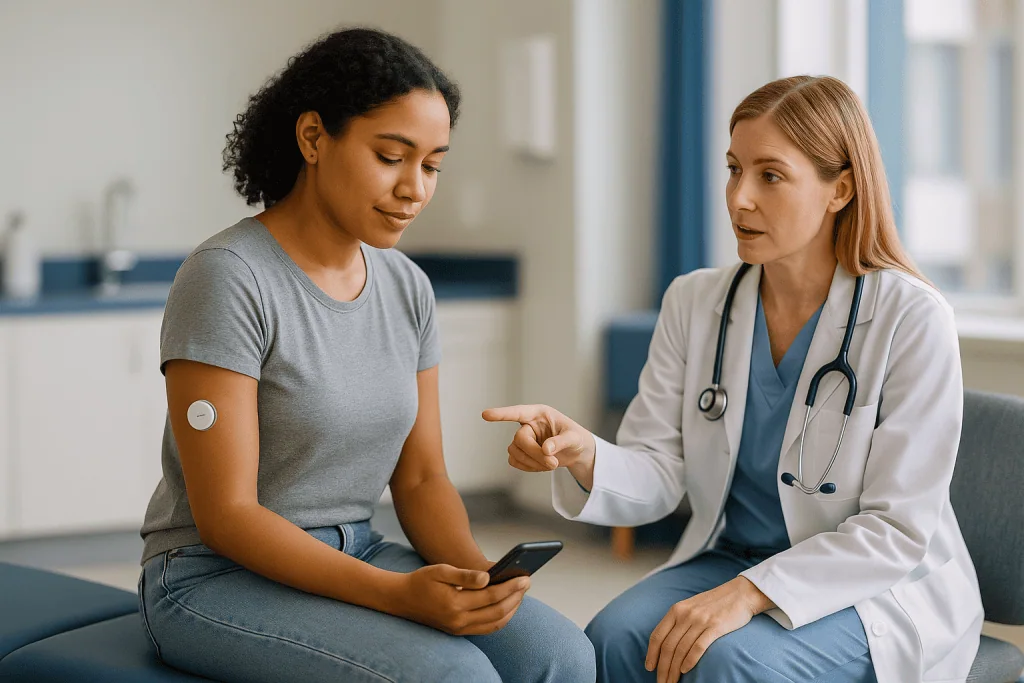
That indirect route explains two quirks every new user notices. First, there is a lag. Glucose moves from blood to interstitial fluid over roughly 5 to 15 minutes, so when you eat, the sensor sees the rise slightly after a fingerstick would. The lag matters most when glucose is changing quickly, which is exactly when people stare at the screen.
Second, the number is an estimate, not a laboratory value. Device accuracy is usually expressed as mean absolute relative difference, or MARD: the average percentage gap between sensor readings and a reference measurement. Modern sensors, including the platforms behind Stelo and Lingo, report MARD values in the single digits to around 10 percent in validation studies. In plain terms, a reading of 110 mg/dL could reasonably reflect a true value anywhere from about 100 to 120.
Stelo reports a value every 15 minutes and is worn for up to 15 days. Lingo updates every minute and lasts 14 days. Neither sensor needs fingerstick calibration, though both can drift during the first day after insertion while the tissue settles around the filament. The Cleveland Clinic notes that pressure on the sensor, such as sleeping on it, can produce temporary false lows, a phenomenon users nickname a “compression low.”
What does a normal glucose curve look like in someone without diabetes?
The most common mistake new users make is treating any rise as a failure. In a healthy body, glucose is supposed to rise after food. Insulin, the hormone that moves glucose from blood into cells, responds within minutes, and the curve comes back down. A flat line is not the goal; a responsive line is.
Here is what mainstream reference ranges say. A fasting glucose below 100 mg/dL is normal, 100 to 125 mg/dL falls in the prediabetes range, and 126 mg/dL or higher on two separate occasions is one criterion for diabetes, according to MedlinePlus and the CDC. For the hours after a meal, a value under 140 mg/dL at two hours is considered normal in standard glucose tolerance testing.
CGM studies have added texture to those snapshots. Observational work in adults without diabetes, including a frequently cited 2019 analysis published in the Journal of Clinical Endocrinology and Metabolism, found that healthy people spent roughly 96 percent of the day between 70 and 140 mg/dL, with an average glucose near 99 mg/dL. Brief excursions above 140 after a large carbohydrate load were common and quickly resolved. Readings above 180 mg/dL were rare and short.
A typical healthy day on a sensor therefore looks like gentle hills, not a flat plain. Overnight values hover in the 70s to 90s. Breakfast might produce a rise to 120 or 130 that settles within an hour or two. A pasta dinner may climb higher and take longer. Early morning may show a small rise before waking, driven by cortisol and growth hormone, a pattern known as the dawn phenomenon.
If that describes your graph, your pancreas is doing its job. The interesting information lies in the exceptions, and in how often they happen, not in the existence of hills.
What the evidence actually says about CGMs for people without diabetes
Evidence comes in grades, and the grades here are uneven. For people with diabetes who use insulin, randomized controlled trials, the strongest study design, show that CGM use lowers A1C and reduces time in dangerous low glucose. That conclusion is solid and underpins current guidelines.
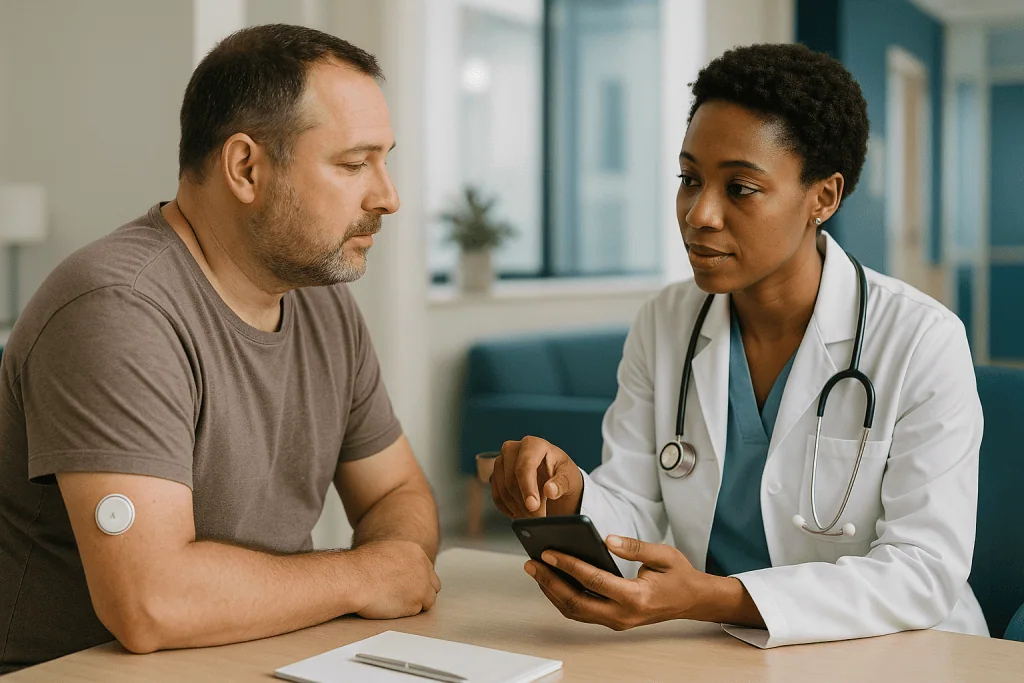
For people without diabetes, the picture is different. The best-known studies are observational and small. A 2018 Stanford study published in PLOS Biology fitted 57 adults with CGMs and found that some people classified as normal by standard tests still showed frequent spikes above 140 mg/dL, which the authors labeled different “glucotypes.” A 2015 Israeli study in Cell tracked 800 people and showed that the same food produces strikingly different glucose responses in different individuals. These studies are genuinely interesting. What they do not show is that acting on a glucose graph changes anyone’s long-term health.
That gap matters. No randomized trial has demonstrated that wearing a CGM reduces the risk of developing type 2 diabetes, heart disease or any other outcome in people with normal glucose metabolism. Harvard Health, reviewing the question in 2021, concluded that the benefit for people without diabetes is “unclear” and that the practice remains largely untested. The evidence that daily glucose variability within the normal range predicts disease is weaker still; most of what we know about glucose and cardiovascular risk comes from people already in the prediabetes or diabetes range.
So the honest grading is this: device accuracy, well established; the normal pattern in healthy people, reasonably well described by observational data; health benefit from tracking in people without diabetes, unproven and currently a matter of expert opinion and plausible theory. Short sensor sessions for education are reasonable. Claims that go beyond that are ahead of the data.
Dexcom Stelo vs Lingo CGM: how the over-the-counter sensors compare
Both over-the-counter CGMs use mature sensor platforms adapted from prescription products, so the differences are mostly about how often they report, how long they last and what their apps emphasize. The table below summarizes the labeled features; it is not an endorsement of either device, and choosing one is a conversation to have with your own clinician if you have any health condition.
| Feature | Dexcom Stelo | Abbott Lingo |
|---|---|---|
| FDA clearance for over-the-counter use | March 2024 | June 2024 |
| Labeled users | Adults 18+ not using insulin | Adults 18+ not using insulin |
| Not intended for | People at risk of problematic hypoglycemia | People at risk of problematic hypoglycemia |
| Reading frequency | Every 15 minutes | Every minute |
| Wear time per sensor | Up to 15 days | Up to 14 days |
| Wear site | Back of upper arm | Back of upper arm |
| Fingerstick calibration | Not required | Not required |
| Urgent low glucose alarm | Not included | Not included |
| App emphasis | Glucose trends, meal and activity patterns | Wellness coaching and a “spike” score |
The shared absence of an urgent low alarm is the detail most worth underlining. Prescription CGMs sold to insulin users include alerts for readings around 55 mg/dL because a severe low can cause confusion, seizures or loss of consciousness. The over-the-counter devices leave that out by design, which is appropriate for their intended audience and a reason they are not substitutes for prescription monitoring.
Lingo’s minute-by-minute data produces a smoother curve, while Stelo’s 15-minute cadence is adequate for seeing meal responses but can miss the exact peak. For educational wear in a person without diabetes, that difference is modest.
Is a glucose spike after a meal dangerous?
The word “spike” has done a lot of unearned work online. In clinical terms, a post-meal glucose rise is an excursion, and the body is built to produce and clear them. The question is not whether glucose rises but how high, how long, and how often.
Standard medicine draws its lines from decades of outcome data. A two-hour post-meal value below 140 mg/dL is normal; 140 to 199 mg/dL suggests impaired glucose tolerance, a form of prediabetes; 200 mg/dL or above on a glucose tolerance test is a diabetes criterion. Those thresholds come from large studies linking glucose levels to the risk of retinal and kidney damage, and they are measured under controlled conditions after a fixed 75-gram glucose drink, not after a slice of birthday cake.
Everyday meals are messier. A healthy person who eats a bagel on an empty stomach can transiently reach 150 or 160 mg/dL and be back under 110 within 90 minutes. Observational CGM data show that healthy adults cross 140 mg/dL for a short period most days. There is no high-quality evidence that these brief excursions, within an otherwise normal pattern, cause harm.
Sustained high values are a different matter. Repeatedly sitting above 180 mg/dL for hours, or routinely remaining above 140 two to three hours after ordinary meals, is worth a laboratory check with a clinician. So is a fasting value that consistently sits above 100 mg/dL after the sensor’s first day of settling.
The Mayo Clinic’s guidance on blood sugar testing frames the goal as recognizing patterns rather than reacting to single numbers. A single high reading after a large meal tells you about the meal. A pattern across two weeks tells you about your metabolism, and even then only alongside standard tests.
Can an over-the-counter CGM detect prediabetes?
Prediabetes is a state in which blood glucose is higher than normal but not yet in the diabetes range. The CDC estimates that about 98 million American adults, more than one in three, have it, and that more than eight in ten do not know. That statistic is the strongest argument people make for wearing a CGM without a diagnosis, and it deserves a fair hearing.
Here is the reality. Prediabetes and diabetes are diagnosed with laboratory tests: a fasting plasma glucose, an oral glucose tolerance test, or a hemoglobin A1C, which reflects average glucose over roughly three months. A CGM is not a diagnostic device and neither Stelo nor Lingo is cleared to diagnose anything. Their accuracy margin alone, around 10 percent, is wide enough that a true fasting value of 97 mg/dL could display as 105, apparently crossing a diagnostic line that it never reached.
That said, a sensor can prompt a useful conversation. If your overnight and pre-breakfast readings consistently sit in the low 100s, or your post-meal values linger above 140 mg/dL for more than two hours, that pattern is a reasonable reason to request an A1C and a fasting glucose. Many people who would never have scheduled a screening have done so because a graph surprised them. That is a plausible benefit, though not yet a proven one.
The flip side matters too. A reassuring two weeks on a sensor does not rule out prediabetes, especially if the wearer ate more carefully than usual because they were being watched by their own phone. The CDC recommends laboratory screening for adults who are overweight and have another risk factor, and for all adults from age 35. A CGM does not replace that schedule; at best it reminds you of it.
Why a CGM reading and a fingerstick do not always match
Users who own a traditional glucose meter often test both at once and discover a gap of 10, 20 or even 30 mg/dL. That gap usually has an innocent explanation, and understanding it prevents a lot of anxious troubleshooting.
The first cause is the physiological lag already described. Interstitial glucose trails blood glucose by several minutes, so during a rapid rise the fingerstick will read higher, and during a rapid fall it will read lower. Comparisons are most meaningful when glucose is stable, such as before breakfast.
The second is the first-day effect. Inserting a filament triggers a small inflammatory response, and readings during the first 12 to 24 hours tend to run low or wobble more than later in the wear period. Both manufacturers note this in their labeling.
The third is compression. Lying on the sensor squeezes the interstitial fluid around the filament and produces a sudden apparent low, often during sleep, that recovers within minutes of rolling over. A dramatic dip on the graph at 3 a.m. with no symptoms is far more likely to be compression than true hypoglycemia in a person without diabetes.
The fourth is interference. Some substances can affect sensor chemistry. High-dose vitamin C supplements, for example, are known to raise readings on certain sensor platforms, and hydroxyurea, a medicine used in some blood disorders, can do the same. The NIH Office of Dietary Supplements notes that vitamin C is widely consumed in supplement form; anyone taking large amounts should read the sensor’s interference warnings.
None of this makes the device useless. It means the trend arrow and the day’s overall shape are more trustworthy than any single number, and a surprising value should be viewed in context before it is acted upon.
Who the over-the-counter CGMs are not designed for
The labels on both devices spell out a boundary that gets lost in enthusiastic social media posts: over-the-counter CGMs are not meant for anyone who uses insulin or who is at risk of problematic low blood sugar. The reason is safety, not marketing.
Hypoglycemia, a blood glucose generally below 70 mg/dL, produces shakiness, sweating, a racing heart and confusion, and a severe episode can lead to seizures or unconsciousness. The Mayo Clinic notes that it occurs most often in people taking insulin or certain diabetes medicines such as sulfonylureas. Those individuals need a sensor with loud, non-dismissible alarms at low thresholds and the ability to share data with family. Stelo and Lingo intentionally omit urgent low alarms, so relying on them in that setting could delay recognition of a dangerous drop. Anyone in that group who is curious about a CGM should talk to their prescribing clinician about a prescription device rather than an over-the-counter one.
Both devices are also cleared only for adults 18 and older. They have not been studied for over-the-counter use in children or adolescents, and pediatric glucose patterns differ.
Pregnancy deserves separate mention. Glucose targets in pregnancy are tighter and the stakes are different, and gestational diabetes is screened for with a specific laboratory test. A wellness CGM is not a substitute for that screening, and any glucose concern in pregnancy belongs with the obstetric team.
Finally, people with a history of disordered eating should think carefully before wearing a device that assigns a number to every bite. Clinicians who work in eating disorder care have raised this concern, and it is a reasonable one. The right first step for anyone in this group is a conversation with their own doctor or therapist, not a sensor.
Common myths about glucose data, corrected
Viral claims travel faster than peer review. These are the ones that come up most often, with what the evidence actually supports.
Myth: A flat glucose line means you are metabolically healthy. A completely flat line is not a sign of health; it is a sign of not eating carbohydrates, or of a sensor that is not responding. Healthy metabolism produces modest rises and prompt returns. Observational CGM studies in people without diabetes show regular excursions above 140 mg/dL that resolve within two hours.
Myth: Any reading above 140 mg/dL is damaging. The 140 threshold comes from a two-hour glucose tolerance test, a controlled setting. Briefly exceeding it 30 to 60 minutes after a real meal is normal. There is no outcome evidence that short excursions within an otherwise normal pattern cause harm.
Myth: Fruit is dangerous because it spikes glucose. Whole fruit does raise glucose, but large cohort studies consistently associate higher fruit intake with lower, not higher, rates of type 2 diabetes and heart disease. A CGM measures one variable; it does not see fiber, potassium or long-term outcomes.
Myth: A CGM can diagnose prediabetes or diabetes. Neither Stelo nor Lingo is a diagnostic device. Diagnosis requires laboratory tests, as MedlinePlus and the CDC describe.
Myth: Everyone should wear a CGM to prevent diabetes. No randomized trial shows that CGM use in people without diabetes prevents anything. The best-supported prevention strategies remain physical activity, weight management where appropriate, and structured lifestyle programs, which the CDC’s National Diabetes Prevention Program has shown can lower the risk of progressing from prediabetes to type 2 diabetes.
Myth: The sensor measures blood sugar. It measures interstitial fluid glucose, which lags blood by minutes. That is why a fingerstick and the sensor can disagree.
What a two-week sensor can and cannot teach you about food
Where the data earns its keep is in showing, vividly and personally, principles that nutrition science established long ago. Watching a glass of juice send glucose up 60 points in 20 minutes while the same sugar in a whole orange produces a gentler rise is a more memorable lesson than any pamphlet. For many wearers, that visual is the entire value of the experiment.
Several patterns are well supported and tend to show up on nearly every sensor. Fiber, protein and fat slow gastric emptying, so a carbohydrate eaten alongside them produces a lower, broader curve than the same carbohydrate alone. Eating order has a measurable effect: small trials show that consuming vegetables and protein before bread or rice lowers the post-meal peak. A short walk after eating pulls glucose into muscle and blunts the rise, a finding replicated in multiple small studies and consistent with the American Heart Association’s broader guidance on movement and metabolic health.
Equally important is what the sensor cannot tell you. It cannot judge a food’s overall nutritional quality. A meal of bacon and cheese may produce a flat line while contributing saturated fat that matters far more for long-term cardiovascular risk than a modest glucose rise from lentils would. Chasing the flattest curve can push people toward diets that mainstream cardiology would not recommend.
The sensor also cannot separate food from context. The same breakfast will produce a higher rise after a poor night’s sleep, during a stressful week or late in a menstrual cycle. Two weeks is not long enough to untangle those variables with any statistical confidence.
The reasonable takeaway is to use the graph as a teaching tool for a handful of well-established habits, then set it down. Treating every meal as a test to be passed is where the benefit begins to turn into a burden.
Exercise, sleep and stress: the non-food drivers of glucose
New wearers expect food to move the line. They are often startled when a hard workout, a bad night or a tense meeting does the same thing without a bite of anything.
Exercise is the most common surprise. Gentle aerobic activity typically lowers glucose as working muscles absorb it. Intense efforts such as sprints, heavy lifting or a race can raise it, sometimes into the 150s or higher, because adrenaline and cortisol signal the liver to release stored glucose. This is a normal stress response, not a malfunction, and the value usually falls within an hour of finishing. People without diabetes clear that glucose efficiently; the rise itself is not a cause for concern.
Sleep has a measurable effect. Even a single night of short sleep reduces insulin sensitivity the following morning in controlled laboratory studies, so the same breakfast produces a higher peak. Chronic short sleep is associated with higher type 2 diabetes risk in large cohorts. A sensor can make that connection visible, which is one of its more legitimately useful features.
Illness and stress act through the same hormones. A cold, a fever or an anxious day can raise fasting and post-meal values. Caffeine on an empty stomach produces a small rise in some people. Dehydration can concentrate glucose slightly. For many women, glucose runs higher in the second half of the menstrual cycle, when progesterone reduces insulin sensitivity.
Then there is the dawn phenomenon: a modest early-morning rise, often 10 to 20 mg/dL, as the body prepares to wake. It is seen in healthy people and is not a reason to skip breakfast or worry.
Recognizing these influences keeps the data in proportion. A morning value of 108 after a sleepless, stressful night with a head cold is information about the night, not a diagnosis.
The psychological side: when glucose data becomes a worry
Any device that renders the body as a scrolling number carries a psychological cost, and glucose is particularly vulnerable because the public associates it with a feared disease. Clinicians who have followed patients wearing wellness CGMs describe a recognizable arc: fascination in the first days, then rising vigilance, then for some people a quiet dread around meals.
There is nothing wrong with curiosity. The concern arises when a healthy person begins to restrict foods that mainstream nutrition considers beneficial, such as whole grains, fruit or legumes, because they produced a visible rise. The sensor cannot distinguish a nutritious rise from a nutrient-poor one. Over weeks, a pattern of avoiding every excursion can narrow a diet in ways that cardiology and gastroenterology would not endorse.
People with a history of disordered eating face a sharper version of this risk. Numerical feedback on every meal is precisely the kind of stimulus that eating disorder treatment works to reduce. For this group, the responsible advice is to avoid wellness CGMs unless a treating clinician specifically recommends one.
Even for people without that history, a few guardrails help. Decide in advance how long you will wear the sensor and what questions you want it to answer. Look at daily and weekly patterns rather than checking after every bite. Remember that the device has an accuracy margin of roughly 10 percent, so a single reading of 143 and a single reading of 128 may reflect the same true value.
If you notice that the graph is changing how you feel about food, or that you are eating differently to please the sensor rather than to nourish yourself, that is a signal to take it off and talk to someone. The data was supposed to serve you, not the other way around.
When to see a doctor about your CGM readings
An over-the-counter CGM is an educational tool, not a diagnostic one, and every decision about what its readings mean belongs with your clinician. Some patterns and symptoms warrant a prompt appointment rather than more days of watching.
Schedule a visit if, after the first day of sensor settling, your readings show any of the following:
- Fasting or overnight values that repeatedly sit at 100 mg/dL or higher, which falls in the laboratory range used to define prediabetes.
- Post-meal values that regularly remain above 140 mg/dL two or more hours after ordinary meals, or that exceed 180 mg/dL for sustained periods.
- Readings below 70 mg/dL that are not explained by lying on the sensor, especially if accompanied by shakiness, sweating, a racing heart, confusion or hunger.
Seek urgent medical care, regardless of what the sensor shows, if you develop symptoms that can accompany very high glucose: intense thirst, frequent urination, unexplained weight loss, blurred vision, nausea and vomiting, fruity-smelling breath, or deep rapid breathing. The CDC and Mayo Clinic list these as warning signs that need same-day evaluation. Call emergency services for confusion, fainting or a seizure.
Bring the data with you. Most apps can export a summary showing average glucose, time in the 70 to 140 range and daily patterns. Your clinician will interpret it alongside a hemoglobin A1C, a fasting plasma glucose and your personal and family history, and may order a glucose tolerance test if the pattern is ambiguous. Those laboratory tests, not the sensor, carry diagnostic weight.
If you take any prescribed medicine, including diabetes medicines managed without insulin, do not adjust it based on CGM readings. Changes to a prescription are the prescribing clinician’s decision, informed by the data you share.
Frequently asked questions
Is Dexcom Stelo accurate enough to trust for daily decisions?
Stelo uses a validated sensor platform with an accuracy margin of roughly 10 percent in studies, which is adequate for seeing trends and meal patterns. It is not accurate enough to diagnose a condition or to replace laboratory tests, and a single reading should always be interpreted in the context of the surrounding curve. Rapid changes and the first day of wear produce the largest gaps versus blood values.
What is Lingo CGM used for if you do not have diabetes?
Lingo is marketed as a wellness tool that shows adults without insulin-treated diabetes how meals, activity, sleep and stress affect glucose. It updates every minute for up to 14 days and includes coaching features around glucose rises. It is not cleared to diagnose or treat any condition, and its usefulness for people with normal glucose metabolism rests on education rather than proven health outcomes.
What is a normal glucose level after eating for someone without diabetes?
A value below 140 mg/dL two hours after eating is considered normal in standard testing. Healthy people often peak higher than that briefly, 30 to 60 minutes after a carbohydrate-rich meal, before returning toward baseline. Routinely staying above 140 mg/dL two to three hours after ordinary meals, or spending long periods above 180, is a pattern worth discussing with a clinician.
Can Stelo or Lingo diagnose prediabetes?
No. Neither device is cleared as a diagnostic tool. Prediabetes is defined by laboratory tests: a fasting glucose of 100 to 125 mg/dL, an A1C of 5.7 to 6.4 percent, or a two-hour glucose tolerance value of 140 to 199 mg/dL. A sensor showing consistently elevated fasting values can be a good reason to request those tests, but it cannot replace them.
Why does my glucose go up during a hard workout?
Intense exercise triggers adrenaline and cortisol, which tell the liver to release stored glucose for fuel. In people without diabetes this rise is normal and typically falls within an hour of finishing. Gentle aerobic activity usually has the opposite effect, lowering glucose as muscles absorb it. The pattern reflects a healthy stress response rather than a problem with blood sugar control.
Why does my sensor show a low reading in the middle of the night?
A sudden dip during sleep that recovers within minutes is most often a compression low, caused by lying on the sensor and squeezing the fluid around its filament. True hypoglycemia is uncommon in people without diabetes who are not taking glucose-lowering medicines. If a low reading comes with sweating, shakiness or confusion on waking, discuss it with a clinician.
Is a flat glucose line the goal?
No. A healthy metabolism produces modest rises after meals followed by a prompt return to baseline. A completely flat line usually means very little carbohydrate was eaten, not that the body is working better. Chasing flatness can push people toward diets high in saturated fat and low in fiber, which mainstream cardiology does not recommend for long-term heart health.
Can I use an over-the-counter CGM if I take insulin?
The labels for both Stelo and Lingo state they are not intended for people who use insulin or who are at risk of problematic low blood sugar, because they lack the urgent low alarms that prescription CGMs include. Anyone on insulin who wants continuous monitoring should ask their prescribing clinician about a prescription device designed with those safety features.
How long should a healthy person wear a CGM?
There is no evidence-based answer, because no trial has studied this question in people without diabetes. Many clinicians suggest one or two sensor periods, enough to learn how a handful of habits affect glucose, and then stopping. Wearing one indefinitely has no proven benefit and may increase food anxiety, so deciding in advance what you want to learn is a reasonable approach.
Does a normal CGM graph mean I do not need a diabetes screening?
No. A reassuring two weeks does not rule out prediabetes, particularly if you ate more carefully than usual while wearing the sensor. The CDC recommends laboratory screening for all adults from age 35, and earlier for those who are overweight with another risk factor. Keep that schedule regardless of what a wellness sensor shows.
References
- Continuous Glucose Monitoring, National Institute of Diabetes and Digestive and Kidney Diseases (NIH)
- Hemoglobin A1C (HbA1c) Test, MedlinePlus
This article is for general information only and is not a substitute for professional medical advice. Please consult a qualified doctor about your individual situation.

More from the Blog

Smart Rings Compared: Galaxy Ring, Ultrahuman and Oura: What They Measure Well
The Samsung Galaxy Ring, Oura Ring and Ultrahuman Ring Air all use an optical sensor on the finger to track resting heart rate, nighttime…

Palliative Chemotherapy: What the Term Means
Palliative chemotherapy is chemotherapy given with the aim of controlling a cancer rather than curing it. Its goals are to shrink or slow tumors,…
How Radiotherapy Works and How Long Sessions Take
A single external radiotherapy session usually takes about 10 to 30 minutes, and the beam itself is switched on for only a few minutes…

Whoop vs Oura: What Each Measures Well, Where They Disagree and How Accurate the Sleep Data Are
Whoop and Oura both estimate sleep and recovery from an optical pulse sensor, and both detect whether you are asleep or awake with roughly…

AI Symptom Checkers and ChatGPT Medical Advice: How Accurate Are They, Really?
AI symptom checkers and chatbots such as ChatGPT are reasonably good at flagging emergencies and at listing plausible causes, but they are not reliable…

AI in Radiology: How Algorithms Read Mammograms and CT Scans, and Why a Radiologist Still Signs the Report
AI in radiology means software trained on large image datasets that flags suspicious areas on mammograms and CT scans, sorts urgent cases to the…