

Is It Bacterial or Viral Pneumonia? How the Cause Changes Your Treatment Plan

Key Takeaways
- Antibiotics disrupt bacterial cell walls or protein machinery and have no target in a virus, so they are irrelevant rather than merely weaker in viral pneumonia.
- No single test reliably separates bacterial from viral pneumonia; clinicians combine the story, chest X-ray, oxygen level, blood markers and swab or culture results.
- Clinicians may start antibiotics before results return because bacterial pneumonia can worsen fast, and stopping them once a virus is confirmed is proper care, not a mistake.
- Influenza is a common prelude to bacterial pneumonia because the virus strips the airway lining, which is why a second fever after early improvement warrants a same-day call.
- The NHS reports most people recover from pneumonia in 2 to 4 weeks, but cough and fatigue commonly outlast fever, and X-ray changes lag behind how a person feels.
- The four stages of bacterial pneumonia, congestion, red hepatization, gray hepatization and resolution, describe untreated lobar pneumonia under the microscope and are usually interrupted by effective treatment.
Bacterial and viral pneumonia are treated differently because the cause decides which medicines can help. Bacterial pneumonia is usually treated with antibiotics chosen by a clinician. Viral pneumonia is managed with rest, fluids, oxygen when needed and, for some viruses such as influenza, antiviral medicines. Tests narrow the answer, but doctors often cannot be certain, so the plan rests on the whole clinical picture.
The chest X-ray is already on the screen when the question comes out, a little hoarse: “So is it the kind you give antibiotics for?” The person asking has spent three nights propped on two pillows, counting breaths, and has just heard the word pneumonia for the first time as something that applies to them. What they really want to know is whether the medicine will match the illness.
That instinct is sound. The heart of bacterial vs viral pneumonia treatment is a mismatch problem: an antibiotic aimed at a virus does nothing useful, and rest alone aimed at a fast-moving bacterial infection can lose precious hours. Yet the two often look alike on a chest film and feel alike in the body.
This explainer walks through how clinicians tell the two apart, why they sometimes cannot, what each treatment actually does inside the lung, and what the weeks afterward tend to look like. Every decision stays with your treating team; the goal here is to make their reasoning legible.
Bacterial vs viral pneumonia treatment: why the cause changes the whole plan
Pneumonia is not one disease. The word describes what has happened, an infection that inflames the tiny air sacs of the lung, not what caused it. Bacteria, viruses and occasionally fungi can all produce that picture, and the Mayo Clinic groups them by cause precisely because the cause steers treatment.
Antibiotics work by disrupting structures that bacteria need and human cells do not, such as the bacterial cell wall or the machinery bacteria use to build proteins. Viruses have no cell wall and borrow our own cells’ machinery to copy themselves, so antibiotics have nothing to grip. That is the single most useful fact in this whole subject: an antibiotic prescribed for viral pneumonia is not a weaker treatment, it is an irrelevant one, with side effects and resistance costs still attached.
Viral pneumonia, by contrast, is mostly managed by supporting the body while the immune system clears the infection. For a few viruses, notably influenza and the virus that causes COVID-19, antiviral medicines exist that slow viral copying, and the CDC notes they work best when started early in the illness.
Why does this matter to the person on the examination couch? Because it explains two things that otherwise feel contradictory. A doctor may decline antibiotics and still be taking the illness seriously. Or a doctor may start antibiotics before test results return, because bacterial pneumonia can worsen quickly and the downside of waiting can outweigh the downside of a possibly unnecessary course. Both are evidence-based judgments, not guesses, and the rest of this article shows how they are made.
What actually happens in your lungs when pneumonia sets in
Picture the lung as a tree turned upside down. Air travels down the trunk of the windpipe, through branching airways, and ends in roughly 300 million microscopic sacs called alveoli. An alveolus is a thin-walled bubble where oxygen passes into blood and carbon dioxide passes out. Healthy alveoli are dry and open; that is what makes gas exchange effortless.
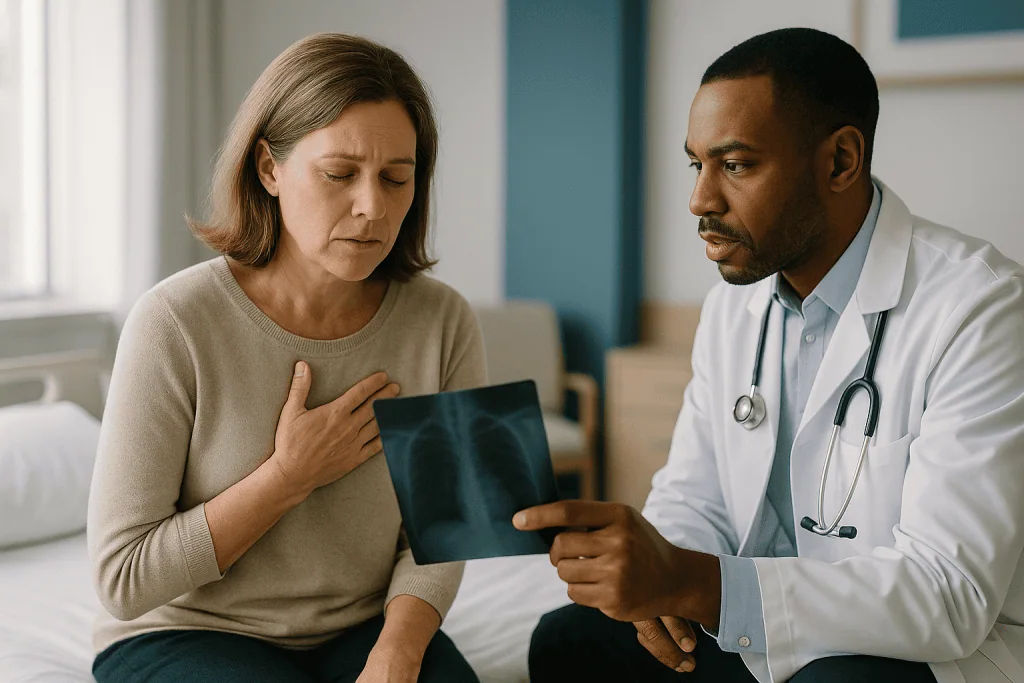
When a microbe reaches the alveoli and starts to multiply, the immune system floods the area with white blood cells and fluid. The sacs fill. Fluid-filled alveoli cannot pass oxygen efficiently, which is why breathlessness and a fast breathing rate are such consistent features, and why a fingertip oxygen reading is one of the first things a clinician checks.
The pattern of filling differs somewhat by cause. Classic bacterial pneumonia, especially from Streptococcus pneumoniae (pneumococcus), tends to consolidate one region or lobe densely, which is why older textbooks called it lobar pneumonia. Many viruses and so-called atypical bacteria such as Mycoplasma spread more diffusely along airway walls and the tissue between alveoli, producing a patchier, hazier appearance. These are tendencies, not rules, and radiologists are careful not to over-read them.
Infection also arrives by different routes. Bacteria that normally live harmlessly in the nose and throat can be inhaled into the lower lung, particularly when a cold or flu has already stripped the airway of its protective lining. That sequence, a virus first and bacteria second, is why the Mayo Clinic describes pneumonia as a common complication of influenza. It also means a single patient can have both causes at once, which complicates the tidy bacterial-versus-viral picture this article is trying to draw.
Is pneumonia viral or bacterial? How doctors actually try to tell
The honest answer is that no single test settles it in the clinic, and clinicians assemble the diagnosis from several imperfect clues.
They start with the story. How quickly did illness arrive? The NHS notes that pneumonia symptoms can develop suddenly over 24 to 48 hours or more gradually over several days; an abrupt arrival with shaking chills and rusty sputum leans bacterial, while a slower build after a week of cold-like illness leans viral or atypical. Season, exposure to sick contacts, recent travel, age and underlying conditions all shift the odds.
Then come the tests the Mayo Clinic lists as routine: a chest X-ray to confirm pneumonia and map its extent, a pulse-oximeter reading of blood oxygen, and blood tests. A high white blood cell count and a raised inflammatory marker called C-reactive protein tend to accompany bacterial infection, though viruses can push them up too. Some services measure procalcitonin, a protein that rises more with bacterial than viral infection; it is a useful nudge, not a verdict.
Direct detection is more specific but slower or patchier. A sputum sample can be cultured for bacteria. A urine test can pick up antigens from pneumococcus or Legionella. Nose and throat swabs run through PCR panels, laboratory tests that amplify a microbe’s genetic material, can identify influenza, RSV, the COVID-19 virus and others within hours in many hospitals. Blood cultures catch bacteria that have spread into the bloodstream.
Put together, these clues usually point one way. Sometimes they do not, and the clinician must decide under uncertainty. That is not failure; it is the normal condition of treating pneumonia, and it is why guidelines allow treatment to begin before every result is back.
Bacterial vs viral pneumonia treatment at a glance
A side-by-side view helps, provided you read it as “usually” rather than “always.” Real patients cross these lines, and the treating team adjusts as results arrive.

| Feature | Bacterial pneumonia | Viral pneumonia |
|---|---|---|
| Common causes | Pneumococcus, Haemophilus influenzae, Mycoplasma, Legionella, Staphylococcus aureus | Influenza, RSV, the COVID-19 virus, rhinoviruses, adenovirus; measles or varicella in the unvaccinated |
| Typical onset | Often abrupt, over a day or two | Often gradual, following a cold-like illness |
| Chest film pattern | Tends toward dense, localized consolidation | Tends toward patchy or diffuse haziness |
| Main treatment | Antibiotics chosen by the clinician, plus supportive care | Supportive care; antivirals for some viruses, mainly influenza and COVID-19 |
| Do antibiotics help? | Yes, when the bacterium is susceptible | No, unless a bacterial co-infection is present or suspected |
| Do antivirals help? | No | Only for specific viruses, and best started early (CDC) |
| Supportive care | Fluids, oxygen if low, fever control, rest | Same |
| Usual course | Improvement often begins within days of effective antibiotics (Mayo Clinic) | Usually mild and self-limiting over 1 to 3 weeks; can become serious (Mayo Clinic) |
| Prevention | Pneumococcal and other bacterial vaccines, smoking cessation | Influenza, COVID-19 and RSV vaccines, hand hygiene |
Two rows deserve emphasis. The “Do antibiotics help?” row is where most confusion lives, and the “Usual course” row is where most anxiety lives. Both are explored in their own sections below.
Notice also how much the two columns share under supportive care. Oxygen, fluids and rest are not consolation prizes for viral illness; they are the treatments that keep the body safe while either the immune system or a medicine does its work, and in hospital they are often what makes the difference.
What are the four stages of bacterial pneumonia?
This question is searched constantly, and the answer comes from pathology rather than bedside medicine. The four stages describe what a lobe of lung looks like under the microscope as classic pneumococcal pneumonia runs its course untreated. They were mapped long before antibiotics, and effective treatment now usually interrupts the sequence early.
Congestion comes first. Blood vessels around the alveoli widen, fluid rich in bacteria seeps into the air sacs, and the lung tissue becomes heavy and boggy. This corresponds roughly to the first day or so of illness.
Red hepatization follows. The term means the lung has become as firm and airless as liver, and red because red blood cells, fibrin and white cells have packed the alveoli. Gas exchange in that region essentially stops.
Gray hepatization is the third stage. Red cells break down, fibrin and white cells dominate, and the tissue turns gray-brown. The lung is still solid but the immune response is now in control of the infection.
Resolution completes the cycle. Enzymes digest the debris, macrophages clear it, and the alveoli reopen. Cough often becomes more productive at this point as the lung expels what it has cleared.
Why should a patient care about microscope slides? Because the stages explain three everyday experiences. Breathlessness peaks when hepatization is at its height. The chest X-ray can lag behind recovery, sometimes looking worse or unchanged even as a person feels better, because resolution takes longer than symptom relief. And the loose, productive cough of the last stage is a sign of clearing, not relapse. The stages do not map neatly onto viral or atypical pneumonia, which tend to inflame airway walls diffusely rather than solidifying a lobe.
How antibiotics treat bacterial pneumonia, and what they cannot do
When the picture points to bacteria, the clinician chooses an antibiotic before knowing the exact organism. This is called empirical treatment, meaning a choice based on which bacteria are most likely given the patient’s age, health, setting and local resistance patterns. If a culture later names the bacterium and its sensitivities, the antibiotic may be narrowed or switched.
Different classes work by different mechanisms. Penicillin-type drugs and cephalosporins weaken the bacterial cell wall so the organism bursts. Macrolides and tetracyclines jam the bacterial protein-building machinery, which is why they are useful against Mycoplasma, a bacterium that lacks a conventional cell wall. Fluoroquinolones block bacterial DNA copying. None of these mechanisms touches a virus. Which class, and whether by mouth or by drip, is entirely the prescriber’s decision based on severity and risk of resistant organisms.
Timelines matter more to patients than mechanisms. The Mayo Clinic notes that it may take a few days after starting antibiotics before a person begins to feel better, so a lack of instant relief is expected rather than alarming. Fever usually settles before cough does. Courses today are shorter than they were a generation ago, and guideline bodies such as NICE favor the shortest effective length, extended by the clinician only if response is slow. Finishing the prescribed course as directed, and reporting if things worsen rather than improve, is the patient’s part of the plan.
What antibiotics cannot do is repair the lung. Inflammation, fluid and fatigue resolve on the body’s schedule, not the pharmacy’s. They also cannot protect against a second, different infection, and they carry real costs: gut upset, allergic reactions, and the population-level problem of antibiotic resistance, which the WHO ranks among the top global health threats. Those costs are why the next section exists.
Are antibiotics for viral pneumonia ever the right call?
Strictly, no antibiotic treats a virus. In practice, clinicians do sometimes prescribe one to a patient whose pneumonia is probably viral, and understanding why prevents a lot of frustration in both directions.
The first reason is uncertainty. Viral and bacterial pneumonia overlap enough that even with X-ray and bloods, a confident label is often unavailable on the first day. Bacterial pneumonia can deteriorate quickly, particularly in older adults, so many guidelines accept starting antibiotics when doubt is genuine and the patient is unwell, then stopping them if tests come back viral and the person is improving. Stopping early on a clinician’s instruction is a proper part of that strategy, not a sign the first decision was wrong.
The second reason is co-infection. A viral illness strips the airway lining and dampens local defenses, leaving the lower lung open to bacteria that were already living in the throat. The Mayo Clinic describes pneumonia as one of the most serious complications of influenza for exactly this reason. Someone who was improving from flu and then worsens again with new fever a few days later is a classic candidate for a bacterial second infection layered on a viral first one.
The third reason is severity. A person needing hospital admission or intensive care may be treated for every plausible cause at once until results narrow the field.
What is not a reason is “just in case” for a mild illness, or because the patient expects a prescription. Each unnecessary course adds side effects for the individual and resistance for everyone. If your clinician declines antibiotics, that usually reflects a judgment that the illness is viral and self-limiting, and it is fair to ask what would change their mind and when to come back.
Who is usually treated at home, and who is asked to wait or come in
Most pneumonia, bacterial or viral, is treated at home. The NHS states plainly that pneumonia can usually be managed at home with rest, fluids and, when appropriate, antibiotics, and that most people recover within 2 to 4 weeks. Home treatment suits people who are breathing comfortably, keeping oxygen levels normal, able to drink and take medicines, and who have someone who can watch for change.
Hospital care is more likely for groups the CDC and Mayo Clinic identify as higher risk: adults aged 65 and older, children under 5, people with chronic heart, lung, liver or kidney disease, diabetes, weakened immune systems from illness or medicines, and those who are pregnant. Clinicians also use structured severity scores that weigh confusion, breathing rate, blood pressure and age; a high score signals that oxygen, intravenous fluids or antibiotics through a drip may be needed, and that the risk of sudden decline is too high for home.
Then there is the group asked to wait. If the picture is mild and probably viral, a clinician may deliberately hold antibiotics and arrange a review in a day or two. This watchful approach is standard practice for otherwise healthy people whose illness is following the expected arc of a viral infection. A safety-net plan, written or verbal, should accompany it: what to watch for, whom to call, and when.
Children sit in their own category. The WHO calls pneumonia the single largest infectious cause of death in children worldwide, and pediatric teams have their own pathways for deciding between home care, oral treatment and admission. Parents are never expected to make that call alone, and no dose or medicine choice for a child belongs anywhere but with the prescriber.
Which is easier to treat, bacterial or viral pneumonia?
People expect one clean answer and the evidence refuses to give it. Each type is easier in one sense and harder in another.
Bacterial pneumonia is easier in that a targeted medicine exists. When the organism is susceptible, antibiotics can turn the tide within days, and the Mayo Clinic’s guidance that improvement usually begins within a few days of starting treatment reflects that. The difficulty lies in speed and severity: untreated or resistant bacterial pneumonia can progress to bloodstream infection, fluid collecting around the lung, lung abscess or sepsis, a life-threatening whole-body response to infection. It is the type most likely to need hospital care.
Viral pneumonia is easier in that most cases are mild and, in the Mayo Clinic’s words, usually go away on their own within 1 to 3 weeks. Harder, because for many viruses there is no specific treatment at all. Influenza and COVID-19 have antivirals; RSV, adenovirus and the common cold viruses largely do not. Treatment is support, patience and vigilance for the bacterial second act described earlier. In infants, older adults and people with weakened immunity, viral pneumonia can be every bit as dangerous as bacterial.
A more honest framing than “easier” is “more controllable.” Bacterial pneumonia offers a lever to pull; viral pneumonia offers fewer levers but usually needs fewer. Neither should be treated casually, and neither justifies fear if the plan is being followed and the safety-net advice is clear.
What about the related question, is bacterial pneumonia hard to get rid of? For most otherwise healthy adults, no: the infection clears with treatment, though fatigue and cough outlast it. It becomes stubborn when the organism is resistant, when the person’s defenses are weakened, or when a complication such as fluid around the lung needs draining. Those are situations the treating team monitors for, not situations a patient can manage alone.
How long does pneumonia last? The days and weeks after diagnosis
Recovery has a shape, and knowing it prevents unnecessary worry and unnecessary complacency in roughly equal measure.
The first two or three days are about direction. With effective antibiotics for bacterial pneumonia, or with the natural course of a mild viral pneumonia, the trend should be toward less fever and slightly easier breathing. The Mayo Clinic’s caution that antibiotics may take a few days to make a person feel better applies here; flat is acceptable, worsening is not, and worsening is the signal to call.
The first week or two brings fever down and appetite back, but cough often persists and may become more productive as the lung clears debris. Fatigue is frequently out of proportion to how the person looks. Employers and family members sometimes struggle with that gap; the lung is repairing tissue at a microscopic level, and that work is invisible.
By 2 to 4 weeks, the NHS says most people have recovered, though it also notes that tiredness can persist beyond that. Older adults and people with chronic illness commonly take longer, and a cough lingering for several weeks after an otherwise normal recovery is well described.
A follow-up review is typical, and a repeat chest X-ray may be arranged for some people, particularly smokers and those over 50, to confirm the shadow has cleared. Because X-ray changes lag behind symptoms, a film taken too early can look unchanged even when the person is well; timing is the clinician’s call.
Through all of this, the practical advice is unglamorous. Drink enough to keep urine pale. Sleep. Avoid smoke. Do not suppress a productive cough unless advised. Resume activity in steps, and let breathlessness, not the calendar, set the pace. Any new fever after a clear improvement deserves a phone call the same day.
What people often get wrong about bacterial and viral pneumonia
Myths around pneumonia are durable partly because each contains a grain of truth. Correcting them changes how people use their treatment plan.
“Green or yellow mucus means bacteria.” Sputum color reflects white blood cells and enzymes, which both viral and bacterial infections produce. Clinicians do not decide on antibiotics by color, and neither should anyone at home.
“If the doctor did not give antibiotics, they are not taking it seriously.” Withholding antibiotics for probable viral pneumonia is guideline-level care. Seriousness shows in the safety-net plan and the follow-up, not in the prescription.
“Antibiotics will stop me being contagious.” Both types can spread through respiratory droplets, and the pneumonia itself is usually less transmissible than the cold or flu that preceded it. Hand washing and staying home while feverish matter regardless of cause, as the CDC’s prevention advice stresses.
“Walking pneumonia is not really pneumonia.” The term describes a milder illness, often from Mycoplasma, in which people stay on their feet. It is still infection of the alveoli and still bacterial, and it can still be treated with antibiotics when the clinician judges it appropriate.
“Once the fever goes, I am fine.” Fever falls first; lung repair follows. Overexertion in week two is a common route back to the clinic.
“Viral pneumonia is always mild.” Most cases are, but the influenza and COVID-19 pandemics were driven substantially by viral pneumonia in the lungs of otherwise ordinary people. Severity depends on the virus and the host, not the category.
“You cannot catch pneumonia twice.” Different organisms, different infections. That is the argument for vaccination against several of them, covered next.
Can vaccines change which pneumonia you get, and how serious it is?
Prevention is the one part of this subject where the bacterial-versus-viral split is genuinely useful to the patient, because vaccines are organism-specific.
On the bacterial side, pneumococcal vaccines target the bacterium that causes a large share of severe community pneumonia. The CDC recommends them for young children, adults aged 65 and older, and younger adults with certain chronic conditions or risk factors. Vaccines against Haemophilus influenzae type b and whooping cough, given in childhood, remove two further bacterial causes that once filled pediatric wards.
On the viral side, annual influenza vaccination reduces the risk of flu and therefore of both viral flu pneumonia and the bacterial pneumonia that so often follows it. COVID-19 vaccines lower the chance of severe lung involvement. RSV vaccines are now available for older adults and for use in pregnancy to protect newborns, and a preventive antibody exists for infants; eligibility is a discussion for the clinician. Measles and chickenpox vaccines close off two viral pneumonias that were common before immunization.
None of these makes pneumonia impossible. What they do is shift the odds away from the organisms most likely to cause severe disease, which is why the CDC lists vaccination first among prevention steps, ahead of hand hygiene, not smoking and managing chronic conditions.
Smoking deserves its own sentence. It paralyzes the tiny hairs that sweep mucus and microbes out of the airway, so smokers face higher risk of both bacterial and viral pneumonia and slower recovery from either. Stopping is the single behavioral change with the widest effect on lung defense, and support for it is available through any primary care service.
The WHO estimated that pneumonia killed 740,180 children under five in 2019, most in low-resource settings where vaccines, clean cooking fuel and prompt antibiotics remain out of reach. The tools work; access is the gap.
Questions to ask your care team
A consultation about pneumonia moves fast, and the questions that matter often surface in the car park. Bring these, or the ones that fit your situation, and expect honest answers that may include “we do not know yet.”
- Based on what you can see today, do you think this is more likely bacterial or viral, and how confident are you?
- Which tests have you ordered, when will results be back, and could they change the treatment?
- If I have been prescribed an antibiotic, what is it targeting, and what should I do if I am no better after the number of days you expect?
- If I have not been prescribed one, what would make you reconsider, and how quickly should I return if that happens?
- Is an antiviral relevant for me, and is it too late in the illness for it to help?
- What oxygen level or breathing changes should send me to emergency care rather than waiting for a call back?
- Do I need a follow-up appointment or a repeat chest X-ray, and when?
- How long should I stay off work or school, and how do I judge when to resume exercise?
- Am I contagious, and for how long should I take precautions around older or vulnerable household members?
- Which vaccines am I eligible for once I have recovered, and when should I have them?
- Do any of my regular medicines or conditions change how you want to manage this?
Write down the answers, or ask permission to record them. Ask who to contact out of hours. If the plan includes watching and waiting, ask for the safety-net advice in writing. Clinicians expect these questions; a patient who understands the reasoning behind their plan is a patient who notices early when the plan needs to change.
When to call your doctor
Most pneumonia improves steadily once treatment or the natural course is under way. The purpose of this section is not to alarm but to name the changes that mean the plan needs urgent review, because the difference between a good outcome and a difficult one is frequently the speed of that phone call.
Call your doctor or the number your team gave you the same day if fever returns after it had settled, if breathing feels harder rather than easier over a couple of days, if you cannot keep fluids or medicines down, or if you have been on antibiotics for the number of days your prescriber mentioned and feel no better. Also call if you develop a new sharp chest pain when breathing in, or if sputum becomes bloodstained.
Seek emergency care immediately, or call emergency services, for any of the following red flags described by the Mayo Clinic and NHS:
- Severe difficulty breathing, breathing very fast, or being unable to speak a full sentence.
- Blue or gray lips, face or fingertips, or a home oxygen reading your team told you was too low.
- New confusion, drowsiness or difficulty waking, particularly in an older adult.
- Chest pain that is severe or persistent.
- Coughing up significant blood.
- Cold, clammy or mottled skin, very low blood pressure, or passing little or no urine, which can signal sepsis.
- In a child: fast or grunting breathing, the skin pulling in between the ribs with each breath, inability to feed or drink, floppiness, or a fever that does not respond to the measures your team advised.
Adults aged 65 and older, people with chronic heart or lung disease, weakened immunity or pregnancy, and infants have less reserve and should call earlier rather than later. If you are unsure whether something is a red flag, that uncertainty is itself a reason to call. Every decision about changing, adding or stopping treatment sits with your treating team; your job is to give them the information in time to act on it.
Frequently asked questions
How do I know if my pneumonia is viral or bacterial?
You usually cannot tell at home, and even clinicians often need several clues. A doctor weighs how fast the illness arrived, the season and exposures, a chest X-ray pattern, blood markers such as white cell count and C-reactive protein, and swab or culture results that may identify a specific virus or bacterium. A sudden onset with chills leans bacterial and a gradual build after a cold leans viral, but overlap is common, so treatment often starts before certainty.
Which is easier to treat, bacterial or viral pneumonia?
Neither is simply easier. Bacterial pneumonia has a specific treatment, antibiotics, and usually improves within days once the right one is started, but it is more likely to become severe or need hospital care. Viral pneumonia is usually mild and resolves on its own within 1 to 3 weeks according to the Mayo Clinic, yet for most viruses there is no targeted medicine, and in infants or older adults it can be just as dangerous.
What are the four stages of bacterial pneumonia?
The four stages are congestion, red hepatization, gray hepatization and resolution. They describe how a lobe of lung changes under the microscope during untreated classic pneumococcal pneumonia: first filling with fluid and bacteria, then becoming solid and red with blood cells and fibrin, then gray as red cells break down, and finally clearing as debris is digested. Effective antibiotics usually interrupt this sequence early, and viral pneumonia does not follow it neatly.
Is bacterial pneumonia hard to get rid of?
For most otherwise healthy adults, no. With an antibiotic the organism is sensitive to, the infection clears, although cough and tiredness typically last longer than the fever. Bacterial pneumonia becomes stubborn when the bacterium is resistant, when the person’s immune defenses are weakened, or when a complication such as fluid collecting around the lung or an abscess develops. These are situations the treating team watches for and manages, sometimes with a change of antibiotic or a drainage procedure.
Do antibiotics for viral pneumonia ever help?
Antibiotics do not act on viruses, so they cannot treat viral pneumonia itself. A clinician may still prescribe one when the cause is uncertain and the patient is unwell, when a bacterial infection is suspected on top of the virus, or when illness is severe enough to treat every plausible cause at once. If tests confirm a virus and the person is improving, stopping the antibiotic on the doctor’s instruction is an expected part of that approach.
How long does pneumonia last?
The NHS says most people recover from pneumonia within 2 to 4 weeks, though tiredness can persist longer. Fever usually settles within the first several days of effective treatment or of a mild viral course, cough and mucus production ease over the following weeks, and a lingering cough for several weeks afterward is common. Older adults and people with chronic conditions often take longer. A chest X-ray may look unchanged for a while even after symptoms improve.
Can you have bacterial and viral pneumonia at the same time?
Yes, and it is a well-recognized pattern. A virus such as influenza damages the airway lining and dampens local defenses, letting bacteria that normally live harmlessly in the throat reach the lower lung. The Mayo Clinic describes pneumonia as one of the most serious complications of flu for this reason. The classic clue is a person who was improving from a viral illness and then develops a new fever and worsening breathing a few days later.
Does the chest X-ray show whether pneumonia is viral or bacterial?
Not reliably. Classic bacterial pneumonia tends to produce dense consolidation in one region, while many viruses and atypical bacteria produce patchier, more diffuse haziness, but radiologists see many exceptions in both directions. The X-ray confirms that pneumonia is present and how much lung is involved, which guides severity assessment. Deciding the cause relies on the clinical story, blood tests and, where available, swab or culture results that identify a specific organism.
Is pneumonia contagious, and does the cause matter?
The germs that lead to pneumonia, both viral and bacterial, can spread through coughs, sneezes and contaminated hands, although the pneumonia itself is usually less transmissible than the cold or flu that preceded it. Cause does not change the basics: wash hands often, cover coughs, and stay away from vulnerable people while feverish. The CDC also emphasizes vaccination against pneumococcus, influenza, COVID-19 and RSV as the most effective way to reduce spread of the organisms most likely to cause severe disease.
What is walking pneumonia and how is it treated?
Walking pneumonia is an informal name for a milder pneumonia, often caused by the bacterium Mycoplasma pneumoniae, in which people feel unwell but can carry on with daily life. It is still a true infection of the air sacs. Because Mycoplasma lacks a normal cell wall, penicillin-type antibiotics do not work against it, and clinicians choose from other classes when they judge treatment is needed. Many cases are mild and the decision to treat rests with the prescriber.
References
This article is for general information only and is not a substitute for professional medical advice. Please consult a qualified doctor about your individual situation.

More from the Blog
Preparing for a Pulmonology Consultation: Scans, Breathing Tests and Records to Bring
To prepare for a pulmonology appointment, gather your actual chest X-ray and CT images (not only the written reports), any previous spirometry or lung…

What Does Daily Cystic Fibrosis Treatment Involve? Airway Clearance, Inhalers and Nutrition
Daily cystic fibrosis treatment usually combines airway clearance to loosen and cough out thick mucus, inhaled medicines that open the airways, thin secretions or…
Lung Abscess After Aspiration: Why Swallowing Problems Matter in Your Treatment Plan
A lung abscess after aspiration is a pus-filled cavity that forms when food, saliva or stomach contents slip into the lungs and infection destroys…

Does Every Pleural Effusion Need Draining? When Doctors Treat the Cause Instead
No. Most pleural effusions are treated by addressing what caused them, such as heart failure, pneumonia or low protein, and the fluid clears as…

Bronchitis Treatment When You Smoke: Why Quitting Is Part of the Plan
Bronchitis treatment for smokers follows the same core steps as for anyone: rest, fluids, easing the cough, and antibiotics only when a bacterial infection…

Recovering From a Mediastinoscopy: Neck Soreness, Wound Care and When to Resume Lifting
Most people go home the same day or the morning after a mediastinoscopy and feel close to normal within a few days. Neck soreness…