

Mouth Taping: The Sleep Trend Doctors Are Split On
Key Takeaways
- The entire clinical evidence for mouth taping comes from two pilot studies totaling about 50 people, all with mild sleep apnea, no large or long-term trials exist.
- Both positive studies used porous, breathable patches, not the airtight seals often shown in social media videos.
- Nasal breathing filters, warms, and humidifies air and delivers sinus-produced nitric oxide, which helps widen blood vessels in the lungs: the physiology behind the trend is real even where the product claims aren't.
- Nighttime mouth breathing usually has a physical cause, congestion, allergies, a deviated septum, polyps, or sleep apnea itself, that tape conceals rather than fixes.
- Taping can quiet the snoring of undiagnosed sleep apnea while the oxygen dips continue, silencing the most audible warning sign of a condition linked to heart disease and stroke.
- Mouth taping should never be used on children, after drinking alcohol, with any nasal congestion, or by anyone with suspected or untreated sleep apnea.
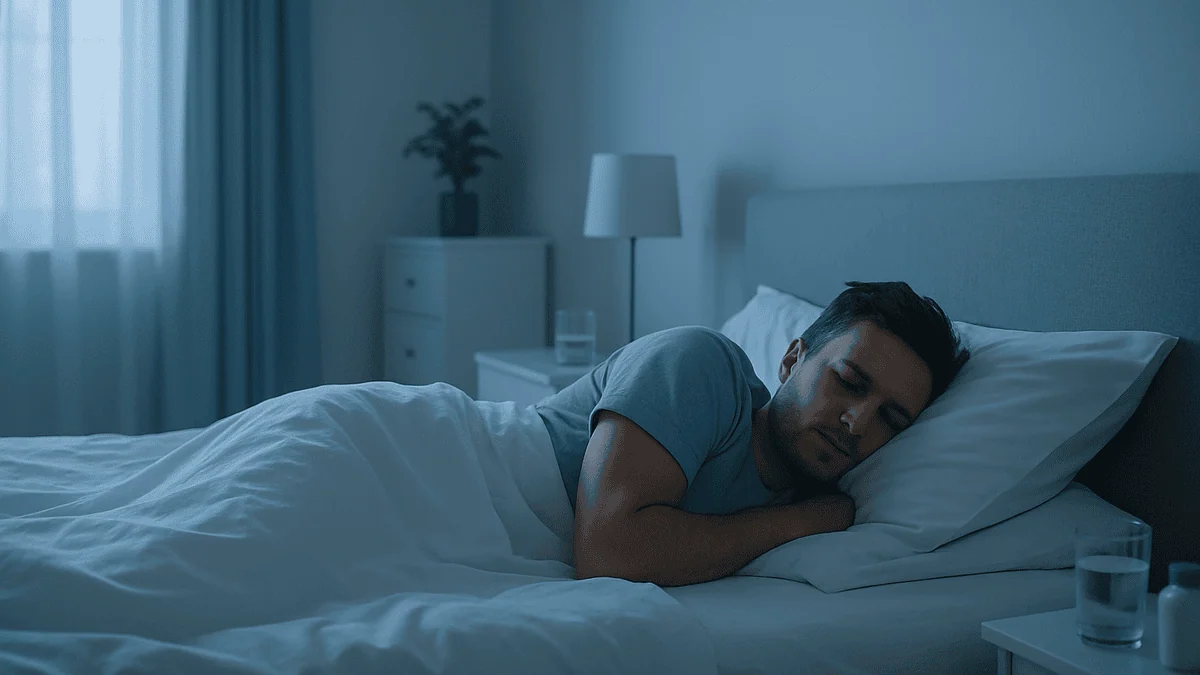
Mouth taping, placing skin-safe tape over the lips at night to encourage nasal breathing, has only limited scientific support. Two small studies in people with mild sleep apnea found modest reductions in snoring and breathing pauses, but no large trials exist. Doctors warn it can be risky for anyone with nasal congestion or undiagnosed sleep apnea, so a medical evaluation should come before the tape.
Somewhere around the third video, a serene sleeper, lights dimmed, a neat strip of tape across their lips, the algorithm decides you need to see forty more. The promise is seductive in its simplicity: seal the mouth, force the nose to do its job, and wake up with more energy, less snoring, maybe even a sharper jawline. All for the price of a roll of tape.
Sleep physicians watching this trend tend to have two reactions at once. The first: nasal breathing genuinely is better for you, and that part of the pitch is solid physiology. The second: taping your airway’s backup exit shut, without knowing why you mouth-breathe in the first place, is a gamble some people should not take.
That tension, real science underneath, thin evidence on top, real risk at the edges, is exactly why doctors are split. Here’s what we actually know.
Why is everyone taping their mouths shut at night?
Mouth taping has been circulating in breathwork and wellness circles for years, but short-form video turned it into a phenomenon, hashtags on the topic have racked up hundreds of millions of views, and products marketed for the purpose now fill entire shelves online. The appeal is easy to understand. Sleep problems are enormously common: roughly one in three American adults doesn’t get the recommended seven hours, according to the CDC, and habitual snoring affects a large share of the adult population. A cheap, drug-free fix you can try tonight is a compelling story.
The claims attached to that story have grown well beyond what any researcher has tested. Depending on which video you watch, mouth taping supposedly cures snoring, deepens sleep, boosts athletic recovery, prevents cavities, sharpens focus, and reshapes the face. A few of those ideas trace back to legitimate research on nasal breathing. Most are extrapolation, and some are pure invention.
What makes this trend worth taking seriously rather than dismissing outright is that the underlying premise isn’t nonsense. Breathing through your nose really does offer physiological advantages over breathing through your mouth, and chronic nighttime mouth breathing really is associated with problems worth fixing. The honest questions are narrower: does tape actually deliver those advantages, for whom, and at what risk? On those, the evidence is far thinner than the enthusiasm.
What is the purpose of mouth taping?
The goal is behavioral, not mechanical: the tape acts as a gentle reminder, or, with a full seal, an enforcer, that keeps the lips together so air travels through the nose instead. People who wake with a parched mouth, a sore throat, or a partner’s complaints about snoring often assume mouth breathing is the culprit, and frequently they’re right.
Advocates pursue taping for a handful of reasons:
- Snoring reduction. An open mouth changes the position of the jaw and tongue, narrowing the airway and making the soft tissues at the back of the throat more likely to vibrate.
- Less dry mouth. Hours of airflow over the tongue and gums evaporates saliva, which is your mouth’s built-in defense system.
- The general benefits of nasal breathingfiltration, humidification, and nitric oxide production, covered in the next section.
- Sleep quality claimsthe hope that quieter, steadier breathing translates into deeper, less fragmented sleep.
Notice what’s missing from that list: any claim that tape fixes the underlying reason a person’s nose isn’t being used at night. Congestion, a deviated septum, allergies, enlarged tonsils, tape addresses none of these. It simply closes the detour. Whether that’s helpful or hazardous depends entirely on whether the main road is actually open, which is why the purpose of mouth taping only makes sense as a question paired with another one: why are you mouth breathing to begin with?
Why nasal breathing genuinely matters
Give the trend its due: the nose is a remarkable piece of equipment, and the case for using it is real physiology, not influencer folklore.
Your nasal passages condition every breath before it reaches the lungs. Tiny hairs and mucus trap dust, pollen, and other particles; the turbinates, scroll-shaped structures inside the nose, warm incoming air to near body temperature and humidify it so it doesn’t dry out the airway. The mouth does none of this. Air gulped past the lips arrives in the lungs colder, drier, and unfiltered.
The nose also produces nitric oxide, a gas made in the sinuses that travels with each inhaled breath. Nitric oxide helps widen blood vessels in the lungs, which may modestly improve how efficiently oxygen moves into the bloodstream. Nasal breathing additionally adds natural resistance to airflow, think of it as breathing through a slightly narrower straw, which slows the breath and may support steadier breathing patterns.
Chronic mouth breathing, by contrast, is associated with dry mouth, bad breath, gum irritation, and a higher risk of cavities, because saliva neutralizes acids and washes away bacteria. In children, persistent mouth breathing is linked to dental and facial development issues and is considered a reason to see a clinician, per MedlinePlus.
So the destination is legitimate. The dispute among doctors isn’t about whether nasal breathing is good: it’s about whether a strip of adhesive is a safe or effective vehicle for getting there, especially when nobody has checked why the nose went unused in the first place.
Does mouth taping really work?
Here is the most honest answer available: possibly, modestly, for a narrow group of people, and nobody can say much more than that yet.
The entire clinical literature on mouth taping amounts to a couple of small studies involving roughly fifty participants combined, both focused on people with mild obstructive sleep apnea who were confirmed mouth breathers. In those studies, a porous patch over the lips reduced snoring and cut the number of breathing interruptions per hour: a genuinely encouraging signal. Cleveland Clinic sleep specialists who have reviewed this evidence describe it the same way: interesting, preliminary, and nowhere near enough to recommend taping broadly.
What the research has not shown matters just as much:
- No study demonstrates that mouth taping improves sleep quality in healthy people without sleep-disordered breathing.
- No evidence supports the more colorful claims, better focus, improved athletic performance, changes to facial structure in adults.
- No trial has tested safety or effectiveness over months or years, or in people with moderate to severe sleep apnea, where the stakes are higher.
There’s also a plausible placebo-adjacent effect to consider. People who adopt a nightly ritual, film themselves sleeping, and expect to feel better often report feeling better. Without controlled comparisons, glowing testimonials can’t be separated from expectation.
If you strip the question to its essentials, will taping my mouth make me sleep meaningfully better?: the scientific answer today is: unproven for most people, tentatively promising for a specific few, and untested for nearly everything the videos promise.
What the (very small) studies actually found
Because so much of this debate hinges on two little studies, it’s worth looking at them squarely rather than through a headline.
| Study | Who was tested | What happened | The catch |
|---|---|---|---|
| 2022 pilot study (Taiwan) | 20 adults with mild obstructive sleep apnea who habitually mouth-breathed | With a porous patch over the lips, the median number of breathing interruptions per hour fell from roughly 8 to under 5, and snoring intensity dropped by nearly half in most participants | Tiny sample, single night per condition, no long-term follow-up, only mild cases |
| 2015 pilot study | 30 adults with mild sleep apnea and habitual mouth breathing | A breathable oral patch reduced snoring and improved some breathing measures during sleep | Same limitations: small, short, mild disease only |
Two details deserve emphasis. First, both studies used porous patches, materials that allow some air exchange in an emergency, not the airtight seal some social media videos demonstrate. Second, participants were screened first: researchers knew they had mild apnea, knew they were mouth breathers, and knew their noses were passable. The average person peeling tape off a roll at home has verified none of this.
In research terms, fifty participants across two pilot studies is a whisper, not a verdict. It’s the kind of result that justifies running a larger trial, which hasn’t happened yet, not the kind that justifies a mass consumer trend. When a claim is uncertain, the responsible move is to say so plainly: the effect may be real for mild, screened cases, and it remains unproven for everyone else.
What are the risks of mouth taping?
For a healthy adult with a clear nose, the most common downsides are minor. For the wrong person, they are not minor at all.
The everyday risks first:
- Skin irritation. Adhesives can inflame the delicate skin around the lips, especially with nightly use or sensitive skin. Redness, peeling, and contact rashes are the most frequently reported complaints.
- Disrupted sleep. Some people find the sensation claustrophobic and wake repeatedly, trading one sleep problem for another. Anxiety about the tape itself can keep the mind alert at exactly the moment it should be winding down.
- Discomfort for lip conditions. Chapped lips, cold sores, or facial hair make removal genuinely unpleasant.
Then the serious ones:
- Restricted breathing when the nose fails. Congestion from a cold, allergies, or a structural blockage can develop or worsen overnight. If the nose clogs and the mouth is sealed, airflow drops. A porous patch reduces this danger; an airtight seal does not.
- Aspiration risk. If a sleeper vomits, from illness, reflux, or excess alcohol, a taped mouth blocks the escape route, creating a rare but genuinely dangerous scenario.
- Worsened oxygen levels in unrecognized sleep apnea. This is the risk sleep physicians worry about most, and it gets its own section below.
None of this is reason for alarm about a product category; it’s reason for screening. The risk profile of mouth taping depends almost entirely on whose mouth is being taped, which is precisely why blanket endorsements from social media are the wrong way to make the decision.
Who should never try mouth taping?
Sleep specialists are broadly consistent on the exclusion list, even when they disagree about everything else. Skip mouth taping entirely if any of the following apply:
- You have diagnosed obstructive sleep apnea and aren’t using your prescribed treatment. Tape is not a substitute for therapy that keeps your airway open, and sealing the mouth can make untreated events worse.
- You suspect sleep apnea but haven’t been evaluated. Loud snoring, witnessed pauses in breathing, gasping awakenings, morning headaches, or heavy daytime sleepiness all warrant a sleep evaluation first, full stop.
- Your nose is blockedby a cold, uncontrolled allergies, sinus infection, nasal polyps, or a significantly deviated septum. If you can’t comfortably breathe through your nose for a few minutes while awake, taping at night is unsafe.
- You’ve been drinking alcohol or taking sedating medications. Both relax the airway, blunt your ability to wake when breathing is compromised, and raise the risk of vomiting during sleep.
- You have severe reflux or a condition that causes nighttime nausea.
- You have very low blood pressure, severe heart or lung disease, or any condition where a brief drop in oxygen is dangeroustalk to your clinician before experimenting with anything that alters your breathing.
And one rule with no exceptions: never tape a child’s mouth. Children’s airways are smaller, their ability to remove tape in distress is limited, and pediatric mouth breathing usually signals something, enlarged adenoids or tonsils, allergies, that needs a clinician, not concealment. A child who mouth-breathes persistently should be seen by a doctor or dentist, not managed with adhesive.
The bigger worry: taping over undiagnosed sleep apnea
If sleep physicians could put one warning label on this trend, it would say this: the people most drawn to mouth taping, chronic snorers who wake up exhausted, are exactly the people most likely to have obstructive sleep apnea, and most of them don’t know it.
Obstructive sleep apnea affects tens of millions of American adults, and a large majority of cases go undiagnosed. The condition isn’t just noisy sleep. During an apnea event, the airway collapses, oxygen levels dip, and the brain jolts the body into a brief arousal to restart breathing, sometimes dozens of times an hour. Over years, untreated apnea is associated with high blood pressure, heart disease, stroke, and type 2 diabetes, according to Mayo Clinic and the NHS.
Here’s the trap. Snoring is the symptom that sends people to the pharmacy shelf. If tape quiets the snoring, or simply muffles it, the household soundtrack improves while the oxygen dips continue. The most audible warning sign of a serious condition gets edited out, and the person feels reassured for exactly the wrong reason. Worse, in someone whose airway depends on mouth breathing as a backup during obstructive events, sealing the lips can deepen the oxygen drops rather than prevent them.
This is why the medical consensus, such as it exists, converges on sequencing rather than prohibition: rule out sleep apnea first. Home sleep tests have made that evaluation far easier than it used to be. A snorer with a clean study loses little by trying tape carefully; a snorer with hidden apnea loses the chance at treatment that actually protects the heart and brain.
Do dentists recommend mouth taping?
Dentists occupy an interesting seat in this debate, because they see the damage mouth breathing does before almost anyone else, and they see it in the chair, not on a sleep study.
Saliva is the mouth’s maintenance crew. It neutralizes acids produced by bacteria, washes away food debris, and continuously bathes tooth enamel in minerals that repair early damage. Hours of nightly mouth breathing dries that system out. The downstream consequences are well documented: higher rates of cavities, gum inflammation, and persistent bad breath. Chronic dry mouth is a legitimate dental problem, and patients who fix their nighttime mouth breathing often see their checkups improve.
So some dentists are sympathetic to the goal of mouth taping, and a few recommend it to select patients as part of addressing dry mouth or snoring. But there is no formal endorsement from major dental or medical organizations, and no dental studies proving that taping, as opposed to nasal breathing achieved by other means, prevents cavities or gum disease. Dentists who do suggest it generally attach the same conditions physicians do: confirm the nose works, rule out sleep apnea, use skin-safe porous products, and stop if anything feels wrong.
A more useful takeaway from the dental world: if you consistently wake with a dry mouth, mention it at your next dental visit and to your primary care clinician. Dry mouth has many causes beyond breathing route, including numerous common medications, and a professional can help sort out which one is yours. Tape answers only one of those possibilities, and it answers it without checking whether it was the right question.
Why do you mouth-breathe at night in the first place?
This is the question the trend skips, and it’s the one that determines whether tape helps, does nothing, or backfires. Nighttime mouth breathing is almost always a symptom of something upstream:
- Nasal congestionfrom allergies, chronic sinus inflammation, or irritants like dry indoor air and smoke. This is the most common and most treatable cause.
- Structural blockagea deviated septum (present to some degree in a large share of adults), nasal polyps, or enlarged turbinates that narrow the airflow path.
- Enlarged tonsils or adenoidsespecially relevant in children, per MedlinePlus, but occasionally significant in adults.
- Sleep apnea itselfthe mouth drops open during obstructive events as the body scrambles for air.
- Habitsome people mouth-breathe out of long-standing pattern even with a perfectly clear nose. This is the group most likely to benefit from a retraining cue like tape.
A simple home check offers a first clue: close your mouth and breathe through your nose, at rest, for three minutes. Comfortable? Your nose is probably usable at night. Straining, whistling, or switching sides constantly? Something is narrowing the passage, and tape would be sealing off your working airway to force air through a compromised one.
The upstream fixes are often unglamorous and effective: managing allergies, using saline rinses, humidifying dry bedrooms, or, for structural problems, seeing an ear, nose, and throat specialist. Solve the reason the nose is closed, and many people find their mouth stays shut at night without any adhesive at all.
If you're set on trying it, here's the safer way
Suppose you’ve cleared the hurdles: no sleep apnea symptoms, no suspicion of undiagnosed apnea, a nose that passes the three-minute test, no alcohol or sedatives on board. Some physicians would still say skip it; others would say a careful trial is reasonable. If you land in the second camp, the how matters.
- Use products designed for skin. Choose hypoallergenic, medical-grade adhesive made for this purpose. Duct tape, packing tape, and household varieties can tear skin and are far harder to remove in a hurry.
- Prefer porous over airtight. The studies showing benefit used breathable patches. A material that permits emergency air exchange builds in a safety margin a full seal doesn’t.
- Don’t seal the whole mouth. A single vertical strip at the center of the lips keeps them together as a cue while leaving the corners free. You get the reminder without the lockdown.
- Rehearse while awake. Wear the tape for 20 to 30 minutes during the day, reading, watching television, to confirm you can breathe comfortably and remove it instantly.
- Prepare the skin. A dab of lip balm at the edges eases morning removal and spares the skin.
- Skip it on bad-nose nights. Colds, allergy flares, congestion of any kind, or an evening that included alcohol all mean no tape tonight.
- Listen to your own data. Waking anxious, gasping, with headaches, or feeling less rested than before? Stop. The experiment has produced its result.
Treat it, in other words, like what it is: an unregulated self-experiment with a thin evidence base, worth doing cautiously if at all, and worth abandoning without sentimentality if your body objects.
Better-proven ways to stop snoring and breathe through your nose
Here’s a mild irony of the mouth-taping boom: several less viral strategies have stronger track records for the same goals.
- Sleep on your side. Back sleeping lets gravity pull the tongue and soft palate toward the throat. Positional changes are among the most consistently recommended snoring fixes at Mayo Clinic and MedlinePlus, and simple tools: a body pillow, or the old trick of something firm sewn into the back of a sleep shirt, help the habit stick.
- Treat the congestion. Managing allergies, rinsing with saline, showering before bed, and running a humidifier in dry rooms all improve nasal airflow directly, which is the actual goal tape only gestures at.
- Try external nasal strips. These pull the nostrils open from the outside rather than sealing the mouth, widening the front door instead of locking the back one. Evidence for snoring reduction is modest but the safety profile is excellent.
- Time your last drink. Alcohol within a few hours of bedtime relaxes throat muscles and reliably worsens snoring. Moving that glass of wine earlier in the evening is a genuinely effective intervention.
- Keep a consistent schedule. Sleep deprivation itself deepens muscle relaxation in the airway; regular, sufficient sleep quietly reduces snoring for some people.
- Ask about medical options. For diagnosed sleep-disordered breathing, clinicians can offer evaluated treatments, airway pressure devices, custom oral appliances fitted by a dentist, or procedures for structural blockages, all with evidence bases that dwarf anything taping can claim.
None of these will trend on your feed. All of them address the mechanics of snoring and nasal obstruction more directly than a strip of adhesive, and none carries the risk of sealing shut your backup airway on the wrong night.
When to see a doctor
Some sleep symptoms are cosmetic annoyances. Others are the surface of something that deserves a proper evaluation, and no consumer product should stand between you and that appointment. Make time with a clinician if you notice:
- Loud, chronic snoring, especially punctuated by silences, gasps, or choking sounds: the classic pattern a bed partner notices before the sleeper does.
- Pauses in breathing during sleep witnessed by anyone in the household.
- Waking unrefreshed despite adequate hours, morning headaches, or a dry mouth every single morning regardless of what you try.
- Daytime sleepiness that intrudes on lifenodding off in meetings, while reading, or, most urgently, while driving.
- High blood pressure that’s hard to control, which can be linked to untreated sleep apnea per Mayo Clinic.
- An inability to breathe comfortably through your nose while awake, which suggests a structural or inflammatory problem an ear, nose, and throat specialist can assess.
- A child who persistently mouth-breathes, snores, or sleeps restlesslypediatric evaluation, not tape, is the answer here.
Getting checked is less burdensome than it once was. Many evaluations start with a conversation and a questionnaire; home sleep tests can often be done in your own bed. The payoff for asking is substantial either way: either you rule out a condition linked to heart disease and stroke, or you catch one early enough to treat it. Both outcomes beat guessing, and both make any subsequent decision about mouth taping an informed one instead of a hopeful one.
So where do doctors actually agree?
Strip away the headlines and the split among physicians is narrower than it looks. Almost no one disputes the underlying physiology: nasal breathing filters, warms, and humidifies air, supports nitric oxide delivery, and protects the mouth from drying out. Almost no one disputes the evidence gap either: two pilot studies of about fifty screened people with mild sleep apnea cannot support the sweeping claims circulating online. And virtually everyone agrees on the exclusions, no taping for children, blocked noses, alcohol-heavy evenings, or anyone with suspected or untreated sleep apnea.
The genuine disagreement lives in a small middle zone: for a healthy adult with a clear nose, no apnea, and a mouth-breathing habit, is a cautious trial of porous tape reasonable? Some sleep physicians shrug and say yes, with precautions. Others argue that anything sealing an airway shouldn’t be recommended on pilot data. Both positions are defensible, which is the most honest thing that can be said about a trend at this stage of the evidence.
If there’s an opinion worth holding firmly, it’s about order of operations. The most valuable step hiding inside this whole trend isn’t the tape: it’s the question the tape raises. Why is your mouth open at night? Answering that, with a clinician if the symptoms warrant it, delivers more health value than any adhesive ever will. Fix the nose, screen the sleep, and the tape becomes what it probably should have been all along: a minor accessory to a solved problem, not a substitute for solving it.
Frequently asked questions
Does mouth taping really work?
The evidence is limited to two small studies of about 50 people with mild obstructive sleep apnea, in which porous lip patches modestly reduced snoring and breathing interruptions. No research shows that mouth taping improves sleep in healthy people, and claims about focus, athletic performance, or facial structure have no scientific support. For most people, the honest answer is: unproven, with a tentative signal in one narrow, medically screened group.
Do dentists recommend mouth taping?
Some individual dentists suggest it for select patients with dry mouth or snoring, but no major dental or medical organization endorses mouth taping. Dentists take nighttime mouth breathing seriously because chronic dry mouth raises the risk of cavities, gum disease, and bad breath, saliva protects teeth. But no dental studies prove taping prevents these problems, and dentists who recommend it typically require a clear nose and a sleep apnea screening first.
What is the purpose of mouth taping?
Mouth taping is meant to keep the lips closed during sleep so you breathe through your nose instead of your mouth. Nasal breathing filters, warms, and humidifies air, supports nitric oxide delivery to the lungs, and reduces nighttime dry mouth. People try taping mainly to curb snoring and morning dry mouth. What it doesn’t do is fix the underlying reason someone mouth-breathes, such as congestion, allergies, or a deviated septum.
What are the risks of mouth taping?
Common risks include skin irritation from adhesive, disrupted sleep, and anxiety or a claustrophobic feeling. More serious risks arise when the nose becomes blocked overnight, when a sleeper vomits with a sealed mouth, or when taping worsens oxygen dips in unrecognized sleep apnea. The danger is lowest for healthy adults with clear nasal passages using porous, skin-safe tape, and highest for anyone with congestion, untreated sleep apnea, or alcohol on board.
Can mouth taping fix sleep apnea?
No. Mouth taping is not a treatment for sleep apnea, and it should never replace prescribed therapy. In two small studies of mild, medically screened cases, porous patches reduced breathing interruptions somewhat, but taping can also mask apnea by quieting snoring while oxygen dips continue, and may worsen events in people who rely on mouth breathing during obstructions. Anyone with apnea symptoms needs a sleep evaluation, not tape.
Is it safe to tape your mouth shut every night?
Long-term safety hasn’t been studied, no trial has followed nightly mouth taping over months or years. For a healthy adult with a clear nose and no sleep apnea, occasional careful use with porous, skin-safe tape appears low-risk, though skin irritation is common with repeated use. Skip taping any night you’re congested, ill, or have been drinking, and stop entirely if you wake gasping, anxious, with headaches, or feeling less rested.
Can I use regular household tape for mouth taping?
No. Duct tape, packing tape, masking tape, and similar products aren’t designed for skin: their adhesives can tear or inflame the delicate tissue around the lips and are harder to remove quickly in an emergency. If you tape at all, use hypoallergenic, medical-grade products made for the purpose, ideally porous ones, and consider a single vertical strip at the center of the lips rather than a full seal.
Is mouth taping safe for children?
No, mouth taping should never be used on children. Their airways are smaller, and their ability to remove tape when distressed is limited. Persistent mouth breathing in a child usually signals an underlying issue such as enlarged adenoids or tonsils, allergies, or nasal obstruction, and it can affect dental and facial development. A child who regularly mouth-breathes, snores, or sleeps restlessly should be evaluated by a pediatrician or dentist.
Why do I breathe through my mouth at night?
Usually because something is limiting airflow through your nose: congestion from allergies or sinus inflammation, a deviated septum, nasal polyps, enlarged turbinates, or, in some cases, sleep apnea forcing the mouth open during obstructive events. Some people mouth-breathe purely out of habit despite a clear nose. A quick self-check: if you can’t breathe comfortably through your nose for three minutes while awake, there’s a physical cause worth investigating.
Does mouth taping help with snoring?
Possibly, for some people. An open mouth shifts the jaw and tongue in ways that narrow the airway, so keeping the lips closed can reduce vibration-driven snoring, small studies in mild sleep apnea found snoring intensity dropped by nearly half with porous patches. The caution: loud chronic snoring, especially with gasps or pauses, can signal sleep apnea, and quieting it with tape without an evaluation removes the warning sign, not the risk.
References
This article is for general information only and is not a substitute for professional medical advice. Please consult a qualified doctor about your individual situation.

More from the Blog

Grounding: The Earthing Claim, Tested Against Physics and Trials
Grounding, or earthing, means placing bare skin in direct contact with the earth on the theory that absorbed electrons reduce inflammation. That mechanism is…

Alcohol and Antibiotics: Which Ones Really Matter
Yes, moderate alcohol is generally considered acceptable while taking amoxicillin; the two are not known to interact directly, according to the NHS and Mayo…

Epsom Salt Baths: What Dissolves in the Water and What Does Not
Epsom salt, magnesium sulfate, dissolves completely in warm bathwater, separating into magnesium and sulfate ions. What does not follow, according to current evidence, is…
Cortisol Belly: What Stress Fat Is and Is Not
Cortisol belly is a popular term, not a medical diagnosis, for abdominal fat linked to chronic stress. Cortisol can encourage fat storage deep in…

Hydrotherapy: Water as Treatment, From Pools to Protocols
Hydrotherapy is the therapeutic use of water, warm therapy pools, aquatic physical therapy, cold immersion, and whirlpools. Evidence best supports supervised warm-water exercise for…

Chlorophyll: The Green-Drops Trend vs Plant Biology
Chlorophyll is the pigment plants use to capture sunlight for photosynthesis. Most liquid "chlorophyll" supplements actually contain chlorophyllin, a semi-synthetic, copper-based derivative. Evidence for…