

Mpox Vaccine: Who It Is Recommended For and How Protection Works
Key Takeaways
- WHO ended the mpox public health emergency on September 5, 2025, but CDC, WHO and NHS eligibility guidance for the mpox vaccine did not change.
- JYNNEOS uses a vaccinia virus that cannot replicate in human cells, so it cannot cause mpox, cannot spread to contacts, and can be given to people with eczema or weakened immunity.
- Observational studies from the 2022 outbreak estimate roughly 66 to 89 percent protection against symptomatic mpox after a completed series, with lower protection for people who started but did not finish.
- Protection is not considered full until about two weeks after the series is complete, which matters for anyone planning travel or events.
- After a known exposure, the CDC advises vaccination as soon as possible, ideally within four days, with benefit for reducing severity up to fourteen days.
- Direct human effectiveness data against clade Ib are still limited; protection is expected on biological and animal-study grounds, and agencies emphasize completing the series.
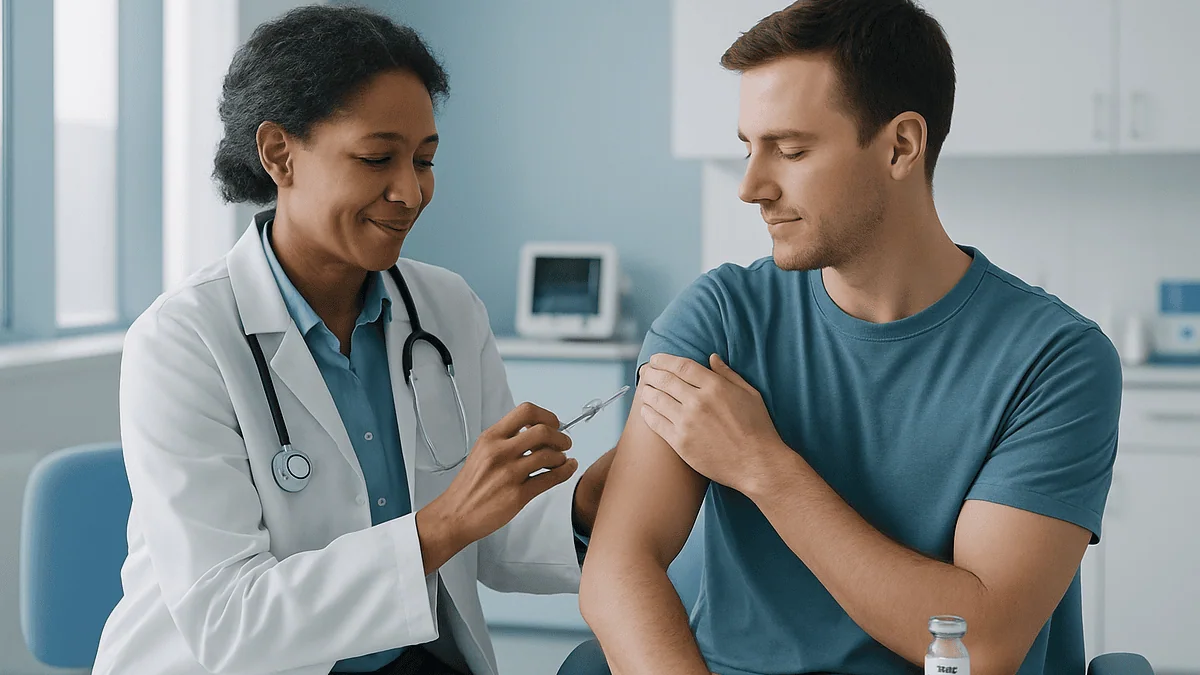
The mpox vaccine (JYNNEOS, also known as MVA-BN) is recommended by the CDC for adults at higher risk of exposure, including gay, bisexual and other men who have sex with men, transgender and gender-diverse people with recent risk factors, their sexual partners, some laboratory workers and certain travelers, plus anyone recently exposed. It uses a virus that cannot multiply to train immunity against orthopoxviruses, and observational studies show substantial but not complete protection.
The search spike is easy to date. On September 5, 2025, the World Health Organization announced that mpox no longer met the bar for a public health emergency of international concern, the agency’s highest alert level. Within days, the same question started landing in clinic inboxes and search bars: if the emergency is over, is the mpox vaccine still recommended, or can I skip it?
As of early 2026, the answer from health agencies has not changed with the headlines. The CDC, WHO and NHS all still recommend vaccination for defined groups at higher risk, and a newer viral lineage, clade Ib, has kept the topic alive with sporadic cases far from central Africa, including a handful in the United States late in 2025 with no travel history.
What follows is the long version: who the vaccine is for, how a virus that cannot reproduce still teaches your immune system to fight, what the studies actually measured, and where the honest gaps remain.
What changed recently with mpox and the mpox vaccine
Three dated developments explain most of the current attention.
First, the emergency status. WHO declared a public health emergency of international concern on August 14, 2024, driven by a fast-spreading clade Ib outbreak centered on the Democratic Republic of the Congo. A clade is a family branch of a virus defined by shared genetic changes. That declaration was lifted on September 5, 2025. WHO was explicit that the lifting reflected sustained decline in cases and better local response capacity, not that the virus had gone away. Its fact sheet still describes vaccination as a core tool for people at risk.
Second, the vaccine landscape widened. In September 2024, WHO prequalified MVA-BN, the same product sold as JYNNEOS in the United States, a step that lets UN agencies and low-income countries procure it. In November 2024, a second product, LC16m8, made in Japan, received WHO emergency use listing. In the United States, the FDA also approved ACAM2000, an older smallpox vaccine that uses a virus able to multiply, for mpox in August 2024. That product carries more restrictions and is rarely the first choice outside specific occupational settings.
Third, the geography of clade I shifted. The first US clade Ib case tied to travel appeared in California in November 2024. By late 2025, public health officials in California reported a small cluster of clade Ib infections in people who had not traveled, suggesting limited local transmission. Case counts remained tiny compared with the 2022 clade IIb outbreak, which infected more than 30,000 people in the United States, but the signal was enough to send people back to the CDC vaccine pages.
The CDC’s own eligibility framework has been stable since its advisory committee voted in October 2023 to make mpox vaccination a routine recommendation for adults at ongoing risk, rather than an emergency-only measure. That recommendation, published in 2024, is the one clinics still follow.
Who should get the mpox vaccine, according to the CDC?
The CDC’s list is specific, and specificity here is a kindness: it tells you plainly whether you are in or out.
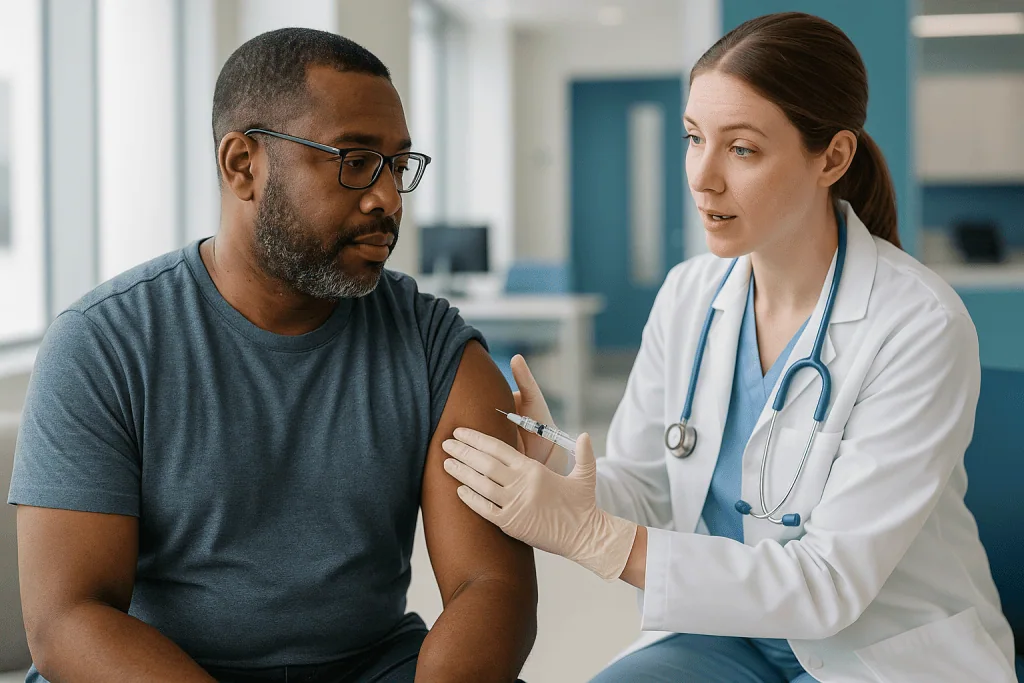
Adults 18 and older are recommended to receive the mpox vaccine if they are gay, bisexual or other men who have sex with men, or transgender, nonbinary or gender-diverse people, and in the past six months have had at least one of the following: a new diagnosis of a sexually transmitted infection, more than one sex partner, sex at a commercial sex venue, or sex in association with a large public event in an area where mpox is spreading.
The recommendation also covers:
- People with a sex partner who meets any of the criteria above.
- People who anticipate any of those situations in the near future.
- People living with HIV or another condition that weakens immunity, when they also have exposure risk. Immunocompromised means the body’s defenses are reduced by illness or medicines.
- People who exchange sex for money or other goods.
- Laboratory and some health care workers who handle orthopoxviruses, the virus family that includes mpox and smallpox.
- Travelers to areas with clade I transmission who expect sexual or other close contact that raises exposure risk.
Anyone, regardless of these categories, who has had a known or suspected exposure to mpox should be offered the vaccine promptly. The CDC calls this post-exposure prophylaxis, meaning treatment given after contact to head off illness.
People under 18 are not covered by the standard US approval, but the vaccine has been available to them under an emergency use authorization when a clinician judges the risk warrants it. That decision sits with the treating clinician and the family.
Notice what the list does not say. It does not recommend the vaccine for the general public, for casual travelers to affected regions, or for people whose only concern is a headline. Public health agencies have been consistent that broad population vaccination is not supported by the pattern of spread, which remains overwhelmingly tied to close, often intimate, skin-to-skin contact.
How CDC, WHO and NHS eligibility compare
The three major guideline bodies agree on the core idea, protect people with the highest likelihood of exposure, but they phrase it through their own health systems. The table below summarizes the current positions in plain terms.
| Group | CDC (United States) | WHO (global) | NHS (England) |
|---|---|---|---|
| Gay, bisexual, other men who have sex with men at higher risk | Recommended with recent risk factors | Recommended where transmission occurs | Offered to those at higher risk, often via sexual health clinics |
| Trans and gender-diverse people with same risk factors | Recommended | Included among at-risk groups | Included when risk criteria are met |
| Sex workers | Recommended | Recommended in outbreak areas | Considered on risk assessment |
| Recent close contacts of a case | Recommended, as soon as possible | Recommended | Offered after exposure |
| Health and lab workers with exposure risk | Recommended for orthopoxvirus lab staff; case-by-case for clinical staff | Recommended for those at occupational risk | Offered to staff in high-risk roles |
| General public | Not recommended | Not recommended | Not offered |
WHO adds a layer the others do not need: in countries with active clade I outbreaks, it supports vaccinating children and pregnant people in affected households under national programs, because the virus there spreads within families as well as through sexual networks. WHO also stated that MVA-BN can be used in people under 18 in outbreak settings under its emergency framework; in the United States that use remains under emergency authorization rather than standard approval.
The NHS route is practical rather than list-based. Eligible people are typically identified and offered vaccination through sexual health services, which already see the population at highest risk, and through occupational health for staff. The NHS page on mpox describes who is likely to be contacted and encourages people who think they qualify to ask.
If you read across the rows, one pattern stands out. No agency frames the mpox vaccine as a universal shot. Each ties it to exposure risk, and each defers the final call to a clinician who knows your history.
How the mpox vaccine works inside the body
JYNNEOS is built from a virus called Modified Vaccinia Ankara. Vaccinia is a relative of smallpox that was used in the original smallpox vaccines; the Ankara strain was weakened decades ago by passing it through cell cultures hundreds of times until it lost the ability to copy itself in human cells. Non-replicating means exactly that: the virus enters cells, displays its proteins, and stops.
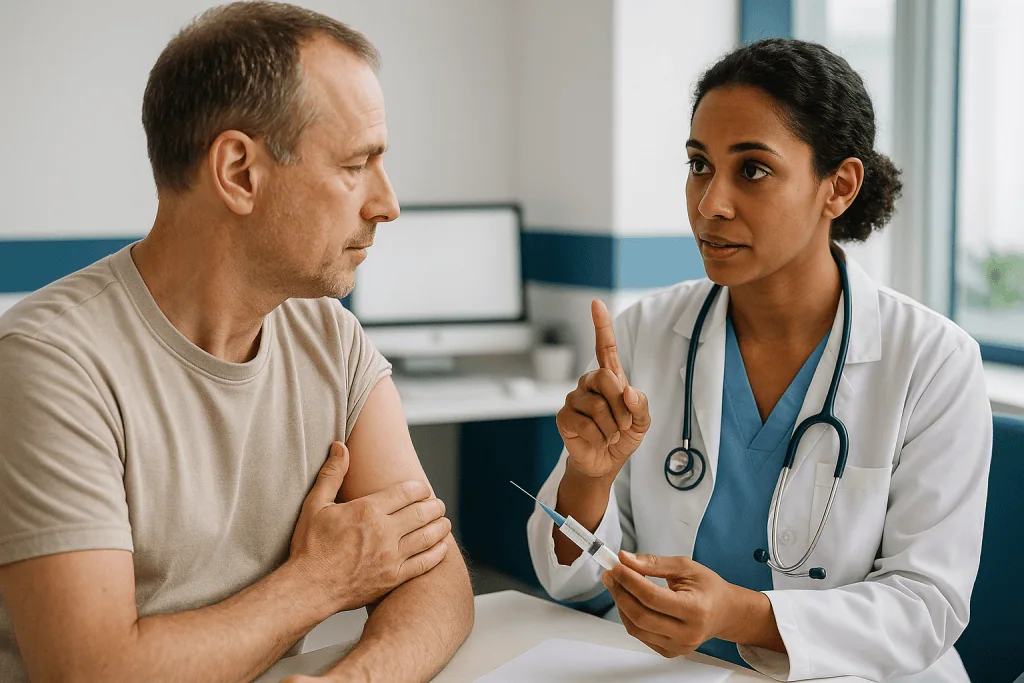
That single property changes the risk profile. Older smallpox vaccines such as ACAM2000 use a vaccinia virus that does multiply, which is why they leave a pustule at the injection site, can spread to other parts of the body or to close contacts, and are avoided in people with eczema, weakened immunity or pregnancy. A non-replicating virus cannot cause those problems, which is why JYNNEOS can be offered to groups the old vaccines excluded.
Protection works by recognition. Orthopoxviruses, the family that includes mpox, smallpox and vaccinia, share many surface proteins. When the immune system meets the vaccine virus, it builds two kinds of memory: antibodies that bind the outer envelope and can neutralize virus particles before they infect cells, and T cells that recognize infected cells and destroy them. Neutralizing antibodies are antibodies that block a virus from entering cells. Because mpox carries look-alike proteins, both arms of that memory carry over.
This is the same principle that let the smallpox eradication campaign work with a cousin virus rather than smallpox itself, and it is why people vaccinated against smallpox decades ago appear to retain partial protection against mpox in some observational data.
What the vaccine does not do is sterilize you against infection. It lowers the odds of becoming ill after exposure and, in people who do get infected, is associated with milder disease, fewer lesions and less need for hospital care. Immunity also takes time to build. CDC guidance treats protection as reaching its peak about two weeks after the series is completed, which matters if you are counting down to a trip or an event.
What the evidence actually says about mpox vaccine effectiveness
Evidence quality is worth grading honestly, because the mpox vaccine story has an unusual shape: the licensing data came from immune-response studies, and the real-world protection data came afterward, during an outbreak.
Randomized trial evidence (strongest design, but a proxy outcome). Before the 2022 outbreak, MVA-BN was tested against ACAM2000 in a randomized trial of several hundred adults published in 2019. Participants given MVA-BN produced neutralizing antibody levels at least as high as those given the older vaccine, and when they were later given ACAM2000, the skin lesion it normally causes was much smaller, a sign of existing immunity. No randomized trial has measured protection against mpox disease itself; running one during a spreading outbreak was judged unethical once the vaccine was available.
Observational evidence (large, consistent, but open to bias). During the 2022 to 2023 clade IIb outbreak, several US case-control and cohort studies compared vaccinated and unvaccinated people. Estimates for a completed series ranged from about 66 percent to 89 percent protection against symptomatic mpox, with partial vaccination landing lower, roughly 36 to 75 percent depending on the study. A CDC analysis across dozens of jurisdictions found that unvaccinated men at risk had roughly 7 to 14 times the incidence of those who had started the series. Observational studies cannot fully separate the effect of the vaccine from differences in behavior between people who chose vaccination and those who did not, which is why the ranges are wide.
Severity evidence (observational). Multiple reports found that vaccinated people who did develop mpox had fewer lesions, less anogenital involvement and lower hospitalization rates.
Clade I evidence (limited, emerging). Direct effectiveness data against clade Ib are thin. Protection is expected on biological grounds, because the vaccine targets shared orthopoxvirus proteins, and early field reports from central Africa are consistent with that, but no large controlled analysis has yet been published. Expert opinion, not trial data, currently underpins this piece.
Durability (immunogenicity data). Antibody levels fall substantially over the first year or two after vaccination. Whether clinical protection falls in step is not yet established, which is why booster recommendations remain limited to certain occupational groups.
Can you still get mpox if vaccinated?
Yes. Breakthrough infections are real, expected and documented, and they do not mean the vaccine failed in any meaningful sense.
Run the numbers from the outbreak studies. If a completed series reduces the risk of symptomatic mpox by roughly two thirds to nine tenths, then out of every hundred people who would otherwise have fallen ill, somewhere between ten and thirty four still will. Across a large population at risk, that is thousands of infections prevented and a smaller number that still occur. A breakthrough case is the visible tail of an otherwise invisible success.
Breakthrough infections also tend to look different. Case series from the United States and Europe describe vaccinated patients with fewer skin lesions, shorter illness and lower rates of the painful complications, such as rectal inflammation, that sent unvaccinated patients to the hospital in 2022. Those comparisons come from observational data and should be read as strong signals rather than proof.
Several factors raise the chance of infection despite vaccination. Exposure within the first two weeks after completing the series, before immunity has fully built, is one. Very high or repeated exposure, for example a sexual partner with active lesions, is another. People with significant immune suppression, including advanced HIV, may mount a weaker response. Time since vaccination may matter as antibodies wane, though how much is still being worked out.
The practical consequence is that vaccination does not retire the other precautions. Public health agencies continue to advise avoiding close contact with anyone who has a new unexplained rash, asking partners about symptoms, and pausing sex until any suspicious lesions have been checked. Someone who is vaccinated and develops a new rash, particularly in the genital or anal area, should still be tested; the vaccine does not change the need for a diagnosis, and a milder presentation can be easier to miss.
Think of the vaccine as a seatbelt. It dramatically improves the odds in a crash, it does not make crashes impossible, and it works best alongside careful driving.
Is the mpox vaccine still recommended now that the global emergency has ended?
The short version is that nothing in the eligibility guidance changed when the emergency declaration was lifted. The longer version explains why.
A public health emergency of international concern is an administrative trigger. It unlocks funding, coordination and reporting obligations across countries. WHO lifts it when the situation becomes manageable through routine systems, not when a pathogen disappears. Polio, for comparison, has remained under that designation since 2014 precisely because the routine systems were judged insufficient. Mpox moving off the list is a statement about response capacity in affected countries, not about individual risk in a clinic in Ohio or Manchester.
The CDC’s routine recommendation for people at ongoing risk was designed for exactly this moment. Its advisory committee moved mpox vaccination from an outbreak-response footing to a standing recommendation in late 2023, more than a year before the clade I emergency, because clade IIb transmission never fully stopped in the United States after 2022. Cases continued at a low level, concentrated in the same sexual networks, with most new infections occurring in people who were unvaccinated or had not completed the series.
Clade I adds a second reason. Its recent appearance outside Africa, including the small US cluster in late 2025, means the population most affected by the 2022 outbreak now faces a second lineage with a historically higher severity profile. Agencies have not changed who is eligible on that basis, but they have emphasized completing the series for anyone who started and stopped.
The NHS position is similar. Mpox vaccination is still offered through sexual health services to people at higher risk, and the NHS continues to encourage anyone who received only part of the series to finish it.
So the honest answer to the trending question is: yes, for the same defined groups, for the same reasons, with a slightly stronger nudge to complete the series than existed in 2023. For people outside those groups, the recommendation is unchanged too, which is to say there is none.
Does the mpox vaccine protect against clade I?
This is the question with the least data and the most reasonable biological argument, so it deserves careful language.
Mpox virus divides into two main clades. Clade II, and specifically the IIb lineage, caused the 2022 global outbreak and has had a case fatality rate well under one percent in countries with good health care. Clade I has historically circulated in central Africa with higher reported fatality, particularly among children and in settings with limited care. Clade Ib is a newer sub-lineage that has spread more efficiently between adults, including through sexual contact, since 2023.
The vaccine was not designed around either clade. It presents proteins shared across the orthopoxvirus family, and the two mpox clades differ from each other by a small fraction of their genetic code, far less than either differs from vaccinia. Animal studies conducted before the outbreak showed MVA-BN protected against lethal challenge with clade I virus. Laboratory work has found that antibodies from vaccinated people neutralize both clades.
Human effectiveness data against clade Ib are still emerging. Vaccination campaigns in the Democratic Republic of the Congo, Rwanda, Uganda and neighboring countries began in late 2024 using WHO-prequalified MVA-BN, and observational analyses are underway. Early reports have been consistent with protection, but no peer-reviewed estimate comparable to the 2022 US studies has been published as of this writing. WHO and the CDC both state that the vaccine is expected to work against clade I while acknowledging the evidence gap, which is the appropriate place to land.
For an individual, the implication is straightforward. If you meet the eligibility criteria, the possibility of clade I exposure is a reason to complete the series, not a reason to wait for a clade-specific product that does not exist and is not in development. If you do not meet the criteria, the emergence of clade I has not changed the guidance, because the routes of spread remain the same close-contact pathways.
Anyone traveling to a region with active clade I transmission who expects close contact should raise it with a clinician well before departure, given the time protection takes to build.
Mpox vaccine side effects: what to expect and how long they last
The typical experience is a sore arm for a few days and, for a minority, a day of feeling run down. That summary comes from both the pre-licensure trials and safety monitoring across the millions of doses given since 2022.
The most common reactions are at the injection site: pain, redness, swelling, firmness and itching. In the trials these affected most recipients and usually resolved within a week. Whole-body symptoms, including fatigue, headache, muscle aches, chills and nausea, occurred in a smaller share and were generally mild to moderate.
During 2022, when supply was short, US clinics used an alternative injection technique that placed the vaccine just under the skin surface. It produced more visible local reactions, including a raised, discolored patch that could persist for several weeks. That approach is now used less often, and people vaccinated in 2022 sometimes still ask whether the mark meant something went wrong. It did not; it was an expected immune response at a shallow depth.
Serious reactions are rare. Anaphylaxis, a sudden severe allergic reaction, has been reported at rates similar to other vaccines, which is why clinics observe people briefly afterward. The vaccine is produced in chicken embryo cells and contains trace antibiotics; severe allergy to any component is a precaution that should be discussed with a clinician beforehand. Egg allergy alone is not considered a barrier under CDC guidance, but it is worth mentioning.
Heart inflammation, called myocarditis, was a known concern with older replicating smallpox vaccines. Because JYNNEOS does not replicate, that risk was expected to be far lower, and safety monitoring through 2022 and 2023 did not identify a signal, though clinicians continue to watch for it.
People who feel unwell after vaccination can usually manage with rest and fluids. Because this vaccine cannot spread virus, there is no need to cover the site or avoid close contact, a real difference from ACAM2000, which does require site care.
Anyone with a reaction that feels beyond the ordinary, especially chest pain, shortness of breath or hives, should seek care promptly; details are in the section on when to see a doctor.
Getting the mpox vaccine after an exposure: why timing matters
Vaccination after contact with mpox is one of the few situations where the calendar is as important as the eligibility list.
The CDC advises that post-exposure vaccination should be given as soon as possible after a known or suspected exposure, ideally within four days. In that window the vaccine has the best chance of preventing disease entirely, because the immune response can begin before the virus has established itself. Between four and fourteen days after exposure, vaccination is still recommended; it may not prevent infection, but observational evidence and experience with related viruses suggest it can reduce the severity of illness.
What counts as an exposure? Public health teams grade it. Highest risk includes direct contact with a person’s skin lesions, body fluids or contaminated materials such as bedding or clothing, and any sexual or intimate contact with someone who has mpox. Intermediate risk includes being within a short distance of an unmasked infected person for an extended period. Casual, brief contact in passing is generally not considered an exposure requiring vaccination.
Knowing you have been exposed usually happens one of two ways: a partner or household member tells you they have been diagnosed, or a health department contact tracer reaches out. Either way, the practical step is the same. Contact a sexual health clinic, local health department or primary care office quickly and say the words post-exposure mpox vaccination. Staff know what that means and can act on it. Mpox is a reportable disease in the United States and the United Kingdom, so public health teams are set up to respond.
People who have already completed the mpox vaccine series and then have a new exposure are generally not advised to receive additional vaccination under current CDC guidance, but they should still monitor for symptoms for 21 days, the outer edge of the incubation period, the time between catching an infection and developing symptoms. Anyone in that situation should check with a clinician rather than assume.
Exposure vaccination is not a substitute for testing. If a rash or other symptoms appear, get evaluated regardless of vaccination timing.
Who should talk with a clinician before getting the mpox vaccine?
Because JYNNEOS cannot replicate, the list of people who need extra caution is short, and it looks very different from the list for older smallpox vaccines. Still, several groups benefit from a conversation first.
People with weakened immunity. The vaccine is considered safe for people with HIV, those on immune-suppressing medicines and transplant recipients, because there is no live replicating virus to run out of control. The caveat is that the immune response may be weaker, so protection may be lower. Nobody in this group should stop or adjust any prescribed medicine to improve vaccine response; that trade-off belongs to the treating clinician.
Pregnant and breastfeeding people. Human data are limited. Animal studies did not show harm to the developing fetus, and the CDC states that the vaccine can be given in pregnancy when exposure risk warrants it. Breastfeeding is not a barrier. A clinician weighing exposure risk against uncertainty makes the call.
People with eczema or other skin conditions. This is a genuine change from the past. Eczema was a strict exclusion for replicating smallpox vaccines because vaccinia could spread across damaged skin. JYNNEOS carries no such restriction.
People with severe allergies. A history of anaphylaxis to gentamicin, ciprofloxacin, or a previous dose of a smallpox or mpox vaccine is a precaution. Egg allergy is not a reason to skip the vaccine under CDC guidance, but tell the clinic.
People who recently had mpox. Infection is thought to give strong protection, and the CDC does not currently recommend vaccination for people with a confirmed prior case, though this may be revisited as more is learned about reinfection.
Adolescents under 18. Use in the United States is under emergency authorization rather than standard approval. It can be appropriate when risk is real, and the decision is made with a clinician and, where relevant, a parent or guardian.
People with a current fever or moderate illness are usually asked to wait until they feel better, a general vaccine precaution rather than something specific to mpox.
Travelers and the mpox vaccine: who actually needs it
Travel questions have multiplied since clade Ib began appearing outside Africa, so it is worth being precise about what the guidance does and does not say.
The CDC does not recommend mpox vaccination for travelers in general, even to countries with active clade I outbreaks. The reasoning follows the transmission pattern. Mpox spreads through close, prolonged, usually skin-to-skin contact; through contact with lesions, body fluids and contaminated bedding or clothing; and, in the clade I regions of central Africa, within households and, historically, through contact with infected animals. It does not spread the way influenza or measles does, drifting through a shared airport terminal. A traveler visiting cities, staying in hotels and eating in restaurants has very low exposure risk.
Vaccination is recommended for travelers who expect activities that fall within the standard risk criteria at their destination: new sexual partners, sex at venues or large events, or occupational exposure such as health care work in outbreak settings. In those cases the same eligibility logic applies as at home, with one added consideration. Protection is not considered full until about two weeks after the series is completed, so the conversation should start well ahead of departure.
Travelers to affected regions are also advised, regardless of vaccination, to avoid contact with anyone who has a rash or lesions, avoid contact with wild animals and with bushmeat, and avoid handling bedding or clothing used by someone who is ill. Aid and health workers deploying to outbreak areas typically go through occupational health, which handles vaccination decisions.
On return, anyone who develops a new rash, fever, swollen lymph nodes or flu-like illness within 21 days should seek care and mention the travel. That advice is the same for vaccinated and unvaccinated travelers, since neither prior vaccination nor low perceived risk rules out infection.
The NHS and WHO take the same position: vaccination for travelers is tied to anticipated exposure, not to the destination on the boarding pass.
Common myths about the mpox vaccine, corrected
A trending topic collects claims faster than fact-checkers can follow them. These are the ones that recur most often, with what the evidence supports.
Myth: the vaccine can give you mpox. It cannot. JYNNEOS contains a vaccinia virus, not mpox virus, and that vaccinia strain cannot replicate in human cells. There is no mechanism by which it could cause mpox or spread to others.
Myth: it is a new, untested vaccine. The Modified Vaccinia Ankara strain has been studied since the 1970s and was given to more than 100,000 people in Germany during late-stage smallpox vaccination. JYNNEOS was approved in the United States in 2019 after trials in thousands of participants, before the 2022 outbreak made it famous.
Myth: if you were vaccinated against smallpox as a child, you are fully protected. Some protection likely persists, and observational data from 2022 hinted at lower risk among older men who had childhood smallpox vaccination. Fully protected is too strong; immunity wanes over decades, and anyone who meets current eligibility criteria is advised to be vaccinated regardless of childhood history.
Myth: the vaccine only matters for gay men. The vaccine is recommended based on exposure risk, and in the 2022 outbreak that risk was concentrated in sexual networks of men who have sex with men. It is also recommended for sex workers, laboratory workers, close contacts of any gender, and, in outbreak countries, household members including children. The virus does not check anyone’s identity; guidance follows where transmission is happening.
Myth: since the WHO emergency ended, the vaccine is no longer recommended. Eligibility guidance did not change when the emergency status was lifted in September 2025. The recommendation for defined at-risk groups stands.
Myth: the vaccine causes heart problems like the old smallpox shot. Myocarditis was associated with replicating smallpox vaccines. Safety monitoring of the non-replicating mpox vaccine through the 2022 to 2023 campaign did not identify that signal.
Myth: a breakthrough infection means the vaccine is useless. Observational studies estimate roughly 66 to 89 percent protection after a completed series, with milder illness in those who are infected. Partial protection is still protection.
Is it worth getting the mpox vaccine? An honest read of risk and benefit
Worth it is a personal calculation, but the inputs are not mysterious, and it helps to lay them side by side.
On the benefit side sits a vaccine with consistent observational evidence of substantial protection against a disease that, in its 2022 form, caused two to four weeks of painful lesions, sometimes in places that made sitting, swallowing or using the toilet an ordeal. About one in twenty US cases in 2022 required hospitalization, most often for pain control or secondary infection. A small number of people, disproportionately those with advanced HIV, died. Clade I raises those stakes on paper, though how much it does so in well-resourced health systems is not yet clear.
On the cost side sits a sore arm, a possible day of fatigue, a clinic visit, and the real but small uncertainty about how long protection lasts.
The math turns entirely on exposure. For someone who meets the CDC criteria, the expected benefit is large relative to the inconvenience, which is why agencies recommend it without hedging. For someone with no realistic exposure route, the benefit approaches zero, and even a very safe vaccine cannot beat zero risk. That is why the guidance is targeted rather than universal, and why a well-meaning relative in a low-risk situation asking whether they should get it can be reassured rather than rushed to a clinic.
The people who most often fall through the cracks are those who started the series in 2022, felt the outbreak fade, and never finished. The evidence is clear that partial vaccination protects less than a completed series. If that describes you and you still meet the criteria, finishing is the single highest-value step available, and clinics do not require you to restart.
The other group worth naming is people who have recently entered a higher-risk situation, a new relationship, a new city, a new set of partners, and have not thought of mpox since 2022. Eligibility is about the past six months and the anticipated future, not about whether you were in the news cycle the first time.
Whatever your situation, the decision is one to make with a clinician who can weigh your actual exposure, your health history and your goals.
When to see a doctor about mpox or the mpox vaccine
Two sets of situations call for prompt medical attention: signs of mpox itself, and rare reactions to the vaccine.
Seek care for possible mpox if you have:
- A new rash, spots, blisters or sores anywhere on the body, especially the genitals, anus, mouth, hands or face, whether or not you feel ill.
- Fever, chills, swollen lymph nodes, headache, muscle aches or exhaustion together with a rash.
- Severe rectal pain, painful swallowing, or difficulty urinating, which can accompany lesions in those areas.
- Any of these symptoms within 21 days of close contact with someone diagnosed with mpox, or of travel to an area with active clade I transmission, regardless of vaccination status.
Call ahead before arriving so the clinic can arrange to see you without exposing others. Mpox is diagnosed by swabbing a lesion; a clinician needs to do that, and self-diagnosis from photographs is unreliable because early mpox can resemble herpes, syphilis, chickenpox or simple ingrown hairs.
Seek urgent care after vaccination if you have:
- Hives, swelling of the face, lips or throat, wheezing or difficulty breathing, which can signal a severe allergic reaction and warrant emergency services.
- Chest pain, shortness of breath, a racing or fluttering heartbeat, or fainting in the days after vaccination.
- Injection-site redness or swelling that keeps expanding after several days, becomes hot, or drains pus, which may indicate a skin infection unrelated to the vaccine itself.
- A fever that persists beyond two to three days, or any symptom that feels severe or frightening to you.
Talk with a clinician, non-urgently, if: you think you meet eligibility criteria and have not been offered vaccination; you started the series and did not finish; you are living with HIV, pregnant, or on immune-suppressing medicines and are unsure whether to proceed; or you have had a serious allergic reaction to a vaccine in the past.
Every decision about whether, when and how to be vaccinated, and about any medicine you take alongside it, rests with the prescribing clinician who knows your history. This article is a map of the evidence, not a substitute for that conversation.
Frequently asked questions
Is the mpox vaccine still recommended?
Yes, for defined groups at higher risk of exposure. The CDC, WHO and NHS all continue to recommend mpox vaccination for gay, bisexual and other men who have sex with men with recent risk factors, trans and gender-diverse people with the same factors, their partners, sex workers, certain laboratory and health workers, some travelers and anyone recently exposed. The end of WHO’s emergency declaration in September 2025 did not change eligibility.
Can you still get monkeypox if vaccinated?
Yes. Breakthrough infections occur because no vaccine gives complete protection. Observational studies estimate the completed series prevents roughly two thirds to nine tenths of symptomatic cases, and people who are infected despite vaccination tend to have fewer lesions and milder illness. Vaccinated people who develop a new rash, especially in the genital or anal area, should still be tested, since a milder presentation can be easier to miss.
Who should get a monkey pox vaccine?
Under CDC guidance, adults at higher risk of exposure: gay, bisexual and other men who have sex with men, or transgender and gender-diverse people, who in the past six months had a new sexually transmitted infection, more than one partner, or sex at a venue or large event; their sex partners; sex workers; people with HIV or immune suppression plus exposure risk; orthopoxvirus laboratory workers; certain travelers; and anyone recently exposed to mpox.
Is it worth getting the mpox vaccine?
For people who meet eligibility criteria, health agencies consider the benefit clearly worth the minor side effects, because mpox can cause weeks of painful lesions and roughly one in twenty US cases in 2022 needed hospital care. For people with no realistic exposure route, the vaccine is not recommended because the expected benefit is close to zero. The decision should be made with a clinician who knows your history.
What are the most common mpox vaccine side effects?
Pain, redness, swelling, firmness and itching at the injection site are the most common, usually lasting a few days. Some people experience fatigue, headache, muscle aches, chills or nausea for a day or so. Serious allergic reactions are rare. Because the vaccine virus cannot replicate, there is no risk of spreading it to others and no need for special care of the injection site.
How does mpox vaccine effectiveness compare between partial and completed vaccination?
Completing the series protects more. US observational studies from 2022 to 2023 estimated roughly 66 to 89 percent protection against symptomatic mpox after the completed series, versus roughly 36 to 75 percent for people who had started but not finished. Those ranges are wide because observational studies cannot fully separate vaccine effect from differences in behavior, but every study pointed the same direction.
Does the mpox vaccine work against clade I?
It is expected to, but direct human data are still limited. The vaccine targets proteins shared across the orthopoxvirus family, the two mpox clades differ only slightly in genetic terms, and animal studies showed protection against clade I. Vaccination campaigns in central Africa since late 2024 are generating real-world data. WHO and the CDC state that protection is expected while acknowledging the evidence gap.
How soon after exposure should someone get the mpox vaccine?
As soon as possible, ideally within four days of the exposure, when the vaccine has the best chance of preventing illness altogether. Between four and fourteen days after exposure it is still recommended and may reduce the severity of disease even if infection occurs. Contact a sexual health clinic, health department or primary care office quickly and mention post-exposure mpox vaccination.
Can people with HIV, eczema or who are pregnant receive the mpox vaccine?
Yes, under CDC guidance, because the vaccine virus cannot replicate. People with HIV or other immune suppression can be vaccinated, though their response may be weaker. Eczema is not a barrier, unlike with older smallpox vaccines. The vaccine can be given in pregnancy when exposure risk warrants it, with limited human data but reassuring animal studies. Each case should be discussed with the treating clinician.
Do I need the mpox vaccine to travel to Africa or other affected regions?
Not for travel alone. The CDC does not recommend mpox vaccination for general travelers, because the virus spreads through close, prolonged, usually intimate contact rather than casual public exposure. Vaccination is recommended for travelers who expect activities within the standard risk criteria, such as new sexual partners or health care work in outbreak areas. Start that conversation well before departure, since protection takes about two weeks after the completed series.
References
This article is for general information only and is not a substitute for professional medical advice. Please consult a qualified doctor about your individual situation.

More from the Blog

Whole Genome Sequencing and Polygenic Risk Scores: What Consumer Genomics Can Predict
Whole genome sequencing reads nearly all 3 billion letters of a person's DNA and can reliably identify rare single-gene variants linked to conditions such…

Protein in Urine: What a Urinalysis Finding Means for Your Kidneys
Protein in urine, called proteinuria, means the kidneys' filters are letting protein such as albumin leak through. A single positive result on a urinalysis…
Lynch Syndrome: The Inherited Cancer Risk Worth Knowing About
Lynch syndrome is an inherited condition, caused by a change in one of the DNA mismatch repair genes, that raises lifetime risk of colorectal,…

Genetic Testing: What It Can Detect and How Long Results Take
Genetic testing can detect single-gene conditions such as cystic fibrosis, sickle cell disease and Huntington disease, chromosome differences such as Down syndrome, inherited cancer…
Pap Smear vs HPV Test: What Each Detects and the New Screening Intervals
A Pap smear examines cervical cells under a microscope for abnormal changes, while an HPV test looks for the genetic material of high-risk human…

A Short History of DNA Testing, and How Long a Test Takes Today
Modern DNA testing began in September 1984, when British geneticist Alec Jeffreys developed DNA fingerprinting at the University of Leicester; the first criminal conviction…