Chickenpox Treatment
Chickenpox is a contagious viral infection causing an itchy blister-like rash, fever and fatigue. Care focuses on diagnosis, symptom relief, isolation guidance and antiviral treatment for higher-risk patients.
Quick answer
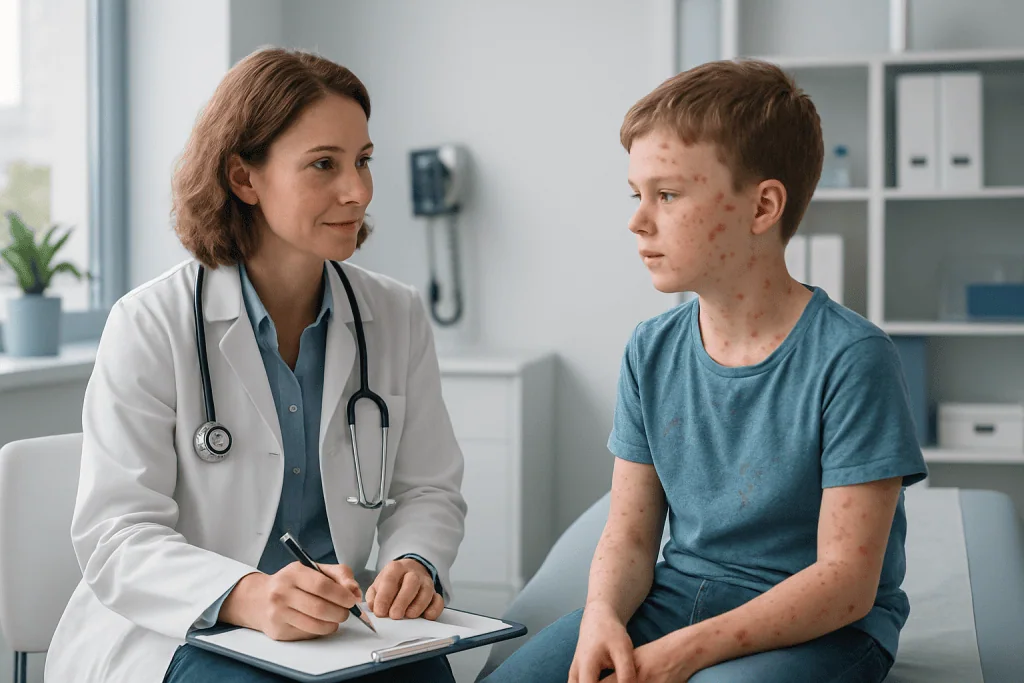
Chickenpox is a contagious infection caused by the varicella-zoster virus. It brings fever, tiredness and an itchy rash that turns from red spots into fluid-filled blisters before crusting over. Most healthy children recover with supportive care, fluids, fever control and itch relief. Adults, pregnant women, newborns and people with weakened immunity may need antiviral medicine and closer monitoring, ideally started soon after the rash appears.
Chicken Pox (Chickenpox): The Illness, the Rash and the Right Level of Care
Chicken pox, usually written as one word, chickenpox, in medical texts, is a highly contagious infection caused by the varicella-zoster virus. It produces fever, tiredness and an itchy rash that moves through recognisable stages: flat red spots become raised bumps, then fluid-filled blisters, then crusts. Treatment ranges from home-based symptom control in healthy children to antiviral medication and hospital-level monitoring in adults, pregnant women, newborns and people with weakened immune systems.
The illness can be unsettling, especially when it appears suddenly in a child, during travel, during pregnancy, or in an adult who has never had the infection before. The rash is often the most visible concern, but many patients and families are equally worried about fever, fatigue, itching, scarring, isolation requirements and the possibility of complications. Those concerns are reasonable, and each has a clear answer once the diagnosis and the patient’s risk level are understood.
Good chickenpox care does more than confirm the diagnosis. It reduces discomfort, prevents bacterial skin infection, guides safe isolation, identifies patients who may benefit from antiviral medication, and detects early warning signs of complications. For people who fall ill away from home, it also covers the practical questions: exposure of family members, vaccination history, and when it is reasonable to return to school, work or a flight.
At Acibadem, assessment is based on the patient’s age, immune status, pregnancy status, symptom severity, timing of the rash and potential exposure risks. Physicians may involve paediatrics, infectious diseases, dermatology, obstetrics, internal medicine or emergency care teams when needed. This coordinated approach matters most when chickenpox occurs in a higher-risk patient or when the diagnosis is uncertain.
What is the chickenpox?
Chickenpox is the common name for varicella, the illness caused by first-time infection with the varicella-zoster virus. It is one of the classic childhood infections: fever and malaise for a day or two, followed by crops of itchy spots that appear over several days and heal over one to two weeks. Despite what the name suggests, there is no chickenpox chicken connection: the illness has nothing to do with poultry. The origin of the name is debated; one theory points to the old English word for itching, another to the resemblance of the spots to chickpeas. What matters clinically is simpler: this is a viral infection of people, spread from person to person, and it behaves very differently in a healthy five-year-old than it does in a pregnant woman or a transplant patient.
What is chickenpox caused by?
Chickenpox is caused by the varicella-zoster virus, a member of the herpesvirus family. First infection produces the illness described on this page. The virus is never fully cleared afterwards: it settles into nerve tissue and remains dormant, usually for decades. In some people it reactivates later in life as shingles (herpes zoster), a painful, localised rash that follows the path of a single nerve. Chickenpox and shingles are therefore two expressions of the same virus at different points in a lifetime, with different clinical patterns, different transmission considerations and different treatment priorities.
How Do You Get Chickenpox?
You get chickenpox through respiratory droplets and airborne particles from an infected person, or through direct contact with the fluid inside their blisters. The virus is unusually efficient at spreading: brief time in the same room can be enough, and household contacts who are not immune very often become infected. Schools, nurseries and family gatherings are the classic settings.
After exposure, the virus incubates silently, typically for around ten to twenty-one days, before fever and rash appear. This delay explains why chickenpox seems to arrive out of nowhere and why a single case in a classroom can produce a second wave of cases two to three weeks later. A person can pass the virus on before they know they are ill, which is one reason isolation advice is built into treatment rather than left to guesswork.
There is a second, less obvious route of infection. Someone who has never had chickenpox and has never been vaccinated can catch it from a person with shingles, through contact with the shingles rash. The reverse does not happen: nobody catches shingles from anyone. Vaccinated people can occasionally develop a mild breakthrough infection after exposure, usually with fewer spots and less blistering, and they may still be able to transmit the virus in some circumstances.
How long is chicken pox contagious?
A person with chickenpox is contagious from roughly one to two days before the rash appears until every lesion has crusted over and no new spots are forming, commonly around five to seven days after the rash begins, sometimes longer. The crusting rule is the practical benchmark clinicians use for return to school, work or shared spaces. Vaccinated patients with a mild rash whose lesions never blister or crust in the typical way may need individualised criteria from their doctor. Because contagiousness starts before the rash is visible, people exposed in a household are often already incubating the virus by the time the first case is diagnosed; this is why clinicians ask carefully about contacts who are pregnant, newborn or immunocompromised.
Symptoms and the Chicken Pox Rash
The chicken pox rash is the illness’s signature: successive crops of itchy spots that pass through stages, so that flat red marks, raised bumps, clear blisters and crusted scabs sit side by side on the same patch of skin at the same time. It commonly starts on the face, scalp, chest or back, then spreads outward to the rest of the body. Spots can also appear inside the mouth, on the eyelids and in the genital area, where they can be particularly uncomfortable.
Itching is often intense, especially during the blistering phase, and scratching is the main avoidable source of trouble. Scratched lesions are more likely to become infected with skin bacteria and more likely to scar. Fever, tiredness and reduced appetite usually accompany the rash and settle as crusting progresses.
What are the five symptoms of chickenpox?
The five symptoms most often described are fever, tiredness, headache, loss of appetite and the itchy blistering rash. The first four frequently arrive a day or two before the rash, particularly in older children and adults:
- Feverusually moderate, sometimes persistent through the first days of rash.
- Tiredness and general malaiseoften out of proportion to the visible illness.
- Headachecommon in the early phase, especially in adults.
- Reduced appetitemade worse when mouth sores make eating and drinking uncomfortable.
- The rashcrops of spots evolving from red marks to blisters to crusts over several days.
How to know if a rash is chicken pox?
A chickenpox rash has a distinctive combination of features: lesions in multiple stages at the same time, a start on the face, scalp or trunk with spread outward, prominent itch, small fluid-filled blisters on a red base, and new crops appearing over several days. Add a fever, a known exposure two to three weeks earlier, and no prior chickenpox or vaccination, and the picture is usually clear. Clinicians weigh:
- Whether spots, blisters and crusts coexist: the hallmark of varicella.
- Where the rash began and how it has spread.
- Whether the patient has fever and felt unwell before the rash.
- Exposure history, vaccination status and prior chickenpox.
- Whether anything about the pattern suggests a different diagnosis.
Not every blistering rash is chickenpox. Insect bites, impetigo, hand, foot and mouth disease, allergic reactions, medication reactions and certain dermatological conditions can look similar, and shingles produces blisters confined to one band of skin rather than scattered crops. Equally, not every feverish, unwell child has chickenpox at all, infections such as respiratory syncytial virus cause fever and fatigue without the characteristic rash. When the appearance is atypical, laboratory testing can settle the question.
What Chickenpox Treatment Involves
Chickenpox treatment is a structured approach to a contagious viral illness. It usually includes diagnosis, symptom relief, isolation guidance, skin care instructions and treatment of complications if they occur. In selected patients, antiviral medication may be recommended to reduce viral activity and help limit the severity or duration of the illness, particularly when started early after the rash appears.
In otherwise healthy children with mild chickenpox, treatment is usually supportive. This means helping the body recover while controlling fever, itching, sleep disruption and skin irritation. Supportive care may include clinician-approved fever medication, oral fluids, soothing skin measures, trimmed fingernails to reduce scratching, and clear instructions about which changes in the illness would call for reassessment.
In adults and higher-risk patients, treatment decisions are more individualised. Antiviral medication may be prescribed when the patient is more likely to develop severe disease or complications. These medicines are most useful when started soon after rash onset, although physicians may still consider them later in patients with ongoing new lesions, severe symptoms or immune compromise.
Treatment also includes public health guidance. Because the virus spreads easily through respiratory droplets, airborne particles and blister fluid, isolation is a core part of care rather than an afterthought. Medical teams help patients understand how to protect newborns, pregnant individuals, immunocompromised family members and others who may be vulnerable, and how long precautions need to last.
For some exposed people who have never had chickenpox or vaccination, preventive steps may be appropriate after exposure. Depending on timing and risk level, this may include post-exposure vaccination or a specialised immune-based medication for people at high risk. These decisions are time-sensitive, which is why exposure in a vulnerable person is assessed promptly rather than watched.
Who May Need Medical Care for Chickenpox
Anyone with a suspected chickenpox rash benefits from clear guidance, particularly if they are unsure of their immunity, have been in contact with vulnerable individuals, or have travel planned. Many cases are managed entirely outside hospital. Medical evaluation carries the most weight when symptoms are severe, when the patient belongs to a higher-risk group, or when the rash does not look typical.
The higher-risk groups are consistent across international guidance:
- Adults and adolescents with suspected chickenpox, who tend to have a rougher course than young children.
- Pregnant patients, at any stage of pregnancy, whether ill or newly exposed.
- Newborns and young infants, whose immune defences are immature.
- People receiving chemotherapy, long-term corticosteroids, biologic therapies or other immune-suppressing treatment.
- Transplant recipients and people living with immune deficiencies.
- People with severe eczema or extensive chronic skin disease, where the virus finds broken skin.
Clinicians also treat certain developments as signals that the illness has moved beyond a typical course: breathing difficulty or persistent cough, high fever that will not settle, confusion or unusual drowsiness, severe headache or neck stiffness, poor drinking and reduced urination, spreading redness, warmth or pus around skin lesions, and any rash involving the eyes. These are the findings that change the level of care, from home management to review, or from outpatient review to hospital observation.
International patients sometimes encounter chickenpox in the least convenient way possible: a child develops a rash mid-trip, an adult falls ill far from their usual doctor, or a complicated case needs an expert second opinion. In these situations, rapid assessment clarifies whether the patient can safely be managed as an outpatient, needs medication, or should be monitored before travel continues.
Conditions and Indications Chickenpox Care Addresses
Chickenpox care addresses primary infection with the varicella-zoster virus. It is distinct from shingles care, even though the same virus is responsible for both. The most common indication is a typical chickenpox rash with fever and itching, where the plan focuses on comfort, hydration, skin protection and preventing spread. In mild paediatric cases the plan may be straightforward, but it still matters: proper fever management, itch control and isolation guidance reduce distress and protect others.
Chickenpox in adults is a separate indication in its own right. Adults tend to experience more intense symptoms and are more prone to complications such as pneumonia. Antiviral therapy is considered far more readily in adults than in healthy young children, especially when medical attention comes early in the rash.
Chickenpox during pregnancy requires careful, individualised assessment. The clinician weighs the stage of pregnancy, maternal symptoms, prior immunity, fetal considerations and exposure history. A pregnant patient exposed to chickenpox who is not immune benefits from prompt evaluation, because preventive treatment has a limited window in which it works.
Chickenpox in immunocompromised patients is a medical priority. Weakened immune defences allow more extensive rash, prolonged viral replication and, in some cases, involvement of internal organs. These patients may need antiviral medicine given by mouth or through a vein, blood tests, imaging or hospital observation depending on severity.
Care also covers complications when they arise: bacterial infection of skin lesions, dehydration from poor intake, pneumonia, neurological complications, eye involvement and, rarely, severe disseminated disease. Early recognition and appropriate escalation are the essential skills here, knowing which changes are part of a normal course and which are not.
Finally, care may be indicated after exposure alone. A person who has been close to someone with chickenpox and does not know whether they are immune may need medical assessment, especially if they are pregnant, immunocompromised, newly born or living with someone at high risk. Post-exposure decisions turn on timing, immune status and medical risk.
Can you get shingles if you never had chickenpox?
No. Shingles is a reactivation of varicella-zoster virus already dormant in the body, so it can only occur in someone who has previously been infected, usually through chickenpox earlier in life, occasionally through an infection so mild it went unnoticed. If you have never carried the virus, there is nothing to reactivate. What can happen is the reverse: a non-immune person who touches a shingles rash can develop chickenpox, because the blister fluid contains live virus. People vaccinated against chickenpox carry the weakened vaccine strain, and reactivation of that strain as shingles is possible but uncommon and generally milder. If you are genuinely unsure whether you ever had chickenpox, a blood test can measure immunity.
How Chickenpox Care Is Performed: From Diagnosis to Recovery
Initial Assessment and Preparation
Care begins with a careful history and examination. Because the infection spreads so easily, patients are usually guided on safe arrival procedures before or during the visit: a mask, avoiding crowded waiting areas, and assessment in an appropriate clinical setting that protects other patients.
The medical team reviews when the fever started, when the first spots appeared, how quickly lesions are spreading, how bad the itching is, how well the patient is drinking, which medicines have already been used, and whether there has been contact with pregnant or immunocompromised individuals. Vaccination history matters, but a prior vaccine does not always exclude chickenpox: vaccinated patients occasionally develop a milder breakthrough form, sometimes with fewer lesions and less blistering, which is easy to misread.
Physicians also map risk factors, age, pregnancy, newborn status, immune suppression, chronic lung disease, severe skin disease, and medicines such as corticosteroids or biologic therapies. For patients away from home, the discussion often extends to travel dates, hotel or household contacts, airline plans, insurance documentation, and communication with the family physician abroad where appropriate.
Confirming the Diagnosis
In a typical presentation, the clinician may diagnose chickenpox on appearance and timing alone. The classic pattern, lesions in multiple stages, central start, outward spread, fever, itch, is highly suggestive. When the picture is uncertain or the patient is high risk, laboratory testing takes over: a sample from a skin lesion can be tested for varicella-zoster virus, and blood tests can assess immune status or reveal signs of complications such as inflammation, dehydration or organ involvement.
Additional testing follows the symptoms rather than a fixed protocol. Respiratory symptoms may prompt oxygen monitoring and chest imaging to look for pneumonia. Eye symptoms lead to specialist ophthalmic examination. Neurological symptoms, confusion, severe headache, balance problems, persistent vomiting, trigger urgent specialist evaluation. The aim is to use tests where they change the plan, not as routine reassurance.
Symptom Relief and Skin Care
For most patients, treatment is about comfort and preventing complications. Fever and body aches are managed with clinician-approved medication at age-appropriate doses. The choice of fever medicine is not trivial in chickenpox: some common products are unsuitable in this illness, aspirin, for example, is not used in children with viral infections because of the risk of a rare but serious complication, so the treating doctor confirms which product and dose fit the patient, and families avoid combining products that contain the same active ingredient.
Itching is usually the hardest symptom to live with. Physicians may recommend soothing baths, cool compresses, suitable topical preparations or oral antihistamines where appropriate. Practical skin care follows a short sequence:
- Keep fingernails short and clean to limit damage from scratching.
- Dress in soft, loose clothing and keep the room comfortably cool.
- Keep the skin clean with gentle washing, no scrubbing, no harsh products.
- Apply itch-relief measures before sleep, when scratching is hardest to control.
- Watch lesions daily for spreading redness, warmth, swelling or pus, which point to bacterial infection.
Hydration is the other core task. Fever and poor appetite reduce intake, especially in children, and mouth sores can make drinking uncomfortable. Small, frequent sips, soft cool foods, and attention to urine output help families track hydration. A child who is very sleepy, unable to drink or passing little urine has moved outside the range of routine home care, and clinicians ask families to treat those changes as a reason for reassessment.
Antiviral Treatment for Higher-Risk Patients
Antiviral medication may be recommended for patients at increased risk of moderate to severe disease: adults and adolescents, pregnant patients in selected circumstances, immunocompromised individuals, and people with severe symptoms or extensive rash. The decision rests on timing, risk factors, clinical severity and whether complications are suspected.
Antivirals work best when started early after rash onset. They do not erase the rash overnight; they reduce viral replication, which can shorten the course or soften its severity in the right patients. In significant immune suppression or severe disease, intravenous antiviral treatment with hospital monitoring may be needed. Before prescribing, the physician reviews kidney function, hydration, medication interactions, allergies and pregnancy considerations, and patients take the medicine exactly as the treating doctor directs.
When intravenous treatment has stabilised a severe case, physicians often switch the patient to oral antiviral tablets to complete the course at home. Before discharge, the team explains the dosing schedule, why steady hydration matters while taking these medicines, what to do about a missed dose, and which changes, new fever, spreading lesions, worsening pain, would mean the plan needs to be reviewed rather than continued unchanged.
Isolation and Protecting Others
Isolation guidance sits at the centre of chickenpox treatment. Patients are typically advised to stay away from school, childcare, work, public transport and close contact with vulnerable people until they are no longer contagious, in most cases, until all lesions have crusted and no new spots are appearing. Vaccinated patients whose mild lesions never crust in the usual way receive individualised criteria.
Household members need a plan of their own. Those who are not immune frequently become infected after household exposure, and pregnant individuals, newborns and immunocompromised contacts benefit from prompt medical assessment, because post-exposure vaccination or immune-based medication is only useful within a limited window. Travellers who develop chickenpox mid-trip should also build the crusting benchmark into their plans: airlines and public health authorities generally expect a person with an active, uncrusted rash to postpone flying, and written medical documentation of recovery can make rebooking considerably smoother.
Technology and Monitoring in Chickenpox Care
Chickenpox rarely requires complex procedures, but modern diagnostic and monitoring tools earn their place in selected cases. Laboratory testing confirms varicella-zoster virus when the diagnosis is unclear. Blood testing evaluates immune status, infection severity, hydration, liver and kidney function, and medication safety. Digital medical records let clinicians across specialties review findings, document rash progression and coordinate care without repetition or gaps.
For respiratory symptoms, oxygen monitoring and chest imaging help detect pneumonia early. For eye symptoms, specialist examination assesses ocular involvement before damage accumulates. For complicated or severe cases, hospital monitoring supports timely intravenous medication, fluid management and observation for changes in breathing, neurological status or skin infection.
Typical Duration and Recovery
The full illness commonly lasts about one to two weeks, though fatigue and skin healing may continue longer. New spots often appear for several days before crusting begins, and itching tends to peak during the blistering and crusting phases. Most healthy children come through with supportive care alone; adults and high-risk patients usually warrant closer follow-up.
Recovery is more than waiting for the rash to fade. It means resisting scratching, watching for secondary infection, keeping fluids up, completing antiviral medication if it was prescribed, and following isolation guidance to the end. Temporary skin discolouration can remain after lesions heal, particularly where spots were scratched or infected, and sun protection during the healing months helps that discolouration settle rather than deepen.
Chickenpox Vaccination: Prevention Before and After Exposure
The chickenpox virus vaccine is a live attenuated vaccine: a deliberately weakened form of varicella-zoster virus that trains the immune system without causing the full illness. In everyday language, the chickenpox injection means this vaccine, usually given as a two-dose course in childhood or to older children and adults with no history of infection. Vaccinated people who are later exposed either avoid the illness or develop a much milder breakthrough version.
When did the chickenpox vaccine come out?
The chickenpox vaccine was developed in Japan in the 1970s from the Oka strain of varicella-zoster virus, saw its first widespread use there and in a handful of other countries in the following decade, and was licensed for routine use in the United States in 1995. Since then, many countries have added it to routine childhood schedules, while others offer it selectively, to healthcare workers, to non-immune adults, or to household contacts of vulnerable patients. National policies genuinely differ, which is why two families from different countries can have entirely different vaccination histories for the same disease.
Vaccination also has a role after exposure. Given promptly to a non-immune person within days of contact, it can prevent illness or reduce its severity. For exposed people who cannot receive a live vaccine, pregnant women, newborns and significantly immunocompromised patients, a specialised immune-based medication may be considered instead. Both options are time-limited, which is the recurring theme of chickenpox care: timing decides what is possible.
For anyone unsure of their own history, a simple blood test can establish whether immunity is already present. This check is commonly performed before pregnancy, before starting immune-suppressing treatment, and for people who work in healthcare or childcare. Because the vaccine contains live weakened virus, it is not given during pregnancy or to significantly immunocompromised patients; these groups rely on the immunity of the people around them, which is part of why household vaccination decisions carry more weight than they first appear to.
Why Acting Early Matters
Early medical advice is valuable because chickenpox decisions are time-sensitive. Antiviral medication, when indicated, is most useful when started early in the rash. Post-exposure prevention for vulnerable contacts has its own narrow window. Waiting reduces the benefit of both.
Early assessment also limits spread. A patient may be contagious before the rash is fully recognised, and chickenpox can be serious for people who have never developed immunity. Clear isolation instructions protect pregnant individuals, newborns, cancer patients, transplant recipients and others at higher risk, people who often cannot afford to catch this infection.
Delay also allows complications to build. A bacterial skin infection can begin as mild redness around a lesion and worsen steadily if untreated. Pneumonia may announce itself quietly, as cough, chest discomfort or breathlessness. Neurological complications are uncommon, but they are the kind of problem where hours matter more than days.
For travellers, early evaluation prevents unsafe decisions. Flying or joining group activities while contagious exposes others and may conflict with public health or airline rules. A medical team can provide documentation, realistic advice on timing, and a care plan if travel needs to be postponed.
Benefits of Chickenpox Treatment
What treatment delivers depends on the patient’s age, risk level, timing and severity, but the categories of benefit are consistent.
| Benefit | What It Means for You |
|---|---|
| Accurate diagnosis | Confirms whether the rash is chickenpox or another condition that may require different treatment. |
| Relief of itching and fever | Helps patients sleep, drink fluids, avoid scratching, and recover with less discomfort. |
| Appropriate antiviral use | Provides targeted treatment for patients more likely to develop severe disease, especially when started early. |
| Lower risk of skin complications | Good skin care and timely treatment of infection can reduce pain, scarring risk, and worsening redness or swelling. |
| Clear isolation guidance | Helps protect family members, other patients, schools, workplaces, and vulnerable contacts. |
| Early detection of warning signs | Supports faster escalation if breathing problems, dehydration, eye symptoms, or neurological concerns develop. |
Chickenpox Recovery Timeline
Every case runs its own course, but most follow a recognisable pattern from first spots to crusting, healing and a return to normal life.
| Time Period | What Patients Can Expect |
|---|---|
| Day 1 | Fever, fatigue, and the first rash spots may appear. Medical advice is especially important for adults, pregnant patients, infants, and immunocompromised individuals. |
| First Week | New blisters may continue to appear for several days. Itching can be intense. Isolation, hydration, fever control, and skin care are priorities. |
| Second Week | Most lesions begin to crust and heal. Patients may be able to return to normal activities once they are no longer contagious, based on medical guidance. |
| First Month | Energy levels usually improve. Temporary skin marks may remain. Patients should watch for delayed redness, pain, or signs of skin infection. |
| Longer Term | The virus remains dormant in the body after recovery and may reactivate later in life as shingles. Vaccination guidance may be discussed for family members or future prevention. |
Factors That Influence Outcomes
Most healthy children come through chickenpox without long-term problems, but outcomes depend on several medical and practical factors. Age is one of the most important: adults, adolescents, newborns and pregnant patients tend to have a more complex course than young children. Immune status runs a close second; patients with weakened defences need closer monitoring and, often, more active treatment.
Timing shapes what medicine can achieve. When a patient is eligible for antivirals, earlier treatment is generally more effective than delayed treatment, and the same holds for post-exposure prevention in vulnerable contacts. Prompt communication with a clinician genuinely changes the range of options on the table.
Severity matters too. Extensive lesions, high or persistent fever, poor fluid intake, mouth sores and marked fatigue all increase the need for follow-up. So does the quality of skin care: scratching pushes bacteria into open lesions, raising the risk of infection and scarring, while trimmed nails, sensible itch relief and clean skin keep the illness on its ordinary course.
Underlying conditions and medicines have to be factored in. Patients taking immune-suppressing drugs, long-term steroids, chemotherapy or biologic therapies do not respond to infection the way healthy people do. Their illness may be more severe, last longer, or involve organs beyond the skin, and physicians move to laboratory testing, intravenous treatment or inpatient monitoring more readily as a result.
Vaccination history modifies the picture. People who develop chickenpox after vaccination usually have a milder illness, but they can still transmit the virus in some circumstances, and the diagnosis is less obvious because lesions may be fewer and less blister-like. Medical evaluation clarifies whether the rash is varicella and which precautions apply.
Finally, access to follow-up counts. Chickenpox evolves over days, and a patient who looks stable at the first visit may need reassessment if symptoms change. Patients treated away from home do best with clear instructions in a language they read comfortably, defined contact points for questions, and documentation their physicians at home can use.
How Chickenpox Care Is Organised at Acibadem
Chickenpox care rewards organisation more than heroics. What a patient needs is timely diagnosis, an honest risk assessment and clear communication, and a structure in which changing symptoms are noticed rather than viewed in isolation. That is how Acibadem approaches the illness: physicians evaluate not only the rash but the whole context, age, immune status, pregnancy, exposure history, medication use, complications and travel plans, and match the intensity of care to what the individual case actually requires.
When the case is straightforward, a paediatrician, family medicine physician, internal medicine specialist or dermatologist manages the plan. When risks are higher, infectious diseases specialists join. Pregnant patients are assessed in coordination with obstetrics; breathing symptoms bring in pulmonology, emergency care or imaging support; eye symptoms lead to ophthalmologic evaluation. Diagnostic resources, lesion testing, blood work, imaging, are used where they clarify the diagnosis or guide treatment, not as routine.
Because chickenpox is contagious, coordination extends to logistics: arrival procedures that protect other patients, isolation planning, and realistic timing of travel after recovery. Acibadem International supports patients in more than 20 languages, helping with appointments, interpretation, medical documentation, insurance-related communication where applicable, and follow-up planning, including second opinions on complicated cases.
The underlying principle is that chickenpox is not the same illness for every patient. A healthy child with mild symptoms needs reassurance and careful home instructions. An adult with fever and extensive rash may need antiviral therapy. A pregnant patient exposed to the virus needs a prompt check of immunity and preventive options. An immunocompromised patient may need hospital-level care. Families tend to arrive with the same direct questions: Is this chickenpox? Is it safe to travel? Does my child need medicine? Who in the household is at risk?, and a well-organised consultation answers each of them plainly, with medical accuracy and practical next steps.
Chickenpox in Perspective
Chickenpox is common, but it should not be dismissed. For most healthy children, supportive treatment and careful observation are enough, and the illness resolves within a couple of weeks, leaving lasting immunity behind. For adults, pregnant patients, infants, immunocompromised individuals and anyone with severe symptoms, the calculus changes: antiviral treatment, closer monitoring and time-sensitive prevention for exposed contacts all come into play.
The consistent lessons are worth restating. The rash follows a recognisable pattern, and lesions in multiple stages at once are the giveaway. Contagiousness begins before the rash and ends when every spot has crusted. Antivirals and post-exposure prevention both work best early. Skin care and hydration prevent most avoidable complications. And the virus never truly leaves: it sleeps in nerve tissue and may return decades later as shingles, which is one more reason the story of chickenpox does not quite end when the last crust falls away.
Preparation
- A doctor evaluates the rash, fever, exposure history and risk factors such as pregnancy, immune suppression or chronic disease. Patients should avoid contact with others, especially newborns, pregnant women and immunocompromised people. Bring vaccination records and a list of current medicines to the appointment.
Aftercare
- Keep the skin clean, avoid scratching and use doctor-recommended medicines for itching or fever. Antiviral medication may be prescribed for adults or high-risk patients if started early. Continue isolation until all blisters have crusted and seek urgent care for breathing difficulty, confusion, severe dehydration or infected lesions.
Frequently Asked Questions
What affects the cost of chickenpox care?
The main factors are the type of consultation, whether testing is needed, the need for antiviral medicine, the presence of complications and any follow-up or infection-control arrangements. For international patients, interpreter support and care coordination may also affect the overall package.
Can I get a quote before travelling for chickenpox care?
Yes. A free consultation can help the medical team review symptoms, risk factors and whether travel is appropriate. Because chickenpox is contagious, remote assessment may be recommended before any in-person visit.
Is chickenpox usually treated in hospital?
Most uncomplicated cases are managed with outpatient advice and symptom relief. Hospital-based care may be needed if there are complications, severe symptoms or higher-risk medical factors. This is general information and not a substitute for medical advice.
Will diagnostic tests change the cost?
They may. Many cases can be diagnosed clinically, but laboratory confirmation may be advised for atypical rashes, higher-risk patients or medical documentation. Your specialist will explain whether testing is necessary.
What is typically included in a chickenpox care package for international patients?
A package may include medical assessment, treatment planning, prescription guidance, isolation advice, interpreter support and follow-up coordination. The exact content depends on the patient’s condition and the hospital pathway.
Medically reviewed by the Acıbadem International Medical Board September 13, 2026
See our medical review board →
Update history
- PublishedJune 8, 2026
- Medical review approvedSeptember 13, 2026
- Last content updateSeptember 12, 2026
References3
- Chickenpox nhs.uk
- Chickenpox (Varicella) cdc.gov
- Chickenpox medlineplus.gov
Trusted care for international patients
From the Acibadem Blog

When Can a Child Return to School After Chickenpox? How Clinics Judge the End of Isolation
A child can usually return to school once every chickenpox spot has crusted over and no new spots have appeared for a full day,…
Why Do Some Chickenpox Spots Leave Scars and How Is Early Healing Supported?
Most chickenpox spots heal without a mark. Scars form when a blister damages deeper skin, usually because it was scratched open, infected, or healed…
Doctors Performing This Treatment






Infectious Diseases & Clinical Microbiology
Prof. Cihadiye Elif Öztürk, MD


Infectious Diseases & Clinical Microbiology
Assoc. Prof. Aslıhan Demirel, MD

Infectious Diseases & Clinical Microbiology