

Nephrotoxicity During Cancer Treatment: How Oncologists and Nephrologists Protect the Kidneys
Key Takeaways
- Cisplatin injures the kidney because tubular cells actively absorb it through transport proteins, which is why the damage is cumulative and shows up first as low blood magnesium.
- Creatinine usually rises several days after a platinum infusion, not the next morning, so the pre-cycle blood test is the one that matters most.
- Tumor lysis syndrome threatens the kidneys through uric acid and phosphate crystals in the first days of treating fast-growing blood cancers, and is prevented with fluids and uric-acid-lowering medicines rather than by adjusting the cancer drug.
- Immune checkpoint inhibitors can inflame the kidney weeks to months after starting, typically without symptoms, so routine creatinine checks continue for the whole course.
- Acute kidney injury frequently recovers over days to weeks; chronic kidney disease, defined by eGFR below 60 for three months or more, does not reverse, though an acute reversible component can lift the number out of stage 3.
- Over-the-counter non-steroidal anti-inflammatory painkillers and contrast dye given close to infusions are among the most common avoidable contributors to kidney injury during chemotherapy.
Chemotherapy kidney damage prevention relies on checking kidney function before every cycle, giving intravenous fluids and electrolyte replacement around high-risk drugs such as cisplatin, adjusting treatment intensity to the kidneys' filtering capacity, avoiding other kidney-stressing medicines, and watching closely for tumor lysis syndrome. Patients help most by reporting vomiting, diarrhea, reduced urine or swelling early so the team can act within hours rather than days.
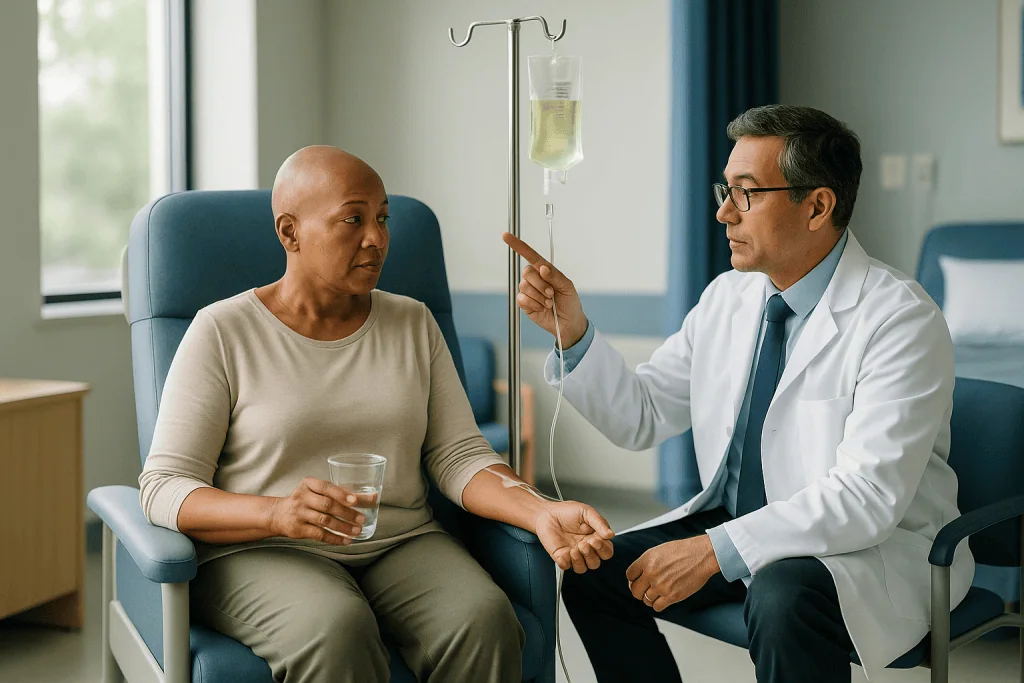
The infusion chair is comfortable, the blanket is warm, and the bag hanging from the pole is plain saline, not chemotherapy. It drips for an hour before the real drug arrives and for another hour after. Most people assume it is there to keep them hydrated. It is, but that is only part of the story. That slow drip is one of the oldest tools in chemotherapy kidney damage prevention, and it sits at the center of a quiet partnership between two specialties that rarely share a waiting room.
Oncologists think about tumor shrinkage. Nephrologists, the doctors who specialize in kidneys, think about the two fist-sized organs that have to clear everything the oncologist prescribes. When cancer treatment works well, both have usually been thinking about each other.
This explainer walks through what actually threatens the kidneys during cancer care, what the care team does about it, what you can do between cycles, and which signs mean you should pick up the phone.
Chemotherapy kidney damage prevention: why the kidneys are so exposed
The kidneys filter roughly half a cup of blood every minute, according to the National Institute of Diabetes and Digestive and Kidney Diseases. Everything circulating in the bloodstream eventually passes through about a million microscopic filtering units in each kidney, called nephrons. A drug that is harmless to muscle or skin can reach concentrations inside those filters many times higher than anywhere else in the body, simply because the kidneys are built to concentrate what they clear.
Nephrotoxicity is the medical term for kidney harm caused by a drug or chemical. In cancer care it is rarely a single villain. The treatment itself may injure kidney cells directly. Nausea and vomiting can leave someone dehydrated, which lowers blood flow to the kidneys at exactly the moment a drug is arriving. Some cancers raise blood calcium, block the ureters (the tubes draining urine from the kidneys), or, in myeloma, flood the filters with abnormal proteins. Scans often need contrast dye. Infections need antibiotics, some of which stress the kidneys too.
Prevention therefore cannot be one action. It is a set of habits layered across the whole treatment plan: measuring kidney function before anything is given, choosing or adjusting drugs to match what the kidneys can handle, protecting blood flow with fluids, replacing minerals the kidneys are losing, and re-checking after each exposure.
One number frames why this matters beyond the clinic. NIDDK estimates that more than 1 in 7 US adults already live with chronic kidney disease, often without knowing it. Many people begin cancer treatment with less kidney reserve than they assume, which is precisely why the first blood test comes before the first infusion.
How does chemotherapy actually damage the kidneys?
It helps to picture a nephron as a coffee filter attached to a long, folded drinking straw. The filter (the glomerulus) lets water and small molecules through while holding back blood cells and large proteins. The straw (the tubule) then reclaims what the body wants to keep, such as water, sodium, glucose and magnesium, and lets waste continue to the bladder. Cancer treatments can injure either part, or the plumbing before and after.
Tubular injury is the most common pattern. Cells lining the tubule absorb the drug while trying to process it, accumulate too much, and die. Platinum agents and ifosfamide behave this way. Because the tubule is where minerals are reclaimed, early damage often shows up as low blood magnesium or potassium before creatinine moves at all.
Crystal injury happens when a drug or a breakdown product becomes so concentrated in the tubule that it solidifies. High-dose methotrexate can crystallize in acidic urine; uric acid does the same during tumor lysis syndrome, discussed later.
Glomerular and vascular injury affects the filter itself or the tiny vessels feeding it. Drugs that block blood vessel growth signals can leak protein into the urine and raise blood pressure.
Immune injury is a newer story. Checkpoint inhibitors can prompt the immune system to inflame the tissue between tubules, a condition called acute interstitial nephritis.
Finally, two problems sit outside the kidney tissue. Pre-renal injury means too little blood reaching the kidney, usually from dehydration or low blood pressure. Post-renal injury means urine cannot drain because something, often a tumor or clot, is blocking the way. Both are reversible if caught, which is why nurses ask about urine output so persistently.
Which cancer treatments carry the highest kidney risk?
Not every regimen threatens the kidneys, and most people will encounter only one or two items from the list below, if any. The table groups treatments by how they tend to cause trouble, because the pattern shapes the prevention plan. Your oncology pharmacist can tell you which, if any, apply to your protocol.
| Treatment group | Typical kidney pattern | Main protective strategy |
|---|---|---|
| Platinum agents (cisplatin in particular) | Tubular cell injury; magnesium and potassium loss; cumulative with repeated doses | Intravenous fluids before and after; electrolyte replacement; kidney function check before each cycle |
| High-dose methotrexate | Crystal formation in tubules | Fluids, urine alkalinization, drug-level monitoring, rescue medicine |
| Ifosfamide | Tubular wasting of phosphate, glucose and bicarbonate | Hydration, electrolyte monitoring |
| Bisphosphonates for bone disease | Tubular or glomerular injury, especially with rapid infusion | Slower infusion, kidney function check before each dose |
| Anti-angiogenic targeted drugs | High blood pressure, protein in urine | Blood pressure monitoring, urine protein checks |
| Immune checkpoint inhibitors | Interstitial nephritis, often weeks to months after starting | Regular creatinine checks, prompt evaluation of unexplained rises |
| Supportive care: contrast dye, NSAID painkillers, some antibiotics | Reduced blood flow or direct tubular injury, worse when combined | Spacing scans, avoiding stacked exposures, reviewing every new medicine |
Two observations from this table deserve emphasis. First, risk is often about stacking: a scan with contrast dye, a course of a kidney-stressing antibiotic and a dose of cisplatin in the same week is far riskier than any one alone. Second, many of the dangerous exposures are not the cancer drug at all but the medicines around it, which is why the team asks you to clear every over-the-counter purchase with them.
Who is at higher risk, and who is usually asked to wait or adjust?
Kidney reserve is the hidden variable. Two people with the same cancer and the same regimen can have very different outcomes because one started with more functioning nephrons than the other.

Factors that lower reserve before treatment even begins include older age, existing chronic kidney disease, diabetes, long-standing high blood pressure, heart failure and having a single kidney. Factors specific to cancer add to that list: dehydration from vomiting or poor intake, a tumor pressing on the urinary tract, high blood calcium, multiple myeloma, previous courses of platinum drugs, and the use of other kidney-stressing medicines at the same time.
Nobody on that list is automatically denied treatment. What changes is the plan. A nephrologist may be brought in early. The team may pick an agent that is gentler on the kidneys, lengthen the gap between cycles, or lower treatment intensity in line with measured filtering capacity. Blood tests may move from once per cycle to several times per week.
Who is usually asked to wait? Someone whose creatinine has risen sharply since the last cycle, whose potassium or magnesium is dangerously out of range, who is actively vomiting and cannot hold fluids, or who has an untreated urinary blockage. In those situations the next cycle is often delayed by days until the kidneys recover, because giving a nephrotoxic drug to an already injured kidney compounds the harm.
This can feel like lost time. It usually is not. A short pause that preserves kidney function often protects the ability to continue the full course later, whereas an acute kidney injury can force a permanent change of plan. The weighing of those risks always sits with the treating oncologist, ideally with nephrology input, and never with a blog article.
What is a chemo kidney function test, and how often is it done?
The phrase covers a small panel of blood and urine tests rather than one procedure. Understanding them turns an anxious glance at a lab report into a useful conversation.
Creatinine is a waste product from muscle, cleared almost entirely by the kidneys. When filtering slows, creatinine rises. It is cheap and quick, but it has a weakness: people with low muscle mass, common after months of illness, produce less creatinine, so a normal-looking value can hide a real decline.
eGFR, the estimated glomerular filtration rate, converts creatinine (together with age and sex) into an estimate of how much blood the kidneys filter per minute. NIDDK describes an eGFR of 60 or above as generally in the normal range, with values below 60 for three months or more defining chronic kidney disease. Oncology teams often use eGFR, or a formal measured clearance, to decide treatment intensity.
Cystatin C is an alternative blood marker that is less affected by muscle mass. Some teams add it when creatinine seems misleading.
Electrolytes, meaning potassium, magnesium, calcium, phosphate and bicarbonate, are checked because tubular injury often shows up here first.
Urine tests look for protein, blood and sometimes glucose, each pointing toward a different kind of injury.
How often? Before every cycle is the usual minimum. With high-risk drugs, blood may be drawn daily during an admission; during the first days after treatment for a fast-growing blood cancer, several times a day. Immune checkpoint inhibitors call for checks at each infusion visit, because their kidney effects arrive late. The schedule is set by the protocol and adjusted to you; a sudden increase in testing frequency is a sign the team is being careful, not that something has gone wrong.
How to protect kidneys during chemo: what the care team does
Most of the protective work is invisible to the patient, which is exactly how it should be. Here is what is happening behind that unremarkable bag of fluid.
Hydration is deliberate and timed. Intravenous fluid given before a platinum drug raises blood flow through the kidneys so the drug passes through more diluted and more quickly. Fluid after the dose keeps urine flowing while the drug is being cleared. For some protocols, a diuretic is added to keep urine volume high. Nurses measure what goes in and what comes out, and a dose may be held if output lags.
Electrolyte replacement is routine. Magnesium is the mineral most often lost with cisplatin, and replacing it as it falls appears to lower the risk of tubular injury in several clinical studies; the evidence is consistent enough that many protocols include it, though the optimal approach is still studied. Potassium, calcium and phosphate are corrected as needed.
Treatment intensity is matched to filtering capacity. Many protocols state how a drug should be adjusted at different eGFR levels, and the pharmacist recalculates before each cycle. This is one reason your blood test must be recent.
Specific antidotes exist for specific drugs. After high-dose methotrexate, the urine is made less acidic so the drug cannot crystallize, drug levels are measured until they fall, and a rescue medicine protects healthy cells. Ifosfamide is given with a bladder-protecting agent.
Other nephrotoxins are cleared out of the way. Scans with contrast are spaced away from infusions where possible, non-steroidal anti-inflammatory painkillers are swapped for alternatives, and antibiotics are chosen with the kidneys in mind.
Nephrology is involved early for anyone with reduced reserve. A single pre-treatment consultation can change the whole shape of a regimen, and it is far easier than rescuing a kidney later.
Cisplatin kidney damage: why one drug gets so much attention
Search results on kidney safety in cancer care are dominated by a single generic name, and for good reason. Cisplatin, a platinum-containing drug used for testicular, bladder, lung, head and neck, ovarian and several other cancers, is both highly effective and consistently hard on the kidneys.
The mechanism is specific. Cells lining the first part of the tubule carry transport proteins that pull certain molecules out of the filtrate. Cisplatin happens to fit those transporters, so tubular cells actively load themselves with it. Inside the cell it damages DNA and mitochondria (the cell’s energy factories), triggers inflammation and causes cell death. The same segment is where magnesium is reclaimed, which explains why low magnesium is such a common early signal.
Two features shape prevention. The injury is dose-related and cumulative: each course adds to the last, so the team tracks lifetime exposure. And it is concentration-related: the more dilute the drug in the tubule and the faster it leaves, the less harm, which is the logic behind aggressive hydration.
Creatinine typically starts rising over the days following an infusion rather than immediately, so the blood test taken a week later is often more telling than the one taken the next morning. In many people the rise is modest and recovers before the next cycle. In some it does not fully recover, and a portion of filtering capacity is lost for good.
When the kidneys cannot tolerate cisplatin, oncologists often consider carboplatin, a related platinum drug that is generally gentler on the kidneys but harder on blood counts. Whether that trade is acceptable depends on the cancer, because the two drugs are not interchangeable for every tumor type. That judgement belongs to the oncologist and is one of the most important conversations to have before treatment begins.
Tumor lysis syndrome and the kidneys: a different kind of emergency
Some kidney crises during cancer care have nothing to do with drug toxicity in the usual sense. They happen because treatment works too well, too fast.
Tumor lysis syndrome is what follows when a large number of cancer cells die at once and spill their contents into the bloodstream. Cells are packed with potassium, phosphate and nucleic acids; the nucleic acids are broken down into uric acid. Suddenly the kidneys are asked to clear a flood of all three. Uric acid and calcium phosphate can crystallize in the tubules and block them, so the very organ needed to clear the mess is the one being damaged.
The Cleveland Clinic notes that tumor lysis syndrome most often arises with fast-growing blood cancers such as acute leukemias and aggressive lymphomas, and usually appears within the first days of starting treatment. Large tumor burden, pre-existing kidney impairment and dehydration raise the risk.
Prevention looks different from cisplatin care, though fluids are again central. Before treatment, people at risk receive generous intravenous hydration and a medicine that either stops uric acid forming or breaks down uric acid already present. Blood tests for potassium, phosphate, calcium, uric acid and creatinine are repeated several times a day over the first days. Heart rhythm may be monitored, because high potassium can disturb it.
Why mention this in an article about prevention? Because it illustrates the oncology and nephrology partnership at its most intense. Nephrologists are often consulted before the first dose for high-risk patients, and dialysis may be used temporarily to clear potassium and phosphate if the kidneys fall behind. In that setting dialysis is a bridge, not a verdict; many people need it only briefly while the kidneys recover.
Immunotherapy and targeted drugs: newer treatments, newer kidney patterns
Older chemotherapy harmed the kidneys mostly by poisoning tubular cells. Newer treatments can reach the kidney by stranger routes, and they have changed the rhythm of monitoring.
Immune checkpoint inhibitors release the brakes on the immune system so it can attack cancer. Sometimes the unleashed immune cells attack normal tissue instead, including the kidney. The usual result is acute interstitial nephritis, inflammation of the supporting tissue between tubules. It tends to appear weeks to months after treatment begins rather than days, and often without symptoms; the first clue is a creatinine that drifts upward on a routine check. Because the injury is immune-driven, it is usually managed by pausing the drug and giving corticosteroids to calm inflammation, decisions that rest with the oncologist. A kidney biopsy, in which a tiny sample of tissue is examined under a microscope, is sometimes needed to be sure of the cause.
Targeted drugs that block vascular endothelial growth factor, a signal tumors use to grow blood vessels, affect the kidney’s own small vessels. The common consequences are a rise in blood pressure and protein leaking into the urine. Neither necessarily means the drug must stop, but both need tracking, which is why people on these drugs are often asked to check blood pressure at home and bring a urine sample to each visit.
Some targeted drugs also interfere with how creatinine is handled by the tubule, so creatinine rises without any real loss of filtering. This is a reassuring possibility, not an assumption, and sorting it out is a job for the team.
The practical lesson is that kidney monitoring does not end once the intense infusion phase is over. For people on long-term immunotherapy or targeted tablets, the quiet quarterly blood test is doing important work.
Between cycles at home: lifestyle steps that support chemotherapy kidney damage prevention
Patients often ask what they can do, and the honest answer is: less than the hospital does, but more than nothing. The steps below are the ones with mainstream evidence behind them, and each should be fitted to your situation by the team.
Fluids, as directed. Staying hydrated between cycles keeps blood flowing to the kidneys, but “drink as much as possible” is not universal advice. People with heart failure, low sodium or certain cancers may have fluid limits. Ask what your target is and how to tell if you are falling short.
Report losses early. Vomiting or diarrhea that lasts more than a day, or that stops you keeping fluids down, can tip the kidneys into pre-renal injury quickly. A same-day call lets the team give fluids or anti-sickness medicine before the next infusion lands on a dehydrated kidney.
Treat every medicine as a question. Over-the-counter non-steroidal anti-inflammatory painkillers reduce blood flow to the kidney and are a frequent hidden contributor. Herbal and dietary supplements are largely untested in this setting and some are known kidney irritants. Bring the actual bottles to appointments.
Mind blood pressure and blood sugar. Both are long-term drivers of chronic kidney disease, according to the Mayo Clinic, and both can be destabilized by steroids and stress during treatment. Home readings help.
Do not smoke. Smoking damages the blood vessels that feed the kidneys and worsens many cancer outcomes.
Eat normally unless told otherwise. Low-protein or low-potassium diets are sometimes prescribed for established kidney disease, but adopting them without guidance during cancer treatment can worsen weight loss and muscle wasting. A dietitian on the team can tailor this.
None of these replaces the measured, timed protection the clinic provides. They lower the chance that a small avoidable insult arrives at the same moment as an unavoidable one.
What the days and weeks after a kidney-stressing cycle usually look like
Knowing the typical rhythm makes the lab results less frightening.
Day of infusion. Fluids run before and after the drug. You may be asked to measure or report urine output. Some people are kept for several hours after a platinum infusion specifically so post-hydration can finish.
Days one to three. This is the window for tumor lysis syndrome in high-risk blood cancers, so anyone in that group has blood drawn repeatedly, often as an inpatient. For solid-tumor regimens the first days are usually about nausea control; keeping fluids down matters more than any kidney-specific step.
Days three to ten. Creatinine, if it is going to rise after cisplatin, tends to do so here. Magnesium and potassium may dip. A blood test around a week after treatment, or before the next cycle, catches this. Oral or intravenous electrolyte top-ups are common and do not mean the plan is failing.
Weeks two to three. In mild acute kidney injury, filtering commonly recovers over days to a few weeks as tubular cells regenerate. The NHS notes that most people with acute kidney injury recover, although some are left with reduced function and a minority develop chronic kidney disease. The pre-cycle blood test determines whether the next dose proceeds on schedule, is delayed, or is adjusted.
Months onward. Lifetime platinum exposure is tracked. For anyone on immunotherapy, creatinine is checked at each visit for the whole course because immune kidney injury can arrive late.
After treatment ends. Kidney function is reassessed, and people whose eGFR has settled below the normal range are often referred for ongoing kidney follow-up. The link between cancer treatment and chronic kidney disease is real, so a survivorship plan that includes annual kidney tests is reasonable to ask about.
Can kidney damage from chemo be reversed? What the evidence actually shows
This is the question behind most searches, and it deserves a precise answer rather than a hopeful or a grim one.
Acute kidney injury, the sudden fall in function over hours to days, is frequently reversible. Tubular cells can regenerate, blocked drainage can be relieved, dehydration can be corrected, and immune inflammation can be calmed with corticosteroids. The NHS describes acute kidney injury as a condition from which most people recover, and the Mayo Clinic notes that it is often reversible when the cause is treated promptly. Recovery takes days to weeks, and it is tracked by watching creatinine fall back toward its earlier level.
Chronic kidney disease is different. Nephrons that have been destroyed do not grow back. When damage has left eGFR persistently below 60 for three months or more, the realistic goals, according to NIDDK and the Mayo Clinic, are to slow further decline, protect the heart and avoid new injuries, rather than to restore what was lost.
Where does that leave stage 3 kidney disease, defined by an eGFR between 30 and 59? It cannot be reversed in the sense of regrowing filters. Yet an eGFR measured during or just after cancer treatment is often depressed by a reversible component: dehydration, a recent contrast scan, a drug that interferes with creatinine handling, or an acute injury still healing. When that component resolves, the number can improve, sometimes enough to move out of stage 3. That is not reversal of chronic disease; it is removal of acute noise. A nephrologist can usually tell which situation applies by looking at the trend over months.
What is firmly established is that the slope of decline can be changed. Controlling blood pressure and blood sugar, avoiding nephrotoxins, and treating protein in the urine all slow progression in mainstream guidelines. In oncology, that means the most reversible thing of all is the next exposure.
What people often get wrong about kidneys and cancer treatment
Myths around this topic are not harmless; several of them lead to decisions that make kidney injury more likely.
“If I drink enough water, my kidneys are safe.” Hydration is protective, but it addresses only blood flow. It does nothing about a drug accumulating inside tubular cells, immune inflammation or a blocked ureter. Overhydration can also be dangerous for people with heart or sodium problems. Fluids are part of a plan, not the plan.
“My kidneys don’t hurt, so they must be fine.” Kidney tissue has very few pain nerves. Most chemotherapy-related kidney injury is silent until blood tests find it. Flank pain usually points to infection, stones or obstruction, not to drug toxicity.
“My creatinine is normal, so my kidneys are normal.” Creatinine depends on muscle mass. Someone who has lost weight during months of treatment may have a normal creatinine while filtering well below normal. That is why eGFR, cystatin C or a measured clearance is sometimes used instead.
“Kidney damage is permanent.” Acute injury often recovers; chronic disease does not reverse. Conflating the two causes needless despair after a single bad blood test.
“Supplements will protect my kidneys.” No over-the-counter product has guideline-level evidence for preventing nephrotoxicity, and some herbal preparations are themselves kidney toxins. Mainstream prevention consists of fluids, electrolytes, treatment adjustment and avoidance of other insults.
“A painkiller from the pharmacy is safer than a prescription.” Non-steroidal anti-inflammatory drugs are among the most common contributors to acute kidney injury during chemotherapy, precisely because people assume they are trivial.
“Refusing the kidney-toxic drug is always the safer choice.” Sometimes a gentler alternative is just as effective; sometimes it is not. Untreated cancer threatens the kidneys too, through obstruction, high calcium and infection. The balance is individual, and it is the oncologist’s to weigh with you.
Questions to ask your care team about kidney safety
A ten-minute conversation before the first cycle can shape months of care. These questions are phrased to produce specific answers rather than reassurance.
- Which drugs in my regimen are known to affect the kidneys, and by what mechanism?
- What is my eGFR now, and what value would prompt you to delay or adjust treatment?
- How often will my kidney function and electrolytes be checked, and who reviews the results?
- Will I receive intravenous fluids before and after treatment, and roughly how long should I expect to be in the chair?
- Will my magnesium and potassium be replaced, and how will I know if they are low?
- Am I at risk of tumor lysis syndrome, and if so, what is the plan for the first few days?
- Should a nephrologist be involved before I start, given my history?
- Which over-the-counter painkillers are acceptable for me, and which should I avoid?
- How should scans with contrast dye be timed around my infusions?
- If my kidney function falls, is there an alternative drug for my cancer, and what are its trade-offs?
- What symptoms between visits should prompt a same-day call, and which number do I call?
- After treatment ends, who will follow my kidney function, and for how long?
Write the answers down or ask for them in a printed summary. The eGFR threshold that would trigger a delay is worth knowing in particular, because it turns every future lab result into something you can interpret for yourself. If the team’s answers include a planned nephrology referral, that is a sign of careful care, not of a problem.
Bring the same list to any new prescriber you see during treatment, including dentists and urgent-care clinicians, who may not have your oncology record in front of them.
When to call your doctor
Kidney injury during cancer treatment is usually silent, which is why the blood tests exist. The signs below are the exceptions: changes you can notice at home that call for a same-day conversation with your oncology team, or emergency care if severe.
Call the same day if you notice a clear fall in how often you pass urine, or very dark urine despite drinking; swelling of the ankles, legs, hands or around the eyes that is new; vomiting or diarrhea for more than a day, or any inability to keep fluids down; a new rise in home blood pressure readings; blood in the urine; or muscle cramps, twitching or palpitations, which can signal disturbed potassium, magnesium or calcium.
Seek emergency care without waiting for a callback if you develop breathlessness or cannot lie flat; chest pain or an irregular, racing heartbeat; confusion, unusual drowsiness or a seizure; a fever during treatment, which is always treated as urgent in people on chemotherapy; or severe pain in the back or side with fever, which can indicate an infected or obstructed kidney.
Also call if any new medicine, including a pharmacy painkiller, antibiotic from another prescriber or herbal supplement, has been started since your last visit, so it can be checked against your regimen.
None of these signs confirms kidney injury on its own. Swelling may come from the drug itself or from low protein; cramps may be simple dehydration. The point of calling is not to diagnose yourself but to let the team order a blood test within hours. Acute kidney injury caught early is frequently reversible; the same injury discovered at the next scheduled appointment may not be. The treating team will decide what the findings mean and whether anything in your plan should change.
Frequently asked questions
How do I protect my kidneys during chemo?
Keep to the fluid target your team sets, report vomiting or diarrhea the same day, avoid over-the-counter anti-inflammatory painkillers and untested supplements unless cleared, and attend every pre-cycle blood test. The hospital does the heavy lifting with timed intravenous fluids, electrolyte replacement and treatment adjustment; your role is to prevent a small avoidable insult landing on the same day as an unavoidable one.
How to reverse kidney damage from chemo?
Acute kidney injury often reverses on its own once the cause is addressed: rehydration, pausing the offending drug, relieving a blockage or treating immune inflammation with corticosteroids. Tubular cells regenerate over days to weeks. Chronic damage, where nephrons have been lost, does not reverse, so the goal shifts to slowing further decline through blood pressure control, blood sugar control and avoiding new kidney-stressing exposures.
Can stage 3 kidney disease be reversed?
Not in the sense of regrowing lost filtering units. An eGFR of 30 to 59 measured during cancer treatment, however, may include a reversible component such as dehydration, a recent contrast scan or healing acute injury. When that resolves, the number can improve, sometimes out of the stage 3 range. A nephrologist can usually distinguish true chronic disease from acute noise by looking at the trend over months.
What lifestyle changes can help prevent kidney disease after cancer treatment?
The changes with the strongest evidence are controlling blood pressure and blood sugar, not smoking, staying physically active, keeping salt intake moderate, and avoiding regular use of anti-inflammatory painkillers. Mainstream guidance from the Mayo Clinic and NIDDK lists these as the main modifiable drivers of chronic kidney disease. Dietary protein or potassium limits should only be adopted if a clinician or dietitian advises them for your situation.
What is a chemo kidney function test and how often is it done?
It is a small panel: blood creatinine, the estimated filtration rate (eGFR) derived from it, electrolytes including potassium and magnesium, and often a urine check for protein and blood. It is done before every cycle as a minimum, daily or several times daily during high-risk admissions, and at each visit for people on long-term immunotherapy, because immune kidney injury can appear late.
Does cisplatin kidney damage happen to everyone?
No. A substantial minority of people develop a measurable rise in creatinine or a fall in magnesium after cisplatin, but many do not, and much of the injury that occurs recovers before the next cycle. Risk rises with higher cumulative exposure, older age, existing kidney disease, dehydration and other kidney-stressing medicines. Hydration and electrolyte replacement reduce the chance of lasting damage but cannot remove it entirely.
How does tumor lysis syndrome affect the kidneys?
When many cancer cells die at once, they release potassium, phosphate and uric acid into the blood. Uric acid and calcium phosphate can crystallize in the kidney tubules and block them, causing acute kidney injury. It mostly affects fast-growing blood cancers in the first days of treatment and is prevented with intravenous fluids, uric-acid-lowering medicines and frequent blood tests. Temporary dialysis is sometimes needed as a bridge.
Is it safe to take painkillers during chemotherapy?
Some are, some are not, and the difference matters for the kidneys. Non-steroidal anti-inflammatory drugs reduce blood flow to the kidney and are a frequent contributor to acute kidney injury when combined with platinum drugs or contrast dye. Other pain relief options exist that are gentler on the kidneys. Ask your oncology team which specific products are acceptable for you before buying anything.
Can immunotherapy damage the kidneys?
Yes, through a different route than chemotherapy. Immune checkpoint inhibitors can prompt the immune system to inflame the tissue between kidney tubules, called acute interstitial nephritis. It typically appears weeks to months after starting, usually without symptoms, and is picked up as a rising creatinine on routine tests. Management usually involves pausing the drug and giving corticosteroids, decisions made by the treating oncologist.
Will I need dialysis if my kidneys are affected by chemo?
Most people whose kidneys are affected during cancer treatment never need dialysis. When it is used, it is most often temporary, for example to clear potassium and phosphate during severe tumor lysis syndrome while the kidneys recover. Long-term dialysis is uncommon and generally follows severe or repeated injury in someone with limited reserve. Your team can tell you where you sit on that spectrum.
References
- NIDDK (NIH): Your Kidneys and How They Work
- NIDDK (NIH): Chronic Kidney Disease (CKD)
- NHS: Acute kidney injury
This article is for general information only and is not a substitute for professional medical advice. Please consult a qualified doctor about your individual situation.

More from the Blog

MRI, Biopsy and PSA Before Prostate HIFU: How the Workup Decides Whether Focal Therapy Fits
Before focal HIFU for prostate cancer, teams rely on three tests together: PSA to flag risk and set a baseline, multiparametric MRI to locate…

After Kidney Stone Treatment: Stent Discomfort, Blood in Urine and the First Week Back
Recovery after kidney stone removal usually means a few days of pink-tinged urine, burning, urgency and a nagging ache in the flank or bladder,…

Which Questions Matter Before a Cystoscopy? Flexible or Rigid, Biopsy Plans and Next Steps
The questions that matter most before a cystoscopy are which type of scope is planned (flexible under local anesthetic or rigid under sedation or…

Living With Interstitial Cystitis: Diet Triggers, Symptom Tracking and Flare Planning
The most commonly reported interstitial cystitis diet triggers are coffee and other caffeinated drinks, alcohol, carbonated beverages, citrus fruits and juices, tomatoes, spicy foods,…

Recovery After Bladder Stone Removal: Burning, Blood-Tinged Urine and the First Week
After bladder stone removal, mild burning when passing urine and pink or blood-tinged urine are common for the first few days and usually settle…

How Penile Implant Surgery Works: The Procedure and Who Is Considered for It
Penile implant surgery places a device inside the two erection chambers of the penis so a person with erectile dysfunction can produce a firm…