

Parathyroidectomy Step by Step: How Surgeons Find and Remove an Overactive Gland
Key Takeaways
- The four parathyroid glands sit behind the thyroid but do a completely separate job: regulating blood calcium through parathyroid hormone.
- About 85 percent of primary hyperparathyroidism comes from a single benign adenoma, which is why a focused, one-gland operation is often possible.
- Rapid intraoperative PTH testing works because the hormone has a half-life of only about three to five minutes, letting surgeons confirm success before closing.
- The operation typically lasts one to three hours, and many patients go home the same day or after one night of observation.
- Temporary tingling from low calcium is expected in the first days and is managed by the surgical team; permanent low calcium is uncommon after single-gland surgery.
- Neck swelling with breathing difficulty after surgery is an emergency because it may indicate bleeding pressing on the airway.
A parathyroidectomy is an operation to remove one or more overactive parathyroid glands in the neck, most often to treat primary hyperparathyroidism. Surgeons locate the gland with pre-operative imaging, make a small incision, remove the enlarged tissue, and often confirm success with a rapid hormone blood test during surgery. Most operations take one to three hours, and many patients go home the same or next day.
The letter from the lab arrives before the appointment does. High calcium, it says, flagged in red, and underneath it a second line about a hormone most people have never heard of. By the time the endocrinologist says the word “surgeon,” the questions have already piled up: Where exactly is this gland? How does anyone find something the size of a grain of rice in a neck full of important wiring? And why would a body make too much of a hormone it clearly does not need?
The parathyroidectomy procedure has a reputation for being oddly reassuring once it is explained. It is a targeted operation with a clear job, guided by imaging and a real-time blood test, and it is one of the few surgeries where the team often knows before you wake up whether the problem has been dealt with.
This explainer walks through that process in order: what the glands do, how a surgeon narrows down the culprit, what happens in the operating room, and what the first days and weeks afterward usually look like.
What the parathyroidectomy procedure actually involves
The parathyroid glands are four small glands, each roughly the size of a grain of rice, that sit behind the thyroid at the front of the neck. Despite the shared name, they have nothing to do with the thyroid’s job. Their single task is to make parathyroid hormone, or PTH, which tells the body how much calcium to keep in the blood.
A parathyroidectomy is the removal of one or more of these glands when they are producing too much PTH. That overproduction is called hyperparathyroidism. The most common form, primary hyperparathyroidism, usually traces back to a single gland that has grown into a benign lump called an adenoma; a non-cancerous growth that keeps pumping out hormone regardless of how much calcium is already circulating.
The operation itself has a fairly fixed skeleton. A surgeon studies imaging to predict which gland is misbehaving, makes a small incision low in the neck, gently moves the thyroid aside, identifies the enlarged gland, and removes it while protecting the nearby nerves and blood supply. In many centers a rapid PTH blood test is drawn during the operation to confirm hormone levels have fallen before the incision is closed. Mayo Clinic notes that surgery is the most common treatment for primary hyperparathyroidism and is typically done as an outpatient or short-stay procedure.
What makes this operation distinctive is its precision. The surgeon is not removing an organ so much as switching off a single faulty thermostat, leaving the remaining glands, which have often been suppressed and quiet, to wake up and resume normal duty over the following days.
Why one gland goes rogue: the mechanism behind high calcium
Healthy parathyroid glands behave like a household thermostat. When blood calcium dips, they release PTH; PTH pulls calcium from bone, tells the kidneys to hold on to it, and nudges the gut to absorb more from food. When calcium rises, PTH output drops. The loop is tight and self-correcting.

An adenoma breaks that feedback. The cells inside the enlarged gland lose their sensitivity to calcium, so they keep secreting hormone no matter how high the blood level climbs. The consequence is a slow, quiet drain of calcium out of the skeleton and into the bloodstream and urine. Over years this can thin bone, seed kidney stones, and leave people feeling tired, foggy, or achy in ways that are easy to blame on age or stress.
Not every case follows this single-gland pattern. According to the NIH-hosted StatPearls review of parathyroidectomy, a solitary adenoma accounts for roughly 85 percent of primary hyperparathyroidism, while enlargement of all four glands, known as hyperplasia, makes up most of the remainder. Rarely, two adenomas coexist. Cancer of the parathyroid is very uncommon.
There are also forms of hyperparathyroidism that start elsewhere. In secondary hyperparathyroidism, the glands enlarge in response to a long-standing problem outside themselves, most often chronic kidney disease or severe vitamin D deficiency. In tertiary hyperparathyroidism, glands that were pushed hard for years by kidney disease stay overactive even after the original trigger is corrected, sometimes after a kidney transplant.
Knowing which pattern is in play matters, because it shapes the whole operation: a focused removal of one gland, or a wider exploration of all four.
Who is usually offered a parathyroidectomy, and who is asked to wait
Surgery is not automatic once a high calcium result appears. Guidelines used by the NHS and summarized by Mayo Clinic generally point toward an operation when the condition is causing harm or is likely to do so, and toward monitoring when it is mild, stable, and symptom-free.
People who are commonly offered surgery include those with:
- Symptoms attributable to high calcium, such as kidney stones, bone pain, fractures, or persistent fatigue that other causes cannot explain.
- Evidence of organ effects on tests: reduced bone density, kidney stones seen on imaging, or declining kidney function.
- A calcium level well above the normal range, even without symptoms.
- Younger age, because Mayo Clinic notes that people under 50 face a longer future exposure to the effects of elevated calcium.
Those more often asked to wait, at least initially, tend to have a mild calcium elevation, normal bone density, healthy kidneys, and no symptoms. For this group, the NHS describes a monitoring approach with regular blood tests and periodic bone scans, with surgery revisited if anything changes. Waiting is a legitimate medical strategy, not a dismissal.
A few situations complicate the decision. People whose overall health makes a general anesthetic risky may be steered toward observation or medication. Anyone who has had previous neck surgery may need more detailed imaging first, because scar tissue changes the anatomy. And in secondary hyperparathyroidism from kidney disease, treating the underlying mineral imbalance usually comes before any discussion of an operation.
The person best placed to weigh these factors is the treating team, who can see the full picture of bones, kidneys, symptoms, and other conditions together.
Before the operation: how surgeons find a gland the size of a rice grain
Finding the overactive gland is the intellectual heart of the parathyroidectomy procedure. The glands are tiny, they sit in variable positions, and one of them may have drifted down toward the chest during fetal development. Surgeons therefore start with a map.

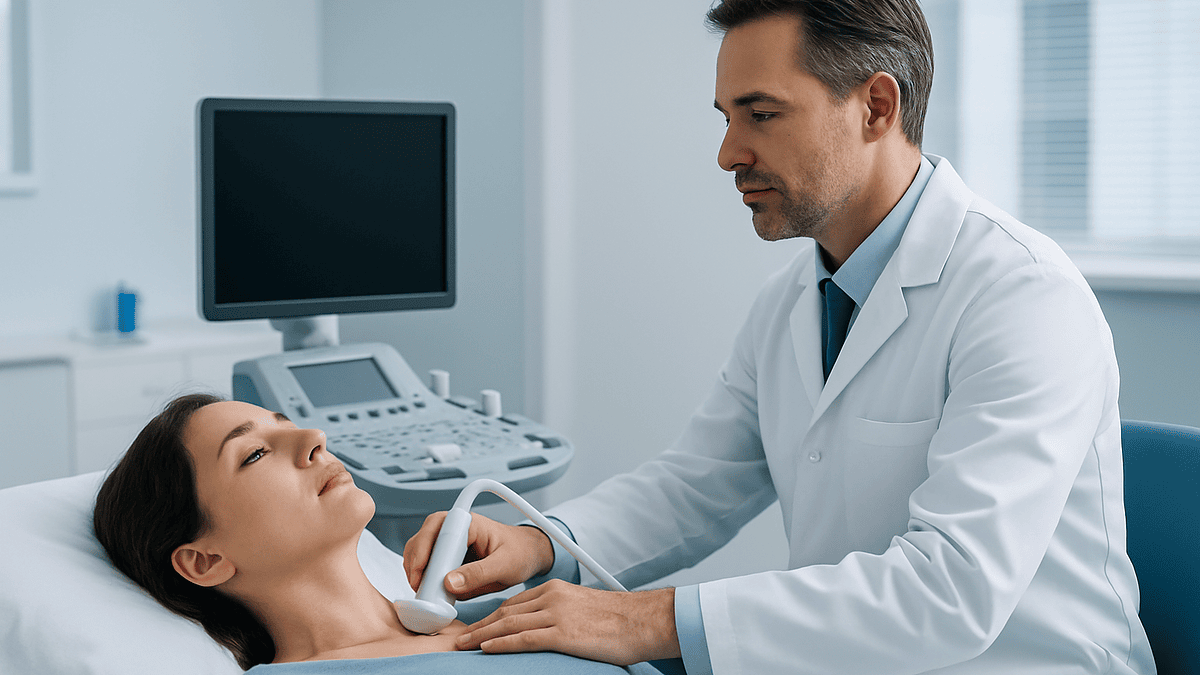
The usual first step is imaging. A sestamibi scan uses a small amount of a radioactive tracer that overactive parathyroid tissue absorbs more eagerly than surrounding structures; a camera then picks up the “hot” spot. Neck ultrasound, which uses sound waves rather than radiation, can show an enlarged gland behind the thyroid and check the thyroid itself for unrelated nodules. Many teams pair the two, because each catches things the other misses. When results are unclear, a specialized CT scan timed to the blood flow of the neck, often called four-dimensional CT, can provide a sharper picture, as Mayo Clinic and Cleveland Clinic both describe.
It is worth understanding what imaging is for. It does not make the diagnosis; that comes from blood tests showing high calcium alongside PTH that is high or inappropriately normal. Imaging exists to plan the operation: to tell the surgeon which side of the neck to start on and whether a small focused incision is realistic. A negative scan does not mean surgery is off the table. It usually means the surgeon plans to look at all four glands directly.
Pre-operative preparation also includes the routine checks that precede any general anesthetic: blood work, a review of medicines, and a conversation about fasting. Vitamin D levels are often checked and, if low, addressed under medical supervision, since a deficiency can make the post-operative calcium dip more pronounced. All of these decisions belong to the surgical and endocrine team.
Step by step inside the operating room: minimally invasive parathyroidectomy
Most parathyroid operations today are done under general anesthesia, though some surgeons offer regional anesthesia with sedation in selected patients. Once you are asleep, the neck is gently extended and cleaned, and the team confirms the plan from the imaging one last time.
When the scans point clearly to one gland, the surgeon usually performs a minimally invasive parathyroidectomy, sometimes called a focused parathyroidectomy. A single incision, typically a few centimeters long, is made in a natural skin crease low in the front of the neck. Working between the strap muscles, the surgeon eases the thyroid lobe forward to reveal the space behind it. The enlarged gland is often visibly different: darker, plumper, and clearly bigger than its rice-grain neighbors.
The critical work happens here. Two structures demand respect: the recurrent laryngeal nerve, which runs close by and controls the vocal cord on that side, and the tiny blood vessels feeding any healthy parathyroid tissue that should remain. The abnormal gland is freed from surrounding fat, its stalk is sealed, and it is lifted out. The tissue is usually sent to pathology to confirm it is parathyroid.
Many centers then draw a blood sample for rapid intraoperative PTH measurement. Because PTH has a half-life of only about three to five minutes, according to the StatPearls review, a meaningful drop within ten to twenty minutes of removal strongly suggests the source has been dealt with. If the hormone level does not fall as expected, the surgeon extends the operation to examine the other glands rather than closing and hoping.
The incision is closed with fine stitches or skin glue. MedlinePlus notes the whole operation commonly takes one to three hours, depending on how straightforward the anatomy proves to be.
Focused removal versus four-gland exploration: which approach and why
Two broad strategies exist, and the difference is not about quality; it is about matching the operation to the disease pattern. A focused operation is efficient when one gland is clearly at fault. A bilateral exploration, in which the surgeon inspects all four glands through a slightly wider incision, is the approach of choice when imaging is inconclusive, when more than one gland may be enlarged, or when the underlying condition tends to affect every gland.
| Feature | Focused (minimally invasive) | Bilateral (four-gland) exploration |
|---|---|---|
| Typical indication | Single adenoma clearly seen on imaging | Unclear imaging, suspected hyperplasia, kidney-related or inherited disease |
| Incision | Small, one side | Somewhat longer, allows access to both sides |
| Glands examined | Usually one | All four |
| Use of rapid PTH testing | Common, to confirm before closing | Sometimes, less essential |
| Extent of removal | The abnormal gland only | May remove three glands and part of the fourth, or all four with a small piece reimplanted in the forearm |
| Anesthesia | General or regional with sedation | Almost always general |
The last row deserves a plain-language note. In four-gland hyperplasia, removing everything would leave the body with no PTH at all, so surgeons preserve a small remnant, either in place or transplanted into muscle in the forearm where it can be monitored and, if necessary, trimmed later without reopening the neck.
Cleveland Clinic and the StatPearls review both describe these approaches as complementary rather than competing. A focused operation can be converted to a full exploration mid-procedure if the rapid hormone test does not behave. Which route you begin on is a judgment made by your surgeon from your imaging, your blood work, and your history, and it is a fair question to ask about directly.
Is parathyroid surgery major surgery? An honest answer
People search this question constantly, and the honest answer sits between two extremes. A parathyroidectomy is real surgery: it involves general anesthesia in most cases, a neck incision, and work within millimeters of a nerve that controls your voice. Nobody should treat it as trivial. At the same time, compared with operations that open the chest or abdomen, it is small in scale, short in duration, and low in blood loss.
Several features keep it toward the lighter end of the surgical spectrum. There is no body cavity to enter. The incision sits in skin and thin muscle rather than through bone or bowel. Fluid shifts are minimal, so the heart and kidneys are not stressed the way they are in long abdominal cases. MedlinePlus describes it as an operation after which many people go home the same day or after one night of observation.
What earns it the label of “serious” is the neighborhood, not the size. The recurrent laryngeal nerve and the remaining healthy parathyroid glands lie in the operative field, and protecting them requires an experienced pair of hands and, often, magnification. That is why guidelines emphasize the surgeon’s familiarity with parathyroid anatomy as a meaningful factor in outcomes, without needing to attach any figure to it here.
A useful way to frame it: this is a low-intensity operation with high-precision demands. For most healthy adults, the anesthesia and recovery are modest. For people with significant heart or lung disease, the general anesthetic itself may carry the greater share of the risk, and the anesthesia team will assess that separately before the day.
If you are weighing the word “major,” the more helpful question to bring to your consultation is not “how big is this?” but “what specifically could go wrong for someone with my health history, and how do you guard against it?”
How painful is a parathyroidectomy, and what the first 48 hours feel like
Pain after parathyroid surgery is usually described as modest and manageable. Expect a sore, tight feeling in the front of the neck, similar to a strained muscle, and a scratchy throat from the breathing tube used during anesthesia. Swallowing may feel awkward for a couple of days. Cleveland Clinic and MedlinePlus both describe the discomfort as mild to moderate, typically settling within the first week.
Your care team will decide on pain relief, and for many people over-the-counter options are sufficient after the first day; stronger prescription medicines are used sparingly and only when a clinician judges them necessary. Any choice about which medicine to use, and how, rests with the prescribing clinician.
Beyond pain, the more distinctive sensation in the first two days relates to calcium. Once the overactive gland is gone, blood calcium falls, sometimes below normal, because the remaining glands were suppressed and need time to wake up. Low calcium, called hypocalcemia, often announces itself as tingling around the lips, fingertips, or toes, and occasionally as muscle cramps. Surgeons anticipate this: many prescribe calcium and sometimes active vitamin D for a defined period after surgery, and they will tell you what tingling means and when it needs a call rather than a wait.
Practical points for the first 48 hours:
- Keep your head slightly elevated when resting to limit swelling.
- Eat and drink normally as tolerated; soft foods are easier at first.
- Follow the wound-care instructions given, which usually involve keeping the incision clean and dry.
- Have someone with you the first night if you were sent home the same day.
Most people are surprised by how quickly ordinary function returns. The neck is stiff, the voice may be a little husky, and energy is lower than usual, but the debilitating sense of being unwell that follows bigger operations is generally absent.
Parathyroid surgery recovery time: the first days and weeks
Recovery from a parathyroidectomy unfolds in stages, and the timeline below reflects typical ranges rather than promises; your own course depends on the extent of your operation and your general health.
Day of surgery to day two. Most people are discharged the same day or the following morning, according to MedlinePlus. A blood calcium check before discharge, or within a day or two, is standard. Voice may sound slightly hoarse; the incision is covered or sealed with glue.
Days three to seven. Neck soreness eases steadily. Many people return to desk work, light household activity, and walking within this window, as Cleveland Clinic describes. Bruising around the incision fades. Tingling from low calcium, if it occurred, usually settles as the remaining glands recover, though the team may keep you on supplements a little longer.
Weeks one to two. MedlinePlus notes that many people can resume most normal activities within about one to two weeks. Heavier lifting and vigorous exercise are typically held off until the surgeon clears them, partly to protect the incision and partly because energy often lags behind the wound.
Weeks two to six. The scar transitions from pink and firm to flatter and paler over months. A follow-up appointment usually falls in this window, with repeat calcium and PTH tests to confirm the levels have settled. Longer-term monitoring, including bone density scanning at intervals the team chooses, tracks whether the skeleton begins to recover.
Fatigue deserves a word of its own. Some people feel a lift in energy and mood within weeks; for others, especially where bone loss or kidney stones were the main problem, the benefits are measured on scans rather than felt day to day. Both patterns are consistent with a successful operation, and neither should be read as a verdict on how well the surgery went.
Parathyroidectomy risks and complications, in plain terms
Every operation carries risk, and this one has a short but specific list. Describing it neutrally is more useful than either alarming or reassuring language.
Low calcium. Temporary hypocalcemia is the most common issue after surgery and is expected to some degree. It becomes a complication when it is severe or prolonged. Permanent low calcium, called hypoparathyroidism, happens when the remaining glands do not recover; Cleveland Clinic and the StatPearls review describe this as uncommon after single-gland removal and more of a consideration after four-gland exploration. It is managed long term with calcium and active vitamin D under specialist supervision.
Voice change. The recurrent laryngeal nerve runs alongside the surgical field. Bruising or stretching can cause temporary hoarseness that resolves over weeks; permanent injury, which weakens one vocal cord, is rare but is the risk surgeons take most seriously. Some centers use nerve monitoring during the operation.
Bleeding. A collection of blood in the neck, called a hematoma, is uncommon but potentially serious because it can press on the airway. This is the main reason for the observation period after surgery and for the red-flag advice at the end of this article.
Persistent or recurrent high calcium. If the wrong gland is removed, or a second abnormal gland is missed, calcium may not normalize or may climb again later. Intraoperative PTH testing exists largely to reduce this possibility, though it does not eliminate it.
General risks. Wound infection, reaction to anesthesia, and scarring apply as they do to any operation. Infection in the neck is unusual because of its rich blood supply.
The negative side of removing a parathyroid gland, when the operation goes to plan, is minimal: the remaining glands take over. The meaningful downside lives in the uncommon scenarios above, which is why an experienced team and clear follow-up matter more than the size of the incision.
Alternatives to surgery: monitoring and medicine, and what the evidence shows
Surgery is the only treatment that removes the source of excess hormone, but it is not the only way to manage primary hyperparathyroidism. Two alternatives are widely used, and understanding what each can and cannot do makes the decision clearer.
Active monitoring. For mild, asymptomatic disease, the NHS and Mayo Clinic describe a strategy of regular blood tests for calcium and kidney function alongside periodic bone density scans. The evidence suggests that in a proportion of people the condition remains stable for years, while in others bone density gradually declines or calcium rises, at which point surgery is reconsidered. Monitoring is therefore a decision to watch, not to ignore. Staying well hydrated and avoiding prolonged immobility are usually advised, and any calcium or vitamin D supplements are reviewed by the clinician rather than stopped or started independently.
Medicines by class. Two groups are used, each addressing a different downstream effect rather than the gland itself.
- Calcimimetics are drugs that make the parathyroid cells more sensitive to calcium, so they release less PTH. They can lower blood calcium but do not shrink the adenoma or reliably protect bone. Mayo Clinic notes they are typically considered when surgery is not possible or has not succeeded.
- Bisphosphonates, and in some cases hormone-related bone medicines, slow the removal of calcium from bone, helping to preserve density. They do not lower PTH or calcium meaningfully.
Neither class treats the underlying cause, and both carry their own side-effect profiles that the prescribing clinician will weigh. Whether medicine, monitoring, or an operation fits your situation is a judgment for your endocrine and surgical team, informed by your bones, kidneys, symptoms, and preferences.
What people often get wrong about parathyroid surgery
Because the parathyroid glands are unfamiliar, misconceptions grow around them. A few come up in nearly every clinic conversation.
“It’s basically thyroid surgery.” The glands sit near the thyroid and share its name, but they are separate organs with a separate job. In a straightforward parathyroidectomy the thyroid is moved aside, not removed, and thyroid hormone production is unaffected. You will not need thyroid hormone replacement because of this operation alone.
“Once it’s out, I’m done with follow-up.” Calcium and PTH are rechecked after surgery, and bone density is often monitored for a period afterward. Follow-up is lighter than for many conditions, but it is not zero.
“High calcium means I ate too much dairy or took too many supplements.” In primary hyperparathyroidism the calcium comes mainly from bone, driven by the overactive gland. Dietary calcium plays little role in causing the problem, and Mayo Clinic advises against cutting calcium drastically without medical advice, since the skeleton is already losing it.
“No symptoms means no harm.” Bone thinning and kidney effects can progress silently. That is precisely why monitored patients have scans rather than simply reporting how they feel.
“A small scar means a minor procedure with no risks.” The incision is small, but the nerve and the remaining glands are the same regardless of scar length. The risk profile is set by the anatomy, not the cosmetics.
“Everyone feels dramatically better afterward.” Some people notice more energy and clearer thinking within weeks; others feel much the same. Both outcomes are compatible with a successful operation, and expecting a transformation can set up unnecessary disappointment when the real gains are showing up on a bone scan instead.
Questions to ask your care team before a parathyroidectomy
Consultations move quickly, and the most useful questions are often the ones you think of in the parking lot. Bringing a short list keeps the conversation concrete. These are worth asking, in roughly this order.
- What did my imaging show, and how confident are you about which gland is responsible?
- Are you planning a focused operation or a four-gland exploration, and what would make you switch from one to the other during surgery?
- Will you use intraoperative PTH testing or nerve monitoring, and how do those change decisions on the day?
- What type of anesthesia do you recommend for me, and why?
- What is your plan for managing low calcium after surgery, and how will I know the difference between expected tingling and a problem?
- How long do you expect I will stay after the operation, and who will check my calcium before I go home?
- What specific risks apply to me given my other health conditions, and what have you done to reduce them?
- If my calcium does not normalize, what happens next?
- When will I have follow-up blood tests and a bone density scan?
- Which of my current medicines or supplements should be reviewed before surgery? (Ask; do not change anything on your own.)
- When can I return to work, drive, and exercise?
Two further questions rarely get asked and often should be. First, what would happen if I chose monitoring instead, and how would we know it was time to reconsider? Second, if my imaging were negative, would that change your recommendation to operate? Both help you understand the reasoning rather than just the plan.
Write the answers down or bring someone who will. The decision remains yours to make with the team, and clear answers to these questions are the raw material for making it well.
When to call your doctor after parathyroid surgery
Most recoveries are uneventful, but a few signs need prompt attention. Your surgical team will give you specific instructions and a number to call; the list below reflects widely used guidance from MedlinePlus and Cleveland Clinic and is not a substitute for that.
Seek emergency care immediately, or call emergency services, if you notice:
- Rapid swelling in the neck, a feeling of pressure or tightness, or difficulty breathing. This may indicate bleeding under the skin pressing on the airway.
- Severe muscle cramps or spasms, especially in the hands, feet, or face, or twitching around the mouth. These can signal a significant drop in calcium.
- Fainting, confusion, or a seizure.
- Chest pain or shortness of breath.
Call your surgical team the same day if you have:
- Tingling around the lips or fingertips that persists or worsens despite following your calcium instructions.
- A fever, or increasing redness, warmth, or discharge from the incision.
- Persistent or worsening hoarseness, or difficulty swallowing that is getting worse rather than better.
- Pain that is not controlled by the plan you were given.
Mention at your follow-up, or call if concerned:
- Voice that remains weaker or breathier than usual after two to three weeks.
- Numbness or unusual sensation in the skin near the scar, which is common and usually fades.
- Ongoing fatigue that has not shifted after several weeks.
A general rule: a symptom that is new, getting worse, or affecting your breathing or swallowing warrants a call rather than a wait. Nobody on a surgical team minds being contacted about a neck that feels wrong. Every decision about further tests or treatment sits with the clinicians who know your case.
Frequently asked questions
Is parathyroid surgery major surgery?
It is a genuine operation under anesthesia but small in scale compared with chest or abdominal surgery. There is no body cavity to enter, blood loss is minimal, and many people go home the same or next day. Its seriousness comes from the nearby recurrent laryngeal nerve and remaining glands, which demand precision. Your anesthesia team will assess any additional risk from other health conditions.
How painful is a parathyroidectomy?
Discomfort is usually described as mild to moderate: a sore, tight neck and a scratchy throat from the breathing tube, easing over about a week. Many people manage with over-the-counter pain relief after the first day, though the choice of medicine rests with your clinician. Tingling in the lips or fingertips from a temporary calcium dip is also common and is anticipated by the team.
How long does it take to recover from a parathyroidectomy?
Typical parathyroid surgery recovery time is about one to two weeks for most normal activities, according to MedlinePlus, with desk work often possible within a few days. Heavier exercise waits for the surgeon’s clearance. Calcium and PTH are rechecked at follow-up, and the scar continues to fade over several months. Individual timelines vary with the extent of surgery and general health.
What is the negative side of removing a parathyroid gland?
When one overactive gland is removed and the others are healthy, the downside is usually limited to short-term low calcium while the remaining glands recover. The meaningful risks are uncommon: permanent low calcium requiring lifelong supplements, injury to the nerve controlling a vocal cord, bleeding in the neck, or persistent high calcium if another abnormal gland was missed.
What is a minimally invasive parathyroidectomy?
It is a focused operation through a small incision on one side of the neck, used when imaging clearly identifies a single overactive gland. The surgeon removes only that gland and often confirms success with a rapid PTH blood test during surgery. If the hormone level does not fall as expected, the operation can be extended to examine the other glands.
Will I need thyroid medication after parathyroid surgery?
Not because of a parathyroidectomy alone. The thyroid is moved aside during the operation, not removed, so its hormone production is unaffected. Thyroid medication only becomes relevant if a separate thyroid problem is treated at the same time. You may, however, be given calcium and sometimes active vitamin D for a period afterward, at your clinician’s direction.
How do surgeons know they removed the right gland?
Three checks are combined: pre-operative imaging such as a sestamibi scan or ultrasound, the visible appearance of the enlarged gland during surgery, and often a rapid intraoperative PTH test. Because PTH clears from the blood within minutes, a clear drop after removal indicates the source is gone. The removed tissue is also examined by a pathologist to confirm it is parathyroid.
What happens if the scans cannot find the overactive gland?
A negative scan does not rule out surgery. It usually means the surgeon plans a bilateral exploration, inspecting all four glands directly through a slightly longer incision. Experienced surgeons locate the culprit this way in the majority of cases, and further imaging such as a specialized CT may be used first. Your team will explain how this affects your plan.
Can hyperparathyroidism be managed without an operation?
Yes, in selected cases. Mild, symptom-free disease with healthy bones and kidneys is often monitored with regular blood tests and bone scans, as the NHS describes. Calcimimetic medicines can lower calcium and bisphosphonates can protect bone, though neither removes the underlying cause. The right path depends on your test results and is decided with your endocrine and surgical team.
Will my voice change after parathyroidectomy?
Mild hoarseness is common for a few days, mostly from the breathing tube and swelling, and usually resolves within weeks. Temporary weakness from bruising of the recurrent laryngeal nerve can take longer to settle. Permanent vocal cord weakness is rare but is the complication surgeons guard against most carefully. Persistent hoarseness beyond two to three weeks should be raised at follow-up.
References
This article is for general information only and is not a substitute for professional medical advice. Please consult a qualified doctor about your individual situation.

More from the Blog

Calcium, Vitamin D and Blood Thinners: What Is Reviewed Before Hyperparathyroidism Surgery
Before parathyroid surgery, the care team reviews calcium and vitamin D supplements, blood thinners (anticoagulants and antiplatelets), and any medicine that can shift blood…

Recurrent DKA: Why Does Diabetic Ketoacidosis Come Back, and How Is It Prevented?
Diabetic ketoacidosis comes back most often because the body runs short of insulin again: doses are missed or omitted, an insulin pump quietly stops…
How Long Does Thyroidectomy Recovery Take? Voice, Swallowing, the Scar and Returning to Work
Most people who have thyroid surgery are home within a day or two and back to ordinary daily activities in about one to two…
What Happens Inside a Medical Longevity Program? Risk Assessment, Screening and the Plan
A medical longevity program usually involves three stages: a detailed history and physical exam, a set of blood tests and screenings chosen to estimate…
Hyperthyroidism With Heart Disease or in Pregnancy: How Treatment Is Adapted
Hyperthyroidism treatment is adapted in pregnancy and heart disease because the usual options carry different risks in each situation. In pregnancy, radioactive iodine is…

When Is Surgery the Treatment for Cushing Syndrome, and When Is Medication Used First?
Surgery to remove the cortisol-producing tumor is usually the first-line treatment for Cushing syndrome caused by a pituitary or adrenal tumor, because it targets…