

Preparing for a Sleep Study: Why Alcohol, Sedatives and Caffeine Are Off the List Beforehand
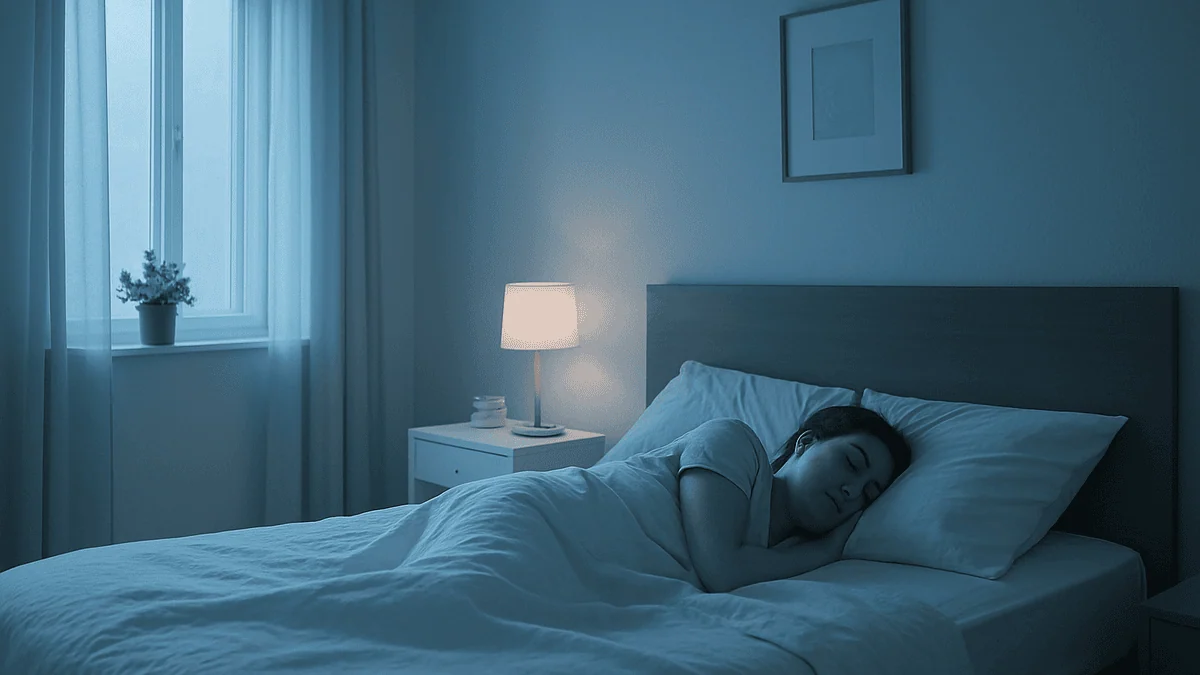
Key Takeaways
- MedlinePlus reports that caffeine peaks in the blood within about an hour and its effects can last four to six hours, which is why sleep labs ask you to stop it from around midday.
- Alcohol relaxes the muscles holding the throat open and shifts REM sleep, so the NHS lists it among factors that can worsen sleep apnea and labs ask about it before recording.
- Never stop a prescribed sedative to 'clean up' a sleep study; the sleep clinic and your prescriber decide together, and many labs want the study done on your usual medicines.
- An apnea is scored as a breathing pause of 10 seconds or longer, and the whole recording is designed to count how often such events happen per hour of actual sleep.
- Washing your hair without conditioner or product and removing nail polish from one finger protects the electrode and oxygen-sensor signals for the entire night.
- Most people sleep more than they believe in the lab; the first-night effect is expected and physicians read the recording with it in mind, offering a repeat if the night is truly unusable.
To prepare for a sleep study, most sleep labs ask you to skip alcohol and caffeine from around midday on the test day, avoid napping, arrive with clean hair and skin free of lotions, and bring your usual medicines so the team can note them. Never stop a prescribed sedative on your own; ask the clinic and your prescriber how to handle it beforehand.
The instruction sheet arrives a week before the appointment, and one line stops people cold: no alcohol, no caffeine, and please tell us about any sleeping pills. For someone who has spent years managing tiredness with a strong afternoon coffee, or who relies on a glass of wine to fall asleep at all, that request can feel like being asked to perform a test with one hand tied behind their back.
It is worth understanding why the request exists, because the reasoning is not about rules for their own sake. A sleep study is a recording of how your body behaves during ordinary sleep. Anything that changes how you fall asleep, how deeply you sleep, or how your airway muscles behave will change the recording too. The lab wants your real night, not a chemically edited version of it.
This guide explains how to prepare for a sleep study in plain terms: what happens, why the three substances in the title matter, and where the common misunderstandings lie.
How to prepare for a sleep study: what the night is trying to capture
A sleep study, formally called polysomnography, is an overnight recording of brain activity, eye movement, breathing, blood oxygen, heart rhythm and muscle activity while you sleep. The word sounds technical, but the purpose is simple: to watch what your body does when you are not awake to describe it.
That is also why preparation matters more than for most tests. A blood test measures a value that sits in your veins whether or not you slept well. A sleep study measures behavior, and behavior is easy to alter. Mayo Clinic notes that alcohol and caffeine both change sleep patterns and can hide the very problems the test is looking for, which is why patients are asked to avoid them in the afternoon and evening before the recording.
Think of it this way. If a mechanic asks to hear the rattle in your engine, you do not turn the radio up on the drive over. Alcohol relaxes throat muscles and can make breathing pauses worse than usual. Caffeine can keep you in lighter sleep for longer. A sedating tablet can deepen sleep in a way you would not normally experience. Each one nudges the recording away from a typical night.
The good news is that the list of things to change is short, and none of it is permanent. Most instructions cover a single day: skip the coffee after lunch, skip the drink with dinner, skip the nap, wash your hair, and pack a bag. The one exception that requires a conversation rather than a decision is prescribed medicine, and that is covered in its own section below. Everything else is a matter of understanding the reasons, which makes the rules far easier to follow.
What actually happens during an overnight sleep study
Most people picture a laboratory. The reality is closer to a modest hotel room with a bed, a bathroom, a camera and a technologist working in an adjoining room. You arrive in the evening, change into your own nightclothes, and spend a while being wired up.
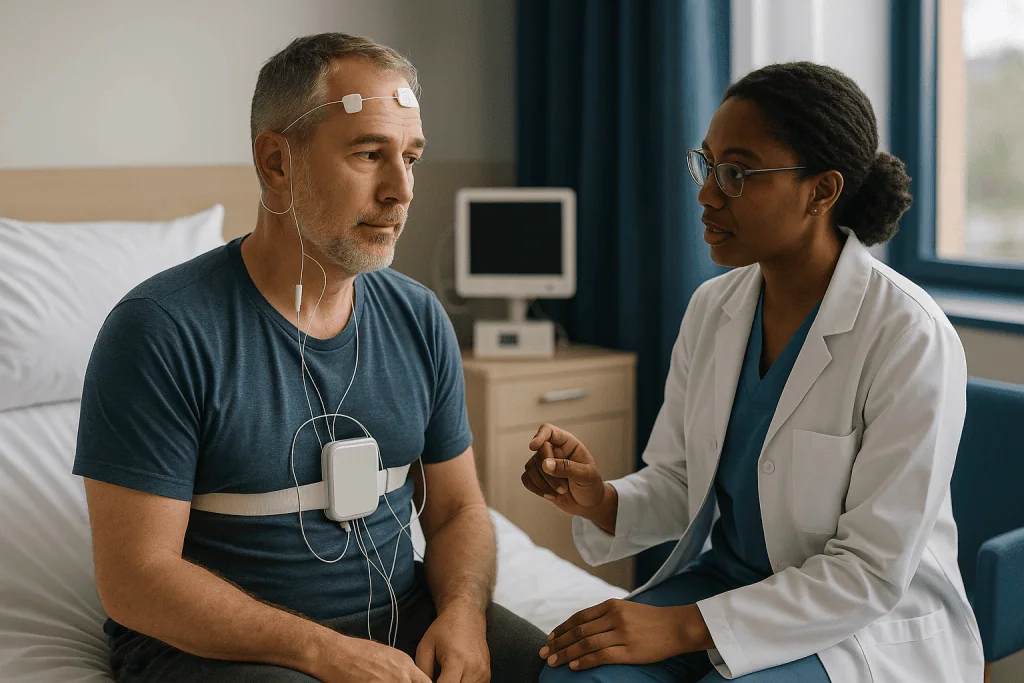
Small sensors called electrodes are attached with a paste or tape to the scalp, temples, chin and legs. Elastic belts go around the chest and abdomen to measure breathing effort. A soft clip on a finger reads blood oxygen, and a thin sensor under the nose tracks airflow. MedlinePlus describes this setup as painless, though the wires take a few minutes to get used to.
Once the lights go out, you sleep, or try to. The technologist watches the signals through the night. According to the NIH’s National Institute of Neurological Disorders and Stroke, a full sleep cycle moves through light sleep, deep sleep and REM (rapid eye movement, the stage in which most vivid dreaming occurs), and one complete cycle typically runs about 90 to 110 minutes. The recording lets the team see how many cycles you complete and whether anything interrupts them.
The signal the lab is most often hunting for is an apnea, a pause in breathing that lasts 10 seconds or longer, or a hypopnea, a partial reduction in airflow. Each event is scored, and the oxygen reading shows whether it caused a dip. If breathing pauses are frequent, some labs may fit a positive airway pressure mask partway through the night to test whether it settles them; this is called a split-night study, and whether it happens is a decision for the sleep physician, not something you request.
In the morning, the sensors come off, the paste washes out in the shower, and you leave. The data then goes to a technologist for scoring and to a physician for interpretation.
Why alcohol before a sleep study distorts the picture
Alcohol is the substance most likely to be quietly ignored on the night before a sleep study, because so many people use it as a sleep aid. That is exactly why it is on the list.
Ethanol is a central nervous system depressant. In the first hours after a drink it tends to speed the onset of sleep, which feels helpful. It also relaxes skeletal muscle, including the muscles that hold the throat open. The NHS lists alcohol among the factors that can make sleep apnea worse, because a floppier airway collapses more easily when the tongue and soft palate fall back during sleep.
For a diagnostic recording, that creates a problem in both directions. A person who drinks more than usual might record a night that looks worse than their typical one, with more frequent or longer pauses. A person who normally has two drinks every evening and abstains for the test might record a night that looks better than their real life. Neither is wrong, exactly, but the lab needs to know which one it is looking at.
Alcohol also changes sleep architecture, the pattern of stages across the night. It tends to suppress REM sleep early and then produce fragmented, restless sleep in the second half as the body metabolizes it. Because some breathing disorders are worst during REM, shifting REM around the night can shift where events appear or whether they appear at all.
This is where honesty helps more than compliance. If you routinely drink in the evening and are unsure whether to abstain for the study, tell the clinic before the appointment. The technologist will also ask on the night. Some sleep physicians prefer to see a typical night, others prefer a clean baseline; either way, they can only interpret what they know about.
Sedatives and sleeping tablets: why the lab asks, and why you should not stop on your own
This section deserves a clear boundary at the start: nothing here is advice to start, stop or change any medicine. Sedating drugs are the one part of sleep study preparation that belongs entirely to your prescriber and the sleep clinic, not to an instruction sheet or a magazine article.
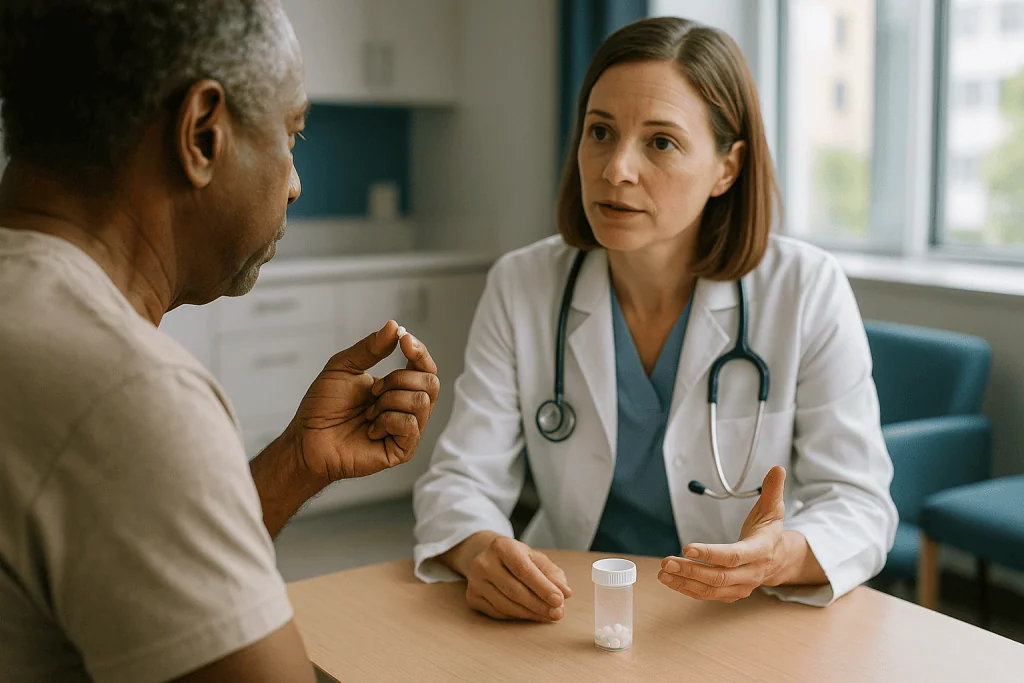
The reason labs ask about them is mechanistic. Benzodiazepines and the related “Z-drug” hypnotics act on receptors that quiet brain activity, and they can also reduce the muscle tone of the upper airway and blunt the body’s response to falling oxygen. Sedating antihistamines, found in many over-the-counter sleep aids, work differently but also alter sleep stages. Some antidepressants suppress REM sleep. Opioid pain medicines can change breathing rhythm during sleep. Each of these can change what the recording shows.
That does not automatically mean they must be stopped. Mayo Clinic’s guidance is that patients should check with their care team about whether to continue regular medicines before polysomnography, and many sleep physicians specifically want the study performed on the patient’s usual medicines, because that is the state they actually sleep in every night. Stopping a long-term sedative abruptly can cause rebound insomnia, anxiety or, with some drugs, withdrawal symptoms that are unsafe. A recording taken during withdrawal is no more representative than one taken after an extra dose.
The practical step is simple. When you receive the appointment, list everything you take, including over-the-counter sleep aids and supplements such as melatonin, and send that list to the sleep clinic. Ask them directly: “Should I take these as normal on the night?” If the answer involves changing a prescription, the sleep clinic will coordinate with your prescriber. Then bring the medicines with you so the technologist can record exactly what was taken and when. That record becomes part of the interpretation.
Can you drink coffee before a sleep study?
The morning cup is usually fine. The afternoon and evening cups are the problem, and the timing comes down to how long caffeine stays active.
Caffeine works by blocking adenosine, a chemical that builds up in the brain across the waking day and creates the sensation of sleep pressure. Block the signal and you feel alert, but the underlying tiredness has not gone anywhere; it has been muted. MedlinePlus notes that caffeine reaches its peak level in the blood within about an hour and that its effects can be felt for four to six hours afterward. Many people metabolize it more slowly than that, particularly those on certain medicines or in later pregnancy.
For a sleep study, lingering caffeine does two unhelpful things. It can lengthen the time it takes to fall asleep, which shrinks the total recording of actual sleep. It can also shift the night toward lighter stages, so the deep sleep and REM the physician wants to examine are underrepresented. Cleveland Clinic’s patient guidance therefore asks people to avoid caffeine from the afternoon of the study day.
Caffeine hides in more places than coffee. Black and green tea, cola and many other sodas, energy drinks, dark chocolate, some pain relievers and pre-workout supplements all contain it. Decaffeinated coffee still contains a small amount. Reading a few labels on the day is a reasonable precaution.
One honest caveat. If you drink a large amount of caffeine daily, cutting it entirely for one day can produce a headache and a heavy, foggy feeling by evening. That is a withdrawal effect and it usually passes, but it is worth mentioning to the technologist, because a caffeine-withdrawal headache at bedtime is part of the context for that night’s recording.
Who a sleep study is usually for, and who is usually asked to wait
Polysomnography is a diagnostic tool, not a screening test, so it is generally ordered when a clinician already suspects a specific sleep disorder and needs objective evidence to confirm or characterize it.
The most common reason is suspected obstructive sleep apnea, where the airway repeatedly narrows or closes during sleep. In an ear, nose and throat setting, the test also helps decide whether anatomical factors such as enlarged tonsils, a deviated septum or a large tongue base are contributing, and whether surgery is even worth discussing. Other reasons Mayo Clinic lists include narcolepsy, REM sleep behavior disorder, periodic limb movement disorder, unexplained chronic insomnia and unusual behaviors during sleep.
Children are referred for similar reasons, most often for suspected apnea related to tonsils and adenoids. Pediatric labs adapt the setup so a parent can stay in the room, and the sensors are the same painless kind used in adults.
Who is asked to wait? Timing is usually the issue rather than eligibility. A person with an active chest infection, a heavy cold or a recent bout of flu will often be rescheduled, because congestion changes airflow and a single bad night of illness is not representative. Someone who has just changed a sedating medicine may be asked to wait until the new regimen has settled. Shift workers who have just switched rotations may be asked to arrive after a few days on a stable schedule. And people whose main problem appears to be an irregular sleep schedule rather than a disorder of sleep itself may be steered first toward a sleep diary or a wearable activity monitor, since a lab night would not add much.
None of these are refusals. They are attempts to make sure the one night that gets recorded is worth recording.
What not to do before a sleep study: the day-of checklist
Most of the preparation fits into a single day, and the logic behind each item is the same: keep the night as close to typical as possible while removing anything that could mask or exaggerate a problem.
| Time | Usually asked to avoid | Why it matters |
|---|---|---|
| Morning | Nothing unusual; keep your normal routine | A typical day sets up a typical night |
| From around midday | Caffeine in any form, including tea, cola, chocolate, energy drinks | Effects last four to six hours or longer; delays and lightens sleep |
| Afternoon onward | Napping | A nap reduces sleep pressure, so you may lie awake in the lab |
| Evening | Alcohol | Relaxes airway muscles, alters REM timing, fragments later sleep |
| Before arrival | Hair products, oils, lotions, makeup, nail polish on one finger | Sensors need clean, dry skin and hair to hold a signal; the oxygen clip reads through the nail |
| All day | Stopping or starting any medicine without instruction | Withdrawal or a new drug both distort the recording; ask first |
Two items on that table surprise people. The first is hair products. Electrode paste grips poorly on conditioned or gelled hair, and a sensor that slides during the night leaves a gap in the data. Washing your hair and skipping the styling product is a small thing that protects hours of recording. The second is nail polish. The finger clip that reads blood oxygen works by shining light through the fingertip, and dark or thick polish can interfere; removing it from one finger is enough.
What you should do is equally short. Eat a normal dinner before you arrive, because most labs do not provide a meal. Keep your usual bedtime rather than trying to exhaust yourself. And bring the list of medicines and the medicines themselves, which the next section covers.
What to bring to a sleep study
Packing for a sleep lab is packing for one night away, with a few additions that make the recording easier and the night more comfortable.
The essentials are the things you would want in any unfamiliar bedroom. Comfortable two-piece nightclothes matter more than usual, because the chest and abdominal belts and the leg sensors need access; a nightgown or a onesie makes the setup awkward. Bring a toothbrush, your morning toiletries, a change of clothes and anything you need to get to work or home afterward. If you use a particular pillow to sleep, bring it. Familiar objects reduce the strangeness of the room.
Then the study-specific items. Your medicines, in their original containers, so the technologist can record names and timings exactly. A written list of everything you take, including supplements. If you already use a positive airway pressure machine or an oral appliance for the jaw, ask the clinic in advance whether to bring it; some studies are designed to test current treatment rather than diagnose. Reading glasses, a book or a paper puzzle help pass the time during setup, which can take a while.
Children need more. A favorite blanket or soft toy, a bedtime book, and a parent who has been told they can stay all change how the night goes. Pediatric technologists are used to turning the wiring into a game, but the child sleeps better with the familiar things nearby.
Leave a few things at home. Phones and tablets are usually allowed but the lab will ask you to put them away at lights out, since screen light delays sleep onset. Perfume and heavy lotions interfere with sensors. And there is no need to bring food unless the clinic has said so; a light snack is fine if you tend to wake hungry, but a large late meal can itself disturb sleep and reflux symptoms.
Home sleep test preparation: how it differs from the lab
For many adults with a straightforward suspicion of obstructive sleep apnea, the first test is now done at home with a portable device rather than in a lab. The NHS describes this as a common route: a small monitor is worn overnight to record breathing, oxygen and sometimes heart rate, and returned the next day for analysis.
The preparation rules are largely the same, and the reasons are identical. Avoid alcohol and caffeine in the afternoon and evening, do not nap, keep your usual bedtime, and take your medicines as your team has instructed. The difference is that nobody is watching the signals overnight, so more of the responsibility for a good recording sits with you.
That means following the fitting instructions carefully. The finger sensor should be snug on a clean fingertip without polish. The chest belt should sit where the leaflet shows it, not pulled loose. The nasal tube, if there is one, should sit at the nostrils and be secured so it does not slip off when you roll over. It is worth doing the fitting before you are drowsy, then checking the device’s indicator light, if it has one, before you turn out the lamp.
Home tests have limits that are worth knowing. They record fewer channels than a lab study, so they cannot stage sleep as precisely and can underestimate the severity of breathing events, particularly if you spend part of the night awake. They also cannot pick up movement disorders or unusual behaviors that a camera would catch. If a home recording is poor quality or the result does not match the clinical picture, a lab study often follows. That is not a failure; it is how the pathway is designed.
Return the device promptly. Most services have a fixed window for scoring, and the data cannot be read until it is back.
"I barely slept": how much sleep the lab actually needs
Almost everyone who has had a sleep study says a version of the same thing in the morning: “I hardly slept at all, so it probably didn’t work.” The recording usually tells a different story.
Two things are going on. The first is the first-night effect, a well-recognized tendency to sleep more lightly and wake more often in an unfamiliar environment, especially one with wires attached. Sleep physicians expect it and read the study with it in mind. The second is that people are poor judges of their own sleep. Lying awake for twenty minutes feels like an hour; a light sleep stage can feel like wakefulness. The brainwave recording resolves the difference objectively.
How much sleep is enough? The honest answer is that it depends on what the study is for, and the lab, not you, decides whether the night is usable. A diagnosis of obstructive sleep apnea generally needs enough recorded sleep to count breathing events per hour with confidence, and the technologist tracks that total as the night goes on. If the total is falling short, they may let you sleep later in the morning. Studies looking for narcolepsy or REM behavior disorder depend on capturing REM, so the team will be watching for it specifically.
What you can do is limited but useful. Do not try to compensate the night before by staying up late to “bank” tiredness; the lab wants your typical sleep pressure, not an exhausted crash. Do not nap on the day. If you normally read before bed, bring the book. If you wake needing the bathroom, tell the technologist through the intercom; they will unclip what needs unclipping, and it does not spoil the study.
And if the night really was too disrupted, the lab will say so and offer another. That happens, and it reflects nothing about you.
What the following days and weeks usually look like
The morning after is undramatic. Sensors come off, paste washes out, and most people go straight to work. Scalp paste can leave a residue for a day or two; a second shampoo shifts it. Some people feel a little foggy from the disrupted night, so if your job involves driving or safety-critical tasks, plan a lighter morning where you can.
The recording then goes through two stages. A technologist scores it, marking every sleep stage, breathing event, oxygen dip, movement and arousal across the whole night. A sleep physician, or in some pathways an ear, nose and throat surgeon with sleep training, then reviews the scored study alongside your history and writes a report. Cleveland Clinic notes that this scoring and interpretation takes time and that results are usually discussed at a follow-up appointment rather than on the morning of the test. Ask your team how long to expect for your service, because it varies.
At that follow-up, several things can happen. The study may show a disorder and lead to a discussion of options. For obstructive sleep apnea, the NHS describes those options as including positive airway pressure therapy, oral appliances that hold the jaw forward, weight management where relevant, changes to alcohol and sleeping position, and in selected cases surgery on the nose, palate or tonsils. The study may show that the airway is not the problem and point toward another explanation for tiredness. Or it may be inconclusive and lead to a repeat, a different type of study, or a period of monitoring.
Whatever the result, the decision about what happens next sits with your treating team, weighed against your own priorities. A sleep study is evidence, not a verdict.
What people often get wrong about preparing for a sleep study
Some of these misunderstandings are harmless. A couple are not.
“I should stop my sleeping tablets so the test is clean.” This is the one that causes real harm. Stopping a long-term sedative abruptly can cause rebound insomnia, anxiety and, with some drug classes, withdrawal that can be dangerous. It also produces an unrepresentative night. Whether to continue is a decision for the sleep clinic and your prescriber together, made before the appointment.
“One drink won’t make a difference.” Alcohol relaxes upper airway muscles and shifts REM sleep; even a modest amount can change how many breathing events appear and when. The lab may or may not want a fully alcohol-free night, but it needs to know either way.
“I’ll stay up late the night before so I’m sure to sleep.” Sleep deprivation deepens sleep and can exaggerate breathing events, producing a night that is not typical for you. Keep your usual schedule.
“Decaf is caffeine-free.” It is not, though the amount is small. Herbal tea is the safer evening choice.
“The study will tell me I have apnea or I don’t.” Results are graded along a spectrum, and mild findings may or may not need treatment depending on symptoms and other health conditions. The report is one input into a clinical conversation.
“If I didn’t sleep, the night was wasted.” Most people sleep more than they think, and labs read studies knowing that first nights are lighter than usual.
“A home test is a lesser test.” For straightforward suspected apnea in adults, a home test is often the recommended first step. It is a different tool with different limits, not an inferior one.
Correcting these takes a two-minute phone call to the clinic. It is always worth making.
Questions to ask your care team before the night
A sleep study is more useful when the person being recorded understands the plan. These questions are the ones sleep technologists say they wish more patients asked in advance rather than at ten o’clock at night with the wires already on.
- Which of my medicines should I take as normal on the night, and which, if any, should I discuss with my prescriber first? Is there anything I should bring in its original packaging?
- Do you want a fully alcohol-free and caffeine-free day, or do you want a typical day for me? What time should I stop each?
- Is this a diagnostic study, a split-night study where treatment might be started partway through, or a study to check treatment I already use?
- Should I bring my current positive airway pressure machine, mask or oral appliance?
- What time should I arrive, and roughly when will I be able to leave in the morning? Should I arrange for someone else to drive?
- Can a partner or parent stay? Is there anything they need to know?
- What happens if I cannot sleep or the recording is poor? Will I be offered another night?
- How long does scoring and interpretation typically take in your service, and how will I receive the results?
- If the study shows sleep apnea, what range of options would we be discussing, and who leads that conversation, the sleep physician or the ear, nose and throat team?
- If the study does not show apnea, what is the next step in working out why I am tired?
Write the answers down. The evening of the study is not a good time to rely on memory, and the technologist on the night may not be the person who gave you the instructions. Having your own record of what was agreed, especially about medicines, protects the quality of the recording and removes a source of anxiety that keeps people awake.
When to call your doctor
A sleep study is low risk in itself. The sensors are external, the paste can cause mild skin irritation in a minority of people, and the most common complaint is a poor night. There is no recovery period. The reasons to call your doctor are about the underlying symptoms and about medicines, not about the test.
Contact your care team before the study if you develop a chest infection, fever or heavy nasal congestion, because the appointment may need rescheduling. Call promptly if you have stopped or changed a sedative, sleeping tablet or other regular medicine on your own in preparation and are experiencing anxiety, tremor, palpitations, severe insomnia or confusion; these can be withdrawal effects and need medical guidance the same day.
Seek urgent care, without waiting for the study or its results, if you or someone who sleeps beside you notices any of the following: falling asleep at the wheel or nearly doing so, sudden severe breathlessness or chest pain at night, waking with a racing or irregular heartbeat that does not settle, lips or fingertips turning blue during sleep, or an episode of acting out dreams that has caused injury. Excessive daytime sleepiness that makes driving or operating machinery unsafe is itself a reason to speak to a clinician now and to stop driving until you have.
After the study, contact the clinic if the scalp or skin under a sensor becomes red, blistered or painful rather than simply itchy, or if you have not heard about results within the timeframe you were given. Above all, do not make any change to a prescribed medicine on the basis of a sleep study result until you have discussed the report with the team that ordered it. The decision about what the recording means for you, and what to do about it, belongs with them.
Frequently asked questions
What not to do before a sleep study?
Do not drink caffeine or alcohol from around midday, do not nap, do not stay up late the night before to tire yourself out, and do not stop or start any medicine without instruction from the sleep clinic or your prescriber. Avoid hair products, lotions and heavy makeup so the sensors adhere, and remove nail polish from one finger for the oxygen clip.
Can you drink coffee before a sleep study?
A morning coffee is usually fine, but most labs ask you to stop caffeine from around lunchtime on the day of the study. MedlinePlus notes caffeine effects can last four to six hours, and it can delay sleep onset and keep you in lighter stages. Remember tea, cola, energy drinks, chocolate and some pain relievers also contain caffeine.
What should I bring to a sleep study?
Bring two-piece nightclothes, toiletries, a change of clothes, your own pillow if you prefer it, something to read, and every medicine you take in its original packaging along with a written list. If you already use a breathing machine or oral appliance, ask the clinic whether to bring it. Children should bring a familiar blanket or toy.
Should I stop taking my sleeping pills before a sleep study?
Not on your own. Whether to continue a prescribed sedative is a decision for the sleep clinic and your prescriber together, and many labs prefer the study to reflect your usual medicines. Stopping abruptly can cause rebound insomnia or withdrawal and produces an unrepresentative night. Send the clinic your medicine list when the appointment is booked and ask directly.
How is home sleep test preparation different from a lab study?
The rules on alcohol, caffeine, napping and medicines are the same, but you fit the device yourself, so following the fitting instructions carefully matters more. Home tests record fewer signals, cannot stage sleep precisely and may underestimate severity, so a lab study sometimes follows. Return the device promptly so it can be scored.
What if I can't sleep during my sleep study?
Most people sleep more than they think, and a lighter first night in an unfamiliar room is expected; physicians read studies knowing this. The technologist tracks total sleep through the night and may let you sleep later. If the recording is genuinely too short to interpret, the lab will offer another night.
Can I eat before a sleep study?
Yes, eat a normal dinner before you arrive, because most labs do not provide a meal. Avoid a very large or late meal, which can worsen reflux and disturb sleep, and skip alcohol and caffeinated drinks with it. A light snack is fine if you usually wake hungry, but check whether the clinic has any specific instructions.
Why does alcohol affect a sleep study?
Alcohol relaxes the muscles that hold the throat open, so the airway collapses more easily and breathing pauses can become more frequent or longer. It also suppresses REM sleep early in the night and fragments sleep later. The NHS lists alcohol as a factor that can worsen sleep apnea, which is why labs need to know how much, if any, you had.
How long does it take to get sleep study results?
The recording must first be scored event by event by a technologist and then interpreted by a sleep physician, so results are usually discussed at a follow-up appointment rather than on the morning after. The timeframe varies between services, so ask your clinic what to expect and how you will be contacted.
Does a sleep study hurt or have risks?
No. The sensors are attached to the skin with paste or tape, nothing is inserted, and there is no recovery period. The main drawbacks are a disrupted night and occasional mild skin irritation from the adhesive. The test carries no exposure to radiation or medication, and you can drive yourself home if you feel rested enough.
References
- MedlinePlus – Polysomnography
- Cleveland Clinic – Sleep Study (Polysomnography)
- NHS – Sleep apnoea
- MedlinePlus – Caffeine
This article is for general information only and is not a substitute for professional medical advice. Please consult a qualified doctor about your individual situation.

More from the Blog
Before Your Vertigo Appointment: Notes, Prior Hearing Tests and Scans Worth Bringing
For a vertigo appointment, bring a dated diary of your spells (how long each lasted, what set it off, whether hearing or balance changed),…

FESS Step by Step: How Functional Endoscopic Sinus Surgery Opens Blocked Sinuses
Functional endoscopic sinus surgery (FESS) is a procedure in which a surgeon passes a thin camera through the nostrils, without external cuts, and removes…
Bleeding and Congestion After Septoplasty: What Is Normal and When to Call Your Surgeon
Light oozing and blood-streaked mucus are expected in the first days after septoplasty, usually fading to pink or brownish discharge within about a week…

Tympanoplasty vs Myringoplasty: Which Eardrum Repair Do You Need?
Myringoplasty repairs only the torn eardrum membrane, usually with a small graft of the patient's own tissue. Tympanoplasty repairs the eardrum and also lets…
From Surgery to Switch-On: The Cochlear Implant Activation Timeline and Early Sound Mapping
After cochlear implant surgery, the device is usually switched on at a first programming visit a few weeks later, commonly around two to four…
Recurrent Sinusitis and Daily Life: Irritants, Fluids and Habits Your ENT Will Ask About
For recurrent sinusitis, the most useful things to avoid are inhaled irritants such as tobacco smoke and strong fumes, prolonged use of decongestant nasal…