

Preparing for Amputee Rehabilitation Before a Planned Amputation: Health, Home and Equipment

Key Takeaways
- Most planned amputations follow vascular disease or diabetes, which means there is usually a window of weeks in which fitness, glucose control and home setup can be improved before surgery.
- A hip or knee that stiffens into a bent position from prolonged sitting can rule out prosthetic walking, so lying flat for periods each day is part of the program before and after surgery.
- Items fitted to the residual limb, including compression shrinkers and prosthetic sockets, should not be ordered before surgery because the limb changes shape markedly in the first weeks.
- Mayo Clinic notes that most people experience phantom sensations after amputation and that phantom pain is common early on, so learning about it beforehand removes much of the alarm.
- The remaining foot is the most valuable structure you own after a leg amputation; unsupervised hopping on a foot with poor circulation or numbness risks ulceration.
- Prosthetic fitting typically begins only after the wound has healed and swelling has stabilized, a process the NHS and MedlinePlus describe in weeks rather than days.
Preparing for amputation rehabilitation before a planned operation means using the waiting weeks to steady blood sugar and blood pressure, stop smoking, build upper-body and core strength, practice transfers and wheelchair skills, adapt the home for a period of single-limb or seated living, and arrange equipment early. Evidence suggests this kind of preparation can make the first weeks after surgery safer and less disorienting, though outcomes vary and every plan should be set with the treating team.
The surgeon has said the word out loud, and now there is a date, or at least a plan. For many people facing a planned amputation, the strangest part is the gap: weeks in which the leg or arm is still there, still painful, still theirs, while everyone around them talks about what comes after. That gap is not dead time. It is, quite possibly, the most useful window in the whole recovery.
Physiotherapists sometimes call this prehabilitation: getting the body, the home and the mind ready before the operation rather than scrambling afterwards. Preparing for amputation rehabilitation in advance is about small, practical decisions. Where will you sleep on night one? Can you move from bed to chair without putting weight on the operated side? Is your blood sugar behaving?
This guide walks through what evidence and mainstream rehabilitation practice suggest you can do now, and what is better left until after surgery. None of it replaces the advice of your own team, who know your case.
Why preparing for amputation rehabilitation before surgery matters
Most amputations in high-income countries are not emergencies. The NHS notes that the majority are performed because of poor circulation, most often from diabetes or peripheral arterial disease, which is narrowing of the arteries supplying the limbs. That usually means a decision is reached over weeks, sometimes months, and the person has time to prepare.
The logic of prehabilitation is simple. Recovery after amputation asks a great deal of the rest of the body. Standing on one leg, pushing up from a chair using the arms, wheeling a chair across a carpet, balancing while a new prosthesis is fitted: all of this draws on strength, stamina and confidence that can be built ahead of time rather than discovered missing afterwards.
There is a second, quieter benefit. People who have already met the rehabilitation team, tried a wheelchair and rehearsed a transfer tend to arrive on the ward with fewer unknowns. Fear feeds on the unfamiliar. Rehearsal shrinks it.
What the evidence does and does not say deserves honesty. There are no large randomized trials proving that a structured pre-amputation program shortens hospital stay or guarantees walking with a prosthesis. What exists is consistent guidance from rehabilitation bodies and health services, including the NHS and Johns Hopkins Medicine, that early involvement of physiotherapy, occupational therapy and prosthetic specialists is standard good practice, and that fitness, wound-healing capacity and home readiness shape how the first weeks go.
So the honest framing is this: preparation stacks the odds in your favor. It does not write the ending.
What actually happens: the operation and the first rehabilitation phase explained
An amputation removes the diseased or damaged part of a limb and shapes what remains, called the residual limb, so that it can heal well and, if appropriate, later fit into a prosthesis. The level of amputation (below the knee, above the knee, through the foot, below or above the elbow) is chosen by the surgical team based on where healthy, well-supplied tissue begins. As Johns Hopkins Medicine explains, the surgeon removes damaged tissue, smooths the bone, and closes muscle and skin over the end to form a padded stump.
Rehabilitation begins before you leave the operating theater, in the sense that the shape of the residual limb, the placement of the scar and the preservation of joints all affect what a prosthetist can do later. On the ward, the first tasks are unglamorous: managing pain, keeping the wound clean, preventing pressure sores and blood clots, and controlling swelling in the residual limb with dressings or a compression sock.
Within a day or two, a physiotherapist usually starts gentle work. This includes positioning the limb to prevent the joint above the amputation from stiffening into a bent position (a contracture), sitting on the edge of the bed, transferring to a chair, and early wheelchair use. For lower-limb amputations, some centers use an early walking aid, an inflatable or rigid frame that lets a person stand and take supported steps before the wound is fully healed, under supervision.
Prosthetic fitting comes later, once the wound has healed and swelling has settled. MedlinePlus describes this as a matter of weeks rather than days, with the exact timing decided by the team based on wound healing and general health.
Who is usually offered pre-amputation rehabilitation, and who is asked to wait
Anyone with a planned amputation can benefit from meeting the rehabilitation team beforehand, and NHS guidance describes this pre-operative contact as routine. In practice, the intensity of what you are asked to do varies with why the operation is happening.
People with vascular disease or diabetes are often the ones who gain most from the health side of preparation: improving glucose control, stopping smoking and optimizing heart and kidney function before surgery. Those facing amputation after cancer or severe trauma may be fitter overall but have a shorter timeline, and their preparation leans toward equipment, home setup and psychological support.
Some people are asked to hold back on the exercise component. If you have an infected foot ulcer, unstable angina, uncontrolled heart failure or a recent stroke, a physiotherapist may limit exertion or defer certain exercises until the surgical and medical teams agree it is safe. Anyone whose remaining foot has poor sensation or circulation, common in diabetes, needs that foot protected during any standing practice, because a pressure sore on the remaining limb is a serious setback.
Frailty matters too. An older person with significant cognitive impairment may not be a candidate for an ambitious prosthetic program, and the team may frame goals around safe transfers and wheelchair independence instead. This is not giving up; it is matching effort to what will actually improve daily life.
Who decides? The treating team, which typically includes the surgeon, an anesthetist, a rehabilitation physician, physiotherapists, occupational therapists and often a prosthetist. Your job in the weeks before surgery is to ask what they recommend for you, and why.
Getting your body ready: blood sugar, blood pressure, nutrition and smoking
Wound healing is the gatekeeper of every later milestone. A residual limb that heals cleanly can be shaped, compressed and fitted. One that breaks down, gets infected or needs revision surgery pushes everything back by weeks. Three things you can influence stand out.
Blood sugar. Persistently high glucose impairs immune function and slows tissue repair, which is why the CDC lists poor glucose control among the reasons diabetes leads to foot wounds and amputation in the first place. If you have diabetes, ask your team what glucose range they want to see before surgery and how they plan to manage your medicines around the operation. Do not adjust doses yourself.
Smoking. Nicotine narrows small blood vessels and carbon monoxide reduces oxygen delivery to tissue. The NHS is blunt that smoking increases the risk of wound complications after amputation and worsens the underlying arterial disease. Even a few smoke-free weeks before surgery help, and the pre-operative period is a moment when many people find the motivation they lacked before. Stop-smoking support, including counselling and prescribed aids, is something to ask the team about, not to organize alone.
Nutrition. Healing tissue needs protein and calories, yet people with chronic wounds and pain often eat poorly. A dietitian can assess whether you are undernourished, which is more common than it looks, even in people carrying extra weight. Anemia, low vitamin D and kidney function are usually checked as part of pre-operative assessment.
Blood pressure and heart health round out the list, because peripheral arterial disease rarely travels alone; the American Heart Association notes that the same process affects coronary and brain arteries. Optimizing these before an anesthetic is a task for your medical team, but arriving at appointments with a record of home readings and your current medicine list makes their job easier.
Exercises before amputation surgery: what physiotherapists actually work on
The phrase exercises before amputation surgery can conjure images of a gym program. The reality is more targeted. A physiotherapist thinks about the movements you will need in week one after the operation and works backwards.
Upper body and trunk. Getting from bed to chair on one leg, or from a wheelchair to a toilet, depends on being able to push up through the arms and control the trunk. Seated press-ups on the arms of a sturdy chair, resistance-band rows and shoulder work are common starting points. For someone who has been housebound with a painful foot for months, this may be the first structured activity in a long time, and it should start gently.
The remaining leg. After a lower-limb amputation, the other leg does the standing, the hopping and the balancing. Strengthening the hip and thigh muscles, and practicing controlled sit-to-stand with support, builds a base. If that foot has diabetic neuropathy or poor circulation, exercises are done in supportive footwear on padded surfaces, and the therapist will check the skin afterwards.
The limb being removed. This sounds counterintuitive, but keeping the hip or shoulder above the planned amputation level mobile is valuable. Hip flexion contractures, where the hip becomes stuck in a bent position from long periods of sitting, are a well-recognized barrier to prosthetic walking, and MedlinePlus advises lying flat on the stomach or back for periods each day after surgery to prevent them. Starting that habit beforehand makes it easier later.
Breathing and stamina. Anesthetic and bed rest increase chest infection risk. Deep breathing practice and short bouts of arm cycling or walking, if pain allows, help.
How long and how often is a question for your therapist, who will tailor intensity to your heart, lungs and wound status. Anything that causes chest pain, breathlessness out of proportion to effort, or a new sore on the remaining foot is a reason to stop and report it.
Learning to move before you lose the limb: transfers, wheelchairs and walking aids
There is a specific kind of relief in discovering, before surgery, that you can do the things you have been dreading. Occupational therapists and physiotherapists use the pre-operative window to rehearse exactly that.
Transfers come first. A transfer is any move from one surface to another: bed to wheelchair, wheelchair to toilet, chair to car. The technique after a lower-limb amputation relies on positioning the chair at an angle, locking the brakes, sliding forward and pivoting on the remaining leg while pushing through the arms. Practicing with both legs still present, but deliberately keeping weight off the affected side, builds the pattern so that it is familiar when it matters.
Wheelchair skills follow. Most people leaving hospital after a leg amputation use a wheelchair at least part of the time in the early weeks, whatever their long-term prosthetic goal. Learning to propel in a straight line, turn in a tight corridor, manage a small threshold and apply the brakes reliably takes practice. NHS rehabilitation services commonly arrange a chair assessment before surgery so that a suitable chair, ideally one with a stump support board for below-knee amputations, is ready at discharge.
Walking aids matter for upper-limb amputations as well as lower. Someone losing a dominant hand will need to relearn how to steady themselves, open doors and manage stairs with one hand, and can begin practicing one-handed tasks and using the non-dominant hand for daily routines weeks in advance.
Hopping with a frame or crutches is sometimes taught, but therapists are cautious: it puts heavy load on the remaining foot, and in people with vascular disease that foot is precious. Ask before attempting it.
Preparing your home for amputation recovery
Preparing home for amputation recovery is less about renovation and more about imagining a day spent mostly seated, or on one leg, and removing the traps. An occupational therapist will often do a home visit or ask for photographs and measurements. Whether or not that happens, the following questions cover most of what they would look at.
Where will you sleep? If the bedroom is upstairs and there is no stair lift, many people set up a bed downstairs for the first weeks. A bed at roughly the same height as the wheelchair seat makes transfers far easier than a low divan or a high bed.
Can a wheelchair get through? Standard doorways in older homes can be narrow. Measure door widths and compare them with the chair the team is planning to provide. Rugs, loose cables and cluttered hallways are fall and tipping hazards for chairs and hoppers alike.
How will you use the bathroom? This is the room that causes the most difficulty. A raised toilet seat or a frame around the toilet, a shower chair or bath board, grab rails fixed into solid wall, and non-slip mats are the usual adaptations. MedlinePlus discharge guidance specifically advises arranging a safe bathroom setup and removing trip hazards before coming home.
Where is the kitchen relative to the sitting area? Carrying a hot drink while hopping is not safe. A wheeled trolley, or simply relocating kettle, snacks and medicines to one reachable surface, solves a surprising amount.
Lighting, especially on the route to the bathroom at night, is often overlooked. So is the front door: a single step at the threshold can be an insurmountable barrier for a wheelchair, and a temporary ramp needs to be arranged and measured in advance.
Finally, think about who else lives there. Pets underfoot, small children and a partner who is also frail all change the plan.
Equipment needed after leg amputation: what to arrange before and what can wait
People often ask for a single list of the equipment needed after leg amputation. The honest answer is that it splits into two groups: things that must be in place on the day you come home, and things that should wait until the team has assessed how you are healing. Ordering the second group too early is a common and expensive mistake.
| Item | Usually arranged before surgery | Usually decided after surgery | Why the timing |
|---|---|---|---|
| Wheelchair with stump support | Yes | Needed for discharge; sized to the person and doorways | |
| Pressure-relieving cushion | Yes | Prolonged sitting raises pressure sore risk from day one | |
| Raised toilet seat or toilet frame | Yes | Bathroom is the highest-risk room for falls | |
| Shower chair or bath board, grab rails | Yes | Washing begins as soon as the dressing allows | |
| Transfer board | Often | Helps if arm strength is limited | |
| Threshold ramp | Yes, if there is a step | Must be measured for the specific step | |
| Compression sock or shrinker for residual limb | Yes | Fitted to the healed limb; size changes weekly | |
| Crutches or walking frame | Sometimes | Often | Depends on remaining-leg health and balance |
| Prosthesis | Yes | Requires healed wound and stable limb volume | |
| Hospital-style bed | Sometimes | Only if transfers or pressure care demand it |
Two principles run through the table. First, anything that affects skin safety or the first transfer home belongs in the before column. Second, anything fitted to the residual limb itself belongs in the after column, because the limb changes shape considerably in the early weeks as swelling resolves, a process the NHS describes as the reason compression garments and early sockets are refitted repeatedly.
Ask the occupational therapist to confirm what will be supplied through the health service and what, if anything, you are expected to source. Do not buy specialist items on your own initiative before that conversation.
Phantom limb sensation and pain: understanding it before it starts
Few things unsettle people more than being told, after the fact, that they will probably still feel a limb that is no longer there. Learning about it in advance takes much of the alarm away.
Phantom sensation is the awareness that the missing part is still present: tingling, pressure, warmth, the sense of toes curling. Phantom pain is when those sensations hurt. Mayo Clinic notes that most people who have an amputation experience phantom sensations, and that phantom pain is common, particularly in the early months. Cleveland Clinic describes it as arising from the brain and spinal cord continuing to process signals from nerves that once served the limb, with the brain’s map of the body slow to update.
Residual limb pain is different: it is pain in the tissue that remains, from the wound, the healing bone, or a nerve ending that has formed a sensitive lump called a neuroma. Distinguishing the two matters because they are managed differently, and your team will ask you to describe where and how it hurts.
What can be done? Management is multimodal. It may include medicines that act on nerve pain rather than ordinary painkillers, with choices and timelines set by the prescribing clinician; compression and gentle handling of the residual limb; mirror therapy, in which the person watches the reflection of the intact limb moving to give the brain a visual sense of the missing one; and graded use of a prosthesis. Mayo Clinic notes that for many people phantom pain lessens over time, though for some it persists and needs ongoing specialist input.
Knowing this before surgery means that the first odd sensation on the ward is expected rather than frightening. It also helps to have a pain diary ready, so the team can see patterns.
Mental preparation, grief and the people around you
A planned amputation is a bereavement with a scheduled date. People describe relief that the pain and the endless dressing changes will end, guilt about feeling relieved, anger, dread about how others will look at them, and grief for a body that will not be the same. All of these can sit together in one afternoon.
The NHS explicitly recommends that psychological support be part of the pre-operative pathway, and many rehabilitation services include a clinical psychologist or counsellor. Take the offer if it comes. If it does not, ask.
Meeting someone who has already been through it, sometimes arranged as peer support through the rehabilitation service or an amputee charity, is one of the most consistently valued parts of preparation. Practical tips about sleeping positions, itching under a compression sock or managing a bath travel in ways that no leaflet manages.
Depression and anxiety after limb loss are common enough that teams screen for them, and untreated low mood is associated with poorer engagement in rehabilitation. This is not a character flaw. It is a predictable response to major loss, and it is treatable.
Family and carers need preparation too. A partner may be about to become the person who helps with transfers, drives to appointments and notices a wound problem. Ask whether they can attend the pre-operative physiotherapy and occupational therapy sessions. Show them the transfer technique. Discuss honestly what help you will accept and what you want to keep doing yourself, because the negotiation over independence can strain relationships if it is left unspoken.
Work, driving and finances belong in this conversation as well. An occupational therapist or social worker can point you to the right people for benefits, workplace adjustments and driving assessment, which in most jurisdictions requires notification to the licensing authority after a lower-limb amputation.
What the first days and weeks after amputation usually look like
Timelines vary with the reason for surgery, the level of amputation and general health, so what follows is a typical shape rather than a schedule.
Days one to three. Pain control, wound checks, early sitting and, for most people, a first transfer to a chair with help. The residual limb is bandaged or placed in a rigid dressing, and the physiotherapist begins positioning to prevent contractures. Blood clot prevention, usually a combination of movement, compression on the remaining leg and an injected anticoagulant prescribed by the team, starts straight away.
The first week or two. Independence in transfers and wheelchair use is the main goal. MedlinePlus notes that hospital stays after leg amputation commonly last from several days to around two weeks, longer if there are complications or if a period in an inpatient rehabilitation unit follows. Discharge planning, equipment delivery and home visits happen in this window, which is why having them started before surgery saves days.
Weeks two to six. Wound healing continues; stitches or clips are usually removed in the second or third week if healing is straightforward. Once the wound allows, a compression shrinker is fitted to reduce swelling and begin shaping the limb. Outpatient or community physiotherapy continues strength and balance work, and for some people supervised standing in an early walking aid begins.
Six weeks onward. If the limb has healed and swelling has stabilized, and if a prosthesis is the agreed goal, casting for a first socket can begin. The NHS describes prosthetic fitting as typically starting several weeks after surgery, and the first months of prosthetic use involve repeated socket adjustments as the limb continues to change shape.
None of these numbers are targets to hit. They are landmarks to recognize.
Prosthetic fitting after amputation: what determines readiness
Many people picture prosthetic fitting after amputation as a single appointment where a limb is handed over. It is a process, and readiness is assessed rather than assumed.
The wound must be healed. A prosthetic socket applies pressure and friction to the residual limb, and an unhealed scar will break down under it. Healing is typically slower in people with diabetes or arterial disease, which is one more reason the pre-operative health work matters.
Swelling must be stable. Limb volume drops sharply in the first weeks and then more slowly for months. A compression shrinker, worn as instructed by the team, accelerates and evens out this process. Prosthetists usually wait until measurements are consistent from one week to the next before casting.
The joint above must move freely. A knee that cannot fully straighten or a hip stuck in flexion makes a lower-limb prosthesis very hard to use. This is where the positioning habits started before surgery pay off.
The person must be able to stand, balance and tolerate the effort. Walking with an above-knee prosthesis demands considerably more energy than ordinary walking; Johns Hopkins Medicine notes that energy expenditure rises with higher amputation levels. Heart and lung fitness therefore shapes what kind of prosthesis, if any, is realistic.
For upper-limb amputations, the questions are different: which tasks matter most, whether a body-powered or externally powered device suits the person’s work and life, and whether the residual limb is long enough to control it. Some people choose no prosthesis at all and manage well; that is a legitimate outcome, not a failure.
The first prosthesis is usually a temporary or check socket, adjusted often. A definitive limb follows once the shape has settled, and even then components are reviewed over time. The prosthetist, physiotherapist and rehabilitation physician make these decisions with you.
What people often get wrong about preparing for amputation rehabilitation
Some myths cause real harm. Correcting them before surgery is part of preparing for amputation rehabilitation properly.
Myth: the prosthesis will be ready when I wake up. It will not. The residual limb needs to heal and shrink first, a matter of weeks at minimum according to NHS and MedlinePlus guidance, and the first socket is temporary.
Myth: once I have a prosthesis I will not need the wheelchair. Most people keep a wheelchair for tiring days, for nights, for when the limb is sore, and for the periods when the socket is being adjusted. Planning the home only around walking leaves gaps.
Myth: hopping is good practice. Hopping on a remaining foot that has poor circulation or numbness risks ulceration, and losing the second leg is a real and devastating outcome in vascular disease. Standing practice should be supervised and the remaining foot inspected daily.
Myth: phantom pain means something has gone wrong. It is an expected consequence of how the nervous system works, as Mayo Clinic and Cleveland Clinic both explain. It should be reported and managed, not feared.
Myth: sitting with the residual limb bent is comfortable, so it is fine. Prolonged bent positioning leads to contractures that can rule out prosthetic walking. Time lying flat each day is part of the program for a reason.
Myth: keeping blood sugar tight can wait until after the operation. Healing depends on the weeks before as well as after.
Myth: asking for psychological support means I am not coping. It means you are preparing in the same way you prepare your muscles and your bathroom.
Myth: the more equipment I buy now, the more prepared I am. Items fitted to the limb are wasted if bought early, and unassessed equipment can be unsafe. Let the team guide purchases.
Questions to ask your care team before a planned amputation
Writing questions down and bringing someone to the appointment makes a difference. These are the ones rehabilitation professionals wish more people asked.
- What level of amputation are you planning, and what would change that decision during surgery?
- What are the alternatives, including further attempts to save the limb, and why do you favor amputation in my case?
- What is the realistic goal for me: walking with a prosthesis, wheelchair independence, or something in between? What would make that more or less likely?
- Which of my medicines should change before surgery, and who will tell me exactly how?
- What blood sugar range are you aiming for before the operation, and how will glucose be managed on the ward?
- Can I be referred to stop-smoking support now?
- Can I meet the physiotherapist, occupational therapist and prosthetist before the operation, and can my partner or carer attend?
- Will someone assess my home, and what equipment will be provided before I am discharged?
- How will pain, including phantom pain, be managed, and who do I contact if it is not controlled after discharge?
- What signs of wound infection or poor healing should I watch for, and who do I call, including out of hours?
- Will I go home directly or spend time in a rehabilitation unit first?
- How often will I be seen after discharge, and by whom?
- Is psychological support or peer support available, and how do I access it?
- What is the plan for protecting my remaining foot?
- Who coordinates all of this if I have a problem that does not fit neatly into one department?
You are entitled to clear answers. If an answer is uncertain, a good team will say so, and explain what it depends on.
When to call your doctor: red-flag signs before and after amputation
Preparation includes knowing what should never be waited out. Before surgery, contact your team promptly if the affected limb becomes suddenly colder, paler or more painful, if a wound develops a spreading area of redness, a foul smell or increasing discharge, or if you develop fever, shivering or feel generally unwell. These can signal spreading infection or a sudden loss of blood supply, both of which may change the timing of the operation.
After surgery, the NHS and MedlinePlus both list signs that need same-day contact with the surgical or rehabilitation team: redness spreading from the wound, increasing rather than decreasing pain in the residual limb, pus or bleeding from the wound, the wound edges opening, a fever, or the limb becoming markedly more swollen or discolored. Any new sore, blister or color change on the remaining foot should be reported the same day, particularly if you have diabetes or poor circulation.
Call emergency services immediately for chest pain, sudden breathlessness, coughing up blood, or a hot, swollen, painful calf, because blood clots in the leg or lung are a recognized risk after limb surgery and prolonged sitting. Do the same for sudden confusion, weakness on one side of the body or difficulty speaking.
Low mood that stops you eating, sleeping or engaging with rehabilitation, or any thoughts of harming yourself, deserve urgent contact with your GP or the team’s psychologist; this is a medical issue, not a private failing.
Keep the contact numbers for the ward, the community rehabilitation team and the out-of-hours service on a card in the wheelchair pocket and by the bed. Every decision about what these symptoms mean and how to respond rests with your treating clinicians; your task is to report early and clearly.
Frequently asked questions
How long before surgery should I start preparing for amputation rehabilitation?
As soon as the decision is made. Even two to three weeks allows a physiotherapist to begin upper-body and remaining-leg strengthening, an occupational therapist to assess the home, and the medical team to address blood sugar and smoking. Longer is better for wound-healing factors, but there is no minimum below which preparation stops being useful. Your team will set the pace according to your heart, lungs and wound status.
What exercises before amputation surgery are safe if I have a foot ulcer?
Seated and lying exercises that do not load the ulcerated foot are usually preferred: arm strengthening with bands or chair press-ups, trunk control, and hip and knee movements of the other leg performed lying down. Standing practice may be limited or supervised so that the wound is not stressed. A physiotherapist should design the program with the wound team, and any change in the ulcer afterwards should be reported.
What is the most important step in preparing home for amputation recovery?
Solving the bathroom. It is the room where most falls happen in the early weeks. A raised toilet seat or frame, grab rails fixed into solid wall, a shower chair or bath board and non-slip flooring cover most needs. After that, ensure a bed at wheelchair height on the level you will live on, doorways wide enough for the chair, and a ramp if there is a threshold step.
What equipment is needed after leg amputation on the first day home?
Typically a correctly sized wheelchair with a pressure-relieving cushion and, for below-knee amputations, a stump support board; bathroom aids such as a raised toilet seat and shower chair; a transfer board if arm strength is limited; and a ramp for any entrance step. Compression garments and prostheses come later, fitted to the healed limb. Your occupational therapist confirms what the health service supplies.
When does prosthetic fitting after amputation usually happen?
Once the wound has healed and the residual limb’s swelling has stabilized, which NHS and MedlinePlus guidance places in weeks rather than days after surgery, often around six weeks or later depending on healing and general health. The first socket is usually temporary and adjusted repeatedly as the limb continues to shrink. The prosthetist and rehabilitation team decide timing based on the limb, not the calendar.
Will I definitely be able to walk with a prosthesis?
No one can promise that before surgery. It depends on the level of amputation, heart and lung fitness, the health of the remaining leg, joint mobility, cognition and motivation. Some people walk independently, some use a prosthesis for short distances alongside a wheelchair, and some choose wheelchair independence as their goal. Ask your team what is realistic for you and what would improve the odds.
Does stopping smoking a few weeks before amputation really make a difference?
It helps. Nicotine constricts small blood vessels and carbon monoxide reduces oxygen delivery to healing tissue, and the NHS identifies smoking as a risk factor for wound complications after amputation. Benefits begin within days of stopping and grow over weeks. Stop-smoking support, including counselling and prescribed aids chosen by your clinician, roughly doubles the chance of success compared with willpower alone.
Is phantom limb pain a sign the operation went wrong?
No. Phantom sensations and phantom pain arise because the brain and spinal cord continue processing signals from nerves that once served the limb, as Mayo Clinic and Cleveland Clinic describe. It is common, especially early on, and for many people lessens over time. It should still be reported, because management options exist and because pain in the residual limb itself, which is different, can indicate a wound or nerve problem.
How do I protect my remaining foot after a leg amputation?
Inspect it daily, including between the toes, wear well-fitting supportive footwear whenever you stand, avoid hopping unsupervised, keep the skin moisturized but dry between toes, and report any blister, redness or sore the same day. People with diabetes or arterial disease should have regular podiatry review. The remaining foot now carries all standing load, so pressure sores develop more easily than before.
Should my family attend pre-operative rehabilitation sessions?
Yes, if they will be helping you at home. Watching the transfer technique, learning how to position the residual limb, understanding wound warning signs and knowing who to call all reduce stress after discharge. It also opens the conversation about which tasks you want to keep doing yourself. Most rehabilitation services welcome a partner or carer at these appointments; ask when you book.
References
- NHS: Amputation
- MedlinePlus: Leg or foot amputation
- MedlinePlus: Leg amputation – discharge
- Cleveland Clinic: Phantom limb pain
This article is for general information only and is not a substitute for professional medical advice. Please consult a qualified doctor about your individual situation.

More from the Blog
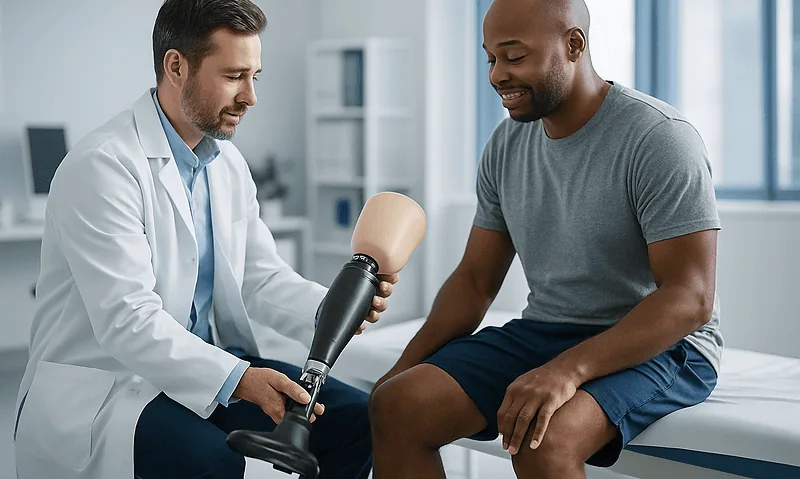
How a Prosthetic Limb Is Designed and Fitted: Casting, Gait Analysis and Adjustments
The prosthetic fitting process usually begins once the surgical wound has healed and swelling has settled. A prosthetist captures the shape of the residual…

How Do You Get Used to a Prosthesis? Wearing Schedules, Skin Checks and Early Training
Getting used to a prosthetic leg is gradual and supervised. Most rehabilitation programs begin with short wearing sessions of an hour or two, a…
Walking, Cycling, Massage, Chiropractic: What Helps Sciatica
Yes, walking is generally good for sciatica. Gentle, regular movement keeps the spine and hips mobile, eases muscle guarding, and is recommended by national…

The First Neurological Rehabilitation Assessment: What the Team Measures and Why It Sets Goals
A neurological rehabilitation assessment is the structured first evaluation a rehabilitation team makes after a stroke, brain or spinal cord injury, or a progressive…

What a Neurological Rehabilitation Program Includes: Movement, Speech, Swallowing and Thinking
A neurological rehabilitation program is coordinated therapy for people whose brain, spinal cord or nerves have been injured by stroke, trauma, multiple sclerosis, Parkinson's…

How Much Does Physical Therapy Cost? Session Pricing Explained
A single private physical therapy session typically costs EUR 30–130 in our guide range for international patients, compared with roughly GBP 45–120 at private…