

Protein in Urine and Kidney Function Tests in Pregnancy Nephropathy: What Each Result Guides
Key Takeaways
- A urine dipstick reacts mainly to albumin and is skewed by how concentrated the sample is, which is why a trace reading is confirmed with a laboratory protein-to-creatinine ratio or a 24-hour collection before it changes any plan.
- The widely used threshold for significant proteinuria in pregnancy on a 24-hour collection is 300 milligrams of protein or more, set higher than the general adult threshold because healthy pregnancy raises kidney filtration.
- Preeclampsia is defined by the NHS as blood pressure of 140/90 or higher plus significant protein in the urine, usually after 20 weeks; protein before 20 weeks points toward infection or pre-existing kidney disease instead.
- Serum creatinine normally falls during pregnancy, so a value inside the standard laboratory range can already represent a decline; eGFR calculations are not validated in pregnancy and clinicians compare creatinine with your own earlier readings.
- Protein in urine cannot cause a positive home pregnancy test, which detects the placental hormone hCG with a specific antibody reaction that dietary or urinary protein does not trigger.
- Mild pre-eclampsia affects up to 6% of pregnancies and severe disease roughly 1–2%, according to the NHS, and many people with confirmed disease feel completely well, which is why routine urine and blood pressure checks continue through pregnancy and after birth.
Protein in urine pregnancy tests start with a dipstick at routine visits; a positive result is usually rechecked with a protein-to-creatinine ratio or a 24-hour urine collection to confirm true proteinuria. Combined with blood pressure and kidney blood tests such as creatinine, the results help clinicians distinguish harmless trace protein from preeclampsia or existing kidney disease and decide how closely to monitor the pregnancy.
The midwife holds the strip up to the light, squints, and says one word: “trace.” Then she writes something in the notes and moves on to the heartbeat. Later, in the car park, the word is still there. Trace of what? Is a trace a little or a lot? Should someone have said more?
Most people who hear that word in a prenatal clinic will never think about it again, because protein in urine pregnancy tests turn up small, meaningless amounts all the time. A smaller group will be asked to give another sample, or to carry a large plastic container home for a full day, or to have blood drawn the same afternoon. For them, the question changes from “what is a trace” to “what does each of these results actually decide.”
That is the question this article answers, test by test and number by number, in the order clinicians usually work through them.
How protein in urine pregnancy tests actually work
Healthy kidneys behave like a very fine sieve. Blood passes through millions of tiny filters called glomeruli, which let water and small waste molecules through into the urine while holding back cells and larger proteins such as albumin. When protein appears in urine in more than tiny amounts, it usually means the sieve is leaking, the tubules that normally reabsorb small proteins are overwhelmed, or something downstream (an infection, blood, vaginal discharge) has contaminated the sample.
The first test almost everyone meets is the dipstick: a paper strip with a chemical pad that changes color in proportion to the albumin present. According to MedlinePlus, results are reported as negative, trace, or graded 1+ to 4+, and the strip reacts mainly to albumin rather than every type of protein. It is quick, cheap and reasonably good at catching large leaks. It is far less reliable at the low end, where hydration alone can push a result up or down: concentrated morning urine looks worse than the same protein diluted after a glass of water.
That is why a dipstick is a screening step, not a diagnosis. NHS guidance describes the routine pattern: urine is checked at antenatal appointments, and if protein is found, a further sample is sent to the laboratory to measure how much is really there. The two confirmatory tests, a protein-to-creatinine ratio on a single sample and a timed 24-hour collection, both correct for how concentrated the urine is, which the strip cannot do.
Everything else in the pathway hangs off that distinction between a screen and a measurement. A colored pad raises a question. A laboratory number, read alongside blood pressure and blood tests, begins to answer it.
Why would I have protein in my urine when pregnant?
Pregnancy itself changes how the kidneys work. Blood volume rises, the heart pumps more, and the kidneys filter noticeably more blood every minute than they did before conception. A little more protein slips through as a result, which is why the threshold for “abnormal” protein in pregnancy is set higher than the level Cleveland Clinic cites for the general adult population. A small amount is expected and not a sign of disease.

Beyond that physiological rise, the common explanations fall into a few groups:
- Contaminated or concentrated samples. Vaginal discharge, which increases in pregnancy, can add protein to a mid-stream sample. Dehydration concentrates whatever protein is present. Both give a positive strip without any kidney problem.
- Urinary tract infection. Infection inflames the lining of the bladder and tubes, and white blood cells and bacteria carry protein with them. The same strip often shows leukocytes or nitrites alongside protein, and a culture settles it.
- Preeclampsia. This is the diagnosis clinicians are most keen not to miss. The NHS describes it as high blood pressure plus protein in urine, usually appearing after 20 weeks, and estimates that mild forms affect up to 6% of pregnancies.
- Kidney disease that predates pregnancy. Diabetes-related kidney damage, lupus nephritis, chronic glomerular disease or reflux scarring can all leak protein before the first prenatal visit. Sometimes pregnancy is simply the first time anyone has looked.
- Transient causes. Fever, strenuous exertion and prolonged standing can produce short-lived protein leaks in anyone, pregnant or not.
The order in which a clinician considers these depends on gestation, blood pressure, symptoms and history. A single trace at 12 weeks with normal pressure is a different conversation from 2+ protein at 34 weeks with a headache. The same strip color can sit at opposite ends of the worry scale.
What does pee look like with high protein, and what does trace protein mean?
People ask this question hoping for an early-warning sign they can watch for at home. The honest answer is disappointing: most urine containing abnormal protein looks entirely ordinary. Color is driven by hydration and pigments, not protein content. Mayo Clinic notes that persistently foamy or frothy urine can be a sign of heavy protein loss, because albumin lowers surface tension in the same way soap does, but foam also appears with a fast stream, a clean bowl or certain cleaning products. Its absence rules nothing out and its presence proves nothing.
Cloudiness is more often infection or crystals. Dark urine is usually dehydration or bile pigments. Pink or brown urine points to blood, which matters in its own right and can also carry protein into the sample. None of these are reliable substitutes for a test strip, which is why routine antenatal checks rely on the strip rather than on what anyone sees.
Then there is “trace,” the word from the clinic car park. On a dipstick it is the faintest positive reading, sitting below 1+. In a healthy pregnancy it is common, frequently caused by discharge or concentrated urine, and clinicians typically respond by rechecking at the next visit or asking for a cleaner mid-stream sample rather than by ordering a full kidney work-up. NHS guidance on pre-eclampsia frames the diagnosis around laboratory-confirmed protein together with raised blood pressure, not around an isolated trace.
Where a trace does change the plan is context. If blood pressure is also up, if there is swelling of the face or hands, or if the same trace has appeared at three visits running, the trace becomes the reason for a proper measurement. Protein in urine pregnancy tests are read as a series, not as single snapshots, and a trend across weeks carries more information than any one strip.
Protein creatinine ratio pregnancy: what the number tells your team
The protein-to-creatinine ratio, often written PCR or uPCR, is now the laboratory test most clinics reach for after a positive strip. It works on an elegant idea. Creatinine is a waste product of muscle that the kidneys excrete at a fairly steady rate through the day. If the lab measures both protein and creatinine in a single sample and divides one by the other, the ratio cancels out how dilute or concentrated the urine happened to be. A glass of water before the appointment no longer skews the answer.
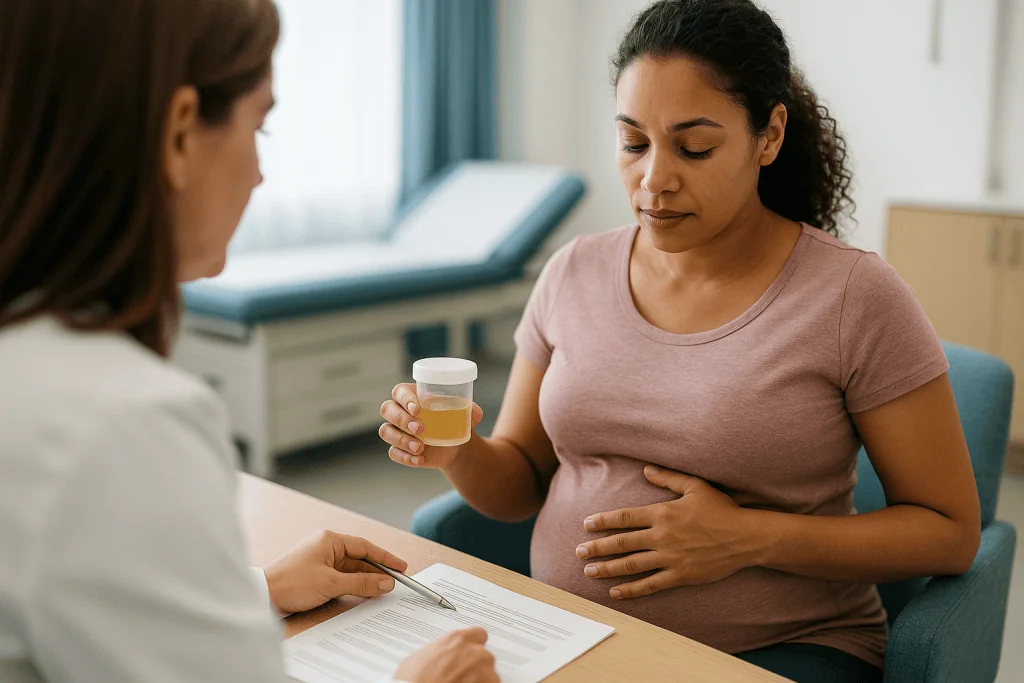
Because the ratio comes from one sample, results are usually available in the same timeframe as any routine urine chemistry, which makes it practical for same-day decision-making in a clinic or maternity assessment unit. NHS diagnostic guidance for pre-eclampsia lists this ratio as one of the ways protein in the urine is confirmed after a dipstick.
Laboratories report the ratio in different units depending on country, so the number on your result may look nothing like a number a friend was given elsewhere. Some report milligrams of protein per gram of creatinine, others milligrams per millimole. The interpretation is the same: the report will state the laboratory’s threshold for significant proteinuria in pregnancy, and the clinician reads your value against that line.
A ratio below the threshold with normal blood pressure generally sends people back to routine care with a repeat check planned. A ratio above it does not, on its own, diagnose preeclampsia; it confirms that the protein is real and quantifies roughly how much is leaking. That confirmed number then gets placed next to blood pressure, kidney blood tests, liver tests, platelet count and the baby’s growth. Some clinicians still order a 24-hour collection when the ratio sits near the threshold, when the pattern is unusual, or when pre-existing kidney disease makes precise tracking over time worthwhile. The ratio answers “is this significant”; the longer collection is used when “exactly how much, and is it changing” matters.
24 hour urine test preeclampsia: what happens and how long results take
The 24-hour collection is the older reference method and it still has a place. You are given a large container, sometimes with a preservative already inside, and asked to start the clock with an empty bladder: that first morning urine is discarded and its time noted. Every drop after that, for the next full day, goes into the container, including the sample passed at the same time the following morning. The container usually needs to stay cool, so a bag in the refrigerator or a cool box becomes part of the routine. MedlinePlus describes this method and the practical steps in its guidance on protein in urine testing.
The value of the method is completeness. Because it captures total protein over a natural day, it smooths out the swings caused by activity, posture and meals. Its weakness is people, not chemistry. A single missed void, a spilled container or a collection that runs 20 hours instead of 24 will underestimate the true figure, and clinics see incomplete collections often enough that many now prefer the spot ratio for routine confirmation.
On timing, the first part is fixed: the collection itself takes a full day, so no result can exist before the container is handed back. After that, turnaround depends on the laboratory and on how urgently the sample is flagged. Samples from a maternity assessment unit where preeclampsia is suspected are generally processed faster than routine outpatient work. The only honest answer to “how long” is to ask the team who ordered it, because they know their laboratory’s schedule and will have decided whether you should wait at home or stay for monitoring.
The threshold widely used to define significant proteinuria in pregnancy on a 24-hour collection is 300 milligrams of protein or more, a figure Mayo Clinic cites in its account of how preeclampsia is diagnosed. Below that line, protein is usually considered non-significant; above it, the kidney involvement is real and the rest of the assessment decides what it means.
Kidney function blood tests in pregnancy: creatinine, urea and uric acid
Urine tells you what is leaking. Blood tells you how well the filter is still working. The two are read together, and a common misunderstanding is that a normal creatinine means the kidneys are fine.
Serum creatinine is the standard marker. Since the kidneys filter more blood in a healthy pregnancy, creatinine normally falls below the person’s pre-pregnancy level. A value that sits comfortably inside the laboratory’s general adult range can therefore already represent a decline for a pregnant person, because the range was built from people who are not pregnant. Obstetric and renal teams read creatinine against pregnancy-specific expectations and, crucially, against any earlier result from the same person. A rising trend across weeks matters more than whether a single figure is flagged.
The estimated glomerular filtration rate, or eGFR, is the calculation most people see on kidney reports outside pregnancy. It is not validated during pregnancy, because the equations assume a body composition and fluid balance that pregnancy changes. If your report prints an eGFR, your clinician will likely set it aside and rely on creatinine itself.
Urea, a nitrogen waste product, also falls in normal pregnancy and rises when filtration drops or when the body is dehydrated. Uric acid tends to climb in preeclampsia, and while it is not diagnostic on its own, a rising level alongside rising blood pressure and protein adds weight to the picture. Electrolytes such as sodium and potassium are checked because disturbed kidney handling can shift them.
When preeclampsia is the concern, the blood panel usually widens beyond the kidney. Liver enzymes and platelet count are included because the condition can affect the liver and clotting, and the NHS lists blood tests for liver and kidney function among the steps used to assess suspected pre-eclampsia. A protein leak with normal creatinine, normal liver tests and normal platelets is a very different situation from the same leak with several of those moving in the wrong direction.
Which result guides which decision: a summary table
Every test in this pathway exists to answer a specific question. Lining them up makes clear why a clinician may order two or three in the same afternoon and treat them as pieces of one assessment rather than as duplicates.
| Test | What it measures | Question it answers | What the result typically guides |
|---|---|---|---|
| Urine dipstick | Approximate albumin by color change | Is there any protein worth measuring? | Negative: routine care. Trace or 1+: recheck or send for a ratio. 2+ or higher: same-day confirmation and blood pressure review. |
| Protein-to-creatinine ratio | Protein corrected for urine concentration, single sample | Is the proteinuria real and significant? | Confirms or rules out significant protein quickly; a positive result triggers blood tests and closer blood pressure monitoring. |
| 24-hour urine protein | Total protein excreted over a full day | Exactly how much is leaking, and is it changing? | Used near the threshold, in pre-existing kidney disease, or to track trend over time. |
| Serum creatinine and urea | Filtering capacity of the kidneys | Is kidney function holding, or declining? | A rise from the person’s own baseline raises urgency and may change where and how often monitoring happens. |
| Uric acid, liver enzymes, platelets | Wider organ involvement | Is this preeclampsia affecting more than the kidneys? | Abnormal results shift the assessment toward more severe disease and closer surveillance of parent and baby. |
| Urine culture | Bacteria in the sample | Could infection explain the protein? | A positive culture is treated as infection first, then protein is rechecked once cleared. |
The table is a guide to logic, not a set of rules. Blood pressure, gestational age, symptoms and the baby’s growth scan sit alongside every row, and the treating team weighs all of it together. Two people with identical laboratory numbers can be, quite correctly, managed differently.
When protein in urine during pregnancy points to preeclampsia
Preeclampsia is a disorder of the placenta’s blood supply that shows up in the parent’s blood vessels. The lining of vessels throughout the body becomes leaky and constricted; in the kidney, the filters let protein through, and everywhere else blood pressure climbs. The NHS gives the working definition most clinics still use: blood pressure of 140/90 or higher together with significant protein in the urine, usually developing after 20 weeks or soon after birth.
Two features of that definition shape how results are read. First, the timing. Protein appearing before 20 weeks is unlikely to be preeclampsia and prompts a search for infection or pre-existing kidney disease instead. Second, the pairing. Protein alone, with normal blood pressure, does not make the diagnosis; nor does raised blood pressure with clean urine, which is classed as gestational hypertension and monitored differently. Some clinical guidelines now also recognise preeclampsia without proteinuria when blood pressure rises alongside other organ signs, such as abnormal liver or platelet results, which is why the blood panel is ordered even when the urine result is borderline.
Symptoms can add weight but are notoriously unreliable in both directions. Mayo Clinic lists severe headache, visual disturbances, pain under the right ribs, sudden swelling of the face and hands, and shortness of breath as features that can accompany the condition. Many people with laboratory-confirmed preeclampsia feel completely well, which is the entire reason routine antenatal urine and blood pressure checks exist. Waiting for symptoms is not a monitoring strategy.
Severity matters as much as presence. The NHS notes that severe pre-eclampsia develops in roughly 1–2% of pregnancies, a much smaller group than the up to 6% with milder disease. Where a person sits on that spectrum, judged from blood pressure level, the degree of protein, kidney and liver blood results and the baby’s wellbeing, drives everything that follows: how often they are seen, whether they are admitted, and how the timing of birth is discussed.
Who gets the full work-up right away, and who is asked to repeat a sample first
Not everyone with a positive strip walks the same path, and the differences are deliberate rather than inconsistent. Triage rests on a handful of factors that clinicians assess in the first few minutes.
People usually moved straight to same-day confirmation and blood tests include those with a strip reading of 2+ or higher, anyone whose blood pressure is at or above the 140/90 line the NHS cites, anyone with symptoms suggestive of preeclampsia, and anyone past 20 weeks with a new positive who previously had clean urine. Known risk factors raise the urgency further. The NHS lists previous pre-eclampsia, chronic high blood pressure, diabetes, kidney disease and autoimmune conditions such as lupus among the stronger ones, with a first pregnancy, age over 40, a long gap between pregnancies, twins and a high body mass index among the more moderate contributors.
People commonly asked to repeat a sample first are those with a trace or 1+ reading, normal blood pressure, no symptoms and no history that raises the stakes. The request often comes with instructions: a clean mid-stream sample, ideally not first thing in the morning, collected after separating the labia to reduce contamination from discharge. If the repeat is clean, the episode is usually closed. If it is positive again, the ratio is sent.
A third group sits between: people whose strip is positive and whose pressure is normal but who have a background condition, such as pre-existing diabetes, that makes protein more meaningful. Many maternity services send the ratio for this group on the first positive rather than waiting.
Being asked to wait and repeat is not a dismissal. It reflects the known false-positive rate of the strip at low readings and avoids subjecting healthy pregnancies to unnecessary testing. The escalation criteria are written down in local protocols precisely so the decision does not depend on who happens to be on duty.
Pregnancy nephropathy: when the kidneys were already the story before pregnancy
Nephropathy simply means kidney disease, and pregnancy in someone with existing kidney disease is a specialised situation in which protein in urine pregnancy tests are read against a very different baseline. Diabetic nephropathy, lupus nephritis, IgA nephropathy, reflux scarring and inherited conditions such as polycystic kidney disease can all leak protein long before conception. For these pregnancies the question is rarely “is there protein” but “how does today’s protein compare with the level before pregnancy, and is filtration keeping pace with the demands of gestation.”
Several things change in practice. The first prenatal visit typically includes a full baseline: ratio or 24-hour protein, creatinine, urea, electrolytes and blood pressure, so that later changes can be measured rather than guessed. Monitoring is more frequent, often shared between obstetric and renal teams. Blood pressure targets may be tighter than in a low-risk pregnancy, because sustained hypertension accelerates kidney damage. Aspirin is commonly offered from early pregnancy to people at higher risk of preeclampsia, a group that includes those with kidney disease; the NHS describes this preventive use, and the decision and any specifics belong to the prescribing clinician.
Distinguishing a flare of the underlying disease from superimposed preeclampsia is the central diagnostic challenge, and it is genuinely difficult. Both raise protein and blood pressure. Clues that point toward preeclampsia include a sharp rise after 20 weeks from a stable earlier trend, new liver or platelet abnormalities, rising uric acid, and changes in the baby’s growth or blood flow on ultrasound. Clues toward a disease flare include features specific to that condition, such as lupus activity elsewhere in the body or blood cells in the urine.
People with kidney disease sometimes read their first pregnancy protein result and assume the worst. A level similar to the pre-pregnancy baseline, with stable creatinine, is generally read as reassuring. The trend is what the renal and obstetric teams are watching, and they will say what pattern would change the plan.
What the following days and weeks usually look like after an abnormal result
The pathway after confirmed proteinuria has a recognisable shape, even though the pace differs from person to person.
In the first hours, if preeclampsia is suspected, expect blood pressure measured more than once, a laboratory ratio sent, and blood taken for kidney, liver and platelet tests. Many people are seen in a maternity assessment unit for this rather than in the routine clinic, because results can be reviewed together and a decision made the same day about going home or staying. The baby’s heartbeat is usually monitored during the visit.
Over the first week or two after a diagnosis of milder preeclampsia, monitoring becomes a rhythm: blood pressure checks several times a week, sometimes at home with a validated cuff and a diary, repeat blood tests at intervals the team sets, and repeat urine testing to see whether protein is stable or rising. Growth scans are often scheduled more frequently to check the baby’s size and the blood flow through the umbilical cord, because the same placental problem that causes protein in the parent can restrict growth in the baby. The NHS describes this pattern of regular checks and hospital assessment as the mainstay of managing pre-eclampsia before birth.
When results are more concerning, the timeline compresses. Admission for daily or continuous monitoring, medicines to bring blood pressure down, and conversations about the timing of birth may all happen within days. The only definitive resolution of preeclampsia is delivery of the placenta, so the discussion becomes a balance between the risks of continuing the pregnancy and the risks of an earlier birth, which shift week by week with gestation.
After birth, protein and blood pressure usually improve over days to weeks, though the NHS notes that pre-eclampsia can also first appear or worsen in the days after delivery, so postnatal checks continue. Anyone whose protein persists well beyond the postnatal period is usually referred for kidney follow-up, since that pattern suggests a kidney issue that was unmasked rather than caused by pregnancy.
How results shape treatment, without the decision leaving your team
Nothing in a urine or blood result treats anything by itself; results set the options on the table. Understanding the mechanisms behind those options makes the conversations that follow easier to take part in.
Blood pressure control is the first lever. Sustained high pressure damages the lining of blood vessels in the kidney, brain and placenta, and lowering it protects the parent from stroke and organ injury while the pregnancy continues. Several classes of antihypertensive medicine have long track records in pregnancy; they work by relaxing vessel walls or reducing the signals that constrict them. Which class, when to start, and any adjustment are decisions for the prescribing clinician, informed by the pattern of pressure readings rather than by the protein level alone. Certain antihypertensive classes used outside pregnancy are avoided during it because of effects on the baby’s kidneys, which is one reason people with pre-existing hypertension are reviewed early.
Magnesium sulfate, given in hospital in severe disease, works on the nervous system to reduce the risk of seizures, the complication that turns preeclampsia into eclampsia. Corticosteroids may be offered when an early birth is likely, because they accelerate maturation of the baby’s lungs. Aspirin, mentioned earlier, is a preventive measure for those at higher risk rather than a treatment for established disease, acting on the platelet pathway that contributes to placental vessel problems.
The largest decision, timing of birth, is where results carry the most weight. Rising creatinine, falling platelets, worsening liver tests, uncontrolled pressure, or signs that the baby is struggling all push the balance toward earlier delivery. Stable results at an earlier gestation push toward continuing with close monitoring. Mayo Clinic frames this as weighing the severity of the condition against the baby’s maturity, and no protein figure decides it in isolation.
Where protein comes from pre-existing kidney disease rather than preeclampsia, the treatment logic shifts toward protecting kidney function across the whole pregnancy and beyond, with the renal team leading on medicine choices that are compatible with pregnancy.
What people often get wrong about protein in urine pregnancy tests
Online forums are full of good intentions and a few durable misconceptions. Correcting them removes a surprising amount of anxiety.
“Protein in urine can make a pregnancy test positive.” It cannot. Home pregnancy tests detect human chorionic gonadotropin, a hormone made by the placenta, using antibodies that bind that hormone specifically. Protein in the sample does not trigger that reaction. A positive pregnancy test means hCG is present; protein in urine is a separate question tested with a separate strip.
“Eating too much protein causes it.” Dietary protein is digested into amino acids and does not pass into the urine as intact protein. Proteinuria reflects the kidney filter, not the dinner plate. Cutting protein from the diet will not clear a positive result and can leave a pregnant person short of what the pregnancy needs.
“Drinking lots of water fixes the result.” Water dilutes the urine and can turn a trace dipstick negative, which is exactly why the ratio and 24-hour tests were designed to correct for concentration. Diluting a sample hides information; it does not change what the kidneys are doing.
“If I feel fine, it cannot be preeclampsia.” Many people with confirmed disease have no symptoms, which is the whole rationale for routine screening. Feeling well is reassuring but not diagnostic.
“Trace means the start of preeclampsia.” A trace with normal blood pressure is common in healthy pregnancies and usually resolves or stays flat. It becomes meaningful only in combination with pressure, gestation and trend.
“A normal creatinine means my kidneys are definitely fine.” Because creatinine normally drops in pregnancy, a value inside the standard laboratory range can already represent a decline. The comparison that matters is with your own earlier readings.
“Swelling proves something is wrong.” Ankle swelling is nearly universal in late pregnancy. Sudden swelling of the face and hands is the pattern Mayo Clinic flags as worth reporting; gradual ankle swelling by itself is not.
Questions to ask your care team
The most useful thing to bring to an appointment about protein results is a short list of specific questions. Vague worry gets vague reassurance; precise questions get numbers and plans. These are the ones that tend to unlock the most information.
- Was my protein result confirmed with a laboratory test, or is it a dipstick reading so far? If it was confirmed, which test was used and what is the laboratory’s threshold on my report?
- What was my blood pressure at this visit, and how does it compare with my earlier readings in this pregnancy?
- Have my kidney blood tests been done, and how does my creatinine compare with any result from before pregnancy or earlier in this one?
- Are my liver tests and platelet count normal, and are you planning to repeat them?
- Do you consider this to be preeclampsia, gestational hypertension, a kidney issue that predates pregnancy, or not yet clear? What would change your view?
- How often will I be seen from here, and will any monitoring happen at home? If I am asked to measure blood pressure myself, what readings should prompt a call?
- Are extra growth scans planned for the baby, and what are they looking for?
- Under what circumstances would you recommend admission, and under what circumstances would you start discussing the timing of birth?
- Is there anything about my history, such as diabetes, previous preeclampsia or kidney disease, that changes how my results are read?
- Who do I contact, day or night, if I develop new symptoms, and is there a direct number for the maternity assessment unit?
- After the birth, when will my protein and blood pressure be rechecked, and who follows up if they have not returned to normal?
Writing the answers down, or asking for a printed copy of results, helps when the same questions come up at the next visit. Trends are what the team is tracking, and having your own record makes it easier to see them too.
When to call your doctor
Because preeclampsia can progress quickly and often without warning, maternity services expect and welcome calls between appointments. Contact your midwife, doctor or maternity assessment unit the same day, or go to emergency care, if you develop any of the following, all of which the NHS and Mayo Clinic identify as warning signs of worsening pre-eclampsia:
- A severe headache that does not ease with rest or simple measures, particularly if it is unlike your usual headaches.
- Visual changes: blurring, flashing lights, spots or a feeling that light hurts your eyes.
- Pain just below the ribs, especially on the right side, or pain in the upper abdomen that is new.
- Sudden swelling of the face, hands or around the eyes, as opposed to gradual ankle swelling.
- Nausea or vomiting that begins in the second half of pregnancy, when early pregnancy sickness would have settled.
- Shortness of breath, or a home blood pressure reading at or above the level your team told you to report.
- Feeling generally and suddenly unwell in a way you cannot explain.
Call immediately, or use emergency services, for a seizure, chest pain, difficulty breathing, confusion, or a reduction in the baby’s movements, since a placenta under strain can affect the baby before the parent feels ill. Reduced movements should never be left until morning.
These signs matter after birth as well as before it. The NHS notes that pre-eclampsia can develop or worsen in the days following delivery, so the same symptoms in the first weeks postnatally warrant the same urgency. If you have been discharged with a plan for blood pressure or kidney follow-up and the appointment has not materialised, chase it.
None of the tests described in this article require you to interpret them alone. Every decision about monitoring, medicines and the timing of birth sits with the team caring for you, and calling them with a concern that turns out to be nothing is a normal, expected part of how this condition is kept safe.
Frequently asked questions
Can protein in urine cause a positive pregnancy test?
No. Home pregnancy tests detect human chorionic gonadotropin, a hormone produced by the placenta, using antibodies that bind only that hormone. Protein in the urine does not react with those antibodies, so it cannot turn a test positive. A positive pregnancy test means hCG is present. Protein is measured on a separate strip and answers an unrelated question about kidney filtering.
What does pee look like with high protein?
Usually completely normal. Color depends on hydration and pigments, not protein. Mayo Clinic notes that persistently foamy or frothy urine can accompany heavy protein loss because albumin lowers surface tension, but foam also comes from a fast stream or cleaning products. Cloudiness more often indicates infection, and pink or brown urine suggests blood. Only a test can confirm protein.
Why would I have protein in my urine when pregnant?
The common causes are a contaminated or concentrated sample, urinary tract infection, preeclampsia, and kidney disease that predates the pregnancy. Healthy pregnancy also raises kidney filtration slightly, so a small amount is expected. Gestation, blood pressure, symptoms and history help clinicians decide which explanation fits, which is why the same strip result can lead to very different next steps.
How long does it take to get results from a 24 hour urine test for preeclampsia?
The collection itself takes a full day, so no result can exist before the container is returned. After that, turnaround depends on the laboratory and how urgently the sample is flagged; suspected preeclampsia samples are generally processed faster than routine work. Ask the team who ordered the test, since they know their laboratory’s schedule and will have decided whether you should wait at home or be monitored.
Is trace protein in urine when pregnant something to worry about?
On its own, usually not. Trace is the faintest positive dipstick reading and is common in healthy pregnancies, often caused by vaginal discharge or concentrated urine. Clinicians typically recheck at the next visit or request a cleaner sample. It becomes meaningful when paired with raised blood pressure, symptoms, or a trend across several visits, at which point a laboratory ratio is sent.
What is a protein creatinine ratio in pregnancy and why is it used instead of a 24-hour test?
It is a single-sample laboratory test that divides urine protein by urine creatinine, cancelling out how dilute the sample is. Results arrive far sooner than a 24-hour collection and are not undermined by missed voids, so many services use it to confirm significant proteinuria on the same day. The 24-hour test is kept for borderline results or for tracking pre-existing kidney disease over time.
Does protein in urine during pregnancy always mean preeclampsia?
No. Preeclampsia requires significant protein together with blood pressure at or above 140/90, usually after 20 weeks, according to the NHS. Protein with normal pressure may reflect contamination, infection or a kidney condition that predates the pregnancy. Conversely, raised pressure with clean urine is classed as gestational hypertension. The combination and the timing are what drive the diagnosis.
Which kidney function tests are done in pregnancy and what do they show?
Serum creatinine and urea measure how well the kidneys are filtering, uric acid tends to rise in preeclampsia, and electrolytes show whether kidney handling of salts is disturbed. Because creatinine normally falls in pregnancy, clinicians compare your value with earlier readings rather than a standard range. Liver enzymes and platelets are usually added to check for wider organ involvement.
Can I do anything myself to lower protein in my urine while pregnant?
Not in a way that changes what the kidneys are doing. Drinking extra water dilutes the sample and can hide protein rather than remove it, and cutting dietary protein has no effect because digested protein does not pass into urine intact. The helpful steps are attending every check, reporting warning symptoms promptly, and following the monitoring and medicine plan your team sets.
Will protein in my urine go away after the baby is born?
When the cause is preeclampsia, protein and blood pressure usually improve over days to weeks after delivery of the placenta, though the NHS notes the condition can also appear or worsen in the days after birth, so postnatal checks continue. Protein that persists well beyond the postnatal period suggests a kidney issue that pregnancy unmasked, and referral for kidney follow-up is usual.
References
- NHS: Pre-eclampsia (overview, symptoms, causes and risk factors)
- NHS: Pre-eclampsia, diagnosis
- MedlinePlus: Protein in urine (laboratory test explanation)
- Cleveland Clinic: Proteinuria
This article is for general information only and is not a substitute for professional medical advice. Please consult a qualified doctor about your individual situation.

More from the Blog

Genetic Counseling Before Prenatal Genetic Diagnosis: What the Session Covers and Why
Genetic counseling before prenatal testing is a conversation with a trained specialist that reviews your family and pregnancy history, explains the difference between screening…

How Is Open vs Fetoscopic Fetal Surgery Chosen and What Does It Mean for Recovery?
Open fetal surgery and fetoscopic surgery are two ways of operating on a baby before birth. Open surgery works through an incision in the…

How Soon Can You Stand After an Epidural Delivery? Leg Sensation, Help and the Puncture Site
Most people can stand after an epidural delivery once full feeling and strength have returned to both legs, which commonly takes a few hours…

Which Prenatal Genetic Diagnosis Test Comes When? CVS vs Amniocentesis Timing and Sampling
Chorionic villus sampling (CVS) is usually offered earlier, from about 11 to 14 weeks of pregnancy, and samples placental tissue. Amniocentesis is usually offered…

After Fetal Surgery: Contraction Monitoring, Rest and the Weekly Checks Until Delivery
Recovery after fetal surgery means resting the uterus, not just the mother. For open procedures, expect a hospital stay of several days, medicines that…

Does Amniocentesis Hurt? What the Needle Feels Like and Whether Local Anesthetic Is Used
Amniocentesis is usually described as uncomfortable rather than painful. Most people feel a brief sting as a thin needle passes through the skin, then…