

Reproductive System Assessment as an International Patient: Sequencing Tests Into One Visit
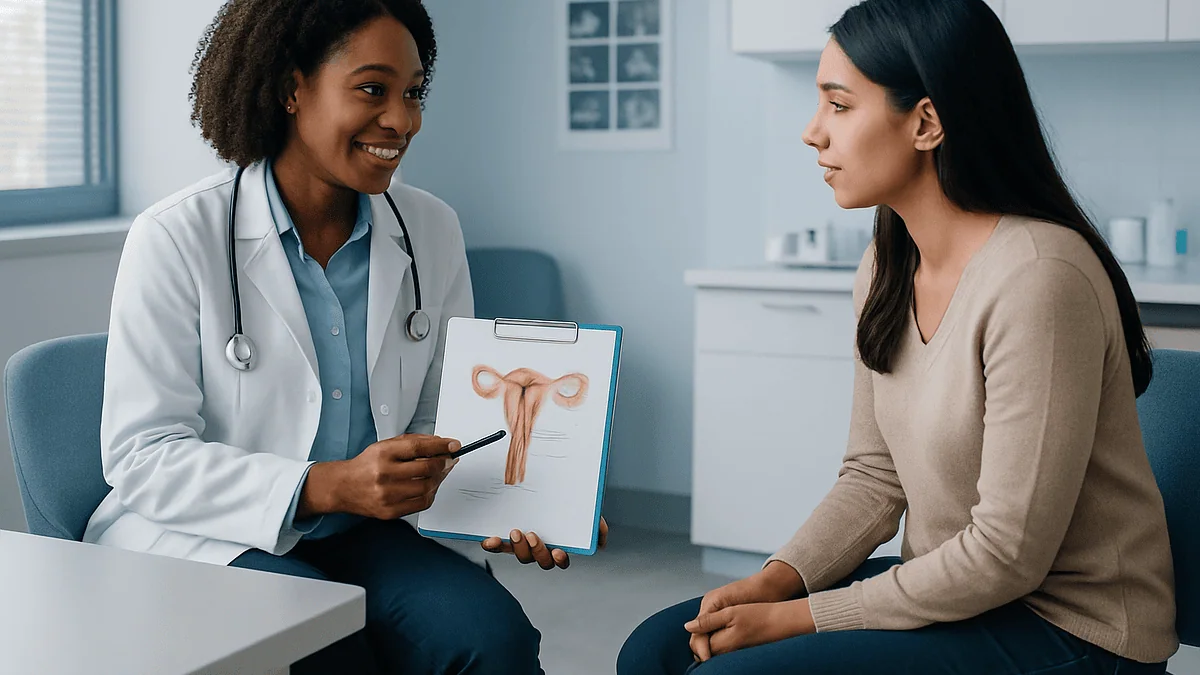
Key Takeaways
- Seven of the eight standard fertility tests cluster into roughly the first twelve days of a menstrual cycle, so a visit that opens on day 2 or 3 captures nearly everything in one stay.
- The mid-luteal progesterone test, taken about seven days before the expected period, is the one test that usually falls outside a single visit and is often done at a local laboratory at home.
- The CDC reports a male factor in about 35 percent of couples with infertility, and as the sole cause in about 8 percent, so a semen analysis with 2–7 days' abstinence belongs in every itinerary.
- A hysterosalpingogram is timed after bleeding stops and before ovulation, partly to avoid exposing a very early pregnancy to X-rays and contrast.
- AMH and FSH estimate how many eggs remain, not their quality, and neither predicts natural conception on its own.
- Roughly a quarter of couples investigated receive a label of unexplained infertility, which describes the limits of current tests rather than a confirmed problem.
A reproductive health check for an international patient can usually be fitted into one trip when it is sequenced around the menstrual cycle: early-cycle hormone blood tests and a pelvic ultrasound in the first few days of bleeding, a tube check after bleeding stops and before ovulation, and a semen analysis on any day. The treating team reviews results, and some tests may still need repeating later.
The folder on the kitchen table holds three years of a life: two semen analysis reports in different languages, a scan from a hospital that has since changed its name, and a calendar with small pencil ticks on the first day of every period. Across the table, a passport. The question is not whether to be assessed. The question is how to make one trip count.
A reproductive health check for an international patient is less a single appointment than a short, carefully ordered series of them. The ovaries do not care about flight schedules. Some tests only make sense in the first days of a cycle, one must happen before ovulation, and the one test that can be done any day is the one people most often forget to prepare for.
What follows is the sequencing logic clinicians use, so that the days you spend away from home line up with the days your body is actually ready to be measured.
What does a reproductive health check for an international patient actually involve?
Strip away the paperwork and the assessment itself is the same one offered to anyone, anywhere. The World Health Organization defines infertility as failing to conceive after 12 months or more of regular unprotected intercourse, and the work-up that follows is built to answer four questions: are eggs being released, can sperm reach them, is the uterus a place where a pregnancy can implant, and is anything in the general health picture getting in the way.
According to the NHS and Mayo Clinic, a standard evaluation includes a detailed history for both partners, a physical examination, hormone blood tests, a pelvic ultrasound, a test of whether the fallopian tubes are open, and a semen analysis. The fallopian tubes are the two narrow channels that carry an egg from the ovary toward the uterus, and the semen analysis is a laboratory measurement of sperm number, movement and shape.
What changes for an international patient is logistics, not medicine. Three things carry extra weight:
- Timing. The visit window has to be matched to a cycle day before anything else is arranged.
- Records. Earlier results need to arrive in a form the new team can read, with units and reference ranges, so tests are not repeated for no reason.
- Follow-up. Results come back over days, so the plan must say who explains them, how, and who acts on them once you are home.
Done well, the assessment is a sequence rather than a scramble. The sections that follow walk through that sequence in the order the body sets it, then turn to the part the top search results tend to skip: what the numbers can and cannot tell you, and how people cope while they wait for them.
Why cycle timing decides which fertility tests fit in one visit
Day 1 of a menstrual cycle is the first day of full bleeding. Clinicians count from there, and nearly every test for the partner who ovulates is pinned to that count.
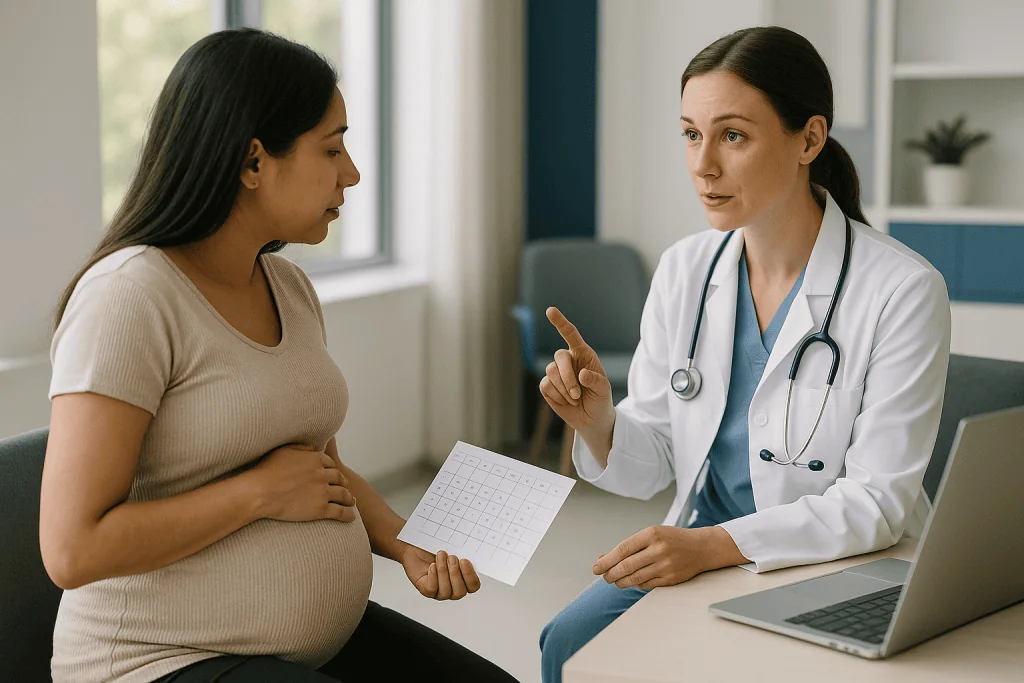
The early days, roughly day 2 to day 5, are when the pituitary gland is sending its baseline signal to the ovaries. Follicle-stimulating hormone, usually shortened to FSH, is the signal that recruits a group of small follicles each month, and measuring it later in the cycle gives a misleading reading. The NHS lists this early-cycle blood test as a core part of the work-up. The same days are ideal for a pelvic ultrasound, because the ovaries are quiet and the small resting follicles can be counted cleanly.
Once bleeding has stopped and before ovulation, usually in the second week, comes the tube check. Cleveland Clinic explains that a hysterosalpingogram is scheduled in this window partly so the test cannot disturb a very early pregnancy and partly because the uterine lining is thin and easier to image.
Then there is the test that sits on the far side of ovulation. A mid-luteal progesterone blood test, taken about seven days before the next period is expected, confirms that an egg was actually released. The NHS describes this as the standard way to check ovulation. On a 28-day cycle that is around day 21, which is why it rarely fits a one-week stay.
Put together, the practical consequence is clear. A single visit that opens on day 2 or 3 and runs through about day 12 can capture hormones, ultrasound, the tube check and a semen analysis. The progesterone test is the one most teams suggest doing at home, before or after the trip, through a local laboratory. Building the itinerary from the cycle outward, rather than from the flight inward, is the single decision that saves a repeat journey.
Preparing before you arrive: records, language and a pre-visit call
The most valuable hour of the whole process often happens before anyone leaves home. A remote pre-visit consultation lets the team look at what already exists and decide what is genuinely missing.
Gather the following, and ask for each document to carry the laboratory’s reference range and the units used, because a hormone value without its range is close to meaningless:
- Any previous semen analyses, including the abstinence period noted at the time.
- Hormone results with the cycle day on which blood was taken.
- Ultrasound and X-ray reports, ideally with the images themselves rather than a summary.
- Operation notes for any pelvic, abdominal or testicular surgery.
- A current list of medicines and supplements, by generic name.
- Vaccination history, since some services check immunity status as part of pre-pregnancy care.
Translation matters more than people expect. A certified translation of key reports, or at minimum a clear English summary, prevents a normal result from being misread as abnormal. Ask whether an interpreter is available for the appointments themselves, and request one if either partner would prefer to speak in their own language about something this personal.
Two practical details decide whether tests can go ahead on arrival. First, the semen analysis requires 2–7 days of abstinence beforehand, a range Cleveland Clinic gives because shorter or longer gaps distort the count and motility. Second, several blood tests and the tube check depend on the exact cycle day, so a message to the team on day 1 of bleeding, before travel, lets them confirm the slots.
Mayo Clinic also notes that a fertility evaluation asks about sexual history, past infections, chemotherapy or radiation, and family history. Writing these down in advance spares you from reconstructing them under jet lag in a room with a stranger. It also makes the record you take home more useful to whoever treats you next.
A one-visit sequencing map: which test goes on which day
The table below shows how the standard tests described by the NHS, Mayo Clinic and Cleveland Clinic are usually distributed across a single stay. Cycle days are typical ranges, not rules; the treating team adjusts them to cycle length and to what earlier records already show.

| Test | Usual cycle timing | What it answers | Fits a one-visit plan? |
|---|---|---|---|
| FSH and estradiol blood test | Day 2–5 | Baseline ovarian signalling | Yes, if the visit opens early in the cycle |
| Anti-Müllerian hormone (AMH) | Any day | Estimate of remaining egg supply | Yes |
| Thyroid and prolactin tests | Any day | Hormone conditions that can disrupt ovulation | Yes |
| Transvaginal ultrasound with antral follicle count | Day 2–5 preferred | Ovaries, uterus, follicle numbers, cysts, fibroids | Yes |
| Hysterosalpingogram (HSG) | After bleeding stops, before ovulation | Whether the tubes are open; uterine cavity shape | Yes, usually in the second week |
| Semen analysis | Any day, after 2–7 days’ abstinence | Sperm count, movement, shape, volume | Yes |
| Chlamydia screening | Any day | Infection linked to tubal damage | Yes |
| Mid-luteal progesterone | About 7 days before the expected period | Whether ovulation occurred | Usually not; often done at home |
Read across the rows and a pattern appears. Seven of the eight tests cluster in roughly the first twelve days of a cycle, and most of them can share the same morning. The outlier is progesterone, which belongs to the second half of the cycle.
Teams generally handle that outlier in one of two ways. Either a local laboratory at home draws the sample on the right day and sends the result across, or, if someone has regular, predictable periods and an earlier progesterone result already on file, the team may decide it does not need repeating at all. Both choices belong to the treating clinician, who will weigh what the rest of the picture already shows.
Hormone and ovarian reserve blood tests: what they measure and what they cannot
Blood tests are the easiest part of the visit to schedule and the hardest part to interpret alone, which is why they generate the most anxiety in waiting rooms.
Ovarian reserve is a clinician’s term for an estimate of how many eggs remain in the ovaries. Mayo Clinic lists two common markers. Anti-Müllerian hormone, or AMH, is released by small developing follicles and can be measured on any day of the cycle. FSH, measured on day 2 to 5, rises when the ovaries need a stronger signal to respond. Taken together with the ultrasound follicle count described in the next section, they sketch quantity.
What they do not sketch is quality, and the distinction matters. A lower AMH indicates fewer eggs, not necessarily poorer eggs, and it does not by itself say whether someone will conceive. Mayo Clinic frames these tests as estimates that help plan care rather than verdicts.
Several other blood tests ride along on the same needle:
- Prolactin, a pituitary hormone that, when raised, can suppress ovulation.
- Thyroid-stimulating hormone, because both an underactive and an overactive thyroid can disturb cycles.
- Testosterone and related androgens, when the history or ultrasound suggests polycystic ovary syndrome, a common hormonal condition in which ovulation is irregular.
Infection screening fits here too. The NHS includes a chlamydia test in the standard work-up because this common bacterial infection often causes no symptoms yet can scar the fallopian tubes. Some services also check immunity to rubella, since infection in early pregnancy can harm a developing baby.
One honest point about international results: hormone assays differ between laboratories. A value that looks high against one range may be normal against another. This is exactly why the pre-visit request for reference ranges is not fussiness, and why the team may quietly repeat a test even when a prior result exists.
Pelvic ultrasound and the antral follicle count
The ultrasound is usually the first moment in the process when an abstract worry becomes a picture on a screen, and many people find that steadying.
A transvaginal ultrasound uses a slim probe placed in the vagina to image the uterus and ovaries at close range; the NHS and Mayo Clinic both list it as a routine step. It is typically done in the early days of the cycle, often on the same morning as the baseline blood tests, which is why a visit that starts on day 2 or 3 is so efficient.
Three things are being looked at:
- The antral follicle count. Antral follicles are the small, fluid-filled sacs visible on the ovaries early in a cycle, each holding an immature egg. Counting them gives a second estimate of ovarian reserve that complements AMH.
- The ovaries themselves. Cysts, the characteristic appearance of polycystic ovaries, and the particular cysts associated with endometriosis, a condition in which tissue similar to the uterine lining grows outside the uterus.
- The uterus. Fibroids, which are non-cancerous muscle growths, polyps in the lining, and the overall shape of the cavity.
Occasionally the team adds a saline infusion sonogram, sometimes called a sonohysterogram. A small amount of sterile fluid is introduced into the uterus during the scan so that the cavity outlines more clearly. Mayo Clinic describes this as a way to look for abnormalities that a plain ultrasound may miss. It is also timed to the first half of the cycle, so it can share the HSG window.
A normal scan is reassuring but not conclusive, and an abnormal finding is a starting point rather than an answer. A fibroid, for example, may or may not be relevant depending on size and position, a judgment the treating team makes alongside everything else. The scan report, with images, should go into the folder you take home.
Checking the tubes: hysterosalpingogram and its alternatives
Of all the tests in a single visit, the tube check is the one that most needs a fixed date, and the one people are most nervous about.
A hysterosalpingogram, or HSG, is an X-ray examination in which a contrast liquid is passed gently through the cervix into the uterus. Cleveland Clinic explains that as the liquid fills the cavity and spills out of the fallopian tubes, the images show whether the tubes are open and whether the uterine cavity has a normal outline. The test takes minutes, though the appointment is longer.
Timing is strict for two reasons. It is done after bleeding has finished so the images are clean, and before ovulation so there is no chance of exposing an early pregnancy to X-rays or contrast. Some teams ask for a pregnancy test on the day as a safeguard.
What it feels like, in plain terms: cramping similar to a period, sometimes sharp as the liquid passes through, usually settling within the hour. Light spotting for a day or two afterward is common. Cleveland Clinic lists the rarer risks as pelvic infection and an allergic reaction to the contrast. People with a known iodine contrast allergy or active pelvic infection are usually offered a different test.
Those alternatives exist and are worth asking about:
- HyCoSy, where an ultrasound-visible fluid replaces X-ray contrast, avoiding radiation entirely.
- Laparoscopy with dye, a keyhole operation under anesthesia in which the surgeon watches dye pass through the tubes directly. The NHS reserves this for when there is a reason to look inside the pelvis, for instance suspected endometriosis.
An open tube on an HSG is good news, but it describes plumbing, not function. A tube can be open and still not pick up an egg well. A blocked tube on one image is sometimes a spasm rather than a true blockage, which is another reason an experienced team reads the result in context rather than in isolation.
Semen analysis: half the picture in one appointment
Here is the uncomfortable statistic that most itineraries ignore. The CDC reports that in about 35 percent of couples with infertility, a male factor is identified alongside a female factor, and in about 8 percent it is the only identifiable cause. A reproductive assessment that tests one partner thoroughly and the other not at all is, by the arithmetic, incomplete.
The semen analysis is also the simplest test to fit into a visit, because it does not depend on anyone’s cycle. It depends only on preparation. Cleveland Clinic advises 2–7 days without ejaculation before the sample, and the sample is produced at or near the laboratory so it can be examined within about an hour, while sperm are still moving as they would in the body.
The laboratory reports several measures:
- Volume of the sample.
- Concentration, the number of sperm per milliliter, and the total count.
- Motility, the proportion moving, and how purposefully.
- Morphology, the proportion with a typical shape.
The WHO publishes reference values for these, and laboratories compare results against them. What the WHO itself is careful to say is that a result below a reference value does not prove a man is infertile, and a result above does not guarantee fertility. The numbers describe a sample on one day, and samples vary.
That variability is why an abnormal first result is almost always repeated rather than acted on. Cleveland Clinic explains that sperm take roughly two to three months to develop, so a fever, an illness or a stressful few weeks before the sample can depress the count temporarily. If the repeat has to happen after the trip, it can usually be done at a local laboratory at home and the report shared, provided the abstinence period and timing are recorded the same way.
Where results are persistently abnormal, the team may add hormone blood tests for the male partner and a physical examination, and may refer to a urologist, a specialist in the male reproductive and urinary systems.
Who is usually offered a full reproductive health check as an international patient, and who is asked to wait
Fertility teams do not test everyone who asks, and the reasons are evidence rather than gatekeeping.
The NHS reports that around 84 percent of couples conceive naturally within a year of regular unprotected intercourse, and about 92 percent within two years. For a healthy couple in which the partner who ovulates is under 35 and has been trying for only a few months, a full work-up would mostly measure normal biology and might lead to interventions that were never needed. Those couples are usually asked to continue trying and to return if a year passes.
The threshold shifts with age and history. The NHS suggests seeing a doctor sooner than a year if the partner who ovulates is 36 or over, or if either partner has a known reason for concern. Mayo Clinic frames it similarly: evaluation after six months of trying from age 35, and without waiting at 40 and over. Known reasons for an earlier assessment, per the NHS, include:
- Irregular or absent periods, or very painful ones.
- A past pelvic infection or sexually transmitted infection.
- Previous surgery on the ovaries, tubes, uterus or testicles, including undescended testicles treated in childhood.
- Chemotherapy or radiotherapy for either partner.
- A known condition such as endometriosis or polycystic ovary syndrome.
Being asked to wait can also be a matter of timing rather than eligibility. Someone who arrives mid-cycle may be told the baseline bloods and HSG cannot be done meaningfully until the next period, which is a reason to confirm dates before booking anything. A current pregnancy, an active pelvic infection, or an acute illness also pauses several tests.
One group that is sometimes overlooked: people not currently trying to conceive who want information before fertility preservation, before cancer treatment, or ahead of a planned pregnancy. The same tests apply, the cycle logic is identical, and the conversation about what the results mean is, if anything, more important.
What the following days and weeks usually look like
The visit ends. The results do not, and the gap between the two is where international patients most often feel adrift.
Some answers arrive in the room. The ultrasound is interpreted as it is performed, and the HSG images are visible on the screen, although the formal radiology report follows later. Blood results and the semen analysis come back over the following days, and the final results consultation is frequently done remotely once everything is in. Before leaving, it is reasonable to ask for a written summary of what was found on the day and a date for that follow-up.
Physically, the days after an HSG are usually unremarkable. Cleveland Clinic describes mild cramping and light spotting as expected for a day or two. There is no routine medical restriction on sitting on an aircraft afterward, though ordinary long-haul advice applies: move about the cabin, keep hydrated, and tell the team if you have a personal or family history of blood clots, since they may want to discuss it.
The weeks that follow tend to branch into one of three paths:
- Everything normal. The team explains what has been ruled out and discusses whether a period of continued trying, a progesterone check at home, or a further test is the sensible next step.
- Something needs repeating. Most often a semen analysis, for the reasons described earlier, or a hormone test drawn on a cycle day that turned out not to be baseline.
- Something was found. A blocked tube, a uterine polyp, a hormonal condition. The conversation then turns to options, and to the practical question of where ongoing care will happen.
That last point deserves plain language. Diagnostic results travel well; treatment relationships travel less well. Mayo Clinic notes that infertility care often involves monitoring across cycles, and a treating team will usually want to know who the local clinician is before any plan is agreed. Arranging that link while still in contact with both teams avoids a results letter landing with no one to act on it.
Infertility and mental health: how to deal with unexplained infertility and the waiting
Nobody warns you that the hardest result is often the one that says nothing is wrong.
Unexplained infertility is the term used when the standard tests for both partners come back normal and no cause is found. The NHS reports that this applies to roughly a quarter of couples investigated. It is not a diagnosis of health; it is a statement about the limits of current tests, which measure structure and hormones well and measure egg quality, sperm function and embryo development much less well.
How does infertility affect mental health? Mayo Clinic describes stress, anxiety and depression as common, and notes that the strain can extend to relationships and sexual intimacy, since intercourse becomes scheduled around fertile days. The WHO adds that infertility carries social stigma in many cultures, with the burden often falling disproportionately on women even when the cause is shared or unknown. For someone far from home, add isolation, language, and a results call taken alone in a hotel room.
What the evidence supports is modest and real. Mayo Clinic lists counseling and support groups among the ways people cope, and recommends being open with a clinician if low mood or anxiety is persistent. Psychological support does not change test results, but it changes how survivable the process is, and that matters.
How to deal with unexplained infertility, practically:
- Ask the team to list exactly what has been excluded, so the word “unexplained” has edges.
- Ask what options exist and what evidence underpins each; the NHS sets out expectant management, meaning continued trying for a defined period, as one evidence-based path for some couples, alongside treatment for others.
- Agree a review point rather than an open-ended wait.
And how to accept infertility and move on, if that is where the road leads? There is no evidence-based script, only patterns people describe: grieving openly, naming an end point for treatment in advance, and finding a counselor who understands reproductive loss. Decisions about continuing, pausing or stopping belong to you and your treating team, and a good team will say so.
What people often get wrong about fertility testing abroad
Most of the myths in this field are not foolish; they are reasonable guesses that turn out to be wrong in a specific way.
“A single blood test tells you whether you can have children.” No single marker does. AMH estimates egg quantity, FSH reflects ovarian signalling, and neither measures egg quality or predicts natural conception on its own. Mayo Clinic frames these as planning tools, not verdicts.
“If the semen analysis is normal, the male side is done.” A normal result against WHO reference values lowers the chance of a male factor but does not exclude it, because the test measures count, movement and shape, not the sperm’s ability to fertilize an egg. The WHO is explicit that reference values describe populations rather than individuals.
“Every test fits any week.” The baseline hormones and ultrasound want day 2–5; the HSG wants the second week before ovulation; the progesterone check wants the final week. Arrive mid-cycle and the most informative tests simply cannot be done well.
“The HSG flushes the tubes, so pregnancy follows.” Some studies have reported higher conception in the months after an HSG, particularly with oil-based contrast, but the test is performed for diagnosis, and no team can promise an outcome from it. Treat any such claim as a question for the clinician, not a reason to book.
“Results from another country will not be accepted at home.” What matters is completeness: the cycle day, the laboratory’s reference range, the units, and images rather than summaries. A report carrying those is usable almost anywhere. A report missing them may need repeating, wherever it came from.
“Age only matters for women.” Both partners’ ages are part of the history Mayo Clinic describes, and semen parameters shift with age, health and lifestyle. The assessment is for two people.
“Stress causes infertility.” The evidence runs mostly the other way: infertility causes stress. Telling someone to relax is not a treatment, and it is not kind.
Questions to ask your care team about fertility tests in one visit
The best questions are the ones that convert a vague worry into a scheduled decision. These are worth writing down before the pre-visit call.
- Which day of my cycle should the first appointment fall on, and what happens to the plan if my period arrives early or late?
- Looking at the records I have sent, which tests do you still need, and which can you accept as they are?
- Can the baseline blood tests and the ultrasound be done on the same morning?
- Will the tube check be an HSG, a HyCoSy, or something else, and why that choice for me?
- What abstinence window do you want before the semen analysis, and where exactly is the sample produced and delivered?
- Which results will I hear on the day, and which will come later? How will the final results be explained, and by whom?
- If a test needs repeating, can it be done at a laboratory at home, and what should that laboratory be told?
- Who will I be in contact with between the visit and the results consultation if I have a concern?
- What would a normal set of results mean for next steps, and what would an abnormal one mean?
- Do you need to know my local clinician before agreeing any plan, and will you write to them?
- Is there an interpreter available, and can my partner join remotely if they cannot travel?
- Is counseling or psychological support available, and how do I access it?
Two further questions are less comfortable and more useful. First: “What are the limits of these tests, and what will they not tell us?” A team that answers that plainly is a team you can trust with the harder conversations later. Second: “If we find nothing, what is your usual approach?” Hearing the answer before the results arrive takes some of the sting out of the word “unexplained”.
Keep the answers in the same folder as the records. A reproductive assessment generates a surprising amount of paper, and the person who benefits most from it being organized is you.
When to call your doctor
Diagnostic tests are low-risk, and most people go home with nothing worse than cramping and a long to-do list. A few signs mean the team, or a local emergency service if you are already travelling, should hear from you the same day.
After a hysterosalpingogram or saline sonogram, Cleveland Clinic advises contacting a clinician if you develop:
- A fever or chills.
- Pelvic pain that is getting worse rather than easing over the first day.
- Heavy bleeding, well beyond light spotting.
- Foul-smelling vaginal discharge.
- Any sign of an allergic reaction to the contrast, such as a rash, swelling or difficulty breathing, which is an emergency.
Independent of any test, seek urgent care for sudden severe pelvic or lower abdominal pain, especially with a missed or unusual period, fainting or shoulder-tip pain, because these can signal an ectopic pregnancy, a pregnancy developing outside the uterus. Testicular pain or swelling that comes on quickly also needs same-day assessment.
Mental health belongs on this list. If low mood, anxiety or hopelessness is persistent, or if there are any thoughts of self-harm, tell a clinician promptly; support exists and the treating team expects to be asked.
For everything less dramatic, the results consultation is the right forum, and the decisions about what any finding means, and what if anything to do about it, rest with the treating team who can see the whole picture.
Frequently asked questions
Can all fertility tests be done in one visit as an international patient?
Most can, if the visit is timed to the menstrual cycle. Baseline hormone bloods and a pelvic ultrasound are done around day 2 to 5, a tube check in the second week before ovulation, and a semen analysis on any day after 2–7 days’ abstinence. The mid-luteal progesterone test, which confirms ovulation, falls about a week before the next period and is usually arranged at home instead.
What is the best cycle day to arrive for fertility testing abroad?
Day 2 or 3 of bleeding is the usual target, because the NHS lists FSH and related hormone tests as early-cycle tests and the ultrasound follicle count is clearest then. Arriving mid-cycle means those baseline tests cannot be done meaningfully until the next period. Confirm the plan with the team on the first day of bleeding before any travel is finalized.
How does infertility affect mental health?
Mayo Clinic describes stress, anxiety and depression as common among people experiencing infertility, with added strain on relationships and intimacy when intercourse becomes scheduled. The WHO notes that stigma adds to this in many cultures. Counseling and support groups are the approaches with evidence behind them, and persistent low mood should be raised with a clinician rather than carried alone.
How do I deal with unexplained infertility after normal results?
Start by asking the team to list exactly what has been excluded, so the label has clear edges. The NHS reports that around a quarter of investigated couples fall into this group, and it reflects the limits of current tests rather than a finding of a problem. Options range from a defined period of continued trying to treatment, and the right path is decided with the treating team at an agreed review point.
How can I accept infertility and move on if treatment is not working?
There is no evidence-based script, but people who describe coping well tend to name an end point in advance, grieve openly, and work with a counselor experienced in reproductive loss. Mayo Clinic lists counseling and support groups among the resources that help. Decisions about pausing or stopping belong to you and your treating team, and a good team will support either direction.
How is infertility managed once the assessment is complete?
Management depends entirely on what the tests show. Normal results may lead to a period of continued trying with a review date; a hormonal cause may lead to medicines that support ovulation; a tubal or uterine finding may lead to surgical or assisted options. The NHS and Mayo Clinic set these out as pathways, and the treating team chooses among them with you.
Does a normal semen analysis mean the male partner is fine?
Not entirely. A normal result against WHO reference values makes a male factor less likely but does not exclude it, because the test measures count, movement and shape rather than the sperm’s ability to fertilize an egg. Samples also vary day to day, which is why an abnormal result is repeated after some weeks rather than acted on immediately.
Will test results from another country be accepted by my doctor at home?
Usually, if the report is complete. What clinicians need is the cycle day of any blood test, the laboratory’s reference range and units, the abstinence period before a semen analysis, and images rather than summaries for scans and X-rays. A report missing those details may need repeating regardless of where it was produced, so ask for them before leaving.
Is it safe to fly after a hysterosalpingogram?
There is no routine medical restriction on flying after an HSG. Cleveland Clinic describes mild cramping and light spotting for a day or two as expected. Ordinary long-haul advice applies: move regularly and stay hydrated. Contact a clinician before travelling if you have fever, worsening pain, heavy bleeding or unusual discharge, and tell the team about any history of blood clots.
Who should have a fertility assessment sooner rather than after a year of trying?
The NHS suggests seeking advice before a year has passed if the partner who ovulates is 36 or over, or if either partner has a known risk factor such as irregular periods, past pelvic infection, previous reproductive surgery, or chemotherapy or radiotherapy. Mayo Clinic advises evaluation after six months from age 35 and without delay at 40 and over.
References
- NHS: Infertility, Diagnosis
- CDC: Infertility FAQs
- WHO: Infertility fact sheet
- Cleveland Clinic: Semen Analysis
This article is for general information only and is not a substitute for professional medical advice. Please consult a qualified doctor about your individual situation.

More from the Blog
How the Male Reproductive System Works and Where Fertility Problems Usually Begin
The male reproductive system makes sperm in the testicles, matures and stores it in the epididymis, mixes it with fluid from the prostate and…

Bloating, Spotting or Pelvic Pain After GIFT: What Is Expected and When to Call Your Team
Mild bloating, light spotting and crampy pelvic discomfort are common for several days after a GIFT (gamete intrafallopian transfer) cycle, because the ovaries are…

Bloating, Spotting or Pelvic Pain After GIFT: What Is Expected and When to Call Your Team
Mild bloating, light spotting and crampy pelvic discomfort are common for several days after GIFT because the procedure combines ovarian stimulation, egg retrieval and…

Does ICSI Work Better Than IVF for Everyone? Common Misconceptions Corrected Plainly
No. ICSI, where a single sperm is injected directly into an egg, helps most when sperm cannot fertilize eggs on their own, such as…
ICSI Cycle Preparation: Screening Tests, Stimulation Monitoring and the Retrieval Day
ICSI preparation typically involves screening tests for both partners (hormone and infection blood tests, a pelvic ultrasound, and a semen analysis), followed by around…

Natural-Cycle vs Medicated IUI: How Ovulation Tracking Changes the Insemination Plan
Natural-cycle IUI places washed sperm in the uterus timed to the body's own ovulation, tracked with urine LH tests or ultrasound. Medicated IUI adds…