

Signs of Infection After Surgery: The Checklist That Means Call Your Team Now

Key Takeaways
- Most surgical site infections appear within 30 days of an operation, and within 90 days when an implant such as a joint replacement or mesh was placed.
- A temperature of 100.4°F (38°C) or higher after the first 48 hours is the threshold that warrants a same-day call, especially alongside any wound change.
- Pain that worsens after day three is a stronger infection signal than pain that is severe but steadily improving, trajectory beats intensity.
- Tracing the edge of wound redness with a washable marker and rechecking in 8–12 hours is the same technique nurses use to tell spreading infection from normal inflammation.
- Confusion, very fast breathing, a racing heart, or cold, clammy, mottled skin after surgery are possible sepsis signs that call for 911, not a next-morning phone call.
- Surgical site infections complicate roughly 1–3% of operations, and washing hands for 20 seconds before touching a dressing remains the single most effective prevention step at home.
Quick Answer
Contact your surgical team promptly if an incision becomes increasingly red, warm, swollen, or painful; leaks cloudy or foul-smelling fluid; pulls apart; or if you develop a fever of 100.4°F (38°C) or higher after the first couple of days. Seek emergency care for confusion, rapid breathing, a racing heart, or cold, clammy skin, possible signs of sepsis. Most surgical site infections appear within 30 days.
Day five after surgery has a particular ritual to it. You lean toward the bathroom mirror, peel back a corner of the dressing, and stare at a line of skin you have never studied so closely in your life. Is that pink normal? Was it that puffy yesterday? Why does it ache more today than it did on Tuesday?
Here is the honest answer: some of what you see is completely expected, some deserves a phone call by this afternoon, and a small slice belongs in the emergency department tonight. The trouble is that healing and early infection can look surprisingly alike for a day or two, and the difference is measured in direction, not snapshots.
This guide sorts the three categories apart, with the actual thresholds surgical teams use, the sepsis red flags nobody should sit on overnight, and one cheap habit, a daily phone photo, that makes every conversation with your care team faster and better.
What does a normal healing incision look like?
Before you can spot trouble, you need a baseline, and normal healing is messier than most people expect. In the first several days, a closed surgical incision is typically slightly red or pink along the edges, mildly swollen, tender to the touch, and sometimes bruised. A thin rim of redness a few millimeters wide is part of the inflammatory phase of healing, not a warning sign.
Small amounts of clear or pale pink fluid on the dressing during the first two or three days are also expected, especially after larger operations. Around a week in, many people notice a firm ridge of tissue directly under the incision line. Surgeons sometimes call this the healing ridge, and its presence is actually reassuring: it means new collagen is being laid down where it belongs.
Itching is another good sign that gets mistaken for a bad one. Nerve endings regrow and histamine is released as tissue repairs itself, so a healing wound often itches. What matters most is trajectory. A normal incision looks a little better every day or two: less red, less swollen, less painful, drier. Pain that steps down day by day, even if it spikes briefly after physical therapy or a long walk, fits the healing pattern.
Hold onto that word, trajectory. Nearly every red flag in the rest of this article is a reversal of it: something that was improving and then started getting worse.
What are the symptoms of an infected surgical incision?
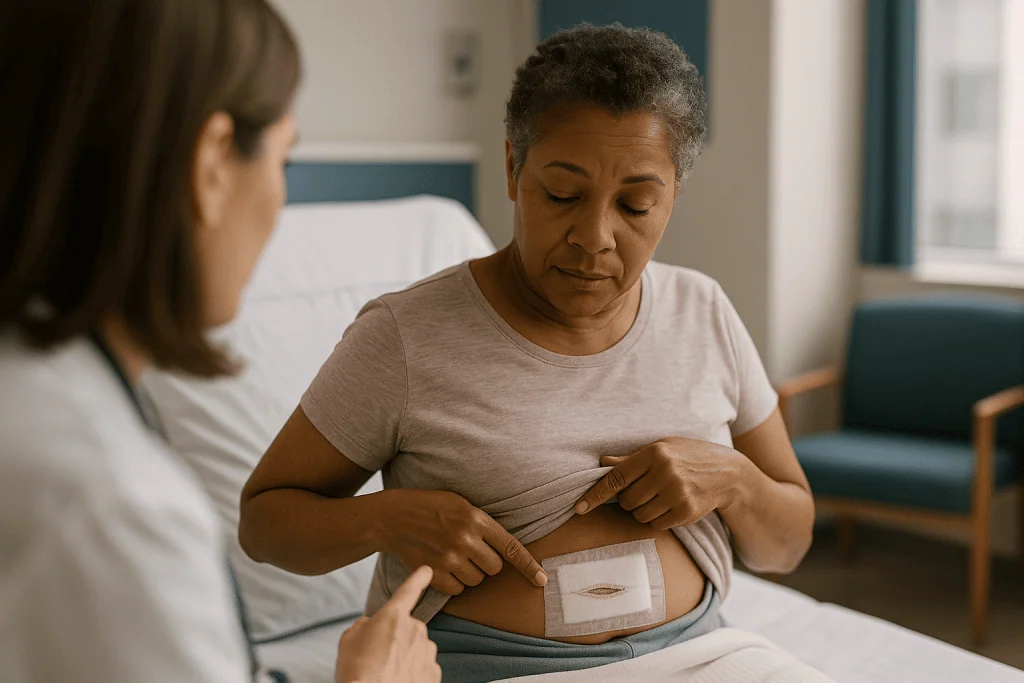
An infected incision announces itself by intensifying rather than fading. According to Johns Hopkins Medicine and MedlinePlus, the classic signs of a surgical site infection include:
- Redness that spreads outward from the incision instead of shrinking, often with the skin feeling noticeably warmer than the surrounding area
- Swelling or hardness that increases after the third or fourth day
- Pain or tenderness that worsens when it should be easing, many patients describe a throbbing or pressure that painkillers no longer touch
- Thick, cloudy, yellow, green, or foul-smelling drainage (pus), as opposed to thin clear or pink fluid
- Wound edges that separate, gape, or fail to knit together
- Fever, chills, or a general feeling of being unwell that arrives days after surgery
No single item on that list is diagnostic on its own. Warmth, for instance, is part of normal inflammation early on. What distinguishes infection is the combination and the timing: two or more of these signs, appearing or worsening from roughly day three onward, is the pattern surgeons ask patients to report.
One more subtle clue deserves mention because it is easy to rationalize away, feeling genuinely unwell. Fatigue that deepens instead of lifting, loss of appetite, or a vague sense of being off can accompany a developing infection even before the wound itself looks dramatic. Your team would far rather hear about a false alarm than learn you waited three days on a real one.
How long after surgery are you at risk of infection?
The window is longer than most people assume. The CDC defines a surgical site infection as one occurring within 30 days of an operation for most procedures, and within 90 days when an implant such as a joint replacement, mesh, or cardiac device was placed. Bacteria can colonize implanted material slowly, which is why the surveillance clock runs three times longer for those surgeries.
Within that window, risk is not evenly spread. Infections rarely declare themselves in the first 48 hours, because bacteria need time to multiply to the point of causing visible inflammation. The most common period for a superficial incisional infection to surface is roughly days four through fourteen, precisely when many patients have stopped checking the wound daily because it seemed fine at the one-week mark.
How likely is any of this? Reassuringly rare. Surgical site infections occur after approximately 1 to 3 percent of operations in the United States, according to Johns Hopkins Medicine. That figure varies by procedure type: clean operations on skin and soft tissue sit at the low end, while bowel surgery and emergency operations carry higher rates because of the bacteria involved and the conditions of the surgery itself.
The practical takeaway is simple. Keep inspecting the incision, ideally with a daily photo in consistent lighting, until it is fully closed and your team has signed off, not just until it stops hurting. And if you have an implant, stay alert to new pain or swelling at the site for the full three months.
The call-your-team-now checklist
Print this, screenshot it, or tape it to the refrigerator. If any of the following appears, contact your surgical team the same day, not at your next scheduled appointment:

- Fever of 100.4°F (38°C) or higher after the first 48 hours, or shaking chills at any point
- Redness spreading outward from the incision, or red streaks tracking away from it
- Pain that is clearly worse today than it was two days ago
- Thick, cloudy, yellow, green, or foul-smelling drainage
- The incision opening, gaping, or a suture or staple pulling loose with the edges separating
- New swelling, hardness, or a warm, tender lump near the wound
- Increasing drainage after day three, even if the fluid still looks clear
- Feeling markedly more tired, nauseated, or unwell than the day before
Notice the pattern: almost every line describes a change in direction. Surgical teams expect these calls and build time into their day for them. Most hospitals and surgical practices run nurse lines around the clock precisely because infections do not respect office hours, and the notes from your operation are in front of whoever answers.
When you call, have three things ready: your surgery date, your current temperature taken with an actual thermometer, and photos of the incision from today and two or three days ago. That comparison often lets a nurse triage you accurately in under five minutes, sometimes sparing you a trip, sometimes getting you seen within hours instead of days.
What are the signs of sepsis after surgery?
Everything above merits a same-day phone call. This section merits an ambulance. Sepsis is the body’s extreme, dysregulated response to an infection, and it can progress from feeling flu-ish to organ failure within hours. The CDC estimates that at least 1.7 million adults in the United States develop sepsis each year, and any infection, including one that starts at a surgical wound, can trigger it.
Call 911 or your local emergency number, or have someone take you to an emergency department immediately, for any of the following after surgery, drawn from NHS and Mayo Clinic guidance:
- Confusion, slurred speech, or unusual difficulty staying awake
- Very fast breathing or breathlessness at rest
- A racing heartbeat combined with feeling faint or dizzy
- Skin that is cold, clammy, mottled, or unusually pale, gray, or bluish
- Severe shivering or intense muscle pain
- Not passing urine for a day, or far less than usual
- A profound sense that something is terribly wrong, patients with sepsis often report exactly this feeling, and clinicians take it seriously
Two details trip people up. First, sepsis does not always come with a high fever; some people run a below-normal temperature instead, which is equally alarming. Second, the wound itself may not look dramatic when a deep or organ-space infection is driving the illness. If the whole-body signs are present, do not wait to see whether the incision looks worse tomorrow. Say the words ‘I recently had surgery and I am worried about sepsis’: that sentence changes how quickly you are assessed.
Redness around the incision: healing or infection?
Redness is the sign patients agonize over most, and understandably, every healing incision has some. The distinctions that matter are width, direction, and company.
Width first. A thin band of pink or red hugging the incision line, a few millimeters to perhaps a finger’s width, is typical inflammation. Redness extending well beyond that, several centimeters of hot, tender, spreading skin, suggests cellulitis, a bacterial infection of the skin and the tissue beneath it, and needs medical attention the same day.
Direction is where a cheap trick earns its keep. Take a ballpoint pen or washable marker and gently trace the outer border of the redness, noting the date and time. Check it eight to twelve hours later. Redness retreating inside the line is healing behaving itself; redness marching past the line is a photograph-and-call situation. Nurses use this exact technique on hospital wards.
Company means what travels with the redness. Thin red streaks running from the wound toward the trunk of the body can indicate lymphangitisinfection spreading along lymphatic channels, and warrant urgent, same-day evaluation. Redness paired with fever, spreading warmth, or new drainage similarly moves you from watchful waiting to the phone.
One honest caveat: on darker skin tones, redness can be subtle or read as purplish, brownish, or simply darker than surrounding skin. Warmth, swelling, tenderness, and drainage carry more weight in that case, and the marker trick still works if you trace the border of warmth and swelling instead.
What should incision drainage look like, and when is it pus?
Fluid on a dressing sends more people to search engines than any other post-op sight, yet most drainage in the first days is harmless. Wound care nurses sort it into four types, and the vocabulary is worth learning because it tells you what to do next.
| Drainage type | Appearance | What it usually means |
|---|---|---|
| Serous | Thin, clear, watery | Normal in small amounts during early healing |
| Serosanguineous | Thin, pale pink | Normal in the first few days; a mix of serum and a little blood |
| Sanguineous | Bright red, bloody | Expected briefly right after surgery; fresh or increasing bleeding later needs a call |
| Purulent | Thick, cloudy, yellow, green, or tan; often foul-smelling | The hallmark of infection, contact your team the same day |
Quantity and trend matter as much as color. Drainage should taper day by day; most closed incisions are essentially dry within about a week. Fluid that increases after day three, soaks through dressings, or returns after the wound had been dry is worth reporting even if it looks clear, because a sudden gush of clear fluid can signal that deeper layers of the closure are separating.
Smell deserves its own sentence: a genuinely foul odor from a wound is never a normal finding, regardless of what the fluid looks like. Note the color and amount, snap a photo of the dressing before you throw it away, and call.
Is a fever after surgery always an infection?
No, and the timing tells most of the story. A low-grade temperature in the first 24 to 48 hours after an operation is common and usually reflects the body’s inflammatory response to surgery itself, along with shallow breathing that lets small areas of lung deflate. This is one reason nurses are so insistent about the deep-breathing exercises and early walking that feel like a nuisance on day one.
The threshold clinicians use is 100.4°F (38°C). Below that, in a person who otherwise feels reasonably well in the first couple of days, a slightly elevated temperature is typically observed rather than treated. Above that line, especially from day three onward, when surgical inflammation should be settling, fever earns a phone call, and the surgical site is one of the first places your team will want to assess.
Certain combinations raise the stakes considerably:
- Fever plus any wound change, spreading redness, new drainage, worsening pain
- Fever with shaking chills, which can indicate bacteria entering the bloodstream
- Fever that resolves and then returns days later
- Fever with burning urination, a productive cough, or calf pain, since urinary, lung, and vein problems are the other common post-op culprits
Buy or borrow a reliable thermometer before surgery and check your temperature at the same time each day for the first two weeks. ‘I feel warm’ is a guess; ‘101.2 at 6 p.m., up from 99.1 this morning’ is data your team can act on immediately.
Superficial, deep, and organ-space infections: why the difference matters
Not all surgical site infections are the same animal, and the CDC’s three-tier classification explains why some are handled at an office visit while others mean readmission.
Superficial incisional infections involve only the skin and the fatty tissue directly beneath the incision. These are the most common type, tend to appear within the first two weeks, and usually show the visible signs covered above, redness, warmth, tenderness, pus at the incision line. Caught early, many are managed straightforwardly in clinic.
Deep incisional infections reach the muscle and fascia, the tough connective layers surgeons stitch to hold everything together. Clues include pain that is disproportionate to how the skin looks, fever, and sometimes a wound that spontaneously opens and drains from below. Because the surface can appear deceptively calm, worsening deep pain after day three is a symptom to report even when the incision itself looks tidy.
Organ-space infections develop in the body cavity or organ that was operated on: an abscess near a bowel repair, for example, or infection around an implanted joint. There may be little or nothing to see at the skin. Instead the picture is fever, feeling progressively unwell, and pain or dysfunction in the operated area, sometimes weeks after surgery. Diagnosis often requires imaging.
The lesson threaded through all three: the skin is not the whole story. Fever plus feeling worse is reportable on its own merits, with or without a scary-looking incision. And for anyone carrying an implant, new pain at the site months out belongs on the phone, not on a wait-and-see list.
Who is at higher risk of a surgical site infection?
Infection risk is not distributed evenly, and knowing where you stand helps you calibrate how vigilant to be. Evidence from the CDC and Johns Hopkins Medicine consistently points to several factors.
Diabetes sits near the top of the list. Elevated blood glucose impairs the white blood cells that clear bacteria and slows the growth of new blood vessels into healing tissue. Keeping blood sugar in the range your care team recommends, before and after surgery, measurably lowers risk: this is one of the most modifiable factors on the list.
Smoking and nicotine in any form constrict small blood vessels and reduce the oxygen supply a healing wound depends on. Studies summarized by the CDC and surgical societies show that quitting even four to six weeks before an operation improves wound outcomes, and staying off nicotine afterward continues to pay dividends throughout recovery.
Other established contributors include:
- A weakened immune system, whether from a medical condition or from immune-suppressing treatments such as long-term corticosteroids or chemotherapy
- Higher body weight, partly because fatty tissue has a more limited blood supply
- Poor nutrition, especially low protein intake, which deprives the body of raw material for repair
- Older age, longer or more complex operations, and emergency procedures
- Surgery involving the bowel or other areas that naturally harbor bacteria
None of this is about blame, several of these factors cannot be changed at all. The point is practical: if two or three apply to you, the daily photo, the thermometer routine, and the low threshold for calling matter even more.
How to reduce surgical site infections before your operation
Prevention starts well before anyone picks up a scalpel, and patients hold more of the levers than they realize.
Follow the pre-surgical washing instructions exactly. Many surgical teams ask patients to shower with a special antiseptic cleanser the night before and the morning of surgery. The instructions are specific for a reason: the goal is to reduce the population of bacteria living on your skin, which is where most surgical site infections originate.
Resist the urge to shave the surgical area yourself. Razors create micro-abrasions that give skin bacteria a foothold, and CDC guidance is clear that if hair must be removed, the surgical team should do it with clippers immediately before the operation. Arriving pre-shaved, however well-intentioned, works against you.
In the weeks beforehand, three moves carry real weight:
- Stop smoking and all nicotine products as far ahead as possible; even a few weeks helps wound healing
- Tighten blood sugar control if you have diabetes, in partnership with your care team
- Eat adequately, with attention to protein, so your body enters surgery with reserves to heal from
Two smaller items round out the list. Tell your team about any active infection anywhere in your body: a tooth abscess, a urinary infection, an infected scratch, because operating while another infection smolders raises risk, and elective procedures are sometimes postponed for exactly this reason. And on the day itself, do not hesitate to ask staff whether they have cleaned their hands. Hospitals genuinely encourage this, and hand hygiene remains the single most effective infection-control measure in medicine.
How to protect your incision at home
Once you are discharged, wound protection comes down to a handful of unglamorous habits done consistently.
Hands first, always. Wash with soap and water for at least 20 seconds: the length of humming the ‘Happy Birthday’ song twice, before touching the incision, changing a dressing, or applying anything your team prescribed. This one habit interrupts the most common route by which bacteria reach a healing wound. If soap and water are unavailable, an alcohol-based hand sanitizer is the backup, not the default.
Follow the dressing and showering instructions you were given, even when they conflict with something you read online, because they are tailored to your specific closure. A few rules are nearly universal:
- Keep the incision out of baths, hot tubs, pools, lakes, and oceans until your team clears you, soaking softens the closure and immerses it in water that is never sterile
- Pat the area dry after approved showers rather than rubbing
- Skip lotions, powders, antibiotic ointments, and home remedies unless specifically instructed; well-meaning additions can trap moisture and irritate healing skin
- Change dressings on the schedule provided, and sooner if one becomes wet or soiled
Protect the closure mechanically, too. Respect lifting restrictions, brace the incision with a pillow when you cough or sneeze after abdominal or chest surgery, and keep pets out of the bed while the wound is open. Finally, feed the repair: protein at each meal, adequate fluids, and enough overall calories. Healing tissue is being built from scratch, and construction requires materials.
When to see a doctor, and when to go straight to the ER
Every rule of thumb in this article compresses into a three-tier decision, and it is worth spelling out plainly.
Call your surgical team the same day for the wound-level warning signs: fever of 100.4°F (38°C) or higher after the first 48 hours, spreading redness or red streaks, pain trending worse instead of better, thick or foul-smelling drainage, increasing swelling or a new tender lump, or an incision that is opening. After hours, use the practice’s on-call line or a nurse advice line: these exist precisely for this, and calling at 9 p.m. beats waiting until 9 a.m.
Go to an emergency department, or call 911, for whole-body danger signs: confusion or unusual drowsiness; very fast breathing; a racing heart with dizziness; cold, clammy, mottled, or bluish skin; severe shivering or muscle pain; not urinating for a day; heavy bleeding that soaks dressings; or a wound that opens widely, especially if tissue is visible or protruding through it, cover it with a clean, moist dressing and seek help immediately.
Mention it at your follow-up appointment if the picture is milder and stable: a wound that seems slow to close but is not worsening, persistent numbness near the scar, or itching that will not quit.
When genuinely unsure which tier you are in, call. Triage nurses make these judgment calls dozens of times a day, and the medical literature is unambiguous on one point: infections treated early are simpler, cheaper, and far less dangerous than infections treated late. Nobody on your care team has ever been annoyed by a patient who called about a wound.
What happens after you call: how infections are treated
Knowing what the response looks like makes picking up the phone easier, so here is the honest preview.
For a suspected superficial infection, you will usually be seen within a day or two, sometimes the same day. A clinician examines the wound, checks your temperature and vital signs, and may take a swab of any drainage to identify which bacteria are involved. If an infection is confirmed, treatment typically means antibiotic medicine chosen for the likely organism, and sometimes opening a small portion of the incision to let trapped pus drain. That last part sounds alarming; in practice it is quick, brings striking pain relief, and is often the decisive step, because pus behind a closed wound is a pocket antibiotics struggle to reach.
Deeper or organ-space infections involve more investigationblood tests, and often an ultrasound or CT scan to locate an abscess. Treatment may require intravenous antibiotic medicine, drainage of the collection using image guidance, or in some cases a return to the operating room. A hospital stay is possible, which is exactly why early reporting matters: the gap between an office visit and a readmission is often measured in the days a person spent hoping it would resolve on its own.
Whatever the tier, follow-through counts. Complete the full course of any medicine prescribed even after you feel better, keep every follow-up appointment, and continue the daily photos so you and your team can verify the trend has genuinely reversed. Most surgical site infections, treated promptly, resolve without any lasting effect on the surgical result.
What not to do while you wait for your appointment
A few well-intentioned moves reliably make post-op wounds worse, and they deserve equal billing with the warning signs.
- Do not take leftover antibiotic medicine from a previous illness. It may be the wrong choice for the bacteria involved, an incomplete course, and it can mask symptoms while the infection advances, and it muddies the test results your team needs.
- Do not squeeze, lance, or drain anything yourself. Pressing on an infected area can push bacteria into deeper tissue or the bloodstream. Drainage is a sterile procedure for a reason.
- Do not pour hydrogen peroxide or rubbing alcohol into the wound. Both damage the fragile new cells doing the healing; MedlinePlus and wound-care guidance recommend against them for exactly this reason. Gentle cleansing as instructed, usually mild soap and water once you are cleared to shower, is what healing tissue actually needs.
- Do not remove sutures, staples, or adhesive strips on your own schedule, even if one is snagging on clothing. Call and ask instead.
- Do not stop monitoring because you have an appointment booked for Thursday. If any sepsis red flag appears in the meantime, confusion, rapid breathing, clammy or mottled skin, the appointment is superseded by the emergency department, immediately.
What you should do is refreshingly simple: keep the dressing clean and dry, keep taking your temperature, keep the daily photos going, and write down when each symptom started. A dated symptom timeline is one of the most useful things you can hand a clinician, and it takes two minutes on the notes app of your phone.
Frequently asked questions
How long after surgery are you at risk of infection?
The main risk window is the first 30 days after surgery, extending to about 90 days if an implant such as a joint replacement or mesh was placed, according to CDC definitions. Infections rarely appear in the first 48 hours; the most common period is roughly days four through fourteen, when many people have stopped checking the incision daily. Keep monitoring until the wound is fully closed and your team confirms healing is complete.
What are the first signs of an infected surgical incision?
The earliest signs are usually redness that spreads outward, increasing warmth, and pain that worsens instead of easing from about day three onward. Thick, cloudy, yellow, or foul-smelling drainage, new swelling or hardness, separating wound edges, and fever typically follow. Because early infection can resemble normal inflammation, the trend matters most: an incision that looks or feels worse than it did two days ago deserves a same-day call to your surgical team.
What are the signs of sepsis after surgery?
Sepsis red flags include confusion or slurred speech, very fast breathing, a racing heart, cold or clammy skin that looks mottled, pale, gray, or bluish, severe shivering or muscle pain, and not passing urine for a day, per NHS and Mayo Clinic guidance. Fever may be present, but some people run a below-normal temperature instead. Any of these after surgery is a 911 emergency, sepsis can progress to organ failure within hours.
Is it normal to have a fever after surgery?
A low-grade temperature in the first 24 to 48 hours is common and usually reflects the body’s inflammatory response to the operation itself rather than infection. The threshold that changes things is 100.4°F (38°C): a fever at or above that level after the first two days, a fever with shaking chills, or a fever paired with any wound change should be reported to your surgical team the same day.
What color drainage is normal after surgery?
Thin, clear fluid or pale pink fluid in small, decreasing amounts is normal during the first few days of healing. Thick, cloudy, yellow, green, or tan drainage, especially with a foul smell, is pus and signals infection. Bright red bleeding beyond the immediate post-op period, drainage that increases after day three, or fluid returning after the wound had been dry are also worth reporting, even if the fluid still looks clear.
Can an incision be infected without pus?
Yes. Deep incisional and organ-space infections can develop under skin that looks relatively calm, showing up instead as worsening pain, fever, chills, and feeling progressively unwell. This is especially true after abdominal surgery or operations involving implants, where an abscess may form well below the surface. That is why fever plus feeling worse is reportable on its own, regardless of how tidy the incision appears from the outside.
How can I reduce my risk of a surgical site infection?
Before surgery: follow antiseptic shower instructions exactly, do not shave the surgical site yourself, stop smoking and nicotine as early as possible, and manage blood sugar if you have diabetes. Afterward: wash hands for 20 seconds before touching the incision, keep dressings clean and dry, avoid baths, pools, and hot tubs until cleared, skip unprescribed ointments, and eat enough protein. These steps target the main routes bacteria use to reach a healing wound.
Should I clean my incision with alcohol or hydrogen peroxide?
No. Both hydrogen peroxide and rubbing alcohol damage the new cells and tissue doing the healing, and wound-care guidance from MedlinePlus advises against them. Once your team clears you to wash the area, gentle cleansing with mild soap and water, followed by patting dry, is typically all a closed incision needs. Apply only products your surgical team specifically recommended, and change dressings on the schedule you were given.
What happens if a surgical wound opens up?
A small separation of the skin edges warrants a same-day call and often an office visit, where the wound can be assessed and re-dressed properly. A wound that opens widely, especially after abdominal surgery, or if deeper tissue is visible or protruding, is an emergency: cover it with a clean, moist dressing, avoid pushing anything back, and go to the emergency department immediately. Do not attempt to re-close a separated wound with tape at home.
When should I go to the ER instead of calling my surgeon?
Go straight to the emergency department, or call 911, for whole-body danger signs: confusion, very rapid breathing, a racing heart with dizziness, cold or mottled skin, severe shaking chills, no urination for a day, heavy bleeding through dressings, or a widely opened wound. Wound-level changes, spreading redness, worsening pain, pus, or fever without those systemic signs, are same-day calls to your surgical team or its after-hours line.
References
- CDC: About Surgical Site Infections
- MedlinePlus: Surgical Wound Infection: Treatment
- NHS: Sepsis: Symptoms and When to Get Help
This article is for general information only and is not a substitute for professional medical advice. Please consult a qualified doctor about your individual situation.

More from the Blog

How to Sleep (and Live) with a Kidney Stent
Most people sleep better with a kidney (ureteral) stent by lying on the side opposite the stent or slightly propped up, emptying the bladder…

Tube Feeding vs IV Nutrition in Clinical Nutrition Therapy: When Doctors Use Each Option
Tube feeding (enteral nutrition) delivers liquid formula into the stomach or small intestine through a tube, while IV nutrition (parenteral nutrition) infuses nutrients directly…

Hardware Removal Surgery: When Plates and Screws Should Come Out
Most orthopedic plates and screws are designed to stay in the body permanently and never need removal. Hardware removal surgery is usually considered only…

Flying with a DVT, Compression Stockings and Prevention
Most people can fly with a DVT once they are established on anticoagulant treatment and their symptoms are stable, but the timing is an…

Living With a Central Venous Port: Showering, Swimming, Flushing Schedules and Travel
Living with a chemo port is mostly a matter of protecting the skin over it and keeping the line clear. Once the incision has…

The Three Types of Cataracts and What Vision Looks Like with Them
The three main types of age-related cataract are nuclear (clouding in the lens center, which slowly yellows and dims vision), cortical (wedge-shaped streaks at…