

Sleep Paralysis: The Terrifying, Harmless Glitch Between Sleep States
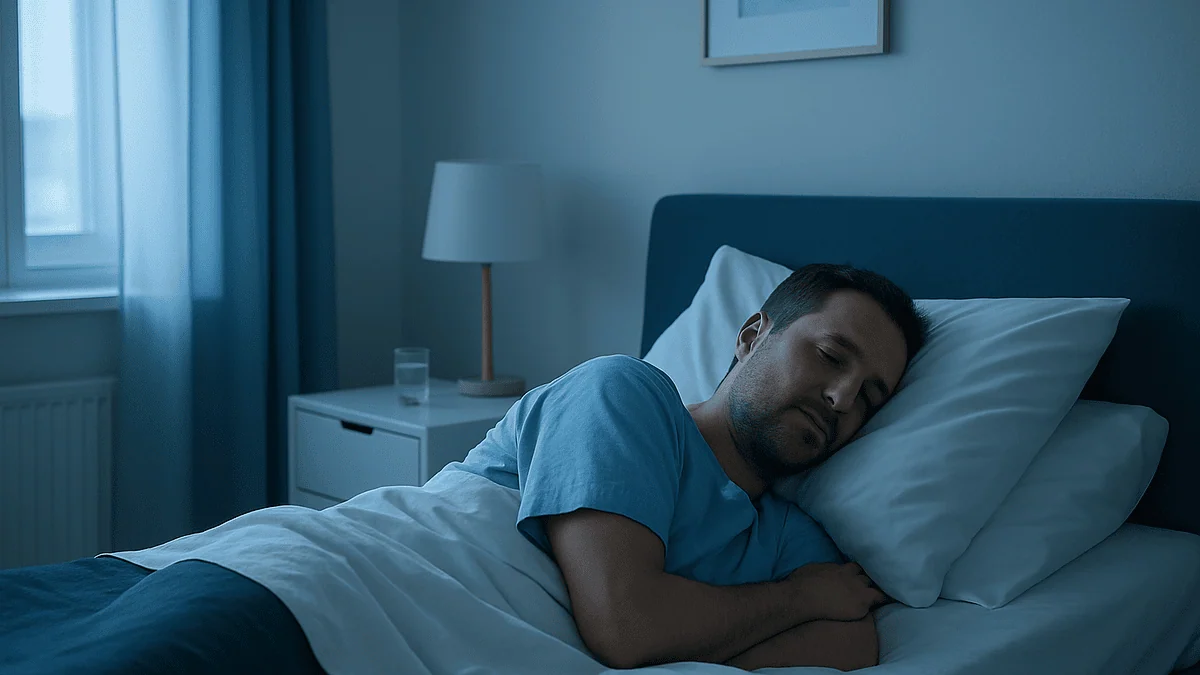
Key Takeaways
- Sleep paralysis is waking up while REM atonia, the normal paralysis of dreaming sleep, is still switched on; it lasts seconds to about two minutes and always resolves.
- A pooled analysis of 35 studies found roughly 8% of the general population, 28% of students, and 32% of psychiatric patients report at least one episode.
- The 'demon' is a hypnopompic hallucination: an overactive REM threat system inventing an explanation for inexplicable immobility, with culture supplying the costume.
- Breathing never stops during an episode, the diaphragm is exempt from atonia, but paralyzed accessory chest muscles create the illusion of suffocating pressure.
- The fastest documented ways out are microscopic movements (a toe, a fingertip, the tongue), deliberate eye movement, slow breathing, and a bed partner's touch or voice.
- Frequent episodes combined with irresistible daytime sleepiness or sudden weakness during laughter warrant evaluation for narcolepsy, which affects an estimated 135,000–200,000 Americans.
Sleep paralysis is a brief, harmless overlap between REM sleep and waking: the mind becomes alert while the muscle paralysis that normally accompanies dreaming lingers for a few seconds up to about two minutes. Vivid hallucinations and chest pressure often come with it, which explains reports of a 'demon.' Episodes end on their own, and frequent ones are most often tied to sleep loss, irregular schedules, stress, or narcolepsy.
It is 3:47 a.m. Your eyes are open. You can see the ceiling fan, the gray edge of the curtain, the doorway. And you cannot move, not a finger, not your jaw. Something heavy seems to be pressing on your chest, and somewhere near the door, you would swear, someone is standing very still.
Then, as suddenly as it started, it releases. You sit up, heart pounding, completely fine.
People have blamed this experience on witches, ghosts, and, more recently, internet-famous ‘demons.’ The real culprit is far less cinematic: a timing error between two brain systems that usually switch on and off together. Understanding that glitch, why the body locks, why the mind invents an intruder, and what actually loosens the grip, turns one of sleep’s most frightening moments into one of its most explainable.
What actually happens during an episode of sleep paralysis?
Every night, roughly every 90 minutes, your brain cycles into REM sleep: the stage where most vivid dreaming happens. During REM, the brainstem deliberately paralyzes nearly all of your voluntary muscles, a state called atonia. It is a safety feature: without it, you would physically act out your dreams, kicking and swinging at imaginary opponents.
Normally, atonia switches off before you wake. In sleep paralysis, the sequence misfires. Consciousness comes online while the paralysis is still engaged, so for a stretch that typically lasts from a few seconds to about two minutes, you are awake, aware, often able to see the real room, and unable to move or speak.
Two muscle groups are exempt, and both matter. The eyes still move, which is why people can look around during an episode. And the diaphragm keeps working, so breathing never actually stops. What does go offline are the accessory chest and rib muscles you recruit when you try to take a deliberate deep breath. Trying and failing to do that creates the signature sensation of suffocation or a weight on the chest, even though oxygen is flowing normally the entire time.
Episodes can happen while falling asleep (hypnagogic) or while waking (hypnopompic); waking episodes are more commonly reported. Either way, the ending is the same: the brainstem finishes its handoff, atonia releases, and full movement returns. No episode of sleep paralysis has ever been shown to cause physical harm.
What is sleep paralysis caused by?
The short answer: anything that fragments or destabilizes REM sleep raises the odds that waking and atonia will overlap. The best-documented triggers, according to the NHS and Cleveland Clinic, include:
- Sleep deprivationshort nights are followed by ‘REM rebound,’ denser and more unstable REM sleep.
- Irregular schedulesshift work, jet lag, and weekend sleep-timing swings all scramble the normal choreography of sleep stages.
- Sleeping on your backrepeatedly associated with episodes in surveys (more on why below).
- Stress, anxiety, and post-traumatic stresspsychological distress correlates with both frequency and how frightening episodes feel.
- Narcolepsya neurological condition in which REM intrudes into wakefulness; sleep paralysis is one of its classic features.
- Other sleep disruptorsuntreated sleep apnea, insomnia, and heavy alcohol use near bedtime can all fragment REM.
Genetics may play a supporting role. A large study of twins found that identical twins were more likely to share the experience than fraternal twins, suggesting a moderate inherited component, though no single ‘sleep paralysis gene’ exists.
Notice what is missing from this list: nothing supernatural, and nothing structurally wrong with the brain. Most people who experience sleep paralysis are neurologically healthy. The episode is a scheduling error, not a malfunction: the brain equivalent of the lights coming up in a theater before the credits finish rolling.
Why can't I move? The chemistry of the body's off switch
The paralysis has a precise wiring diagram. During REM, clusters of neurons in the pons, part of the brainstem, send inhibitory signals down the spinal cord. Two chemical messengers, glycine and GABA, then clamp down on the motor neurons that drive your voluntary muscles. The command center upstairs can shout ‘move’ all it wants; the switchboard downstairs isn’t forwarding calls.
Researchers worked this out in part by studying what happens when the system fails in the opposite direction. In REM sleep behavior disorder, the atonia switch doesn’t engage properly, and people punch, kick, or leap out of bed while dreaming, sometimes injuring themselves or a bed partner. Seen from that angle, the paralysis you experience during an episode is the safety system doing its job a few beats too long, not a new and sinister force taking hold.
This wiring also explains the strange partial quality of episodes. The neurons controlling eye movements and the diaphragm sit outside the inhibited circuit, which is why your gaze can dart around a room your limbs cannot respond to. Some people also report being able to produce a faint grunt or moan, because certain throat muscles escape full suppression: a detail that turns out to be practically useful when you want to signal a bed partner.
One reassuring implication is worth underlining: the paralysis is time-limited by design. The same brainstem circuits that switch atonia on always switch it off. There is no documented case of the mechanism simply staying stuck.
What is the 'sleep paralysis demon'?
Ask people what frightened them most and few say the paralysis. They describe the presence: a figure in the corner, a shadow at the foot of the bed, something crouched on their chest. Surveys suggest a majority of people with sleep paralysis experience hallucinations alongside the immobility, and they feel utterly real, because in a sense they are half real.
Here is the mechanism most sleep researchers point to. During REM, the amygdala, the brain’s threat-detection hub, runs hot; it is part of why dreams so often involve pursuit and danger. In sleep paralysis, you wake into that state. Your threat system is blaring, your body is inexplicably immobilized, and your dreaming machinery is still partially generating imagery. The brain, which abhors an unexplained alarm, does what brains do: it builds a story. Paralysis plus fear plus dream imagery equals someone is here, and they mean harm.
The chest-pressure sensation feeds the narrative. Because the deliberate-breathing muscles are offline, effortful breaths feel blocked, and the mind translates that resistance into weight: a creature sitting on the sternum. It is the oldest hallucination in the historical record for exactly this reason.
What the demon looks like is supplied by culture and expectation, not neurology. A person steeped in ghost stories sees a ghost; someone who has read about alien abduction may perceive gray figures; a viewer of modern horror films gets a shadow man. The projector is the same in every brain. Only the film reel changes.
The three classic hallucinations, decoded
Researchers who have catalogued thousands of episode reports find the hallucinations cluster into three recurring types. Knowing which one you are prone to can make an episode dramatically less frightening, because you can recognize it mid-experience for what it is.
| Type | What it feels like | Likely mechanism |
|---|---|---|
| Intruder | A sensed or seen presence in the room; footsteps, whispering, a figure approaching | An overactive REM threat system searching for, and inventing, a source of danger |
| Incubus (pressure) | Weight on the chest, choking or suffocating sensations, sometimes a figure sitting on you | Effortful breathing muscles are paralyzed while the diaphragm breathes normally; the strain is misread as external force |
| Vestibular-motor | Floating, flying, falling, spinning, or out-of-body sensations; feeling yourself rise off the bed | The brain’s motion-and-position system remains active without matching input from immobilized muscles |
The first two types travel together and account for most of the terror; interestingly, the third is often described as neutral or even pleasant. Some frequent experiencers learn to reframe an episode toward the floating sensation: a small psychological pivot that several clinical reports suggest can drain the fear from recurring episodes.
One more pattern worth knowing: the more panicked you become, the more vivid and threatening the imagery tends to get, because fear itself feeds the threat-detection loop. Calm doesn’t just feel better. It appears to shorten the story the brain is telling.
Is sleep paralysis a warning sign of something serious?
For most people, no. Occasional episodes in an otherwise healthy sleeper, what clinicians call isolated sleep paralysis, are considered benign. They are not a stroke, not a seizure, not a heart problem, and not a sign of psychosis or an early symptom of mental illness. The NHS is blunt about it: frightening, yes; dangerous, no.
That said, sleep paralysis can be a messenger, and it is worth listening to what the pattern says:
- Frequent episodes after short nights usually mean exactly what they look like: a sleep debt your REM system is protesting.
- Episodes plus overwhelming daytime sleepiness, dozing off mid-conversation, or knees buckling during laughter point toward narcolepsy and deserve a medical evaluation.
- Episodes plus loud snoring, gasping, or witnessed pauses in breathing suggest sleep apnea, which fragments REM and is very treatable.
- Episodes clustered around trauma, panic, or severe anxiety track with research linking psychological distress to more frequent, more frightening paralysis: a reason to address the distress itself.
There is one scenario that is categorically different: weakness or inability to move that persists after you are fully awake, or that involves one side of the body, facial drooping, or slurred speech. That is not sleep paralysis, and it warrants emergency care immediately. True sleep paralysis always resolves completely within minutes, leaving normal strength behind.
How common is it? More common than you'd guess
If you have experienced sleep paralysis, you have plenty of company, most of it silent. A 2011 systematic review published in Sleep Medicine Reviews pooled 35 studies covering more than 36,000 people and arrived at striking numbers: roughly 8 percent of the general population reports at least one lifetime episode. Among students, a group famous for erratic schedules and all-nighters, the figure jumped to about 28 percent. Among psychiatric patients, particularly those with panic disorder or post-traumatic stress, it reached about 32 percent.
Those three numbers tell the whole causal story in miniature. The baseline rate reflects the fact that any human brain can misfire the REM handoff occasionally. The student rate shows what sleep restriction and irregular timing do to that probability. The clinical rate shows the added weight of stress and hyperarousal.
Most people who experience it will have only one or a handful of episodes across a lifetime. A smaller group, estimates vary, but on the order of a few percent of the population, has recurrent episodes frequent enough to dread bedtime, and that dread can itself become a problem, since anxiety about sleep tends to fragment sleep further, creating exactly the conditions that produce more episodes.
Underreporting is almost certainly substantial. Historically, people hesitated to describe the experience for fear of sounding unwell, or haunted. The rise of the phrase ‘sleep paralysis demon’ online has, whatever its melodrama, done one genuinely useful thing: it has made millions of people realize their private terror has a name, a mechanism, and a very large club.
How to get out of sleep paralysis while it's happening
Full honesty first: no technique has been proven in controlled trials to end an episode on command, because episodes are nearly impossible to schedule in a lab. What follows is the consistent advice of sleep clinicians and the strategies frequent experiencers report as most reliable.
- Start microscopically small. Don’t try to sit up or thrash, large movements are exactly what atonia blocks best. Instead, pour all your attention into wiggling one toe, one fingertip, or your tongue. Small distal movements often break through first, and once one muscle responds, the rest typically cascades free.
- Use your eyes. Eye muscles are never paralyzed. Deliberate, repeated blinking or sweeping your gaze side to side gives you an immediate proof of control and, many people report, hastens the release.
- Breathe on purpose. The diaphragm is working; let it. Slow, steady breathing counters the suffocation illusion and dials down the panic that intensifies hallucinations.
- Try to vocalize. A grunt or moan is sometimes possible, and a bed partner’s touch or voice frequently ends an episode outright. Couples who share a bed with a frequent experiencer can agree on this signal in advance.
- Narrate it to yourself. Mentally repeating something like this is sleep paralysis, it is harmless, it ends in under two minutes sounds almost too simple, but reframing is the core of the cognitive techniques clinicians use for recurrent cases, and people consistently describe it as the difference between terror and mere annoyance.
Afterward, get up briefly before returning to sleep. Drifting straight back can occasionally drop you into a repeat episode.
Why sleeping on your back seems to invite it
Of all the modifiable factors, sleep position is the oddest and one of the most consistent. Multiple surveys have found that episodes disproportionately occur in people sleeping supine, flat on the back, and many recurrent experiencers can confirm the pattern from their own history.
Why should posture matter to a brainstem timing error? Researchers have proposed a few overlapping explanations. Back sleeping is associated with more airway narrowing and more micro-arousals, brief, partial awakenings, which create more opportunities for consciousness to surface mid-REM. Gravity may also contribute to the illusion side of the equation: lying supine, the soft tissues of the airway and the weight of the chest wall make effortful breathing feel more labored, sharpening the pressure sensation once an episode begins.
Whatever the mix of reasons, the practical takeaway is cheap and safe: if you have recurring episodes and you sleep on your back, experiment with side sleeping. Old tricks work: a body pillow along your back, or a firm pillow wedged to discourage rolling over. Some people sew or tuck a tennis ball into the back of a sleep shirt, an approach borrowed from positional snoring management.
Be realistic about what this fixes. Position is one input among several, and side sleeping will not overrule a schedule that swings three hours between weekdays and weekends. But for people whose episodes cluster tightly around back sleeping, and surveys suggest that describes a large share, it is the single easiest lever to pull tonight.
When sleep paralysis is part of narcolepsy
Most sleep paralysis is ‘isolated’: it arrives on its own and means nothing more. But it is also one of the four classic features of narcolepsy, a neurological condition in which the boundary between REM sleep and wakefulness is chronically unstable. According to the National Institute of Neurological Disorders and Stroke, narcolepsy affects an estimated 135,000 to 200,000 people in the United States, and many go years before diagnosis.
The pattern to watch for is the company sleep paralysis keeps:
- Excessive daytime sleepinessnot ordinary tiredness, but an irresistible pull toward sleep during meetings, meals, or conversations, even after a full night in bed.
- Cataplexysudden muscle weakness triggered by strong emotion, classically laughter: the jaw slackens, the head drops, knees buckle. This is essentially REM atonia firing in broad daylight.
- Hypnagogic hallucinationsvivid dreamlike imagery at sleep onset.
- Fragmented night sleep, ironically, despite the daytime sleepiness.
Not everyone with narcolepsy has all four features, and cataplexy in particular occurs in only one of the two main types. But the combination of frequent sleep paralysis plus daytime sleep attacks is a strong signal to seek evaluation. Diagnosis typically involves an overnight sleep study followed by a daytime nap test that measures how quickly a person falls asleep and how fast they enter REM.
The distinction matters because narcolepsy is a manageable medical condition, and identifying it changes everything from driving safety to work accommodations. Sleep paralysis, in this context, is not the problem itself: it is the visible tip of a treatable one.
The demon has a passport: one experience, a hundred names
Perhaps the strongest evidence that sleep paralysis is neurological rather than supernatural is its perfect consistency across cultures that never spoke to one another. The physiology is identical everywhere; only the costume changes.
In Japan, the experience is called kanashibari‘bound in metal’, and is folklore old enough to appear in classical literature. In Newfoundland, it is a visit from the Old Hag, and ‘being hagged’ remains a living expression. Brazilian tradition names a crone called the pisadeira who tramples the chests of people who sleep on their backs, note how precisely the folklore encodes the supine-position risk factor centuries before any survey did. Cambodian tradition describes a ghost that pushes you down; Scandinavian folklore blamed the mara, a nocturnal spirit that sat on sleepers’ chests. That creature gave English its word nightmareliterally, the night-mara.
Painters got there before scientists too. Henry Fuseli’s 1781 painting The Nightmarea woman sprawled on her back, a squat incubus perched on her sternum, a wild-eyed horse peering through the curtains, is essentially a clinical illustration of the incubus-type episode, rendered two centuries before anyone mapped REM atonia.
In the modern era, researchers have noted that some accounts of alien abduction closely match hypnopompic sleep paralysis: immobility, a sensed presence, pressure, floating. The interpretation updates with the times; the experience does not.
There is real comfort in this history. Whatever stood in your doorway at 3 a.m. has been standing in doorways for as long as humans have slept, and it has never once actually been there.
How to make episodes less likely
Because unstable, fragmented REM is the common thread behind most episodes, prevention is mostly about giving your sleep architecture nothing to trip over. The evidence-backed levers, per the NHS and Cleveland Clinic:
- Protect a consistent schedule. Going to bed and waking within roughly the same 30- to 60-minute window daily, weekends included, does more for REM stability than almost anything else. Big weekend swings are a form of self-inflicted jet lag.
- Bank enough hours. Most adults need 7 to 9 hours. Chronic shortfalls create REM rebound, the dense, unstable REM in which episodes flourish.
- Rethink back sleeping if your episodes cluster there: a side position, maintained with a body pillow, is a zero-cost experiment.
- Time your chemistry. Caffeine lingers for six hours or more; alcohol near bedtime suppresses REM early in the night and then fragments it later. Both destabilize exactly the stage you are trying to smooth out.
- Build a real wind-down. Thirty to sixty minutes of dim light and low stimulation lowers the arousal level you carry into sleep, relevant because stress and hyperarousal are among the strongest correlates of frequent episodes.
- Treat what fragments your sleep. Snoring with gasping, restless legs, chronic insomnia, or unmanaged anxiety each deserve attention in their own right, and each removal tends to reduce episodes as a side effect.
None of this guarantees zero episodes: an occasional glitch can happen to a flawless sleeper. But for recurrent sleep paralysis, sleep regularity is the intervention with the best return on effort, and it costs nothing.
When to see a doctor about sleep paralysis
An occasional episode needs no medical visit, reassurance and better sleep habits are the whole prescription. Certain patterns, though, deserve professional eyes. Talk with a clinician if:
- Episodes are frequenthappening regularly, such as multiple times a month, or increasing despite consistent sleep.
- You have started dreading sleep. Anticipatory anxiety about episodes can spiral into insomnia, and that feedback loop is very much treatable.
- Daytime sleepiness is severenodding off during conversations, meals, or driving, or you experience sudden muscle weakness with laughter or strong emotion. These point toward narcolepsy and warrant a sleep-medicine evaluation.
- Your sleep is noisy or interruptedloud snoring, gasping, or breathing pauses reported by a partner suggest sleep apnea, which both fragments REM and carries its own health consequences.
- Episodes coincide with trauma, panic attacks, or worsening anxiety. Addressing the underlying distress typically helps both problems.
- You are unsure it is sleep paralysis at all. True episodes resolve completely within minutes. Weakness that persists after full waking, affects one side of the body, or comes with facial drooping or slurred speech is a different emergency entirely, call emergency services rather than waiting for an appointment.
Come prepared: a two-week sleep diary noting bedtimes, wake times, episode timing, sleep position, caffeine and alcohol, and stress level gives a clinician most of what they need on the first visit. Many cases are sorted out from the history alone, without any testing.
What help actually looks like for recurrent episodes
There is no dedicated cure for sleep paralysis, and honest medicine says so plainly. What exists instead is a set of approaches that reliably reduce how often episodes happen and, just as important, how much they frighten you when they do.
Evaluation usually starts with a detailed sleep and medical history. If narcolepsy or sleep apnea is suspected, an overnight sleep study may follow; if not, testing is often unnecessary. When an underlying condition is found, treating it typically shrinks the paralysis problem along with it, since both apnea and narcolepsy destabilize the REM boundary where episodes are born.
For recurrent isolated sleep paralysis, clinicians lean on behavioral and cognitive tools. Structured sleep-schedule work targets the fragmentation that seeds episodes. Cognitive techniques, some adapted specifically for sleep paralysis, teach people to recognize an episode as it starts, reframe it as harmless, and practice the small-movement and breathing strategies described earlier. Where anxiety or post-traumatic stress is fueling the pattern, psychotherapy aimed at those conditions does double duty. In some persistent cases, physicians may consider medications used for related sleep or mood conditions; that is a conversation for a prescriber, weighing individual circumstances.
Do not underestimate the plainest intervention of all: knowing what this is. Clinical reports repeatedly note that education alone, mechanism, prevalence, harmlessness, transforms the experience for many people. The episode may still come, but it arrives demoted: no longer a demon, just a brainstem running about ninety seconds behind schedule. For a condition whose main damage was always fear, that reframe is most of the battle.
Frequently asked questions
What is sleep paralysis caused by?
Sleep paralysis is caused by a timing overlap between waking and REM sleep: the brain becomes alert while the muscle paralysis of dreaming sleep is still active. Anything that fragments REM raises the risk, sleep deprivation, irregular schedules, shift work, jet lag, stress, anxiety, post-traumatic stress, sleeping on your back, and conditions like narcolepsy or sleep apnea. Twin research also suggests a modest genetic component. Nothing supernatural is involved.
How do you get out of sleep paralysis?
Focus on the smallest possible movement, a toe, a fingertip, or your tongue, rather than trying to sit up, since one successful movement usually breaks the whole episode. Deliberate blinking and eye movements help, because eye muscles are never paralyzed. Slow your breathing to counter the pressure sensation, and mentally remind yourself the episode is harmless and brief. A bed partner’s touch or voice often ends it immediately.
Is sleep paralysis a warning of something serious?
Usually not. Occasional isolated episodes are considered benign by sleep specialists and do not signal stroke, seizure, heart problems, or mental illness. Frequent episodes are more often a sign of sleep debt, irregular schedules, or stress. The main exception: sleep paralysis paired with severe daytime sleepiness or sudden weakness during strong emotion can indicate narcolepsy, and episodes alongside loud snoring or gasping may point to sleep apnea, both worth medical evaluation.
What is the sleep paralysis demon?
The ‘demon’ is a hallucination, not a visitor. During an episode, the brain’s threat-detection system is highly active, dream imagery is still being generated, and the body is inexplicably immobilized, so the mind constructs a menacing presence to explain the alarm. The chest-pressure sensation, caused by paralyzed accessory breathing muscles, reinforces the feeling of being sat upon. Cultures worldwide have named this same experience for centuries, from Japan’s kanashibari to Newfoundland’s Old Hag.
Can you die from sleep paralysis?
No documented case exists of sleep paralysis causing death or physical harm. Breathing continues throughout every episode because the diaphragm is exempt from REM paralysis; the suffocating feeling comes from paralyzed chest muscles, not from any actual lack of air. Episodes end on their own within seconds to a couple of minutes as the brainstem completes its normal handoff from REM to wakefulness. The experience is frightening, but physiologically it is harmless.
Why do I get sleep paralysis when sleeping on my back?
Surveys consistently link back sleeping to more episodes. The supine position is associated with more airway narrowing and more brief micro-arousals, creating extra opportunities to wake mid-REM while paralysis is still active. Lying on your back may also intensify the chest-pressure illusion once an episode starts. If your episodes cluster around back sleeping, switching to your side, using a body pillow to hold the position, is a simple, low-cost experiment.
How long does sleep paralysis last?
Most episodes last from a few seconds to about two minutes, though panic can make them feel far longer. Every episode ends on its own as the brainstem finishes switching off REM paralysis, and external stimulation, a partner’s touch or voice, often ends it sooner. Full strength returns immediately afterward. Any weakness that persists after you are completely awake is not sleep paralysis and needs urgent medical attention.
Is sleep paralysis genetic?
Partly, it appears. A large study of twins found that identical twins were more likely to both experience sleep paralysis than fraternal twins, suggesting a moderate inherited contribution, and episodes do sometimes run in families. That said, environment dominates: sleep deprivation, irregular schedules, stress, and sleep position are stronger and far more controllable influences. Having a relative with sleep paralysis raises your odds somewhat; it does not make episodes inevitable.
Can stress or anxiety cause sleep paralysis?
Yes, stress and anxiety are among the best-documented correlates. Research reviews find notably higher rates in people with panic disorder and post-traumatic stress, and psychological distress predicts both more frequent episodes and more frightening hallucinations. The likely mechanism is twofold: stress fragments sleep, creating the unstable REM where episodes arise, and a hyperaroused threat system makes the hallucinations more vivid. Treating the underlying anxiety typically reduces episodes as well.
Does sleep paralysis mean I have narcolepsy?
Almost always not. The vast majority of sleep paralysis is ‘isolated’: it occurs in otherwise healthy sleepers and carries no diagnosis. Narcolepsy becomes a real question only when episodes are accompanied by its other hallmarks: overwhelming daytime sleepiness, sudden muscle weakness triggered by emotion (cataplexy), or vivid hallucinations at sleep onset. If that cluster sounds familiar, ask about a sleep-medicine evaluation; an overnight study plus a daytime nap test can settle it.
References
- Sleep Paralysis: Cleveland Clinic
- Sleep paralysis: NHS
- Sleep paralysis: MedlinePlus Medical Encyclopedia
- Narcolepsy: National Institute of Neurological Disorders and Stroke (NIH)
This article is for general information only and is not a substitute for professional medical advice. Please consult a qualified doctor about your individual situation.

More from the Blog

Sleep and the Immune System: How Short Sleep Blunts Vaccines and Invites Colds
Sleep and the immune system are tightly linked. In controlled studies, adults who slept fewer than six hours a night were about four times…
Sleep Apnea in Women: The Symptoms That Are Missed and Why Diagnosis Comes Late
Sleep apnea in women is frequently missed because it often presents as insomnia, daytime fatigue, morning headaches, low mood or waking to urinate rather…

Waking Up Too Early: The Common Causes and How to Push Your Wake Time Back
Waking up too early usually comes from a body clock that has drifted earlier, lighter sleep in the second half of the night, or…

Social Jet Lag: Why Weekend Lie-Ins Feel Like Time-Zone Travel to Your Body
Social jet lag is the mismatch between the sleep schedule your body clock prefers and the one your weekday alarm imposes, measured as the…
Orthosomnia: When Sleep Tracking Becomes the Thing Keeping You Awake
Orthosomnia is an informal term for a preoccupation with achieving perfect sleep data from a wearable or app, to the point that worry about…
How Long Can You Go Without Sleep? Deprivation, Hour by Hour
Most people can stay awake for one to two days before microsleeps, memory lapses, and mood changes set in; by 72 hours, hallucinations and…