

Soft Diet and Oral Hygiene After Genioplasty: Caring for the Incision Inside the Mouth

Key Takeaways
- Mayo Clinic puts initial bone healing after jaw and chin surgery at about six weeks and complete healing at up to 12, which is why the soft diet outlasts the sore mouth.
- NHS oral-surgery guidance advises no rinsing or forceful spitting for the first 24 hours, followed by warm salt-water rinses after meals and at bedtime.
- Brushing twice daily with fluoride toothpaste should continue from day one, with only the lower front gum line and inner lip left alone until the team clears them.
- Swelling is worst in the first few days, is often uneven between the two sides, and drifts down into the neck with gravity; renewed swelling after improvement is the sign to report.
- Temporary altered sensation of the lower lip and chin is common because the mental nerve sits just above the bone cut, and it usually improves over weeks to months.
- Smoking, vaping, alcohol and straw use all stress a fresh intraoral incision, and no supplement has been shown to speed nerve or bone recovery after genioplasty.
After genioplasty the incision usually sits inside the lower lip, so aftercare centers on a liquid-to-soft diet for several weeks, gentle brushing that steers clear of the stitched gum line, and warm salt-water rinses begun after the first 24 hours. Swelling peaks in the first few days and initial bone healing takes about six weeks. Follow your surgeon's written instructions and report fever, worsening swelling or persistent bleeding promptly.
The first night home, the thing that unsettles most people is not the chin. It is the lower lip, swollen to twice its size and stitched on the inside, and the question that arrives at bedtime: how do I brush my teeth without touching that?
It is a fair question, because genioplasty aftercare is unusual. The bone work happens on the face, but the wound lives in the mouth, a warm, wet space shared with every meal and with the hundreds of bacterial species that call it home. The surgeon’s part ended in the operating room. The next six weeks belong to you, a very soft toothbrush, a great deal of soup and a stack of pillows.
This guide walks through what mainstream surgical guidance actually supports: what to eat and when, how to keep the incision clean without disturbing it, which sensations are expected and which are not, and what to ask the team who will make every decision along the way.
What is chin surgery, and why is the genioplasty incision inside the mouth?
Genioplasty is an operation that changes the shape or position of the bony chin. In the most common version, called sliding or osseous genioplasty, the surgeon makes a horizontal cut through the chin bone below the roots of the lower front teeth (an osteotomy, meaning a planned cut through bone), slides that segment forward, backward, up or down, and fixes it with small plates and screws. A second version places a shaped implant over the existing bone instead. Either way, the surgeon usually reaches the chin through an incision in the vestibule, the gutter of soft tissue between the lower lip and the gum.
That route is chosen for good reasons. There is no scar on the face, the surgeon has a direct view of the bone, and the lining of the mouth has a rich blood supply that heals quickly. The trade-off is the setting: the stitched line sits in a bacteria-rich space, a few millimeters from every spoonful you eat for the next few weeks. Mayo Clinic groups genioplasty with jaw (orthognathic) surgery and notes that initial bone healing typically takes about six weeks, with complete healing taking up to 12.
So genioplasty aftercare comes down to two jobs. First, keep the incision clean without pulling on it. Second, let the repositioned bone sit still while it knits, which is why soft food matters even though your teeth were never touched. Most surgeons close the incision with dissolvable sutures and resuspend the chin soft tissue with a deeper layer of stitches; you may also wear a supportive chin dressing or tape for several days. Everything that follows is built around those two jobs, and your surgical team’s written instructions always take precedence over any general guide.
Who is genioplasty usually for, and who is usually asked to wait?
Surgeons usually suggest genioplasty for a chin that sits too far back (retrogenia), too far forward, too long, too short or off to one side when the teeth already meet properly. It is also commonly done alongside orthognathic surgery, the repositioning of the upper or lower jaw to correct how the teeth fit, because moving a jaw changes where the chin ends up. In a smaller group of people with obstructive sleep apnea, advancing the chin can help open the airway as part of a broader surgical plan.

Not everyone who asks is a good candidate right now, and a careful team will say so. People who are still growing are generally asked to wait, because the lower jaw keeps developing into the late teens and a chin positioned on an unfinished jaw may not look balanced later. Active gum disease, a dental abscess or untreated decay near the incision raise infection risk, so dental treatment usually comes first. Smokers are asked to stop well before surgery; NHS advice on oral surgery recovery is to avoid smoking because it slows healing, and most surgeons extend that to the weeks before the operation. Uncontrolled diabetes, bleeding disorders, medicines that affect clotting, and recent dental implants or orthodontic work on the lower front teeth all prompt a conversation.
Expectations matter as much as anatomy. Surgeons often screen for body dysmorphic disorder, a condition in which a person is preoccupied with a perceived flaw that others barely notice, because surgery rarely relieves that distress. None of this is a verdict on anyone. It is the treating team weighing timing and risk, and the final call always sits with them and with you.
What does genioplasty aftercare involve in the first 48 hours?
The first evening is mostly about rest, cold and patience. Swelling and bruising are driven by fluid leaking from small vessels cut during surgery, and they build over roughly the first two days before they begin to settle. Cold packs on the outside of the chin, used in short cycles with a cloth barrier, narrow those vessels and take the edge off. Keeping your head raised above your heart, on two or three pillows or in a recliner, lets gravity drain fluid away from the face.
Inside the mouth, the rule for the first day is to leave things alone. NHS guidance on oral surgery advises against rinsing or spitting for the first 24 hours, because the pressure can dislodge the fragile blood clot that seals a fresh wound; straws create the same suction. A little blood-tinged saliva is expected. Many teams allow gentle brushing of the back teeth on day one but ask you to keep the brush away from the lower front gum line entirely until they say otherwise.
Hydration comes before food. Sips of cool water, then clear fluids, then thin nutritious liquids such as broth, seedless smoothies or protein drinks, taken from a cup or spoon. If you were given a chin dressing or tape, keep it on; it supports the soft tissue over the repositioned bone while the deeper layers reattach. By the second morning most people are stiff, swollen and a little alarmed by the mirror. That is the expected picture, not a sign that something has gone wrong, and it is the point at which aftercare shifts from protecting a clot to protecting a healing line.
Soft food after chin surgery: what can I eat and when?
You will not be chewing with your chin, so why the diet? Because biting transmits force through the lower jaw and the muscles that anchor around the chin, and because hard, sharp or crumbly food scrapes the stitched line and lodges in it. A soft diet protects the bone fixation and keeps the incision clean. Mayo Clinic advises a modified diet after jaw surgery with a gradual return to normal food as healing progresses, and NHS oral-surgery guidance recommends soft foods in the first days while avoiding anything hot or hard.
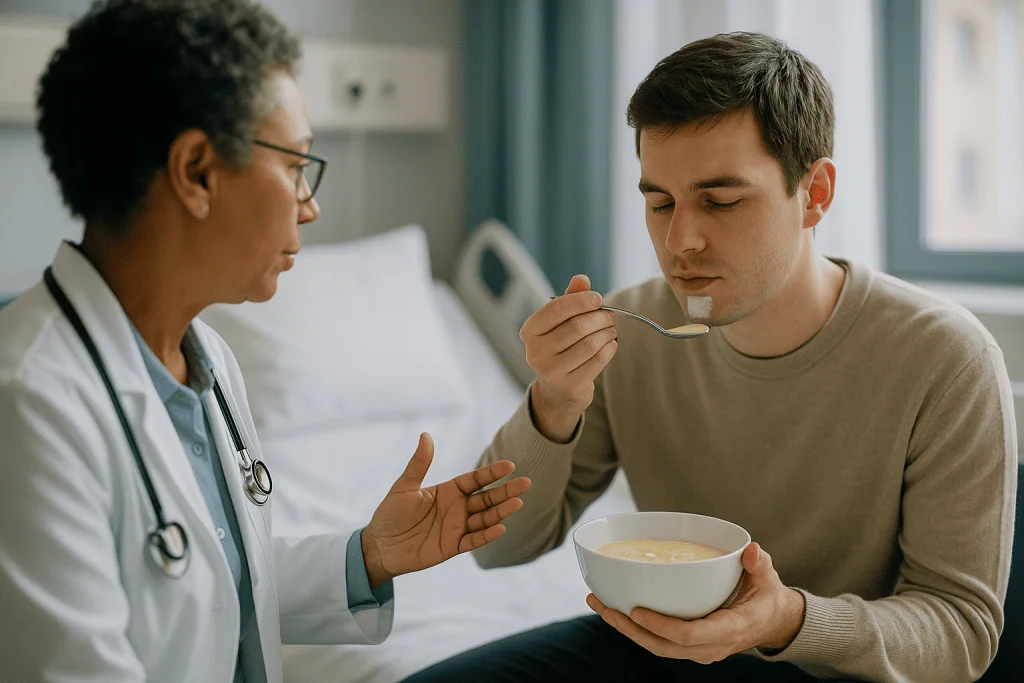
Think in stages rather than rules. Move up only as your surgeon confirms, and drop back a stage if chewing hurts or the incision bleeds.
| Stage | Typical window | What usually works | What to avoid |
|---|---|---|---|
| Liquids | Days 1–2 | Water, broth, strained soup, smoothies, protein and yogurt drinks | Straws, very hot drinks, alcohol, fizzy drinks if they sting |
| Puree | Days 2–7 | Mashed potato, blended soups, applesauce, scrambled egg, oatmeal, pudding | Seeds, nuts, crumbs, spicy or acidic foods that burn the incision |
| Soft solids | Weeks 2–6, team-guided | Pasta, flaky fish, soft rice, well-cooked vegetables, soft cheese, ripe banana | Crusty bread, steak, raw carrot, chips, popcorn, chewing gum |
| Normal diet | After bone is judged stable | Reintroduced gradually, hardest textures last | Nothing specific once cleared |
The windows in the table are typical ranges drawn from jaw-surgery guidance, not promises; your surgeon decides when the plates and bone can take real load. Two practical points get missed. Protein and calories keep a wound healing, so eat small amounts often rather than skipping meals because chewing is tedious. And temperature matters more than people expect: lukewarm is kinder than hot to swollen tissue, while ice-cold foods soothe without any harm to the incision.
How do I brush my teeth and rinse without disturbing the incision?
Plaque does not pause for surgery. The National Institute of Dental and Craniofacial Research recommends brushing twice a day with a fluoride toothpaste and cleaning between the teeth daily, and that advice still stands, with modifications, while the incision heals. Bacteria that build up along the lower front teeth drift straight onto the stitched gum line below them, and a neglected mouth is the main avoidable route to a wound infection.
The method is simple. Use the softest brush you can find, ideally a small-headed child’s brush or a post-surgical brush, and hold it like a pencil rather than a fist. Brush the upper teeth and the back lower teeth normally. For the lower front teeth, angle the bristles toward the biting edge and sweep away from the gum rather than toward the incision, and leave the inside of the lip entirely alone until your team clears it, usually once the dissolvable stitches have loosened. Running the brush under warm water first softens the bristles. Flossing the lower front teeth usually waits a week or two; floss everything else.
Rinsing starts after the first 24 hours. NHS guidance suggests a warm salt-water rinse after meals and at bedtime; let it bathe the area, then tip it out instead of swishing hard or spitting forcefully. Some surgeons prescribe an antiseptic mouthwash containing chlorhexidine, which reduces plaque bacteria on the mucosa, for a limited period; prolonged use can stain teeth, so keep to the duration your team sets. A clean cotton swab dipped in the rinse can lift food from around the stitches if brushing feels too close. Whatever you use, the goal is a mouth that looks and smells clean by the end of week one.
Is swelling normal after genioplasty?
Yes, swelling is normal after genioplasty, and the amount often surprises people who were braced for a small operation. The chin is a tight compartment with thin skin over bone, so even modest fluid makes it look dramatically fuller, and the lower lip, which was stretched to reach the incision, swells with it. NHS oral-surgery guidance describes swelling of the mouth and cheeks that is worst in the first few days and then improves gradually; after chin surgery most of it has eased by the end of week two, leaving a firmer fullness over the bone that fades across the six-to-twelve-week healing window Mayo Clinic gives for jaw surgery.
Bruising follows a predictable color journey from purple to yellow-green and often tracks down into the neck with gravity. That drift is expected. Three things help: keep the head elevated, including at night; keep cold packs going in the first two days and switch to warm compresses afterward only if your team agrees; and stay gently mobile, because walking improves circulation and lymph drainage better than lying flat all day. Salt-heavy processed foods hold fluid, which is one more argument for simple home-prepared purees.
Uneven swelling is common too, because the two sides rarely drain at the same pace. What deserves attention is the direction of travel rather than the size. Swelling that was improving and then grows again, becomes hot and tense, or arrives with fever or a foul taste from the incision points toward infection or a collection of blood (a hematoma), and that belongs in a phone call to the surgical team rather than on a wait-and-see list.
How to sleep after genioplasty
Nights are where most of the early discomfort lives, partly because lying flat lets fluid pool in the face and partly because people roll onto the chin. Sleeping with the head and shoulders raised, on a wedge, a stack of pillows or in a recliner, for roughly the first week keeps overnight swelling down and reduces the throbbing that comes with a congested, dependent chin. Elevation is the single most useful sleep adjustment and it needs no special equipment.
Back-sleeping is the default. Side-sleepers can wedge a pillow against each flank as a gentle barrier; stomach-sleepers, who press the chin into the mattress, are usually asked to avoid that position for several weeks while the fixation settles. A travel neck pillow stops the head lolling sideways. If you wear a chin support dressing, wear it to bed as instructed; it doubles as a reminder not to rub the area.
Dry mouth is the other night problem. Swollen lips often will not seal, so you breathe through your mouth and wake with a parched incision and a sticky film over the stitches. A glass of water on the nightstand, a humidifier in a dry room and a brief warm salt-water rinse first thing in the morning handle most of it. Expect two or three poor nights; sleep usually improves in step with swelling.
If the team prescribed any sedating medicine, tell them about snoring, breath-holding or waking gasping, especially if you had the operation for sleep apnea, because sedatives can deepen those pauses. Alcohol is best avoided during the healing weeks for the same reason, as well as for its effect on bleeding and on the medicines you are taking.
Why is my lip numb after genioplasty, and will it come back?
The mental nerve exits the lower jaw through a small opening below the premolars on each side and supplies feeling to the lower lip, the chin skin and the gum in front of it. A sliding genioplasty cut runs a short distance beneath that opening, and the nerve is held aside during the operation, so temporary altered sensation in the lip and chin is one of the most common findings afterward. Mayo Clinic lists nerve injury among the recognized risks of jaw surgery; in most people the change reflects a stretched or bruised nerve rather than a cut one, and feeling returns as the swelling around it subsides.
What it feels like varies: dense numbness, pins and needles, a tight band, or an odd buzzing when the lip is touched. Sensation typically improves over weeks to months, often announcing itself as tingling, and that tingling is a good sign rather than a bad one. Because you cannot feel the lip properly, it is easy to bite it or scald it on hot drinks, which is a practical reason for the lukewarm-food rule, and easy to dribble without noticing. Check the lip in a mirror after meals until feeling returns.
Some people, particularly older adults or those who had a larger movement, keep a patch of reduced sensation for longer. MedlinePlus advises reporting numbness that is worsening, spreading, or accompanied by weakness, since those features need assessment. Your surgeon will usually map the numb area at each visit and watch it shrink. Nerve recovery cannot be hurried by supplements or gadgets; no product has been shown to shorten it. Time, protection from injury and patience are what the evidence supports.
Genioplasty recovery timeline: what the following weeks usually look like
Everyone heals at a different pace, but the shape of the curve is consistent enough to plan around. These ranges reflect jaw-surgery guidance from Mayo Clinic and oral-surgery recovery advice from the NHS; your own team’s milestones override them.
Days 1–3. Peak swelling, bruising, lip stiffness and a liquid-to-puree diet. Talking is tiring and smiling looks strange. Rest, elevation and cold packs.
Days 4–7. Swelling plateaus and starts to fall. Many people reduce prescribed pain medicine toward the end of the week, on their clinician’s advice. Salt-water rinses and careful brushing become routine; the dressing usually comes off at the first follow-up, and the incision is checked for trapped food and stitch irritation.
Weeks 2–3. The NHS puts general oral-surgery recovery at up to two weeks; after a bone-moving genioplasty this is when many people return to desk work and social life, still swollen, on soft solids. Dissolvable stitches shed. Numbness begins to prickle.
Weeks 4–6. Mayo Clinic puts initial jaw healing at about six weeks. Firmer foods are often cleared in this window, exercise resumes progressively, and the chin starts to look like a chin rather than a bruise.
Weeks 6–12 and beyond. Complete bone healing takes up to roughly 12 weeks. Residual firmness softens, sensation keeps returning, and the surgeon assesses the final position, sometimes with an X-ray. The shape you were aiming for is sensibly judged only once that window has passed.
Two caveats. Implant genioplasty involves less bone healing and usually a shorter diet restriction, though incision care is identical. A genioplasty combined with full jaw surgery follows the slower jaw-surgery timeline, with elastics or a splint adding their own rules about eating and cleaning.
Pain relief, medicines and the habits that slow healing
Pain after genioplasty is usually described as pressure and aching rather than sharp pain, worst on days two and three when swelling peaks, then easing. Surgeons commonly use a combination of a simple analgesic, which dampens pain signaling in the brain and spinal cord, and a non-steroidal anti-inflammatory drug, which blocks the enzymes that make the chemicals driving swelling and pain at the wound. Some add a short course of an opioid analgesic for the first days; others avoid it. A brief preventive antibiotic course is sometimes prescribed because the incision sits in a bacterial environment, though practice varies and evidence for routine use is mixed. What to take, how much and for how long is entirely for the prescribing clinician, and this article deliberately gives no amounts. If a medicine is not working, or causes nausea, rash or constipation, tell the team rather than adjusting it yourself.
Certain habits measurably slow healing. Smoking tops the list: nicotine narrows blood vessels, carbon monoxide displaces oxygen, and the sucking action stresses the incision, which is why NHS oral-surgery advice is to avoid smoking during recovery. Vaping is not a safe substitute from the wound’s point of view. Alcohol thins the blood, dries the mouth and interacts with many pain medicines. Hard exercise in the first couple of weeks raises blood pressure and can restart bleeding or worsen swelling; walking is encouraged, while lifting and running wait for clearance.
Nutrition is the quiet ally. Wound and bone healing draw on protein, vitamin C, zinc and calcium, which a varied soft diet supplies. Supplements beyond a normal diet have not been shown to speed genioplasty recovery, so spend the effort on meals rather than pills.
Is genioplasty the hardest plastic surgery to recover from, and what is life like after jaw surgery?
Search engines are full of the question of which plastic surgery is hardest to recover from, and genioplasty gets pulled into it because it is bone surgery with the recovery happening in your mouth. The honest answer is that no evidence-based ranking exists; difficulty depends on the person, the extent of the operation and what is combined with it. A chin implant through a small intraoral incision is, for most people, a one-to-two-week inconvenience. A sliding genioplasty is harder in the first week because of swelling and diet, but it changes nothing about the bite and needs no elastics. A genioplasty performed as part of full orthognathic surgery is in a different league, with weeks of restricted jaw movement, and people who have had both tend to describe the chin as the easy part.
So what is life like after jaw or chin surgery once the dramatic phase ends? Mostly ordinary, with footnotes. You eat carefully for a month or so and become briefly expert in soup. You notice your lower lip in a way you never did, because of the numbness, and you check it after coffee. Photographs look odd for several weeks, then stop looking odd. The incision becomes a faint firm ridge inside the lip that your tongue finds for a while and then forgets.
A few lasting changes are worth naming. Plates and screws usually stay permanently and rarely cause trouble, though they can occasionally be felt through thin tissue. The gum in front of the lower incisors can recede slightly in some people, one reason dental check-ups after surgery matter. Sensation can take months to normalize fully. None of this is a reason to fear the operation; it is the realistic texture of recovery that a glossy summary leaves out.
What people often get wrong about genioplasty aftercare
“Don’t brush until the stitches are gone.” The opposite is true. Skipping brushing lets plaque colonize the gum line directly above the incision, and infection risk climbs with every day of neglect. Brush everything you can reach gently from day one and expand from there.
“Rinse hard and often to flush it out.” Vigorous swishing and forceful spitting in the first day can disturb the clot, and later it irritates the stitches. Let a warm rinse sit, then tilt it out.
“My teeth weren’t touched, so I can eat normally.” Chewing loads the lower jaw and the muscles anchored at the chin, and crumbs lodge in the incision. The soft diet protects the fixation and the wound, not the teeth.
“The chin will look like this forever.” The boxy chin of week one and the overly prominent chin of week three are both temporary. Mayo Clinic’s six-to-twelve-week healing window is the earliest sensible point for judging shape.
“Numbness means the nerve is cut.” Most altered sensation reflects a stretched or bruised nerve that recovers over weeks to months. Worsening or spreading numbness is the version to report.
“Antibiotics make hygiene optional.” No medicine substitutes for mechanical cleaning. Antibiotics, where prescribed, lower bacterial load briefly; the toothbrush and rinse do the daily work.
“Straws are fine because the wound is on the gum.” Suction pulls on the whole vestibule and can restart bleeding, which is why NHS oral-surgery guidance discourages anything that creates pressure in the mouth early on. Cups and spoons for the first days.
“Side-sleeping is fine if I’m careful.” Pressure plus warmth on a healing chin invites lopsided swelling and discomfort. Elevated and on the back is the sensible default for the first week or so.
Questions to ask your care team
Written instructions vary between surgeons, and the most useful conversation you can have is the one that turns a general guide into your specific plan. Take this list to your pre-operative visit or first follow-up.
- Is my procedure a sliding genioplasty or an implant, and how does that change what I can eat and when?
- Where exactly is the incision, and are the stitches dissolvable? When are they expected to loosen?
- When may I start rinsing, and should I use salt water, a prescribed antiseptic rinse, or both?
- Which teeth can I brush from day one, and when can I brush the lower front gum line and the inside of the lip?
- How long will I wear the chin dressing or tape, and may I remove it to wash?
- What diet stage should I be on at each follow-up, and what is the signal to move up?
- How much swelling and bruising do you expect for a movement of my size, and when would you be concerned?
- What area of numbness is typical after my operation, and how will you track it?
- Which medicines are you prescribing, what is each one for, and which side effects should prompt a call?
- When can I return to work, drive, exercise, and sleep without elevation?
- Will the plates stay permanently, and under what circumstances would you remove them?
- What number do I call out of hours, and which symptoms do you want to hear about straight away?
Write the answers down or ask a companion to; the early days after surgery are a poor time to rely on memory. If an answer surprises you, say so. A good team would rather explain the reasoning than have you quietly follow an internet timeline that was written for somebody else’s chin, and every decision about your diet, your medicines and your return to normal activity rests with them.
When to call your doctor
Most of what you notice in the first two weeks, swelling, bruising, a stiff lip, a sore incision, pink-tinged saliva and patchy numbness, is expected. A short list of signs is not, and the right response to any of them is a same-day call to your surgical team or, for the most serious, emergency care.
Call the surgical team the same day if you notice:
- Bleeding from the incision that does not stop with firm, sustained pressure on gauze, or that keeps returning.
- Swelling that was improving and then increases, becomes hot, tense or shiny, or spreads under the jaw or into the neck.
- Fever, chills, a foul taste or pus from the incision, or wound edges separating to expose a plate or bone; the CDC lists fever, redness, pain and drainage as signs of a surgical site infection.
- Pain that escalates after day three instead of easing, or that the prescribed medicine no longer controls.
- Numbness that is spreading or worsening, or any weakness of the lip or lower face.
- Inability to keep fluids down for more than a day, signs of dehydration, or a reaction to a medicine such as rash or severe nausea.
- Clicking, movement or an obvious change in chin position after a knock or fall.
Seek emergency care immediately if there is difficulty breathing or swallowing, swelling that pushes the tongue upward or closes the throat, severe uncontrolled bleeding, chest pain or sudden breathlessness, or a calf that becomes painful and swollen, which NHS guidance describes as possible signs of a blood clot after any operation. Confusion, a very fast heartbeat or mottled skin alongside fever can indicate sepsis and also need emergency assessment.
Do not wait for a scheduled appointment to report any of the above. A call that turns out to be unnecessary is a small thing; a delayed call can turn a manageable problem into a serious one. Your treating team makes every decision about what happens next.
Frequently asked questions
Is swelling normal after genioplasty?
Yes. Swelling of the chin and lower lip is expected and is usually at its worst in the first few days before improving gradually, according to NHS guidance on recovery from oral surgery. A firmer fullness over the bone can persist across the six-to-twelve-week healing window Mayo Clinic describes for jaw surgery. Swelling that grows again after improving, becomes hot and tense, or comes with fever should be reported to your surgical team the same day.
What is chin surgery (genioplasty) and how is it done?
Chin surgery, or genioplasty, reshapes or repositions the bony chin. In a sliding genioplasty the surgeon cuts the chin bone below the tooth roots, moves the segment, and fixes it with small plates and screws; an implant genioplasty places a shaped implant over the bone instead. Both are usually performed through an incision inside the lower lip, which avoids a facial scar but means the wound heals in the mouth.
How long do I need soft food after chin surgery?
Typically liquids for the first day or two, purees for the first week, then soft solids until your surgeon confirms the bone is stable, often around the six-week mark that Mayo Clinic gives for initial jaw healing. Implant genioplasty usually involves a shorter restriction; genioplasty combined with jaw surgery a longer one. The purpose is to avoid loading the fixation and to keep crumbs out of the incision, so the final timing always rests with your team.
How should I sleep after genioplasty?
On your back with the head and shoulders raised, on a wedge, pillows or a recliner, for roughly the first week. Elevation limits overnight swelling and throbbing. Side pillows can stop you rolling, and stomach-sleeping is usually avoided for several weeks because it presses on the chin. Keep water nearby for the dry mouth that comes with swollen lips, and wear any chin dressing to bed as instructed by your surgeon.
What is the hardest plastic surgery to recover from?
There is no evidence-based ranking. Recovery difficulty depends on the person, the extent of surgery and what is combined with it. A chin implant is usually a one-to-two-week inconvenience, a sliding genioplasty is tougher in the first week because of swelling and diet, and genioplasty done with full orthognathic surgery follows the longer jaw-surgery timeline. Mainstream guidance frames recovery as a range of weeks rather than a contest between operations.
What is life like after jaw surgery or genioplasty?
Mostly ordinary after the first two weeks, with footnotes. You eat carefully for about a month, check a numb lower lip after hot drinks, and watch swelling settle across the six-to-twelve-week healing period Mayo Clinic describes. The incision becomes a faint ridge inside the lip. Plates usually stay permanently, sensation can take months to normalize fully, and regular dental check-ups matter because gum around the lower front teeth can recede slightly.
When can I brush my teeth after genioplasty?
Usually from day one, gently, for every tooth you can reach without touching the lower front gum line or the inside of the lip. Use the softest small-headed brush available, sweep away from the incision, and keep brushing twice daily with fluoride toothpaste as the National Institute of Dental and Craniofacial Research recommends. Brushing near the stitches and flossing the lower front teeth usually wait until your surgeon clears them.
Can I use mouthwash after chin surgery?
Not in the first 24 hours; NHS guidance for oral surgery advises against rinsing on day one so the clot is not disturbed. After that, warm salt-water rinses after meals and at bedtime are the standard. Some surgeons prescribe an antiseptic rinse containing chlorhexidine for a limited time; it can stain teeth with prolonged use, so follow the duration your team sets. Let any rinse bathe the area and tip it out rather than swishing hard.
Why is my lip numb after genioplasty?
The mental nerve, which supplies feeling to the lower lip and chin, exits the jaw just above the bone cut and is held aside during surgery. Temporary altered sensation is therefore common and usually reflects a bruised or stretched nerve that recovers over weeks to months, often beginning as tingling. MedlinePlus advises reporting numbness that is spreading, worsening or accompanied by weakness, as those features need assessment by your surgical team.
What does the genioplasty recovery timeline look like?
Peak swelling and a liquid diet in days one to three; swelling falling and routine rinsing by the end of week one; many people back at desk work on soft solids by week two or three; initial bone healing at about six weeks and complete healing at up to 12, according to Mayo Clinic’s jaw-surgery guidance. Shape is best judged after that window. Your surgeon’s milestones, not a general timeline, govern each step.
References
- NHS: Wisdom tooth removal, recovery
- NIH National Institute of Dental and Craniofacial Research: Oral hygiene
- CDC: About surgical site infections
- MedlinePlus: Surgical wound care, closed
This article is for general information only and is not a substitute for professional medical advice. Please consult a qualified doctor about your individual situation.
Add us as a Preferred Source to see more of our trusted health content across Google Search, AI Overviews and Discover.

Planning This Treatment in Turkey
Our full guide for international patients: techniques, hospital stay, recovery and cost.
More from the Blog

How Do You Prepare for Cosmetic Surgery? Tests, Smoking Cessation and Anesthesia Review
Preparing for cosmetic surgery means completing a pre-operative assessment with your surgical and anesthesia teams, having any blood tests or heart checks they request,…

Eating, Talking and Stretching the Lip After a Lip Lift: Habits to Change While You Heal
After a lip lift, the main things to avoid in the first one to two weeks are wide mouth opening, hard or messy foods,…
Is Rhinoplasty Right for Your Nose? Skin Thickness, Breathing and Health Factors Explained
A good rhinoplasty candidate is usually an adult whose facial growth is complete, who is in stable general health, does not smoke, has a…

Dimple Creation Surgery Recovery: Swelling, Mouthwash Routine and When the Dimple Softens
Dimpleplasty recovery is usually short and mostly about the inside of the cheek: mild swelling and soreness for the first several days, a saltwater…

Are Buccal Fat Removal Results Permanent? How Cheeks Age After the Fat Pad Is Reduced
Buccal fat removal is generally considered permanent because the portion of the buccal fat pad that is taken out does not grow back, according…
Who Is a Candidate for Cheek Augmentation? Flat Midface, Volume Loss and Skin Thickness
A typical cheek augmentation candidate is a healthy nonsmoking adult whose facial growth is complete and who has a flat or under-projected midface, age-related…