

Soft Tissue Injury Healing Stages: Why Sprains, Strains and Bruises Heal at Different Rates

Key Takeaways
- Bruises usually fade within about two weeks because skin and fat are rich in blood and lymph vessels; ligaments and tendons heal far more slowly because their dense collagen carries few vessels.
- Every soft tissue injury moves through the same three stages, inflammation, proliferation and remodeling, and remodeling of ligament collagen can continue for months after pain has gone.
- Most mild sprains and strains feel much better within two weeks, but the NHS advises avoiding strenuous exercise such as running for up to eight weeks to reduce re-injury risk.
- A completely torn ligament can hurt less than a partial tear in the first hours; instability and inability to bear weight, not pain intensity, are the signs that need assessment.
- Rest in the first two to three days means avoiding provoking movements, not immobility; prolonged complete rest weakens surrounding muscle and typically lengthens recovery.
- Anti-inflammatory medicines reliably reduce pain, but whether blunting early inflammation changes healing time is unproven in people; any change to prescribed medicines belongs with the prescriber.
Soft tissue injury healing time depends on what was damaged and how well it is supplied with blood. Bruises usually fade within about two weeks, most mild sprains and strains feel noticeably better in two weeks, and returning to strenuous exercise commonly takes six to eight weeks. Severe ligament or tendon injuries can take months, because these tissues have a poor blood supply and remodel slowly.
A runner rolls her ankle on a curb, hobbles home, and by bedtime the outside of her foot looks like a plum. Her partner, who took an elbow to the thigh in a pickup basketball game the same afternoon, has a bruise the size of a coaster. Two weeks later his thigh is a faint yellow smudge. Her ankle still swells by evening and protests on stairs. Same day, same household, wildly different recoveries.
That gap is not bad luck. It is biology. Soft tissue injury healing time is governed by which tissue tore, how much of it tore, and, above all, how much blood reaches the damaged spot. Muscle is generously supplied and repairs quickly. Ligaments and tendons are built for strength, not for blood flow, and they mend at a slower, more deliberate pace.
This explainer walks through the three stages every soft tissue injury passes through, why a bruise, a strain and a sprain move through them at different speeds, what honest evidence says about speeding things up, and which signs mean the injury deserves a clinician’s eyes rather than another week of waiting.
What counts as a soft tissue injury?
“Soft tissue” is a catch-all term for everything in the musculoskeletal system that is not bone: muscle, the tendons that anchor muscle to bone, the ligaments that tie bone to bone, and the fat and connective layers beneath the skin. When any of these is stretched, torn or crushed by force, clinicians call it a soft tissue injury. Three types account for most of what shows up in urgent care after a weekend of sport or a slip on wet leaves.
A sprain is an overstretched or torn ligament. Ligaments are short bands of dense collagen that hold a joint together, so sprains happen at joints, the ankle, knee, wrist and thumb most often. A strain is the same kind of damage in a muscle or its tendon; the hamstring, calf and lower back are frequent sites. A bruise, or contusion, is bleeding from small vessels crushed beneath intact skin; the pooled blood is what turns the area purple.
The distinction matters because the tissues are built differently. Muscle is roughly three-quarters water and threaded with capillaries, which is why a torn muscle bleeds visibly and swells fast. Ligament and tendon are tightly packed collagen fibers arranged like the strands of a rope, with comparatively few vessels running through them. That design gives them tensile strength close to steel cable by weight, at the cost of slow repair.
MedlinePlus and Mayo Clinic both note that sprains and strains share the same early symptoms, pain, swelling, bruising and limited movement, so the two are often only told apart by where the tenderness sits and what movement provokes it. Fractures can mimic both, which is one reason a clinician, not a mirror, should judge any injury that cannot bear weight. Keep that overlap in mind: the label a clinician gives an injury tells you a good deal about how long it is likely to take.
What are the three stages of soft tissue healing?
Whether the damage is a bruised thigh or a torn ankle ligament, the body follows the same three-act script. The acts overlap rather than hand off cleanly, and their length is what changes from tissue to tissue.
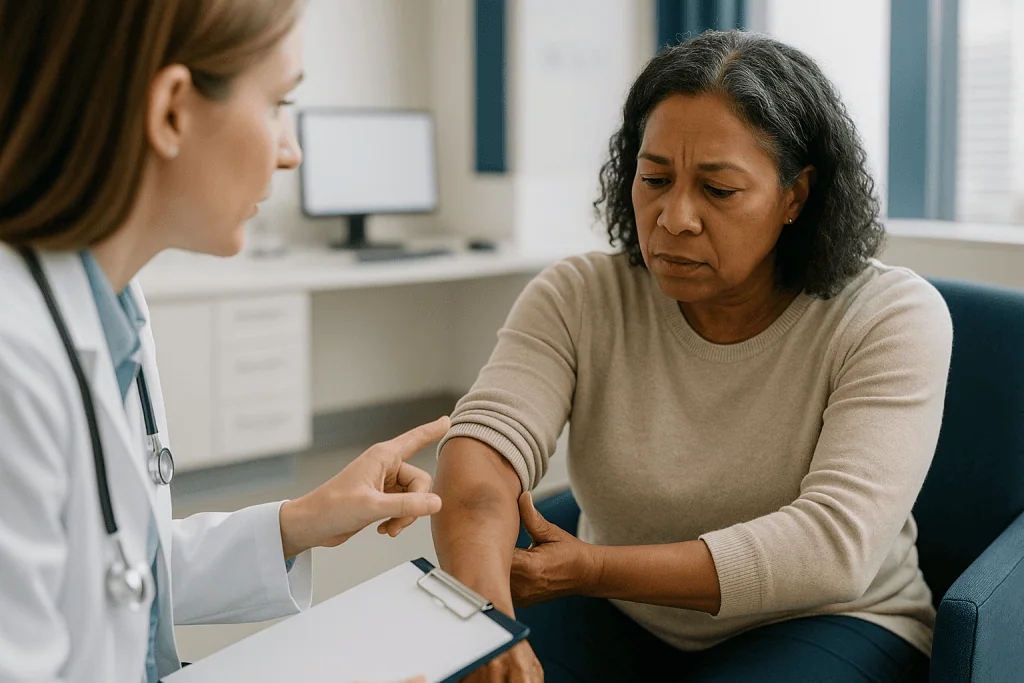
Stage one: inflammation. In the first minutes, torn vessels bleed and then clot. Over the next hours, the clot becomes a scaffold, and white blood cells arrive to clear debris and dead fibers. Chemical messengers widen local vessels, which is why the area becomes warm, red, swollen and sore. Inflammation has a bad reputation, but it is the demolition crew that makes construction possible. In most uncomplicated injuries this stage dominates the first few days.
Stage two: proliferation, or repair. Specialized cells called fibroblasts move in and lay down new collagen, initially a weaker, disorganized type. New capillaries sprout into the area to feed the work. The tissue that forms is scar, not a perfect replica of what was there. This stage typically runs from a few days to several weeks after injury, which aligns with the NHS observation that most sprains and strains feel substantially better within two weeks.
Stage three: remodeling. The body swaps immature collagen for the stronger, more organized type and aligns the fibers along the lines of stress the tissue actually experiences. This is why controlled loading matters: fibers organize in response to pull. Remodeling can continue for months, and for dense ligament or tendon, up to a year or longer, long after pain has faded. The NHS notes that severe sprains and strains can take months to return to normal, which is remodeling in plain language.
Understanding these stages of soft tissue healing turns an abstract “it takes time” into something you can picture: first clean-up, then rough patching, then months of quiet reinforcement.
Soft tissue injury healing time: why blood supply sets the pace
If you remember one mechanism from this article, make it this: healing speed tracks blood supply. Every stage described above depends on delivery, of oxygen, immune cells, fibroblasts, amino acids for collagen, and the growth signals that tell cells to get to work. Tissue with a dense capillary network gets those supplies quickly and in volume. Tissue with sparse vessels waits.
Muscle sits at the fast end. It is one of the most vascular tissues in the body, which is why a moderate hamstring strain that felt catastrophic on day one is often walkable within days and jog-ready within a few weeks. Skin and the fat beneath it are similarly well supplied, so the pooled blood of a bruise is broken down and carried away on a predictable schedule.
Ligaments and tendons sit at the slow end. Their collagen bundles are packed so tightly that vessels run mostly along the surface and between bundles rather than through them. Injured fibers deep in the structure are effectively at the end of a long supply road. Cartilage, which lines joint surfaces, has almost no direct blood supply at all and heals poorly, a separate problem beyond this article’s scope.
Location within a tissue matters too. The anterior talofibular ligament on the outside of the ankle, the one most commonly sprained, has a modest supply and is stressed with every step, a combination that helps explain why ankle sprains linger. Contrast that with a small tear in the belly of the calf muscle, which is bathed in blood and can be rested simply by not pointing the toes hard.
Age, smoking, diabetes and certain long-term medicines can narrow vessels or blunt the cellular response, stretching timelines further. None of these are reasons for gloom; they are reasons to expect a longer runway and to plan rehabilitation accordingly.
How long does a sprain take to heal by grade?
Clinicians grade sprains by how much of the ligament tore, and grade is the single best predictor of timeline. The NHS and Mayo Clinic describe the picture below in slightly different words; the ranges are typical, not promises, and your own recovery may sit outside them.
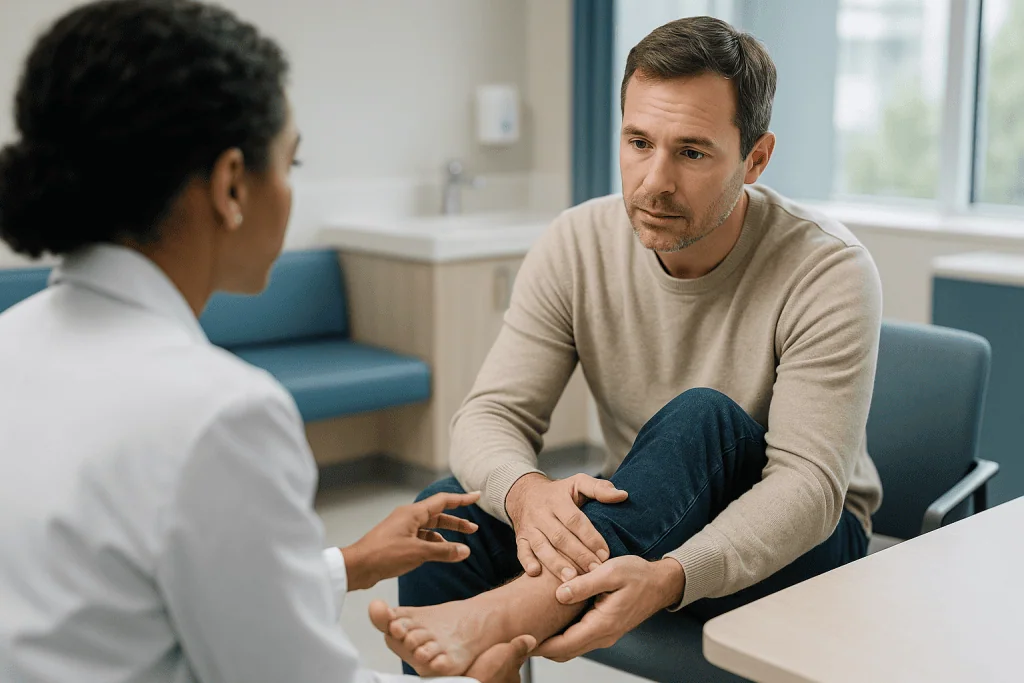
| Grade | What happened to the ligament | Typical features | Typical time to feel better (NHS / Mayo Clinic) |
|---|---|---|---|
| Grade 1 (mild) | Fibers stretched, a few micro-tears | Mild swelling and tenderness; joint stable; can usually bear weight | Most feel better within about 2 weeks; strenuous sport often waits up to 8 weeks |
| Grade 2 (moderate) | Partial tear | Noticeable swelling and bruising; some looseness; weight-bearing painful | Several weeks to a few months; return to sport is guided by strength and balance, not the calendar |
| Grade 3 (severe) | Complete tear or pulled from bone | Marked swelling, joint may feel unstable or give way; may not bear weight | Months; may need immobilization or, in some cases, surgical repair |
Two details surprise people. First, a grade 3 sprain sometimes hurts less than a grade 2 in the first hours, because a fully torn ligament is no longer being tugged. Instability, not pain intensity, is the warning sign. Second, the two-week mark the NHS cites is when most people feel better, not when the ligament is back to full strength. Remodeling of collagen carries on well beyond that, which is why returning to cutting sports at two weeks on a moderate sprain often ends in a second sprain.
Mayo Clinic advises that any sprain where you cannot move or bear weight on the joint, where there is pain directly over bone, or where numbness develops should be assessed, because those features point to fracture or a severe tear rather than a simple sprain. Grading is a clinical judgment, sometimes supported by imaging, and belongs to the treating team.
How long does a muscle strain take to heal?
Muscle strains follow the same three grades, but because muscle is so well supplied with blood, each grade tends to move faster than the equivalent ligament sprain. Mayo Clinic describes mild strains as responding to home care within a few weeks, while severe strains, meaning a large partial or complete tear, can take considerably longer and occasionally need surgical repair.
The pattern of a strain is distinctive. There is often a sudden sharp pull mid-movement, a sprinter’s hamstring at full stride or a tennis player’s calf lunging for a wide ball. Within a day or two, bruising may appear below the injury rather than on it, because gravity draws the leaked blood downward through the tissue planes. That migrating bruise alarms people, but it is a normal feature of a bleeding muscle and not, on its own, a sign of worsening.
What slows a strain down is re-injury during the repair stage. New collagen laid down in the first two to three weeks is weak and disorganized, and a full-effort sprint at that point can tear it again, resetting the clock. Rehabilitation programs for hamstring and calf strains therefore progress in steps, from pain-free walking to gentle lengthening, to strengthening through range, and only then to speed. Each step is earned by tolerating the previous one, not by a date.
Where the strain sits also matters. A tear in the fleshy belly of the muscle heals faster than one at the junction where muscle becomes tendon, since the tendon end shares the ligament’s poorer blood supply. Tears near that junction are a common reason a “simple” strain drags on past the expected window.
Low back strains deserve a word because they frighten people out of moving. Guideline advice from the NHS is consistent: stay as active as pain allows, since prolonged bed rest tends to prolong recovery rather than protect the back.
How long does a bruise take to heal, and why does it change color?
A bruise is the simplest soft tissue injury to time, because you can watch it happen. Cleveland Clinic describes the sequence: a fresh bruise looks red or pink as blood pools under the skin, deepens to blue or dark purple within a day or two as the blood loses oxygen, shifts to green as the hemoglobin in that blood is broken down into biliverdin, then to yellow or brown as it becomes bilirubin and is finally carried away. Most bruises fade within about two weeks. Large or deep bruises take longer.
That color journey is stage one and two of healing happening in plain sight. The clean-up crew, mostly macrophages, is dismantling spilled blood molecule by molecule and hauling the pieces off through lymphatic vessels. Because skin and fat are richly supplied with both blood and lymph, the job is done quickly.
Position affects appearance. Bruises on the shin, where skin sits directly over bone with little padding, often look worse and last longer than bruises on the thigh. Bruises low on the legs clear more slowly than those on the arms because the return journey to the heart is longer and works against gravity. Older skin bruises more easily and can take longer to clear as vessels become more fragile and the tissue beneath thins.
Occasionally a large bruise organizes into a firm lump called a hematoma, a collection of clotted blood that the body walls off. Most shrink over weeks; a hematoma in a muscle that stays hard, hot or increasingly painful should be reviewed, since it can rarely calcify or become infected.
Cleveland Clinic also flags bruising that appears without any remembered injury, bruises that keep multiplying, or bruising accompanied by bleeding gums or nosebleeds as reasons to see a clinician, because those patterns can signal a clotting or platelet problem rather than a bump.
Who can manage at home, and who is usually asked to be seen first?
Most sprains, strains and bruises never need a clinic. The NHS and MedlinePlus both describe a home-care pathway for mild injuries: a joint that is sore and swollen but stable, a muscle that aches but still works, a bruise that is fading on schedule. If you can put weight through the limb, move the joint through most of its range with discomfort rather than sharp pain, and the swelling is improving rather than growing after the first two days, home care is usually appropriate.
Certain features move an injury out of that group. Mayo Clinic advises assessment when you cannot bear weight or move the joint, when there is pain directly over a bone rather than the soft tissue beside it, when the joint looks deformed or feels unstable, or when there is numbness or tingling beyond the injured area. A snap or pop heard at the moment of injury, especially in the heel cord or knee, also earns a same-day look, since a complete tendon or ligament rupture is a different injury with different decisions.
Some people are asked to wait longer before self-managing or returning to activity even when the injury looks minor. Anyone on anticoagulant medicine, sometimes called blood thinners, can bleed more into a bruise or joint and should have a lower threshold for review. People with diabetes, peripheral vascular disease or long-term steroid use tend to heal more slowly, so what looks like a two-week sprain may need a longer, more supervised plan. Children with tenderness near a growth plate at the end of a bone should be assessed, because growth plates can be injured in ways that mimic a sprain.
Repeat injuries are a category of their own. An ankle that has sprained three times in two seasons is usually asked to complete a balance and strength program before returning to sport, because each sprain leaves the ligament a little longer and the joint a little less well protected. Who falls into which group is a clinical call made by the treating team with the injury in front of them.
What is the fastest way to heal a soft tissue injury? What the evidence actually says
There is no switch that shortens the repair or remodeling stages. Collagen is laid down and reorganized at a pace set by cell biology and blood supply. What you can influence is whether you lose ground: through re-injury, through prolonged immobility that weakens surrounding muscle, or through fear that stops you loading the tissue when loading is exactly what tells the fibers how to align. “Fastest” therefore means avoiding delay rather than adding speed.
The NHS home-care advice for the first days is to protect the area from further injury, rest it relative to normal activity, apply something cold wrapped in a cloth for short periods to ease pain, compress with a bandage to limit swelling, and keep it elevated. Beyond the first two to three days, the advice pivots: start moving the joint or muscle gently, and build activity gradually.
A widely discussed editorial in the British Journal of Sports Medicine, indexed on PubMed, proposed the acronyms PEACE and LOVE to summarize that pivot. PEACE covers the first days: Protect, Elevate, Avoid anti-inflammatories, Compress, Educate. LOVE covers what follows: Load, Optimism, Vascularization (meaning cardiovascular activity that does not stress the injury), Exercise. It is expert consensus, not a trial, and it deserves to be read that way. Its two most useful points are well supported elsewhere: early, pain-guided movement outperforms prolonged rest for most sprains, and expectations shape recovery, with people who believe they will recover tending to return to activity sooner.
Its most debated point is the suggestion to avoid routine anti-inflammatory drugs and ice, on the reasoning that blunting inflammation might blunt repair. The honest summary is that this is biologically plausible, supported by some laboratory and animal work, and not settled in people. Ice reliably reduces pain in the short term; whether it changes healing time either way is unproven. Nobody should change how they use a prescribed medicine on the strength of an acronym; that conversation belongs with the prescribing clinician.
How long should you rest a soft tissue injury?
Shorter than most people think, and never completely. Rest in the first 48 to 72 hours means avoiding the specific movements that provoke sharp pain and protecting the area from another impact. It does not mean lying on the sofa. The NHS advises gentle movement as soon as it is tolerable and warns that avoiding activity for too long can weaken muscle and stiffen the joint, lengthening rather than shortening recovery.
Think of rest as relative. A sprained ankle rests when you stop running but keep walking short distances on flat ground. A strained shoulder rests when you skip overhead lifting but keep swinging the arm as you walk. A bruised quadriceps rests when you stop squatting heavily but keep cycling gently. Each of these keeps blood moving through the injured area, which is the delivery system every healing stage depends on, without asking the new, weak collagen to bear more than it can.
Complete immobilization does have a place. Grade 3 sprains, tendon ruptures and some fractures need a boot, splint or cast so torn ends stay close enough to knit. That decision is made by a clinician after examination, sometimes after imaging, and it comes with a plan for when and how immobilization ends. Self-imposed immobilization of a mild injury, by contrast, is one of the commonest reasons a two-week recovery becomes a two-month one.
The signal to use is pain during and after activity. Mild discomfort that settles within a day is acceptable and often unavoidable. Sharp pain during movement, or pain and swelling that are noticeably worse the next morning, means the load was too much, too soon. Drop back a step, hold there for a few days, then try again. This dial-up, dial-down approach is how physical therapists structure rehabilitation, and it works because it lets the tissue, not the calendar, set the pace.
Return to sport is a separate threshold from return to daily life. The NHS advises avoiding strenuous exercise such as running for up to eight weeks after a sprain or strain to reduce the risk of further damage, a figure that describes typical caution rather than a rule.
What the first days and weeks usually look like
A plausible timeline for an uncomplicated moderate injury, drawn from NHS and Mayo Clinic guidance, runs something like this. Individual recoveries will run faster or slower, and any that stall or reverse deserve review.
Hours to day 3. Pain peaks, swelling builds and then plateaus, and bruising emerges and may spread or drift downward. Sleep is often disturbed because the throbbing worsens when the limb is level with the heart. Keeping the area elevated above heart level while resting and compressing it with a snug, not tight, bandage limits how much fluid pools. Warmth and redness near the injury are expected; warmth spreading well beyond it, or fever, is not.
Days 3 to 14. Swelling starts to recede and the joint or muscle tolerates gentle movement through part of its range. This is when the pivot from protection to loading begins: ankle circles, gentle heel raises, walking without a limp as the target. Bruises pass through their green and yellow phases. The NHS notes that most people feel much better by the end of this window, though “better” and “healed” are not the same word.
Weeks 2 to 6. Everyday function returns. Stairs, long walks and light work stop being a negotiation. Strength and balance work becomes the focus, because the muscles around an injured joint weaken quickly and protect it poorly until retrained. Stiffness first thing in the morning is common and usually eases within minutes of moving.
Weeks 6 to 12 and beyond. Gradual return to sport-specific movement: jogging before running, straight lines before cutting, controlled hops before jumping. Remodeling continues silently for months, so the ligament or tendon keeps gaining strength after it stops hurting. Mild ache after a hard session in this phase is common. A joint that swells after every session, or that gives way, is not on schedule and should be reassessed.
Do painkillers and anti-inflammatories change soft tissue injury healing time?
Two classes of over-the-counter medicine come up with nearly every sprain and strain, and they work in different ways. Simple analgesics such as acetaminophen act mainly in the central nervous system to raise the pain threshold; they do little to the inflammatory process itself. Nonsteroidal anti-inflammatory drugs, a class that includes ibuprofen and naproxen, block enzymes called cyclo-oxygenases that make prostaglandins, the chemical messengers driving much of the swelling, warmth and pain of stage one healing.
The NHS lists both classes as options for easing the pain of a sprain or strain, and the question is not whether they relieve pain, they do, but whether dampening inflammation changes the final result. The theoretical concern, raised in the PEACE and LOVE editorial and in laboratory studies, is that prostaglandins are also signals for the repair stage, so blunting them could delay collagen formation. Human evidence is mixed and mostly short-term. The most honest reading is that occasional use for comfort has not been shown to lengthen soft tissue injury healing time in a meaningful way, and that the question of prolonged use is unresolved.
What is better established is who should be cautious with the anti-inflammatory class for reasons unrelated to healing: people with kidney disease, heart failure, a history of stomach ulcers or bleeding, those on anticoagulants, and people in later pregnancy. These are conversations for a pharmacist or prescribing clinician, not for an article, and anyone already taking a prescribed medicine should not add, stop or swap anything on the basis of what they read here.
Topical anti-inflammatory gels deliver the same class of drug through the skin with lower levels reaching the bloodstream, which is one reason they are often suggested for superficial injuries. Bruises generally do not need medication at all; a cool compress and time do the work. Whichever route is chosen, the aim is to make movement tolerable during the repair stage, since movement is what drives remodeling, not to switch off a process the body needs.
What people often get wrong: myths about what not to do with soft tissue damage
Most delayed recoveries trace back to a handful of misunderstandings, some of them decades old.
“If it isn’t broken, it can’t be serious.” A complete ligament tear or a ruptured heel cord is not a fracture and does not show on a plain X-ray, yet either can cause lasting instability if missed. Mayo Clinic’s guidance to have any joint that will not bear weight or feels unstable examined exists precisely because “no fracture” is not the same as “nothing to see.”
“Rest until it stops hurting completely.” Pain often outlasts the point at which gentle loading is safe and useful. Waiting for zero pain typically means weeks of unnecessary stiffness and muscle loss. The NHS advises starting gentle movement within days, guided by comfort rather than by the absence of all sensation.
“Heat straight away helps it heal.” In the first two or three days, heat widens vessels and can increase bleeding and swelling in tissue that is still leaking. Heat is often soothing later, once swelling has settled, for stiffness during the remodeling months.
“Massage the bruise out.” Firm massage over a fresh bruise or torn muscle can restart bleeding into the tissue. Gentle movement helps the lymphatic system clear the debris; pressing hard does not speed it and may set it back.
“Walking it off proves it’s fine.” Adrenaline masks pain for an hour or two after injury. Continuing to play on a freshly sprained ankle is a common way to convert a grade 1 into a grade 2.
“A brace means the ligament is healed.” External support reduces the load on healing tissue; it does not replace strength and balance retraining, and long-term reliance on a brace without that retraining leaves the joint no better protected than before.
“Alcohol is fine, it’s only a sprain.” Alcohol widens vessels and impairs the balance that protects a sore joint. The NHS lists it among things to avoid in the first days.
Questions to ask your care team about your recovery
A five-minute consultation goes further when you arrive with specific questions. These are the ones that tend to change what people do next.
- Which tissue is injured, and what grade? The answer sets your expected timeline more than anything else. Ask whether the assessment is clinical or whether imaging was needed to be sure.
- Has a fracture or complete tear been ruled out, and how? If an X-ray was taken, ask what it showed and what it cannot show. If none was taken, ask what features made it unnecessary.
- What can I do this week, and what should I avoid? Ask for specifics: walk on flat ground, yes; run, not yet; drive, depends on which foot and how quickly you can brake.
- What are the signs that I am loading too much, too soon? Most clinicians will describe next-morning pain and swelling as the gauge. Ask them to put it in their own words for your injury.
- When should I start strengthening and balance work, and who should guide it? Ask whether a referral to physical therapy is appropriate and what the first exercises should be.
- What would make you want to see me again sooner? This turns the red-flag list into a personalized one.
- If this happens again, does that change the plan? Recurrent sprains are often managed differently from a first one.
- Are any of my regular medicines or conditions likely to slow this down? Anticoagulants, diabetes and steroids are worth naming out loud.
- Is there anything about pain relief I should know given my other medicines? Let the prescriber or pharmacist weigh the options rather than defaulting to what is in the cabinet.
Write the answers down or ask for them in a printed summary. Recovery plans are easy to misremember once the swelling goes down and life speeds back up.
When to call your doctor: red-flag signs that an injury needs review
Most sprains, strains and bruises improve steadily from day three onward. The signs below, drawn from NHS, Mayo Clinic and Cleveland Clinic guidance, mean the injury should be assessed rather than watched, some the same day and some urgently.
Seek urgent care the same day if: you cannot put weight through the limb or move the joint at all; the joint or limb looks deformed, bent at an odd angle, or a bone appears out of place; you heard or felt a snap or pop at the moment of injury, especially at the back of the ankle or in the knee; the skin over the injury is broken, or the area is numb, tingling, pale, cold or an unusual color; pain is severe and not eased by rest and elevation; or a head, neck or spine injury occurred at the same time.
Contact your doctor promptly if: swelling or pain is worse rather than better after two to three days; the joint feels loose or gives way when you stand; you develop a fever, or spreading redness, heat and increasing pain around the injury, which can signal infection; a bruise becomes a hard, hot or growing lump; a calf injury is accompanied by swelling of the whole lower leg, warmth and tenderness, since a blood clot can be mistaken for a strain; you are taking anticoagulant medicine and have any significant bruise or joint injury; or a child has tenderness near the end of a bone.
Book a review if: you are not noticeably better after two weeks of sensible home care, you are not back to normal daily activity after six to eight weeks, you have sprained the same joint repeatedly, or bruises are appearing without injury or alongside bleeding gums or nosebleeds.
None of these signs is a diagnosis. Each is a reason to let a clinician examine the injury, and every decision that follows, imaging, immobilization, referral or reassurance, sits with the treating team.
Frequently asked questions
What is the fastest way to heal a soft tissue injury?
There is no way to speed the biology, but you can avoid losing time. Protect and elevate the area for the first two to three days, then begin gentle, pain-guided movement and progressive loading, which tells new collagen fibers how to align. Avoiding re-injury during the weak early repair stage matters more than any product or technique. The NHS notes most sprains and strains feel better within two weeks with this approach.
What are the three stages of soft tissue healing?
Inflammation, proliferation and remodeling. Inflammation dominates the first few days, as clotting stops bleeding and immune cells clear damaged fibers. Proliferation follows over days to weeks, when fibroblasts lay down new but disorganized collagen and new capillaries grow in. Remodeling then replaces that immature collagen with stronger, aligned fibers over months. The stages overlap, and their length depends largely on the blood supply of the injured tissue.
How long should you rest a soft tissue injury?
Relative rest for about the first 48 to 72 hours, then gradual return to movement. Rest means avoiding the specific actions that cause sharp pain, not staying off the limb entirely. The NHS advises gentle movement as soon as it is comfortable and warns that prolonged inactivity stiffens joints and weakens muscle. Full immobilization is reserved for severe tears or fractures and is a decision made by a clinician after examination.
What not to do with soft tissue damage in the first few days?
Avoid heat, firm massage, alcohol and pushing through sharp pain in the first two to three days. Heat and massage can increase bleeding into tissue that is still leaking, alcohol widens vessels and impairs balance, and continuing to play on a fresh injury can turn a mild tear into a moderate one. Also avoid complete immobilization of a mild injury beyond a few days, which delays rather than protects recovery.
How long does a sprain take to heal compared with a strain?
Strains generally heal faster than sprains of the same grade because muscle has a far richer blood supply than ligament. Mayo Clinic describes mild strains as settling within a few weeks with home care. Mild sprains often feel better in about two weeks per the NHS, but ligament remodeling continues for months, so return to strenuous sport is usually delayed to around six to eight weeks and longer for moderate or severe sprains.
Why does a bruise change color as it heals?
The colors track the chemical breakdown of leaked blood. A fresh bruise is red or pink, turns blue or purple as the blood loses oxygen, becomes green as hemoglobin is converted to biliverdin, then yellow or brown as it becomes bilirubin and is cleared by the lymphatic system. Cleveland Clinic notes most bruises fade within about two weeks; deep bruises and those on the lower legs can take longer.
Why does my ankle still swell weeks after a sprain?
Swelling that returns after activity in the weeks following a sprain is common and usually reflects a joint that is still remodeling and being loaded slightly beyond its current tolerance. Ligaments have a poor blood supply and rebuild slowly, and the small vessels around the joint remain leaky for a while. Persistent swelling that does not improve week to week, or a joint that gives way, should be reviewed by a clinician.
Should I use ice or heat on a soft tissue injury?
Cold is used in the first two to three days mainly for pain relief, applied wrapped in a cloth for short periods, while heat is avoided during that window because it can increase bleeding and swelling. After swelling has settled, gentle heat can ease stiffness during the remodeling phase. Whether ice changes the underlying healing time is unproven; it reliably eases pain in the short term, which is its practical role.
Do anti-inflammatory medicines slow healing of sprains and strains?
Not clearly, based on current human evidence. Nonsteroidal anti-inflammatory drugs block prostaglandins that drive swelling and pain, and because those same signals also promote repair, some experts, including the authors of the PEACE and LOVE editorial, advise caution. Laboratory findings support the concern, but studies in people are mixed and short-term. Anyone taking prescribed medicines should discuss pain relief with their prescriber rather than changing anything on their own.
When is a soft tissue injury serious enough to see a doctor?
Same-day assessment is advised if you cannot bear weight or move the joint, the limb looks deformed, you heard a pop at the moment of injury, or the area is numb, cold or pale. Prompt review is also warranted if pain or swelling worsens after day three, the joint gives way, redness and fever develop, or you take anticoagulants. An injury that is not clearly improving after two weeks should be examined.
References
- NHS: Sprains and strains
- MedlinePlus: Sprains and Strains
- Cleveland Clinic: Bruises: Causes, Symptoms and Treatment
This article is for general information only and is not a substitute for professional medical advice. Please consult a qualified doctor about your individual situation.

More from the Blog

What Happens Years After Meniscus Surgery? Cartilage Wear and Realistic Expectations
Years after meniscus surgery, the knee's future depends mainly on how much meniscus tissue was removed and how healthy the cartilage was beforehand. Partial…

Does a Sprain or Strain Need an MRI? When Imaging Adds to a Soft Tissue Injury Exam
Most sprains and strains do not need an MRI. Clinicians usually diagnose them by asking how the injury happened and examining the joint or…

Does Bursitis Come Back? Why Flares Recur and What Long-Term Results Usually Look Like
Yes, bursitis can come back. Most flares settle within a few weeks with rest, ice and reduced pressure on the area, but recurrence is…
Does a Torn ACL Always Need Surgery? Who Copes Without Reconstruction and Who Does Not
Not always. Many people with a torn ACL, particularly those who do not play pivoting sports, regain a stable, working knee through structured rehabilitation…

Is Swelling After Ankle Arthroscopy Normal? What Helps and When to Call Your Team
Some swelling after ankle arthroscopy is expected and usually peaks in the first few days before easing over several weeks, because the joint is…
Preparing for Meniscus Surgery: The MRI Review, Fasting Rules and Medicine Checklist
Preparing for meniscus surgery usually involves three strands: an MRI review with your surgeon that clarifies whether the tear is likely to be trimmed…