

Supplements to Reduce Cortisol: Ashwagandha, Rhodiola, Magnesium: What Trials Actually Show

Key Takeaways
- Ashwagandha has the strongest trial support of any cortisol supplement, but studies are mostly 6–8 weeks long, small, and clustered at a few centers with manufacturer involvement.
- The NIH LiverTox database documents a series of ashwagandha-linked liver injuries appearing within weeks to months of starting, most resolving after the herb was stopped.
- NCCIH rates rhodiola's evidence as insufficient, and commercial rhodiola products are frequently adulterated with other species or contain less of the labeled compounds.
- Magnesium supplements have no good evidence of lowering cortisol in people who are not deficient, while roughly half of US adults fall short of recommended intake from food.
- A single morning cortisol blood test is a noisy snapshot; diagnosing true cortisol excess requires several different tests, so one-sample trial results deserve extra skepticism.
- Regular moderate exercise, adequate sleep and mindfulness practice have more consistent cortisol-rhythm data than most supplements, with no liver or thyroid risk.
Supplements to reduce cortisol have modest, mixed evidence. Ashwagandha has the most support: several small, short randomized trials found lower perceived stress and serum cortisol, but studies are brief and liver injury has been reported. Rhodiola and magnesium show weaker or inconsistent effects. None treats a true cortisol disorder, and anyone considering them should talk with a clinician first, especially if pregnant or taking thyroid or sedative medicines.
Scroll long enough through any wellness feed and you will meet the same face: puffy cheeks, a hand pressed to the belly, a caption blaming cortisol for everything from a bad night’s sleep to a stubborn waistline. As of early 2026, searches for supplements to reduce cortisol are climbing faster than almost any other stress-related phrase, pushed along by viral “cortisol face” and “cortisol belly” videos and by a steady stream of adaptogen products promising calm in a capsule.
The science underneath has moved too, though more quietly. The NIH Office of Dietary Supplements published its first dedicated ashwagandha fact sheet, pooling the small trials that fuel the hype and flagging a growing file of liver-injury reports. Rhodiola and magnesium ride the same wave with far less data behind them.
So here is the honest version: what cortisol really does, which trials exist, how strong they are, and where the marketing quietly outruns the evidence.
What cortisol actually does, and why "lowering it" is the wrong goal
Cortisol is a steroid hormone made by the adrenal glands, two small organs that sit on top of the kidneys. It is often called the stress hormone, which is a little like calling your car’s accelerator the “panic pedal”: it is used in emergencies, but you also need it to get to work.
Every morning, cortisol surges in the half hour after waking, a pattern researchers call the cortisol awakening response. That spike raises blood sugar, sharpens attention and gets you upright. Levels then fall through the day and bottom out around midnight. Cortisol also keeps blood pressure stable, tempers inflammation, and helps the body shift fuel between fat, protein and glucose. Cleveland Clinic describes it plainly as a hormone you cannot live without.
The problem is not cortisol itself but a rhythm that goes flat or stays high. Chronic psychological stress, poor sleep, shift work, heavy drinking and some illnesses can blunt the morning peak or keep evening levels elevated. That is the pattern linked, in observational studies, to poorer sleep, central weight gain and higher cardiovascular risk. The Harvard Health overview of the stress response describes how repeated activation of this system is thought to contribute to those outcomes.
Here is the point that most “cortisol supplements” marketing skips: healthy people do not want low cortisol. Too little causes fatigue, low blood pressure and dangerous drops in blood sugar. The sensible goal is a resilient daily rhythm, not a suppressed number. When you read a trial reporting a cortisol drop, the question worth asking is whether participants started unusually high, how the hormone was measured, and whether the change tracked with how they actually felt.
What are the symptoms of high cortisol?
Two very different things hide behind this question. One is the everyday experience of feeling wired, tired and stressed, which may or may not involve measurably high cortisol. The other is Cushing syndrome, a rare medical condition in which the body is exposed to too much cortisol for months, most often because of long-term steroid medicines and occasionally because of a tumor in the pituitary or adrenal gland.

Mayo Clinic lists the features doctors look for in true cortisol excess: weight gain concentrated in the trunk and upper back with thinner arms and legs, a rounded face, wide purple stretch marks on the abdomen, skin that bruises easily and heals slowly, acne, muscle weakness in the thighs and shoulders, high blood pressure and high blood sugar. Women may notice irregular periods and extra facial hair; men may notice reduced libido. Low mood, irritability and poor concentration are common.
Most people searching this phrase do not have Cushing syndrome. The NHS notes it is uncommon and that most cases are explained by steroid treatment rather than a tumor. Garden-variety stress tends to produce lighter sleep, a racing mind at bedtime, sugar cravings, headaches, and a heart that feels quick even at rest. Those symptoms overlap with anxiety, thyroid problems, depression, anemia and simple sleep debt.
That overlap is exactly why self-diagnosing a “cortisol problem” from a symptom list is unreliable. A clinician who hears “I think my cortisol is high” will usually ask about steroid use, including creams, inhalers and joint injections, check blood pressure and blood sugar, and consider whether a formal cortisol test makes sense. The specifics of those tests, and why a single blood draw misleads, come later in this piece.
What changed recently: new fact sheets and new safety signals
Three developments explain why this topic feels fresh rather than recycled.
First, the NIH Office of Dietary Supplements published a dedicated ashwagandha fact sheet in October 2023, its first professional-level summary of the herb. It concluded that the available randomized trials are small, short, mostly eight weeks or less, and largely conducted at a handful of centers, often with manufacturer involvement. It also catalogued the safety file in one place: documented cases of liver injury, a possible effect on thyroid hormone levels, and advice to avoid use in pregnancy.
Second, the liver story grew. The NIH LiverTox database, which tracks medicines and supplements linked to liver harm, now describes a series of case reports of ashwagandha-associated hepatitis, generally appearing within weeks to a few months of starting the herb and resolving after it was stopped. Several European food-safety authorities have since issued cautions or restricted sales. These remain rare events against millions of users, but they are no longer anecdotes.
Third, the viral framing changed. Where earlier trends sold adaptogens for “energy” or “focus,” the current wave attaches them to visible body changes: cortisol face, cortisol belly, cortisol cocktails. That shift matters because it turns a vague wellness claim into an implied medical one, and it pulls in people whose puffiness or weight gain may have entirely different causes.
Against that backdrop, the National Center for Complementary and Integrative Health, also part of NIH, continues to rate rhodiola’s evidence as insufficient, and the ODS magnesium fact sheet still finds no convincing proof that magnesium supplements reduce stress in people who are not deficient. The hype updated; the evidence base, for the most part, did not.
Do supplements to reduce cortisol work? What the evidence actually says
Grading evidence sounds academic until you realize it is the difference between a hunch and a reason. Medicine ranks evidence roughly like this: large, well-run randomized controlled trials at the top, meaning studies where participants are assigned by chance to the supplement or a placebo; smaller or short randomized trials next; observational studies, which watch what people already do; then laboratory or animal studies; then expert opinion.
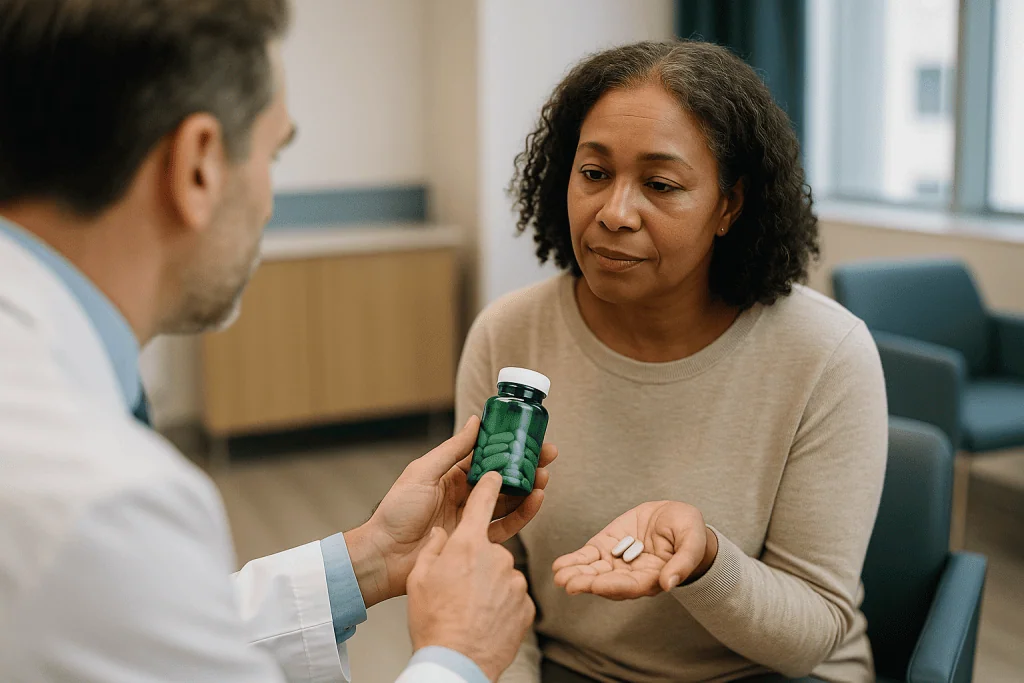
Measured against that ladder, here is where the three headline supplements to reduce cortisol stand.
Ashwagandha has several small randomized placebo-controlled trials, typically 50 to 130 adults, lasting 6–8 weeks, mostly in self-described stressed but otherwise healthy people. Most report lower scores on perceived-stress questionnaires and lower morning serum cortisol compared with placebo. Grade: low-to-moderate certainty. Consistent direction, but small samples, short follow-up, geographic clustering of studies, industry funding and unclear long-term safety hold it back.
Rhodiola has a handful of randomized trials, many without a placebo arm, and one placebo-controlled study in people with stress-related fatigue that reported improved fatigue scores and a modest change in the cortisol awakening response. Grade: low certainty. NCCIH describes the research as insufficient to draw conclusions.
Magnesium has strong evidence that deficiency harms health and observational links between low intake and anxiety, but randomized trials on stress or cortisol are small, methodologically weak and inconsistent. Grade: very low certainty for cortisol reduction in people with normal magnesium status.
Notice what is missing. None of these supplements has a trial showing benefit in people with a diagnosed cortisol disorder, and none has a long-term trial showing that a cortisol change translates into fewer health problems. Lower numbers on a lab report are a surrogate, not an outcome.
Ashwagandha for cortisol: what the randomized trials show
Ashwagandha, botanically Withania somnifera, is a shrub used in traditional Indian medicine for centuries. Its root extract is the most studied of any “adaptogen,” a marketing-era term for plants claimed to help the body resist stress; the word has no agreed scientific definition.
The trials follow a recognizable template. Adults who score high on a stress questionnaire are randomized to a standardized root extract or placebo for about two months. At the end, researchers compare questionnaire scores, sometimes sleep quality, and a morning blood cortisol sample. In the better-known studies, the ashwagandha groups reported meaningfully lower perceived stress and showed cortisol reductions in the range of roughly a fifth to a quarter from baseline, while placebo groups changed little.
Those are real, repeated findings, and they deserve credit. They also come with caveats worth reading twice. Participant numbers are small, so a few outliers can shift results. Follow-up stops where the trial stops; nobody knows whether the effect persists at six months or whether cortisol rebounds on stopping. Many studies used a specific proprietary extract, so results may not transfer to other preparations, and extract strength varies widely between products. Several trials were funded or run by the manufacturer. A sizeable share were conducted at a limited set of sites, which makes it harder to know how the results generalize.
A fair summary: ashwagandha probably reduces self-reported stress modestly over a couple of months in healthy, stressed adults, and probably nudges morning cortisol down alongside it. Whether that is worth the safety trade-offs described next is a decision for an individual and their clinician, not a caption.
Ashwagandha safety: the liver, the thyroid and pregnancy
The most important recent development in this story is not a new benefit but a clearer picture of harm.
Liver. The NIH LiverTox resource describes a pattern of ashwagandha-linked liver injury: jaundice, itching, nausea and fatigue appearing typically two to twelve weeks after starting, with blood tests showing a cholestatic or mixed pattern, meaning bile flow is impaired. Most reported cases resolved after the supplement was stopped, though recovery sometimes took months. Why some people react and most do not is unknown; contamination, variable extract potency and individual susceptibility have all been proposed. The absolute risk appears low, but it is not zero, and it is the reason several European regulators have issued warnings.
Thyroid. Small studies suggest ashwagandha can raise thyroid hormone levels. For someone with an underactive thyroid on replacement therapy, or an overactive thyroid, that interaction could push levels out of range. Anyone taking thyroid medicine should not add ashwagandha without their prescriber knowing.
Pregnancy and breastfeeding. The ODS fact sheet advises avoiding ashwagandha in pregnancy because of traditional use to induce miscarriage and a lack of safety data. There is also no reliable information on breastfeeding.
Other cautions. It may add to the drowsiness of sedatives and sleep medicines. Because it can influence immune activity, people with autoimmune conditions or on immunosuppressants need medical advice first. It should be stopped before surgery. People with hormone-sensitive prostate cancer are advised against it.
Common, milder side effects in trials were mostly digestive: loose stools, stomach upset and sleepiness. If you are already using ashwagandha, do not stop or change anything abruptly on the strength of an article; raise it with your clinician, who can also decide whether a liver test is sensible.
Rhodiola rosea: an adaptogen with a thin evidence base
Rhodiola rosea, sometimes called golden root or arctic root, grows in cold, high-altitude regions of Europe and Asia. Scandinavian and Russian traditions used it for stamina and low mood long before it appeared on supplement shelves. Its active compounds, rosavins and salidroside, are the usual markers for standardizing extracts.
The research base is smaller and shakier than ashwagandha’s. Many rhodiola studies are open-label, meaning everyone knew they were taking the herb, which makes improvements in energy or mood hard to separate from expectation. The most frequently cited placebo-controlled trial enrolled adults with stress-related fatigue, often called burnout, and found better scores on fatigue and attention after four weeks, together with a smaller cortisol rise after waking in the rhodiola group. Another randomized trial in people with mild to moderate depression reported symptom improvement, though a later comparison against a standard antidepressant found rhodiola less effective, with fewer side effects.
NCCIH’s assessment is blunt: there is not enough evidence to say whether rhodiola helps with any health condition. It also raises a practical concern specific to this herb. Rhodiola rosea is slow-growing and increasingly scarce in the wild, and analyses of commercial products have found some contain other Rhodiola species or little of the labeled compounds. A supplement that does not contain what the trials tested cannot reproduce what the trials found.
On safety, short-term use appears to be well tolerated. Reported side effects include dizziness, dry mouth and, because it can be stimulating, insomnia or jitteriness when taken late in the day. Theoretical interactions with antidepressants, blood pressure medicines and diabetes medicines are listed, though human data are sparse. Pregnancy and breastfeeding safety are unknown.
The honest grade: promising for fatigue, unproven for cortisol, and more vulnerable to product quality problems than almost any other popular herb.
Magnesium and cortisol: deficiency versus supplementation
Magnesium is a mineral, not a herb, and that changes the shape of the evidence. It is involved in several hundred enzyme reactions, including those that regulate nerve signaling and the stress-response system. Roughly half of American adults consume less than the recommended amount from food, according to the ODS fact sheet, though true clinical deficiency is less common because the kidneys conserve it well.
The link between magnesium and stress is biologically plausible in both directions. Low magnesium appears to amplify the release of stress hormones, and stress hormones increase magnesium loss in urine. Observational studies associate low intake with higher rates of anxiety and depression.
Randomized trials are where the story thins. Systematic reviews of magnesium for anxiety describe the evidence as “suggestive” but note that most trials are small, often combine magnesium with vitamin B6 or other nutrients, and use inconsistent outcome measures. Trials that measured cortisol directly are few; some found reductions after intense exercise or in stressed, low-magnesium populations, others found nothing. In people with normal magnesium levels, there is no good evidence that adding more lowers cortisol.
That distinction is the whole point. If someone’s diet is genuinely short on magnesium, correcting it through food, or a supplement if a clinician recommends one, may improve sleep and anxiety symptoms, and lower stress-hormone output could be part of why. For a person already replete, more is unlikely to do anything except, at higher intakes, cause diarrhea and cramping.
Magnesium from food has no upper limit; supplemental magnesium does, and exceeding it brings digestive side effects first and, rarely, dangerous blood levels in people with kidney disease. It also interferes with absorption of some antibiotics, osteoporosis medicines and thyroid hormone when taken at the same time. Leafy greens, legumes, nuts, seeds and whole grains remain the first-line source.
Other cortisol supplements people ask about: theanine, omega-3, phosphatidylserine, vitamin C and cinnamon
Once the big three are covered, the same handful of names recur in search. Each has a story shorter than the marketing suggests.
L-theanine is an amino acid found in tea. Small randomized trials report lower subjective stress and, in a few, lower salivary cortisol during an acute stress task, such as a mental arithmetic test under time pressure. The effects are measured over hours, not months, and the studies are small. Grade: low certainty for short-term calming, essentially none for long-term cortisol.
Omega-3 fatty acids from fish oil have a more interesting trail. A randomized trial in healthy adults found that higher omega-3 intake for four months blunted the cortisol response to a laboratory stressor. Observational data link low omega-3 status with higher inflammation. Grade: low-to-moderate for stress reactivity in the lab; no evidence that this changes daily cortisol or health outcomes.
Phosphatidylserine, a fat found in cell membranes, has a few small trials in athletes showing a smaller cortisol spike after exhausting exercise. Nothing comparable exists for everyday stress. Grade: very low.
Vitamin C appears in older studies of ultramarathon runners, where high doses were associated with a smaller post-race cortisol rise. That is a niche finding in extreme exertion. Grade: very low for ordinary stress.
Cinnamon is the one people ask about most, and the answer is simple: no trial shows cinnamon lowers cortisol in humans. Its research base concerns blood sugar in type 2 diabetes, and even there, results are mixed and modest. Enjoy it on oatmeal; do not expect it to do hormonal work.
A recurring theme ties these together. Most positive findings come from stress challenges in a lab or a race, not from the slow, grinding stress that sends people to the supplement aisle.
Supplements to reduce cortisol at a glance: a comparison table
The table below compresses the preceding sections into one view. “Evidence grade” refers to certainty that the supplement lowers cortisol or perceived stress in healthy, stressed adults, not to benefit in any medical condition. Doses are deliberately omitted; the amounts and extracts used in trials vary, and matching them to a particular person is a clinician’s job.
| Supplement | Best available evidence | Effect reported | Evidence grade | Main safety concerns |
|---|---|---|---|---|
| Ashwagandha root extract | Several small placebo-controlled RCTs, 6–8 weeks | Lower perceived stress; lower morning serum cortisol | Low to moderate | Rare liver injury; may raise thyroid hormone; avoid in pregnancy; drowsiness with sedatives |
| Rhodiola rosea | One placebo-controlled RCT in stress-related fatigue; several open-label studies | Less fatigue; small change in cortisol awakening response | Low | Insomnia, dizziness; frequent product adulteration; interactions theoretical |
| Magnesium | Small, mixed RCTs; stronger observational links | Possible benefit only if intake is low | Very low for cortisol | Diarrhea at higher intakes; caution in kidney disease; absorption interactions |
| L-theanine | Small RCTs using acute lab stressors | Short-term calm; lower salivary cortisol for hours | Low | Generally well tolerated; few long-term data |
| Omega-3 | One 4-month RCT on stress reactivity | Blunted cortisol response to lab stress | Low to moderate (lab outcome only) | Fishy aftertaste; bleeding risk with anticoagulants |
| Cinnamon | No human cortisol trials | None demonstrated | None | Coumarin content in cassia cinnamon at high intakes |
Read across the rows and a pattern emerges. The two columns that matter most to a reader, effect size and safety, rarely line up in a single product’s favor. Ashwagandha has the best efficacy data and the most serious safety signal. Magnesium has the best safety record and the weakest cortisol data. Rhodiola sits in the middle with a quality-control problem that no label can fully reassure you about. That trade-off, not a star rating, is what a conversation with a clinician should weigh.
How cortisol is measured, and why one blood test misleads
Here is a detail that undermines a surprising share of supplement claims: cortisol is one of the hardest common hormones to measure meaningfully with a single sample.
MedlinePlus explains the options. A blood test, usually drawn in the morning and sometimes repeated in the late afternoon, captures a snapshot. A saliva test, often collected late at night when levels should be at their lowest, is useful for spotting a rhythm that fails to fall. A 24-hour urine collection measures total output across a day. Each answers a different question, and none is a general “stress score.”
Why does that matter for trials? Because cortisol swings with the clock, with meals, with exercise, with how long you waited in the clinic, and even with the needle itself. A morning blood sample can vary considerably day to day in the same person. Small trials that report a drop in a single morning value are measuring something real but noisy, and the noise is one reason small studies can produce effects that larger ones fail to find.
It also matters for anyone tempted by direct-to-consumer cortisol testing. A result that is slightly outside a reference range in a healthy person usually means nothing; endocrinologists only act on cortisol tests when there is a clinical reason to suspect a disorder, and even then they repeat and cross-check with different methods. Mayo Clinic notes that diagnosing Cushing syndrome typically requires several tests because no single one is definitive.
The practical lesson is counterintuitive. If a supplement company shows you a chart of falling cortisol from a one-time blood draw, be more skeptical, not less. And if you want to know whether your own cortisol is a problem, the right person to decide which test, if any, is a clinician who knows your history.
What exercises can help lower cortisol levels, and what sleep does
Supplements get the headlines, but the interventions with the most consistent effect on cortisol rhythm are unglamorous: movement, sleep and daylight.
Exercise has a dual relationship with cortisol. During a hard session, cortisol rises; that is normal and useful, mobilizing fuel. Over weeks of regular training, however, resting cortisol tends to settle and the body’s response to psychological stress becomes smaller, a finding repeated across observational and interventional studies. Moderate-intensity activity, the kind where you can talk but not sing, produces the most favorable pattern. Walking, cycling, swimming and resistance training all qualify.
Very long or very intense sessions without recovery push the other way. Overtraining syndrome, common in endurance athletes who ramp up too fast, is associated with disordered cortisol rhythms, poor sleep and persistent fatigue. More is not better here; consistency is.
Mind-body practices deserve mention because their cortisol data are stronger than most supplements’. Randomized trials of mindfulness-based stress reduction, yoga and tai chi have reported reductions in cortisol alongside lower perceived stress, with yoga and meditation showing the most consistent signals in meta-analyses. Effects are modest and depend on practicing regularly.
Sleep may matter most of all. Restricting sleep to a few hours a night raises evening cortisol within days in experimental studies, and the morning peak flattens. Shift workers and people with untreated sleep apnea often show disrupted rhythms. Protecting a regular sleep window, getting bright light in the morning and dimming screens at night are the behaviors most tightly linked to a healthy cortisol curve.
None of this is exotic, which is probably why it does not trend. It is also the baseline against which any supplement should be judged: if a capsule cannot outperform a brisk daily walk and seven hours of sleep, it is hard to argue it earns its risk.
How to get rid of a "cortisol belly": what is real and what is viral
The phrase cortisol belly describes abdominal fat attributed to stress hormones, and it has become one of the most searched body-image terms online. Some of the underlying biology is real. Fat cells around internal organs carry more cortisol receptors than fat under the skin, and sustained high cortisol does favor central fat storage. People with Cushing syndrome develop a distinctive trunk-centered weight pattern for exactly this reason.
The leap from that physiology to “my belly is caused by cortisol and a supplement will fix it” is where the evidence collapses. In people without a cortisol disorder, abdominal fat is driven by the same factors as fat anywhere: total energy balance over time, genetics, age, menopause-related hormone shifts, alcohol, sleep debt, inactivity and, yes, chronic stress, partly through its effect on appetite and food choices. Cortisol is one thread in a thick rope.
No trial of any supplement discussed here has shown a reduction in waist circumference or visceral fat as a primary outcome in healthy adults. A few ashwagandha studies reported small changes in body weight alongside stress scores, but these were secondary measures in short trials and have not been replicated at scale.
What the evidence does support for central fat is familiar. Regular aerobic activity reduces visceral fat even when the scale barely moves. Resistance training preserves muscle, which keeps metabolic rate up. Limiting alcohol and sugary drinks has an outsized effect on abdominal fat specifically. Sleeping enough improves appetite regulation. Managing stress through whatever works, whether exercise, therapy or social connection, helps indirectly by changing behavior.
If a belly has changed quickly, especially alongside the other features of cortisol excess listed earlier, that is a medical question and worth a clinician’s attention. If it has crept up over years, the honest answer is that there is no cortisol shortcut, only the slow levers that have always worked.
Common myths about cortisol supplements, corrected
Viral claims travel faster than fact sheets. Here are the ones most worth untangling.
Myth: “Lower cortisol is always better.” Cortisol follows a daily curve for good reason. Suppressing it is the problem in adrenal insufficiency, a condition that causes exhaustion, low blood pressure and, in crisis, collapse. The aim is a healthy rhythm, not a low number.
Myth: “Adaptogens are natural, so they are safe.” Ashwagandha is natural and has a documented, if rare, liver-injury signal. Natural describes origin, not risk. Herbs act on the body through chemistry like any medicine, and they interact with prescriptions.
Myth: “A cortisol cocktail resets your adrenals.” The popular drink of orange juice, coconut water and salt supplies sugar, potassium and sodium. There is no evidence it changes cortisol or supports adrenal function, and “adrenal fatigue” itself is not a recognized medical diagnosis; endocrinology societies have reviewed the concept and found no supporting evidence.
Myth: “If it lowered cortisol in a study, it will work for me.” Trials enrolled specific people using specific extracts for specific durations. A different product, person or problem may behave differently, and the single-sample cortisol measures used in most studies are noisy.
Myth: “Supplements can replace stress management.” The interventions with the strongest cortisol data, sleep, regular moderate exercise and mindfulness practice, cost no capsules and carry no liver risk.
Myth: “Puffy face means high cortisol.” Facial swelling has dozens of causes, including salt intake, alcohol, allergies, sleep position, thyroid disease and kidney issues. The rounded face of Cushing syndrome develops over months with other hallmark signs, not overnight after a stressful week.
Correcting myths is not the same as dismissing the underlying worry. People searching these phrases usually feel genuinely unwell. The right response is a conversation with someone who can look at the whole picture, not a product.
Choosing wisely: quality, interactions and what to tell your clinician
If, after weighing all of this, you and your clinician decide a supplement is reasonable to try, the decision does not end at the shelf. Several factors determine whether what you take resembles what was studied.
Product quality is unregulated in the way medicines are. In the United States, dietary supplements do not require pre-market proof of efficacy or safety, and manufacturers are responsible for their own quality control. Independent analyses have repeatedly found herbal products with less active compound than labeled, different plant species, or contaminants including heavy metals. Third-party certification seals from recognized testing organizations indicate that a batch was checked for identity and contaminants, though not that it works. Standardized extracts, labeled with the percentage of marker compounds, are closer to what trials used than unstandardized powders.
Interactions are the practical risk most people overlook. Ashwagandha with thyroid medicine, sedatives or immunosuppressants; rhodiola with antidepressants or blood pressure medicines; magnesium taken at the same time as certain antibiotics or osteoporosis medicines. A pharmacist or prescriber can screen these in minutes.
Timing and duration need a plan. Trials ran for weeks, not years. A sensible approach, agreed with a clinician, includes a defined trial period, a clear measure of whether it is helping, and a point at which to stop if it is not.
Tell every clinician what you take. Herbal supplements are among the most common omissions in medication histories, and they matter before surgery, in pregnancy, and when a new liver or thyroid result looks puzzling.
Finally, keep perspective about what a positive trial means. A modest average change in a questionnaire score across sixty people in eight weeks is useful knowledge. It is not a promise about you.
When to see a doctor about cortisol, stress or a supplement reaction
Most stress does not need a specialist, and most supplement use passes without incident. Some situations, though, deserve prompt medical attention rather than another search.
Seek urgent care if, while taking ashwagandha or any herbal supplement, you develop:
- Yellowing of the skin or eyes, dark urine or pale stools, which can signal liver injury
- Severe itching, persistent nausea or pain under the right ribs
- Palpitations, tremor, unexplained weight loss or heat intolerance, which can indicate thyroid overactivity
- Confusion, extreme drowsiness or fainting, particularly if combined with sedatives
Book a routine appointment if you notice:
- Rapid weight gain concentrated in the trunk and face, wide purple stretch marks, easy bruising or new muscle weakness
- New or worsening high blood pressure or high blood sugar
- Persistent low mood, anxiety or insomnia lasting more than a few weeks
- Irregular periods, new facial hair or reduced libido without an obvious explanation
- Exhaustion with dizziness on standing, salt cravings or darkening skin, which can suggest low cortisol rather than high
Always involve a clinician before starting any cortisol supplement if you are pregnant, breastfeeding or trying to conceive; take thyroid medicine, antidepressants, sedatives, blood thinners, diabetes or blood pressure medicines; have liver, kidney, thyroid or autoimmune disease; are scheduled for surgery; or have a hormone-sensitive cancer.
Two reminders apply throughout. Do not stop or adjust a prescribed medicine on the strength of a supplement claim or this article; any change belongs to the prescriber who knows your history. And if a symptom frightens you, that alone is reason enough to be seen. Clinicians would far rather rule out a cortisol disorder than discover one late.
Frequently asked questions
What are the best cortisol supplements according to clinical trials?
Ashwagandha root extract has the most consistent trial evidence, with several small placebo-controlled studies showing lower perceived stress and morning cortisol over about eight weeks. Omega-3 and L-theanine have limited evidence for blunting short-term stress responses in the lab. Rhodiola and magnesium have weaker or inconsistent data. None has been shown to treat a cortisol disorder, and safety concerns, especially ashwagandha’s liver signal, should be discussed with a clinician before use.
What are the symptoms of high cortisol?
True cortisol excess, called Cushing syndrome, causes weight gain in the trunk and face, wide purple stretch marks, easy bruising, muscle weakness, high blood pressure and high blood sugar, developing over months. Everyday stress more often causes light sleep, a racing mind, cravings and irritability without measurable cortisol excess. Because these symptoms overlap with thyroid problems, anxiety and sleep debt, a clinician should evaluate them rather than a symptom checklist.
Does cinnamon lower cortisol?
No. There are no human trials showing that cinnamon lowers cortisol. Cinnamon’s research concerns blood sugar in people with type 2 diabetes, and even those results are mixed and modest. It is a pleasant spice, and cassia cinnamon in large amounts contains coumarin that can stress the liver. Enjoy it in food, but do not expect any hormonal effect from it.
What exercises can help lower cortisol levels?
Regular moderate aerobic activity such as brisk walking, cycling or swimming, along with resistance training, is linked to lower resting cortisol and a calmer response to stress over weeks of practice. Yoga, tai chi and mindfulness meditation have randomized trial data showing modest cortisol reductions. Very long or intense sessions without recovery can raise cortisol instead, so consistency and adequate rest matter more than intensity.
How do you get rid of a cortisol belly?
In people without a cortisol disorder, abdominal fat is driven mainly by long-term energy balance, genetics, age, alcohol, sleep debt and inactivity, with stress as one contributing factor. No supplement has been shown to reduce waist size as a primary outcome. Regular aerobic exercise reduces visceral fat even when weight barely changes, and cutting alcohol and sugary drinks helps specifically. Sudden trunk-centered weight gain with other signs of cortisol excess warrants a medical review.
Is ashwagandha safe to take every day?
Short-term use in trials, usually up to eight weeks, was generally well tolerated, with digestive upset and drowsiness the most common side effects. Rare cases of liver injury have been reported, it may raise thyroid hormone levels, and it should be avoided in pregnancy. Long-term safety beyond a few months has not been studied. Daily use is a decision to make with a clinician, particularly if you take thyroid medicine, sedatives or immunosuppressants.
Does magnesium reduce cortisol and stress?
Only weakly, and probably only when intake is low. Observational studies link low magnesium with anxiety, and small trials suggest possible benefit in stressed people who are short on the mineral. In people with normal magnesium status there is no convincing evidence that supplements lower cortisol. Food sources such as leafy greens, legumes, nuts and whole grains are the first step, and supplements can cause diarrhea or interact with some medicines.
How long does it take for supplements to reduce cortisol?
In the trials that showed an effect, ashwagandha and rhodiola were taken for four to eight weeks before differences in stress scores or cortisol appeared. L-theanine and omega-3 studies measured changes over hours or a few months respectively, but only in response to artificial lab stressors. Nothing is known about effects beyond a few months or what happens after stopping, so any trial period should be time-limited and reviewed with a clinician.
Can I test my own cortisol at home to see if supplements work?
Home saliva and finger-prick kits exist, but a single reading is a noisy snapshot that varies with time of day, meals, exercise and sleep. Clinicians diagnose cortisol disorders using several different tests, repeated and cross-checked, and only when there is a clinical reason. A result slightly outside a reference range in a healthy person usually means nothing, so home tests are not a reliable way to judge a supplement.
Is adrenal fatigue a real diagnosis that cortisol supplements can fix?
Adrenal fatigue is not a recognized medical diagnosis; endocrinology bodies have reviewed the concept and found no evidence that everyday stress exhausts the adrenal glands. Genuine adrenal insufficiency does exist, is serious, and is diagnosed with specific tests and treated by a doctor, not with supplements. If you have persistent exhaustion, dizziness on standing or unexplained weight loss, see a clinician rather than self-treating.
References
- NIH National Center for Complementary and Integrative Health: Rhodiola
- MedlinePlus: Cortisol Test
- Cleveland Clinic: Cortisol
This article is for general information only and is not a substitute for professional medical advice. Please consult a qualified doctor about your individual situation.

More from the Blog
Can You Die from a Panic Attack, and Can They Happen in Your Sleep?
A panic attack is frightening but not directly life-threatening. The racing heart, chest tightness and breathlessness come from a surge of stress hormones that…

Health Anxiety: What It Is and How It Is Treated
Health anxiety is a persistent, distressing preoccupation with having or developing a serious illness, even when medical checks find nothing wrong. Ordinary sensations get…
Stress Rash and Stress Hives: Why Skin Reacts to Pressure and How Dermatologists Treat It
Stress hives are real. Emotional stress can prompt mast cells in the skin to release histamine, producing raised, itchy welts (urticaria) on the chest,…

Correlation vs Causation: The Health-Headline Trap, Explained
Correlation means two things tend to occur together; causation means one actually produces the other. Health headlines often blur the two because observational studies…

High Cortisol Symptoms: What Chronically Raised Stress Hormones Do to the Body
High cortisol symptoms range from the common and non-specific, such as poor sleep, fatigue, irritability, cravings and weight gain around the middle, to the…

How Bipolar Is Diagnosed (and the ‘Am I Bipolar?’ Question)
Bipolar disorder is diagnosed by a mental health professional through a detailed clinical interview and history, not by a blood test or brain scan.…