

The Best Temperature for Sleep: Why a Cooler Room Deepens Sleep
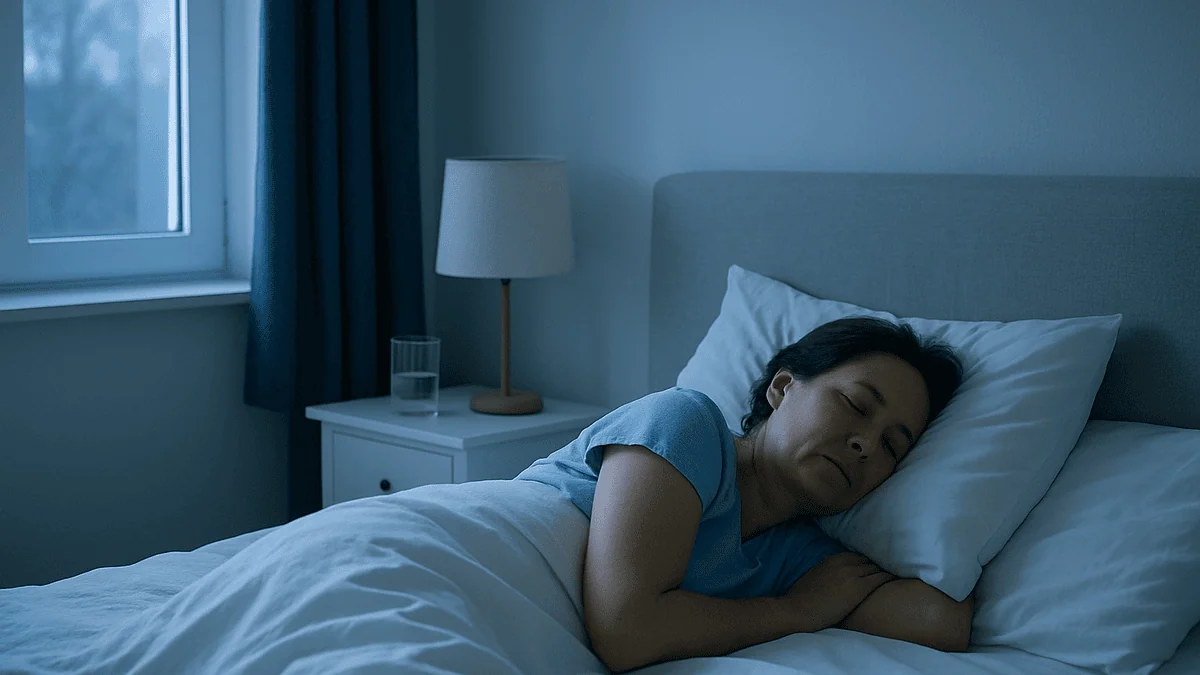
Key Takeaways
- Core body temperature falls about 1 to 2°F overnight, bottoming out around 4 a.m., and sleep is easiest to start and deepen while that drop is under way.
- Mainstream guidance puts the best temperature for sleep at roughly 60 to 67°F for healthy adults, but a 2023 in-home study of people in their 70s and 80s found peak sleep efficiency closer to 68 to 77°F.
- Hot bedrooms cut slow-wave and REM sleep in controlled studies, and large wearable datasets show the hottest nights cost roughly a quarter hour of sleep, with older adults hit hardest.
- A warm bath or shower about 90 minutes before bed shortened time to fall asleep by around 10 minutes in a pooled analysis of 17 studies, because warmed skin releases core heat faster.
- Warm hands and feet open the skin vessels that carry heat out of the body, which is why socks in a cool room help sleep onset and cold feet delay it.
- The NHS advises 16 to 20°C (61 to 68°F) for an infant's sleep room, and overheating is a recognised risk factor for SIDS, so check a baby's chest or neck rather than the hands.
For most healthy adults the best temperature for sleep is roughly 60 to 67°F (about 15.5 to 19.5°C), with some guidance settling around 64 to 65°F. A cooler room helps because core body temperature must fall by about a degree for sleep to begin and deepen. Older adults, infants and people who sleep hot or cold may need a different range, so comfort matters more than one fixed number.
Somewhere around 2 a.m. the sheet comes off. One foot goes out from under the blanket, then the other, and a person who was deeply asleep an hour ago is now staring at the ceiling, damp at the neck, negotiating with the duvet. If that scene has played out in your bedroom lately, you are part of a very large club.
As of July 2025, searches for the best temperature for sleep have climbed sharply, driven by a second summer of prolonged heat across North America and Europe, by a wave of social-media sleep routines insisting that 60°F is the only serious setting, and by new field data suggesting that older adults actually sleep best in rooms warmer than the figure everyone quotes. The thermostat has become a wellness argument.
The physiology underneath it all is older than the trend and, happily, more reassuring. Your body already knows how to cool itself for sleep. The room simply has to stop getting in the way.
What is the best temperature for sleep?
Ask a sleep specialist what to set the thermostat to and you will usually hear a range rather than a number: roughly 60 to 67°F (about 15.5 to 19.5°C) for most healthy adults. Cleveland Clinic sleep physicians quote that range; the NHS lands a touch warmer, suggesting a bedroom around 18°C (64°F). Neither figure is a law of physics. The range reflects where most bodies can do the thing they need to do at night: shed about a degree of core heat and keep it shed until morning.
Core body temperature, the temperature of your organs rather than your skin, runs on a 24-hour rhythm. It peaks in the early evening and bottoms out around 4 a.m., falling by roughly 1 to 2°F (0.5 to 1°C) along the way. Sleep is easier to enter and hold while that temperature is dropping. A room in the low to mid 60s lets the body dump heat through the skin without working at it. A room in the upper 70s fights the process, and the sleep you get becomes lighter and more broken.
So the best temperature for sleep is not the coldest one you can stand. It is the setting that lets you fall asleep in a comfortable bed without sweating, without burrowing under the covers, and without waking at 3 a.m. with the blanket on the floor. For many people that means a thermostat several degrees below the daytime setting, paired with bedding they can adjust in the dark. Age, hormones, body size, medical conditions and even what you wore to bed all shift the sweet spot, which is why the rest of this guide spends more time on how to find your own range than on defending one number.
What changed recently (and what did not)
The physiology has not changed; the context has. Three things pushed bedroom temperature into the news this year.

First, heat. Long hot spells across much of the United States and Europe in 2024 and again in 2025 produced weeks of nights when outdoor temperatures never dropped below the mid 70s°F. The CDC’s extreme-heat guidance now stresses night-time cooling for older adults and people with heart or lung disease, not only daytime protection. Sleep has become part of the heat-safety conversation rather than an afterthought.
Second, data. A 2023 US field study of adults in their 70s and 80s tracked roughly 11,000 nights with wearable sensors and bedroom thermometers. Sleep efficiency, the share of time in bed actually spent asleep, was highest when the room sat between about 68 and 77°F, and fell by 5 to 10 percent as rooms warmed from 77 toward 86°F. That is one of the few long-term, in-home datasets available, and it matters because the range it found is warmer than the lab-derived 60 to 67°F figure. Different bodies, different homes, different answers.
Third, the social-media sleepmaxxing wave, which bundled cooling mattress pads, mouth tape and 60°F bedrooms into a single routine and presented the coldest setting as the most disciplined one. Clinical sources have quietly pushed back. Cleveland Clinic’s current guidance keeps its 60 to 67°F range but says comfort, not a number, should decide. Mayo Clinic’s sleep-hygiene advice lists a cool, dark, quiet room among six core habits and names no temperature at all. MedlinePlus likewise tells readers to keep the bedroom cool and leaves the degrees to them.
What changed, then, as of July 2025, is attention and nuance: wider recognition that heat wrecks sleep, and better evidence that the right temperature is a personal range rather than a universal target.
Why a cooler room deepens sleep: the core temperature dip
Think of your body as a house with its own thermostat, located in the hypothalamus, a small structure at the base of the brain that manages temperature, hunger and the sleep-wake cycle. In the evening that thermostat is turned down a notch. Blood vessels in the skin widen, heat flows outward, and the core cools. The dip is modest, about a degree Fahrenheit by the time you are drowsy, but it is one of the strongest signals the brain uses to open the gate to sleep.
The same signal shapes what kind of sleep you get. Slow-wave sleep, the deep stage in which brain waves slow to large rolling patterns and the body does most of its physical repair, clusters in the first half of the night, exactly when core temperature is falling fastest. Laboratory studies that warm the bedroom into the upper 70s and 80s°F consistently record less slow-wave sleep, more brief awakenings and a shallower night overall.
REM sleep, the dreaming stage marked by rapid eye movements, is even more vulnerable. During REM the body largely stops regulating its own temperature: shivering and sweating are suppressed. If the room is hot, the brain tends to cut REM short to protect the body, which is one reason a sticky night can leave you feeling emotionally frayed rather than simply tired.
Melatonin plays a supporting role. The hormone that the brain releases as darkness falls also nudges skin blood vessels open, speeding heat loss. Light exposure late in the evening blunts melatonin and, with it, the cooling. A dim, cool room therefore works on two fronts at once.
None of this requires a cold room. It requires a room cooler than you are, so that heat can leave the body at the pace the brain is asking for. That is the entire mechanism, and everything else in this article is a variation on it.
Why do I sleep better in a cold room? Warm hands, cool core
People who sleep well in a cold room often describe the same thing: the air is crisp but the bed is warm, and their hands and feet feel pleasantly toasty under the covers. That combination is not a coincidence. It is the ideal arrangement for the body’s heat-loss system.

Heat leaves the core mainly through the hands, feet and face, where dense networks of small blood vessels sit close to the surface. For those vessels to open wide, a process called distal vasodilation, the skin there needs to be warm, not chilled. Cold feet make the vessels clamp shut, trapping heat in the core and delaying sleep onset. Several small laboratory studies have found that warming the feet, by socks or a warm foot bath, shortens the time it takes to fall asleep by a measurable margin, typically several minutes.
Here is the paradox resolved: a cool room plus warm bedding gives the body both halves of what it wants. The warm microclimate under the covers keeps the extremities open for business; the cool air above the covers accepts the heat they release. A warm room with light bedding does the opposite. The skin is warm, but the air is too warm to take the heat away, so the core stays elevated and sleep stays shallow.
This also explains the exposed-foot reflex at 2 a.m. Sticking a foot out from under the blanket creates a small radiator, letting the body dump heat quickly without waking fully. It is a sign the room or bedding is running warm, and a cue to adjust one or the other before the next night.
If you are someone who sleeps better in a cold room, the lesson is not to chase ever-lower numbers. It is to keep the air cool enough for heat to escape while keeping the bed warm enough for the extremities to let it go.
What the evidence actually says, graded
Not every claim about sleep temperature rests on the same footing. Grading the evidence helps separate the solid from the speculative.
Strong and consistent. The nightly fall in core body temperature and its link to sleep onset is supported by decades of laboratory polysomnography, the overnight recording of brain waves, eye movements and muscle activity that defines sleep stages. This is as close to settled physiology as sleep science gets.
Moderate. The finding that hot rooms reduce slow-wave and REM sleep and increase awakenings comes mostly from small controlled studies, often 8 to 20 volunteers, in climate chambers. The samples are small, but the direction of effect is remarkably consistent across studies and decades. Large observational datasets back it up: an analysis of wearable data from tens of thousands of people across dozens of countries found that hot nights shortened sleep, with losses averaging around a quarter of an hour on the hottest nights, and larger losses for older adults, women and people in lower-income regions.
Moderate for one intervention. A warm bath or shower one to two hours before bed has been examined in a 2019 systematic review of 17 studies. It shortened the time to fall asleep by roughly 10 minutes on average and modestly improved sleep efficiency. Studies were small and varied, but the pooled result was consistent.
Weak to expert opinion. The specific 60 to 67°F recommendation has never been tested in a randomised trial comparing thermostat settings. It is a reasoned extrapolation from the chamber studies and from clinical experience. The 2023 in-home study of older adults suggests the ideal range may sit higher for some groups.
Weak and conflicted. Claims that cooling mattress pads, chilled pillows or ice-cold rooms deepen sleep in healthy people rest largely on small, often manufacturer-funded studies. They may help people who sleep hot; they have not been shown to help everyone.
Ideal bedroom temperature at a glance
The table below gathers the ranges that mainstream guidance and the best available studies support. Treat each row as a starting point to adjust, not a target to hit.
| Situation | Suggested range | Evidence and notes |
|---|---|---|
| Healthy adults | 60–67°F (15.5–19.5°C) | Expert consensus (Cleveland Clinic, NHS); chamber studies support cooler over warmer |
| Adults over about 65 | 65–75°F (18–24°C) | 2023 in-home observational study found best sleep efficiency around 68–77°F; older bodies lose heat faster and tolerate cold less |
| Infants under 1 year | 61–68°F (16–20°C) | NHS guidance; US safe-sleep guidance gives no number but stresses avoiding overheating |
| Hot flashes or night sweats | Lower end of adult range | Expert opinion; layered bedding matters as much as air temperature |
| Hot climate, no air conditioning | Below about 77°F (25°C) if achievable | Observational data show sleep loss rising above this point; fans and ventilation help |
| Couples with different preferences | Cooler room, separate bedding | Practical consensus; two duvets let each person set their own microclimate |
Two patterns stand out. The ideal bedroom temperature drifts upward with age, because thinner skin, less muscle and slower circulation make older adults lose heat more readily and feel cold sooner. And every row leans cool rather than warm, because the body can always add insulation under the covers but cannot cool a room from inside the bed.
A cheap bedroom thermometer, placed at mattress height rather than on a high shelf, tells you more than the hallway thermostat does. Many homes run 3 to 5°F warmer in upstairs bedrooms than the thermostat reading suggests, especially in summer.
Best room temperature for baby sleep: what safe-sleep guidance says
Parents search for the best room temperature for baby sleep for a reason that has nothing to do with comfort. Overheating is a recognised risk factor for sudden infant death syndrome (SIDS), the unexplained death of an apparently healthy baby under one year, usually during sleep. The guidance is cautious because the stakes are high.
The NHS recommends a room temperature of 16 to 20°C (about 61 to 68°F) for a baby’s sleep space. US safe-sleep guidance from pediatric bodies does not name a figure; it advises dressing the baby in no more than one layer more than an adult would wear in the same room, avoiding hats indoors, and skipping heavy blankets, duvets and swaddles that trap heat. Both approaches reach the same place: cool room, light clothing, nothing loose in the crib.
Checking a baby’s temperature by touch is easy to get wrong. Hands and feet are often cool even when the baby is comfortable, because infant circulation prioritises the core. Feel the chest, tummy or the back of the neck instead. Signs of overheating include damp hair, sweating, flushed cheeks, a heat rash or faster breathing than usual. If any of these appear, remove a layer and let the room cool.
Some observational studies have linked fan use in the baby’s room with a lower risk of SIDS, possibly by improving air movement. The evidence is limited and no agency makes a formal recommendation, but a fan aimed away from the crib is reasonable in warm weather.
The temperature advice sits inside a wider safe-sleep package: baby on the back, on a firm flat surface, in the parents’ room but not their bed for at least the first six months, in a smoke-free home. Temperature is one piece, not the whole picture. Any concern about a baby who seems unusually hot, floppy or hard to wake belongs with a pediatric clinician, not a thermostat.
Can a bedroom be too cold for good sleep?
Yes, and the social-media version of this topic tends to forget it. Cold disturbs sleep by a different route than heat, but it disturbs it all the same.
In laboratory studies, bedrooms chilled into the low 50s°F with ordinary bedding produce more awakenings and more time in light sleep, much as hot rooms do. The mechanism is the warm-extremities rule in reverse: when the hands and feet get cold, skin vessels close, the core holds onto its heat, and the body cannot complete its evening cooling. People then compensate by shivering, curling up or waking to find another blanket, none of which is restful.
Certain groups feel this sooner. Older adults generate less body heat and sense cold less accurately, which is why winter guidance in cooler countries advises keeping living spaces at or above 18°C (64°F) for people over 65 and anyone with heart or lung disease. People with Raynaud’s phenomenon, a condition in which small blood vessels in the fingers and toes overreact to cold, may find a chilly room keeps their feet painfully cold and their sleep shallow. Cold, dry air can also tighten the airways of some people with asthma overnight.
A practical rule: if you are waking with cold feet, a stiff neck or a strong urge to pile on layers, the room is too cold for your bedding, even if the number looks virtuous. The remedy is usually not a warmer room but warmer feet, through socks, a hot-water bottle at the foot of the bed or a heavier duvet with the air left cool.
There is no evidence that very cold rooms burn meaningful calories, build resilience or produce deeper sleep than a comfortably cool one. The physiological target is a falling core temperature, which a 64°F room achieves just as well as a 55°F one, with far fewer 3 a.m. blanket hunts.
How to sleep in a hot room without air conditioning
Plenty of people searching how to sleep in a hot room do not have air conditioning, or cannot run it all night. The goal is the same as always: let heat leave the body. Without cooled air, that means working on airflow, evaporation, bedding and timing.
- Keep daytime heat out. Close blinds and curtains on sun-facing windows during the day, especially in the afternoon. A room that never reaches 85°F is far easier to bring down to 75°F by midnight.
- Move air across your skin. A fan does not cool the air, but it speeds evaporation of sweat, which cools you. Point it at the bed, or set it in a window at night to pull in cooler outdoor air while a second window on the opposite side is cracked open.
- Cool the body directly. A lukewarm shower before bed, a damp washcloth on the neck or wrists, or a pillowcase chilled in a sealed bag in the freezer for an hour all lower skin temperature enough to help onset.
- Strip the bed back. Switch to a single cotton or linen sheet, remove mattress toppers made of memory foam, which retains heat, and sleep in loose, light clothing or none.
- Time your evening. Finish vigorous exercise at least three hours before bed, keep dinner light, and go easy on alcohol, which widens blood vessels, raises skin temperature and fragments sleep in the second half of the night.
- Go low. Heat rises; a mattress on the floor or a lower-storey room can be several degrees cooler.
During a true heatwave, the CDC notes that fans alone stop protecting against heat illness once indoor temperatures climb into the mid 90s°F. At that point, spending the hottest hours somewhere cooler and checking on older neighbours matters more than any bedroom trick. Night-time heat is a health exposure, not only a sleep nuisance.
The warm bath trick: heat up to cool down
One of the oldest pieces of folk sleep advice turns out to have the best evidence behind it. A warm bath or shower in the evening helps people fall asleep faster, and the reason is counterintuitive: warming the skin makes the core cooler.
Here is the sequence. Warm water draws blood to the skin, especially the hands and feet, opening the surface vessels wide. When you step out, that warm, well-perfused skin radiates heat into the cooler room air far more efficiently than skin that was never warmed. Core temperature then drops more steeply than it would have on its own, and the brain reads that steep drop as a strong signal to sleep.
A 2019 systematic review and meta-analysis pooled 17 studies of what researchers call passive body heating. Water-based warming at around 104 to 109°F (40 to 43°C), taken one to two hours before bedtime, shortened the time to fall asleep by about 10 minutes on average and modestly improved sleep efficiency and self-reported sleep quality. The individual studies were small, but the direction was consistent, which earns the practice a moderate evidence grade, better than most sleep gadgets can claim.
Timing is the detail that trips people up. A very hot bath immediately before lying down can leave the core still elevated at lights-out, delaying rather than helping. The window that works in the studies is roughly 90 minutes before bed, long enough for the rebound cooling to be well under way.
Smaller versions of the same trick work too. A warm foot bath, a hot-water bottle at the feet for 20 minutes, or simply putting on socks before bed all target the extremities where heat loss happens. Combined with a cool bedroom, this is the single most evidence-supported temperature routine in this article, and it costs nothing but a little planning.
Bedding, pajamas and mattresses: your personal microclimate
The number on the thermostat describes the air in the room. The temperature that actually touches your skin all night is the one under the covers, and it is usually somewhere in the high 80s to low 90s°F regardless of what the room is doing. Sleep researchers call this the bed microclimate, and it is the variable most people can change fastest.
Three things set it. Insulation first: a thick down duvet traps far more heat than a cotton coverlet, and two layered blankets allow finer adjustment than one heavy one. Breathability second: natural fibres such as cotton, linen and wool wick moisture and let air pass, while many synthetic sheets and fleece pajamas trap humidity against the skin, which is why they feel clammy at 3 a.m. even in a cool room. The mattress third: dense memory foam conforms beautifully but holds body heat; innerspring and latex designs allow more airflow. If you sleep hot on a foam mattress, a breathable topper or simply a thinner mattress protector can make a bigger difference than lowering the room two degrees.
Couples add a layer of complication. Men, on average, run warmer than women at night, and many partners disagree by five degrees or more on what feels comfortable. The simplest fix is also the most effective: set the room cool and give each person their own duvet, a practice so common in Scandinavia that it is sometimes named after the region. Each sleeper controls their own microclimate; nobody steals the covers.
Weighted blankets deserve a brief word. They can feel calming for some people, but the dense fill holds heat. Anyone who sleeps hot should look for a lighter weight or a breathable cover, or save it for winter.
The principle underneath all of this: keep the air cool, then dress the bed so your skin, especially hands and feet, stays warm enough to release heat. Get that balance right and the exact thermostat setting matters surprisingly little.
Night sweats and hot flashes: when the heat comes from inside
Some people do everything right, cool room, light bedding, evening shower, and still wake soaked. When the heat is coming from inside the body, the thermostat can only do so much.
The most common cause in midlife women is perimenopause, the transition of several years before periods stop, when estrogen levels swing. Falling estrogen appears to narrow the hypothalamus’s comfort zone, so that tiny changes in core temperature trigger a full cooling response: sudden flushing, sweating and a racing heart. At night these are hot flashes with the lights off, and they are a leading reason for sleep disruption in women in their 40s and 50s. A cool room and layered bedding help many women manage them; for frequent or severe symptoms, both hormonal and non-hormonal prescription treatments exist, and the choice belongs with a clinician who knows your history.
Other causes are worth knowing. Several medicines, including some antidepressants, diabetes medicines and fever-reducers, list sweating as a side effect. Alcohol in the evening widens blood vessels and produces a warm, sweaty second half of the night. An overactive thyroid raises the body’s metabolic rate and heat production. Infections, low blood sugar, obstructive sleep apnea (repeated airway collapse during sleep, often with loud snoring and gasping) and anxiety can all produce night sweats. Rarely, drenching sweats accompanied by fever, weight loss or swollen glands point to conditions that need prompt evaluation.
A practical first step is to keep a brief log for two weeks: what you drank, which medicines you took, whether the room was cool, how wet the sheets were. Patterns often emerge. What you should not do is stop or adjust a prescribed medicine on your own because you suspect it is making you sweat; raise it with the prescriber, who can weigh alternatives.
Sweating that soaks through nightclothes more than occasionally, or that arrives with other symptoms, is a reason to be seen, not a bedding problem.
Humidity, fans and fresh air: the forgotten variables
Two bedrooms at an identical 70°F can feel completely different at night. The difference is usually humidity, and it changes what the best temperature for sleep means in practice.
Sweat cools the body only when it evaporates. In dry air, evaporation is quick and even a slightly warm room feels manageable. In humid air, sweat sits on the skin, the sheets dampen, and the body’s main cooling tool stops working. Laboratory studies that hold temperature steady while raising humidity see the same pattern as heat alone: less slow-wave sleep, less REM, more awakenings. Most comfort guidance suggests keeping indoor relative humidity between about 40 and 60 percent; above 60, a dehumidifier can improve sleep more than a lower thermostat setting would.
Fans are the humidity workaround. Moving air strips the layer of warm, moist air that forms next to the skin and speeds evaporation, which is why a fan on a sticky night feels like a drop of several degrees. The old worry that sleeping with a fan on causes illness has no supporting evidence; a fan may dry out the nose and eyes, and it can stir dust and pollen, so people with allergies may prefer a clean filter or a fan pointed at the ceiling rather than the face.
Fresh air matters for a less obvious reason. In a closed bedroom, carbon dioxide from breathing accumulates overnight, and small studies have linked higher bedroom CO2 to poorer sleep quality and next-morning concentration. Cracking a window or leaving the door open brings in cooler, fresher air at once, assuming outdoor noise and pollution allow it.
Finally, remember that thermostats measure one spot. A thermometer at pillow height for a few nights, plus a glance at humidity, tells you what your body is actually experiencing. Adjust that, and the room temperature number can take care of itself.
Common myths about the best temperature for sleep
Viral sleep advice tends to take a real mechanism and stretch it past the evidence. Here are the claims circulating most widely, and what the research actually supports.
Myth: colder is always better, and 60°F is the serious person’s setting. The evidence supports a cool room, not a cold one. Chamber studies show both heat and cold fragment sleep. The 2023 in-home study of older adults found the best sleep in rooms around 68 to 77°F. One number does not fit every body.
no, let us put that plainly: the best temperature for sleep is the one at which you fall asleep comfortably and stay asleep without adjusting covers, and for most adults that sits somewhere in the 60s.
Myth: sleeping in a cold room melts fat overnight. Cold exposure does activate brown fat, a heat-generating tissue, and a few small studies measured slightly higher calorie burn in people sleeping at around 66°F versus 75°F. The differences were modest, the studies tiny and short, and no trial has shown weight loss from a cold bedroom. Grade: weak.
Myth: socks in bed overheat you and ruin sleep. The opposite is better supported. Warm feet open skin blood vessels and speed core cooling, and small studies find socks shorten time to fall asleep.
Myth: a fan at night makes you sick. No evidence. Fans aid evaporation and are safe; they may dry the airways, which is a comfort issue, not a health risk.
Myth: you need a cooling mattress to sleep well. Some people who sleep hot find them helpful, but the supporting studies are small and often industry-funded. Breathable bedding and a cooler room achieve most of the same effect.
Myth: feeling hot at night is only about comfort. Persistent night sweats can signal hormonal change, medicine side effects, sleep apnea or infection. When the room is cool and the sheets are still wet, the question is medical, not environmental.
When to see a doctor
Most bedroom-temperature problems are solved with a thermometer, a fan and a change of bedding. Some are not, and the body usually says so. See a clinician if any of the following apply.
- Night sweats that soak nightclothes or sheets more than occasionally, especially with fever, unexplained weight loss, swollen glands, persistent cough or bone pain. These need evaluation rather than a cooler room.
- Loud snoring, gasping or choking during sleep, witnessed pauses in breathing, or waking unrefreshed with morning headaches. These are features of obstructive sleep apnea, which is treatable once diagnosed.
- Insomnia lasting more than three months, or sleep problems on three or more nights a week that affect your day. NHS guidance identifies this pattern as long-term insomnia, and structured treatment such as cognitive behavioural therapy for insomnia works better than any environmental tweak.
- Hot flashes that are frequent, severe or disrupting sleep night after night. Effective options exist; which one suits you is a conversation with the prescriber, not a decision to make from an article.
- Signs of heat illness during a hot spell: confusion, dizziness, nausea, a fast pulse, hot dry skin or a temperature above 103°F. Heat stroke is an emergency; call emergency services.
- A baby who feels hot to the chest, is sweating, breathing fast, unusually floppy or difficult to wake, or who has a fever in the first three months of life. Contact a pediatric clinician promptly.
- New sweating or sleep disruption after starting or changing a medicine. Do not stop or alter the dose yourself; tell the prescriber, who can review options.
A sleep clinician will often ask what your bedroom temperature is and may suggest a sleep diary before any testing. Bring your notes. The environment is part of the assessment, but it is the clinician’s job to decide whether the problem is the room, a condition, a treatment or some combination, and to say what to do about it.
Frequently asked questions
What is the best temperature for sleep in Celsius?
For most healthy adults the best temperature for sleep is about 15.5 to 19.5°C, which is 60 to 67°F, with the NHS suggesting roughly 18°C as a comfortable midpoint. Older adults often sleep better a few degrees warmer, around 18 to 24°C, and infants’ rooms should sit at 16 to 20°C. Treat these as ranges to adjust by comfort, not exact targets.
Why do I sleep better in a cold room but wake up with cold feet?
A cool room lets your core shed heat, which helps sleep, but cold feet mean the bedding is not holding enough warmth at the extremities. Heat leaves the body through warm, open blood vessels in the hands and feet; when they chill, those vessels close and sleep lightens. Keep the air cool and add socks or a heavier blanket at the foot of the bed.
Is 72 degrees too hot for sleeping?
For many adults 72°F is slightly warm but workable with light bedding; it sits above the commonly quoted 60 to 67°F range yet inside the range where a 2023 study found older adults slept best. If you wake sweating, kicking off covers or restless at 72°F, lowering the room a few degrees or switching to breathable sheets is likely to help. Comfort is the deciding signal.
What is the best room temperature for baby sleep?
The NHS recommends 16 to 20°C (61 to 68°F) for a baby’s sleep room. US safe-sleep guidance gives no exact figure but stresses avoiding overheating: light clothing, no hats indoors, no loose blankets or heavy swaddles. Check warmth by touching the chest or back of the neck, since infant hands and feet often feel cool even when the baby is comfortable.
How can I sleep in a hot room without air conditioning?
Block daytime sun with closed blinds, run a fan across the bed or in a window to pull in cooler night air, take a lukewarm shower before bed, and strip bedding back to a single cotton or linen sheet. Avoid alcohol and heavy meals in the evening and finish exercise early. If indoor temperatures reach the mid 90s°F, fans stop protecting against heat illness and a cooler location is safer.
Does sleeping in a cold room help you lose weight?
Not in any meaningful way, based on current evidence. A few very small studies found slightly higher overnight calorie burn at around 66°F compared with 75°F, linked to brown fat activity, but the differences were modest and no trial has shown actual weight loss from a cold bedroom. A cool room is worth having for sleep quality, not as a weight strategy.
Is it unhealthy to sleep with a fan on?
No. There is no evidence that sleeping with a fan on causes illness. A fan cools you by speeding evaporation of sweat, which is especially useful in humid rooms. It can dry the nose, eyes or throat and may stir dust or pollen, so people with allergies may prefer a clean filter or a fan pointed at the ceiling. In extreme heat above the mid 90s°F, fans alone are not enough to prevent heat illness.
Should I wear socks to bed?
If your feet tend to be cold, yes. Warming the feet opens the small blood vessels that release core heat, and small studies have found that socks or a warm foot bath shorten the time to fall asleep. The combination that works best is warm feet in a cool room. If socks make you feel hot or sweaty, remove them; the goal is comfortable, warm extremities, not insulation for its own sake.
Why do I get hot at night even in a cool room?
Internal causes are usually responsible when the room is cool but you still wake hot or sweating. Common ones include perimenopause and menopause hot flashes, evening alcohol, certain medicines such as some antidepressants, an overactive thyroid, infections, low blood sugar and obstructive sleep apnea. Heat-retaining bedding or a memory-foam mattress can also be the culprit. Frequent drenching sweats, or sweats with fever or weight loss, warrant a medical visit.
What ideal bedroom temperature works for couples who disagree?
Set the room toward the cooler partner’s preference and let each person control warmth with their own bedding, ideally two separate duvets of different weights. It is far easier to add insulation under the covers than to cool one side of a warm room. Breathable sheets, socks for the colder sleeper and a lighter blanket for the warmer one usually close a five-degree gap in preference.
References
- NHS: Reduce the risk of sudden infant death syndrome (SIDS)
- NHS: Insomnia
- MedlinePlus: Healthy Sleep
- NIH National Heart, Lung, and Blood Institute: Sleep Deprivation and Deficiency
This article is for general information only and is not a substitute for professional medical advice. Please consult a qualified doctor about your individual situation.

More from the Blog
How to Sleep Better: The 12 Evidence-Backed Habits, Ranked by How Much They Actually Help
To sleep better, keep the same wake time every day, get outdoor light within an hour of waking, use the bed only for sleep,…

Caffeine Half-Life: Why a 3 pm Coffee Is Still in Your Blood at Midnight
Caffeine half life is the time your body needs to clear half of a dose, about five hours in a typical healthy adult, with…
Sleep Score: What the Number Means and How Seriously to Take It
A sleep score is a proprietary estimate, usually on a 0-to-100 scale, that blends how long you slept, how restless you were, and sleep…
Sleep Cycles Explained: The 90-Minute Rhythm, the Stages and Why Waking Time Matters
A sleep cycle is one pass through the light, deep and REM stages of sleep, lasting roughly 90 to 120 minutes in adults, with…
Is 7 Hours of Sleep Enough? What the Research Says About the Minimum That Protects Health
For most healthy adults, yes: seven hours of actual sleep a night is the minimum that major sleep medicine and public health bodies recommend,…
What Causes Lack of Sleep? The Medical, Hormonal and Lifestyle Reasons, Sorted
Lack of sleep usually has more than one cause. Doctors sort them into medical conditions (pain, reflux, sleep apnea, restless legs, thyroid disease), mental…