

The Dawn Phenomenon: Why Blood Sugar Rises Before Breakfast

Key Takeaways
- The dawn phenomenon is driven by scheduled overnight surges of growth hormone, cortisol and glucagon, which tell the liver to release glucose between roughly 3 and 8 a.m.
- In people without diabetes the rise is usually 10 to 20 mg/dL and is absorbed by a matching insulin response, so a fasting value that settles below 100 mg/dL is normal physiology.
- Observational continuous-monitoring studies found the pattern in about half of people with type 2 diabetes and estimated it adds roughly 0.4 percentage points to HbA1c.
- A low reading at 2 or 3 a.m. followed by a high morning reading suggests rebound from hypoglycemia rather than the dawn phenomenon, and overnight data is the only reliable way to tell them apart.
- Afternoon or evening exercise lowers next-morning glucose more than morning exercise in small randomized trials, because the insulin-sensitizing effect is still active when the hormones surge.
- Automated insulin delivery systems have randomized-trial support for blunting the overnight rise, while bedtime snacks, vinegar and nut butter rest on small, inconsistent or absent evidence.
The dawn phenomenon is a natural early-morning rise in blood sugar, usually between about 3 and 8 a.m., driven by overnight surges in cortisol, growth hormone and glucagon that signal the liver to release glucose. In people without diabetes, insulin quietly absorbs that rise. In diabetes, the rise can persist into breakfast. It is common and manageable, and persistent high fasting readings deserve a conversation with your clinician.
Somewhere right now, a perfectly healthy thirty-something is staring at a glucose graph on a phone screen, alarmed by a gentle upward slope that began while they were still asleep. Since over-the-counter continuous glucose monitors reached US shelves in 2024, that scene has gone viral many times over, and the phrase dawn phenomenon has climbed the search charts alongside it. As of February 2026, short videos warning that a pre-breakfast reading in the low 100s means “hidden diabetes” are racking up millions of views.
The physiology behind that slope is real, well described, and nearly a century old in the medical literature. The panic is newer, and mostly misplaced. The body has a reason to top up its fuel tank before you open your eyes, and in most people that top-up is tidy, modest and gone by the time the coffee brews.
Where it matters is in diabetes, where the same hormonal choreography can push a morning number well above target and quietly lift a three-month average. This piece separates the mechanism from the myth, grades the evidence, and lays out what the morning number can and cannot tell you.
What is the dawn phenomenon, and who gets it?
The dawn phenomenon is the early-morning climb in blood glucose that happens as the body prepares to wake. Mayo Clinic places the window between roughly 3 and 8 a.m., and the pattern is sometimes called the dawn effect. It is not a disease and not a malfunction. It is a scheduled hormonal event, part of the body’s circadian rhythm, the internal 24-hour clock that governs sleep, temperature and hormone release.
Everyone with a working liver and a functioning set of adrenal and pituitary glands experiences the underlying hormone surge. What differs is the result. In a person with normal insulin function, the pancreas senses glucose drifting upward and releases enough insulin to hold the line, so fasting readings stay in the normal band. In type 1 diabetes, where the pancreas makes little or no insulin, there is nothing to catch the rise unless injected or pumped insulin is covering it. In type 2 diabetes, where the body makes insulin but responds to it poorly (insulin resistance), the pancreas may not keep up with the extra demand.
How common is it? Observational studies that tracked people with type 2 diabetes using continuous monitors found an overnight rise in roughly half of participants, with the proportion varying by how the researchers defined a meaningful increase. In type 1 diabetes it is considered near-universal to some degree. Cleveland Clinic notes that the dawn phenomenon can occur in anyone with diabetes regardless of type, age or how long they have had it.
The practical point: a higher reading at 7 a.m. than at bedtime is not automatically evidence that something went wrong in the night. It is often evidence that the morning hormone shift happened on schedule and that the insulin response, natural or prescribed, was not quite enough to match it.
What changed recently
Three developments explain the surge of interest. The first is access. In March 2024 the US Food and Drug Administration cleared the first continuous glucose monitor sold without a prescription for adults who do not use insulin. Until then, CGMs, small sensors worn on the arm or abdomen that estimate glucose every few minutes, were prescribed almost exclusively to people with diabetes. Suddenly curious, healthy adults could watch their own overnight curve, and many had no framework for interpreting a pre-dawn upward slope. The National Institute of Diabetes and Digestive and Kidney Diseases describes what these devices measure and how readings lag behind fingerstick values.
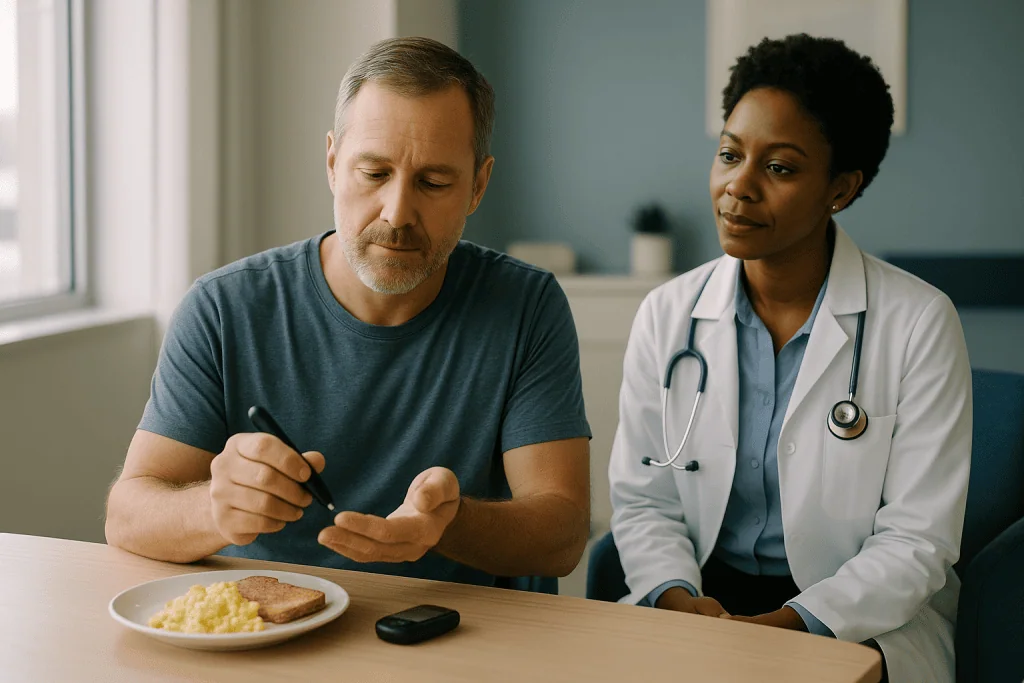
The second is scale. The CDC’s National Diabetes Statistics Report, updated in 2024, estimates that 38.4 million Americans have diabetes and that 97.6 million adults, about 38% of the adult population, have prediabetes, a state in which fasting glucose sits above normal but below the diabetes threshold. Most of those with prediabetes do not know it. A large pool of people now has a reason to look at fasting glucose, and a device to look with.
The third is the content economy. Wellness creators discovered that a morning glucose graph makes compelling footage, and that alarm travels further than nuance. Claims that a fasting reading above 90 mg/dL signals “metabolic dysfunction,” or that apple cider vinegar or a spoon of nut butter at bedtime will flatten the curve, spread quickly in 2025 and early 2026.
What has not changed is the clinical guidance. Mayo Clinic’s patient advice on the dawn phenomenon and Cleveland Clinic’s overview still describe the same mechanism, the same testing approach and the same deferral to the treating clinician for any medication decision. The science moved slowly; the audience arrived all at once.
Why does blood sugar rise before breakfast? The hormone timeline
Picture the liver as a pantry that restocks the bloodstream while you sleep. Through the night the body runs on stored fuel, and glucose drifts gently downward. Then, in the hours before waking, a set of hormones changes the instructions.
Growth hormone leads. It is released in pulses, with the largest surge in the first deep-sleep cycles and smaller ones later. Growth hormone makes muscle and fat cells slightly less responsive to insulin, which means glucose stays in the blood longer. Cortisol, the body’s main stress and alertness hormone, follows a strict daily curve: lowest around midnight, climbing steeply from about 3 a.m., and peaking within the first hour after waking. Cortisol instructs the liver to make new glucose from amino acids and other building blocks, a process called gluconeogenesis, and to release glucose from its stored form, glycogen. Glucagon, the hormone that acts as insulin’s counterweight, adds a third nudge in the same direction. Adrenaline, the fight-or-flight hormone, contributes a smaller push.
The net effect in a healthy adult is a glucose rise of roughly 10 to 20 mg/dL over a few hours, met by a matching rise in insulin from the pancreas. The curve on a monitor looks like a shallow hill rather than a cliff.
In diabetes, the hill grows for two reasons. The counter-regulatory hormones are released normally, but insulin is either absent or less effective, so the liver’s output goes unchecked. Some research also suggests that people with type 2 diabetes have a liver that is already overproducing glucose at baseline, so the morning instruction lands on a system that was never fully switched off.
Why would evolution build this in? The leading explanation is readiness. A body that wakes with fuel already in circulation can move, hunt, forage or flee before the first meal. Breakfast is a cultural habit; the pre-dawn glucose rise is far older.
Dawn phenomenon vs Somogyi effect: how to tell them apart
Two very different stories can end with the same high morning number, and the distinction changes what a clinician does next.
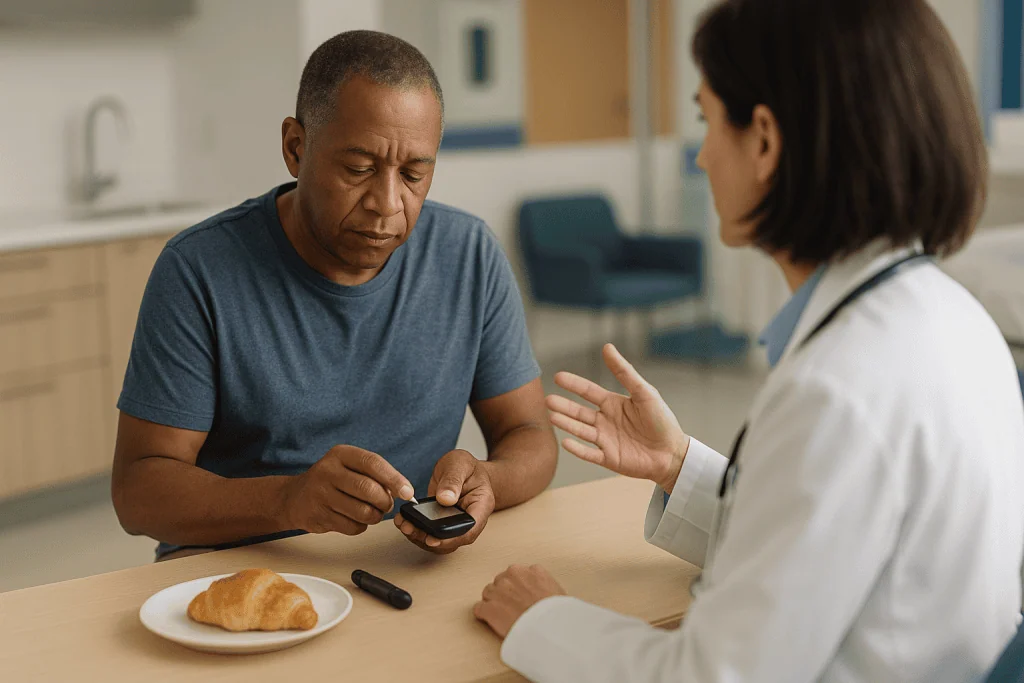
The Somogyi effect, also called rebound hyperglycemia, describes a high morning reading that follows an episode of low blood sugar (hypoglycemia) during the night. The theory is that a drop in glucose, often from too much evening insulin or a skipped bedtime snack, triggers a counter-regulatory surge that overshoots. The dawn phenomenon, by contrast, involves no low at all; glucose simply rises on the hormonal schedule.
Here is the honest caveat. Studies that used overnight continuous monitoring in people with type 1 diabetes have found the classic Somogyi pattern to be far less common than once taught, and in many cases a nighttime low is followed by a morning reading that is low or normal, not high. Mayo Clinic describes both patterns and advises checking glucose in the early hours to distinguish them. The dawn phenomenon is now considered the more frequent explanation for high fasting readings.
A third pattern deserves mention: the “feet on the floor” rise, a quick bump of 20 to 40 mg/dL in the first half hour after standing up, driven by the cortisol awakening response and the act of moving.
| Pattern | What happens overnight | Typical 2–3 a.m. reading | Morning reading | Usual clinical approach |
|---|---|---|---|---|
| Dawn phenomenon | Hormones signal the liver to release glucose; no low occurs | Normal or already rising | High | Review timing and type of therapy, evening habits, exercise |
| Somogyi effect | Glucose drops low, then rebounds | Low | High | Review evening therapy and bedtime routine to prevent lows |
| Feet-on-the-floor rise | Nothing unusual overnight | Normal | Normal, then jumps after standing | Usually no change; often reassurance |
The pattern is diagnosed by data, not by guessing from the breakfast number alone.
Can you have the dawn phenomenon without diabetes?
Yes, and that is the single most reassuring fact for the new wave of monitor wearers. The hormonal surge is universal. What is not universal is a reading that stays elevated.
In a person without diabetes, the morning rise is typically small and self-correcting. A fasting glucose measured after at least eight hours without food is considered normal below 100 mg/dL, in the prediabetes range from 100 to 125 mg/dL, and in the diabetes range at 126 mg/dL or above on two separate tests, according to standard thresholds summarized by MedlinePlus and the CDC. Those are laboratory cut-offs applied by a clinician, not labels you should assign yourself from a sensor reading.
Two things trip people up. First, consumer CGMs estimate glucose in the fluid between cells, not in blood, and the readings can run a little above or below a lab draw; the NIDDK notes that sensor values also lag blood values by several minutes, which matters most when glucose is changing fast. A single 104 on a sensor at 6 a.m. is not a diagnosis. Second, context moves the number. A late, heavy dinner, a poor night of sleep, an alcohol-free evening after a week of drinking, an early-morning workout, a stressful dream, a cold coming on: each can shift the fasting reading by several points.
What a healthy person should notice is the trend over weeks, not the peak of one night. A fasting pattern that sits consistently above 100 mg/dL across many mornings is worth bringing to a clinician, who can order a fasting plasma glucose or an HbA1c, the blood test that reflects average glucose over roughly three months. A pattern that bobs around in the 80s and 90s, with a gentle lift before waking, is a textbook illustration of a body doing its job.
How big is the rise, and does it change your A1C?
Size matters here, because a small, predictable rise and a large, persistent one call for different responses.
Researchers studying the dawn phenomenon in type 2 diabetes have used continuous monitoring to measure the gap between the lowest overnight value and the pre-breakfast value. Across those observational studies the average rise in people who show the pattern sits in the range of about 20 to 30 mg/dL, with wide individual variation; some people rise 10, others 50 or more. In type 1 diabetes without adequate overnight insulin coverage the rise can be considerably steeper.
The downstream question is whether a few extra hours of elevated glucose each morning actually shifts the long-term average. One frequently cited analysis of people with type 2 diabetes who were not yet on insulin estimated that the dawn phenomenon added roughly 0.4 percentage points to HbA1c, which is a meaningful fraction of the gap between a controlled and an uncontrolled result. That figure comes from observational data in a few hundred participants, so treat it as a reasonable estimate rather than a fixed law.
There is a second-order effect worth understanding. A high fasting number does not stay contained to the morning. Breakfast lands on top of it, and the post-breakfast peak is often the highest of the day in people with this pattern. Clinicians sometimes describe the fasting value as the floor on which the rest of the day’s readings are built; lift the floor, and every subsequent reading tends to lift with it.
None of this means the morning number is the only number. A person with a tidy fasting reading and large swings after lunch has a different problem from a person with a flat day and a stubborn morning plateau. The value of overnight data is that it tells you which of those people you are.
What the evidence actually says
It helps to sort what we know by how we know it.
The mechanism is on solid ground. The role of growth hormone and cortisol in the pre-dawn rise was established through small, carefully controlled physiology studies from the 1980s onward, including experiments that blocked growth hormone release and watched the morning rise shrink. These are mechanistic studies, not large trials, but they are consistent, reproducible and uncontested in mainstream endocrinology. Mayo Clinic and Cleveland Clinic describe the hormone story in the same terms.
The prevalence estimates are observational. Continuous monitoring studies in type 2 diabetes, mostly involving a few hundred people each, found the pattern in roughly half of participants and linked it to a modest increase in HbA1c. Observational data can describe how common something is and what it correlates with; it cannot by itself prove that fixing the morning rise would lower the three-month average by the same amount.
The lifestyle advice is the weakest layer. Evening exercise lowering next-morning glucose is supported by small randomized crossover trials, mostly in type 2 diabetes, with modest effects. The bedtime-snack strategy rests on small, mixed studies and expert opinion. Protein or vinegar before bed has a thin and inconsistent trial base. Earlier dinner timing and earlier-eating windows have promising small trials, but most are short and in people without diabetes.
Medication strategies sit in between. The ability of automated insulin delivery systems (insulin pumps linked to a monitor that adjusts basal insulin overnight) to blunt the dawn rise has been tested in randomized trials and is well supported. Adjusting the timing or type of injected insulin or oral medication to address morning readings is standard practice built on physiology and clinical experience rather than large dedicated trials.
The honest summary: the why is well established; the how much is reasonably estimated; the what to do about it ranges from well tested to barely tested, and the better-tested options are the ones that run through a prescribing clinician.
How to check for the dawn phenomenon at home
Confirming the pattern is straightforward, and the method depends on what you have in the drawer.
With a fingerstick meter, Mayo Clinic suggests checking glucose for several nights at around 2 or 3 a.m. and again on waking, after discussing the plan with your clinician. A normal or rising reading in the early hours followed by a higher waking value points to the dawn phenomenon. A low reading at 2 or 3 a.m. followed by a high morning value raises the question of rebound from an overnight low. Keep a simple log with bedtime, dinner timing, evening activity and any medication taken, because the explanation often sits in that column rather than in the glucose column.
With a continuous glucose monitor, the overnight graph does the work for you. Look for the shape of the curve from midnight onward: a gradual lift beginning in the 3 to 5 a.m. range, with no preceding dip, is the characteristic signature. Most CGM apps also generate an overlay of several nights, which exposes patterns a single night hides. The NIDDK recommends confirming an unexpected sensor reading with a fingerstick before acting on it, and that caution is especially relevant to a device bought over the counter and worn without a clinician’s input.
What you do with the data is the clinical part. For a person with diabetes, a confirmed dawn pattern is a concrete, useful finding to bring to the next appointment. For a person without diabetes, a gentle overnight lift that returns to the normal range needs no action at all.
Two practical cautions. Do not change insulin or any glucose-lowering medicine on the strength of your own overnight readings; the risk of tipping into hypoglycemia is real and the adjustment belongs to the prescriber. And do not let three nights of 2 a.m. alarms become a habit; the point of a short testing window is to answer a question, not to add a chronic sleep disruption that can itself nudge glucose upward.
How to stop the dawn phenomenon: what actually helps
Nobody switches off the hormone surge, and nobody should want to. The realistic goal is to narrow the gap between the liver’s morning output and the insulin available to handle it. Several everyday levers can help, and they are worth trying in order of evidence.
Evening movement has the best support among lifestyle measures. A walk after dinner or a short bout of resistance exercise increases the muscles’ uptake of glucose for many hours afterward, a benefit that persists into the overnight period in small randomized studies. The effect is modest, in the range of a few to perhaps a dozen points on the morning reading, but it is reliable and carries wider benefits for the heart.
Dinner composition and timing come next. A large, carbohydrate-heavy meal late in the evening sends glucose into the night already elevated, and a liver that was never fully quieted has more to add to in the morning. Shifting the bulk of the day’s carbohydrate earlier, choosing higher-fiber carbohydrates, and finishing dinner two to three hours before bed are reasonable, low-risk changes. The trial evidence for earlier eating windows is promising but still small and short.
Alcohol in the evening can produce a different problem, lowering glucose overnight in people on insulin, which is a separate safety matter the NHS flags in its guidance on low blood sugar.
Sleep is an underrated lever. Short or fragmented sleep raises cortisol and worsens insulin resistance the following day, and sleep apnea, a condition in which breathing repeatedly pauses during sleep, is strongly associated with higher fasting glucose.
Where these measures fall short, the next step is a medication conversation, covered below. The honest expectation to set: lifestyle changes trim the dawn phenomenon; they rarely erase it in someone whose own insulin supply is limited.
Does a bedtime snack lower morning blood sugar?
This is the most searched practical question, and the answer is less tidy than the viral videos suggest.
The logic behind the snack is twofold. For people on insulin whose morning highs may follow an overnight low, a small bedtime snack can prevent the dip and therefore the rebound; that is a hypoglycemia-prevention strategy, not a dawn phenomenon strategy. For the dawn phenomenon itself, the theory is that a small amount of protein or fat before bed blunts the liver’s overnight glucose production or slows the morning rise.
The evidence for the second idea is thin. A handful of small studies, several in people with type 2 diabetes, have compared bedtime snacks of different types with no snack. Results are inconsistent: some found slightly lower fasting glucose after a protein-rich or high-fiber snack, others found no difference, and a few found that any additional calories before bed raised the morning number. Mayo Clinic’s patient advice leans toward avoiding carbohydrates at bedtime rather than adding a specific snack.
The quality of what goes into the snack matters more than the ritual. A bowl of cereal or a sweet yogurt is a carbohydrate load that the overnight liver then builds on. A small serving of plain nuts, a boiled egg or a few slices of cheese adds little glucose directly, though it still adds calories and, for someone managing weight as part of their diabetes care, that trade-off should be weighed.
A reasonable approach for someone with diabetes is to test rather than assume. Try a week with no bedtime food and a week with a small protein snack, logging the morning readings, and bring the comparison to your clinician. For someone without diabetes who is simply curious, there is no evidence that a bedtime snack improves health, and no reason to adopt one for the sake of a sensor graph.
Exercise, sleep and the morning number
Two of the strongest everyday influences on fasting glucose never show up in a food log.
Exercise works through two channels. During and shortly after activity, muscles pull glucose out of the blood without needing much insulin. For roughly 24 to 48 hours afterward, muscles stay more sensitive to insulin, which means the same pancreatic output accomplishes more. Both channels help in the pre-dawn window, when insulin sensitivity is naturally at its lowest. Small randomized crossover trials in type 2 diabetes have found that afternoon or evening activity produces a lower next-morning reading than morning activity, which fits the physiology: the benefit is still fresh when the hormones surge. Resistance training appears to contribute as much as walking, and combining the two seems to outperform either alone. People on insulin should know that this same overnight sensitivity can tip toward hypoglycemia, which is why timing and intensity are worth discussing with the prescriber.
Sleep works in the opposite direction when it goes wrong. Laboratory studies in healthy adults that restricted sleep to four or five hours for a few nights measured a clear drop in insulin sensitivity, in some experiments on the order of a quarter or more, alongside higher evening cortisol. Sleep apnea compounds this: each pause in breathing triggers a small stress response, and a night of hundreds of them leaves cortisol and adrenaline elevated at precisely the hour the dawn surge begins. Loud snoring, witnessed pauses in breathing, morning headaches and daytime sleepiness are reasons to raise the subject with a clinician, because treating apnea has been associated with improved glucose control in observational studies.
Chronic stress rounds out the list. Cortisol does not distinguish between a predator and an inbox. Evening routines that lower arousal before bed, consistent sleep and wake times, and daylight exposure in the morning all help anchor the circadian rhythm that governs the dawn surge in the first place.
Medication timing: why this is a conversation with your clinician
For many people with diabetes, lifestyle measures narrow the morning gap but do not close it. The remaining distance is where prescribed therapy comes in, and where the guidance must be individual.
The general principle clinicians use is to match the shape of the treatment to the shape of the problem. If glucose rises in the early hours, the goal is to have more insulin action, or less liver glucose output, covering that specific window. Depending on the person, that may mean adjusting the timing of a long-acting insulin, changing the type of insulin, reviewing the timing of an oral glucose-lowering medicine, or, for people on a pump, programming a higher basal rate in the pre-dawn hours. Automated insulin delivery systems, which pair a pump with a continuous monitor and raise or lower background insulin minute by minute, have been shown in randomized trials to reduce overnight highs and lows together, and they are often the most effective tool for a pronounced dawn rise in type 1 diabetes.
Each of those options carries trade-offs that the person at home cannot fully see. Moving insulin later in the evening can help the morning number and also increase the risk of a low at 1 a.m. Raising a basal rate for the dawn window helps on the nights the pattern appears and can cause trouble on the nights it does not, which is why pump adjustments usually follow a run of overnight data rather than a single reading. Oral medicines interact with kidney function, other prescriptions and meals in ways that require a full picture.
This is the reason every mainstream source, Mayo Clinic and Cleveland Clinic among them, directs the decision back to the prescriber. Bring your overnight data, bring your log, bring the questions. Do not bring a change you have already made on your own. A good clinician will treat a clearly documented dawn pattern as exactly the kind of information that makes an adjustment safer and more precise.
Common myths about the dawn phenomenon
The viral version of this topic contains several errors that deserve a direct correction.
Myth: a fasting reading above 90 mg/dL means your metabolism is broken. Standard laboratory thresholds define normal fasting glucose as below 100 mg/dL, and a single sensor reading, which can run a few points off a lab value, carries little weight on its own. A healthy pre-dawn rise that settles in the 90s is normal physiology.
Myth: the dawn phenomenon means you ate too much the night before. Diet shapes the size of the rise, but the rise itself is hormonal and occurs on an empty stomach. People who fast for 14 hours still show it, sometimes more clearly.
Myth: a spoonful of apple cider vinegar or a particular nut butter at bedtime will flatten the morning curve. The vinegar trials are small, short and inconsistent, and most measured post-meal glucose rather than fasting glucose. Nut butter has no dedicated evidence at all. Neither is harmful in normal amounts; neither is a treatment.
Myth: skipping breakfast fixes the problem. Skipping breakfast removes the post-breakfast peak from the graph but does nothing to the pre-dawn rise, and in some studies it was followed by larger glucose excursions later in the day.
Myth: a high morning number always means you went low overnight and need less evening medication. This is the Somogyi explanation, and overnight monitoring studies suggest it is far less common than the dawn phenomenon. Reducing evening insulin on that assumption, without data, can leave the real pattern uncovered.
Myth: the dawn phenomenon is a sign of poor self-management. It is a sign of a liver and adrenal system working on schedule. Managing it is a matter of matching treatment to physiology, not a test of willpower, and the language of blame has no place in it.
When to see a doctor
Most of what the dawn phenomenon produces is a number, and numbers are rarely emergencies. A few situations are different.
Seek urgent medical care, or call emergency services, if someone with diabetes shows signs of severe high blood sugar with ketones: persistent vomiting, abdominal pain, deep or rapid breathing, a fruity smell on the breath, confusion or drowsiness. These can signal diabetic ketoacidosis, a dangerous build-up of acids that occurs when there is too little insulin. The same urgency applies to severe low blood sugar, which the NHS describes as including confusion, slurred speech, seizures, loss of consciousness or an inability to safely swallow.
Make a prompt appointment if fasting readings sit consistently above the target your clinician set, if a new pattern of morning highs appears without an obvious explanation, or if you have been waking with symptoms of overnight lows: sweats, nightmares, a racing heart or a morning headache. These point to a treatment plan that needs adjusting, and the adjustment belongs to the prescriber.
Also book a visit if you do not have a diabetes diagnosis but notice unexplained thirst, frequent urination, unintended weight loss, blurred vision or slow-healing wounds, or if an over-the-counter monitor shows a fasting pattern that stays above 100 mg/dL across many mornings. A clinician can order a fasting plasma glucose or an HbA1c test and interpret it in context; a sensor reading is a prompt for that conversation, not a substitute for it.
Finally, raise the subject of sleep if you snore loudly, stop breathing during sleep according to a partner, or feel exhausted despite a full night in bed. Untreated sleep apnea amplifies the morning rise and carries risks for the heart that extend well beyond glucose. Whatever you find overnight, do not stop, start or change any prescribed medicine on your own; bring the data, and let the person who prescribed it decide.
Frequently asked questions
What is the dawn phenomenon in simple terms?
It is the natural rise in blood sugar that happens in the early morning, usually between 3 and 8 a.m., as the body gets ready to wake. Hormones such as cortisol and growth hormone tell the liver to release glucose for energy. In people without diabetes, insulin keeps that rise small. In diabetes, there may not be enough insulin to match it, so the morning reading can be high.
How can I tell the dawn phenomenon vs Somogyi effect apart?
Check glucose at around 2 or 3 a.m. for a few nights, with your clinician’s agreement, or review the overnight graph on a continuous monitor. A normal or rising early-hours value followed by a high waking value points to the dawn phenomenon. A low early-hours value followed by a high waking value suggests rebound from an overnight low. Monitoring studies find the dawn phenomenon far more often.
Can you have the dawn phenomenon without diabetes?
Yes. The hormone surge happens in everyone, so a gentle upward slope on a glucose monitor before waking is normal. In a person with healthy insulin function the rise is modest and the fasting value typically stays below 100 mg/dL. A pattern that consistently sits above that line across many mornings is worth discussing with a clinician, who can order a laboratory test to interpret it properly.
How do I stop the dawn phenomenon from raising my fasting blood sugar?
You cannot switch off the hormone surge, but you can narrow the gap it creates. Evening activity, an earlier and lower-carbohydrate dinner, consistent sleep and treating sleep apnea all have some supporting evidence. If those measures are not enough, the timing or type of prescribed therapy may need adjusting, and that decision belongs to the clinician who prescribes it, guided by your overnight readings.
Does the dawn phenomenon affect fasting blood sugar tests at the lab?
It can. A laboratory fasting glucose is drawn in the morning, inside the window when the dawn rise occurs, so someone with a pronounced pattern may test higher than their overnight average. That is one reason clinicians usually confirm a diagnosis with a second test or an HbA1c, which reflects three months of readings rather than one morning. Tell your clinician if you suspect a strong dawn pattern.
Is a bedtime snack a good idea for morning blood sugar?
The evidence is mixed and the studies are small. For people on insulin who have overnight lows, a small snack may prevent the dip and the rebound that follows. For the dawn phenomenon itself, protein-rich snacks have shown small or no effects, and carbohydrate snacks tend to raise the morning number. Testing a week with and a week without, and sharing the results with your clinician, beats guessing.
Does exercising at night help the dawn phenomenon?
Small randomized crossover trials in type 2 diabetes suggest that afternoon or evening activity lowers next-morning glucose more than morning activity, because muscles stay more insulin-sensitive for many hours afterward. The effect is modest, often a few points, and both walking and resistance exercise contribute. People who use insulin should discuss timing with their prescriber, since the same effect can increase the risk of an overnight low.
How much does the dawn phenomenon raise blood sugar?
In people without diabetes the rise is typically 10 to 20 mg/dL and is quickly absorbed. In observational studies of type 2 diabetes using continuous monitors, the average rise among those who show the pattern was roughly 20 to 30 mg/dL, with wide individual variation. In type 1 diabetes without adequate overnight insulin coverage, the climb can be considerably larger and may continue through breakfast.
Can poor sleep or sleep apnea make the dawn phenomenon worse?
Yes. Short or fragmented sleep raises cortisol and reduces insulin sensitivity the next day, which widens the morning gap. Sleep apnea adds repeated small stress responses through the night, leaving cortisol and adrenaline elevated at the hour the dawn surge begins. Loud snoring, pauses in breathing, morning headaches or daytime exhaustion are reasons to raise sleep with a clinician as part of glucose management.
Should I change my insulin dose if my morning readings are high?
No, not on your own. A high morning reading can come from the dawn phenomenon, from a rebound after an overnight low, or from evening habits, and each calls for a different adjustment. Changing insulin without that information can cause dangerous lows. Record a few nights of early-hours and waking readings, note dinner timing and activity, and bring the log to the clinician who prescribes your treatment.
References
- Cleveland Clinic: Dawn Phenomenon
- NIH NIDDK: Continuous Glucose Monitoring
- CDC: National Diabetes Statistics Report
- NHS: Low blood sugar (hypoglycaemia)
This article is for general information only and is not a substitute for professional medical advice. Please consult a qualified doctor about your individual situation.

More from the Blog

Eggs and Cholesterol: What the Latest Research Says About the Daily Egg
Eggs raise blood cholesterol far less than once feared. A large egg holds about 186 mg of cholesterol, yet most people's LDL rises only…

Cardiac Amyloidosis in Older Adults: How Kidney Function and Other Conditions Shape Care
Cardiac amyloidosis in older adults is a stiffening of the heart muscle caused by misfolded protein deposits, most often transthyretin (ATTR) after age 70…

Heart Valve Surgery Recovery Milestones: Wound Care, Walking, Rehab and Return to Work
A typical heart valve surgery recovery timeline runs from about a week in hospital to two or three months of steady healing at home.…

CABG or Stents: How Does the Heart Team Choose for Coronary Artery Disease?
A heart team, usually an interventional cardiologist and a cardiac surgeon working with the patient's own cardiologist, weighs how many coronary arteries are narrowed,…

Cardiomyopathy and Other Myocardial Diseases: How Heart Muscle Conditions Are Treated
Treatment for cardiomyopathy depends on its type. Dilated cardiomyopathy is usually managed with heart failure medicines that ease the heart's workload, hypertrophic cardiomyopathy with…

How Do Follow-Up Tests Change Pulmonary Hypertension Treatment Over Time?
Follow-up tests for pulmonary hypertension, usually an echocardiogram, a six-minute walk test, BNP blood tests and a functional class assessment, are repeated every few…