

Heart Valve Surgery Recovery Milestones: Wound Care, Walking, Rehab and Return to Work

Key Takeaways
- The breastbone divided during open valve surgery takes about six to eight weeks to fuse, and every lifting, pushing, and pulling rule exists to protect that bone, not the scar.
- The NHS puts overall recovery from aortic valve replacement at two to three months, with a hospital stay of about a week and no driving for at least four weeks.
- Walking begins within a day or two of surgery and remains the safest exercise throughout recovery because it protects the lungs, reduces clot risk, and rebuilds stamina without loading the chest.
- Only mechanical valves require lifelong anticoagulation; tissue valves and repairs usually need short-term or no blood-thinning medicine, though other conditions can change that.
- Cardiac rehabilitation programs typically run about three months and are recommended after valve surgery, not just after heart attacks, with upper-body strength work delayed until the breastbone has healed.
- A prosthetic valve raises the lifetime risk of endocarditis, so meticulous dental care, telling every dentist about your valve, and reporting unexplained fevers are permanent habits.
A typical heart valve surgery recovery timeline runs from about a week in hospital to two or three months of steady healing at home. The breastbone usually takes six to eight weeks to knit, walking starts within a day or two, cardiac rehabilitation often runs about three months, and return to work depends on the job and the surgeon's advice. Ranges vary widely by person.
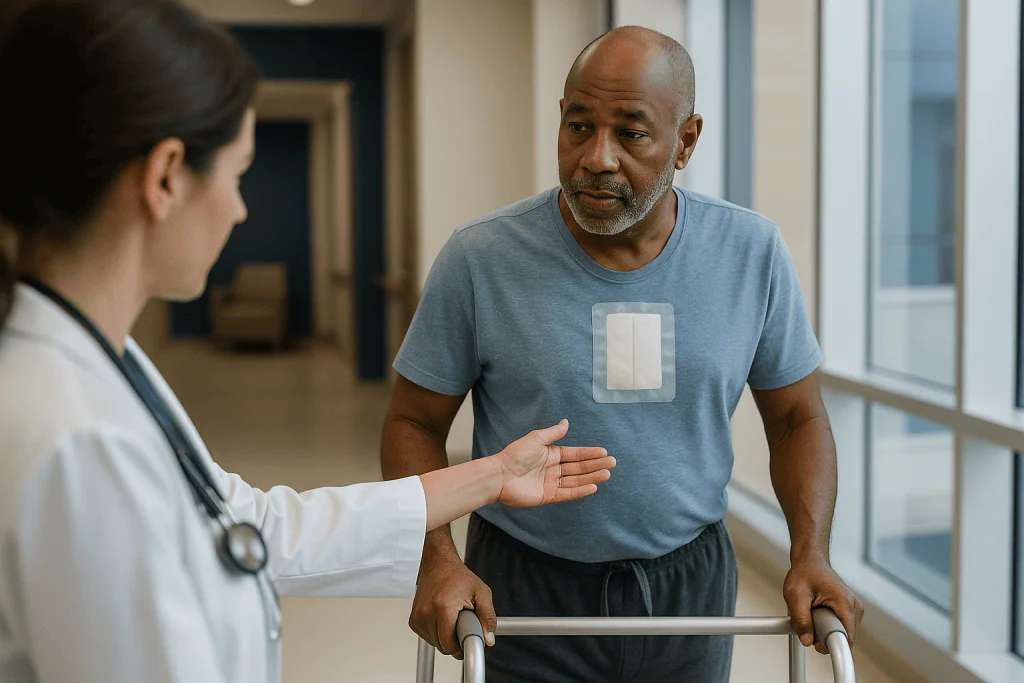
On the third morning after surgery, a retired postal worker in a hospital gown made it from the bed to the doorway and back, one hand on a physiotherapist’s arm, the other clutching a folded pillow to his chest. It was, he said afterward, the most tiring 30 feet of his life. It was also the moment his recovery became real.
That is what a heart valve surgery recovery timeline looks like up close: not a single dramatic milestone but dozens of small ones, most of them measured in steps, showers, and stairs. People arrive at the operation asking about the surgeon and the valve. They leave asking about the scar, the lifting rule, the driving rule, and the honest date they can get back to work.
This explainer follows that arc from the intensive care unit to the return of ordinary life, with the ranges major guidelines actually give, the reasons behind each restriction, and the moments when a phone call to your team matters more than patience.
What actually happens during heart valve surgery
Your heart has four valves, one-way doors of thin tissue that open and shut roughly 100,000 times a day. Surgery is offered when a valve either leaks (regurgitation, blood flowing backward) or stiffens and narrows (stenosis, blood struggling to get through), badly enough to strain the heart or cause symptoms. The aortic and mitral valves on the left side of the heart are the ones most often operated on, according to Mayo Clinic.
The surgeon has two broad options. Repair means reshaping your own valve: trimming a floppy leaflet, tightening the ring it sits in, or separating fused flaps. Replacement means removing the diseased valve and sewing in a new one, either a mechanical valve made of carbon and metal or a biological valve built from treated animal or human tissue. Mechanical valves are very durable but require lifelong anticoagulant medicine; tissue valves usually do not, yet they wear out over time and may eventually need replacing, a trade-off Mayo Clinic describes plainly.
Most valve operations are still done through a cut down the middle of the chest, with the breastbone divided and the heart connected to a bypass machine that takes over pumping and oxygenating blood while the surgeon works. Smaller-incision approaches, working between the ribs or through a partial breastbone cut, are used in selected people. Catheter-based procedures, such as transcatheter aortic valve implantation (TAVI, where a folded valve is threaded through an artery and expanded inside the old one), avoid opening the chest altogether and usually mean a faster recovery, as the NHS notes.
Why does this matter for recovery? Because almost every restriction you will be given in the following weeks traces back to one of three things: a divided breastbone that must fuse, a heart that has been stopped and restarted, and a new valve that must settle in without infection or clot.
Heart valve surgery recovery timeline at a glance
Recovery is not a straight line, and the ranges below are typical windows drawn from major patient guidance rather than promises. Your own team will adjust them for your age, the operation you had, and how your heart and lungs behave in the first days.
| Milestone | Typical window | Source |
|---|---|---|
| Intensive care stay | About one day, sometimes longer | Mayo Clinic |
| Total hospital stay after open surgery | Around a week | NHS |
| First walk with help | Within a day or two of surgery | Mayo Clinic |
| Breastbone healing | Six to eight weeks | MedlinePlus |
| Return to driving | Not for at least four weeks, with team approval | NHS |
| Cardiac rehabilitation program | Usually about three months | MedlinePlus |
| Feeling fully recovered | Two to three months, longer for some | NHS |
Two patterns stand out. First, the early weeks are front-loaded with rules: no heavy lifting, no driving, careful wound checks. Those are the weeks when the breastbone is only held by wire and scar tissue. Second, energy returns more slowly than people expect. The NHS puts full recovery at two to three months, and many people describe a tiredness that lingers well past the point where the scar looks healed. That is normal healing after a major operation and the effects of the bypass machine, not a sign that something went wrong.
Minimally invasive and catheter-based procedures shorten several of these windows, particularly hospital stay and lifting restrictions, because the breastbone is either partly cut or not cut at all. If that is the route your team has chosen, ask them to walk you through their own version of this table.
Who is usually offered valve surgery, and who is asked to wait
Surgery is not the reflex answer to a faulty valve. Many people live for years with a mild leak or narrowing, checked with a periodic echocardiogram (an ultrasound scan of the heart) and no operation at all. The American Heart Association describes this watchful monitoring as a legitimate stage of care, not a delay.
The people usually offered surgery fall into three groups. Those with severe valve disease and symptoms, such as breathlessness on effort, chest tightness, fainting, or swollen ankles. Those without obvious symptoms whose scans show the heart muscle beginning to stretch or weaken under the strain, because waiting for symptoms can mean waiting for damage that does not reverse. And those already having another heart operation, such as bypass grafting, where fixing the valve at the same time avoids a second chest opening.
Being asked to wait is common and often wise. Someone with moderate disease and a strong, normal-sized heart is frequently monitored rather than operated on, because the risks of surgery outweigh the benefit at that stage. An active infection, including an infected valve (endocarditis), may need treatment first. Recent stroke, uncontrolled diabetes, lung disease, or frailty may prompt the team to optimize those problems before scheduling a date, or to steer toward a catheter-based option that avoids open surgery.
Age alone rarely decides it. What the team weighs is the whole picture: how much the valve is hurting the heart, how the rest of the body would tolerate an operation and a bypass machine, and what you want your life to look like afterward. Mayo Clinic and the NHS both frame the choice between repair, mechanical replacement, tissue replacement, and catheter procedures as a shared decision, and that decision always sits with you and the treating team.
The first days: from intensive care to the ward
You wake in an intensive care unit with more tubes than you expected. A breathing tube usually comes out within hours once you are awake enough to breathe on your own. Drains in the chest remove fluid from around the heart and lungs. Small wires taped to the skin connect to a temporary pacemaker in case your heart rhythm needs support. A catheter drains the bladder. Mayo Clinic describes a typical intensive care stay of about a day before transfer to a regular cardiac ward, though this stretches for some people.

The first real work begins on the ward. Nurses will ask you to cough while hugging a pillow to your chest, which braces the breastbone and makes the cough far less alarming than it sounds. You will be handed an incentive spirometer, a plastic device you breathe into that measures how deeply you can inhale; using it every hour or so re-expands the small air sacs at the base of the lungs that collapse during anesthesia and helps prevent pneumonia.
Expect to sit out of bed the first day and walk short distances with help within a day or two. Expect, too, a few things that unsettle people: a racing or irregular heartbeat, which is common in the first days and usually settles with medicine and time; poor appetite; disturbed sleep; and moments of tearfulness or confusion, especially in older adults. The NHS lists a hospital stay of about a week as typical for open aortic valve surgery, shorter for catheter procedures.
Before discharge you will meet a pharmacist about your medicines, a physiotherapist about stairs and walking, and usually a rehabilitation nurse who books your outpatient program. Write down every question that occurs to you in those days; the ward is the easiest place to get answers.
Wound care after heart valve surgery: chest, leg, and arm incisions
The chest incision is the one people fixate on, but it is usually the least troublesome. It is closed in layers beneath the skin, often with dissolving stitches and skin glue or small adhesive strips. Your job is simply to keep it clean and dry and to look at it every day.
MedlinePlus and the NHS give similar practical advice. Showering is generally permitted once the team says so, often within the first days at home; let warm water run over the wound rather than scrubbing it, use plain soap, and pat dry with a clean towel. Avoid baths, swimming, and hot tubs until the skin is fully closed, because soaking softens healing tissue and invites bacteria. Skip lotions, powders, and ointments on the incision unless your team specifically prescribes one. Adhesive strips will curl and fall off on their own; do not pull them.
A little redness along the edges, mild itching, numbness around the scar, and a small firm ridge under the skin are all part of normal healing. What is not normal is spreading redness, warmth, swelling, a wound that opens, cloudy or foul-smelling drainage, or a clicking or shifting sensation in the breastbone when you move. Those need a same-day call.
Do not forget the other incisions. If a vein was taken from the leg or an artery from the arm for a combined bypass, those sites often ache more and swell more than the chest. Elevate the leg when sitting, keep walking to move fluid, and watch for the same signs of infection. Catheter procedures leave a small puncture in the groin or chest wall; a bruise the size of a hand is common, a rapidly growing, tense, painful lump is not.
Sternum healing after open heart surgery: what the precautions protect
The breastbone, or sternum, is a flat bone that was sawn down its length and then wired back together at the end of the operation. Bone heals like a fracture: it needs stillness and time. MedlinePlus puts the healing period at about six to eight weeks, and every sternal precaution you are given exists to stop the two halves from grinding against each other while new bone bridges the gap.
The rules are consistent across guidance from MedlinePlus and the NHS. Do not lift anything heavier than about 10 pounds (roughly 4.5 kilograms), a gallon of milk or a small bag of groceries, until your surgeon clears you. Do not push or pull hard with your arms: no shoving a heavy door, no pushing up from a low chair with your hands, no vacuuming, no reaching to the back seat. Do not lift small children or pets, however much they protest. Keep your elbows close to your body when reaching, and let your legs do the work when you stand.
Getting out of bed is the moment most people forget. Roll onto your side, drop your legs over the edge, and push up with the lower elbow rather than sitting straight up with your stomach and chest muscles. Hug a pillow when you cough, sneeze, or laugh.
Pain here is real and expected: an ache across the chest, soreness between the shoulder blades, and sharp twinges when you twist. It fades over weeks. What should not fade is your attention to a clicking, popping, or grating sensation in the bone, or a feeling that the two halves move separately when you shift position. That can mean the wires have loosened, and it needs prompt assessment rather than a wait-and-see approach.
Walking after heart valve surgery: what the first weeks usually look like
Walking is the one exercise every guideline agrees on from the start, because it is safe for the breastbone, clears the lungs, keeps blood moving in the legs to reduce clot risk, and gives the heart the gentle, rhythmic work it needs to rebuild stamina. MedlinePlus advises starting with short walks several times a day and adding time gradually.
In practice the first weeks tend to look something like this, though your own program will set the pace. In the first week at home, most people manage a few minutes of slow walking on flat ground two or three times a day, with rest in between. Stairs are allowed if you take them slowly and use the rail lightly rather than hauling with your arms. By the second and third weeks, walks often stretch to 10 to 15 minutes at a time. By the end of the first month, many people are walking 20 to 30 minutes most days at a comfortable pace, which is roughly where a formal rehabilitation program picks up and begins to add structure.
Use the talk test: you should be able to hold a conversation while walking. If you are gasping, slow down. Stop and rest if you feel chest pain, dizziness, palpitations, or unusual breathlessness, and tell your team about it.
Fatigue will ambush you. A good morning walk can be followed by an afternoon of exhaustion for no obvious reason. That pattern is common after any operation involving a bypass machine and general anesthesia, and it does not mean the surgery failed. Nap when you need to, but keep the walks going; the fastest route through post-surgical tiredness is steady, modest activity rather than bed rest. Avoid walking outdoors in extreme heat or cold in the early weeks, when the heart is still recalibrating.
Cardiac rehab after valve surgery: what it involves and why it matters
Cardiac rehabilitation is a medically supervised program that combines monitored exercise, education about heart-healthy living, and support for stress, mood, and medicines. MedlinePlus describes programs that typically run about three months, with sessions a few times a week, and both the American Heart Association and the NHS recommend it after valve surgery, not only after heart attacks.
Why does a person who has just had a valve fixed need a program? Three reasons. First, safety: in the early weeks your heart rate and blood pressure response to exercise are being watched by staff with a monitor in the room, so you learn what effort is appropriate for your heart rather than guessing. Second, confidence: many people are quietly frightened to exert themselves after their chest has been opened, and rehabilitation replaces that fear with evidence from their own body. Third, the long game: valve disease often travels with high blood pressure, high cholesterol, diabetes, or smoking, and the education sessions target exactly those risks.
A typical session begins with a warm-up, moves through treadmill or bike work at a heart rate the team has calculated for you, and finishes with cool-down and gentle stretching. Upper-body resistance work waits until the breastbone has healed, usually after the six to eight weeks MedlinePlus describes. Dietitians, pharmacists, and psychologists rotate through the program in most centers.
Referral is not automatic everywhere. If nobody has mentioned rehabilitation by the time you go home, ask. Programs may be hospital-based, community-based, or delivered partly at home with telephone or video check-ins, and the evidence base supports all of these formats. Those who attend and complete their program tend to fare better than those who do not, a finding consistent across major cardiology guidance, though the size of the benefit varies from study to study.
Medicines after heart valve surgery: what they do and how long they usually last
You will go home with more prescriptions than you arrived with. Understanding the purpose of each helps, though every decision about starting, stopping, or adjusting them belongs to your prescribing clinician.
Anticoagulants, medicines that slow the blood’s ability to clot, are the ones with the biggest impact on daily life. A mechanical valve needs lifelong anticoagulation because blood clots readily on artificial surfaces, and a clot on the valve can jam it or break free and travel to the brain. Mayo Clinic and the NHS both describe this as the central trade-off of choosing a mechanical valve. Tissue valves and repaired valves usually need anticoagulation for a limited period after surgery, if at all, while the sewing ring heals over. The most common long-term anticoagulant for mechanical valves requires regular blood tests to keep its effect within a target range, and its action is influenced by vitamin K in the diet and by many other medicines.
Antiplatelet medicines, such as low-dose aspirin, make blood cells less sticky and are often used after tissue valves and catheter procedures. Beta blockers slow the heart and are frequently used in the early weeks, when irregular rhythms are common. Diuretics help the body shed the extra fluid that accumulates during and after surgery, which is why you may be asked to weigh yourself daily. Pain relief is usually stepped down over a few weeks.
Timelines differ by valve type, by whether an irregular rhythm appeared, and by other conditions you have, so the same operation can lead to very different medicine lists in two people. Carry an up-to-date list, tell every dentist and pharmacist about your valve and anticoagulant, and never adjust a medicine because a website or a friend suggested it.
What foods should you avoid after heart valve replacement surgery?
There is no forbidden-foods list that applies to everyone after valve surgery, and anyone who hands you one without knowing your medicines is guessing. What exists instead are three distinct reasons to think about what you eat.
The first concerns anticoagulants. If you take the common vitamin K-dependent anticoagulant used with mechanical valves, the aim is consistency rather than avoidance. Leafy greens such as spinach, kale, and broccoli are rich in vitamin K, which works against the medicine; eating a large amount one week and none the next makes the blood tests swing. The American Heart Association’s guidance is to keep intake steady week to week and to tell your anticoagulation clinic about any big dietary change, new supplement, or herbal product. Alcohol also interacts with this medicine and with healing in general, so ask your team about a sensible limit.
The second concerns fluid and salt. In the early weeks the heart is recovering and the body is shedding surgical fluid. High-salt foods, such as cured meats, packaged soups, and salty snacks, hold water in the body, which is why you may be asked to limit sodium and weigh yourself each morning. Sudden weight gain over a day or two is a sign to report, not to diet away.
The third is the long term. Valve disease and coronary artery disease share risk factors, and a Mediterranean-style pattern, built around vegetables, fruit, whole grains, legumes, fish, nuts, and olive oil with little processed meat or added sugar, is what the American Heart Association recommends for heart health generally. Protein matters in the first weeks for wound healing, and appetite is often poor, so smaller, more frequent meals help. Grapefruit deserves a specific mention because it interferes with several heart medicines; check with your pharmacist rather than assuming.
Driving, flying, intimacy, and return to work after heart valve surgery
These are the questions people are most reluctant to ask and most desperate to have answered, so here they are in plain terms, with the caveat that your surgeon’s advice overrides any general range.
Driving is restricted for two reasons: a sudden braking maneuver puts strain across the healing breastbone, and reaction times and concentration are dulled for weeks after major surgery. The NHS advises not driving for at least four weeks after aortic valve replacement and checking with your team before restarting; commercial and heavy-vehicle licenses carry longer rules and formal notification requirements in many countries. Riding as a passenger is fine as soon as you are home, wearing the seat belt with a small folded towel between the belt and the incision if it rubs.
Flying is usually discouraged in the earliest weeks, both because the cabin environment is a poor place to develop a complication and because prolonged sitting raises clot risk. Ask your team when they consider it safe for you, arrange follow-up at the far end if the trip is long, walk the aisle regularly, and keep your medicines and a summary of your operation in your hand luggage.
Sexual activity can resume when you feel ready and your team agrees; the physical demand is similar to climbing two flights of stairs, so if you can do that comfortably you are usually cleared. Choose positions that keep weight off your arms and chest while the breastbone heals.
Return to work is the most variable milestone. The NHS frames it within the two to three months of overall recovery, with desk-based roles typically earlier and physically demanding jobs waiting for full sternal healing and rehabilitation. A phased return, shorter days at first, is worth negotiating with an employer if that option exists.
Life after heart valve replacement: can you live a normal life?
For most people the honest answer is yes, with a few permanent adjustments whose size depends on the valve you received. The American Heart Association describes long-term goals after valve surgery in terms of ordinary living: regular activity, a heart-healthy diet, not smoking, and consistent follow-up rather than a life of restriction.
Three things do become permanent. The first is surveillance. Every replaced or repaired valve is checked periodically with an echocardiogram to watch for leaks, narrowing, or wear, usually starting with a baseline scan in the months after surgery and then at intervals your cardiologist sets. Tissue valves are watched more closely as the years pass because they degrade over time and may eventually need a further procedure, a point Mayo Clinic makes clearly when comparing valve types.
The second is infection prevention. A prosthetic valve is a surface where bacteria can settle, and infection of the valve, called endocarditis, is a serious complication. The NHS emphasizes meticulous dental hygiene, regular dental checks, and telling every dentist and doctor that you have a valve; whether you need antibiotics before dental work is a decision for your cardiologist based on current guidance, not a universal rule. Skin infections, unexplained fevers, and night sweats should always be reported.
The third applies to mechanical valves: lifelong anticoagulation and its monitoring, plus attention to bleeding risk in sports and hobbies. Many people also notice a faint click from a mechanical valve in a quiet room, which fades into the background for most within months.
What people rarely expect is the emotional aftermath. Low mood, anxiety, and irritability are common in the months after heart surgery. They are part of recovery, not a personal failing, and rehabilitation programs and primary care teams treat them routinely.
What people often get wrong about heart valve surgery recovery
Myths cluster around this operation, partly because everyone knows someone who had one and every story is different. A few deserve correcting.
“Once the scar looks healed, I am healed.” The skin closes in a couple of weeks; the bone beneath it takes six to eight weeks according to MedlinePlus, and stamina takes two to three months by the NHS estimate. Lifting a suitcase at week three because the scar looks fine is how sternal wires loosen.
“Rest is the safest thing.” Bed rest after heart surgery raises the risk of pneumonia, clots in the legs, and muscle loss. Every major guideline pushes early, gentle walking for exactly this reason.
“A new valve means the heart is fixed for good.” The valve is fixed. The heart muscle that was straining against the old valve may take months to recover, and some changes do not fully reverse. The risk factors that damaged arteries alongside the valve are untouched by the operation, which is why rehabilitation and follow-up are not optional extras.
“Everyone needs blood thinners forever.” Only mechanical valves require lifelong anticoagulation. Tissue valves and repairs often need only a short course or none, though other conditions such as an irregular rhythm may change that.
“Success rate” is a single number. People search for it constantly, and the truthful answer is that outcomes depend on the valve involved, the type of operation, age, kidney and lung function, and other heart disease. Surgical teams calculate an individual risk estimate before the operation using validated scoring systems; ask for yours rather than relying on a headline figure that was never about you.
“Feeling low means something went wrong.” Mood changes after cardiac surgery are common and treatable.
Questions to ask your care team before and after heart valve surgery
The best recoveries tend to belong to people who arrive at clinic with a written list. Adapt this one.
Before the operation: Is repair possible for my valve, or is replacement more likely, and why? If replacement, what are the trade-offs between a mechanical and a tissue valve at my age and with my lifestyle? Am I a candidate for a smaller-incision or catheter-based approach, and what does the evidence say about that option for someone like me? What is my individual risk estimate for this operation, and what drives it? Will anything else be fixed at the same time?
Before going home: Exactly how should I care for each incision, and what does your team consider an infection warning sign? What is my lifting limit and for how many weeks? When may I drive, and does my license category carry extra rules? Which medicines am I taking, what does each one do, and which are expected to stop after a set period? If I am on an anticoagulant, who monitors it and how do I reach them? What daily weight change should I report? Have I been referred to cardiac rehabilitation, and when does it start?
At follow-up: When is my baseline echocardiogram, and how often after that? Do I need antibiotics before dental work? What symptoms would make you want to see me early? When can I begin upper-body strength training, swimming, or my particular sport? What is a realistic date for return to my specific job, and can it be phased?
Write the answers down or bring someone who will. Anesthesia and the strangeness of the ward make even careful people forget half of what they hear, and a good team expects to repeat itself.
When to call your doctor after heart valve surgery
Most bumps in recovery are minor, but a few signs need a same-day call, and a few need emergency services. Your discharge paperwork will list your team’s specific thresholds; the categories below reflect guidance from MedlinePlus, the NHS, and the American Heart Association.
Call emergency services immediately for chest pain that is new, crushing, or spreading to the arm or jaw and different from wound soreness; sudden severe breathlessness; fainting or collapse; sudden weakness or numbness of the face, arm, or leg, slurred speech, or loss of vision, which can signal a stroke from a clot; or heavy bleeding that does not stop with firm pressure.
Call your surgical or cardiology team the same day for a fever at or above the threshold on your discharge notes, or chills and sweats without explanation; spreading redness, warmth, swelling, or cloudy drainage from any incision, or a wound that has opened; a clicking, popping, or shifting sensation in the breastbone; a new or worsening irregular or racing heartbeat; breathlessness that is getting worse day by day, waking you at night, or forcing you to sleep propped up; rapid weight gain or new swelling of the ankles, legs, or abdomen; a painful, swollen, or red calf; unusual bleeding or bruising if you take an anticoagulant, including blood in urine or stool, prolonged nosebleeds, or bleeding gums; dizziness or lightheadedness when standing; or coughing up blood.
Do not talk yourself out of a call because the symptom seems small or the hour is late. Teams that do this surgery would far rather hear about a false alarm than treat a delayed complication, and infection of a new valve in particular is easier to manage the earlier it is caught.
Frequently asked questions
How long does it take to recover from open heart aortic valve replacement surgery?
Most people need about a week in hospital and two to three months to feel fully recovered, according to the NHS. The breastbone heals over roughly six to eight weeks, driving waits at least four weeks, and stamina returns gradually through a cardiac rehabilitation program. Older adults and those with lung, kidney, or other heart disease often take longer, and catheter-based procedures generally recover faster.
What is the aortic valve replacement recovery time compared with mitral valve repair?
Recovery depends more on the surgical approach than on which valve was treated. Both operations done through a full breastbone incision carry the same six to eight week bone-healing window and the same two to three month overall estimate. Smaller-incision mitral repairs between the ribs and catheter-based aortic procedures usually shorten hospital stay and lifting restrictions because the breastbone is spared or only partly divided.
What is the success rate of heart valve surgery?
There is no single honest number, because outcomes vary with the valve involved, the type of operation, age, kidney and lung function, and other heart disease. Surgical teams calculate an individual risk estimate before the operation using validated scoring systems. Ask your team for your own estimate and what drives it rather than relying on general figures that were not calculated for you.
Can you live a normal life after aortic valve replacement?
Most people return to ordinary activity, work, travel, and exercise, with permanent additions rather than restrictions: periodic echocardiograms to watch the valve, careful dental hygiene to reduce infection risk, and lifelong anticoagulation with regular blood tests if the valve is mechanical. Tissue valves wear over time and may need a further procedure years later, which is one reason follow-up never fully stops.
What foods should I avoid after heart valve replacement surgery?
No universal list exists. If you take a vitamin K-dependent anticoagulant, keep leafy green intake consistent rather than avoiding it, and report dietary changes and supplements to your clinic. Limit high-salt foods while your body sheds surgical fluid, ask about alcohol, and check whether grapefruit interacts with your heart medicines. Long term, a Mediterranean-style diet is what the American Heart Association recommends.
How long does sternum healing after open heart surgery take, and what should I avoid?
MedlinePlus puts breastbone healing at about six to eight weeks. During that time avoid lifting more than about 10 pounds, pushing or pulling hard with the arms, lifting children or pets, and pushing up from chairs with your hands. Roll to your side to get out of bed and hug a pillow when coughing. Report any clicking, popping, or shifting sensation in the bone promptly.
When does cardiac rehab after valve surgery start and how long does it run?
Most programs begin a few weeks after discharge, once incisions are healing and you are walking comfortably, and run about three months with sessions a few times a week, according to MedlinePlus. Sessions combine monitored exercise, education on diet and risk factors, and support for mood and medicines. Upper-body resistance training is added only after the breastbone has healed. Ask for a referral if none has been offered.
Why am I so tired weeks after heart valve surgery?
Fatigue lasting weeks to months is common after any operation involving general anesthesia and a heart-lung bypass machine, and the NHS frames full recovery at two to three months. Poor sleep, low appetite, anemia from blood loss, and low mood all contribute. Steady daily walking recovers energy faster than rest. Tiredness that worsens rather than improves, or comes with breathlessness or swelling, should be reported.
Do I need antibiotics before dental work after a valve replacement?
That decision belongs to your cardiologist and depends on the type of valve and current guidance, which has narrowed the situations where preventive antibiotics are recommended. What applies to everyone with a prosthetic valve is meticulous daily dental hygiene, regular dental checks, and telling every dentist about your valve, because bacteria entering the blood from the mouth can infect an artificial valve.
When is life after heart valve replacement considered back to normal for work and exercise?
Desk-based work often resumes within the NHS two to three month recovery window, sometimes earlier with a phased return, while physically demanding jobs wait for full sternal healing and rehabilitation clearance. Walking and cycling build steadily from the first weeks; swimming, contact sports, and heavy weights wait for surgeon approval, typically after the breastbone has healed. Your rehabilitation team sets individual targets.
References
- NHS: Aortic valve replacement: Recovery
- MedlinePlus: Heart valve surgery: discharge
- MedlinePlus: Cardiac Rehabilitation
- NHS: Endocarditis
This article is for general information only and is not a substitute for professional medical advice. Please consult a qualified doctor about your individual situation.

More from the Blog

Eggs and Cholesterol: What the Latest Research Says About the Daily Egg
Eggs raise blood cholesterol far less than once feared. A large egg holds about 186 mg of cholesterol, yet most people's LDL rises only…

Cardiac Amyloidosis in Older Adults: How Kidney Function and Other Conditions Shape Care
Cardiac amyloidosis in older adults is a stiffening of the heart muscle caused by misfolded protein deposits, most often transthyretin (ATTR) after age 70…

The Dawn Phenomenon: Why Blood Sugar Rises Before Breakfast
The dawn phenomenon is a natural early-morning rise in blood sugar, usually between about 3 and 8 a.m., driven by overnight surges in cortisol,…

CABG or Stents: How Does the Heart Team Choose for Coronary Artery Disease?
A heart team, usually an interventional cardiologist and a cardiac surgeon working with the patient's own cardiologist, weighs how many coronary arteries are narrowed,…

Cardiomyopathy and Other Myocardial Diseases: How Heart Muscle Conditions Are Treated
Treatment for cardiomyopathy depends on its type. Dilated cardiomyopathy is usually managed with heart failure medicines that ease the heart's workload, hypertrophic cardiomyopathy with…

How Do Follow-Up Tests Change Pulmonary Hypertension Treatment Over Time?
Follow-up tests for pulmonary hypertension, usually an echocardiogram, a six-minute walk test, BNP blood tests and a functional class assessment, are repeated every few…