

The Endometriosis Diet: What Anti-Inflammatory Eating Can and Cannot Do
Key Takeaways
- In a cohort of US nurses followed for 12 years, the highest trans fat intake was linked to a 48 percent higher likelihood of endometriosis diagnosis, while the highest omega-3 intake was linked to a 22 percent lower likelihood.
- No adequately powered randomized trial has tested a whole anti-inflammatory diet against usual eating for endometriosis pain; the supportive evidence is observational and survey-based.
- In a 2024 international survey, about 45 percent of people who cut gluten or dairy reported less pain, which means roughly half did not, so an individual four-to-six-week trial with reintroduction beats a permanent ban.
- Dairy pulls in opposite directions: three or more daily servings were associated with about 18 percent lower risk in cohort studies, yet many patients report it as a personal pain trigger.
- Surgical stage correlates poorly with pain and is not changed by diet; what eating patterns may influence is the inflammatory environment around existing lesions.
- Having a mother, sister or daughter with endometriosis raises your own risk roughly five to seven times, a history worth stating early to shorten the path to diagnosis.
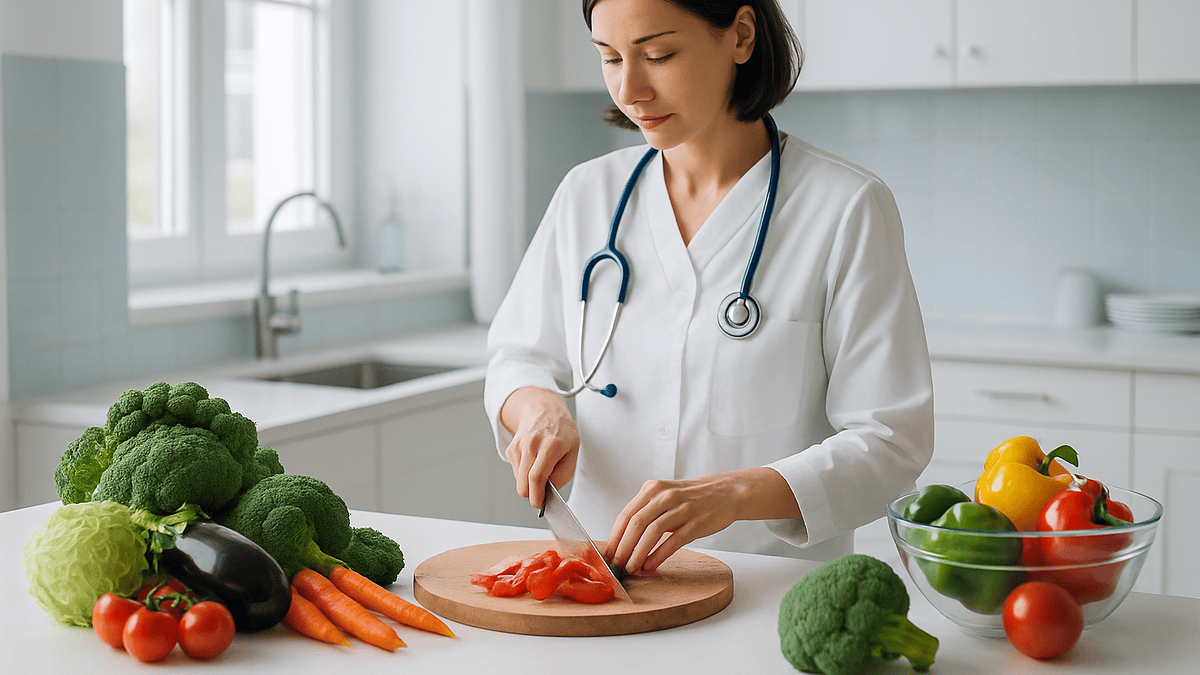
An endometriosis diet rich in vegetables, fruit, whole grains, legumes, fish and olive oil, with fewer trans fats, processed meats and alcohol, may ease pain for some people and is safe to try. The evidence is mostly observational and small trials, so it supports symptom management, not a replacement for medical treatment. Decisions about medicines or surgery belong with your gynecologist.
Scroll through any endometriosis forum this spring and you will find the same screenshot: a color-coded grocery list, half the items crossed out in red. Gluten, dairy, soy, coffee, sugar. The caption promises that food fixed what years of appointments could not. As of May 2025, searches for the endometriosis diet have climbed sharply, pushed by a widely shared 2024 international survey in which thousands of patients described cutting foods to control pain, and by a fresh wave of creator videos built on it.
The appetite for answers makes sense. Endometriosis affects roughly one in ten women and girls of reproductive age worldwide, the World Health Organization estimates, and the average wait for a diagnosis still stretches for years. When relief is slow, a shopping list feels like something you can act on tonight.
So here is the honest version: what anti-inflammatory eating can genuinely do for endometriosis, what it cannot, and how to tell a reasonable kitchen experiment from a costly detour.
Why is the endometriosis diet trending right now?
Three currents met at once. The first is patient-led research. In 2024, researchers published an international survey of more than 2,000 people with endometriosis who had tried changing what they ate. Around half had reduced gluten or dairy, and roughly 45 percent of those who did reported less pain. Alcohol and caffeine cuts drew similar reports. The authors were careful to call the findings self-reported and uncontrolled, but headlines were not always so careful.
The second current is cultural. Anti-inflammatory eating has become a general wellness identity, and endometriosis, a condition defined in part by inflammation, is an obvious fit for that framing. Short videos compress a nuanced idea into a before-and-after.
The third is a quiet shift inside medicine itself. Specialist societies and national health services now describe endometriosis as a chronic, whole-body condition rather than a purely surgical problem, which has opened the door to talking about sleep, exercise, pelvic physiotherapy and diet as legitimate parts of long-term management. The NHS and Mayo Clinic both now list lifestyle measures alongside hormonal treatment and surgery.
What the trend gets right: food is one of the few levers a patient controls daily, and eating in a pattern that reduces inflammatory signaling is reasonable and safe. What it gets wrong: it tends to flatten the difference between a crowd of people saying something helped and a randomized trial showing that it does. That gap is the whole story of this article, and it matters for one practical reason. If you expect a diet to do the job of a gynecologist, you can lose years of effective treatment while your disease progresses.
What changed recently in endometriosis care and research
In March 2023, the World Health Organization updated its endometriosis fact sheet, putting the global figure at about 190 million women and girls, or roughly 10 percent of those of reproductive age, and explicitly naming the condition a priority for primary care recognition rather than specialist-only care. That reframing has filtered into patient materials everywhere.
The 2024 survey described above was a turning point in a different way. Earlier diet research in endometriosis mostly asked whether eating patterns predicted who developed the disease. The newer work asked people already living with it what they had tried and what happened. Both questions are useful; neither is the same as testing a diet against a control group.
Several small randomized trials of supplements have also appeared over the past few years, most of them on omega-3 fatty acids, vitamin D, or antioxidant combinations. They tend to enroll fewer than 100 participants and run for a few months. Some show modest reductions in pelvic pain scores; others show no difference from placebo. The National Institutes of Health Office of Dietary Supplements continues to grade omega-3 evidence for pain conditions as limited and mixed.
On the clinical side, guideline bodies in the UK and US have moved toward earlier use of hormonal medicines based on symptoms, before surgical confirmation, and toward multidisciplinary pain management. Dietary advice now sits in that broader toolkit, usually phrased as “may help some people” rather than as a prescription.
None of this amounts to a new rulebook for eating. The genuinely new thing is permission: clinicians are more willing to say that what you eat is worth discussing, as long as it travels alongside, not instead of, proven treatment.
What is endometriosis, and why does inflammation matter so much?
Endometriosis is a condition in which tissue similar to the lining of the uterus grows outside it, most often on the ovaries, fallopian tubes, the lining of the pelvis, the bowel or the bladder. Each month, that misplaced tissue responds to the same hormonal cycle as the uterine lining. It thickens, breaks down and bleeds, but the blood has nowhere to go.
The body treats this as an injury. Immune cells rush in and release prostaglandins, which are hormone-like chemicals that trigger pain and cramping, along with a cascade of inflammatory messengers. Over years, repeated cycles of bleeding and healing create scar tissue and adhesions, bands of fibrous tissue that can bind organs together. That is why pain in endometriosis is often described as deep, dragging and out of proportion to the size of the lesions a surgeon can see.
Estrogen, the main female sex hormone, fuels the lesions. Inflammation, in turn, increases local estrogen production, so the two processes feed each other. Most medical treatments interrupt one half of this loop: hormonal medicines lower or steady estrogen, and anti-inflammatory painkillers blunt prostaglandin production.
Here is where diet enters the conversation. Certain dietary patterns raise circulating markers of inflammation; others lower them. Trans fats and heavily processed meats are associated with higher levels of C-reactive protein, a blood marker of inflammation, while diets high in fish, nuts, legumes and vegetables are associated with lower levels. Fiber also helps the gut excrete estrogen rather than recirculate it.
The biological rationale for an endometriosis diet is therefore real. The question that follows is whether nudging inflammatory markers through food produces a noticeable change in pelvic pain. That is a different claim, and it needs different evidence.
What does an anti-inflammatory diet for endometriosis actually look like?
Strip away the branding and the anti-inflammatory diet for endometriosis is close to a Mediterranean pattern: the everyday eating of coastal Greece, southern Italy and Spain in the mid-20th century, built on plants, olive oil and fish rather than on rules.
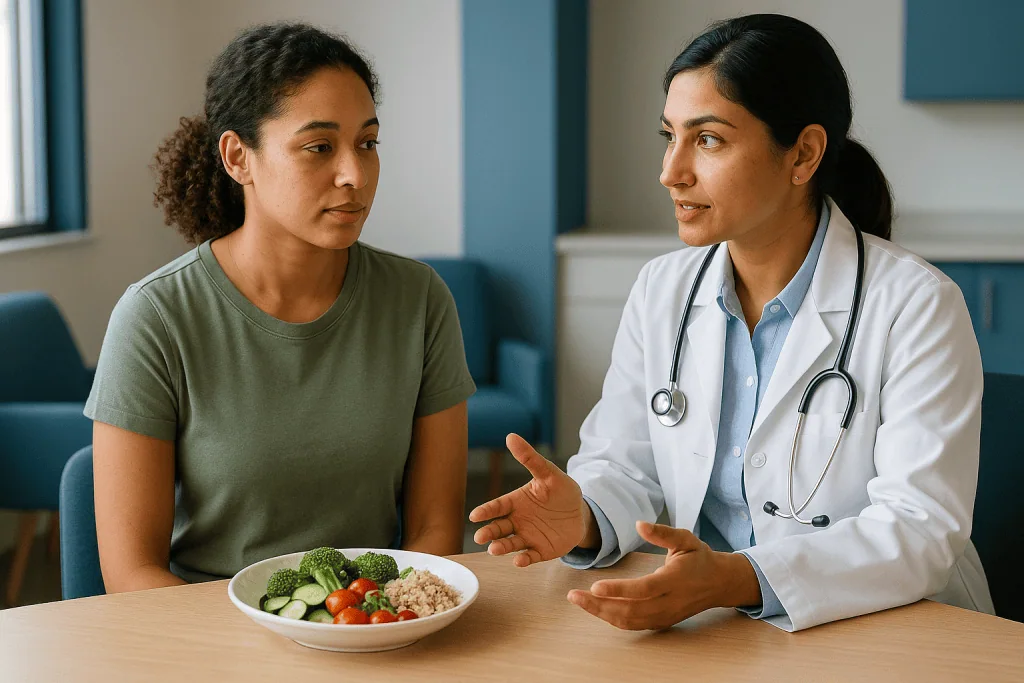
In practice, Harvard Health describes the foundation as vegetables of every color, fruit, whole grains such as oats and brown rice, legumes, nuts and seeds, extra-virgin olive oil, and oily fish such as salmon, sardines and mackerel two or more times a week. Herbs and spices stand in for salt. Red meat moves to the edge of the plate; processed meat mostly leaves it.
Why these foods? Oily fish supply omega-3 fatty acids, a type of polyunsaturated fat the body uses to make less inflammatory signaling molecules. Colorful produce delivers polyphenols, plant compounds that dampen oxidative stress. Fiber feeds gut bacteria that produce short-chain fatty acids, which calm immune activity in the gut wall, and fiber also binds estrogen in the bowel so more of it leaves the body.
A realistic day looks ordinary: oats with berries and walnuts, a lentil and vegetable soup with wholegrain bread, grilled fish or chickpeas with roasted vegetables and olive oil, fruit for dessert. Nothing exotic, nothing powdered.
One underappreciated point: this pattern has strong randomized-trial evidence for heart health and reasonable evidence for lowering inflammatory markers in general, which means it is worth adopting regardless of what it does for pelvic pain. That is the most honest selling point of an endometriosis diet. Even if its effect on your symptoms turns out to be small, you have lost nothing and gained measurable benefits elsewhere.
What foods should you avoid when you have endometriosis?
The lists circulating online are long. The evidence supports a shorter one, and even that comes mostly from studies of who develops endometriosis rather than from trials of what reduces pain once you have it.
Trans fats top the list. These are industrially hardened oils once common in margarine, packaged pastries and fried fast food. In a large US cohort of nurses followed for 12 years, women with the highest trans fat intake had a 48 percent higher likelihood of being diagnosed with endometriosis than those with the lowest. Many countries have since restricted trans fats, so the practical advice is to limit ultra-processed baked goods and repeatedly fried foods.
Red and processed meat come next. The same cohort found that women eating more than two servings of red meat a day had a 56 percent higher risk than those eating one serving or less a week. Processed meats carried similar associations. A plausible mechanism is higher estrogen and inflammatory markers with heavy meat intake.
Alcohol has a weaker but consistent link with higher estrogen levels and, in the 2024 survey, was one of the items patients most often said made pain worse when consumed.
Beyond that, the ground gets soft. Caffeine shows inconsistent associations across studies. Soy, often blamed because it contains plant estrogens, has not been shown to worsen endometriosis in human research, and some data point the other way. Sugar in excess is reasonable to limit for general inflammatory reasons, but no study isolates it in endometriosis.
The takeaway is proportion. Cutting trans fats, processed meat and heavy alcohol has evidence and little downside. Cutting whole food groups on the strength of a viral list does not, and it can leave you short on calcium, iron or protein at exactly the time your body is coping with chronic pain and heavy bleeding.
What the evidence actually says, graded honestly
Medical evidence comes in tiers, and it helps to name them. Randomized controlled trials, in which people are randomly assigned to a diet or a comparison, sit at the top because they can show cause and effect. Observational studies, which track what people already eat and what happens to them, come next; they reveal associations but cannot rule out other explanations. Surveys and expert opinion sit below that.
For the endometriosis diet, the picture by tier is this.
Randomized trials: few, small and focused on supplements rather than whole diets. Omega-3 trials with under 100 participants show modest pain reductions in some studies and none in others. Vitamin D trials are similarly split. No adequately powered trial has tested a Mediterranean or anti-inflammatory eating pattern against usual diet for endometriosis pain. That is the central gap.
Observational studies: moderately strong and fairly consistent on risk of developing the disease. Higher intake of trans fats and red meat is associated with higher risk; higher intake of omega-3 fats, fruit (especially citrus) and, in some cohorts, dairy is associated with lower risk. These are associations in healthy women followed over time, not pain outcomes in diagnosed patients.
Patient surveys: large and striking, with roughly half of respondents reporting benefit from cutting gluten, dairy or alcohol. Powerful as lived experience, but vulnerable to placebo effects, to the general benefits of eating more carefully, and to the fact that people who improved are more likely to answer a survey.
Expert opinion: broadly supportive of a Mediterranean-style pattern as safe and sensible, broadly skeptical of strict elimination diets without supervision.
Put together, the fair summary is that an anti-inflammatory diet is biologically plausible, safe and probably helpful for some people, with the strength of that “probably” resting on observational and survey data rather than trials.
Endometriosis diet summary table: what to eat, what to limit, how strong the evidence is
The table below condenses the research into one view. The evidence grade reflects the best available study type for each item, not the size of any effect.
| Food or nutrient | Direction | What studies show | Evidence grade |
|---|---|---|---|
| Oily fish, omega-3 fats | Emphasize | About 22 percent lower risk of diagnosis with highest intake; small trials show mixed pain benefit | Observational plus small randomized trials |
| Vegetables and fruit, especially citrus | Emphasize | Daily citrus linked to roughly 22 percent lower risk in a large cohort | Observational |
| Whole grains and legumes (fiber) | Emphasize | Plausible estrogen-clearing and gut effects; no endometriosis-specific trial | Mechanistic and expert opinion |
| Trans fats | Limit | About 48 percent higher risk with highest intake | Observational |
| Red and processed meat | Limit | About 56 percent higher risk at more than two servings a day | Observational |
| Alcohol | Limit | Raises estrogen; frequently reported pain trigger in surveys | Observational and survey |
| Gluten | Individual | Around 45 percent of survey respondents who cut it reported less pain; no controlled trial | Survey |
| Dairy | Individual | Higher intake linked to lower risk in cohorts; cutting it reported helpful by some patients | Observational, conflicting with surveys |
| Soy | Neutral | No human evidence of harm; some data suggest neutral or protective | Observational |
| Vitamin D | Individual | Low levels common; supplement trials mixed | Small randomized trials |
Two patterns jump out. Everything in the “emphasize” rows also belongs to a heart-healthy diet, so there is no conflict between treating your pelvis and treating your arteries. And the most-shared advice online, dropping gluten and dairy, sits in the weakest evidence tier, with dairy pulling in opposite directions depending on the study type. That does not make patients wrong about their own bodies. It means a self-experiment, ideally with a dietitian, is the right way to test it, rather than a permanent ban adopted on faith.
Endometriosis and gluten, dairy and elimination diets: what the data show
Ask a room of people with endometriosis what they have cut, and gluten and dairy come up first. The research deserves a fair hearing, because the story is more interesting than either camp admits.
Gluten is a protein in wheat, barley and rye. Only one older study, from Italy, tracked women with endometriosis on a gluten-free diet for a year; a majority reported less pain, but there was no control group, so the result cannot separate gluten removal from the placebo effect or from eating fewer processed foods overall. The 2024 survey echoed it: among respondents who cut gluten, about 45 percent reported improvement. Cleveland Clinic and other centers note that bowel symptoms are common in endometriosis, often because lesions sit on or near the intestine, and that some people may also have irritable bowel syndrome. A low-FODMAP diet, which temporarily removes certain fermentable carbohydrates, has better evidence for those bowel symptoms than a gluten-free diet does, and wheat happens to be high in FODMAPs. In other words, some people who feel better off gluten may be responding to the FODMAP change.
Dairy is the puzzle. Cohort studies found that women eating three or more servings of dairy a day had about an 18 percent lower risk of endometriosis diagnosis than those eating two or fewer, possibly through calcium, vitamin D or anti-inflammatory fats in dairy. Yet many patients report that dairy worsens their pain. Both can be true: a food that lowers population risk can still trigger bloating or discomfort in an individual, especially someone with lactose intolerance.
The sensible middle: if you suspect a food, remove it for four to six weeks, track symptoms, then reintroduce it deliberately. If nothing changes, bring it back. Permanent restriction without a clear signal risks nutrient gaps, especially calcium and iron, and makes eating with others harder than chronic illness already does.
Omega-3s, vitamin D and supplements: can they help endometriosis pain?
Supplements are where the endometriosis diet conversation most often leaves the kitchen and enters the pharmacy aisle, so this section needs extra care. Nothing here is a recommendation to take anything; every supplement decision should go through your clinician, who knows your other medicines and your blood work.
Omega-3 fatty acids are the best studied. These are polyunsaturated fats found in oily fish, with smaller amounts in flaxseed and walnuts. Mechanistically, they compete with omega-6 fats to produce less inflammatory signaling molecules, and in laboratory studies they slow the growth of endometrial-like cells. In humans, a large observational cohort linked higher omega-3 intake to a 22 percent lower risk of diagnosis. Randomized trials in people with endometriosis are small; some show lower pain scores than placebo, others do not. The NIH Office of Dietary Supplements rates omega-3 evidence for inflammatory pain as limited. Eating oily fish regularly captures most of the plausible benefit without a capsule.
Vitamin D is a hormone-like nutrient made in skin exposed to sunlight and found in oily fish and fortified foods. Low levels are common in people with endometriosis, but it is unclear whether that is cause, consequence or coincidence. Supplement trials are mixed, with modest pain reductions in some and none in others.
Antioxidant combinations, usually vitamins C and E, have been tested in a handful of trials with mostly small effects on pain and inflammatory markers. Curcumin, the active compound in turmeric, has laboratory data and very limited human data. Magnesium is widely discussed for cramping; evidence in endometriosis specifically is scant.
A caution worth stating plainly: supplements are not tested for safety the way medicines are, high-dose fish oil can interact with blood thinners, and “natural” products marketed for endometriosis are not approved to treat it. The question to bring to your doctor is not “should I take this?” but “is there anything in my situation that makes this a bad idea?”
What are the stages of endometriosis, and does diet change them?
Stages describe what a surgeon sees, not how much you hurt. The most widely used system, from the American Society for Reproductive Medicine, scores lesions and adhesions found during laparoscopy, a keyhole operation in which a thin camera is passed through the abdomen, and sorts them into four stages.
Stage I, minimal, means a few small, superficial implants with little or no scar tissue. Stage II, mild, has more implants and some that reach deeper. Stage III, moderate, adds deeper lesions, small cysts on one or both ovaries called endometriomas, and filmy adhesions. Stage IV, severe, involves many deep implants, large endometriomas and dense adhesions that may bind organs together.
The counterintuitive part, and the one every patient should know: stage correlates poorly with pain. Someone with stage I disease can have debilitating symptoms, while someone with stage IV may have been diagnosed only during fertility investigations. Stage does correlate better with fertility outcomes, which is why the system was built.
Does eating well move you down a stage? There is no evidence that it does. Stage reflects accumulated tissue and scar, which diet does not remove. Observational studies that link diet to endometriosis measure who gets diagnosed, not whether lesions shrink. Laboratory experiments showing omega-3s slowing endometrial-like cell growth are not the same as regression in a human pelvis.
What diet may plausibly influence is the inflammatory environment around existing lesions, and therefore day-to-day symptoms. That is a worthwhile goal. Framing it correctly protects you from a specific disappointment: following a strict regimen, having repeat imaging or surgery, and feeling you failed because the disease is still there. The disease being there was never the measure of whether the food was helping.
Is endometriosis genetic? What the family history research shows
Partly, yes. Women with a first-degree relative, meaning a mother, sister or daughter, who has endometriosis are roughly five to seven times more likely to develop it themselves than women without that history. Twin studies estimate that about half of the variation in who develops endometriosis is heritable, which places it in the same broad territory as type 2 diabetes or asthma: strongly influenced by genes, strongly shaped by environment, and not determined by either alone.
Large genetic studies have identified dozens of common DNA variants that each nudge risk slightly. Many sit near genes involved in hormone signaling, immune function and the development of pelvic tissue. No single “endometriosis gene” exists, and no genetic test can tell you whether you will develop the condition or how severe it will be.
Other risk factors are hormonal and anatomical rather than genetic: starting periods early, short menstrual cycles, heavy or prolonged bleeding, never having given birth, and conditions that obstruct menstrual flow. Low body weight is associated with somewhat higher risk, which surprises many people who assume the opposite.
Where does diet fit? Genes load the gun, as the saying goes, and environment pulls the trigger. Diet is one environmental factor among several, and the observational studies on trans fats, red meat and omega-3s were conducted in large populations that included women with and without family history. There is no evidence that eating well cancels an inherited risk, and no evidence that eating poorly causes endometriosis in someone without any predisposition.
A family history is useful information for a different reason. If your mother or sister has endometriosis and you have painful periods, pelvic pain or trouble conceiving, that history should shorten the road to being taken seriously. Mention it early and explicitly at your appointments.
Natural remedies for endometriosis: what holds up alongside medical treatment
“Natural” is a marketing word, not a medical one, so it helps to sort popular remedies by evidence rather than by origin.
Heat, in the form of a hot water bottle or heating pad across the lower abdomen, has small randomized trials behind it for menstrual pain and is recommended by the NHS and Mayo Clinic as a first-line comfort measure. Regular aerobic exercise is associated with lower estrogen levels and improved pain tolerance in observational studies; it will not shrink lesions but reliably improves fatigue and mood. Pelvic floor physiotherapy has growing evidence for the muscle tension and pain that build around chronic pelvic conditions. Transcutaneous electrical nerve stimulation, a small device that delivers mild electrical pulses through skin pads, has modest trial support for period pain. Mind-body approaches such as cognitive behavioral therapy and mindfulness help many people cope with chronic pain, and chronic pain changes the nervous system in ways those approaches directly target.
Herbal products have weaker footing. Turmeric, ginger and certain traditional Chinese medicine formulas show laboratory activity and small, low-quality human studies. Castor oil packs and “seed cycling” have no clinical evidence. Products sold online with claims to shrink or reverse endometriosis are not approved for that purpose and should not be bought or used on that basis.
None of these replace the medicines and procedures that carry randomized-trial evidence: nonsteroidal anti-inflammatory drugs such as ibuprofen for pain; hormonal options including combined contraceptive pills, progestin-only pills, the levonorgestrel intrauterine device, and gonadotropin-releasing hormone agonists and antagonists that lower estrogen; and laparoscopic surgery to remove lesions when appropriate. Which of these suits you, in what order, depends on your symptoms, fertility plans and side-effect tolerance, and that is a decision for your gynecologist. Diet and natural measures work best as the layer around that plan, not as an alternative to it.
Common myths about the endometriosis diet, corrected
Myth: food caused your endometriosis. No study shows that. Diet is one of several environmental factors that shift population risk modestly in people who are already predisposed, with genetics, menstrual history and immune function playing larger roles. If you have endometriosis, nothing you ate put it there.
Myth: a strict anti-inflammatory diet can reverse the disease. Lesions and scar tissue are physical structures. Eating patterns may calm the inflammation around them and ease symptoms, but no imaging or surgical study shows lesions disappearing because of diet.
Myth: everyone with endometriosis should go gluten-free and dairy-free. Around half of patients who try this report benefit, which means around half do not. Dairy intake is associated with lower risk in cohort studies. The reasonable approach is an individual trial with reintroduction, not a universal rule.
Myth: soy worsens endometriosis because it contains estrogen. Soy contains isoflavones, plant compounds that weakly bind estrogen receptors and can block stronger estrogens. Human studies have found no harm and hints of benefit.
Myth: you need to “detox” to clear excess estrogen. The liver and gut already do this. Fiber genuinely helps by binding estrogen in the bowel, which is a reason to eat vegetables and whole grains, not a reason to buy a detox kit. Juice cleanses and detox teas have no evidence and can worsen fatigue.
Myth: if a diet helped someone online, failing to feel better means you did it wrong. Pain in endometriosis has many sources: lesions, adhesions, nerve sensitization, pelvic muscle tension, bowel involvement. Diet speaks to one of them. Not responding is information about your body, not a verdict on your discipline.
Myth: natural means safe. High-dose supplements and herbal products can interact with hormonal medicines, blood thinners and anesthesia. Tell your clinician everything you take.
When to see a doctor about endometriosis symptoms
A better diet should never delay a diagnosis or a conversation about treatment. Book an appointment with your primary care clinician or gynecologist if you have period pain that stops you working, studying or leaving the house; pelvic pain between periods; pain during or after sex; pain with bowel movements or urination, especially around your period; heavy bleeding that soaks through protection hourly; or difficulty conceiving after a year of trying, or six months if you are over 35. A first-degree relative with endometriosis strengthens the case for being seen sooner.
Seek urgent care the same day for sudden, severe pelvic pain, particularly with fever, vomiting or fainting, which can signal a ruptured or twisted ovarian cyst or another emergency; for heavy bleeding with dizziness or shortness of breath; or for new, severe pain during pregnancy.
If you already take medicine for endometriosis, do not stop or change it because a diet seems to be working, and do not add supplements without checking first. Hormonal treatments such as combined pills, progestins, the hormonal intrauterine device and gonadotropin-releasing hormone medicines each carry side effects worth reporting: new or worsening low mood, severe headaches, calf pain or swelling, chest pain or breathlessness, unusual bleeding patterns, or hot flushes and bone pain on estrogen-lowering therapy. Your prescribing clinician decides whether to adjust, switch or stop.
Bring your food diary. A clinician who sees four weeks of meals alongside pain scores can spot bowel-pattern clues, flag nutrient gaps and refer you to a registered dietitian, which is the right route for any elimination diet lasting more than a few weeks.
Finally, if you have been dismissed before, say so. Average diagnostic delays still run many years, and the WHO now lists early recognition in primary care as a global priority. You are not being difficult by asking for pelvic imaging, a specialist referral or a second opinion.
Frequently asked questions
What is the best endometriosis diet?
The best-supported pattern is Mediterranean-style eating: vegetables, fruit, whole grains, legumes, nuts, olive oil and oily fish, with little processed meat, few trans fats and limited alcohol. It is safe, lowers general inflammatory markers and matches the foods linked to lower endometriosis risk in cohort studies. No single named diet has randomized-trial proof for endometriosis pain.
What foods should you avoid with endometriosis?
The evidence most consistently points to trans fats, red and processed meat, and heavy alcohol. All three are associated with higher inflammatory markers or higher estrogen, and the first two with higher risk of diagnosis in large cohorts. Beyond those, restrictions such as soy, caffeine or sugar rest on weaker or inconsistent data and are best treated as personal experiments.
Does an anti-inflammatory diet for endometriosis actually reduce pain?
It may, for some people. Surveys show roughly half of patients who change their diet report less pain, and the biological rationale is sound, but controlled trials of whole diets are lacking and supplement trials are small and mixed. Expect a modest, variable effect on symptoms, not a change in the disease itself, and keep medical treatment in place.
Is endometriosis and gluten a real connection?
Possibly, but not proven. One uncontrolled study and a 2024 survey found many patients reporting less pain off gluten, yet no trial has compared gluten-free eating with a control. Some of the benefit may come from reducing FODMAPs, fermentable carbohydrates in wheat that worsen bowel symptoms. Test it for a few weeks and reintroduce rather than committing permanently.
What are the stages of endometriosis?
Stages I to IV, from minimal to severe, are assigned during laparoscopy based on the number, depth and location of lesions, the presence of ovarian cysts called endometriomas, and the extent of adhesions. Stage predicts fertility outcomes reasonably well but correlates poorly with pain, and diet has not been shown to change stage.
Is endometriosis genetic?
Partly. Having a first-degree relative with endometriosis raises risk roughly five to seven times, and twin studies attribute about half of the variation in who develops it to inherited factors. Dozens of common gene variants each contribute a little. Environment, hormones and immune function supply the rest, so family history raises suspicion but does not determine your outcome.
What are some natural remedies for endometriosis that have evidence?
Heat applied to the lower abdomen, regular aerobic exercise, pelvic floor physiotherapy, TENS devices and cognitive behavioral or mindfulness approaches all have at least small trials supporting them for pelvic or menstrual pain. Herbal products and detox regimens do not. These measures sit alongside medical treatment chosen with your gynecologist, not in place of it.
Should I cut out dairy if I have endometriosis?
Not automatically. Cohort studies associate higher dairy intake with lower risk of diagnosis, while some patients report dairy as a personal trigger, often because of lactose intolerance or bloating. If you suspect it, remove dairy for four to six weeks with a symptom diary, then reintroduce it, and protect your calcium intake through other sources during the trial.
Do omega-3 or vitamin D supplements help endometriosis?
The evidence is limited and mixed. Small randomized trials of omega-3s and of vitamin D show modest pain reductions in some studies and none in others, and the NIH rates omega-3 evidence for inflammatory pain as limited. Eating oily fish regularly captures most of the plausible benefit. Discuss any supplement with your clinician, especially if you take blood thinners or hormonal medicines.
Can changing my diet replace hormonal treatment or surgery for endometriosis?
No. Diet may ease symptoms for some people, but it has not been shown to shrink lesions, remove adhesions or protect fertility, which are what hormonal medicines and surgery are tested to do. Think of eating well as the foundation around a treatment plan. Never stop or change a prescribed medicine without talking to the clinician who prescribed it.
References
- World Health Organization: Endometriosis fact sheet
- NHS: Endometriosis
- Cleveland Clinic: Endometriosis
This article is for general information only and is not a substitute for professional medical advice. Please consult a qualified doctor about your individual situation.

More from the Blog

FSH Test and Antral Follicle Count: The Ovarian Reserve Tests Beyond AMH
An FSH test measures follicle-stimulating hormone, the pituitary signal that recruits eggs each cycle; a higher day-2-to-5 level suggests the ovaries need more prompting…
What Happens During IUI Insemination? Sperm Preparation, the Catheter and the Timing
During an IUI procedure, a semen sample is washed in a laboratory to concentrate the healthiest moving sperm, then placed directly into the uterus…
Period Bloating, Cravings and Fatigue: The Hormone Timeline Behind the Symptoms
Period bloating is mostly fluid shift and slower digestion driven by the rise and fall of progesterone and estrogen in the week before bleeding,…

Before Artificial Fertilisation Begins: The Tests Both Partners Complete and Why They Matter
Before IUI or IVF starts, both partners usually complete a structured workup: a semen analysis for the male partner; hormone blood tests, an ultrasound…

Azoospermia vs Oligospermia: How Each Male Infertility Diagnosis Changes the Treatment Plan
Azoospermia means a semen analysis finds no sperm at all; oligospermia means sperm are present but fewer than the reference range, commonly under 15…
Does Bed Rest Help After Embryo Transfer? Common Myths Your Clinic Wants You to Drop
Bed rest after embryo transfer has not been shown to improve the chance of pregnancy. Randomized trials and systematic reviews found no benefit from…