

The Fatty Liver Diet: What to Eat to Reverse Early Liver Fat, According to Studies

Key Takeaways
- Losing 3–5% of body weight measurably lowers liver fat, while 7–10% can improve inflammation and regress early scarring, according to biopsy-based trials.
- A Mediterranean-style diet cut liver fat by roughly 39% in six weeks versus about 7% on a low-fat diet in a crossover trial, without significant weight change.
- Supervised exercise for 8–16 weeks reduced liver fat by 20–30% in randomized trials even when body weight stayed nearly the same.
- Fructose is metabolized almost exclusively by the liver, which is why sugar-sweetened drinks are the single most consistent dietary predictor of liver fat.
- Two to three cups of coffee a day are associated with less liver scarring across large cohort studies, though no randomized trial has tested coffee as treatment.
- The common PNPLA3 gene variant raises liver fat at any given weight, yet carriers lose liver fat as well as non-carriers when they change their diet.
A fatty liver diet is a Mediterranean-style eating pattern built around vegetables, legumes, whole grains, fish, nuts and olive oil, with sugary drinks, refined carbohydrates and alcohol cut back sharply. Trials show it reduces liver fat within weeks, and losing 3–5% of body weight lowers fat while 7–10% can improve inflammation and early scarring. Any plan should be agreed with your own clinician.
The phrase showed up on a routine blood test printout, two words most people had never thought about: fatty liver. Then, in a matter of months, the condition acquired a new name, its first prescription medicines in the United States, and a flood of social media videos promising to “flush” the liver with lemon water and beetroot. Little wonder the search term fatty liver diet has climbed steadily, and as of January 2026 it sits among the most-asked nutrition questions online.
The attention is justified. Roughly one in four adults worldwide carries excess fat in the liver, usually without a single symptom. What rarely makes the viral clips is the quieter, better-tested story: in the early stage, the fat is reversible, and the evidence for how to do it comes from randomized trials rather than wellness folklore.
This piece walks through what those studies found, how strong each finding is, and where the honest gaps remain.
What changed recently: new names, new medicines, same first-line advice
Three developments explain why liver fat is suddenly dinner-table conversation. The first is a rename. In June 2023, international liver societies retired the term non-alcoholic fatty liver disease (NAFLD) in favor of metabolic dysfunction-associated steatotic liver disease, shortened to MASLD. Steatotic simply means fat-laden; the new label points to the real driver, which is metabolic strain from excess weight, insulin resistance and type 2 diabetes rather than what someone drinks. The NHS, Mayo Clinic and Cleveland Clinic pages cited below now carry both names, which is why you will see them used interchangeably.
The second is pharmacology. In March 2024, the US Food and Drug Administration approved the first medicine specifically for the inflamed, scarring stage of the disease (MASH with moderate to advanced fibrosis), and in August 2025 a second medicine, already familiar from diabetes and weight management, received approval for the same stage. Both approvals apply to people with established scarring, not to the millions with simple fat, and both were tested alongside, not instead of, diet and activity changes.
The third is cultural. Short-form videos touting “liver cleanses” have multiplied, and some have been viewed tens of millions of times. None are supported by clinical trials, a point the Common myths section returns to.
What has not changed is the opening recommendation in every major guideline: for early fatty liver, the treatment is food, movement and weight loss. The National Institute of Diabetes and Digestive and Kidney Diseases still lists eating and physical activity as the cornerstone, and no new medicine has displaced that advice. The rest of this article is about doing it well.
What is early liver fat, and why does the word "early" matter so much?
A healthy liver holds very little fat. When fat makes up more than about 5% of the organ’s weight, clinicians call it steatosis, the medical term for excess fat stored inside liver cells. At this point the liver is enlarged and a little sluggish, but it is not damaged, and most people feel nothing at all. Many learn of it only when an ultrasound ordered for another reason mentions a “bright” liver.
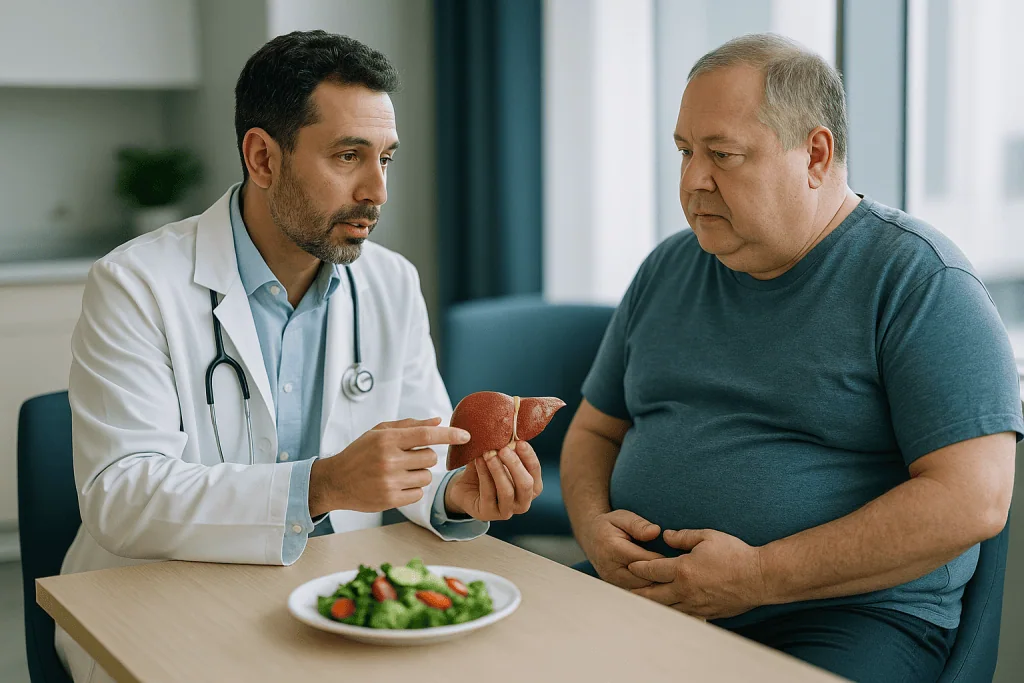
Trouble begins when stored fat triggers inflammation. That stage is called steatohepatitis, abbreviated MASH (formerly NASH), and it is where liver cells start to die and be replaced by scar tissue. Scar tissue is fibrosis. Enough fibrosis, accumulated over years, becomes cirrhosis, a hardened liver that cannot regenerate normally. Cirrhosis raises the risk of liver failure and liver cancer, and it is not reversible in the way simple fat is.
The hinge, then, is between simple fat and inflammation. According to the Cleveland Clinic, only a minority of people with fatty liver progress to MASH, and fewer still to cirrhosis. The Mayo Clinic puts the figure for progression to significant scarring at roughly one in five people with MASH over time. These are odds worth changing, and the window for changing them is wide open in the early stage.
Here is the encouraging physiology. Liver cells unload fat quickly when the body’s energy balance shifts. Imaging studies show measurable drops in liver fat within six to eight weeks of dietary change, long before the bathroom scale tells a dramatic story. The liver, in other words, responds first. That is the reason diet occupies the center of every guideline and the reason this article exists.
What can you eat if you have a fatty liver?
More than most people fear. The fatty liver diet is not a list of forbidden foods so much as a shift in proportions, and the proportions come straight from the trials with the best results.
Vegetables and fruit form the base, ideally five or more servings a day. Whole fruit is fine; its fiber slows sugar absorption, which matters because the liver turns excess sugar directly into fat. Legumes such as lentils, chickpeas and beans supply fiber and plant protein and have been associated with lower odds of liver fat in large population studies.
Whole grains replace white ones: oats, brown rice, barley, whole-wheat bread and pasta. The point is not to banish carbohydrate but to choose versions that arrive slowly.
Fish appears two or three times a week, with oily varieties such as salmon, sardines and mackerel preferred for their omega-3 fats. Poultry, eggs and modest amounts of dairy round out protein. Red and processed meat is limited rather than eliminated.
Fat is not the enemy, but its type is decisive. Extra-virgin olive oil becomes the default cooking and dressing fat. Nuts, seeds and avocado supply the rest. Butter, lard, palm oil and the trans fats in some packaged baked goods are kept to a minimum, because saturated fat specifically increases liver fat in controlled feeding studies, even when calories are matched.
Drinks matter as much as plates. Water, unsweetened tea and plain coffee are the staples; sugary drinks are the single most consistent dietary predictor of liver fat in observational research.
The NIDDK summarizes the approach as a diet that limits fat and sugar, favors plant foods and whole grains, and fits within a calorie level that allows gradual weight loss. Everything below is a more detailed version of that sentence.
Why the Mediterranean pattern leads the fatty liver diet evidence
Ask a hepatologist which eating pattern has the strongest data for liver fat and the answer is quick: Mediterranean. The reason is not romance about olive groves but the fact that it has been tested head to head.
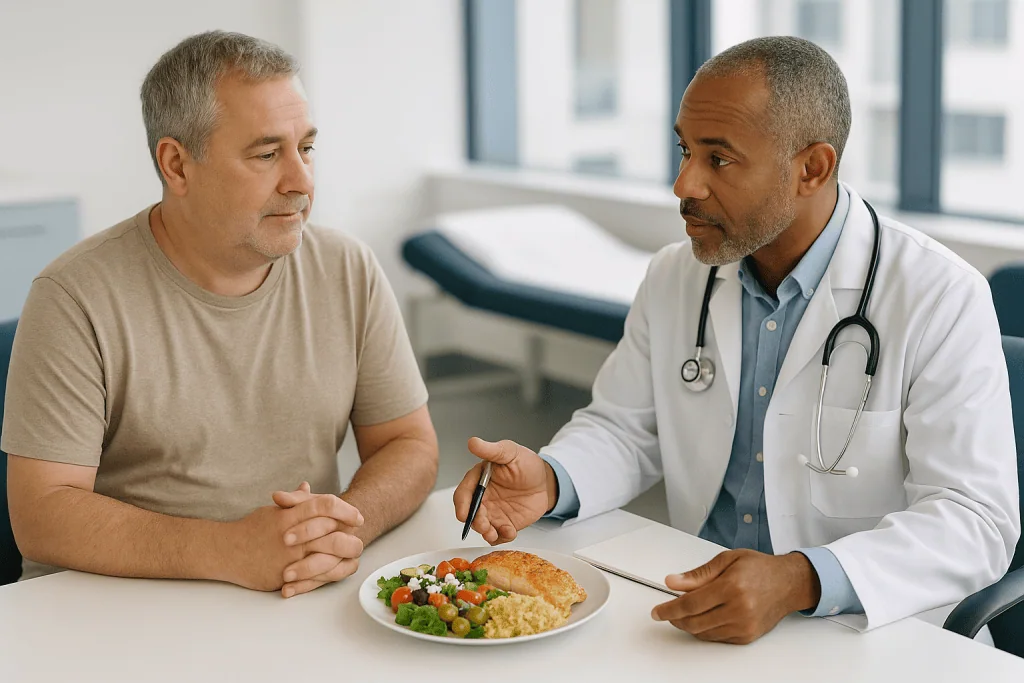
In a well-known Australian crossover trial, adults with fatty liver ate a Mediterranean diet for six weeks and a conventional low-fat, high-carbohydrate diet for another six weeks, with a washout in between. Liver fat measured by magnetic resonance spectroscopy fell by about 39% on the Mediterranean diet and roughly 7% on the low-fat diet, and insulin sensitivity improved more, all without meaningful weight change. That last detail is the striking one: the composition of the food shifted liver fat before the scale moved.
Larger trials have reinforced the signal. An 18-month Israeli study comparing a Mediterranean diet enriched with polyphenols (plant compounds found in green tea, walnuts and a leafy plant called Mankai) against a standard Mediterranean diet and a conventional healthy diet found the greatest liver fat reductions in the polyphenol-rich arm, with both Mediterranean arms outperforming the control. Weight loss was similar across groups, again suggesting that what is eaten matters independently of how much.
Why would this pattern work? Mechanistically, it replaces saturated fat with monounsaturated fat, which reduces fat synthesis in liver cells; it swaps refined carbohydrate for fiber, blunting the sugar surges that drive fat production; and it delivers anti-inflammatory compounds from vegetables, nuts and olive oil.
Harvard Health and the NHS both name a Mediterranean-style pattern as a reasonable template for people with fatty liver. The evidence grade is good: multiple randomized trials, consistent direction of effect, plausible mechanism. Few dietary claims in this field clear that bar.
Foods to avoid with fatty liver: sugar, refined starch and alcohol
If the Mediterranean plate is the positive half of a fatty liver diet, this is the subtraction half, and it is where the fastest wins hide.
Sugar, and fructose in particular, sits at the top. Table sugar and high-fructose corn syrup are both about half fructose, a sugar that only the liver can metabolize. Flood the liver with fructose and it manufactures fat through a process called de novo lipogenesis, literally “new fat-making.” Controlled feeding studies show that a few weeks of sugar-sweetened drinks measurably increase liver fat even in lean volunteers. Sodas, sweetened coffees, energy drinks and juices (including 100% juice in large volumes) are therefore the first items to go. Whole fruit, with its fiber and water, does not behave the same way.
Refined carbohydrates come next: white bread, white rice, pastries, most breakfast cereals and snack crackers. They raise blood sugar quickly, prompting insulin spikes that push the liver toward fat storage. Replacing them with whole-grain versions is one of the easiest swaps with evidence behind it.
Saturated fat matters more for the liver than for almost any other organ. Trials that overfed volunteers with equal calories from saturated versus unsaturated fat found saturated fat raised liver fat roughly twice as much. Fatty cuts of meat, processed meats, full-fat cream and coconut oil are kept to small amounts.
Alcohol is a separate conversation. Even though the condition is defined by its metabolic cause, alcohol adds a second insult to a liver already under strain. The NHS advises people with fatty liver to cut down significantly or stop, and anyone with inflammation or scarring is generally advised to avoid alcohol entirely. The exact guidance for your situation should come from your clinician, because the answer depends on the stage.
How much weight loss does it take to reverse liver fat?
Less than most people assume, and the numbers are among the best-established in the field. They come largely from a landmark one-year trial in which people with biopsy-proven steatohepatitis followed a structured lifestyle program and had their livers rebiopsied at the end. The findings scaled neatly with the amount of weight lost.
| Weight lost | What studies show in the liver | Strength of evidence |
|---|---|---|
| 3–5% of body weight | Measurable reduction in liver fat (steatosis) | Randomized and biopsy-based trials; consistent |
| 7% or more | Improvement in inflammation and cell injury (MASH); resolution in most participants | Biopsy-based trial, supported by guidelines |
| 10% or more | Regression of early fibrosis (scarring) in a substantial share | Biopsy-based trial; smaller numbers at this level |
For a person weighing 200 pounds, 5% is 10 pounds and 10% is 20 pounds. Those are achievable targets, and the Cleveland Clinic and NIDDK both cite them. The grim footnote is that in the trial, only about one in three participants managed the 7% threshold over a year, which says less about willpower than about how hard sustained change is without support.
Two practical lessons follow. Gradual loss, roughly one to two pounds a week, is the aim; the Mayo Clinic specifically cautions against very rapid weight loss, which can temporarily worsen liver inflammation. Second, maintenance counts more than the initial drop. Liver fat returns when weight does, so the eating pattern has to be one you can keep.
Whether weight loss alone is the right target for you, especially if you are at a lower body weight or have other conditions, is a question for your own clinician.
Can exercise reverse fatty liver even if the scale does not budge?
Yes, to a meaningful degree, and this is one of the more underappreciated findings in the literature. Several randomized trials have put sedentary adults with fatty liver through supervised exercise for eight to sixteen weeks and measured liver fat with MRI before and after. Liver fat fell, typically by 20–30% in relative terms, even in participants whose body weight barely changed. Muscle, it turns out, is a powerful consumer of the fatty acids and glucose that would otherwise be shipped to the liver.
Aerobic and resistance training both work. Walking briskly, cycling, swimming and jogging improve insulin sensitivity across the whole body. Lifting weights or using resistance bands builds muscle that acts as a metabolic sink. Trials comparing the two generally find similar reductions in liver fat, so the better choice is whichever one you will actually keep doing. A combination appears to add a modest extra benefit.
How much? Guidelines converge on the general public-health target: at least 150 minutes a week of moderate-intensity activity, or 75 minutes of vigorous activity, plus two sessions of strength work. One analysis suggested the liver benefit becomes noticeable above about 135 minutes a week, but even smaller amounts beat none.
Breaking up sitting matters too. Observational data link long uninterrupted sitting with higher liver fat independent of exercise.
The evidence grade here is good for reducing fat (multiple randomized trials, consistent direction) and weaker for improving inflammation or scarring, where trials have been shorter and smaller. Anyone with heart disease, joint problems or long inactivity should check with a clinician before starting a new program; the usual advice is to begin gently and build over weeks.
Coffee, nuts and other foods with surprisingly good data
A few individual foods have accumulated enough research to deserve a mention, with the caveat that most of it is observational, meaning it shows association rather than proof.
Coffee is the headline. Across multiple large cohort studies, people who drink two to three cups of coffee a day have lower rates of advanced fibrosis and liver cancer, and the association holds for caffeinated and, more weakly, decaffeinated coffee. The likely mechanism involves compounds such as chlorogenic acid that dampen fat accumulation and scarring. No randomized trial has tested coffee as a treatment, so the evidence grade is moderate at best, but the finding is consistent enough that several expert groups now say there is no reason for people with fatty liver to avoid coffee. The cream and syrup that often come with it are another matter.
Nuts, particularly walnuts, show up repeatedly in cohort studies as associated with less liver fat, and a handful of small trials support the finding. A daily small handful is the usual portion.
Oily fish and the omega-3 fats they carry have been tested in supplement form in randomized trials. The results are mixed: liver fat tends to drop modestly, but inflammation and scarring scores generally do not improve. Eating fish is reasonable; expecting capsules to do heavy lifting is not.
Green tea, soy foods, oats and leafy greens all have supportive observational or small-trial data, mostly as components of a healthy pattern rather than as stand-alone agents.
The honest summary is that no single food reverses liver fat. The pattern does. Coffee may be the one exception where a specific item carries its own signal, and even there the word is association, not cause.
Is fatty liver genetic, or is it all about lifestyle?
Both, and the balance varies from person to person. Fatty liver runs in families, and twin studies suggest that roughly half of the variation in liver fat between people has a genetic component.
The best-studied gene is PNPLA3. A common variant in it, carried by a sizable share of people of Hispanic and East Asian ancestry and a smaller share of others, impairs the liver’s ability to break down stored fat. Carriers accumulate liver fat more readily at the same body weight and progress to inflammation and scarring more often. A handful of other genes, including TM6SF2 and HSD17B13, nudge risk up or down. This genetic layer helps explain why some lean people develop fatty liver while some people with obesity never do.
Genetics also shapes where the body stores fat. Visceral fat, the kind packed around abdominal organs, drains directly into the liver through the portal vein and is far more closely tied to liver fat than fat under the skin. Waist circumference is therefore a better predictor than body weight alone.
None of this makes diet pointless; it makes it more important. In the trials cited earlier, carriers of the PNPLA3 risk variant actually lost liver fat as well as or better than non-carriers when they changed what they ate. Genes load the dice; food and movement still roll them.
Routine genetic testing is not recommended for fatty liver, because the result would not change the advice. If several close relatives have had cirrhosis or liver cancer, that history is worth telling your clinician, who may suggest earlier or more frequent checks of liver scarring.
Supplements, vitamin E and "liver detox" products: what has actually been tested
Few corners of health retail are more crowded than liver support, so it is worth separating the studied from the marketed.
Vitamin E is the only supplement with a sizable randomized trial behind it. In a two-year National Institutes of Health trial, a prescription-strength vitamin E regimen improved inflammation and fat on biopsy in adults with steatohepatitis who did not have diabetes; it did not improve scarring. Guidelines list it as an option that a specialist may consider for selected patients. Two cautions follow. High-dose vitamin E has been linked in other studies to a small increase in prostate cancer and bleeding risk, and the trial excluded people with diabetes and cirrhosis. This is a prescriber’s decision, not a shelf purchase.
Omega-3 supplements, as noted above, reduce liver fat modestly in trials but have not shown convincing benefit for inflammation or fibrosis. Silymarin, the active component of milk thistle, has been tested in several small trials with inconsistent results; current evidence does not support it as a treatment. Probiotics, berberine, curcumin and green-tea extract each have small or short trials, some promising, none definitive. Concentrated green-tea extract has, in rare cases, caused liver injury itself, which is a sobering irony.
“Liver detox” or “cleanse” products have no clinical trial evidence of any kind. The liver detoxifies the body; nothing in a bottle detoxifies the liver.
A practical warning sits above all of this: the liver metabolizes most supplements, and the NIH Office of Dietary Supplements documents a growing number of liver injuries linked to herbal and bodybuilding products. Anyone with liver fat should tell their clinician about every supplement they take, including “natural” ones.
What the evidence actually says, graded by strength
Nutrition science is often accused of changing its mind. On liver fat it has been unusually steady, but the strength of evidence varies by claim, and readers deserve to know which is which.
Strong (multiple randomized trials, biopsy or MRI endpoints, consistent): Losing 7–10% of body weight improves inflammation and can regress early scarring. Reducing total calories lowers liver fat. A Mediterranean-style pattern lowers liver fat more than a conventional low-fat diet, even at similar weight. Regular aerobic or resistance exercise reduces liver fat independent of weight loss. Removing sugar-sweetened drinks lowers liver fat in controlled feeding studies.
Moderate (observational data from large cohorts, mechanistically plausible, few or no trials): Coffee at two to three cups daily is associated with less fibrosis. Nuts, legumes and whole grains are associated with lower liver fat. Red and processed meat intake is associated with higher risk. Saturated fat raises liver fat more than unsaturated fat in short overfeeding studies.
Limited (small trials, mixed results, or single studies): Omega-3 supplements for anything beyond modest fat reduction. Intermittent fasting compared with ordinary calorie restriction; trials to date show similar results when weight loss is matched. Low-carbohydrate versus low-fat diets; both work when calories fall, and no clear winner has emerged for the liver specifically. Probiotics, curcumin, berberine.
Expert opinion only: Specific meal timing, specific protein targets, specific fruit limits beyond avoiding juice.
No credible evidence: Detox teas, liver cleanses, lemon water protocols, castor oil packs.
Two gaps are worth naming. Almost no trial has run longer than two years, so long-term outcomes such as prevention of cirrhosis rest on extrapolation. And most participants have been middle-aged adults with obesity, so the data for lean people and for children are thinner.
Common myths about the fatty liver diet, corrected
“Fatty liver only affects heavy drinkers.” The most common form has nothing to do with alcohol; it tracks with weight, insulin resistance and type 2 diabetes. That is precisely why the condition was renamed in 2023.
“You have to cut out all fruit because of the sugar.” Trials and cohort studies consistently find whole fruit either neutral or protective. The problem is liquid sugar: juice, soda, sweetened coffee. Two or three servings of whole fruit a day fit comfortably within a fatty liver diet.
“A detox cleanse flushes fat out of the liver.” No cleanse has ever been shown to reduce liver fat in a trial. The liver releases fat when the body’s energy balance and food composition change over weeks, not after a three-day juice program. Some cleanse products have themselves caused liver injury.
“Only extreme diets work.” The trial data say the opposite. Modest, sustained changes producing 5–10% weight loss outperform crash diets, and rapid loss can temporarily worsen inflammation.
“Thin people cannot have fatty liver.” Roughly 10–20% of people with fatty liver have a normal body mass index. Genetics and visceral fat around the organs explain much of this, and the same dietary pattern still helps.
“Fatty liver is harmless, so why bother?” Simple fat is indeed low-risk, but it is also the only stage that reliably reverses. The minority who progress to scarring cannot be identified in advance by how they feel.
“Carbohydrates are the enemy, full stop.” Refined carbohydrate and sugar are; whole grains, legumes and vegetables are associated with less liver fat, not more.
“A new pill means diet no longer matters.” The medicines approved in 2024 and 2025 are for established scarring, were studied alongside lifestyle change, and are prescribed by specialists after assessment. For early fat, food and movement remain the treatment.
What are the symptoms of liver disease, and why does fatty liver usually have none?
The uncomfortable truth is that early fatty liver is silent. The liver has no pain nerves in its interior and an enormous functional reserve, so fat can accumulate for years without any sensation. Most diagnoses are incidental: a routine blood panel shows a mildly raised liver enzyme such as ALT (alanine aminotransferase, a protein that leaks from injured liver cells), or an ultrasound ordered for gallstones notes a bright, enlarged liver.
When symptoms do appear in the early or middle stages, they are vague. Tiredness is the most frequently reported, along with a dull ache or fullness under the right ribs where the enlarged liver presses against its capsule. Neither is specific, and both have many other causes.
Symptoms become clearer only when scarring is advanced. The NHS and Mayo Clinic list the features of cirrhosis: yellowing of the skin or whites of the eyes (jaundice), swelling of the abdomen from fluid (ascites), swollen ankles, easy bruising or bleeding, intensely itchy skin, dark urine, pale stools, confusion or drowsiness, and vomiting blood or passing black stools. These are late signs, and the goal of everything in this article is to make sure they never arrive.
Because the condition hides, the practical message is about who should be checked rather than what to feel for. The NIDDK notes that people with type 2 diabetes, obesity, high triglycerides or metabolic syndrome are at higher risk, and clinicians increasingly use a simple blood-test score (the FIB-4, which combines age, two liver enzymes and platelet count) to estimate scarring risk in these groups. If your risk factors fit, asking about that score is reasonable. Interpreting it is your clinician’s job.
When to see a doctor about fatty liver
Most people reading this were told about liver fat by a clinician and are weighing what to do next. Diet and exercise changes described here are safe for nearly everyone, but they are an addition to medical follow-up, not a replacement for it. Here is when to pick up the phone.
Seek urgent care the same day for yellowing of the eyes or skin, vomiting blood, black or tarry stools, sudden confusion or unusual drowsiness, or rapid swelling of the abdomen. These point to advanced liver disease or bleeding and need emergency assessment.
Book an appointment soon if you have persistent pain or fullness under the right ribs, unexplained fatigue that is new, itching without a rash, easy bruising, dark urine, swelling in the ankles, or unintended weight loss. Also book if a blood test has shown raised liver enzymes that have not been followed up, or if an imaging report mentioned a fatty or bright liver and no one has discussed it with you.
Ask for a review if you have type 2 diabetes, obesity, high triglycerides or a close relative with cirrhosis, even without symptoms, because these raise the odds of scarring. Your clinician may calculate a fibrosis score or arrange a scan called transient elastography, which measures liver stiffness painlessly in a few minutes.
Before changing anything else: speak with your prescriber before starting any supplement, including vitamin E, omega-3 or herbal products, and before stopping or adjusting any medicine. Some common drugs are processed by the liver, and decisions about them belong to the clinician who knows your full history. Children with suspected fatty liver should be assessed by a pediatric team.
None of the dietary advice above should delay any of these conversations.
Can fatty liver be reversed for good? What a sustainable week looks like
In the early stage, yes, and the people who keep it reversed tend to share a trait: they stopped thinking of the fatty liver diet as a diet.
A realistic week looks ordinary. Breakfast is oats with berries and walnuts, or eggs with vegetables and whole-grain toast, with coffee taken black or with a splash of milk. Lunch leans on legumes: a lentil soup, a chickpea salad with olive oil and lemon, or leftover grilled fish with brown rice. Dinner centers on vegetables with a palm-sized portion of fish, chicken or beans, cooked in olive oil, with a whole grain or potatoes on the side. Fruit and a small handful of nuts replace pastries and chips as snacks. Water and unsweetened tea do the hydrating; soda disappears, and alcohol shrinks or goes, depending on what your clinician has advised for your stage.
Movement is spread across the week rather than crammed into a weekend: a brisk thirty-minute walk most days, two short strength sessions, and a habit of standing or moving for a few minutes every hour.
Progress is tracked loosely. A waist measurement every few weeks is more informative than daily weigh-ins, and repeat liver enzymes or a stiffness scan at intervals set by your clinician show whether the liver is responding. In the trials, enzyme improvements often appeared within three months.
What matters most, in this writer’s reading of the evidence, is not any single food but three things held together: a plate that looks Mediterranean, a glass that holds water instead of sugar, and a body that moves most days. Hold those for a year and the liver, which responds faster than almost any other organ, will usually have told you so on paper. Whether and when to recheck is a conversation for your clinician, who can also judge whether anything beyond lifestyle is warranted.
Frequently asked questions
What can you eat if you have a fatty liver?
A Mediterranean-style pattern: vegetables, whole fruit, legumes, whole grains, fish two or three times a week, nuts and extra-virgin olive oil, with poultry, eggs and modest dairy for protein. Red meat and sweets are limited rather than banned. Water, unsweetened tea and plain coffee replace sugary drinks. The pattern, not any single food, is what trials have shown reduces liver fat.
What are the main foods to avoid with fatty liver?
Sugar-sweetened drinks and fruit juice come first, because the liver converts fructose directly into fat. Refined carbohydrates such as white bread, pastries and sugary cereals follow, then foods high in saturated fat including fatty and processed meats, cream and palm or coconut oil. Alcohol should be cut back sharply or stopped, with the exact limit set by your clinician based on your liver stage.
Can fatty liver be reversed completely?
Simple liver fat without scarring is reversible in most people through weight loss, dietary change and exercise, and imaging studies show fat falling within six to eight weeks. Inflammation can also resolve with 7% or more weight loss. Established scarring reverses less reliably, and cirrhosis generally does not, which is why acting at the early stage matters so much.
Can exercise reverse fatty liver without weight loss?
Exercise reduces liver fat even when weight stays stable. Randomized trials of 8–16 weeks of aerobic or resistance training showed liver fat dropping by roughly a fifth to a third with little weight change, because working muscle consumes fatty acids that would otherwise reach the liver. Both training types work; combining them adds a modest extra benefit. Aim for at least 150 minutes of moderate activity weekly.
Is fatty liver genetic?
Partly. Twin studies suggest about half of the variation in liver fat between people is inherited, and a common variant of the PNPLA3 gene raises risk at any weight. Genes do not override diet, however: in trials, carriers of risk variants lost liver fat as well as anyone else when they changed what they ate. Routine genetic testing is not recommended because it would not change the advice.
What are the early fatty liver symptoms to watch for?
Usually none. Early fatty liver is almost always silent and is found on routine blood tests or an ultrasound ordered for another reason. When symptoms occur they are vague, most often tiredness or a dull ache under the right ribs. Yellow skin or eyes, abdominal swelling, easy bruising or confusion are late signs of advanced scarring and need prompt medical assessment.
Is coffee good for a fatty liver?
Large observational studies consistently associate two to three cups of coffee a day with less liver scarring and lower liver cancer risk, for both caffeinated and, more weakly, decaffeinated coffee. No randomized trial has tested coffee as a treatment, so the evidence shows association rather than proof. Plain coffee is considered reasonable for people with fatty liver; sugary syrups and cream undo the benefit.
Does intermittent fasting help fatty liver more than a regular diet?
Not clearly. Trials comparing time-restricted eating with ordinary calorie restriction in people with fatty liver have found similar reductions in liver fat when the amount of weight lost was comparable. Fasting is one tool for eating less, not a special liver treatment. People with diabetes or on glucose-lowering medicines should discuss any fasting plan with their prescriber first because of the risk of low blood sugar.
Should I take vitamin E or milk thistle for fatty liver?
Not without medical advice. A prescription-strength vitamin E regimen improved inflammation in one large NIH trial for adults with steatohepatitis who did not have diabetes, but it did not improve scarring and carries bleeding and prostate cancer concerns at high doses, so specialists decide case by case. Milk thistle has shown inconsistent results in small trials. Tell your clinician about any supplement you take.
How long does a fatty liver diet take to work?
Imaging studies show liver fat beginning to fall within six to eight weeks of dietary change, and liver enzyme levels in blood often improve within about three months. Improvements in inflammation and early scarring were measured at one year in the key trials and tracked with the amount of weight lost. The benefits persist only while the eating pattern does, so sustainability matters more than speed.
References
- NIDDK (NIH): Eating, Diet, & Nutrition for NAFLD & NASH
- MedlinePlus: Fatty Liver Disease
- NHS: Non-alcoholic fatty liver disease (NAFLD)
- Cleveland Clinic: Fatty Liver Disease
This article is for general information only and is not a substitute for professional medical advice. Please consult a qualified doctor about your individual situation.

More from the Blog

Probiotics Benefits: Which Strains Have Evidence for Which Problems
Probiotics benefits are strain-specific and condition-specific, not general. The strongest evidence, from randomized trials, supports certain strains such as Saccharomyces boulardii and Lacticaseibacillus (formerly…

Why You Need an Escort After Endoscopy or Colonoscopy and How Companions Can Help
You need an escort after colonoscopy or endoscopy sedation because the medicines used slow reaction time, blur judgment and cloud memory for hours after…

After Barrett’s Ablation: Throat Discomfort, Diet Steps and When Eating Feels Normal Again
Recovery after Barrett's ablation usually means a sore throat and chest discomfort for a few days, a diet that moves from cool liquids to…

Akkermansia: The ‘Next-Generation Probiotic’: What Human Data Show
Akkermansia muciniphila is a mucus-dwelling gut bacterium that is less abundant in people with obesity and type 2 diabetes. In mice it improves metabolism;…

Painkillers, Aspirin and Blood Thinners With a Peptic Ulcer: What Your Doctor Reviews
With a peptic ulcer, doctors usually review every pain reliever and blood thinner you take. NSAIDs such as ibuprofen and naproxen strip the stomach's…

How to Improve Gut Health: What the Microbiome Science Actually Supports
The strongest evidence for improving gut health points to everyday habits rather than products: eating more fiber from a wide variety of plants, adding…