

Preparing for Gallstone Surgery: Blood Tests, Fasting and Which Medicines Are Paused
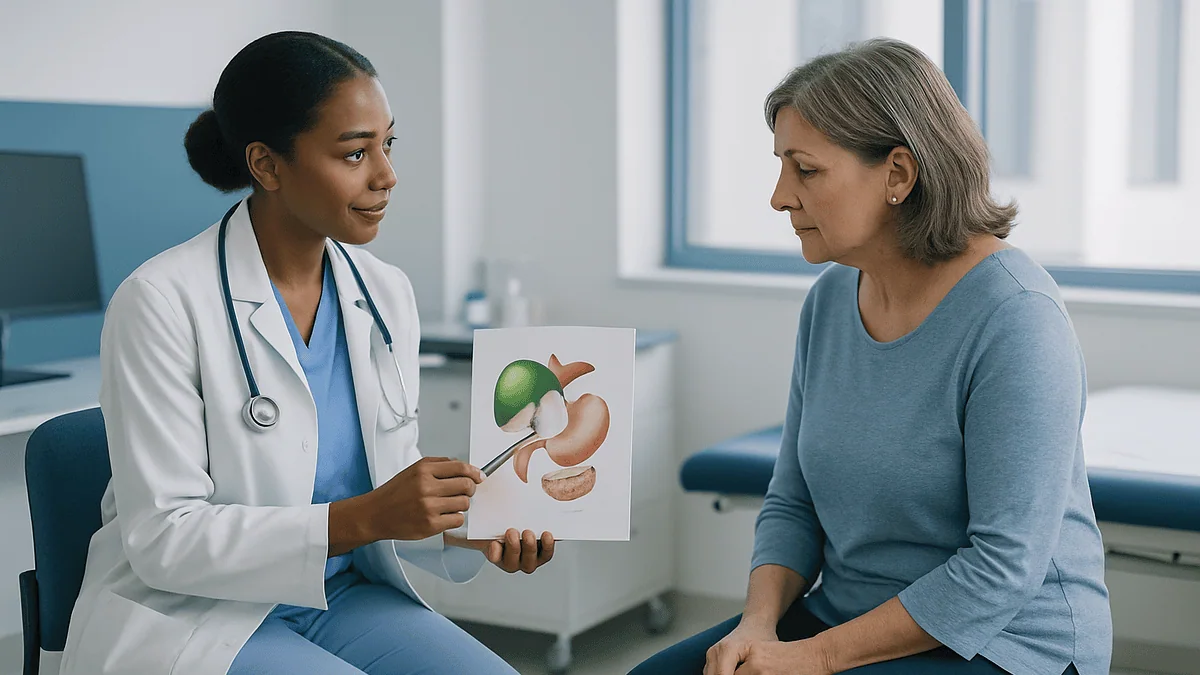
Key Takeaways
- Liver function tests before gallstone surgery matter specifically because a raised bilirubin or alkaline phosphatase can point to a stone in the bile duct, which changes the surgical plan.
- Fasting protects your airway under anesthesia; Mayo Clinic guidance is nothing to eat the night before and no food or drink for at least four hours before, with your hospital's exact times taking precedence.
- Blood thinners are paused only on a written plan agreed between your prescriber and surgeon, because stopping too early after a stent or clot can be riskier than the bleeding it avoids.
- GLP-1 receptor agonists slow stomach emptying and SGLT2 inhibitors can trigger ketoacidosis during fasting, so both must be declared and are often held before surgery on the anesthetist's advice.
- Shoulder-tip pain after keyhole surgery comes from carbon dioxide irritating the diaphragm, not from the shoulder, and it settles over a few days as the gas absorbs.
- The NHS puts typical recovery at around two weeks for keyhole cholecystectomy and six to eight weeks for open surgery, with driving usually possible once you can safely perform an emergency stop.
Preparing for gallstone surgery usually means a pre-assessment visit with blood tests (blood count, kidney and liver function, sometimes clotting), a fasting window of several hours before anesthesia, and a medicine review in which blood thinners, some diabetes drugs and certain supplements may be paused on your surgical team's instructions. Follow the written plan you are given rather than general advice, and ask about anything that is unclear.
The letter arrives with a checklist longer than the operation itself. Do not eat after a certain hour. Bring a list of everything you take. Stop this, keep taking that, phone if you are unsure. For most people, preparing for gallstone surgery is the first time they have ever been asked to plan their own body’s schedule around an anesthetic, and the instructions can read like a code you were never taught.
Gallbladder removal, or cholecystectomy, is one of the most common operations in general surgery. Yet the questions people bring to the pre-assessment clinic are rarely about the surgery. They are about the blood draw, the empty stomach, the tablet in the bathroom cabinet, and whether the small print applies to them.
This guide walks through those instructions in the order you will meet them, explains the reasoning behind each, and points out where the evidence is solid and where your own team’s judgment fills the gaps.
What preparing for gallstone surgery actually involves
Think of it as three appointments folded into one plan: a checkup on your general health, a set of rules for the hours before anesthesia, and a review of your medicines. Each exists to make the anesthetic safer and the operation more predictable.
Cholecystectomy is the surgical removal of the gallbladder, the small pouch under the liver that stores bile. Bile is the digestive fluid that helps break down fat; when its components crystallize, they form gallstones. Most operations are done laparoscopically, meaning through three or four small cuts using a thin camera and instruments, and the NHS notes that keyhole surgery usually takes one to two hours with most people home the same day or the next (NHS). A minority of operations are open, through a single larger cut under the ribs, either planned or converted to during surgery when the view or the anatomy demands it.
Before any of that happens, a pre-assessment nurse or doctor will take your history, measure blood pressure, weight and height, listen to your heart and lungs, and order tests based on your age and health. This is the visit where you should bring the actual boxes or an accurate list of everything you take, including inhalers, contraceptives, herbal products and anything bought without a prescription. The Mayo Clinic lists a medicine review and instructions on what to stop as standard parts of cholecystectomy preparation (Mayo Clinic).
Nothing in this article replaces that visit. Two people with the same gallstones can leave the clinic with different instructions because one takes a blood thinner and the other has diabetes. The pattern is universal; the details belong to your team.
Who is usually offered gallbladder removal, and who is asked to wait
Gallstones themselves are common and often silent. The NHS estimates that they affect around one in ten adults in the UK, and most of those people never need an operation (NHS). Surgery is generally offered when stones are causing trouble: repeated attacks of biliary colic, the cramping upper-abdominal pain that follows a fatty meal; acute cholecystitis, which is inflammation of the gallbladder wall; pancreatitis triggered by a stone; or jaundice from a stone lodged in the bile duct.

Timing varies. Someone admitted with an inflamed gallbladder may be operated on during that admission, while someone with occasional colic is more likely to have a planned procedure weeks later. Both are legitimate paths, and the choice reflects how sick you are, how busy the surgical list is and what your surgeon sees on imaging.
Some people are asked to wait or are steered toward alternatives. Common reasons include:
- A recent heart attack, stroke or uncontrolled heart failure, because general anesthesia adds strain the body may not yet tolerate.
- An active chest infection or poorly controlled asthma, which raises breathing risks under anesthesia.
- A blood thinner that cannot safely be paused yet, for example soon after a stent or a clot.
- Pregnancy, where surgery is sometimes deferred to the second trimester or after delivery depending on symptoms.
- Very high surgical risk from other illness, where drainage of the gallbladder through the skin or medicines to dissolve stones may be discussed instead (MedlinePlus).
Being asked to wait is not a rejection. It is a judgment that the operation will be safer once something else is treated first, and that judgment belongs to the surgeon and anesthetist together.
Blood tests before gallbladder surgery: what each one checks
A handful of tubes is drawn at pre-assessment, and each answers a specific question rather than fishing for problems.
A full blood count measures red cells, white cells and platelets. Low red cells (anemia) matter because surgery can involve blood loss; a low platelet count affects clotting; a high white count can hint at ongoing infection in the gallbladder. Kidney function and electrolytes, sometimes called a renal panel, show how well the kidneys clear medicines and whether salts such as potassium sit in a safe range for anesthesia drugs.
Liver function tests are the gallstone-specific part. Bilirubin, the yellow pigment in bile, rises when a stone blocks the duct. Alkaline phosphatase and the enzymes ALT and AST climb when the liver or ducts are irritated. Abnormal results do not cancel surgery, but they may prompt a scan of the bile duct first, because a duct stone changes the plan (Mayo Clinic).
Clotting tests are ordered when you take a blood thinner or have liver disease. A blood group sample is common so that matched blood is available should it ever be needed. People who could be pregnant are usually offered a pregnancy test on the day.
Beyond blood, an electrocardiogram, a painless recording of the heart’s electrical rhythm, is often requested for older adults or anyone with heart or lung history. Many hospitals also swab the nose and skin for MRSA, a resistant bacterium, so carriers can be given decolonizing washes before admission. You will already have had an ultrasound showing the stones; occasionally an MRCP, a detailed MRI of the bile ducts, is added if duct stones are suspected.
If a result is abnormal, expect a phone call and possibly a delay. That delay is the system working, not failing.
Fasting before gallbladder surgery: why an empty stomach matters
The fasting rule causes more anxiety than any blood test, so it helps to understand the mechanism. Under general anesthesia the reflexes that normally protect your airway are switched off. If the stomach contains food or acid, it can flow back up the esophagus and into the lungs, a rare but serious event called aspiration. An empty stomach shrinks that risk, which is why anesthetists are strict about it.
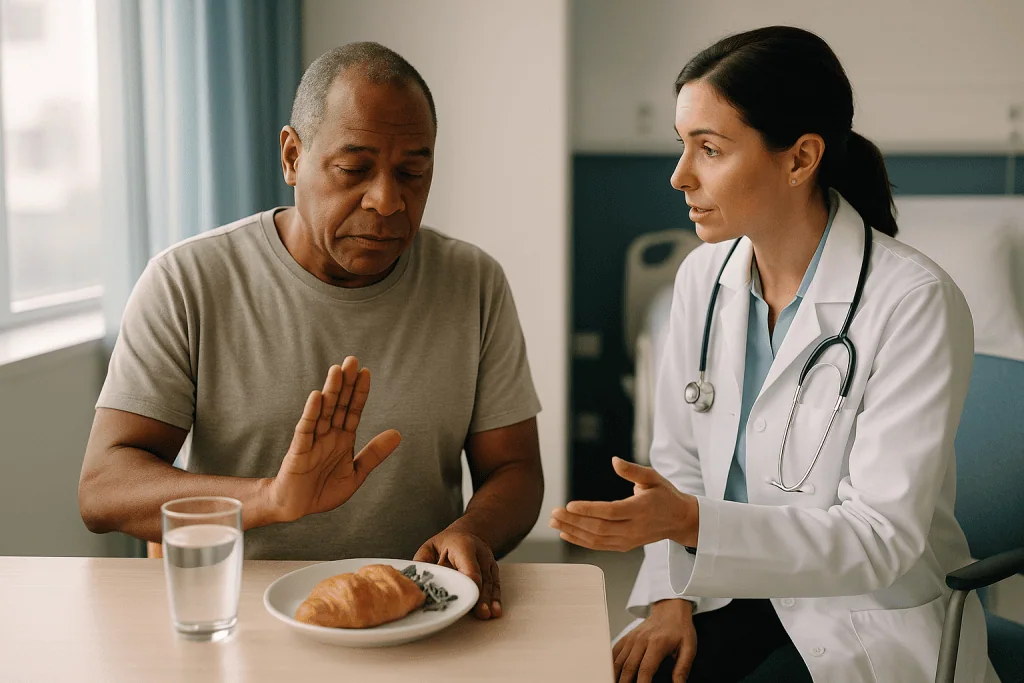
Exact windows are set by your hospital and printed on your admission letter. The Mayo Clinic’s patient guidance for cholecystectomy is to eat nothing the night before and to avoid eating and drinking for at least four hours before the operation (Mayo Clinic). Many anesthesia teams separate solids from clear fluids, allowing water for longer than food, because water leaves the stomach quickly while fat and protein linger. Whatever numbers you are given, follow them precisely; arriving having eaten usually means being sent home and rescheduled.
A few practical points people rarely hear until the morning:
- Clear fluid means you can see through it: water, and sometimes black coffee or tea without milk if your team permits. Milk, juice with pulp and smoothies count as food.
- Chewing gum and sweets stimulate acid and are generally treated as eating.
- If you are told to take a medicine on the morning of surgery, a small sip of water to swallow it is normally allowed. Confirm this rather than assuming.
- Brushing your teeth is fine; just do not swallow the water.
Fasting is one of the few instructions where being slightly more conservative than the letter is safe, whereas being slightly less so is not. If your surgery is an afternoon case, your windows will be later; if the time changes, ask whether the fasting times change with it.
What to stop before cholecystectomy: blood thinners and supplements
This is where instructions become individual, and where you must not act on a general article. Broadly, medicines are reviewed for three risks: bleeding during surgery, unstable blood sugar around the fast, and interactions with anesthetic drugs.
Anticoagulants are medicines that slow clot formation, including warfarin and the newer direct oral anticoagulants. Antiplatelet drugs such as aspirin and clopidogrel work differently, by stopping platelets from sticking together. Both groups raise bleeding during an operation, so many are paused for a number of days beforehand, but the decision is a balance: the reason you take the drug, whether a heart stent or a previous clot, may outweigh the bleeding risk, and some people are switched temporarily to an injectable alternative. The prescribing clinician and surgeon agree the plan; you should never stop a blood thinner on your own initiative (Mayo Clinic).
| Medicine group | Why it is reviewed | What usually happens |
|---|---|---|
| Anticoagulants (warfarin, DOACs) | Slow clotting, raise bleeding | Often paused days before; timing set by prescriber and surgeon |
| Antiplatelets (aspirin, clopidogrel) | Reduce platelet stickiness | Sometimes paused, sometimes continued if a stent is recent |
| NSAIDs (ibuprofen, naproxen) | Mild antiplatelet effect, kidney strain | Frequently paused shortly before surgery |
| Herbal and fish-oil supplements | Some affect clotting or interact with anesthetics | Commonly paused in the run-up |
| Blood pressure and heart medicines | Keep circulation stable | Usually continued, some adjusted on the morning |
| Diabetes medicines | Fasting alters sugar control | Individually adjusted; see next section |
Supplements deserve a mention because people forget them. Fish oil, high-dose vitamin E, garlic, ginkgo and ginseng have all been flagged for possible effects on bleeding, and St John’s wort can alter how the liver handles anesthetic and pain medicines. The evidence for each is uneven, so most teams take the cautious route and ask you to stop them for a period before surgery. Declare everything, including the ones that seem harmless.
Diabetes medicines, weight-loss injections and the anesthetist's list
Fasting and diabetes pull in opposite directions. Insulin and sulfonylureas lower blood sugar whether or not you have eaten, so an unadjusted dose on an empty stomach risks hypoglycemia. Metformin does not cause low sugar by itself but is often held around the day of surgery because of a rare interaction with kidney stress and contrast dyes. Your diabetes team or anesthetist will give a written plan for the day before and the morning of surgery; diabetes patients are also frequently placed early on the operating list so the fast is short.
Two newer classes need particular attention because many people now take them for weight management as well as diabetes. SGLT2 inhibitors are tablets that make the kidneys excrete glucose. Under the stress of fasting and surgery they can, uncommonly, trigger ketoacidosis, a dangerous build-up of acid, even with normal sugars, so anesthesia guidance generally calls for pausing them for a few days beforehand. GLP-1 receptor agonists, the injectable or tablet drugs that mimic a gut hormone, slow stomach emptying. That is part of how they help appetite, but it means the stomach may not be empty after a standard fast, and anesthesia societies have issued cautious advice about holding doses before procedures and telling the anesthetist about them. Guidance here is still evolving, which is exactly why you should tell your team what you take and let them decide.
Other medicines have quieter rules. Most blood pressure tablets are continued because a stable circulation is safer under anesthesia; certain ones, such as ACE inhibitors and diuretics, may be held on the morning to avoid a pressure dip. Inhalers should be used as normal and brought with you. Steroid tablets usually continue, sometimes with an extra dose given in hospital because the body cannot ramp up its own stress hormone. Contraceptive pills are occasionally paused before longer operations because of clot risk; for a short keyhole procedure many teams do not require this, so ask (MedlinePlus).
What to do in the week before surgery
The week before is less about the operation and more about arriving in the best condition you can. Small changes compound.
Smoking is the single most useful thing to stop, even briefly. Nicotine narrows blood vessels and carbon monoxide displaces oxygen, both of which slow wound healing and worsen lung function under anesthesia. Cleveland Clinic’s cholecystectomy guidance lists stopping smoking among the standard preparation steps (Cleveland Clinic). Any smoke-free days help; do not let the thought that it is too late stop you.
Alcohol interacts with anesthetic drugs and can dehydrate you before a fast, so most teams ask you to keep intake low or stop in the final days. If you drink heavily and daily, tell the anesthetist frankly, because sudden withdrawal in hospital is a safety issue they can plan for.
Eating in the run-up rarely needs a special regime, though many surgeons suggest a lower-fat pattern to avoid provoking a colic attack in the last days. If you develop a fever, a cold with a chesty cough, vomiting or a new gallbladder attack, phone the pre-assessment line; they would rather know than find out at the door.
Home setup deserves an evening’s thought:
- Arrange someone to drive you home and ideally stay the first night, since anesthesia impairs judgment and coordination.
- Stock soft, plain food and the fluids you like.
- Move things you use daily to waist height so you do not bend or stretch.
- Fill any prescriptions your team has asked you to have ready, and buy loose clothing with a soft waistband.
Shower with ordinary soap the night before or morning of, avoid shaving the abdomen yourself because nicks invite infection, remove nail polish and jewelry, and leave valuables at home.
What actually happens on the day of the operation
You arrive fasted, in comfortable clothes, with your medicine list and whatever the letter told you to bring. A nurse checks your identity band, blood pressure, temperature and blood sugar if relevant, and confirms when you last ate and drank. You change into a gown and, in most hospitals, compression stockings to reduce the chance of leg clots.
The surgeon visits to confirm the plan, mark the site if required and go through consent again. You will hear the risks listed: bleeding, infection, injury to the bile duct or nearby organs, leakage of bile, clots, and the possibility of converting to open surgery. Ask what you want to ask; this conversation is for you. The anesthetist then reviews your airway, teeth, allergies and previous reactions to anesthesia, and explains the plan for pain control afterward.
In the anesthetic room a small cannula is placed in a vein on the back of the hand. You breathe oxygen through a mask while the anesthetic drug is given, and most people remember nothing after a few seconds. During the operation the surgeon fills the abdomen with carbon dioxide gas to create space, inserts a camera through a cut near the navel and instruments through others, clips and divides the small duct and artery to the gallbladder, and removes it in a retrieval bag. Sometimes a dye X-ray of the bile duct is done during surgery to check for stones. The NHS puts the typical keyhole operating time at one to two hours (NHS).
You wake in recovery, often with a sore throat from the breathing tube and a dull ache under the ribs. Once you are alert, drinking and passing urine, and your pain is managed with medicines you can take by mouth, a same-day discharge is common. Open surgery or complications mean a longer stay, which the NHS describes as typically three to five days.
The first three days: gas pain, the hardest day and your first bowel movement
Ask people what surprised them most and the answer is rarely the cuts. It is the shoulder. Carbon dioxide left under the diaphragm irritates a nerve that shares a pathway with the shoulder, producing a nagging ache at the shoulder tip that has nothing to do with the shoulder itself. The NHS lists this shoulder pain as an expected part of early recovery; it eases as the gas absorbs over a few days, and walking helps disperse it faster than lying still (NHS).
Which day is hardest? Many people say the second, once the long-acting anesthetic drugs and local anesthetic in the wounds have worn off but the body has not yet settled. That is a pattern reported by patients and clinicians rather than a measured statistic, and experiences vary widely. Pain is usually managed with medicines your team prescribes or recommends; take them on the schedule you were given rather than waiting for pain to peak.
Bowels are the second surprise. Anesthesia, opioid painkillers, a day of fasting and less movement all slow the gut, so it is common not to open your bowels for the first few days. Fluids, gentle walking, fiber when you are eating normally, and a stool softener if your team suggests one are the usual remedies (MedlinePlus). The opposite can also happen: bile now drips continuously into the intestine instead of being stored, and some people have loose stools in the early weeks.
Wounds are usually closed with dissolving stitches or glue under small dressings. Keep them dry for the period you were told, usually a day or two, then shower normally and pat dry. A small amount of bruising around the navel is expected. Bathing, swimming and heavy lifting wait.
Gallbladder surgery recovery time: weeks one to six
Recovery is quicker than most people fear, and slower than the online forums imply. The NHS states that most people who have keyhole surgery return to normal activities in around two weeks, while open surgery typically needs six to eight weeks (NHS). Those are population averages; your own curve depends on age, fitness, job and whether the gallbladder was inflamed.
In the first week, fatigue is often more limiting than pain. Anesthesia lingers in energy levels for days, and a body that has been through inflammation and surgery wants sleep. Short walks several times a day are the best medicine here: they reduce clot risk, wake the bowel and disperse gas. Stairs are fine if you take them slowly.
Driving has a practical test rather than a fixed date. You need to be able to perform an emergency stop, twist to check mirrors and concentrate without the fog of strong painkillers; the NHS suggests this is often possible after about a week following keyhole surgery, and later after open surgery. Check your insurer’s position too.
Work depends on the job. Desk-based roles are often resumed within one to two weeks; jobs involving lifting or driving for a living may need longer, and your team can advise on a note. Heavy lifting, vigorous sport and anything that strains the abdominal wall are generally deferred for a few weeks after keyhole surgery and longer after open surgery.
Follow-up varies. Some hospitals see everyone in clinic; others rely on a phone call and a clear plan for what to do if problems arise. Ask which applies to you before you leave, and make sure you know how to reach the ward or surgical team directly in the first fortnight, when questions are most likely.
Eating after gallbladder removal, and the weight question
The gallbladder stored bile and released it in a burst when fat arrived. Without it, bile flows steadily into the intestine, which is enough for ordinary digestion in most people. A very large fatty meal can overwhelm that trickle and cause bloating, urgency or loose stools, which is why the standard advice is to start with small, low-fat meals and reintroduce richer foods gradually over the first weeks (Mayo Clinic). Most people find they can eat a normal diet again; a minority notice persistent diarrhea, which is usually manageable and worth mentioning at follow-up if it continues.
People also ask, in blunter words than these, how to avoid gaining weight after the operation. The honest answer is that the gallbladder itself does not regulate weight. Any change afterward tends to come from behavior: eating more freely because meals no longer trigger pain, moving less during recovery, or the reverse, losing appetite for fatty foods. There is no evidence-based diet specific to life without a gallbladder beyond the general one, and no reason to fear the operation on weight grounds.
What helps, according to mainstream guidance, is unremarkable:
- Regular meals of moderate size rather than one large one, which suits a steady bile supply.
- Fiber from vegetables, fruit, oats and beans, introduced gradually if your bowels are sensitive.
- Lean protein and modest amounts of unsaturated fat, since fat is still needed for absorbing certain vitamins.
- Fluids, especially if stools are loose.
- Returning to walking and then to your usual activity as your team allows.
If you have been told a low-fat diet is essential for life, that is a myth we address next. Bodies adapt, and most people’s diets look ordinary again within a couple of months.
What people often get wrong about preparing for gallstone surgery
Myths gather around common operations, and several of them cause real harm because they lead people to skip or invent instructions.
“Stopping my blood thinner for a week is the safe option.” Stopping too early or without cover can be more dangerous than the bleeding it prevents, particularly after a stent or a recent clot. The plan is individual and comes from your prescriber and surgeon together.
“A small breakfast will not matter.” It does. The fasting rule is about airway protection under anesthesia, and hospitals will postpone rather than take the risk. Fasting instructions are the one place where following the letter exactly is non-negotiable.
“Supplements are natural, so they do not count.” Several herbal products influence clotting or liver enzymes. Declare them; the team may ask you to pause them.
“I need a special low-fat diet for the rest of my life.” Early low-fat eating helps the gut adjust, but most people return to a normal, balanced diet within weeks (Cleveland Clinic).
“Keyhole means trivial.” It means smaller wounds and faster recovery, not no recovery. Fatigue and shoulder pain in the first days are normal, and rushing back to lifting invites problems.
“If the stones are not hurting today, the operation can wait indefinitely.” Sometimes it can. But stones that have caused pancreatitis or jaundice carry a real chance of doing so again, which is why surgeons often advise not delaying once symptoms have occurred. Talk through the timing with your team rather than assuming.
“I should stop all my medicines to be safe.” Most medicines, including those for blood pressure, thyroid, asthma and epilepsy, are continued right up to the morning of surgery. Abruptly stopping them can cause harm. Only the medicines named on your written plan change.
Questions to ask your care team
The pre-assessment visit is the best chance to ask, and the questions people wish they had raised are usually practical rather than technical. Take a list; write the answers down while you are there.
- Which of my medicines should I take on the morning of surgery, and which should I pause, from what day? Can you write this down with the names?
- What are my exact fasting times for food and for clear fluids, and do they change if my operation time moves?
- Do any of my blood test results need action before surgery, and who will contact me if they do?
- Is my operation planned as keyhole, and roughly how often does your team need to convert to open surgery?
- Will you check the bile duct during the operation, and what happens if a stone is found there?
- What is the plan for pain relief afterward, and what should I have at home?
- How will my wounds be closed, when can I shower, and what does a normal healing wound look like versus an infected one?
- When can I expect to drive, return to my kind of work, and lift my children or shopping?
- Who do I call, at what number, if I have a problem in the first two weeks, including at night or on a weekend?
- Will I have a follow-up appointment, or is discharge the end of routine contact?
- Are there any results from the removed gallbladder that you will send to me or my primary care doctor?
If you have diabetes, add a question about who manages your sugar plan on the day. If you take a blood thinner, ask whether you will need a bridging injection and who teaches you to give it. And if anything in the written instructions later contradicts what you were told verbally, phone before the day rather than guessing. Teams expect these calls and would far rather answer them than cancel an operation at the door.
When to call your doctor
Before surgery, contact the pre-assessment team if you develop a fever, a new chest infection, vomiting, a gallbladder attack that will not settle, or if you realize you have taken a medicine you were asked to pause. Honesty here changes plans safely; silence changes them at the last minute.
After surgery, most recoveries are uneventful, but a few signs need prompt attention. The NHS and MedlinePlus list the following as reasons to seek medical help rather than wait for follow-up (NHS; MedlinePlus):
- Worsening abdominal pain that is not controlled by the pain relief you were given, or pain that returns after it had eased.
- A fever or chills, which can signal infection or a bile leak.
- Yellowing of the skin or the whites of the eyes, dark urine or pale, clay-colored stools, which suggest a blockage or leak in the bile duct.
- Persistent vomiting or an inability to keep fluids down.
- A wound that becomes increasingly red, hot, swollen or leaks pus or cloudy fluid, or that opens.
- A swollen, painful calf, or sudden breathlessness or chest pain, which can indicate a blood clot and are emergencies.
- Bleeding from a wound that does not stop with gentle pressure.
Call emergency services for chest pain, severe breathlessness, collapse, or bleeding that will not stop. For everything else on the list, use the surgical team number you were given, or your primary care doctor or an urgent care service if that number is unavailable.
None of this should overshadow the ordinary picture: sore wounds, an aching shoulder, tiredness and a sluggish bowel for a few days, followed by a steady return to normal. Knowing the red flags lets you stop scanning for trouble and get on with recovering. Every decision about your care, before and after, rests with the team looking after you.
Frequently asked questions
What do people wish they had known before gallbladder surgery?
Most often that the shoulder ache from trapped gas is normal and eases with walking, that fatigue outlasts pain, and that bowels may not move for a few days. People also wish they had written down exactly which medicines to take on the morning and had a direct phone number for the surgical team. Practical setup at home, such as loose clothing and someone to drive, matters more than most expect.
What is the hardest day after gallbladder surgery?
Many people describe the second day as the toughest, once the anesthetic and the local anesthetic in the wounds have worn off but the body has not yet settled. This is a commonly reported experience rather than a measured statistic, and it varies widely. Taking prescribed pain relief on schedule, walking short distances often and expecting shoulder-tip gas pain all make those first days easier.
How long before I poop after gallbladder surgery?
It is common not to open your bowels for the first few days after surgery, because anesthesia, opioid painkillers, fasting and reduced movement all slow the gut, according to MedlinePlus. Drinking well, walking and reintroducing fiber usually restore a normal pattern. Ask your team before using any laxative. If you have no bowel movement with worsening bloating, vomiting or severe pain, contact them promptly.
Does gallbladder removal cause weight gain?
No direct effect on weight is established; the gallbladder stores bile but does not regulate metabolism. Changes after surgery usually reflect behavior, such as eating more freely once meals no longer trigger pain or moving less during recovery. Mainstream advice is ordinary: regular moderate meals, fiber, lean protein, fluids and a gradual return to activity as your team allows. A lifelong special diet is not required for most people.
What is the typical gallbladder surgery recovery time?
The NHS states that most people return to normal activities around two weeks after keyhole surgery and six to eight weeks after open surgery. Fatigue often lasts longer than pain, driving depends on being able to perform an emergency stop, and heavy lifting is deferred for several weeks. These are population averages, not promises; your own recovery depends on age, fitness, your job and whether the gallbladder was inflamed.
Can I drink water when fasting before gallbladder surgery?
Often yes, up to a specified time that is later than the cut-off for food, because water leaves the stomach quickly while fat and protein linger. Mayo Clinic guidance is no food or drink for at least four hours before surgery, but hospitals set their own windows, so follow the times printed on your letter. Milk, juice with pulp, gum and sweets count as food. A small sip to swallow permitted medicines is usually allowed.
Which blood tests before gallbladder surgery are routine?
A full blood count, kidney function with electrolytes and liver function tests are the usual core. Clotting tests are added if you take a blood thinner or have liver disease, a blood group sample is common, and a pregnancy test is offered where relevant. Older adults or those with heart or lung history often have an electrocardiogram too. Abnormal liver results may prompt a bile duct scan before surgery.
What do I stop before cholecystectomy if I take blood thinners?
Only what your prescriber and surgeon jointly instruct, in writing, with the date. Anticoagulants such as warfarin or the newer direct oral agents, and antiplatelets such as aspirin or clopidogrel, raise bleeding risk during surgery, but pausing them too early after a stent or clot can be dangerous. Some people are switched temporarily to an injectable alternative. Never stop or change a blood thinner on your own initiative.
Should I take my usual morning medicines on the day of surgery?
Most regular medicines, including those for blood pressure, thyroid, asthma and epilepsy, are continued and taken with a small sip of water, but some are held: certain blood pressure tablets, most diabetes medicines, blood thinners and some supplements. Your pre-assessment team will give a written list naming each one. If the list is unclear or you take something new since the visit, phone before the day rather than guessing.
What happens if I have a cold or fever on the day of surgery?
Contact the pre-assessment or admissions team as soon as symptoms appear, ideally before you travel in. A mild runny nose may not change plans, but a chesty cough, fever, vomiting or a new gallbladder attack can raise anesthesia risks and often lead to a short postponement. The anesthetist makes that call on the day. Reporting early gives them the chance to reschedule safely and offer your slot to someone else.
References
- NHS: Gallbladder removal
- NHS: Gallbladder removal: Recovery
- MedlinePlus: Gallbladder removal – laparoscopic
- Cleveland Clinic: Gallbladder Removal (Cholecystectomy)
This article is for general information only and is not a substitute for professional medical advice. Please consult a qualified doctor about your individual situation.

More from the Blog

Autoimmune Hepatitis Diagnosis: Antibody Tests, Imaging and When a Liver Biopsy Is Needed
Autoimmune hepatitis is diagnosed by combining blood tests (raised liver enzymes and immunoglobulin G), autoantibody tests such as ANA, anti-smooth muscle and anti-LKM1, and…

Living Gluten-Free With Celiac Disease: Label Reading, Eating Out and Travel Without Slips
A gluten free diet with celiac disease means removing all wheat, barley and rye, every day, for life, because even small amounts can damage…

Why Variceal Banding Is Often Repeated: How Many Sessions and What Follow-Up Endoscopy Checks
Variceal banding is usually repeated every 2 to 4 weeks until the varices are flattened or gone, a point endoscopists call eradication. Liver guidance…

IBS Myths: Is It All in Your Head and Does Cutting Out Gluten Always Help?
IBS is not all in your head. It is a recognized disorder of gut-brain interaction in which the bowel and nervous system miscommunicate, producing…

Living With Chronic Liver Disease: Weight, Alcohol, Sleep and the Check-Ups That Matter
Living with chronic liver disease usually means protecting the working tissue you still have: avoiding alcohol if your team advises it, aiming for gradual…

When Does a Hiatal Hernia Need Surgery? Reflux Despite Medication and Other Triggers
Most hiatal hernias never need surgery; they are managed with lifestyle changes and acid-reducing medicines. Surgery is usually discussed when reflux persists or complications…