

Vulvar Cancer Surgery Explained: Organ-Sparing Excision and Wider Procedures
Key Takeaways
- Most early vulvar cancers are treated with a wide local excision or partial vulvectomy that preserves the clitoris and vaginal opening; removing the entire vulva is now uncommon, according to the NHS.
- The vulvar operation and the lymph node procedure are decided separately, and long-term leg swelling tracks mainly with full groin dissection rather than sentinel node biopsy.
- Only the pathologist's report on the removed tissue, not a scan, confirms whether the margin around the tumor is clear, which is why a second small excision is sometimes recommended.
- Vulvar cancer usually develops slowly over years, per the National Cancer Institute, so there is normally time for a second opinion and practical planning before surgery.
- Rinsing with lukewarm water after every bathroom visit and then patting or air-drying is the core of home wound care, because the warm, folded skin heals poorly when kept damp.
- Recovery takes several weeks according to NHS guidance, with hospital stays ranging from a night or two after a small excision to about a week after radical surgery with a flap.
Vulvar cancer surgery removes the tumor together with a rim of healthy tissue. It ranges from a wide local excision that preserves most of the vulva to a partial or radical vulvectomy, often paired with a sentinel lymph node check in the groin. Typical hospital stays run from a few days to about a week, followed by several weeks of wound care at home. The extent of surgery is decided by the treating team.
The consultation room is quiet except for the sound of a pen tapping a diagram. On the paper is a simple outline of the vulva, and the surgeon has just drawn a small oval on one side of it. “This is what we would remove,” she says. The patient nods, but her question is not about the oval. It is about everything around it: sitting, walking, going to the bathroom, being touched.
That gap between the surgeon’s drawing and the patient’s daily life is where most of the anxiety lives. Searching “vulvar cancer surgery what to expect” usually turns up lists of procedure names. What people actually want is a plain account of what the surgeon does, why the operation is sometimes small and sometimes not, and what the weeks afterward genuinely feel like.
This explainer is written for that moment at the table. It draws on mainstream guidance from national cancer bodies and health services, not on anecdote, and it leaves every decision where it belongs: with the person and the team looking after them.
Vulvar cancer surgery: what to expect on the day
The vulva is the external female genital area: the outer and inner lips (labia majora and minora), the clitoris, the opening of the vagina and the surrounding skin. Vulvar cancer is uncommon, and according to MedlinePlus most cases begin in the flat skin cells of the labia. Because the disease starts on the surface, surgery is the mainstay of treatment for early tumors, as both the NHS and the National Cancer Institute (NCI) describe.
On the day itself, the sequence is fairly predictable. A general anesthetic is typical, sometimes with a spinal or regional block added for pain relief afterward. Before the first incision, the surgeon marks the planned edges of the excision on the skin. If a sentinel lymph node procedure is planned, a small amount of tracer is injected near the tumor beforehand so the surgeon can find the first-draining lymph node in the groin during the operation.
Tissue removed in theater is sent to a pathologist, the doctor who examines it under a microscope. That report, which usually takes days rather than hours, tells the team two crucial things: whether the margin of healthy tissue around the tumor is clear, and whether any lymph nodes contain cancer cells. Those findings, not the operation itself, decide whether anything further is recommended.
Most people wake with a urinary catheter, a thin tube draining the bladder, so the wound is not repeatedly wet in the first day or two. Some also have a small drain in the groin. According to the NHS, the length of stay depends on how much tissue was removed, from a night or two after a small excision to around a week after more extensive surgery.
What is a wide local excision, and why is it called organ-sparing?
A wide local excision, sometimes called a radical local excision, removes the tumor along with a margin of normal-looking tissue around and beneath it. The word “wide” refers to that margin, not to the size of the wound. The aim is to take the cancer out completely while leaving the rest of the vulva untouched.
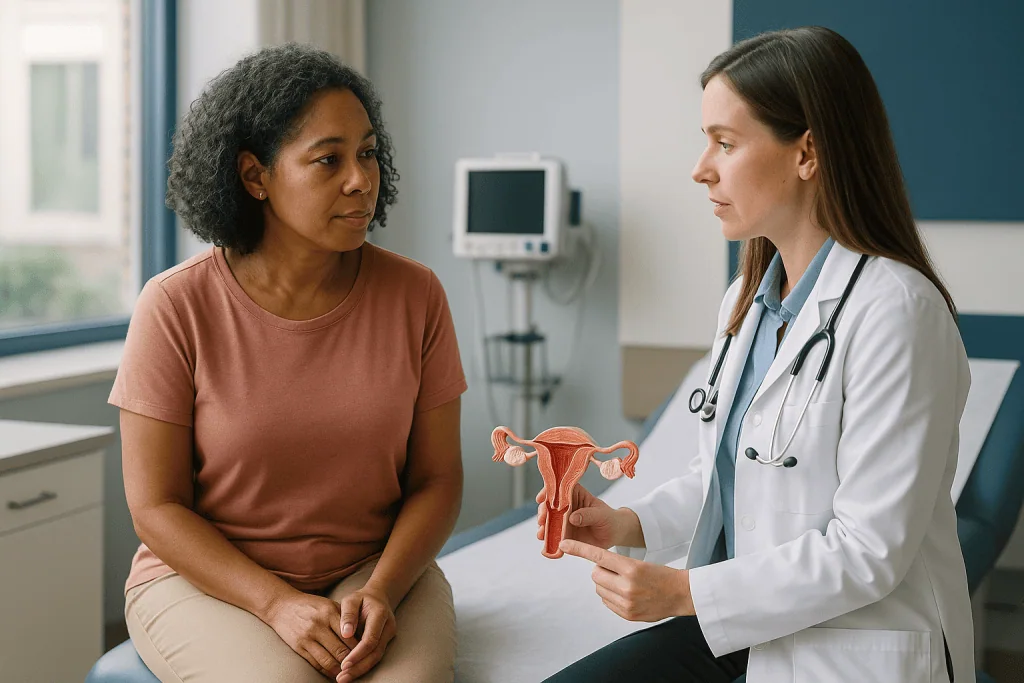
Why does the margin matter so much? Cancer cells can extend microscopically beyond what the eye can see. The NCI explains that the pathologist checks the edges of the specimen; if cancer cells reach the edge, a second, small operation to remove more tissue may be recommended. If the margin is clear, no further vulvar surgery is usually needed for that tumor.
The organ-sparing philosophy has changed vulvar cancer care over recent decades. Older practice removed the entire vulva for almost any tumor. Mayo Clinic and the NHS now describe wide local excision as the standard approach for small, early-stage tumors that sit clearly on one side and are not close to the urethra or clitoris. The goal is straightforward: preserve sensation, appearance and function wherever the cancer allows.
The wound left behind can usually be closed with stitches that dissolve on their own. For tumors on the labia, the result is often a linear scar and a labium that is smaller than before. Sensation in the clitoris and vaginal opening is preserved when those structures are not involved.
One honest caveat: “organ-sparing” does not mean “cosmetically invisible.” The vulva heals well because of its blood supply, but the area will look different, and the change is noticeable to the person who lives with it. Good pre-operative conversations, ideally with a diagram or a mirror, make that adjustment easier.
What is a vulvectomy, and how do partial and radical versions differ?
A vulvectomy is an operation that removes part or all of the vulva. The word covers several distinct procedures, and people often hear it without being told which one applies to them.
A partial vulvectomy removes a section of the vulva: for example, one labium and the tissue beneath it. A radical vulvectomy removes the vulva, the deep tissue under it and often the clitoris, and is reserved for larger tumors or those that involve several structures. Mayo Clinic also describes a skinning vulvectomy, which removes only the top layer of skin and is used for precancerous changes rather than invasive cancer. The NHS notes that removing the whole vulva is now uncommon because smaller operations achieve the same goal for most early tumors.
The difference between these procedures is not just the size of the wound. It is what remains afterward. After a partial vulvectomy, the clitoris and vaginal opening are usually preserved and the direction of urine flow is unchanged. After a radical vulvectomy, urine may spray or run differently because the tissue that once shaped the stream is gone, and the sensation of the clitoris is lost if it has been removed.
Closing the wound also differs. A partial vulvectomy is usually closed directly. A radical vulvectomy may leave a defect too large to stitch edge to edge, in which case the surgeon uses a flap, a piece of nearby skin and tissue moved across while still attached to its blood supply, to cover the area. Flaps heal slowly and need careful monitoring, which is one reason stays are longer after the bigger operation.
Which version is offered depends on the tumor’s size, depth and location, all confirmed on biopsy and examination before the operation.
Sentinel node biopsy or groin dissection: what happens to the lymph nodes?
Lymph nodes are small, bean-shaped filters in the lymphatic system, and vulvar cancer tends to spread first to the nodes in the groin. Checking them is part of staging, the process of working out how far a cancer has gone, and it influences whether radiotherapy is recommended afterward.
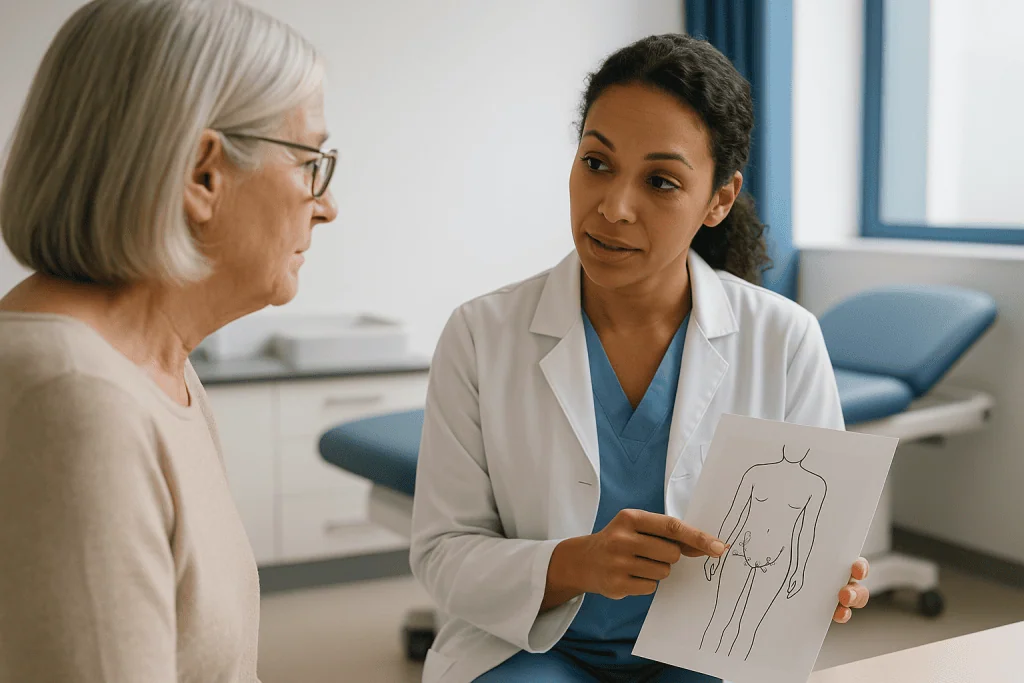
A sentinel lymph node biopsy identifies the first node or nodes the tumor drains into. A tracer, a radioactive substance, a blue dye or both, is injected around the tumor; the surgeon then follows it to the sentinel node, removes it through a small groin incision and sends it for examination. As the NCI explains, if the sentinel node contains no cancer cells, it is unlikely that other nodes do, and the remaining nodes can be left in place.
A groin lymph node dissection, also called an inguinofemoral lymphadenectomy, removes most of the lymph nodes in one or both groins. It is recommended when the sentinel node is positive, when a sentinel node cannot be found, or when the tumor is too large or too close to the midline for the sentinel technique to be reliable, according to the NCI’s treatment summary.
The trade-off is real. Removing many nodes disturbs lymphatic drainage from the leg and can lead to lymphedema, a persistent swelling of the leg that the NHS and NCI list among the longer-term effects of vulvar cancer treatment. Sentinel node biopsy was developed precisely to reduce that risk for people with early tumors, and both Mayo Clinic and the NHS describe it as the preferred option when the tumor is suitable.
Wound healing in the groin can also be slow because the skin there folds and stays moist. Drains, careful drying and early walking all help.
Who is usually offered surgery first, and who is asked to wait?
Surgery is usually the first treatment for vulvar cancer that is confined to the vulva or has spread only to the groin nodes. That covers the majority of people at diagnosis. The exact operation depends on tumor size and depth measured on the biopsy, how close the tumor sits to the urethra, clitoris or anus, and whether the person is fit for an anesthetic.
Some people are asked to wait, or offered a different order of treatment, for specific reasons:
- Precancerous change rather than cancer. Vulvar intraepithelial neoplasia (VIN) is a change in the surface cells that has not become invasive. Mayo Clinic and the NHS describe options including skinning excision, laser treatment, prescribed creams and, for some, careful monitoring rather than surgery.
- Large or midline tumors. When a tumor involves the urethra, anus or vaginal opening, removing it outright could compromise bladder or bowel control. The NCI notes that chemoradiation, a combination of chemotherapy and radiotherapy, may be given first to shrink the tumor so that a smaller operation becomes possible.
- Cancer that has spread beyond the groin. Here systemic treatment or radiotherapy usually takes priority over an operation on the vulva.
- Medical fitness. Uncontrolled diabetes, active infection or a recent heart event may prompt a delay while these are addressed, since each slows wound healing or raises anesthetic risk.
None of this means a person has been “turned down.” Sequencing treatment is normal, and the multidisciplinary team meeting where surgeons, oncologists, radiologists and pathologists review each case is where these decisions are made. Asking which pathway applies, and why, is entirely reasonable.
Vulvar cancer surgery options at a glance
The names used in clinic can sound interchangeable. This table sets the main procedures side by side, drawing on descriptions from Mayo Clinic, the NHS and the NCI. Timeframes are typical ranges from those sources, not promises, and individual plans vary.
| Procedure | What is removed | Usually offered when | Typical hospital stay | Main considerations |
|---|---|---|---|---|
| Wide local excision | Tumor plus a margin of healthy tissue | Small, early tumor on one side, away from midline structures | One to a few nights | Preserves most of the vulva; possible re-excision if margin not clear |
| Partial vulvectomy | A section of the vulva, such as one labium | Larger tumor still confined to one area | A few nights | Visible change in shape; clitoris usually preserved |
| Radical vulvectomy | Entire vulva with underlying tissue, often clitoris | Extensive or multifocal tumor | About a week or longer | Often needs a flap; altered sensation and urine stream |
| Skinning vulvectomy | Top skin layer only | Precancerous change (VIN), not invasive cancer | Short | May need skin graft; sensation largely kept |
| Sentinel node biopsy | First-draining groin node(s) | Early tumor of suitable size and position | Adds little to stay | Lower lymphedema risk than full dissection |
| Groin node dissection | Most groin nodes, one or both sides | Positive sentinel node or sentinel not feasible | Longer, with drains | Higher risk of lymphedema and slow groin wound healing |
Two patterns stand out. First, the size of the vulvar operation and the extent of the lymph node procedure are decided separately; a person can have a small excision with a full groin dissection, or the reverse. Second, the longer-term effects that people find hardest to live with, leg swelling and changes in sensation, track more closely with the node surgery and with whether the clitoris is removed than with the length of the vulvar scar. That is worth keeping in mind when weighing what to ask before the operation.
How do you prepare for vulvar cancer surgery?
Preparation begins with the pre-assessment clinic, where a nurse or anesthetist reviews health history, current medicines, allergies and previous anesthetics. Blood tests and sometimes a heart tracing or chest X-ray are ordered depending on age and health. Anyone who takes blood thinners, diabetes medicines or hormone treatments should mention them; the team will give individual instructions about whether to pause or continue each one, and that guidance overrides anything read elsewhere.
Stopping smoking is the single most useful thing a person can do for their own wound. Nicotine narrows small blood vessels, and the vulva and groin rely on good skin blood flow to heal. Mayo Clinic lists smoking among the factors that slow recovery from surgery generally, and surgical teams commonly ask people to stop for as long as possible beforehand. Support to quit is available through primary care.
Practical steps at home make the return easier:
- Arrange help for the first week, particularly with shopping, stairs and anything involving lifting.
- Buy loose cotton underwear, a hand-held shower attachment or peri-bottle, and a soft cushion or ring to sit on.
- Stock high-fiber foods and ask the team about a stool softener, since straining puts pressure on the wound.
- Prepare a small bag with front-opening nightwear and slip-on shoes, both easier when bending is uncomfortable.
Emotional preparation deserves equal weight. Many people find it helpful to look at the area beforehand, either alone or with a partner, so the post-operative change has a starting point. Specialist nurses, where available, can walk through what the wound will look like and can be contacted after discharge with questions.
Finally, ask the team what “a good result” means for this specific operation. Knowing in advance that a clear margin and a negative sentinel node are the goals makes the pathology conversation afterward far less frightening.
How painful is vulvar surgery, really?
The honest answer is that it is uncomfortable rather than agonizing for most people, but the discomfort is in a place that is hard to ignore. The vulva is richly supplied with nerves, and everyday actions such as sitting, walking and passing urine bring the wound into contact with clothing or moisture. Pain after a small excision is usually described as soreness and stinging; after a larger vulvectomy or groin dissection, there is a deeper ache and a pulling sensation, particularly in the groin.
Pain control uses several approaches together, a strategy the NHS calls multimodal analgesia. Regular anti-inflammatory and simple painkillers form the base. Stronger opioid medicines are typically added for the first few days after larger operations and then reduced as the wound settles. Some teams use a regional block, an injection of local anesthetic around the nerves supplying the area, during the operation so that the first hours are more comfortable. All of these are prescribed and adjusted by the treating team; the aim is to stay ahead of the pain rather than chase it.
Several non-drug measures matter as much as tablets:
- Rinsing the area with lukewarm water after urinating and patting or air-drying rather than wiping.
- A cool pack wrapped in cloth, applied for short periods, to ease swelling in the first days.
- Sitting on a cushion with the weight shifted onto the thighs, and standing or walking briefly every hour.
- Avoiding constipation, which is a common and avoidable cause of severe pain when straining.
Pain should ease steadily over the first one to two weeks. Pain that worsens, becomes throbbing, or arrives with fever or a bad odor suggests infection or a collection of fluid and needs prompt assessment. Persistent burning or electric sensations that outlast the wound, called neuropathic pain, are less common but real, and there are specific approaches for them if they occur.
Vulvectomy recovery time: what the first days and weeks usually look like
Recovery has a recognizable shape, even though the pace varies with the size of the operation. The NHS describes recovery from vulvar cancer surgery as taking several weeks, with more extensive procedures at the longer end.
Days one to three. The urinary catheter is usually removed once the person is walking comfortably. Nurses check the wound, encourage short walks to reduce the risk of blood clots, and teach wound care. After groin dissection, drains stay in until the fluid output falls, and some people go home with them.
Week one. Home, or nearly so. Swelling and bruising peak and start to subside. Sitting for more than a short period is uncomfortable. Dissolving stitches begin to soften. Fatigue is pronounced, and short daily walks are more restorative than bed rest.
Weeks two to four. Most wounds have closed on the surface. Stinging with urination fades. Many people return to desk-based work or light routines toward the end of this period, though anyone with a flap or a slow-healing groin wound will take longer. The pathology results and a discussion about any further treatment usually fall in this window.
Weeks four to eight. The tissue strengthens, and the team typically reviews whether it is safe to resume driving, exercise, bathing in a tub and sexual activity. The NHS suggests waiting until the wound has fully healed before penetrative sex and checking with the team first.
Beyond eight weeks, the scar continues to remodel for months. Numbness around the incision may persist or improve slowly, and leg swelling after node surgery can appear late, sometimes after the person has otherwise recovered. Follow-up appointments are scheduled at regular intervals, and these are the moments to raise anything that does not feel right.
How do you care for the wound at home?
The vulva heals well because it has an excellent blood supply, but it works against itself in one respect: the area is warm, folded and frequently damp. Wound care is therefore mostly about keeping the skin clean and dry without disturbing the stitches.
Rinsing is the foundation. After every trip to the bathroom, rinse the area with lukewarm water from a peri-bottle or hand-held shower, then pat dry with a soft towel or use a hair dryer on the cool setting held well away from the skin. Soap is unnecessary in the first days and can sting; if used later, choose an unscented one and rinse thoroughly. Cleveland Clinic and the NHS both describe this rinse-and-dry routine as the mainstay of home care.
A few other habits protect the wound:
- Wear loose cotton underwear or none at all when resting, and avoid tight trousers or leggings for several weeks.
- Skip perfumed wipes, talc, douching and any cream not recommended by the team.
- Look at the wound once a day with a mirror so changes are noticed early; a small amount of clear or slightly blood-tinged fluid is common, while thick yellow or green discharge is not.
- Change any dressing as instructed, and wash hands before and after.
- Keep bowel movements soft with fluids, fiber and any prescribed softener; straining can pull at stitches near the perineum.
Groin wounds after node dissection need the same care plus attention to the drain, if one is present. The team will explain how to empty and record the output and when the drain will be removed.
Bathing in a tub is usually discouraged until the wound has closed, because soaking softens new tissue. Showers are fine. Once healed, a warm shallow bath, sometimes called a sitz bath, may be suggested to ease residual soreness. As always, the team’s specific instructions take precedence over general advice.
What is life like after a vulvectomy?
People searching “life after vulvectomy” are usually asking about three things: the body, the bathroom and the bedroom. Each deserves a plain answer.
The body. The vulva will look different. After a partial operation, one side may be smaller or flatter. After a radical vulvectomy, the labia and often the clitoris are absent, and the skin may be smooth or reconstructed with a flap that has a slightly different texture and color. Numbness along the scar is common early and can persist. Many people describe an adjustment period that is as much psychological as physical, and the NHS lists counseling and specialist nurse support among the resources worth asking about.
The bathroom. Urine may spray or track differently because the tissue that shaped the stream has changed. Sitting further back on the toilet or using a peri-bottle helps. Removing tissue near the anus can occasionally affect the sensation of needing to open the bowels, and this should be reported if it occurs.
The bedroom. This is the area people are most reluctant to raise and clinicians most often forget to. Sexual sensation depends heavily on whether the clitoris and the nerves around the vaginal opening were preserved. When they are, arousal and orgasm are often possible after healing, though the area may feel tighter or more sensitive at first. When the clitoris has been removed, orgasm from external stimulation is affected, and many people find that intimacy shifts toward other sources of pleasure. Vaginal moisturizers, lubricants, dilators when the opening has narrowed, and psychosexual counseling are all options the team can discuss.
The leg. After groin node surgery, watch for lymphedema. Early signs are a feeling of heaviness, tightness of shoes or a visible difference between the legs. Referral to a lymphedema service for compression and skin care advice works best when started early.
What are the risks, and what are the alternatives to surgery?
Every operation carries risk, and being told about it in neutral terms is part of informed consent. For vulvar cancer surgery, the main short-term risks listed by Mayo Clinic and the NHS are wound infection, wound breakdown (where the edges separate before healing), bleeding, blood clots in the leg or lung, and reactions to anesthesia. Wound problems are more frequent in the groin than on the vulva itself, because the skin folds and stays moist, and more frequent after larger operations, in people who smoke, and in those with diabetes or obesity.
Longer-term risks are the ones that shape daily life:
- Lymphedema of one or both legs after groin node surgery, which the NCI and NHS describe as a recognized long-term effect.
- Lymphocyst, a pocket of lymph fluid in the groin that may need draining.
- Changes in sexual sensation and function, discussed above.
- Narrowing of the vaginal opening, which can make examinations and intercourse uncomfortable.
- Altered urine stream or, uncommonly, urinary incontinence when tissue near the urethra is removed.
- Body-image distress, which is real, common and treatable.
Alternatives exist, and the choice between them is a shared decision. For precancerous VIN, options include laser treatment, prescribed topical medicines and monitoring rather than excision. For invasive cancer that is small but sits in a difficult position, or for people not fit for surgery, radiotherapy with or without chemotherapy is the main alternative, and the NCI describes chemoradiation as a way either to replace surgery or to shrink a tumor first. For advanced disease, systemic therapy, including chemotherapy and, in some cases, immunotherapy, takes priority.
Reconstruction with a flap can be planned at the same time as a large excision, and it is fair to ask whether a plastic or reconstructive surgeon will be involved. None of these options is universally better; each depends on the tumor and the person.
What people often get wrong about vulvar cancer surgery
Misunderstandings cluster around a few themes, and correcting them changes how people approach the operation.
“Surgery always means removing everything.” It does not. The NHS states that removing the whole vulva is now unusual and that most early tumors are treated with a wide local excision or partial vulvectomy. The question to ask is not “will I have a vulvectomy” but “which structures will be kept.”
“Vulvar cancer spreads fast, so there is no time to think.” The NCI notes that vulvar cancer usually forms slowly over a number of years, often from precancerous changes. Urgency is appropriate, but there is time for a second consultation, a fertility or intimacy conversation, and practical planning. The team will say if a particular case is an exception.
“Only older women get it.” Vulvar cancer is more common after the menopause, but the human papillomavirus (HPV)-related type occurs in younger people too, according to the CDC and NCI. Age alone does not decide who is affected, or who is offered surgery.
“If the lymph nodes are checked, I will get a swollen leg.” Lymphedema risk is tied mainly to full groin dissection, not to sentinel node biopsy, which was designed to lower that risk for early tumors.
“Sex is over.” Sexual life changes and may require new approaches, but the assumption that it ends is not supported by the experience described in NHS and Mayo Clinic patient guidance, particularly when the clitoris is preserved.
“A clear scan means a clear margin.” Scans cannot see microscopic disease at the edges of a tumor. Only the pathologist’s report on the removed tissue can, which is why a second small operation is sometimes recommended even after a scan looked reassuring.
“Home care is optional.” Wound care and early reporting of problems are what keep small setbacks small.
Questions to ask your care team
A written list turns a rushed clinic visit into a useful one. These questions cover the points that most shape recovery and life afterward; not all will apply to everyone, and the answers should come from the treating team, who know the specific case.
- Which operation exactly is planned, and which structures, including the clitoris and the vaginal opening, will be preserved?
- Will the lymph nodes be checked, and if so, by sentinel node biopsy or full groin dissection? What would make you change from one to the other during the operation?
- What is the chance I will need a second operation if the margin is not clear, and how would that be done?
- Will a reconstructive surgeon be involved, and what would the area look like afterward? Is there a diagram or photograph you can show me?
- How long do you expect me to be in hospital, and what does going home with a drain involve?
- What pain relief plan do you use, and who do I contact if it is not working?
- What signs of infection or wound breakdown should I look for, and who is my named contact after discharge?
- What is the plan for the pathology results, and how and when will I hear them?
- Might I need radiotherapy or other treatment afterward, and what would decide that?
- How will this affect urination, bowel function and sexual sensation, and is psychosexual support available?
- What are the early signs of lymphedema, and is there a service I can be referred to promptly?
- When can I drive, return to work, exercise, bathe and have sex, and how will I know the wound is ready?
- How often will I be followed up, and for how long?
Bringing someone to the appointment, or asking permission to record it, helps. So does asking the team to repeat anything in plain words; that is a normal request, not a difficult one.
When to call your doctor
Most recovery hiccups are minor, but a few signs need same-day assessment, and knowing them in advance removes the guesswork. Contact the surgical team, the ward, or emergency services if any of the following occur after vulvar cancer surgery:
- A temperature of 38°C (100.4°F) or higher, shaking chills, or feeling suddenly unwell.
- Increasing redness, warmth or swelling spreading from the wound, or thick, cloudy, yellow-green or foul-smelling discharge.
- The wound edges opening or a sudden gush of fluid from the groin.
- Bleeding that soaks a pad or does not settle with gentle pressure.
- Pain that worsens rather than eases, or is not controlled by the prescribed plan.
- Inability to pass urine, or burning and frequency that suggest a bladder infection.
- A swollen, painful or warm calf, which can indicate a blood clot in the leg.
- Sudden shortness of breath, chest pain or coughing up blood, which can indicate a clot in the lung and is an emergency.
- New heaviness, tightness or visible swelling in one leg in the weeks or months after node surgery, which may be early lymphedema.
Beyond the immediate recovery period, the same principle applies to the vulva itself. Follow-up exists because vulvar cancer can recur, sometimes years later, often on the vulvar skin. Any new lump, persistent itching, a sore that does not heal within a few weeks, bleeding not related to periods or a change in skin color or texture should be examined rather than watched, according to the NHS and MedlinePlus.
Emotional distress counts too. Low mood, anxiety about the body or difficulty with intimacy that lingers for weeks is a legitimate reason to ask for help, and most cancer teams can refer to counseling or psychosexual services. The treating team remains the right first call for anything uncertain; no question about a healing wound is too small.
Frequently asked questions
What is a vulvectomy and does everyone with vulvar cancer need one?
A vulvectomy removes part or all of the vulva, and no, not everyone needs one. Many early tumors are treated with a wide local excision that removes only the tumor and a margin of healthy tissue. A partial vulvectomy takes a section such as one labium; a radical vulvectomy removes the whole vulva and is reserved for large or multifocal tumors. The treating team decides based on tumor size, depth and position.
How painful is vulvar surgery?
Most people describe soreness, stinging and a pulling ache rather than severe pain, though the location makes it hard to ignore. Pain is managed with a combination of regular painkillers, sometimes stronger medicines for the first days, and non-drug measures such as rinsing, cool packs, cushions and preventing constipation. Discomfort should ease steadily over one to two weeks; worsening pain with fever or odor needs prompt review.
What is the vulvectomy recovery time?
The NHS describes recovery from vulvar cancer surgery as taking several weeks, longer after radical surgery or a flap. Hospital stays range from a night or two after a small excision to about a week after more extensive procedures. Surface healing typically occurs over two to four weeks, with return to driving, exercise, bathing and sex reviewed by the team around four to eight weeks depending on the wound.
What is life like after a vulvectomy?
Life changes but continues. The vulva looks different, urine may flow in a new direction, and sexual sensation depends heavily on whether the clitoris and nearby nerves were preserved. Many people adjust with time, specialist nurse support and, where needed, psychosexual counseling. After groin node surgery, watching for leg swelling and seeking early lymphedema care matters. The NHS lists these adjustments as expected parts of recovery, not failures.
How quickly does vulvar cancer spread?
Vulvar cancer usually develops slowly over a number of years, often from precancerous skin changes, according to the National Cancer Institute. When it spreads, it typically goes first to the lymph nodes in the groin, which is why those nodes are checked during surgery. Slow growth does not mean treatment can be postponed indefinitely, but it does mean there is usually time to plan and ask questions.
Will my lymph nodes be removed during vulvar cancer surgery?
Often, but usually only a few. For early tumors of suitable size, a sentinel lymph node biopsy removes just the first-draining node or nodes in the groin. A full groin dissection, removing most nodes, is recommended when the sentinel node contains cancer or cannot be found. The sentinel approach carries a lower risk of long-term leg swelling, which is why guidance from Mayo Clinic and the NHS favors it when possible.
What are the main complications of vulvar cancer surgery?
Short-term risks include wound infection, wound breakdown, bleeding and blood clots, with groin wounds more prone to problems than vulvar ones. Longer-term effects include lymphedema of the leg after node dissection, fluid pockets in the groin, altered sexual sensation, narrowing of the vaginal opening and changes in the urine stream. Smoking, diabetes and obesity increase wound risk, according to Mayo Clinic and NHS guidance.
Can I have sex after vulvar cancer surgery?
Usually yes, once the wound has fully healed and the team confirms it is safe, which the NHS suggests checking before resuming penetrative sex. Sensation depends on what was removed; when the clitoris is preserved, arousal and orgasm are often possible, though the area may feel tighter or more sensitive at first. Lubricants, dilators and psychosexual counseling are options the team can discuss.
Will I need radiotherapy after vulvar cancer surgery?
Not always. Radiotherapy is typically considered when the pathology report shows cancer in the lymph nodes, when the margin around the tumor is very close or involved and further surgery is not suitable, or when the tumor has certain higher-risk features. The National Cancer Institute describes it as an additional treatment for selected cases. The decision follows the pathology results and is made by the multidisciplinary team.
How do I care for the wound at home after vulvar surgery?
Rinse with lukewarm water after every bathroom visit, then pat or air-dry; avoid soaps, wipes, talc and tight clothing. Check the wound daily with a mirror, keep bowel movements soft, and shower rather than soak until the wound has closed. Follow the team’s instructions for dressings and drains. Report thick or smelly discharge, spreading redness, fever or wound edges separating without delay.
References
This article is for general information only and is not a substitute for professional medical advice. Please consult a qualified doctor about your individual situation.

More from the Blog
Partial or Radical Nephrectomy for Kidney Cancer: How Surgeons Decide What to Remove
Surgeons choose between partial and radical nephrectomy for kidney cancer mainly on tumor size, where the tumor sits in the kidney, how well both…

Eating Safely After a Stem Cell Transplant: The Low-Microbial Diet and When It Relaxes
After a stem cell transplant, most teams ask patients to follow a low-microbial or neutropenic diet: fully cooked foods, pasteurized dairy and juices, washed…
What Staging Tests for Head Cancer Reveal: Biopsy, Imaging and Endoscopic Examination
Head and neck cancer staging tests combine three things: a biopsy, which confirms what the cells are; an endoscopic examination, which lets the team…
Planning Your Stay in Istanbul for HIPEC: Hospital Days, Follow-Up and When to Fly Home
After cytoreductive surgery with HIPEC, most people spend roughly one to two weeks in hospital, often beginning with a day or more in intensive…

How Neck Cancer Treatment Is Planned When Lymph Nodes Are Involved
When neck cancer involves lymph nodes, a multidisciplinary team plans treatment after biopsy, imaging and staging establish how many nodes are affected, their size,…
How Ureteroscopy With Biopsy Confirms a Ureteral Tumor and Sets the Treatment Plan
Ureteroscopy with biopsy passes a thin telescope through the bladder into the ureter so a urologist can see a suspected tumor directly, collect urine…