

What a CyberKnife Session Feels Like: No Incision, No Frame, Just Lying Still
Key Takeaways
- The radiation in a robotic radiosurgery session is painless because therapeutic x-rays do not stimulate nerves; any discomfort comes from the mask, the table or holding still.
- MedlinePlus describes single sessions running roughly 30 minutes to two hours, most of it the robotic arm moving and imaging rather than the beam being on.
- Mayo Clinic notes brain radiosurgery is often a single session while body treatments are typically one to five, compared with several weeks of daily visits for conventional radiotherapy.
- Side effects usually peak a week or two after the final session, not on the treatment day, because radiation's biological effects build with a lag.
- External beam radiation leaves nothing behind: the National Cancer Institute confirms people are not radioactive afterward and pose no risk to others.
- No meaningful 'success rate' exists for a machine; outcomes are reported by tumor type, size, location and follow-up period, so ask your team for the evidence that fits your case.
Most people describe a CyberKnife session as uneventful: you lie still on a padded table, often in a soft mesh mask or body cradle, while a robotic arm moves around you delivering focused radiation. There is no incision, no metal frame screwed to the skull, and no sensation from the radiation itself. Sessions commonly run 30 to 90 minutes, and many people go home the same day.
The appointment letter says “radiosurgery,” and the word does its quiet work overnight. By morning you have pictured a scalpel, a shaved patch of scalp, a hospital gown that opens at the back. Then someone mentions that you will probably drive yourself home afterward, and the picture no longer makes sense.
That gap between the word and the reality is why so many people type what does CyberKnife treatment feel like into a search bar the night before their first session. The honest answer is oddly anticlimactic. You lie down. A machine moves around you, pausing, humming, repositioning. A radiation therapist’s voice comes through a speaker to check on you. Then it stops, and you get up.
What follows is a plain account of the experience: what your body actually registers, what happens in the room, how the following weeks tend to unfold, and where the popular myths part ways with the evidence. Your treating team makes every decision about whether this approach fits your situation. This article is about knowing what to expect once they have.
What does CyberKnife treatment feel like during the session?
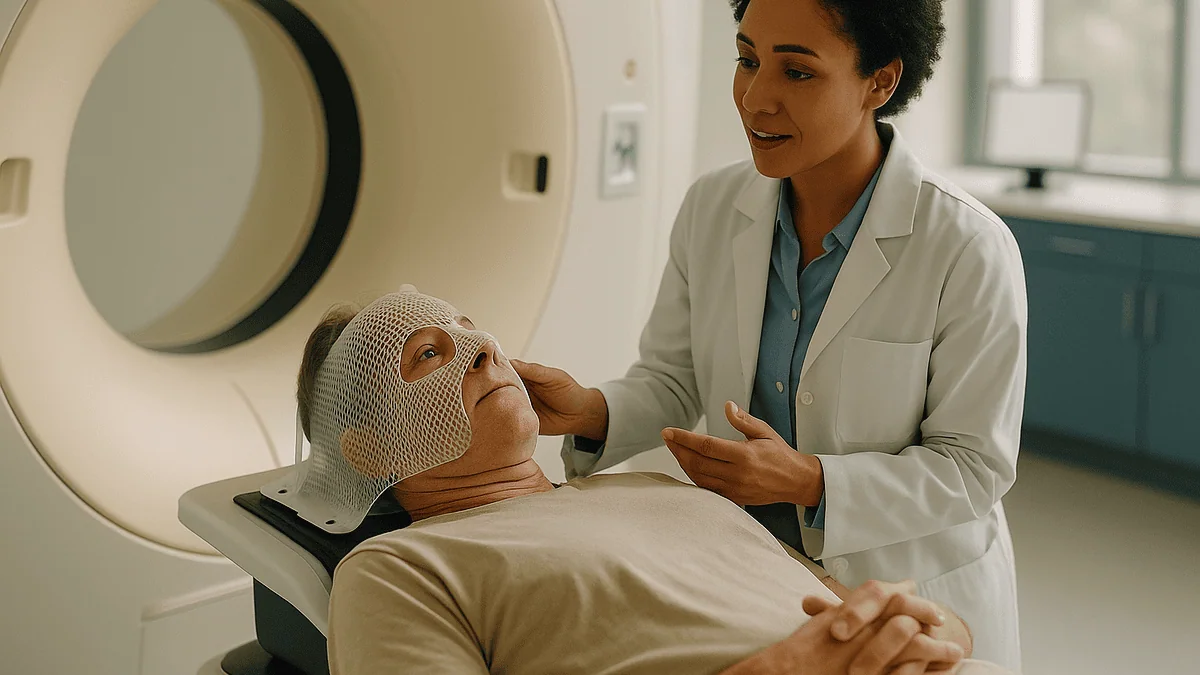
Picture a dentist’s chair stretched flat, a ceiling you will get to know well, and a machine that looks more like a factory robot than anything medical. That is the room. You change into comfortable clothes without metal, lie on a narrow padded table, and a therapist helps you settle into whatever positioning device was made for you at your planning visit: a soft mesh mask for head or neck treatment, a molded body cradle for the chest, abdomen or pelvis.
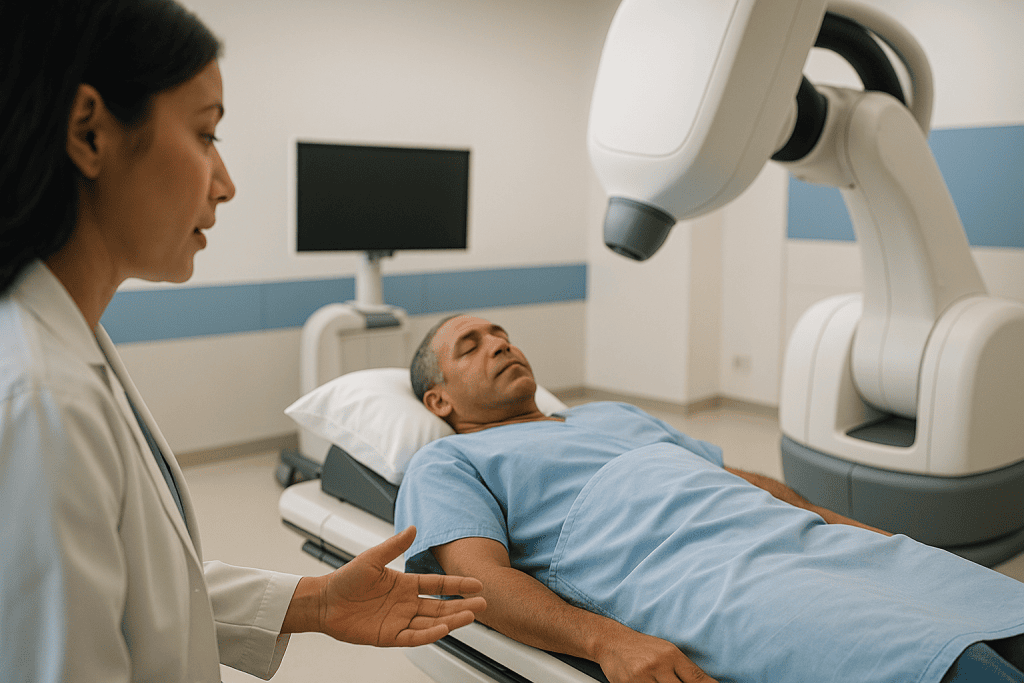
Then the machine begins. The robotic arm holds a compact linear accelerator, which is the device that generates the treatment beam. It swings to one position, pauses for several seconds while the beam is on, then glides to the next. There are dozens of these stops. Between them you hear soft mechanical whirs and an occasional click. The beam itself produces no heat, no tingling and no pressure; radiation at these energies does not stimulate the nerves in skin or tissue, so the body has nothing to report.
Two imaging panels near the ceiling take low-dose x-rays throughout the session. These are the system’s eyes. If you shift a few millimeters, or your breathing moves a tumor in the lung or liver, the arm adjusts its aim rather than asking you to freeze. That is the practical meaning of “no frame”: the machine tracks you instead of pinning you down.
People commonly describe the hardest part as boredom, or a stiff shoulder from holding one position. Some centers play music you choose. Others let you bring a podcast. The therapists watch on cameras and can talk with you through an intercom the entire time, and if you need to cough or stretch, the beam pauses. According to MedlinePlus, a single session may last anywhere from about 30 minutes to a couple of hours depending on the number and complexity of beams, and you can usually go home afterward.
How CyberKnife works: robotic radiosurgery in plain language
CyberKnife is a brand name for one type of robotic stereotactic radiosurgery system. Two of those words need unpacking. Stereotactic means aiming at a precisely mapped three-dimensional target using imaging coordinates. Radiosurgery is a slightly misleading historical term: no cutting happens. It describes radiation delivered with such precision and in such concentrated amounts that it can accomplish, over a handful of visits, what conventional radiotherapy spreads across many weeks.
The physics is the same as any modern radiation treatment. High-energy x-ray beams pass through the body and damage the DNA of cells in their path. Healthy cells are generally better at repairing that damage than cancer cells, and the treatment is planned so that beams enter from many different angles. Each individual beam carries only a fraction of the total, but they all converge on the target, where the effect adds up. Think of dozens of flashlights aimed at one spot on a wall: each beam is dim on its own, but the spot where they overlap is bright.
What distinguishes robotic radiosurgery from a standard linear accelerator on a rotating gantry is the range of angles available and the real-time image guidance. Mayo Clinic describes stereotactic radiosurgery as relying on detailed 3D imaging to deliver high doses of radiation to the affected area with minimal effect on surrounding tissue. The robotic arm can approach from positions a conventional gantry cannot reach, and the ceiling-mounted x-ray cameras check the target’s position repeatedly during treatment.
For tumors that move with breathing, some systems add a chest-mounted sensor or a lightweight vest. The machine learns the rhythm of your breathing and times or steers the beam accordingly. You breathe normally; the tracking does the rest. That combination of many angles, live imaging and motion compensation is what allows treatment without the rigid head frame that older radiosurgery methods required.
Does CyberKnife hurt? What the body actually senses
The direct answer is that the radiation is painless, and most people feel nothing during delivery. The sensations worth preparing for come from everything around the beam rather than the beam itself.
Start with the mask. If your target is in the brain, head or neck, you will wear a thermoplastic mesh mask molded to your face at the planning visit. It feels snug, roughly like a firm swimming cap pulled over the whole face, and it is clipped to the table so your head stays in one place. People who dislike enclosed spaces sometimes find the first minute unsettling. The mesh has holes; you can see through it and breathe freely. Tell your team beforehand if claustrophobia is a concern, because there are ways to help, from practicing with the mask to discussing a mild relaxing medicine with your clinician. Any decision about medication sits with them.
Next, the table. It is firm, and sessions are long enough that a hip or the lower back may start to ache. Mention this at planning so cushions can be built into your setup. Once treatment begins, your position needs to match the plan, so fidgeting is discouraged, but the beam can be paused if you genuinely need to move.
Then there is the environment: a cool room, a large machine passing within a foot or two of your face, and the low hum of motors. The arm never touches you. For some people the hardest sensory experience is simply lying still with their thoughts for an hour.
Afterward, discomfort depends on the site treated and tends to arrive later, if at all. Johns Hopkins notes that stereotactic radiosurgery is typically well tolerated, with side effects that are usually mild and temporary. A headache or nausea can follow brain treatment; skin tenderness can develop over the coming days at body sites. None of that is felt in the room itself.
What happens before treatment: scans, masks and fiducial markers
The treatment day is the short part. Most of the work happens beforehand, and knowing the sequence removes much of the anxiety.
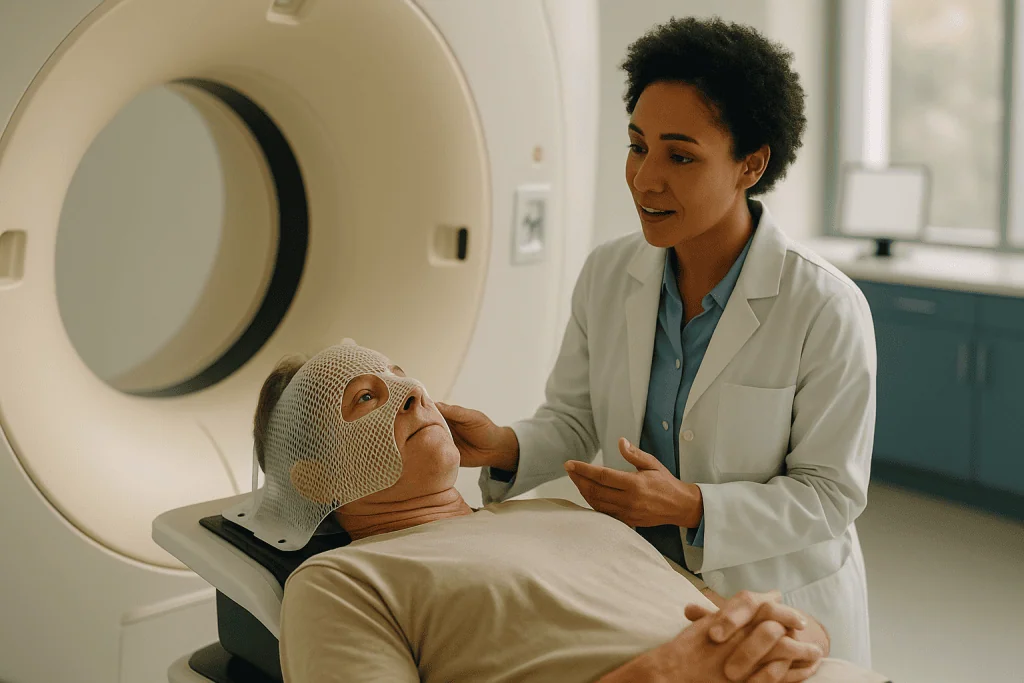
The first step is usually a planning appointment, sometimes called simulation. You lie in the treatment position on a CT scanner while your immobilization device is made. For the head, warm plastic mesh is draped over your face and hardens into your mask within a few minutes. For the torso, a vacuum-molded cushion forms around your body. A CT scan is then taken in exactly that position, often combined with an MRI or PET scan, so the physicist and radiation oncologist can outline the target and every nearby structure they want to protect.
Some body sites need small internal markers. A fiducial is a tiny gold seed, about the size of a grain of rice, placed in or near a tumor so the imaging system can lock onto it during treatment. Bone provides a natural landmark for the skull and spine, but soft organs like the prostate, liver or lung give x-rays little to see. Fiducial placement is a minor outpatient procedure done with a needle under imaging guidance, similar to a biopsy. It may feel like a brief sting or pressure, and it is commonly scheduled several days to a week or more before planning so the markers settle in place. Your team will tell you what to expect for your specific site.
Between simulation and the first session there is a quiet interval, often a week or two, while the treatment plan is calculated and checked. This wait can feel long. It is not a delay in the medical sense; it is when the precision is built. You will typically be asked about pacemakers, implants, pregnancy and any medicines you take, and given instructions on eating and drinking that vary by site.
How long does CyberKnife take, and how many sessions are typical?
Two different clocks matter here: the length of one visit and the number of visits overall.
A single session is longer than many people expect, given how short the actual beam-on time is. MedlinePlus describes robotic radiosurgery sessions lasting from roughly 30 minutes to two hours, with most of that time spent on the machine moving, imaging, and repositioning between beams. Setup adds time at the start: checking your identity and mask, aligning the table, taking the first tracking x-rays. Budget a couple of hours for the whole visit and you will rarely be surprised.
The number of sessions depends on what is being treated. Mayo Clinic notes that stereotactic radiosurgery to the brain is often completed in a single session, while stereotactic body radiation therapy, the same concept applied to the lung, spine, liver, prostate or other sites, is typically given over one to five sessions. Each session is called a fraction. Compare that with conventional radiotherapy, which the NHS describes as usually delivered in daily sessions over several weeks.
Sessions are usually scheduled on consecutive days or every other day. Some people work between them; others find the cumulative fatigue argues for a lighter week. There is no single right answer, and your team can give a sense of what people with your treatment site commonly report.
What the short course does not mean is that the effect is instant. Radiation works by damaging cells that then fail when they next try to divide, a process that plays out over weeks and months. The visits end quickly; the biology continues long after your last appointment. Your first follow-up scan is usually timed with that lag in mind, often several weeks to a few months later, so that imaging reflects a genuine response rather than early swelling.
Who is usually offered radiosurgery, and who is usually asked to wait
Radiosurgery earns its place when a target is small, well defined on imaging, and either hard to reach surgically or sitting next to something that must not be damaged. Mayo Clinic and Johns Hopkins list common uses that include brain metastases, certain benign brain tumors such as meningiomas and acoustic neuromas, arteriovenous malformations, trigeminal neuralgia, and, through stereotactic body radiation therapy, selected tumors of the lung, liver, spine, pancreas, kidney and prostate.
A few patterns come up repeatedly in guideline-level discussions:
- People who cannot safely have surgery because of age, heart or lung disease, or the tumor’s location.
- Tumors that have returned in an area already treated with conventional radiation, where a highly focused approach may limit repeat exposure to surrounding tissue.
- A limited number of metastases, where treating each spot individually is practical.
- Situations where preserving a nearby structure, such as the optic nerve or spinal cord, is the overriding priority.
Who is usually asked to wait, or steered toward another approach? Very large tumors, because concentrating a high dose into a big volume raises the risk to healthy tissue; the NHS notes that radiotherapy of any kind is planned around the limits of nearby organs. Tumors with unclear edges on imaging, since precision cannot outperform the map it is given. Widespread disease with many sites, where systemic treatment often takes priority. And people whose tumor may respond as well or better to surgery, chemotherapy, hormone therapy or immunotherapy, alone or in combination.
Sometimes the recommendation is active monitoring rather than treatment now. That can feel like being turned away. In practice it usually means the team judges that the risks of treating today outweigh the benefit, and that repeat imaging will show whether that balance changes. These judgments are made in multidisciplinary meetings where surgeons, oncologists and radiologists review the same scans, and the decision rests with that team in conversation with you.
CyberKnife compared with other radiation approaches
People often arrive at their consultation having read about several options and unsure how they differ. The table below sets out the practical experience side by side. It describes what the categories involve in general terms; none of these approaches is inherently “better,” and the right choice depends on the tumor, its location and the rest of your health.
| Feature | Robotic radiosurgery (e.g., CyberKnife) | Frame-based radiosurgery | Conventional radiotherapy |
|---|---|---|---|
| Immobilization | Soft mesh mask or body cradle | Rigid frame fixed to the skull with pins under local anesthetic | Mask or cushions |
| Typical course | 1 to 5 sessions | Usually 1 session | Daily sessions over several weeks |
| Length of one session | About 30 minutes to 2 hours | Varies; often under an hour of treatment plus frame placement | Usually 10 to 30 minutes |
| Sites treated | Brain and body | Mainly brain and upper spine | Almost any site |
| Tracking during treatment | Live x-ray imaging; adjusts for movement | Frame holds position fixed | Imaging before session; some systems image during |
| Anesthesia | None for the radiation; sedation rarely needed | Local anesthetic for pin sites | None |
Figures for session numbers and durations reflect descriptions published by Mayo Clinic, MedlinePlus and the NHS. Frame-based systems remain widely used and highly precise; their trade-off is the frame itself, which some people find the most uncomfortable part of the day. Conventional radiotherapy spreads treatment over more visits but can cover larger or less sharply defined areas.
Surgery, chemotherapy, targeted drugs and hormone therapy sit outside this table but are often the true alternatives in a given case. If you are weighing options, ask your team to explain not just what each involves but why they favor one for you. A good answer will mention your tumor’s size, its neighbors, and the evidence for that combination.
CyberKnife side effects: what usually shows up and when
Because the beams converge tightly, tissue outside the target receives far less radiation than it would with older techniques, and side effects tend to be milder and more localized than people fear. They are not zero. What you feel depends almost entirely on where the target sits.
Across all sites, the common early effect is tiredness. The NHS describes fatigue as one of the most frequent side effects of radiotherapy, often building over the course of treatment and sometimes lasting for weeks after it ends. With a short course, fatigue can arrive after the sessions are already over, which catches people out.
Site by site, the patterns your team may describe include:
- Brain: headache, nausea, temporary swelling around the treated area, and occasionally a short course of steroid medicine prescribed to manage that swelling. Hair loss, if it occurs, is patchy and limited to where beams entered.
- Lung: cough, mild shortness of breath, and a delayed inflammation of lung tissue called radiation pneumonitis that can appear weeks to months later.
- Prostate: urinary urgency or frequency, a burning sensation on passing urine, and bowel irritation, usually peaking a week or two after treatment.
- Liver or pancreas: nausea, reduced appetite, and fatigue.
- Spine: a temporary flare of pain at the treated level, sometimes called a pain flare, in the first days.
- Skin: redness or tenderness where beams entered, generally milder than with long-course radiotherapy.
The National Cancer Institute groups radiation side effects into early effects, which appear during or shortly after treatment and usually resolve within weeks, and late effects, which can appear months or years later and depend on the tissue exposed. Late effects after radiosurgery are uncommon but include radiation necrosis in the brain, which is damage to healthy tissue near the target, and rib or vertebral fractures near body sites. Your consent discussion should name the specific late risks for your location, and it is entirely reasonable to ask for them in writing.
CyberKnife recovery time: what the first days and weeks usually look like
“Recovery” is the wrong frame for most people, because there is no wound to heal. What there is instead is a slow curve of fatigue and a wait for the biology to do its work. Here is how that typically unfolds, with the caveat that individual experience varies widely and your team’s guidance for your site takes precedence.
The same day. You walk out of the treatment room. Most people are cleared to drive unless they were given a sedative or had brain treatment with specific instructions. Eating and drinking are usually unrestricted. Some feel a little washed out from the tension of lying still; others go back to work.
Days one to seven. Fatigue often begins to build. For brain treatment, a mild headache or nausea may appear as tissue swells slightly in response. For prostate or pelvic sites, urinary symptoms can start. For the spine, a pain flare can peak in the first few days before easing. The NHS advises that tiredness during and after radiotherapy is normal and that gentle activity, rather than complete rest, tends to help.
Weeks two to six. This is often when side effects reach their high point and then begin to recede. Skin reactions, if any, usually appear a couple of weeks in. Steroid courses for brain swelling, when prescribed, are commonly tapered under supervision during this window; how and when is a decision for your clinician, never one to make on your own.
Beyond six weeks. Most acute effects have faded. Fatigue can linger, and the NHS notes it may take weeks or a few months after radiotherapy for energy to return fully. Your first follow-up imaging is often scheduled somewhere in this period or a little later, because scans taken too early can show inflammation that looks confusingly like growth.
Practical adjustments that people often find helpful: planning lighter workloads for the two weeks after the last session, keeping a simple symptom diary, and staying well hydrated, especially with pelvic treatment.
What are the hardest days after radiation treatment?
Ask people who have been through it and the answer is rarely “the day in the treatment room.” The hardest stretch, for many, comes a week or two later, after the appointments have stopped and the structure of showing up somewhere has disappeared.
Part of that is physiological. Radiation’s effects accumulate and then peak with a lag. The National Cancer Institute explains that early side effects typically appear within days to weeks and reach their worst before gradually resolving. With a one-to-five-session course, that peak lands after you have already finished, when you might have expected to feel done.
Part of it is emotional. During treatment there are therapists checking on you, nurses asking how you slept, a sense of active effort. Afterward there is a gap before the first scan, and the mind fills it. People describe watching every twinge for meaning. Health psychologists sometimes call this the “scanxiety” interval, and it is real enough that many cancer centers offer counseling specifically for it.
Site-specific low points follow their own timing. After brain radiosurgery, the days when swelling peaks can bring headache and fogginess; steroid medicine, when prescribed, often helps, and its side effects, such as disturbed sleep and increased appetite, can be their own small trial. After prostate treatment, the week when urinary urgency is highest can disrupt nights. After spine treatment, a pain flare in the first days can be alarming even when expected.
What consistently helps, according to NHS guidance on coping with radiotherapy: brief daily walks rather than bed rest, keeping meals regular even when appetite dips, accepting practical help, and reporting symptoms early rather than waiting for the follow-up appointment. Knowing that the low point is anticipated and temporary does not erase it, but it changes what it means. A bad day two weeks out is usually the treatment working through its expected course, not a sign of failure.
What are the potential downsides of CyberKnife?
Honest explainers say what a treatment cannot do as clearly as what it can. Radiosurgery has real limits, and understanding them helps you ask sharper questions.
It only treats what can be seen. Precision is a double-edged tool. A beam aimed within a millimeter of a tumor’s edge treats nothing beyond that edge. Microscopic disease outside the visible target, or cells that have already spread, are untouched. That is why radiosurgery is often paired with systemic treatment, and why it is generally not chosen for cancers likely to be scattered rather than local.
Size matters. Concentrated doses that are safe in a small volume become risky in a large one, because more healthy tissue sits within the treated region. Mayo Clinic notes that radiosurgery is generally reserved for smaller tumors.
Effects take time. Unlike surgery, where a tumor is gone the same day, radiation works over weeks to months. Some benign tumors stop growing rather than shrink. That can be a perfectly good result, and it is a different result from removal.
Late effects exist. Radiation necrosis in the brain, pneumonitis in the lung, rectal or bladder irritation after prostate treatment, and, rarely, damage to nerves or bone near the target. These are uncommon with modern planning but not impossible, and they can appear long after the visits end.
No tissue for the pathologist. Surgery yields a specimen that can be examined under the microscope and tested for molecular markers. Radiosurgery does not. In some cases a separate biopsy is needed first.
Imaging ambiguity. Treated tissue can swell and look larger on early scans, which sometimes leads to uncertainty about whether a tumor is responding or growing. Follow-up often requires patience and repeat imaging.
Every one of these points has a mirror image in the alternatives: surgery carries anesthetic and wound risks; long-course radiotherapy means weeks of visits. The choice is a weighing, made with your team.
What's the success rate of CyberKnife? An honest answer
This is the question people most want a number for, and the responsible answer is that no single number exists. Success depends on what is being treated, how big it is, where it sits, what else is happening in the body, and what “success” means for that condition. For a benign brain tumor, success might mean no further growth on scans over years. For a lung metastasis, it might mean local control of that one spot while other treatment addresses the rest. For trigeminal neuralgia, it means pain relief. These are not comparable percentages.
Beware of any figure attached to a brand name. The machine is a delivery device; outcomes reflect the disease, the planning, and the team. A percentage quoted without a diagnosis, tumor size and follow-up period attached is close to meaningless. Marketing pages sometimes offer such numbers. Guidelines and systematic reviews report them by condition, with confidence intervals and follow-up durations, which is the only form in which they mean anything.
What the mainstream evidence base does support is this: stereotactic radiosurgery and stereotactic body radiation therapy are established, guideline-endorsed options for a range of small, well-defined tumors, and both Mayo Clinic and Johns Hopkins describe them as effective for appropriately selected patients. “Appropriately selected” is the load-bearing phrase.
The useful version of the question is specific: “For a tumor of my type, my size, in my location, what does the published evidence show for local control at one, two and five years, and how does that compare with my alternatives?” A radiation oncologist can answer that from the literature, and can also explain the difference between local control, progression-free survival and overall survival, which are three different measures often blurred together.
You are entitled to that conversation. If the answer you receive is a single glossy number with no conditions attached, ask for the study it came from. The best teams welcome the question.
What people often get wrong about what CyberKnife treatment feels like
The name does most of the damage. Here are the misunderstandings that come up most often, and what the evidence actually shows.
“There will be a knife.” There is no blade, no incision and no stitch. The word “knife” is a metaphor for precision, inherited from older radiosurgery systems. MedlinePlus is explicit that the procedure is a form of radiation therapy, not surgery.
“I’ll feel the radiation.” You will not. Therapeutic x-rays do not activate pain receptors or produce heat you can perceive. Any discomfort during a session comes from lying still, the mask, or the table, not from the beam.
“I’ll be radioactive afterward.” External beam radiation passes through the body and is gone the moment the machine switches off. The National Cancer Institute notes that people receiving external radiation are not radioactive and pose no risk to family, children or pregnant partners. This differs from some internal radiation treatments, which is where the confusion arises.
“One session means one day of side effects.” The short course compresses the visits, not the biology. Fatigue and site-specific effects often peak a week or two after the last session and can take weeks to fade.
“Fewer sessions means it’s stronger, so it must be better.” Fewer sessions means each carries a larger share of the total; whether that is preferable depends on the tumor and its neighbors. For some situations, spreading treatment over weeks is the safer choice, which is why both approaches remain standard.
“The scan afterward will show the tumor is gone.” Sometimes it does. Often the first scan shows something similar in size, occasionally larger from swelling, before shrinkage or stability becomes clear over subsequent imaging. Ask your team what a good early scan looks like for your condition, so the first result does not alarm you unnecessarily.
“I’ll need to stay in the hospital.” Most radiosurgery is outpatient. You arrive, are treated, and leave, usually within a few hours.
Questions to ask your care team before your first session
Consultations move fast, and the questions you meant to ask surface on the drive home. Bringing a short list changes that. These are the ones that tend to matter most, grouped by the moment they apply to.
About the decision itself
- Why radiosurgery for me rather than surgery, longer-course radiotherapy, systemic therapy, or monitoring? What would change your recommendation?
- What does the published evidence show for my tumor type, size and location, and over what follow-up period?
- Is this intended to control one spot, or is it part of a broader plan that includes other treatments?
About the experience
- Will I need fiducial markers, and what does that procedure involve?
- How long will each session last, and how many are planned?
- Can I bring music or a podcast? What can be done if I struggle with the mask?
- Can I drive myself home, and can I work between sessions?
About the weeks after
- Which side effects are expected for my site, when do they usually peak, and how long do they typically last?
- Which symptoms should prompt a phone call the same day?
- Will I be prescribed anything to manage swelling or symptoms, and who adjusts it if needed?
- When is my first follow-up scan, and what does a reassuring result look like at that stage?
About the longer term
- What late effects are possible for my treatment site, and how likely are they?
- If the tumor does not respond, what are the next options?
- Who is my point of contact between appointments?
Write the answers down or ask permission to record the conversation. The NHS recommends bringing a family member or friend to key appointments for exactly this reason. Answers that come with a reason attached, rather than reassurance alone, are the ones worth trusting.
When to call your doctor: red-flag signs after radiosurgery
Most people move through the weeks after treatment with nothing more than tiredness and predictable, site-specific irritation. A small number develop symptoms that need same-day attention. Your team will give you a contact number; use it without hesitation for any of the following, and call emergency services if symptoms are severe or sudden.
After brain treatment, seek care urgently for: a severe or rapidly worsening headache, especially with vomiting; a new seizure; sudden weakness, numbness or drooping on one side of the face or body; new confusion, difficulty speaking or understanding speech; sudden vision changes; or unusual drowsiness that is hard to rouse. These can signal swelling that needs prompt management.
After lung or chest treatment, seek care for: new or worsening shortness of breath, a fever with a dry cough, chest pain, or coughing up blood. Radiation pneumonitis can appear weeks to months after treatment and is treatable when recognized early.
After abdominal, pelvic or prostate treatment, seek care for: inability to pass urine, blood in urine or stool that is more than a small streak, severe or persistent vomiting preventing you from keeping fluids down, black stools, or severe abdominal pain.
After spine treatment, seek care for: new weakness or numbness in the arms or legs, loss of bladder or bowel control, or pain that escalates sharply rather than easing after the first few days.
At any site, seek care for: a fever, chills or shaking, particularly if you are also receiving chemotherapy; a painful, swollen calf or sudden breathlessness, which can indicate a blood clot; signs of infection at a fiducial insertion site such as spreading redness, warmth or discharge; or any symptom that frightens you and is not on your expected list.
The National Cancer Institute and the NHS both stress that reporting side effects early usually means they are easier to manage. A phone call that turns out to be unnecessary costs nothing. A delay can. Your treating team, not a search engine, is the right judge of what a symptom means for you.
Frequently asked questions
Does CyberKnife hurt during treatment?
No, the radiation itself is painless and produces no heat or tingling. What people notice is the snug fit of a mesh mask for head treatment, the firmness of the table over an hour or more, and the low hum of the robotic arm moving around them. If you have back pain or claustrophobia, tell your team at the planning visit so cushions or coping strategies can be built into your setup.
How long does CyberKnife take from start to finish?
A single session commonly lasts 30 minutes to two hours according to MedlinePlus, and you should budget extra time for check-in and positioning. The overall course is short: brain radiosurgery is often one session, and body treatments typically run one to five sessions on consecutive or alternating days. Planning scans and, where needed, fiducial marker placement happen one to two weeks beforehand, so the whole pathway usually spans a few weeks.
What is CyberKnife recovery time like?
There is no wound to heal, so most people go home the same day and resume light activity immediately. Fatigue and site-specific side effects tend to build over the first week, peak around weeks two to four, and then ease. The NHS notes tiredness after radiotherapy can linger for weeks to a few months. Your first follow-up scan is usually scheduled several weeks out because early imaging can show swelling before any response is visible.
What are the most common CyberKnife side effects?
Fatigue is the most frequent effect at any site. Beyond that, side effects depend on location: headache, nausea and temporary swelling after brain treatment; cough or breathlessness after lung treatment; urinary urgency and bowel irritation after prostate treatment; a short pain flare after spine treatment. Skin redness is usually mild. Late effects such as radiation necrosis or pneumonitis are uncommon but possible, and your consent discussion should name the specific risks for your site.
What are the hardest days after radiation treatment?
For many people the low point comes one to two weeks after the last session, when accumulated fatigue and site-specific effects peak just as the routine of appointments disappears. The National Cancer Institute notes early side effects reach their worst before gradually resolving. Knowing this in advance helps: plan lighter workloads for that fortnight, keep a symptom diary, and call your team early rather than waiting for the scheduled follow-up.
Will I be radioactive after CyberKnife?
No. Robotic radiosurgery uses external beams that pass through the body and stop the instant the machine switches off. The National Cancer Institute confirms that people treated with external radiation are not radioactive and can safely be around children and pregnant partners. The confusion usually comes from internal radiation treatments, such as implanted seeds or radioactive drugs, which follow different precautions.
What are the potential downsides of using CyberKnife?
Radiosurgery treats only what imaging can see, so microscopic disease outside the target is untouched and systemic therapy is often still needed. It is generally limited to smaller tumors, works over weeks to months rather than instantly, provides no tissue sample for the pathologist, and carries uncommon late risks such as radiation necrosis or lung inflammation. Early scans can also be ambiguous because treated tissue may swell before shrinking.
What's the success rate of CyberKnife?
There is no single figure, because outcomes depend on the tumor type, size, location and what counts as success for that condition. A percentage attached to a machine rather than a diagnosis is not meaningful. Mainstream sources such as Mayo Clinic and Johns Hopkins describe stereotactic radiosurgery as an established option for appropriately selected patients. Ask your radiation oncologist for published local-control data for your specific situation and follow-up period.
Can I drive home and go to work after a CyberKnife session?
Most people are cleared to drive themselves home unless they received a sedative or their team gives specific instructions after brain treatment. Many return to work the same or next day, though fatigue can build across a multi-session course and in the week or two after it ends. Ask your team what is typical for your treatment site, and consider arranging a lighter schedule for the fortnight following your last visit.
Do I need fiducial markers, and what does placement feel like?
Markers are needed when the target sits in soft tissue that x-rays cannot easily track, such as the prostate, liver or lung; bony sites like the skull and spine usually do not need them. Placement is a short outpatient procedure using a needle under imaging guidance, similar to a biopsy, and typically involves a brief sting or pressure. It is usually done several days to more than a week before planning so the markers settle.
References
- MedlinePlus: Stereotactic radiosurgery – CyberKnife
- NHS: Radiotherapy – Side effects
- MedlinePlus: Radiation Therapy
This article is for general information only and is not a substitute for professional medical advice. Please consult a qualified doctor about your individual situation.

More from the Blog

Why Leukemia and Lymphoma Plans Are Built by Hematology and Oncology Together
Leukemia and lymphoma begin in blood-forming and immune cells, so the specialists who read blood counts and bone marrow (hematology) and those who plan…

Mouth Sores and Taste Changes During Chemotherapy: Daily Care That Makes Eating Easier
Mouth sores during chemotherapy (oral mucositis) happen because chemotherapy damages the fast-dividing cells lining the mouth. They usually appear 5 to 10 days after…

After Ureteral Tumor Surgery: Stents, Catheters and the Return to Normal Activity
After surgery for a ureteral tumor, a temporary ureteral stent (a soft tube keeping the ureter open) and a bladder catheter are common. The…

Who Is Assessed for a Stem Cell Transplant in Multiple Myeloma, and When Does It Happen?
In multiple myeloma, a stem cell transplant is usually considered for people whose overall fitness, organ function and other health conditions suggest they can…

Preparing for Brachytherapy: Fasting, Bowel Preparation and the Anesthesia Check
To prepare for brachytherapy, most people are asked to stop eating for roughly six hours and clear fluids for about two hours before anesthesia,…

When Is a Stem Cell Transplant Part of Acute Lymphocytic Leukemia Treatment?
A stem cell transplant is usually considered for acute lymphocytic leukemia when chemotherapy alone is unlikely to keep the disease away: high-risk genetic features,…